You're staring at a caterer's sample menus, a venue contract, and a guest list that includes vegans, a cousin with a nut allergy, and grandparents who expect a proper sit-down dinner. Picking dishes isn't the hard part. Picking a format that fits your space, season, schedule, and budget is where couples get stuck.
The best wedding catering menu ideas start with service style, not entrées. Catering is a central cost, not an add-on, since approximately 85% of couples hired a professional caterer and average food spending reached about $80 per guest. That scale means your format choice affects staffing, rentals, timing, and guest flow all night.
Choose one of the nine approaches below, then adapt the dishes to your tastes and your guests. If you're also weighing cake and baked goods, streamline your bakery menu with the same principle you'll see throughout. Keep the selection tight, make it personal, and plan how every dish will be held, covered, and refreshed.
1. Live Action Food Stations
Your guests don't sit and wait. They walk, talk, and watch chefs finish food to order. That's the appeal of live action stations.
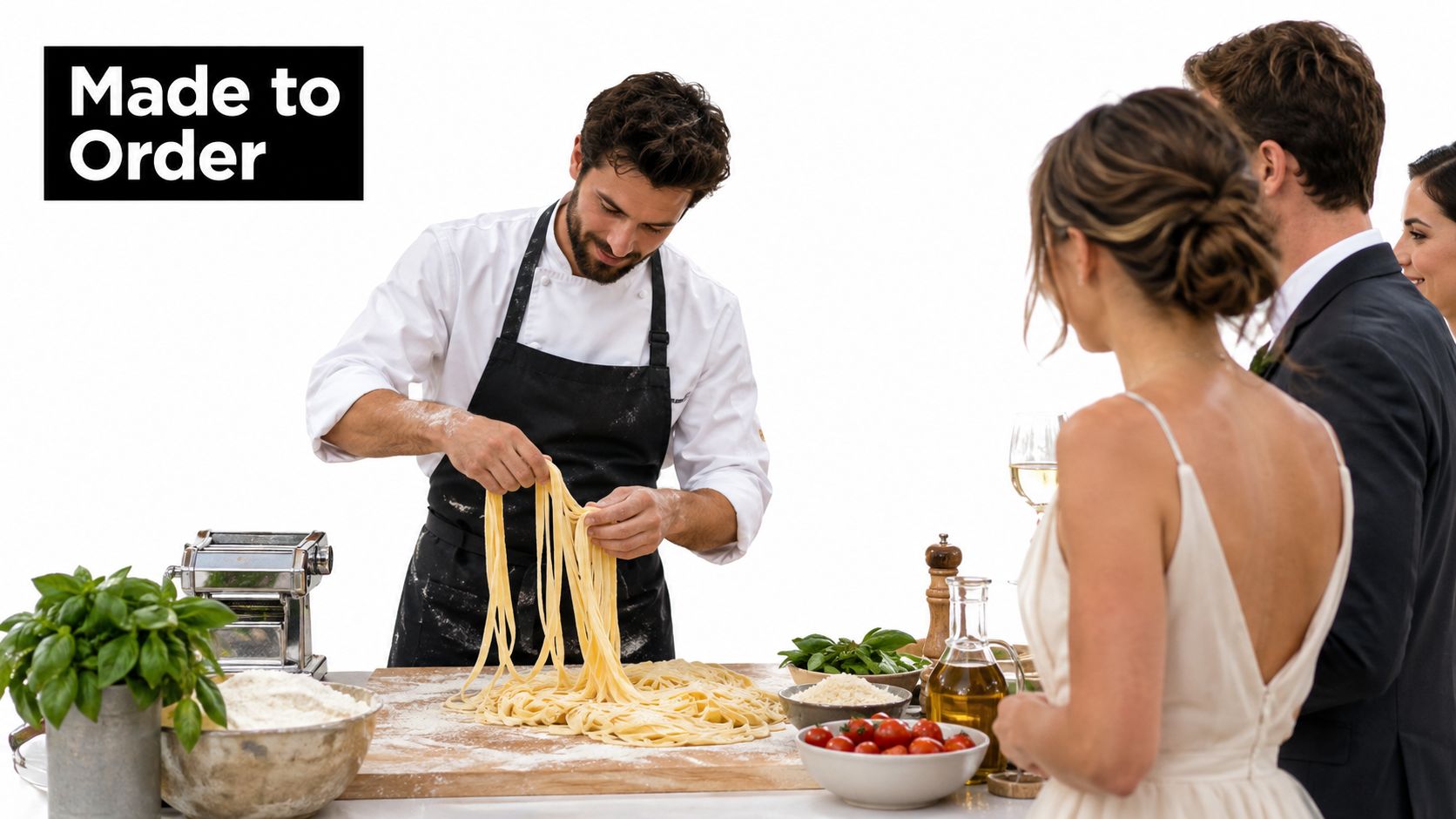
Pasta and risotto stations suit Italian-themed weddings, carving stations with prime rib or turkey fit traditional receptions, and taco or fajita bars work for casual outdoor celebrations. Each station gives guests choice without forcing you into a single entrée decision. It also turns dinner into entertainment, since food arrives hot and visible.
Make Stations Flow
Use this setup to avoid lines and cold trays.
- One station per 50 to 75 guests: That's your practical limit for wait times.
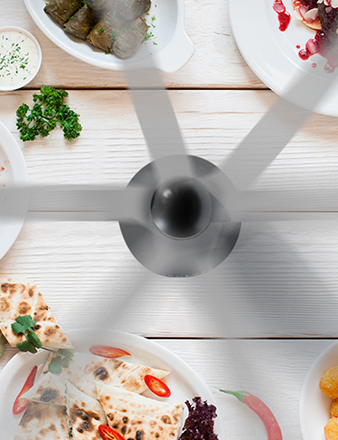
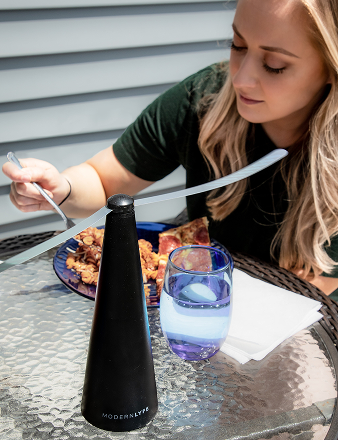
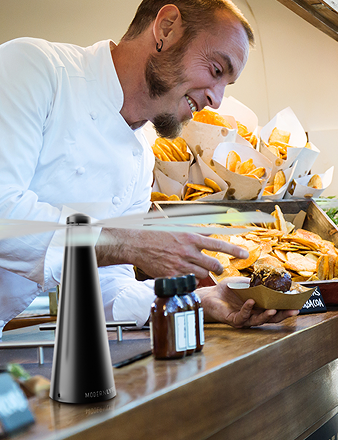
- Modern Lyfe fly fans on each station: Food stays uncovered and guest-ready outdoors.
- Clear chef workspace: Coordinate placement so chefs have sightlines, power, and room to replenish.
Before you finalize layouts, review a practical wedding buffet table setup guide and map traffic on paper. Stations fail when guests cross paths with staff carrying hot pans.
Watch a live station in service to judge spacing and pace before your tasting.
2. Family-Style Shared Platters
Family-style service puts large platters and bowls in the center of each table. Guests pass, serve, and seconds are easy. It's relaxed, generous, and built for conversation.
An Italian feast with pasta, antipasti, and roasted meats feels celebratory without formality. A Southern spread of fried chicken, sides, and biscuits works at barns and homes. A Mediterranean mezze layout fits garden and courtyard weddings, especially in warm weather.
Protect Shared Food
Shared dishes sit exposed longer than plated food, so plan the refresh cycle in advance. Limit each platter's time on the table, send smaller refills, and remove anything that's lost temperature. If you're planning the tablescape, follow structured guidance on setting up buffet tables for spacing and service flow.
Practical rule: Label every platter with ingredients and common allergens. Guests shouldn't have to hunt down a server to eat safely.
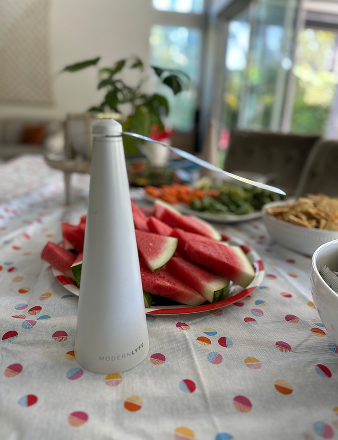
Place Modern Lyfe fans on buffet-adjacent and shared tables outdoors. You'll keep platters accessible without lids guests have to lift and replace.
The trade-off is table space. Skip oversized centerpieces, keep glassware tight, and confirm your table width works before you commit.
3. Global Street Food Menu
Skip the seated courses. Build a market. Tacos, dumplings, sliders, banh mi, and skewers give guests handheld food they can eat at high-top tables or while they move between groups.
Taco and slider bars anchor modern urban weddings. Dumpling and noodle stations lead Asian-inspired receptions. A market-style food hall setup works when you're blending a wedding with a large, social guest list that doesn't want assigned seats.
Keep It Fast
Street food only works if lines move. Keep the menu to 4 to 6 items, prep components ahead, and finish to order. Offer one vegetarian and one gluten-free option at minimum, built into the main lineup rather than hidden as a special request.
Separation matters more than a checkbox. The stronger approach is collecting free-text dietary information and classifying responses into medical, allergy, religious, and lifestyle categories, because celiac disease, severe allergies, halal, and kosher needs each carry different preparation rules. Ask your caterer how each meal will be prepared, identified, and served.
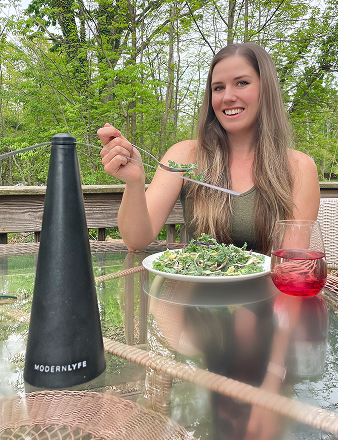
Place Modern Lyfe fans at each food counter to protect open-air dishes. Use dedicated utensils for every item, and don't let guests swap tongs between trays.
4. Plated Three-Course Dinner
Choose plated service when you want control. Guests stay seated, courses arrive in sequence, and portions are predictable. It's the most formal option and the easiest to pace around speeches.
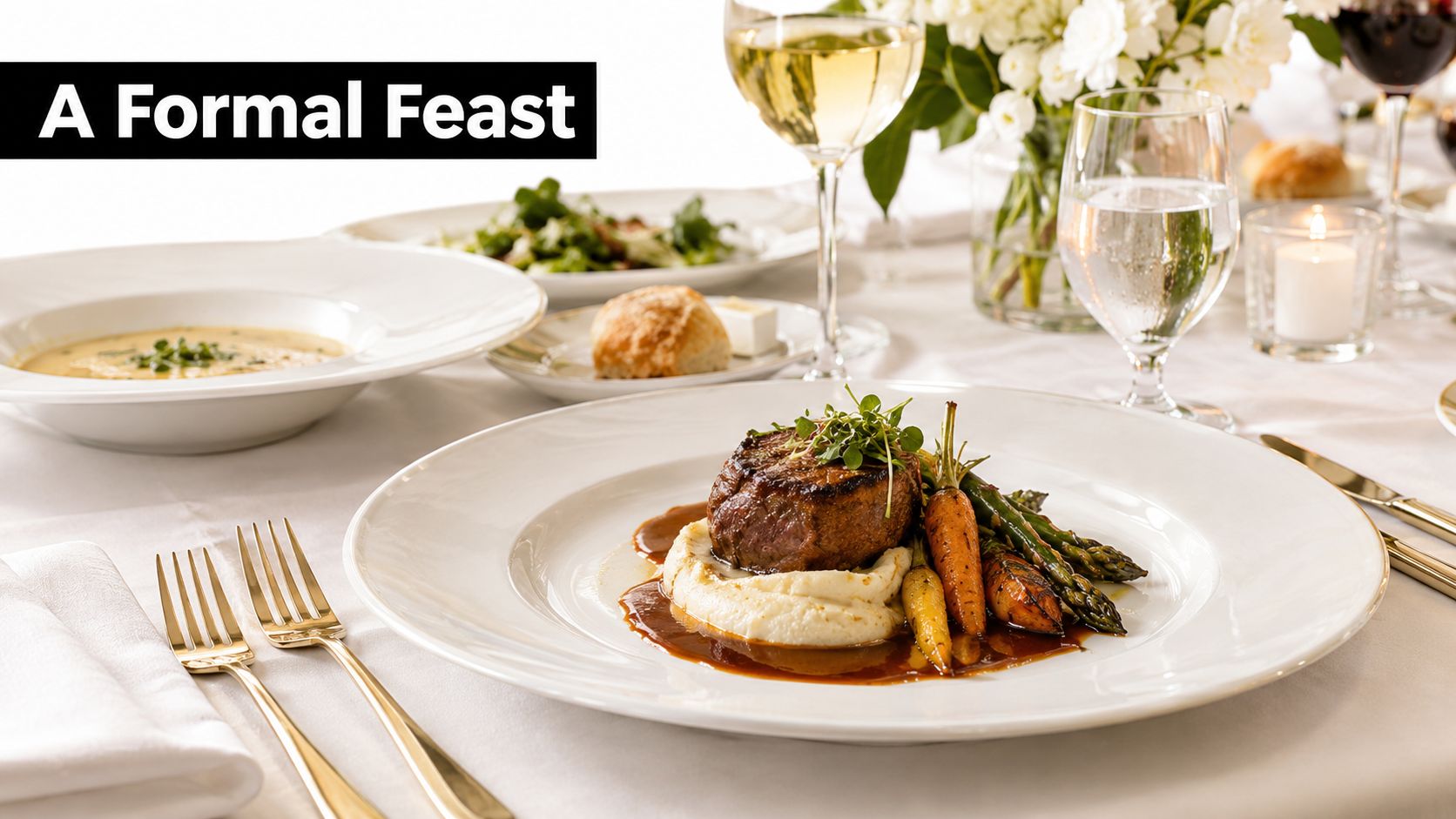
Black-tie hotel ballrooms suit a classic appetizer, entrée, and dessert structure. Country club receptions often plate salmon or beef tenderloin. Resort destination weddings can extend the format into a multi-course tasting.
Budget for labor, not just ingredients. Reported U.S. ranges place buffet service at roughly $40 to $65 per guest, compared with approximately $65 to $85 for a plated dinner, before additional fees. That gap reflects table service and timing.
Run It on Schedule
Collect entrée choices with RSVPs 3 to 4 weeks before the event, and give the kitchen a final count by table. Plan a 90-minute window for dinner service. Use Modern Lyfe fans at service stations and dessert tables where plates wait before delivery, especially at outdoor or semi-outdoor venues.
5. Raw Bar and Seafood Tower
A raw bar is a centerpiece you can eat. Oysters, shrimp, crab, lobster, and ceviche on tiered ice give cocktail hour a focal point and a premium signal before dinner starts.
Oyster bars fit coastal and beachfront weddings. Seafood towers suit upscale city hotels. Ceviche and shrimp stations work at tropical destinations where guests expect bright, cold food rather than heavy passed bites.
Cold Food Needs Active Control
This format lives or dies on temperature. USDA guidance identifies 40°F to 140°F as the bacterial Danger Zone, and it advises discarding perishable food left at room temperature longer than two hours, or one hour above 90°F. Nest trays in ice, replenish in small batches, and don't top up old product with new.
Assign one staff member to monitor the station through cocktail hour. That person checks ice, rotates product, and keeps serving utensils separate. Position Modern Lyfe fans at a safe distance from the ice so you deter flies without disrupting chilling.
Small, fresh batches look better than a huge tower that's been sitting. Guests notice when seafood is pristine, and they notice when it isn't.
6. Dessert Bar and Sweets Display
A single cake doesn't have to carry the ending. A dessert bar with cupcakes, macarons, donuts, cookies, and candy gives guests choice and gives your reception a visual finish.
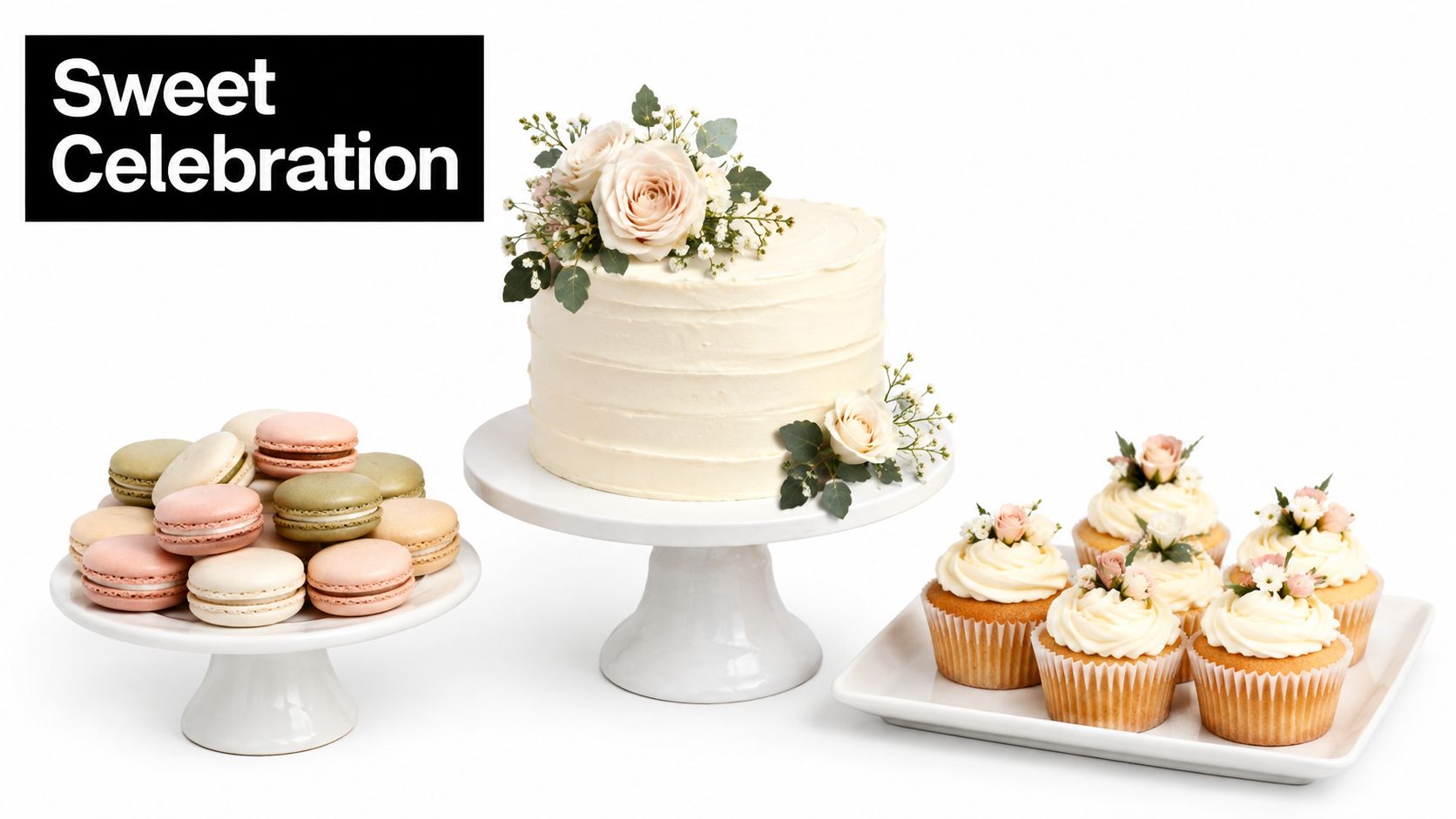
Donut walls fit casual and rustic weddings. Macaron towers suit elegant garden receptions. Candy bars work for vintage and retro themes. If you're sourcing recipes for a home baker or a small producer, the Just Cook It dessert collection is a useful starting point for night-friendly sweets.
Plan roughly 1.5 dessert pieces per guest when no cake is served, and offer at least one gluten-free and one dairy-free dessert. Label them clearly and serve them with separate tongs on a separate tray, not mixed into the main display.
Time the Display
Do not set everything out at 5 p.m. for a 9 p.m. dessert moment. Stage covered backstock, refresh in waves, and keep fruit and creamy items chilled until service.
Set Modern Lyfe fans on dessert tables to keep sweets protected. Sugar draws insects fast, especially outdoors, and a covered cake that guests can't see defeats the display.
7. Farm-to-Table Seasonal Menu
Your menu follows the season, not a fixed banquet sheet. Local farms and producers supply the produce, meats, and cheese, and your dishes change based on what's ready that month.
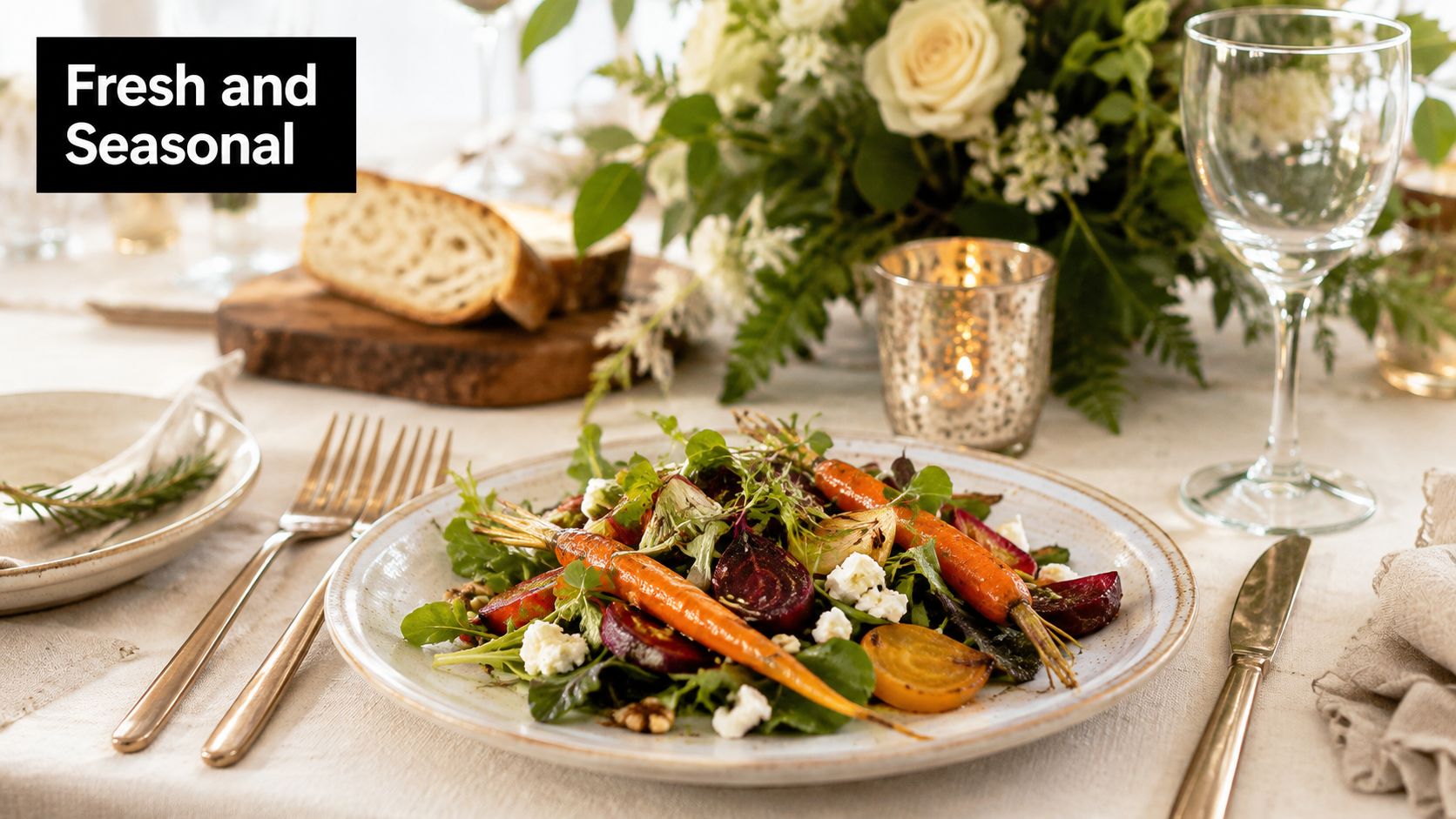
Harvest-season weddings feature roasted root vegetables and local meats. Summer garden receptions lean on heirloom tomatoes and fresh herbs. Vineyard weddings pair regional produce with local wines for a clear sense of place.
Confirm seasonal availability with your caterer at least 60 days before the event, and agree on substitutions in writing. Weather shifts harvests. You want a backup vegetable at the same quality level, not a last-minute compromise.
Tell the Story on the Table
Print a menu card that names each farm or producer. Guests connect with food more when they know where it came from, and it justifies a simpler preparation that lets ingredients lead.
Use Modern Lyfe fans at outdoor buffets to protect fresh produce during service. Choose dishes that hold well outdoors, such as roasted vegetables and grain salads, and keep dressings and soft cheeses chilled until plating.
8. Heavy Hors d'Oeuvres Reception
No seated dinner. No assigned tables. Servers circulate with passed bites while stationary displays anchor the room, and guests eat continuously over a longer cocktail-style reception.
Urban lofts and galleries suit this mingling format. Historic venues use it after a ceremony when a full dining room isn't practical. Rooftop weddings pair it with high-tops, lounge seating, and skyline views. For crowd-pleasing stationary items, Smokey Rebel BBQ party favourites offer hearty options that balance lighter passed bites.
Plan 8 to 10 bites per guest for a 2-hour reception, and make several of them substantial. Sliders, skewers, and filled pastries satisfy in a way that canapés alone don't. Stagger tray rotations so hot food doesn't cool while circulating.
Manage Time Out of Temperature Control
Grazing needs tracking. Under the FDA Food Code mechanism, food may be managed for up to four hours only under defined conditions, including starting temperatures and marking the discard time. Assign each exposed item a placement time, a discard time, and a responsible staff member.
Keep Modern Lyfe fans at main display tables for stationary items. Passed food moves, displayed food waits, and that's where protection matters most.
9. Backyard Barbecue Wedding Menu
Barbecue is direct, generous, and forgiving for large groups. Smoked meats, grilled sides, and classic favorites suit backyards, farms, ranches, and parks where guests expect a relaxed pace.
Smokehouse-style farm weddings, backyard receptions with pulled pork and ribs, and park weddings with barbecue food trucks all use the same core idea. Guests serve themselves, go back for seconds, and eat when they're hungry. Start with proven backyard barbecue menu ideas and adapt the proteins to your region.
Don't Let Outdoor Service Drift
Long, casual service is the risk. The FDA advises holding hot foods at 140°F or above and cold foods at 40°F or below, and discarding perishable food after more than two hours at room temperature. Use chafing dishes for meats, nest slaws and salads in ice, and check temperatures on a schedule.
Hire a dedicated pitmaster or caterer to manage smoking schedules so you aren't carving while guests arrive. Offer a plant-based protein and side with real substance, such as smoked mushrooms or grilled vegetable platters.
Set Modern Lyfe fans on buffet lines and picnic tables. Outdoors, that's not decoration. It's how open trays stay guest-ready.
9 Wedding Catering Menu Ideas: Side-by-Side Comparison
| Wedding Menu Style | Implementation & Resource Needs | Service Speed / Complexity | Expected Guest Experience | Ideal Use & Key Advantage |
|---|---|---|---|---|
| Live Action Food Stations | 🔄 Multiple attended stations; higher staffing and workspace needs | ⚡ Can serve efficiently when stations are well spaced; lines may form | 📊 Fresh, customizable food with interactive cooking | ⭐ Large or social receptions; combines made-to-order meals with entertainment |
| Family-Style Shared Platters | 🔄 Platters and bowls for each table; moderate service needs | ⚡ Simplified kitchen output; replenishment and dietary labeling require coordination | 📊 Warm, communal meal with varied dishes | ⭐ Relaxed, intimate receptions; encourages sharing and suits varied tastes |
| Global Street Food Menu | 🔄 Multiple cuisines and counters require varied prep and sourcing | ⚡ Handheld items are easy to serve; a focused menu helps maintain pace | 📊 Casual, lively food-market atmosphere | ⭐ Informal, modern events; offers broad menu variety without formal seating |
| Plated Three-Course Dinner | 🔄 Set menu, RSVP choices, experienced servers, and coordinated timing | 🔄 High service coordination; meals are delivered course by course | 📊 Formal presentation, controlled portions, and predictable costs | ⭐ Upscale or black-tie receptions; provides the most structured dining experience |
| Raw Bar and Seafood Tower | 🔄 Premium seafood, ice, frequent replenishment, and temperature monitoring | 🔄 Requires continuous food-safety oversight | 📊 Dramatic centerpiece and light cocktail-hour option | ⭐ Coastal or luxury events; adds a distinctive, premium display |
| Dessert Bar and Sweets Display | 🔄 Multiple dessert items, display stands, and possible vendor coordination | ⚡ Guests serve themselves; setup and replenishment need planning | 📊 Varied, photogenic display with options for different tastes | ⭐ Themed or informal receptions; creates a customizable focal point |
| Farm-to-Table Seasonal Menu | 🔄 Local sourcing and advance coordination with farms and caterers | 🔄 Menu flexibility depends on seasonal availability | 📊 Fresh, ingredient-led dishes with a clear sourcing story | ⭐ Sustainability-focused or garden events; highlights local produce |
| Heavy Hors d'Oeuvres Reception | 🔄 Passed trays, supplementary displays, and substantial service staffing | 🔄 Continuous service; timing and portion planning are important | 📊 Guests mingle while sampling small bites | ⭐ Receptions without formal dinner; supports flexible timing and social movement |
| Backyard Barbecue Wedding Menu | 🔄 Outdoor cooking, weather planning, and buffet or family-style setup | ⚡ Easy to scale; smoking and grilling require schedule management | 📊 Casual, hearty meal in a relaxed setting | ⭐ Backyard, farm, or park weddings; often more budget-friendly than plated service |
Build a Menu Guests Will Remember
Start with service style, because it decides almost everything else. Plated service gives you pacing and formality. Stations and family-style give you interaction and choice. Heavy hors d'oeuvres and street food keep guests moving. None of these wedding catering menu ideas is better in the abstract, and the right one is the one your venue, staff, and timeline can execute without strain.
Build a compact menu around dishes that perform. AHLEI's menu-engineering framework recommends combining covers sold, each dish's share of total sales, and gross-profit contribution to classify items by popularity and profitability. Apply that logic at wedding scale. Keep one premium entrée, one plant-forward entrée, two scalable sides, and a dessert or late-night station rather than an oversized list that complicates purchasing and prep.
Confirm dietary needs early and precisely. Don't group every requirement into one checkbox. Separate medical needs, severe allergies, religious requirements, and lifestyle preferences, then ask your caterer how each high-risk meal will be prepared, labeled, and served. Build a naturally inclusive base menu and handle certified or cross-contact-sensitive meals separately.
Plan outdoor execution as part of the menu, not after it. Existing guidance leaves buffet dwell time, heat-sensitive sauces and desserts, insect exposure, and buffet monitoring comparatively underdeveloped, so write those answers into your caterer agreement. Choose stable dishes for warm weather, replenish vulnerable items in small batches, use covered vessels where practical, and name a food-safety lead.
Prep timing matters behind the scenes too. FDA guidance requires cooling cooked foods from 135°F to 70°F within two hours, then to 41°F or below within the following four hours, which favors shallow pans and smaller containers for soups, sauces, grains, and casseroles. Ask how advance-prepped dishes will be cooled and reheated. A responsible caterer will answer without hesitation.
Lock seasonal availability, staffing ratios, station placement, temperature checks, and fly protection for open displays before you sign off on final dishes. You'll get a menu that tastes personal, runs on time, and stays appealing from cocktail hour to dessert. That's what guests remember, not how many options you listed.
MODERN LYFE makes quiet, battery-operated fly fans that sit directly on buffet lines, dessert tables, raw bars, and outdoor stations to keep open food protected without covers blocking your display. If your reception includes any uncovered service, visit MODERN LYFE to choose sleek fans that match your tablescape and help your caterer keep every dish guest-ready.