Food safety is the practices, conditions, and rules that keep food from making people sick. It matters because 866 million illnesses and 1.52 million deaths came from unsafe food in 2021, so this isn't a background compliance issue, it's a core public health control.
What Food Safety Really Means in Kitchens
Food safety starts with the global picture, then lands on a Tuesday night line cook trying to get dinner out without making anyone sick. The World Health Organization's 2021 estimate of 866 million illnesses and 1.52 million deaths shows why the topic belongs in every restaurant, catering company, hotel kitchen, food truck, and outdoor event setup, not just in government guidance and audit binders. Foodborne illness also carries a heavy hidden cost in lost healthy life years and productivity, which is why the issue reaches far beyond a single bad meal (WHO food safety fact sheet).
Food safety is not the same as food quality. A plate can look polished, smell right, and still be unsafe if the chicken sat too long, the sanitizer was mixed wrong, or a fly landed on it at the buffet. That's why operators need to think in systems, not snapshots.

The operator's definition
For a kitchen manager, food safety means controlling every step that can introduce risk, from sourcing and receiving to prep, cooking, holding, serving, and cleanup. It's the difference between a dish that's safe because the process was controlled and a dish that only looks fine because nobody checked the details.
That's why clean equipment matters in more than one way. A clean coffee machine better resource can help staff think about food-grade cleaning habits around small equipment as well as major prep areas, because residue and poor cleaning routines don't stay neatly in one corner of the kitchen. The same mindset applies to slicers, steam tables, and serviceware.
The four habits that matter most
Practical rule: If a control can't be checked, logged, or repeated, it isn't a control yet.
The rest of the work keeps coming back to four habits: temperature, separation, verification, and pest control. Temperature keeps bacteria from multiplying. Separation keeps raw food away from ready-to-eat food. Verification proves the team did what it said it did. Pest control closes one of the easiest paths for contamination to reach the plate.
The Three Hazard Categories Every Operator Must Understand
The easiest way to teach food safety is to break hazards into three buckets, because each one fails for a different reason and needs a different fix. A prep cook can't solve a sanitizer mistake with a thermometer, and a manager can't solve a broken glass issue by changing the menu.
Biological hazards
Biological hazards are the microbes that make people sick. In real kitchens, that means Salmonella in undercooked poultry, Norovirus from a sick team member who shouldn't be handling ready-to-eat food, Listeria in deli meats that sit too long, and E. coli in undercooked ground beef. These problems are invisible on sight, smell, or taste, which is why training and controls matter more than gut instinct.
A sick employee is a major risk vector for Norovirus because handwashing alone won't fix a person who keeps working while contagious. Managers have to treat illness reporting as part of food safety, not as a staffing inconvenience.
Chemical and physical hazards
Chemical hazards usually come from the kitchen itself. An unlabeled spray bottle, sanitizer mixed too strong or too weak, cross-contact from allergens, and pesticide residue on produce can all turn a clean-looking line into a risky one. The problem isn't just the presence of a chemical, it's the wrong chemical in the wrong place, at the wrong concentration, with no clear label.
Physical hazards are just as practical. Bone fragments in fish stock, a broken jar leaving glass near prep, or metal shavings from worn equipment can all end up in a guest's mouth. Those are control problems, too, because they call for inspection, maintenance, and good receiving habits.
Separate the hazard by category first, then choose the right control. That saves time and prevents bad fixes.
The cleanest kitchens still fail when the team doesn't know which hazard they're dealing with. Once staff can name the problem, they can choose the right tool instead of guessing.

Time, Temperature, and the Danger Zone Explained
Food safety gets simpler when you stop treating temperature as a detail and start treating it as the main event. CDC guidance says bacteria can multiply rapidly in the 40°F to 140°F danger zone, so perishable food should not sit out longer than 2 hours, or 1 hour when the air is above 90°F (CDC food safety prevention guidance). In plain terms, time plus warmth is what turns a safe batch into a problem.
Cooling is where kitchens slip
Cooling is one of the highest-risk steps because hot food often lingers in the danger zone too long. FDA food-code guidance requires a two-step cooling process for time/temperature control for safety foods, cool from 135°F to 70°F within 2 hours, then from 70°F to 41°F or below within the next 4 hours (FDA cooling guidance). Shallow pans, ice baths, blast chillers, and portioning are not fancy extras, they're the tools that make the clock work in your favor.
Keep the numbers visible
The FDA Food Code also sets holding thresholds for time/temperature control for safety food at 41°F or colder when removed from cold holding, or 135°F or hotter when removed from hot holding (FDA Food Code). WHO's consumer guidance uses the same idea in a different form, saying food should stay below 5°C or above 60°C and calling out the 5°C to 60°C danger zone (WHO Five Keys).
| Control Point | Temperature | Why It Matters |
|---|---|---|
| Cold holding | 41°F or colder | Slows bacterial growth |
| Hot holding | 135°F or hotter | Keeps food out of the growth range |
| Cooling step 1 | 135°F to 70°F within 2 hours | Limits growth during the first fast-cooling window |
| Cooling step 2 | 70°F to 41°F or below within 4 more hours | Finishes cooling before bacteria can rebound |
Build the thermometry habit
A probe thermometer only helps if the team uses it the same way every time. Calibrate it on a schedule, probe the thickest part of the product, and write the reading down instead of trusting memory. Temperature control is the most effective preventive practice because it touches receiving, cooking, holding, and cooling at once.
Modern danger zone guidance for operators
HACCP in Plain Language for Restaurants and Caterers
A kitchen can have good intentions and still miss a control step. HACCP gives the team a shared method for catching those gaps before food reaches a guest. The Codex and FAO system has seven principles, conduct a hazard analysis, determine critical control points, establish critical limits, establish monitoring procedures, establish corrective actions, establish verification procedures, and establish documentation and recordkeeping (FAO HACCP principles). It is a line plan, not shelf decoration.
What the seven steps look like in practice
Start by walking prep, cook, hold, and service areas. List the hazards at each station, then decide where the risk sits, not where the paperwork is easiest to file.
Next, identify the critical control points, the moments where control has to be checked before food moves forward. Receiving, cooking, hot and cold holding, and cooling are the places most kitchens and caterers watch first. Set clear limits for each point, using the standard your team already trains on.
Monitoring comes after that. A manager checks cooler temperatures, a cook probes product at the right moment, and someone writes the result on the shift log. If a limit is missed, one missed critical limit leaves a gap the next control must catch. The corrective action has to happen right away, reheat, discard, or fix the equipment that failed.
Proof matters
Key point: If the log says the team checked it, the log should show who checked it, when they checked it, and what they did next.
Verification keeps the plan honest. Calibration logs, manager audits, and food safety software help show that the kitchen followed the process instead of just talking about it. Recordkeeping closes the loop by proving the monitoring happened and the response matched the problem.

For a more formal definition of the framework, this overview of what HACCP means in food safety helps connect the system to daily operations.
Regulatory Frameworks and the WHO Five Keys Compared
People often mix up consumer guidance and operator obligations. The WHO Five Keys to Safer Food are simple actions, keep clean, separate raw and cooked, cook thoroughly, keep food at safe temperatures, and use safe water and raw materials. WHO says the framework was created by a group of international scientists to give consumers around the world a simple, usable set of actions, which is why it's easy to teach during onboarding (WHO Five Keys background).
HACCP is different. It's an operator-grade risk management system built for commercial kitchens, processors, and caterers, and it relies on documented monitoring and verification. In practice, that means inspectors want to see records, not just intentions.
| Dimension | WHO Five Keys to Safer Food | HACCP |
|---|---|---|
| Primary audience | Consumers and frontline staff | Commercial operators |
| Main purpose | Simple behavior guidance | Structured risk control |
| Proof requirement | Teach the habit | Document the control |
| Best use | Onboarding and daily reminders | Regulatory and operational system |
The right rulebook also depends on where you operate. In the US, the FDA Food Code is the major reference point for many kitchens. In Europe, operators deal with EU Regulation 852/2004 and local authority inspections. In Australia and New Zealand, FSANZ standards shape the line. The exact code changes by jurisdiction, but the logic stays the same, one framework tells people what to do, the other proves they did it.
Operators need both. WHO shapes behavior, HACCP shows control.
Why Fly Control Belongs in Your Food Safety Plan
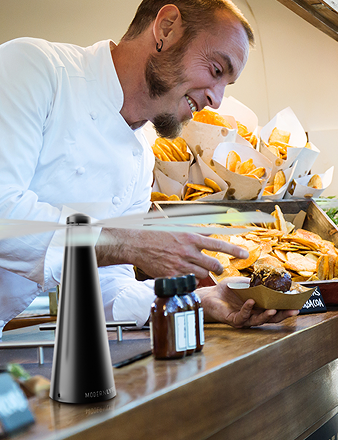
Flying insects are not just a nuisance, they're a contamination route you can control. Houseflies and blowflies can travel across outdoor service areas, land on exposed food, and move contamination from garbage, drains, or animal waste onto a plate. On a buffet line, food truck window, catering station, or outdoor bar, a single fly on a plated dish can break the separation principle in real time.
That's why fly control belongs in the food safety plan, not just the hospitality checklist. If raw and ready-to-eat food must stay separate, then a fly that moves from a trash area to the carving station is part of the same risk picture.
Layer the controls
Screen the service area where you can. Cover prep with lids and film. Remove standing water. Empty grease traps on schedule. Seal outdoor bins. Those steps reduce the chance that flies show up in the first place.
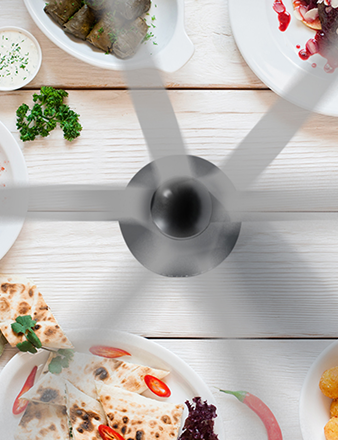
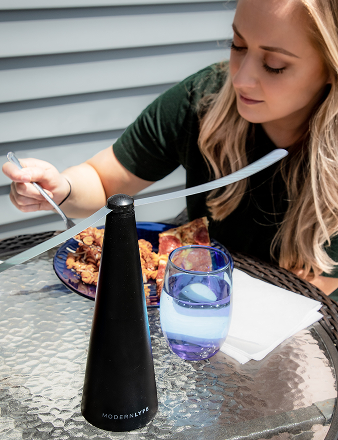
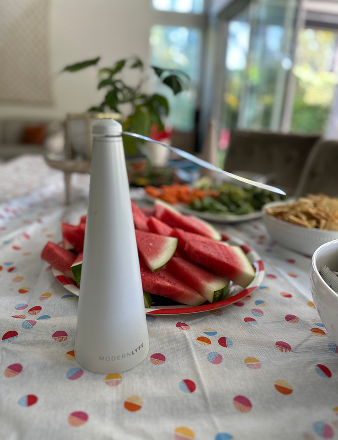
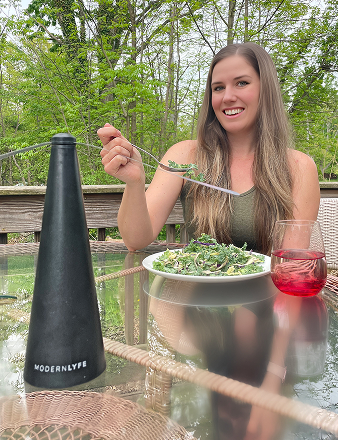
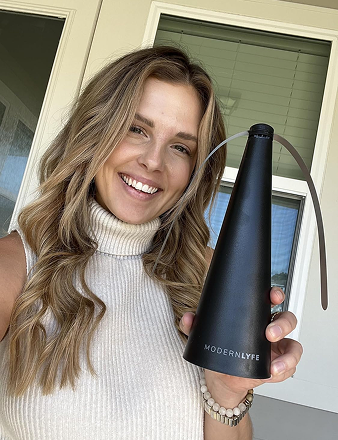
For plate-up and buffet points, battery-operated fly fans add a useful physical barrier by creating a gentle downdraft that discourages landing without chemicals or open flame. A Modern Lyfe fly fan fits that exact use case because it's cordless, quiet, and designed for tableside and outdoor service where plug-in units and zappers aren't practical. Put them at service entry points, carving stations, and buffet ends, then treat them as a visible control that supports your HACCP plan.

Modern restaurant fly control guidance
If flies can reach the plate, the control plan is incomplete.
That's especially true outdoors, where guests notice pests quickly and staff may assume “one fly” is harmless. It isn't harmless when the dish is ready-to-eat and the service line is open.
A Practical Readiness Checklist and Incident Response Guide
A good kitchen doesn't wait for a problem to test its controls. It uses a short checklist that the manager can run during prep, service, and after any suspected contamination event.
Prep phase
Before service starts, check the thermometer calibration log and confirm the probe is reading accurately. Verify sanitizer concentration at the sink and bucket level, make sure handwash stations are stocked, and confirm cold-hold items are below 40°F before they hit the line. If the shift includes an outdoor buffet, station a fly fan above the service zone and keep lids within reach.
Service phase
During service, watch the clock on time/temperature control for safety foods. If food has been in the danger zone too long, move it out of service and document why. Keep tasting utensils clean between uses, and don't let garnish pans, carving stations, or buffet items sit exposed longer than they should.
Incident response
If you suspect contamination, stop service and isolate the product immediately. Document the time, temperature, product name, and lot information, then retain a refrigerated sample for at least 72 hours so you have something to review if questions come up later. Notify the local health authority within the required window, photograph any pest activity for the pest-control log, and record every action taken.
Escalation rule: When in doubt, throw it out and write down why.
A printable checklist should include the shift date, station name, manager sign-off, and an owner or supervisor line. That makes the tool useful in a real operation, not just in a training folder. For a kitchen manager, the best checklist is the one the team can complete under pressure.
Bringing It All Together on the Line
Food safety becomes manageable when the team repeats four habits every shift. Keep temperature below 40°F or above 140°F in the places that matter. Keep separation between raw and ready-to-eat food at every station. Use verification through calibrated tools and logged checks, not memory. Treat pest control, especially flies, as a contamination control equal to handwashing.
That's the answer to what food safety is. It's not a poster on the wall and it's not an annual inspection day. It's a system of small actions that prevent sick customers, lost product, and stressful late-night incident calls.
Pick one weak spot on your line this week, then assign a name to it. Maybe that's cooling audits on every hot hold for seven days, or fly control at the outdoor station, or hourly temperature checks on the pass. A manager who owns one measurable habit is already ahead of a kitchen that only talks about standards.
MODERN LYFE designs battery-operated fly fans for tables, buffet lines, and outdoor service areas, which makes them a practical part of a food safety setup when flies are part of the risk. If you're tightening controls on the line or at an event, visit MODERN LYFE to see how their products fit into restaurant, catering, and outdoor service environments.