Let's be direct: there's no single "best" fruit fly trap. What works in your kitchen could be a disaster on a restaurant patio. The right solution isn’t a magic bullet—it's about matching the right tool to the job.
So, instead of searching for a one-size-fits-all answer, let's figure out what "best" means for your specific situation.
Defining the "Best" Trap for Your Space
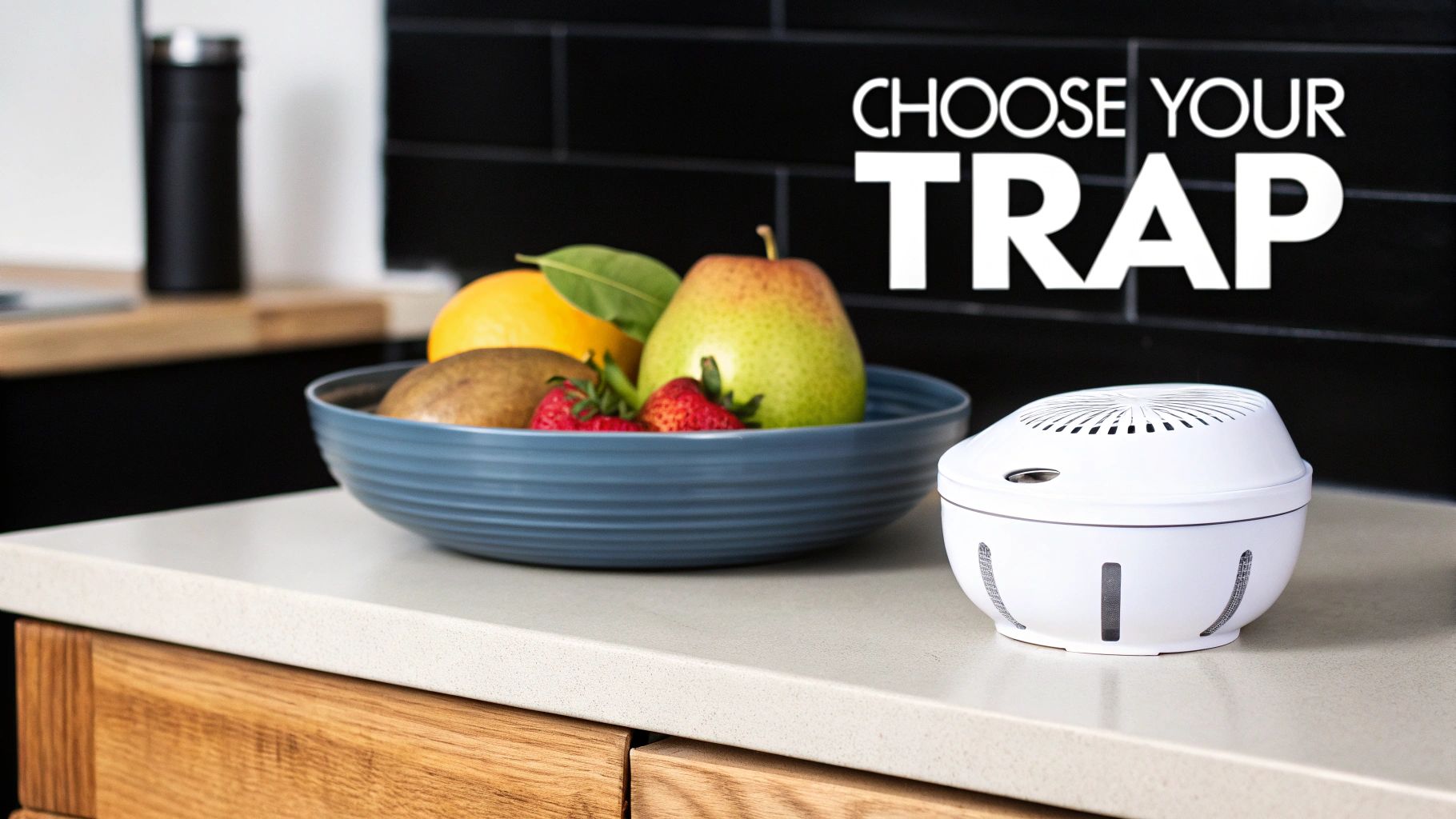
When you see those first few fruit flies, the impulse is to grab whatever's available. But the perfect solution for one setting can be completely wrong for another. A messy DIY trap with apple cider vinegar might be fine in a hidden corner of your house, but it has no place on a beautifully set table at a wedding reception.
The definition of "best" changes with the environment. It's less about raw killing power and more about a balance of factors that fit your needs.
Key Factors in Your Decision
Finding the right solution means weighing a few critical elements. In a hospitality setting, for example, the guest experience is just as important as pest control. A noisy, smelly, or ugly trap can ruin the ambiance you've worked hard to create.
Here's what you need to consider:
- Effectiveness: How well does it actually work? Will it solve your fly problem quickly and keep it from coming back?
- Safety: Is it safe to use around food, people, and pets? This is non-negotiable in kitchens and dining areas.
- Aesthetics: Does it blend with your decor, or does it stick out like a sore thumb?
- Noise and Odor: Will it create distracting sounds or unpleasant smells? Buzzing zappers and sour bait are instant mood killers.
- Maintenance: How much time and effort does it take to set up, clean, and maintain?
The demand for solutions that check all these boxes is soaring. The global fruit fly trap market was valued at $540 million in 2024 and is on track to break $1 billion by 2033, driven largely by the high standards of modern hospitality. You can dig into the numbers behind the fruit fly trap market growth on marketintelo.com.
This guide gives you a clear framework for making the right choice, helping you move from simply reacting to a pest problem to building a proactive strategy for a fly-free environment.
Exploring Your Fruit Fly Trap Options
So, what really is the best fruit fly trap? The answer is: it depends. There’s no single magic bullet, because each type of trap is built for a different job. Let's review the most common choices and see where they shine—and where they fall short.
DIY Baited Traps: The Kitchen Classic
You know this one: a small jar with apple cider vinegar, a drop of dish soap, and a paper cone on top. It’s a classic for a reason and can handle a handful of flies in your home kitchen. The sweet, fermenting smell of vinegar pulls them in.
But let's be real—this approach has serious drawbacks, especially for a business. They get messy, they don't smell great, and a jar of dead flies is the last thing you want on a restaurant table. It’s a quick fix, not a professional solution.
Commercial Sticky Traps
A step up from DIY, commercial sticky traps are another common sight. You've probably seen them as yellow stakes in potted plants or decorative strips on windows. The bright color attracts flies, and the glue does the rest.
They have their perks: they're silent and odorless. The downside? They only catch flies that happen to land on them, and a trap covered in tiny carcasses is just plain gross. This makes them a non-starter for any area where you're trying to impress guests.
A fruit fly trap's performance isn't just a body count. It's how well it blends into its surroundings without killing the vibe. The goal is to get rid of pests, not create a new eyesore.
UV Electric Zappers
When you need the big guns for a back-of-house area, UV electric zappers are a go-to. These units use ultraviolet light to lure flying pests, fruit flies included, and then fry them on a high-voltage grid. They're built for heavy traffic and are common in commercial kitchens or loading docks.
The downside is that tell-tale "ZAP!" It's loud, startling, and can send tiny insect particles into the air—a huge sanitation concern near food prep. Keep these far away from customers and active cooking stations. If you want to dig deeper, you can learn more about the different types of fly traps.
Fan-Based Deterrents: The Modern Alternative
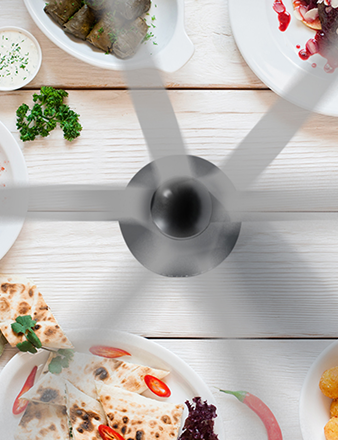
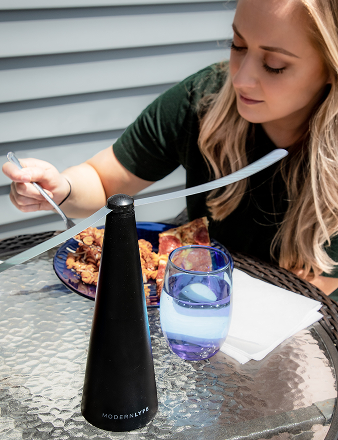
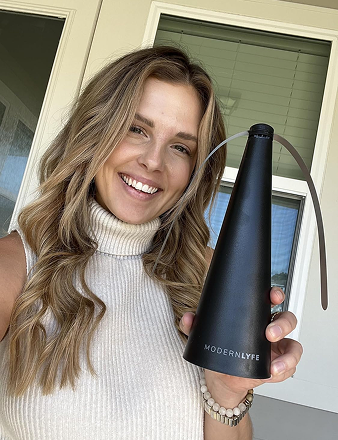
Then there's a completely different approach: stop flies before they land. Fan-based deterrents, like those from Modern Lyfe, don't trap anything. Instead, their soft, spinning blades create a gentle air current that makes it impossible for a tiny fly to navigate or land.
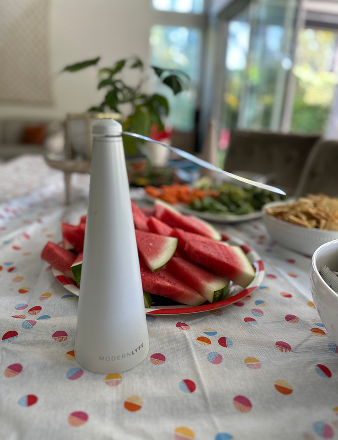
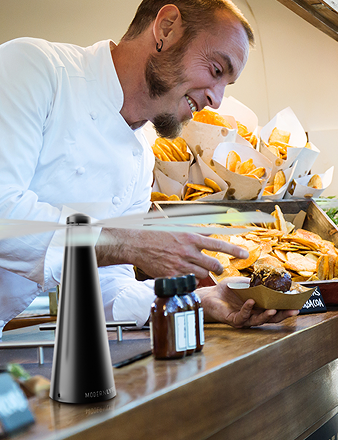
Imagine trying to land a tiny drone in a stiff wind—it’s not going to happen. This creates an invisible shield over a dining table or buffet line. They're silent, chemical-free, and designed to look good, making them a perfect fit for protecting the guest experience without anyone noticing.
How to Choose the Right Fruit Fly Solution
You know the options—from simple DIY jars to modern fly fans. But how do you pick the winner for your specific needs? The best fruit fly trap isn't a one-size-fits-all gadget; it's about matching the tool to the job.
The right call solves your fly problem without creating a new one. A loud zapper might be a powerhouse in a storage room, but it would kill the mood in a dining area.
The first question to ask is simple: where is the problem? This one question will point you in the right direction.
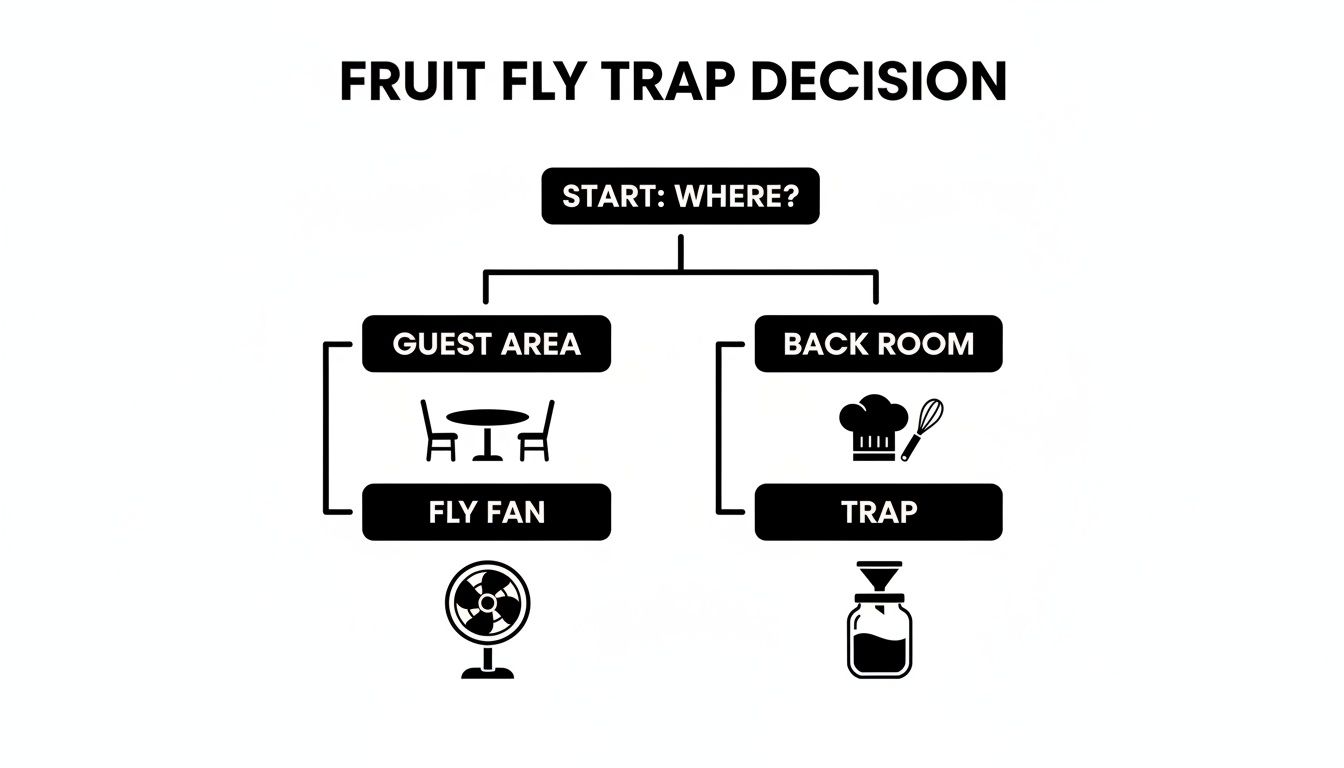
This flowchart nails the core strategy: use deterrents like fly fans where your guests are, and use traps where they aren't. That simple rule is the foundation of any effective pest management plan.
Finding Your Ideal Match
To zero in on the perfect solution, let’s get more specific. We can break down the decision using five key factors. Think of this as your personal scorecard for any potential trap or deterrent.
-
Efficacy: This is the big one—does it actually work? Some traps are decent for a few stragglers, while others are built for a full-blown invasion. A truly effective solution should deliver noticeable results within a day or two.
-
Safety: This is non-negotiable, especially near food. Does it use chemicals, poisons, or high-voltage parts? Any solution used in dining areas or kitchens must be 100% safe for people, pets, and food.
-
Noise Level: A constant buzzing, humming, or zapping is more than a minor annoyance. In a restaurant or at an event, it's a direct assault on the guest experience. The best options for public spaces are silent.
-
Maintenance: How much babysitting does it require? Consider the ongoing time and cost of refilling bait, swapping sticky pads, or cleaning the unit. Great solutions are often the "set it and forget it" kind.
-
Aesthetics: Let's be honest: does it look like a pest control device? In a nicely decorated home or a carefully designed restaurant, looks matter. Clunky, industrial traps can cheapen your decor and make a space feel less clean.
When you run each option through this checklist, you can move past generic advice and find a solution that genuinely fits your needs.
The real goal isn't just a pest-free space. It's getting there without sacrificing safety, ambiance, or style. The "best" fruit fly trap is the one that makes flies disappear while blending seamlessly into your environment.
Comparing Fruit Fly Solutions Across Key Factors
To make this even clearer, here's a direct comparison. This table breaks down how each type of solution stacks up against our five critical factors, giving you an at-a-glance guide for your decision.
| Factor | Baited Jars | Sticky Traps | UV Zappers | Fly Fans (Deterrent) |
|---|---|---|---|---|
| Efficacy | Fair (for small issues) | Good (for monitoring) | High (in enclosed areas) | High (in immediate area) |
| Safety | High (food-safe bait) | Moderate (non-toxic) | Low (high voltage, UV) | High (soft-stop blades) |
| Noise Level | Silent | Silent | Low-High (buzzing/zapping) | Silent (air movement) |
| Maintenance | High (regular rebaiting) | Moderate (replace when full) | Moderate (clean grid/tray) | Low (replace batteries) |
| Aesthetics | Low (can be unsightly) | Low-Moderate | Low (very industrial) | High (sleek & modern) |
As you can see, there's no single perfect score. A UV zapper might win on raw power, but it fails on aesthetics and noise. A fly fan, on the other hand, excels where guest experience is paramount.
For example, a busy restaurant kitchen might use a powerful UV zapper in a back corner where efficacy is the only thing that matters. But for the dining tables? Aesthetics and silence are everything. In that setting, a sleek, quiet deterrent like a fly fan is the clear choice, protecting the food without disrupting the five-star experience. It's all about matching the tool to the environment.
Strategic Placement for Maximum Effectiveness
Even the best fruit fly trap won't work if it’s in the wrong spot. You have to go where the flies are. Getting the placement right is the secret to seeing fast, dramatic results.
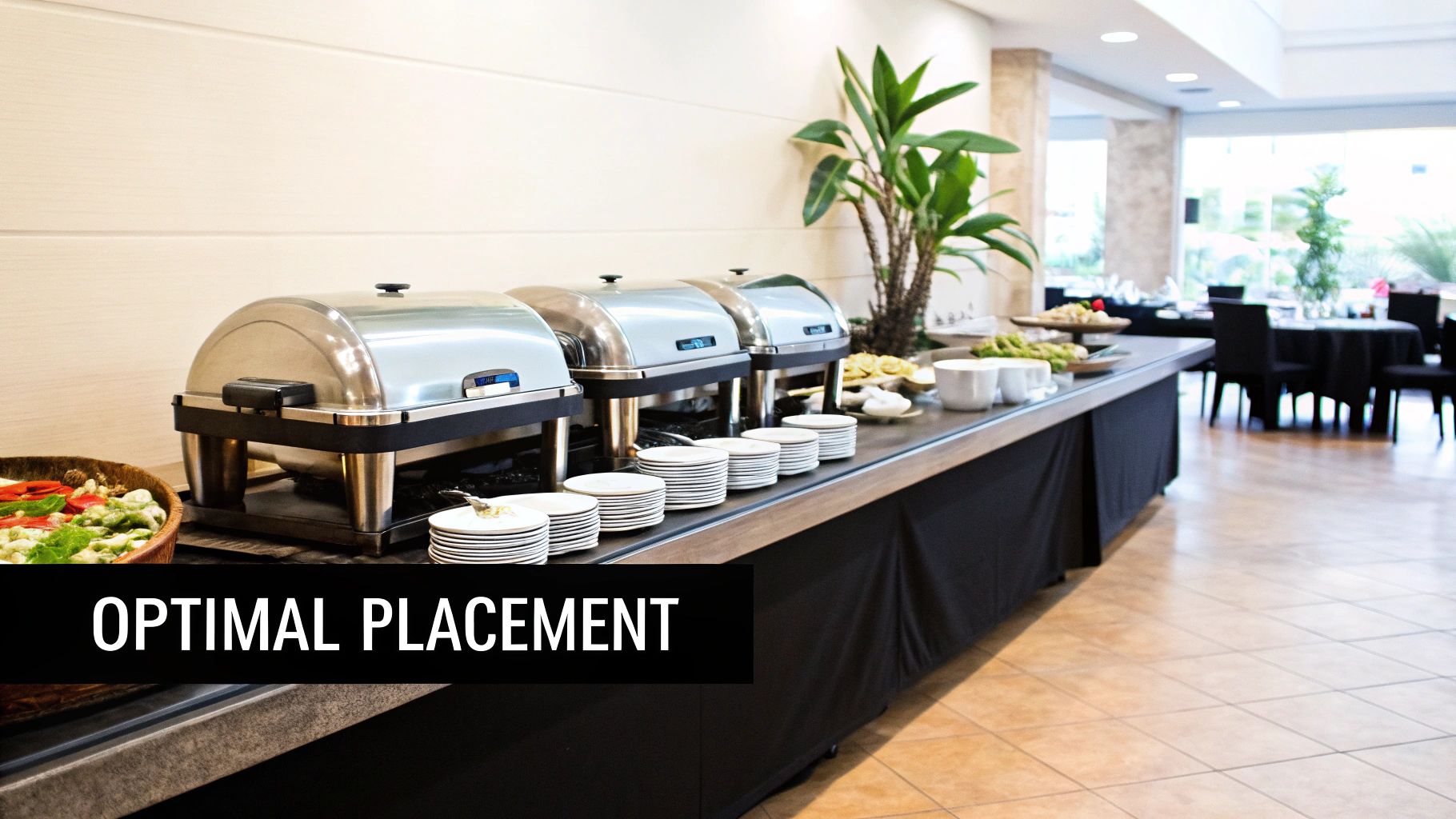
The core principle is simple: go to the source. Fruit flies don't just appear out of nowhere; they actively seek specific spots to eat and breed. Placing your trap right where they gather cuts them off before a few stragglers turn into a full-blown infestation.
This simple shift turns your trap from a passive device into an active part of your pest control strategy.
Positioning Traditional Traps
With solutions like baited jars or sticky traps, the goal is to lure flies in. That means getting these traps as close as possible to the root of the problem without making things worse. You're looking for anywhere that moisture and food bits tend to collect.
Ideal spots for these traps include:
- Near sink drains: Kitchen drains collect organic gunk, making them a five-star hotel for breeding fruit flies.
- Next to trash and compost bins: These are an all-you-can-eat buffet and an obvious magnet for pests.
- Close to fruit bowls or liquor bottles: Any sweet, fermenting substance will draw them in.
But here’s the most important rule: never place an attractant-based trap directly on a dining table or food prep counter. All you’ll do is invite more flies to the exact area you're trying to keep clean. The trap should be nearby, but not on the main stage. For a deeper look at this, check out our guide on how to make a fly trap with bait.
Smart Placement for UV Zappers
UV zappers are a heavy-duty, back-of-house tool. Their industrial look and that unmistakable zap aren't exactly dinner-party-friendly. Placement here is about intercepting flies as they try to enter a space.
Set them up near back doors, loading docks, or in storage rooms—well away from the public eye. Most importantly, keep them far from active food prep areas to prevent zapped insect parts from contaminating surfaces.
Creating a Protective Shield with Fly Fans
Fly fans, like those from Modern Lyfe, work on a completely different principle: they don't attract, they repel. This means their best placement is the exact opposite of a traditional trap.
Your goal with a fly fan is not to catch flies, but to create an invisible, fly-free zone directly over the food you want to protect. They are designed for front-and-center placement.
You should place them directly on:
- Dining tables
- Buffet lines
- Catering displays
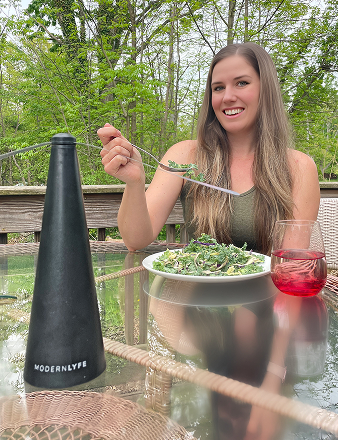
- Outdoor picnic tables
The fan's soft blades create gentle air currents, forming a turbulent barrier that tiny insects like fruit flies can't fly through. It’s a proactive shield that stops them from ever landing, keeping food sanitary and guests happy. Understanding how each device works is the key to mastering its placement and making it dramatically more effective.
Beyond Traps: Prevention is the Best Strategy
Let's be honest: even the most effective fruit fly trap is playing catch-up. It's a great tool for dealing with the pests you see, but it's a reactive solution—a bandage on an existing problem. Traps are great for knocking down a current infestation, but they don't get to the heart of why the flies showed up in the first place.
For real, long-lasting control, you have to shift from defense to offense. That means taking away everything that attracts flies: their food, their water, and their breeding spots. It's about creating an environment where they simply can't survive.
This is the core idea behind Integrated Pest Management (IPM). It’s a common-sense approach that combines preventative tactics like sanitation with targeted solutions like traps. Instead of relying on one magic bullet, you build a smarter, more comprehensive defense.
Prevention Starts with Simple Habits
The good news is, you don't need a hazmat suit to get started. A few tweaks to your daily routine can make a world of difference by cutting off the resources fruit flies need to multiply.
Here's a quick checklist for a fly-free zone:
- Wipe Up Spills Instantly: A sticky drop of juice, wine, or soda is a welcome sign for a fruit fly. Clean it up immediately.
- Store Produce Wisely: Don't leave ripe fruit on the counter. Put it in the fridge and toss anything that's overripe.
- Control Your Trash: Use trash cans with tight lids and empty them often, especially if they have food scraps. Rinse recycling bins to wash away sugary residue.
- Don't Forget the Drains: Your sink drain is a dark, damp paradise for fruit flies. Clean drains regularly with a dedicated cleaner or a classic baking soda and vinegar mix.
These habits are non-negotiable, particularly in a restaurant or bar. The cost of ignoring these tiny pests is huge. The USDA has warned that just one species, the Mediterranean fruit fly, could trigger $1.5 billion in agricultural losses if it took hold in the U.S. In some regions, fruit flies already wipe out up to 80% of certain crops. You can dig into the data by reading the full fruit fly economic impact research on agresearchmag.ars.usda.gov.
When you pair proactive sanitation with smart placement of traps and deterrents like fly fans, you're not just swatting flies. You're building a multi-layered defense that solves today's problem and prevents tomorrow's.
Modern Lyfe Fly Fans: The Elegant Deterrent
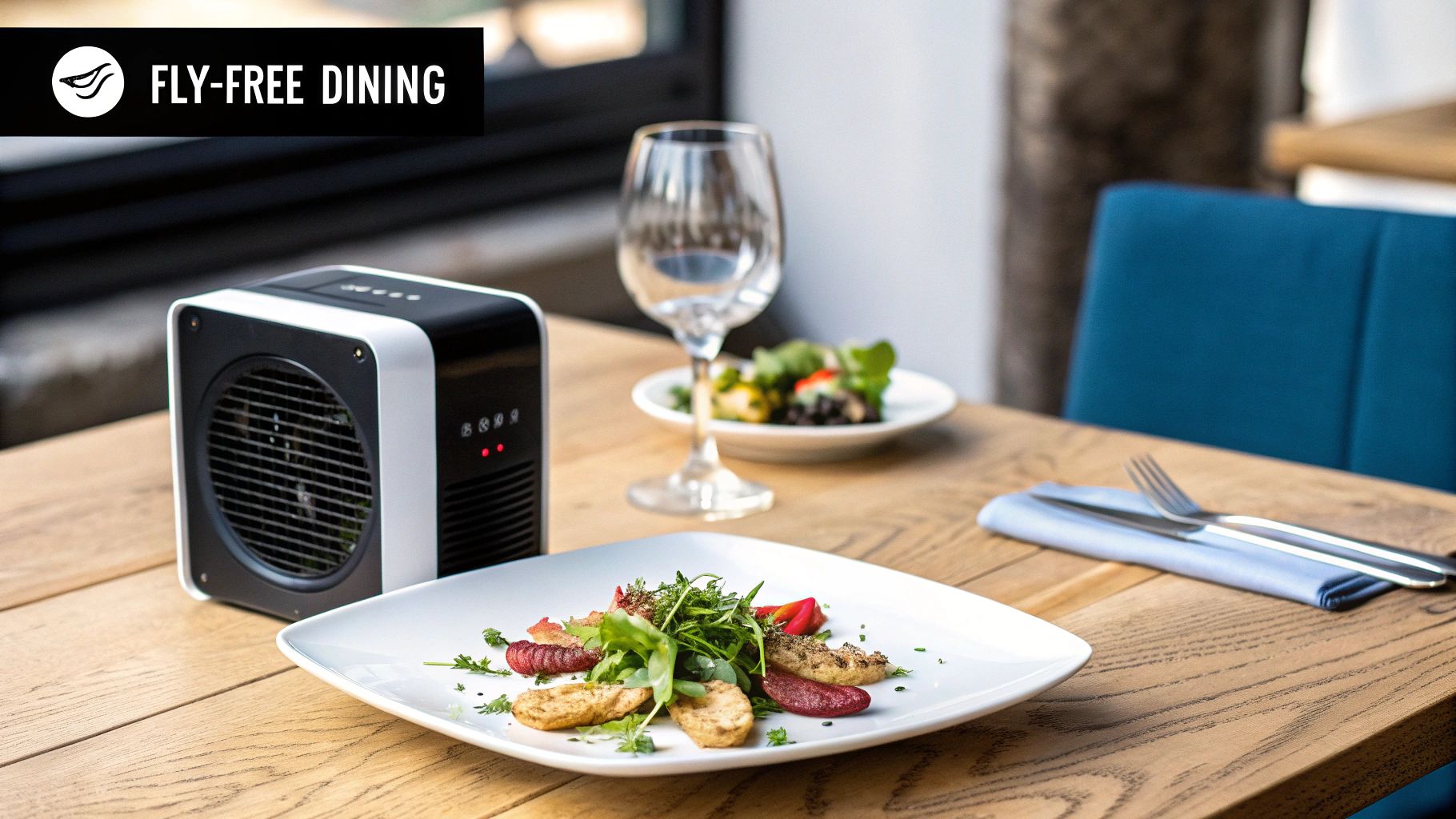
When the atmosphere is as important as the food—at a restaurant patio, an outdoor wedding, or a catered event—traditional fly traps just don't cut it. The sight of a sticky strip covered in bugs or the smell of vinegar bait can instantly ruin the ambiance. In these situations, the goal isn't just to trap pests; it's to prevent them from ever becoming a problem.
This is where Modern Lyfe fly fans shine. They don't lure flies to a sticky end. Instead, they operate on a more elegant principle: deterrence. They don’t need to trap anything because flies can't get close enough to be a nuisance.
The fan's soft, holographic blades spin to create gentle but constant air currents. For a tiny fruit fly, flying through this moving air is like a person trying to walk through a wind tunnel—it's disorienting and nearly impossible. This creates an invisible barrier that stops them from ever reaching the food or bothering your guests.
Redefining Pest Control for Hospitality
This approach is less a pest control gadget and more an upgrade to the dining experience. It's a sophisticated solution that protects both hygiene and atmosphere without compromise. The focus shifts from managing a nuisance to proactively preserving the guest experience.
Here’s what makes them a better fit for these environments:
- Sleek, Minimalist Design: They are built to blend in with modern decor, adding style instead of creating an eyesore.
- Silent, Battery-Powered Operation: With no buzzing sounds or messy cords, they are portable and discreet.
- Chemical and Odor-Free: They keep the air and food pure, perfect for any gathering centered around a good meal.
By preventing flies from ever landing, you protect the food, preserve the atmosphere, and ensure guests remain completely undisturbed. It’s a proactive measure that blends seamlessly into the background.
Ultimately, this modern deterrent offers a smarter way to handle flying pests in any guest-facing area. You can explore more about how a fly fan works and see why it’s becoming a staple in the hospitality industry. Adding this tool to your setup ensures food stays hygienic and the focus remains on the quality of the experience, not on swatting away unwanted visitors.
Common Questions About Fruit Fly Control
Even with a solid plan, you'll have questions. Getting rid of fruit flies for good often requires a bit of detective work, so let's tackle some common hurdles.
Why Did Fruit Flies Suddenly Appear Out of Nowhere?
If you're suddenly swarmed, a new breeding ground has probably popped up nearby. Fruit flies are incredibly prolific—a single female can lay up to 500 eggs—so a tiny issue can feel like a full-blown invasion in just a day or two.
Before you panic, check the obvious spots. A piece of overripe fruit, a sticky juice spill under the fridge, or gunk in the sink drain can be the culprit. Find the source and eliminate it; that’s always your first move.
Can I Use a Fly Fan and a Trap at the Same Time?
Absolutely. In fact, it's one of the smartest ways to tackle the problem. Think of it as a one-two punch that lets you play both offense and defense.
- Fly Fans for Your Guests: Place deterrents like Modern Lyfe fly fans where people are eating—on dining tables, buffet lines, and patios. Their job is to create a no-fly zone to protect food and keep the atmosphere pleasant.
- Traps for the Back: Set up traditional baited or sticky traps in the kitchen, near garbage cans, or by the bar sink. These will catch flies at the source before they reach your customers.
Are Bug Zappers Safe to Use in a Restaurant Kitchen?
This is a big one: while bug zappers kill flies, they are not a good choice for food prep areas. That "zapping" sound is a small explosion that can send tiny insect particles into the air. That's a serious contamination risk you can't afford to take around food.
In any space where food is prepped or served, food safety is your number one priority. Stick with solutions that don't compromise sanitation, like non-toxic sticky traps or air-based deterrents like fly fans.
If you must use a zapper, make sure it's far away from the kitchen. Place it in a hallway, near a loading dock, or in a storage area to catch pests before they get anywhere near your food.
Ready to create a fly-free zone without chemicals or eyesores? The Modern Lyfe fly fan is the elegant solution designed for modern homes and upscale hospitality. Protect your food and elevate your guests' experience by exploring the collection at https://modernlyfe.com.