"100 boric acid" isn't a brand name. It's a quality guarantee. Like "100% pure" on a food label, it means you're getting a product with no fillers, ensuring maximum potency and consistent results. For professionals, especially in foodservice, this purity is non-negotiable.

Why Purity Equals Performance
So, what exactly is "100 boric acid"? It’s a grade of boric acid that is typically 99% to 100% pure. It's free from additives, dyes, or bulking agents that dilute its effectiveness. For professionals who need reliable results, this purity separates a real solution from a waste of time and money.
Think of it like baking. If a recipe needs pure cane sugar but you use a cheap blend, the cake will be a flop. The texture and taste will be wrong. It’s the same with boric acid for pest control. Any impurity weakens it, forcing you to use more product for less predictable outcomes. That 99-100% purity is your guarantee that you're getting the full strength of the active ingredient.
To understand what you're buying, you need to know the different grades. Not all boric acid is the same, and the right purity level depends on the job.
Boric Acid Purity Levels Explained
| Purity Grade | Common Name | Primary Uses | Key Characteristic |
|---|---|---|---|
| 99.5% - 100% | Technical Grade / Pest Control Grade | Pest control baits, high-purity cleaning, lab use. | Highest potency, no fillers, ensures predictable results. |
| 99.0% - 99.5% | Industrial Grade | Glass, ceramics, fiberglass manufacturing, flame retardants. | High purity, but may have minor impurities unsuitable for sensitive tasks. |
| <99.0% | Agricultural Grade | Fertilizers and soil micronutrients. | Contains other minerals, formulated specifically for agricultural use. |
For guaranteed performance in a sensitive environment like a commercial kitchen, choosing "100 boric acid" or Technical Grade is essential.
Forms and Packaging to Look For
Pure boric acid comes in a few forms. Knowing the difference helps you pick the right one for your needs.
- Fine Powder: This is the most common form, looking and feeling like flour. Its fine particles stick easily to the legs and antennae of insects like roaches and ants, making it ideal for pest control.
- Granules: Slightly larger and heavier, granules are best for outdoor perimeter treatments or drafty areas, as they won't blow away as easily as powder.
- Crystals: Less common for pest control, these small, clear or white crystals are typically used in industrial and lab settings.
The packaging also offers clues. A huge bag labeled "Industrial Grade" is for large-scale manufacturing. Smaller, sealed containers are usually for household use or professionals mixing specific bait formulas.
The Purity Promise: The biggest advantage of 100 boric acid is consistency. With no fillers, its properties are exactly as they should be. It will perform reliably, whether you're using it as an insecticide, a cleaning agent, or an industrial compound.
Demand for boric acid is growing due to its versatility. The global market, valued at USD 897.7 million in 2025, is projected to hit USD 1,518.9 million by 2035. Industrial-grade boric acid holds over 87.2% of the market share because it's cost-effective for large-scale jobs where absolute purity isn't the top priority.
Beyond pests, its powerful fungicidal properties make it a key ingredient in many natural mould killer solutions. This highlights its usefulness in keeping any space hygienic.
Key Uses in Hospitality and Foodservice
In a restaurant or hotel, cleanliness is your reputation. 100 boric acid is a quiet workhorse in maintaining that standard. Its most famous role is in pest management, where it excels as a tool against pests that can drive customers away.
It's not a bug spray you blast at a roach. It’s a silent, deadly trap. When insects like roaches, ants, or silverfish crawl through the powder, it sticks to their legs and antennae. Later, when they groom themselves, they ingest it, and it slowly shuts down their metabolism. It’s a patient, methodical process.
A Powerful, Persistent Pest Control Agent
The best thing about 100 boric acid is its staying power. Unlike chemical sprays that break down in days or weeks, boric acid powder remains effective as long as it stays dry. This makes it perfect for treating out-of-the-way spots where pests hide.
For a commercial kitchen, this means applying a light dusting in specific, non-food areas:
- Cracks and Crevices: Along baseboards, in tight corners, and any small gaps in walls or floors. These are pest highways.
- Under and Behind Appliances: The warm, dark spaces behind refrigerators, ovens, and ice machines are cockroach hotspots. A light dusting creates a no-go zone.
- Inside Wall Voids: Puffing a small amount of dust into wall cavities through outlets or plumbing gaps (with the power off) cuts off their hidden travel routes.
Expert Tip: Less is more. Don't create piles of powder. A fine, nearly invisible layer is what you want. Pests will walk right through it, ensuring they get a lethal dose when they groom themselves later.
This targeted method is a cornerstone of an Integrated Pest Management (IPM) plan. It's about being proactive and precise, not just reacting with broad sprays. You put the treatment exactly where it’s needed and keep it completely separate from food prep surfaces.
More Than Just Pest Control: A Hygiene Powerhouse
Boric acid's talents extend beyond insects. It's also an effective cleaning and deodorizing agent, tackling other critical hygiene challenges in hospitality. Its natural antifungal and mild antiseptic properties give it useful secondary applications.
Drain Maintenance and Deodorizing Kitchen drains get gross. They fill with grease and organic matter, becoming a breeding ground for bacteria, bad smells, and drain flies. A regular treatment can keep this in check. Flush the drain with hot water, then add a small amount of boric acid to help stop fungal growth and neutralize odors at the source.
Mold and Mildew Prevention Damp, humid spaces like laundry rooms or storage closets are magnets for mold. Clean these surfaces, then wipe them with a solution of boric acid and water to create an invisible barrier that helps prevent fungus from returning. It’s a simple, proactive step for better air quality.
Its reliability is why the global boric acid market is projected to reach about 979 thousand tonnes by 2026. For managers who prioritize pristine environments, its sanitation uses are just as valuable as its pest control power.
If you’re interested in other mineral-based solutions, our guide on 100% food-grade diatomaceous earth offers a great comparison. Understanding all available tools helps you build a smarter sanitation program.
Safe Handling Protocols for Professional Use
Using 100 boric acid effectively is one thing; handling it safely is non-negotiable, especially in a professional kitchen. Responsible use protects your staff, customers, and business reputation. These clear protocols get the job done right, without the risk.
First, personal safety. Before anyone opens the container, they must wear the right Personal Protective Equipment (PPE). It’s a mandatory step.
Essential Personal Protective Equipment
Start with the right gear. This isn't being overcautious; it's being professional. The fine powder of 100 boric acid can become airborne, and you don't want it on your skin, in your eyes, or in your lungs.
- Chemical-Resistant Gloves: Nitrile gloves are your first line of defense. They prevent skin contact and irritation.
- Safety Glasses or Goggles: A must. A tiny puff of air can send dust into your eyes. Goggles are best as they create a seal.
- Dust Mask or Respirator: An N95-rated mask is essential to avoid inhaling the powder, which is a primary cause of irritation.
Once you’re geared up, you need to know exactly where the product should—and shouldn't—go.
Boric acid works when you put it where pests live, not where people are. The strategy is to treat their hidden travel routes, not your open surfaces. Applying it incorrectly is a waste of time and a serious safety risk.
The "Cracks, Crevices, and Voids" Rule
In a foodservice environment, the golden rule is simple: keep it completely separate from food. Never apply boric acid on countertops, cutting boards, or inside cabinets with dishes or food.
Instead, focus on the out-of-sight spots where pests hide and travel. This targeted approach is what makes it both safe and effective. Stick to these areas only:
- Cracks along baseboards and deep in corners.
- Voids underneath and behind heavy equipment like fridges and ovens.
- Gaps around plumbing lines and inside electrical outlet plates.
This approach fits perfectly into a complete hygiene strategy, tackling pests, cleaning, and drain maintenance all at once.

A single product can be a powerful tool for multiple hygiene challenges, from eliminating pest harborage to keeping drains clear.
Precise Application for Maximum Effect
Here's a pro tip: more is not better. Pests will simply walk around a big pile of white powder. You want a fine, almost invisible dusting that insects will crawl through without noticing.
A Simple Application Guide:
- Dusting: Use a bulb or puffer duster to apply a micro-thin layer of powder into cracks and crevices. It should look like a faint haze, not a thick line.
- Baits: When mixing baits, keep the concentration low. A classic recipe is one part boric acid to six parts powdered sugar, with a little water to form a dough. Place pea-sized baits in sealed bait stations and tuck them away.
- Ensure Ventilation: When applying dust, ensure the area is well-ventilated to minimize airborne particles. Turn off any fans that could blow the powder where it doesn't belong.
Finally, have a clear plan for accidental exposure. If boric acid gets on skin, wash it off with soap and water. If it gets in eyes, flush with clean water for 15 minutes. If ingested, seek medical attention immediately. Simple, fast responses keep your team safe.
Staying on the Right Side of the Law
When you use 100 boric acid in a commercial kitchen, you're handling a regulated substance. Though it's a naturally occurring compound, the Environmental Protection Agency (EPA) classifies it as a pesticide.
That "pesticide" label isn't alarming; it's a framework to ensure safety. The EPA requires that any product sold for pest control, including boric acid, has a registration number and a detailed label. That label isn't a suggestion—it's the law.
The EPA Label: Your Legal Guide
Here’s the single most important rule: always follow the label directions. Think of the label as your legal guide, telling you exactly how to use the product safely and correctly.
It will specify critical information, including:
- Approved Use Sites: The label states where you can apply the product, such as "for use in commercial food-handling establishments in non-food areas only."
- Target Pests: It lists the insects the product is proven to work against.
- Application Rates: It provides precise instructions on how much to use, which is crucial for safety and effectiveness.
Using a product against its labeling is a violation of federal law. This is a big deal in any business, but it's especially critical in foodservice, where a misstep can have serious health consequences.
Bottom Line: If a boric acid product doesn't have an EPA registration number and a clear label for commercial use, it's not legal for your business. Using it opens you to major liability.
Commercial vs. Residential Grade
Not all boric acid products are for the same environment. A powder from the hardware store is likely not approved for a professional kitchen. Using a residential-grade product in a restaurant is a red flag for health inspectors.
Always look for products labeled for commercial or professional use. These versions are tested and registered for demanding environments like restaurants, hotels, and hospitals. It's the only way to ensure your tool is both effective and compliant.
The strict regulations reflect boric acid's global importance. With the market projected to hit USD 1.23 billion by 2026, its role in hygiene is governed by rules businesses must follow.
Following these regulations is a key part of any solid food safety plan. These principles fit right into established systems like HACCP. You can build a stronger safety framework by understanding what is HACCP food safety and how it protects your business. Compliance isn't just about avoiding fines; it’s about proving your commitment to the well-being of staff and guests.
Proper Storage and Disposal Procedures

After you've applied your 100 boric acid treatment, the job isn't done. How you store leftover product and dispose of empty containers is just as critical as the application itself.
Think of it like a chef cleaning their knives. Proper storage and disposal are the final, non-negotiable steps to using this tool responsibly.
Ideal Storage Conditions
The goal for storing 100 boric acid is simple: keep it effective and keep it separate. In a foodservice environment, the line between a helpful tool and a dangerous contaminant can never be blurred.
A safe storage spot looks like this:
- Cool, Dry, and Ventilated: Boric acid absorbs moisture, which makes it clump and lose effectiveness. A damp storage room is its worst enemy.
- Sealed and Labeled: Keep it in the original, tightly sealed container. If you must use a secondary container, label it clearly and boldly. No one should ever have to guess what's inside.
- Locked and Secured: Store it in a locked cabinet accessible only to trained staff. It must be completely out of reach of children, pets, or anyone unfamiliar with it.
The cardinal rule is total separation from all food. Never store it in the pantry, near prep stations, or anywhere close to ingredients, dishes, or packaging. Dedicate a specific, marked cabinet for chemicals only.
Compliant Disposal Procedures
You can't just toss leftover boric acid in the bin or wash it down the sink. That’s a shortcut to environmental problems and can violate local regulations.
Follow these straightforward, safety-focused steps.
How to Handle Boric Acid Waste
- Unused Product: Never dump large amounts of unused boric acid down the drain. Treat it as chemical waste. Check your local rules, as some areas may permit flushing tiny residual amounts.
- Empty Containers: Never reuse an empty boric acid container, especially for food or water. If local guidelines permit, triple-rinse the container before disposing of it according to the label's directions or local waste management rules.
- Check with Local Authorities: The surest method is to call your local waste management office or a hazardous waste disposal service. They will provide the exact, legal, and safe instructions for your area.
Proper storage and disposal complete the job. It's what separates a professional pest control strategy from a careless and risky one.
Integrating Boric Acid into a Modern Pest Strategy
No single product is a silver bullet for pest control. To protect a professional kitchen, you have to think bigger. This is where 100 boric acid shines—not as a magic solution, but as a key player in a well-rounded Integrated Pest Management (IPM) plan.
First, let's clear up a common misconception: boric acid is not a "quick kill" spray. Unlike contact pesticides that give instant but temporary results, boric acid works on a slower timeline. An insect must ingest the powder. It then disrupts the pest's metabolism, leading to death in about 3 to 10 days. This slow, methodical action is its greatest strength.
Because it doesn't kill on contact, an infected roach or ant has time to carry the powder back to its nest. There, it unknowingly passes the boric acid to the rest of the colony, eliminating the problem at its source. It's a long-term control measure, not an emergency fix.
Prevention First
The best pest management is stopping pests before they get inside. In any good IPM program, keeping pests out is more effective than kicking them out. Before using any product, make your kitchen an unwelcoming place for them.
This starts with the basics:
- Rigorous Sanitation: Pests need food, water, and shelter. Daily deep cleans, immediate spill cleanup, and proper trash management remove their main attractions.
- Structural Maintenance: Think like a bug. Seal cracks in walls, fix leaky pipes, and ensure doors and windows have tight seals. Close off their entry points and hiding spots.
- Smart Storage: Keep all food in sealed, pest-proof containers. Don't offer them a free meal.
An effective IPM plan is a layered security system. Sanitation and structural repairs are the outer walls. Only then do you strategically place your guards—like boric acid—inside.
Combining Chemical and Non-Chemical Tools
With a preventative fortress in place, you can bring in targeted treatments. This is where boric acid is invaluable. Apply it with precision in out-of-sight, non-food areas like inside wall voids, behind refrigerators, and under equipment. It’s a surgical strike that hits pests hard while minimizing exposure.
But a modern strategy combines these smart chemical applications with non-chemical solutions. To get the full picture, our guide on what is Integrated Pest Management breaks down these principles in more detail.
A complete pest strategy for a food business must fight on multiple fronts. Along with treatments, you need physical barriers. For example, understanding the importance of fly screens for commercial kitchens is non-negotiable for food safety and health inspections. They are a cornerstone of prevention.
Elevating the Guest Experience
The final piece of the puzzle is your guest-facing areas—the dining room, patio, and bar. A single fly can ruin a customer's meal, but spraying chemicals where people eat is not an option.
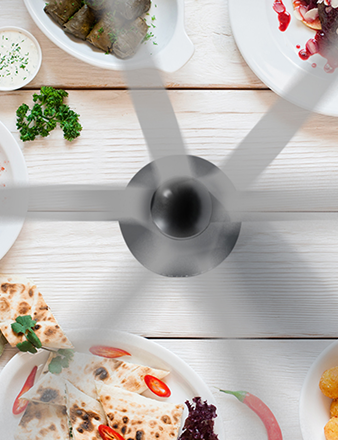
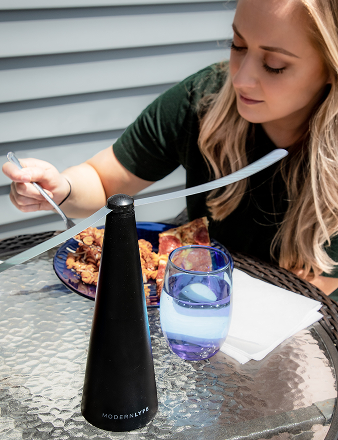
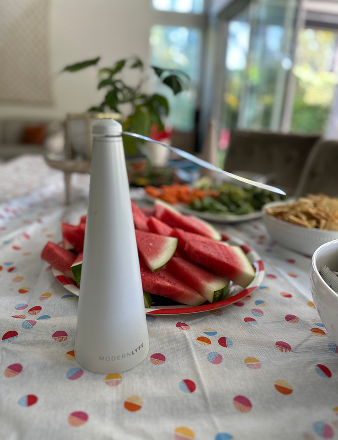
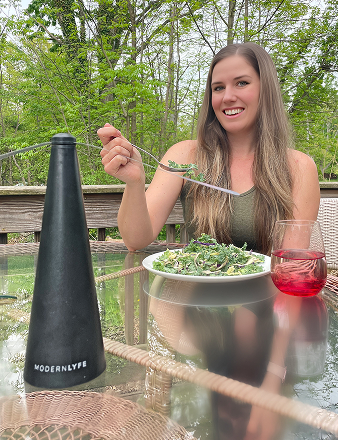
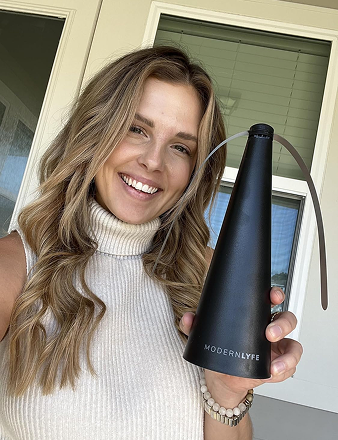
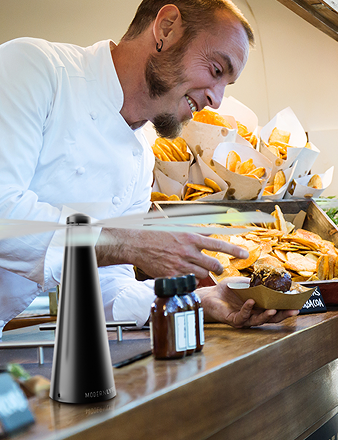
Modern, non-chemical solutions like sleek, quiet fly fans are perfect for this. They create a gentle, invisible curtain of air that flying insects can't penetrate. This establishes a protective, chemical-free zone around dining tables and buffets, protecting both the food and the guest experience without noise or smells.
By weaving together sanitation, targeted 100 boric acid use in hidden spots, and elegant tools like fly fans out front, you create a comprehensive system. This multi-layered approach works better and shows a commitment to safety, hygiene, and guest comfort that sets a modern hospitality brand apart.
Frequently Asked Questions
Even with clear guidance, questions come up. Let's tackle the most common ones about 100 boric acid to ensure you're using it safely and effectively.
How Long Does 100 Boric Acid Take to Work?
Boric acid is not a quick fix. It's a slow-burn strategy. Patience is key.
It works from the inside out. Pests walk through the fine powder, which clings to their bodies. They later ingest it while grooming, which disrupts their digestive and metabolic systems. An individual insect might take 24 to 72 hours to die.
The real power of boric acid is its persistence. This isn't about a quick kill; it's about lasting control. As long as the dust remains dry and undisturbed, it can remain an effective barrier for months or even years.
Is It Safe to Use Boric Acid Near Food Prep Areas?
A hard no. NEVER use boric acid on any surface where food is prepared, served, or stored. This includes countertops, cutting boards, and inside cabinets holding dishes or pantry items. This is a non-negotiable food safety rule.
The correct way to use it is to target hidden pathways pests use. Think of out-of-sight places completely separate from food:
- In cracks and crevices where walls meet floors.
- Under and behind bulky appliances like refrigerators and ovens.
- Carefully puffed inside wall voids through small openings (always turn off the power before applying near electrical outlets).
Your product label is your best guide. Follow its directions exactly to keep your kitchen safe and compliant.
What's the Difference Between Boric Acid and Borax?
It’s easy to confuse these two. Both come from the element boron and are sold in similar packaging, but they are not the same. They're chemical cousins with different strengths.
Borax (sodium tetraborate) is a raw mineral salt mined from the ground. To make boric acid, borax is reacted with an acid. This refining process makes it more potent for pest control.
So, which should you use? For pests, boric acid is almost always the better choice. Its particles are finer and stick to an insect’s body more easily, making it more likely the pest will ingest a lethal dose. While both should be handled with care, boric acid is the specialist for this job.
Ready to complete your pest management strategy with a modern, guest-friendly solution? MODERN LYFE offers elegant and effective fly fans that create a chemical-free zone in your dining areas. Protect your guests and your presentation by exploring our products.