You're halfway through an outdoor wedding reception when the buffet table starts feeling hotter than the dining area. Guests crowd around the food, a candle flame bends toward the plates, and the compact fan that looked adequate during setup shuts down before dinner service is finished. That's the difference between buying a fan for its brochure and buying one for the actual job.
A battery operated fan outdoor setup has to survive heat, changing wind, limited charging access, guest conversations, staff movement, and the full service window. A four-hour reception and an eight-hour food-truck shift need different specifications, even if both take place outside. This guide focuses on the numbers that matter, the placement decisions that prevent disruption, and the supplier questions that protect your investment.
Why the Right Battery Operated Fan Outdoor Choice Matters
A small fan can create a large service problem when its runtime, airflow, or mounting doesn't match the venue. On a wedding buffet, a dead battery leaves food and guests without useful circulation at the moment attention is highest. On a patio, a fan with a narrow, aggressive stream may blow napkins, disturb candle flames, or make conversation uncomfortable.
Outdoor conditions also change constantly. Direct sunlight raises the thermal load on the table and the fan itself. Wind can redirect a carefully aimed stream, while a covered patio may hold warm air without producing a useful breeze. A model that feels powerful in an indoor showroom may circulate weakly across a long buffet or become too loud once you raise the speed.
Battery capacity determines whether staff can finish a service without interrupting the setup. Independent buying guidance commonly places compact 2,000 mAh fans at about 3 to 4 hours on low and 45 to 60 minutes on high, while 10,000 mAh models may reach roughly 12 to 15 hours on low and 3 to 4 hours on high (runtime guidance for portable fans). Those figures are useful comparisons, but they aren't promises for a sunlit event.

Start with the service window
Write down the hours the fan must operate, including setup and likely delays. Then account for guest comfort, food presentation, staff workflow, charging access, and what happens if one unit fails. A fan should provide steady, comfortable circulation, not just the highest possible airflow.
Features such as an adjustable tilt, stable base, weather-conscious construction, and table-safe mounting matter as much as the battery. For broader outdoor comfort planning, this practical guide to best ways to stay cool outside can help you assess shade, air movement, and patio layout alongside the fan itself.
Understanding Battery Operated Fans and How They Work
Battery capacity, motor efficiency, and blade design determine how long a portable fan runs outdoors. The battery stores energy, the motor turns that energy into rotation, and the blades convert rotation into airflow. Higher speed or a narrower, more concentrated pattern generally uses more power.
Capacity appears in milliamp-hours, or mAh, and sometimes watt-hours. It shows how much energy the pack can hold, not the fan's guaranteed operating time. Motor efficiency, blade size, grille resistance, control electronics, and speed selection all affect the result. For a four-hour wedding reception, compare those factors against the full service window, including setup and delays. An eight-hour food-truck shift may require lower-speed operation, a spare pack, or charging access between rushes.
Runtime is a service figure, not a permanent product feature. A fan running gently beside a seated brunch may last through service, while the same unit at maximum speed may need charging during the busiest period. Outdoor heat can reduce performance further. One test summary reported a 41% runtime reduction in outdoor shade at 32°C and 60% relative humidity compared with a laboratory baseline (outdoor runtime testing summary).

Build a useful vocabulary
Airflow is commonly expressed in cubic feet per minute, or CFM. Portable handheld and mini outdoor fans are often listed around 10 to 40 CFM, while neck fans may fall around 15 to 60 CFM (portable fan airflow guide). Higher CFM moves more air, but a concentrated stream can feel harsher than broad, moderate circulation across a buffet line.
Noise is measured in decibels, but the figure does not describe every sound guests notice. Motor tone, blade turbulence, speed, and background noise affect how disruptive a fan feels. Independent coverage places many models around 23 to 40 decibels at low speed, with stronger settings often reaching 50 to 60 decibels (portable fan selection guide).
Ask suppliers for airflow, noise, and runtime measured at the same speed. Check for a battery indicator, removable pack, USB charging, replaceable components, and controls staff can operate without leaving the service area. For context on how battery design continues to develop, review these battery technology advances.
Matching Runtime, Airflow, and Noise to Your Service
Start with the service window. A four-hour wedding reception needs comfortable airflow through dinner, not a maximum-runtime claim measured at a barely noticeable setting. An eight-hour food-truck shift needs low-speed operation for the full shift, a spare charged battery, or a fan with a pack staff can replace on site.
Compare required hours, usable airflow, and acceptable noise together. Published guidance commonly lists about 8 to 12 hours on low, 4 to 6 hours on medium, and 2 to 4 hours on high for battery-operated fans (event-focused runtime guidance). Use those figures as comparison ranges, not promises. Heat, battery age, and operating conditions affect the result.
| Use Case | Runtime Target | Airflow Priority | Noise Priority |
|---|---|---|---|
| Four-hour wedding reception | At least the full reception window, with operating reserve | Broad, gentle circulation around guests and food | High, keep conversation comfortable |
| Eight-hour food-truck shift | Full shift through low or moderate operation, or spare pack support | Stronger directed airflow near the service window | Moderate, background equipment may mask some sound |
| Outdoor brunch buffet | Full service window with coverage across the line | Multiple angles or oscillation | High near seated guests |
| Patio dining table | Full meal period | Moderate, diffuse airflow | Very high |
Treat speed settings as operating modes
A compact unit around 1,000 to 2,000 mAh may provide about 6 to 20 hours on low, but only 1 to 4 hours on high. Models around 2,000 to 4,000 mAh may reach approximately 8 to 24 hours on low and 2 to 8 hours on high (outdoor fan runtime ranges). Ignore the upper end if airflow is too weak for the table or service window.
Commercial testing shows the trade-off. A battery-capable industrial fan rated at 28,050 m³/h ran for only 20 minutes at full speed, compared with 1 hour 30 minutes at 60% speed. Measured noise reached 76.8 dB at 3 m (commercial battery fan testing). Reserve maximum speed for short bursts. Set a moderate speed for sustained service.
Practical rule: Ask suppliers for runtime and noise measurements at the exact speed staff will use. A modest fan lasting ten hours can serve a reception or shift better than a powerful model lasting three.
Placement and Mounting Strategies for Buffets and Tables
A four-hour outdoor wedding reception needs controlled airflow, not a fan that dominates the table. Start by mapping heat sources, guest seating, walkways, candles, grills, and open edges where air can escape. Place the fan so it cools the service area without blowing directly at plates, decorations, or guests' faces.
For a buffet line, aim airflow across the upper area of the chafing dishes at roughly a 30 to 45 degree angle. Keep the fan about 2 to 3 feet back from the food. Stagger units along a long table instead of pointing one fan down the entire line. This limits dead spots and avoids a concentrated blast that can disturb presentation during service.

Position and secure the fan before the first guest is seated
Choose a low-profile base, weighted feet, and rubber pads for linen-covered tables. Clamp-on brackets suit sturdy buffet ledges. Telescoping stands provide adjustable height on patios, while a magnetic base can work on a food truck's stainless surface only if it stays secure during vibration and staff movement.
Keep the fan near plate level when the goal is to move air across food. Raise it toward shoulder level for guest comfort. Aim the stream parallel to seating, never down a walkway, so servers and guests do not walk directly into it.
Know when placement is the wrong solution
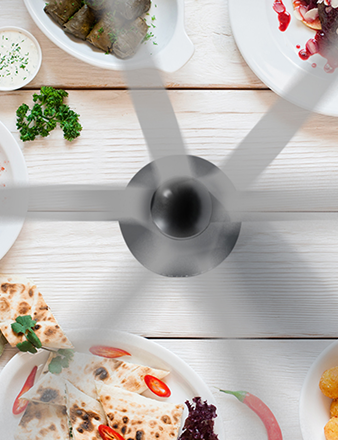
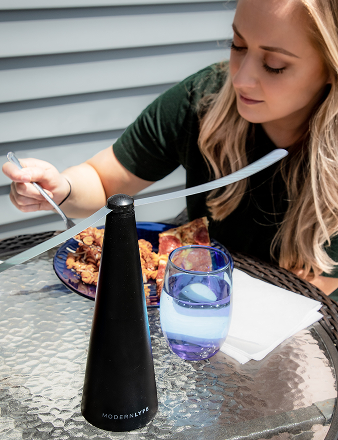
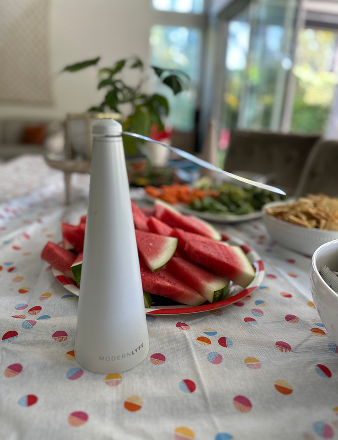
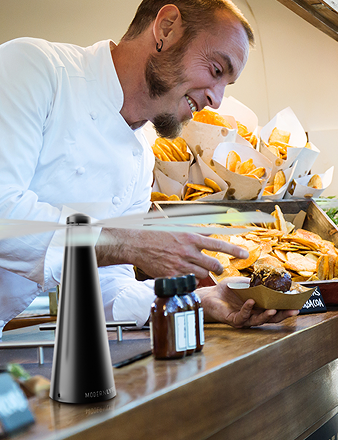
Skip fans on candle-heavy tables if airflow could destabilize flames. Keep units away from smoke-prone grills, where grease and particulates can coat the grille and blades during an 8-hour food truck shift. For food-focused airflow and insect-control considerations, review this guide to battery-powered fly fans for food before positioning equipment around dining areas.
Real-World Hospitality Scenarios and What Works
Specifications matter only when they fit the service window. The same compact fan may suit a quiet reception table yet fail beside a busy food truck. Choose equipment around the operating conditions, staff workload, and guest experience.
A four-hour outdoor wedding reception with plated dinner calls for quiet operation, a discreet finish, and dependable runtime. Select a model that stays under 40 dB at the required setting and provides at least 6 hours of runtime for the planned use. Airflow still matters, but comfort, appearance, secure placement, and speech-friendly operation deserve priority.
An eight-hour food-truck shift places greater demands on charging and durability. USB-C charging between rushes, clip-on mounting, and an impact-resistant housing matter more than a polished finish. The outdoor battery-operated fan must stay out of the way while moving enough air across the service window. A replaceable battery or backup charging plan protects service when the busiest period arrives late in the shift.
Match the equipment to the operator
A hotel Sunday brunch buffet serving 120 covers benefits from dual-fan coverage, oscillation, and remote control. Staff should not reach across dishes or leave the line to adjust airflow. A backyard barbecue for 40 guests, managed by one host, needs a simple all-in-one unit with a built-in LED lantern and one-button controls.
| Scenario | Service Length | Top Priority | Nice to Have | Avoid |
|---|---|---|---|---|
| Outdoor wedding reception | 4 hours | Quiet operation and reliable runtime | Decor-friendly finish and adjustable tilt | Loud maximum-speed operation |
| Food truck | 8 hours | Mounting flexibility and charging options | Spare battery and impact-resistant housing | Unsecured tabletop units |
| Hotel brunch buffet | Brunch service window | Broad coverage and staff control | Oscillation and remote control | One fan aimed at the entire line |
| Backyard barbecue | Host-managed gathering | Simple controls and stable placement | Built-in LED lantern | Complicated multi-mode controls |
Buy for the person operating the fan, not only for the guest standing nearby. A professional crew may manage interchangeable batteries and mounting hardware. A single host needs one reliable button, a stable base, and controls that require no troubleshooting during service.
Maintenance, Cleaning, and Troubleshooting
Outdoor hospitality fans collect dust, pollen, food particles, and grease faster than household units. Clean the grille and blades weekly with a damp microfiber cloth and mild dish soap. Never spray liquid directly into the housing, controls, battery compartment, or motor.
Units used near food trucks need more attention. Degrease them monthly with a product suitable for the manufacturer's materials, then dry every surface before charging or storage. A dirty grille restricts airflow and forces the motor to work harder, which can increase noise and reduce practical runtime.

Use a short field checklist
- Fan won't turn on: Check the battery seating, charge level, power button, and charging connection.
- Airflow has weakened: Clean the grille, inspect the blades, and look for bent components or obstructions.
- The fan sounds unusual: Remove debris and tighten mounting hardware. A loose clamp or vibrating base can sound like a motor fault.
- Runtime has shortened: Test the fan at the same speed used during service. If performance remains poor, the battery may need replacement after 300 to 500 cycles, as described in the operating guidance provided for this maintenance plan.
Use the manufacturer's supplied charging cable whenever possible. Cheap third-party charging bricks may deliver unsuitable output and can damage lithium cells. For seasonal storage, keep the unit dry, protected from rain and direct sun, and store the battery at a moderate partial charge rather than leaving it empty.
Rotate spare batteries so one pack doesn't sit unused for an extended period. Before the next busy season, inspect contacts, test every speed, check the mounting hardware, and run a complete service simulation.
Questions to Ask Suppliers and What Warranty Really Covers
A supplier should be able to answer operational questions without sending you back to a generic product page. Ask for runtime at the airflow setting you will use, not only the longest low-speed figure. Request sound measurements in decibels at a stated distance, and ask whether the figures apply to every speed.
Use this checklist before placing a bulk order:
- Battery support: What is the expected cycle life, and can you buy replacement batteries separately?
- Runtime proof: Has the supplier verified runtime at the required CFM and speed?
- Outdoor protection: What IP rating applies, and does it match the environments where you'll operate?
- Noise testing: At what distance and speed did the supplier measure the dB output?
- Commercial durability: Is the fan approved for hospitality and commercial use?
- Repairs: What is the repair turnaround, and where does service take place?
- Warranty shipping: Who pays shipping when a warranty claim is approved?
- Continuity planning: Does the supplier offer loaner units for an important service window?
- Motor support: For brushless motors, does the supplier provide recalibration or firmware support?
- Warranty structure: Is the remedy repair-only, full replacement, or prorated coverage?
Read the warranty as an operating document
A warranty may exclude commercial use, water exposure, impact, misuse, or third-party accessories. Those exclusions matter when fans operate beside food, outdoors, and in busy staff areas. Ask for the certificate in writing before committing to several units across multiple venues.
Also document the serial numbers, batteries, charging accessories, and purchase date. A clear record speeds up support when a fan fails before a reception or during a service shift.
Choosing Your Battery Operated Fan With Confidence
Shortlist two or three models that match your longest realistic service window, remain below your venue's noise ceiling, and fit the actual placement points. Give yourself 20% runtime headroom beyond the planned operating period, then verify that the manufacturer's figure applies to the speed and airflow you need.
Prioritize replaceable battery packs, verified IP ratings, stable mounting, and clear commercial warranty terms over a small purchase-price difference. A cheaper unit becomes expensive when staff must replace it mid-service or when a failed battery makes the entire fan unusable.
Create a one-page decision matrix with five rows:
- Runtime: Does it cover the full service with reserve?
- Airflow: Does it move air across the intended area without disrupting food?
- Noise: Is it acceptable at the operating speed?
- Mounting: Can staff secure it safely where it belongs?
- Support: Are batteries, repairs, and warranty service available?
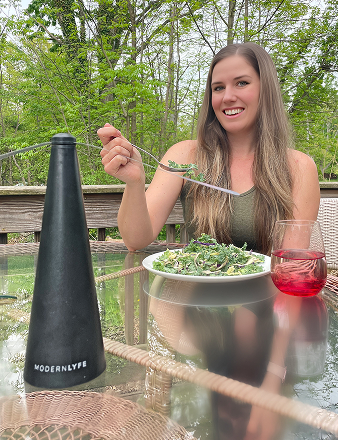
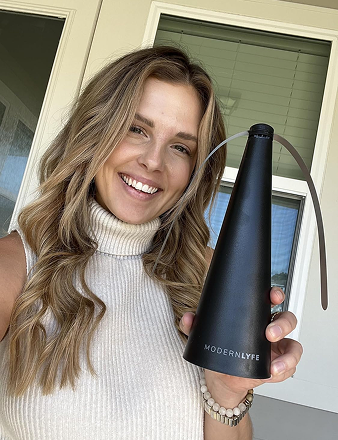
Buy one unit and test it through a real shift before scaling the order. For tables where insect control matters alongside airflow, MODERN LYFE offers the Black Fly Fan, an indoor and outdoor dual-power model that uses its included USB cable or two AA batteries. That option fits portable table setups where a compact fly-control fan is more relevant than a high-output circulation fan.
Confidence comes from matching specifications to evidence. Test the fan in heat, around the actual table or service window, and at the speed staff will use. Then order the equipment that performs reliably in that setting, not the one with the most impressive headline number.
If you're outfitting a buffet, patio, food truck, or outdoor gathering, visit MODERN LYFE to review portable fly-fan options designed for table and event use. Choose the power format and placement style that fit your service, then test one unit before expanding across your operation.