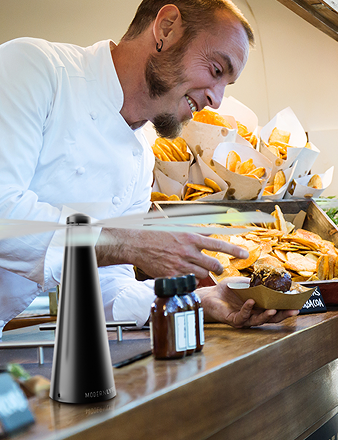
A patio service is moving at full pace. Guests are trying to talk, staff are replenishing food, and flies are circling the buffet. A fan placed too close to the tables may interrupt conversation with a harsh motor tone, while a quiet unit may not move enough air to keep the dining area comfortable.
That tension explains why ordinary battery operated fan reviews often miss the point for hospitality buyers. Maximum airflow looks impressive on a product page, but restaurants, hotels, caterers, and home hosts usually need a fan that can run, cover the right area, and remain unobtrusive beside food and guests. Independent testing shows that portable fans vary widely in both airflow and sound, with top-speed noise measurements ranging from roughly 49 dB to 71 dB across tested models. Consumer Council testing also found that airflow at the highest setting varied by more than a factor of three.
This review framework puts low-noise usability ahead of headline output. It considers battery endurance at usable settings, airflow at table height, noise at low, medium, and high speeds, placement, stability, cleaning, and the way each fan fits into a guest-facing environment. The objective isn't to crown one universal winner. It's to identify which design makes sense for a restaurant patio, a hotel buffet, an off-site wedding, or an evening barbecue.
The comparison below summarizes the evidence available from independent reviews and technical buying guidance. It uses tested examples and category benchmarks rather than pretending that every fan has been measured under identical conditions.
Introduction Why Battery Operated Fan Reviews Matter for Hospitality
A fan beside a dinner table becomes part of the guest experience. During an outdoor service, its motor tone sits alongside conversation, cutlery, music, and staff movement. A unit that improves air circulation or makes a food area less attractive to flies can still create a new problem if guests notice its hum throughout the meal.
The operating context determines what matters. A patio fan needs useful circulation without competing with conversation. A banquet unit must fit beside chafing dishes or a service cart without appearing improvised. Caterers may prioritise a compact body and flexible placement over peak motor output, while home hosts often place the device close enough for every sound to be heard.
Why maximum speed is an incomplete test
Maximum airflow is easy to demonstrate, so product reviews often give it the most attention. Hospitality buyers need a different comparison. The relevant question is whether low or medium speed produces enough air movement across the table or food area while remaining a tolerable background sound.
The review evidence shows why airflow, acoustics, and runtime should be judged together. Some portable fans remain relatively quiet at their usable settings, while others become intrusive as speed rises. One tested model also offered limited endurance at a practical setting, illustrating the risk of choosing output without considering how long the fan must operate. Good Housekeeping UK's portable fan review makes the broader point: a powerful fan may be poorly suited to sustained, guest-facing service.
Hospitality rule: A fan earns its place at a table by staying effective at the quietest setting that still produces useful circulation.
What this guide evaluates
The scorecard examines four service requirements:
- Endurance: How long can the fan operate at low, medium, and high settings?
- Airflow: Does it move air across the intended table or food area, rather than directly into one person's face?
- Acoustics: Is the sound a smooth background hum, a high-pitched whine, or an intrusive mechanical rattle?
- Integration: Can staff place, move, clean, and recharge it without interrupting service?
This framework applies to restaurant managers, hotel event coordinators, caterers, food truck operators, outdoor vendors, and home hosts. It also changes how the comparison should be read. A fan that performs well on its quiet setting may serve a dining room better than one that produces stronger airflow only at an objectionable volume. Guest comfort depends on the setting used in practice, not the maximum result shown in a demonstration.
Understanding Battery Operated Fly Fans and How They Work
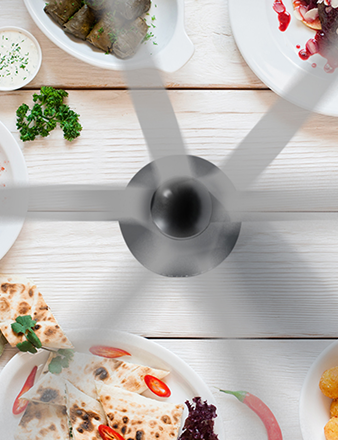
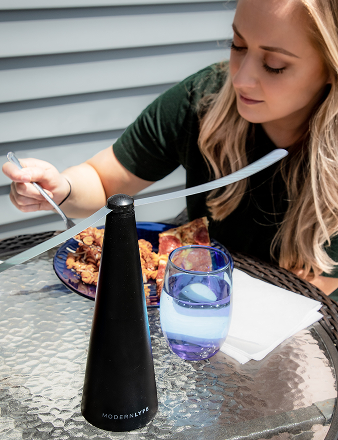
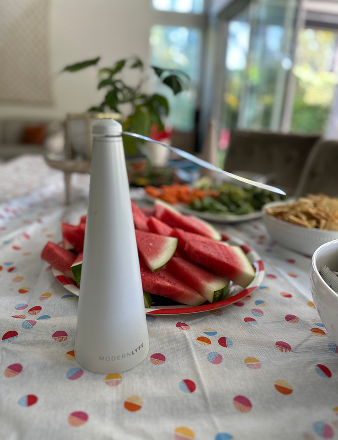
A battery operated fly fan is different from a handheld or neck fan. Personal fans direct a narrow stream toward one user. Fly fans create a moving-air zone around food or a dining surface, using soft blades or flexible elements that produce an airflow barrier. The purpose is to make the immediate area less attractive to flying insects without relying on chemical sprays.
That distinction changes the evaluation criteria. A handheld fan can succeed if it cools a person standing close to it. A table fan used around food needs stable positioning, broad enough circulation, a protected blade design, simple controls, and a sound profile that won't compete with conversation.
The operating principle
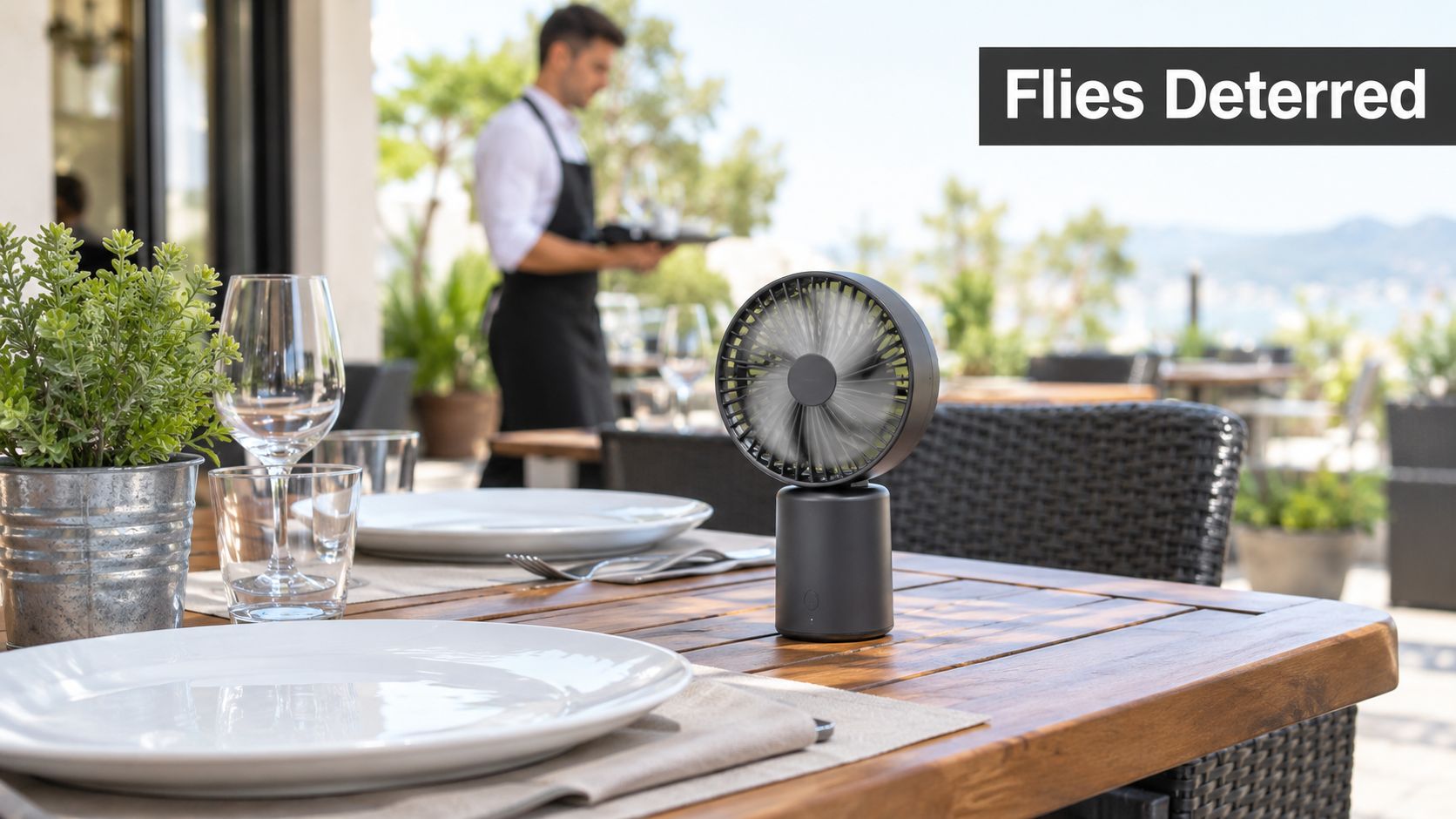
The mechanism is straightforward. A motor rotates the blades, and the blades generate a continuous stream of air across the protected area. Soft or flexible blades are particularly relevant in hospitality because they reduce the risk associated with exposed rigid blades near guests, plates, and service activity.
Battery operation adds placement freedom. A unit doesn't need to sit beside a wall outlet, so staff can position it on an outdoor table, buffet surface, bar, or service cart. USB operation can also make recharging easier when a venue already uses standard charging equipment, while replaceable batteries can be useful where staff need a quick swap rather than a charging wait.
Form factor and visual fit
Portable fan designs generally fall into three practical groups:
- Freestanding tabletop units suit patios, dining tables, and home gatherings where a stable base matters.
- Clip or clamp fans work well on rails, carts, bed frames, or narrow service surfaces, although the clamp must hold securely without damaging furniture.
- Handheld or neck fans prioritize individual cooling and portability rather than coverage around food.
The visual design matters more than many generic reviews acknowledge. A bulky, brightly colored appliance can make a carefully styled reception look temporary. A compact black housing, restrained controls, and a guarded blade assembly are easier to integrate into modern décor.
The category also spans a wide performance range. A 2026 Wirecutter review found that one cordless fan with a 4,000 mAh battery lasted about five to six hours on the middle setting, while another reviewed portable fan lasted over five hours at its highest setting. At the premium end, a 2026 Guardian test cited by Wirecutter found a handheld fan lasting 7 hours 2 minutes on its highest speed and more than 35 hours on its lowest speed, demonstrating why capacity alone can't predict hospitality performance. Wirecutter's cordless fan review links endurance to motor efficiency and speed selection, not just the battery label.
A fly fan should therefore be judged as a placement system, not as a smaller cooling fan. The right model creates a useful air barrier while remaining safe, quiet, and visually acceptable beside guests.
How We Tested Battery Life Airflow and Noise
A hospitality fan can appear impressive in a product video and still fail at a dinner table. Our method therefore prioritizes the settings guests experience, especially quiet operation, sustained runtime, and airflow that reaches the intended seating area without creating an intrusive sound.
Battery endurance
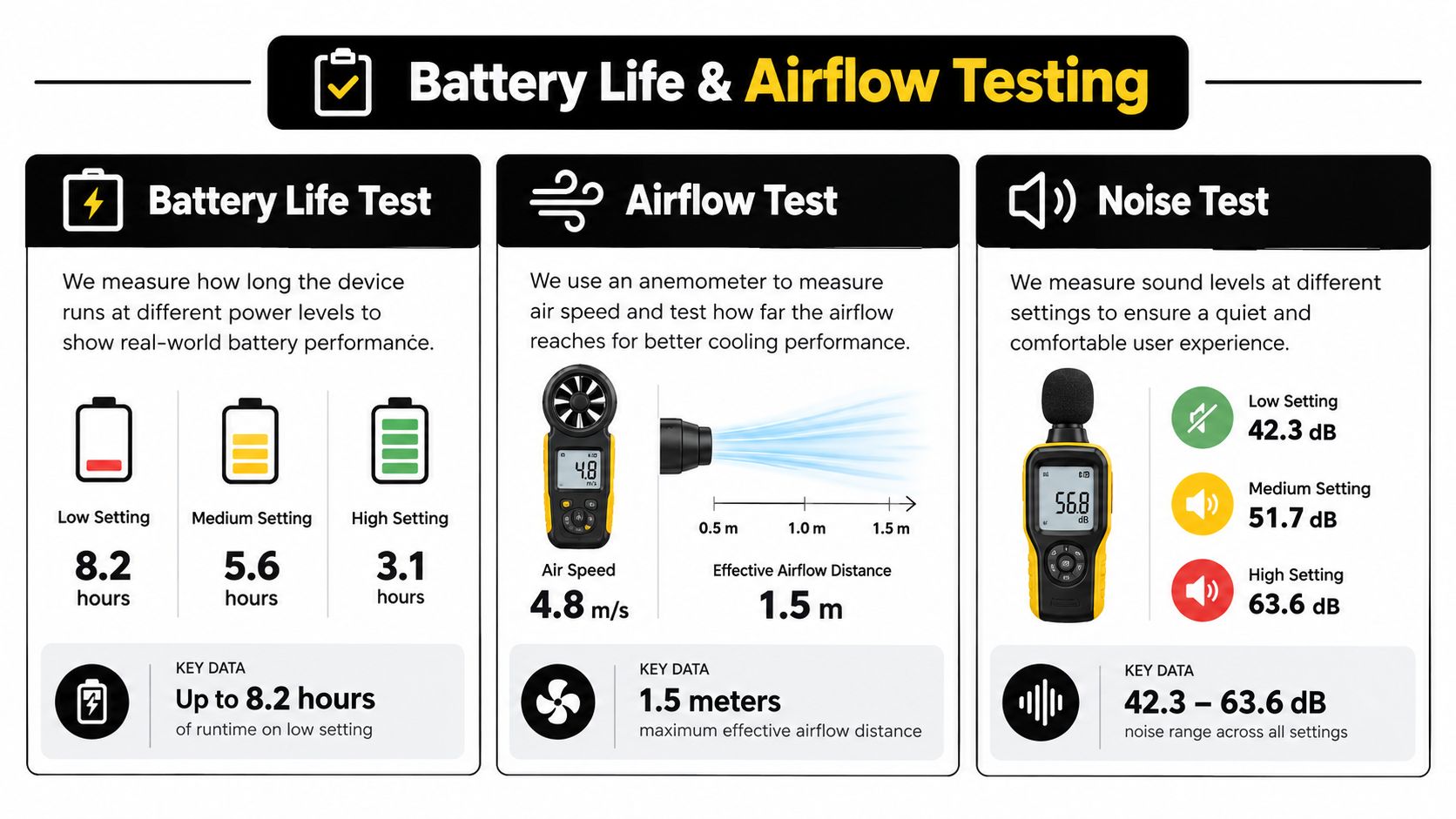
Begin with a fully charged battery and run each unit at low, medium, and high. End the test when the fan can no longer hold its selected mode. Reporting three separate results exposes the trade-off between maximum output and usable service time better than one headline runtime.
A technical buying guide places 2,000 mAh batteries at about four to six hours on medium and 3,000 mAh batteries at about six to eight hours. These are benchmarks, not guarantees. The battery-operated cooling fan buying guide stresses that capacity, airflow, and noise need to be assessed together.
Low and medium results receive more weight in hospitality testing. A fan that maintains tolerable airflow through a service period can be more useful than one that produces a short, forceful burst. Buyers comparing battery specifications can consult this battery lifespan guide for context on how operating conditions affect practical runtime.
Airflow at table height
Measure airflow from the position where staff would place the unit, not only directly in front of its grille. At table or buffet height, record the distance at which the stream remains perceptible and note whether it feels narrow and forceful or broad and diffuse. This distinction matters for guest comfort. A concentrated jet may reach farther, while a broader stream can cool more seats with less disturbance.
The Consumer Council found that maximum-speed airflow varied by more than three times across models, while sound levels ranged from about 49 dB to 71 dB. Its portable fan assessment also noted that some fans remained relatively quiet at maximum output. For hospitality, that combination of coverage and sound matters more than airflow alone.
Measuring sound properly
Measure noise at one meter, close to the distance between a tabletop unit and a guest. Record low, medium, and high settings rather than publishing only the loudest result. Write down the sound character too. A smooth hum may disappear into room noise, whereas a sharp tonal whine can remain irritating even when its meter reading is lower.
A technical buying guide classifies 30 dB or below as library-quiet, 31 to 35 dB as a soft whisper, and readings above 38 dB as a noticeable hum. These thresholds provide consistent review language, but listening remains necessary.
The final score gives the greatest weight to quiet, sustained usefulness, followed by endurance, coverage, stability, and ease of service. That weighting matches dining rooms and events, where a fan must support comfort without becoming part of the guest experience.
Head to Head Performance Comparison of Leading Battery Fans
The category doesn't offer one universal leader because the available independent reviews measure different products and conditions. A fair comparison therefore separates tested examples from category benchmarks. That avoids treating a handheld fan's exceptional low-speed runtime as directly equivalent to a tabletop fly fan's coverage.
The table below is a practical matrix for hospitality buyers. “Not reported” means the referenced review didn't provide a directly comparable result, not that the product performed poorly.
| Model | Battery Life by Setting | Airflow at High Speed | Noise at Low Medium High | Best For |
|---|---|---|---|---|
| Wirecutter cordless fan, 4,000 mAh example | About five to six hours on medium | Not reported in the cited data | Not reported in the cited data | Buyers seeking a tested mid-capacity reference |
| Wirecutter reviewed portable fan | Over five hours at highest setting | Not reported in the cited data | Not reported in the cited data | Longer high-setting operation |
| Guardian handheld fan tested in 2026 | 7 hours 2 minutes at highest speed, more than 35 hours at lowest speed | Not reported in the cited data | Low, medium, and high values not reported in the cited data | Quiet personal use where low-speed endurance matters |
| Good Housekeeping UK handheld example | Four hours on medium | Not reported in the cited data | 51.4 dB at highest setting | Shorter service periods where compact size matters |
| Good Housekeeping UK second handheld example | Runtime not reported in the cited data | Not reported in the cited data | 45.5 dB at highest setting | Buyers prioritizing a lower reported top-speed reading |
| Consumer Council tested portable models | Runtime not reported in the cited data | More than threefold spread across models | About 49 dB to 71 dB at top speed | Comparing output and acoustics before purchase |
| Practical category benchmark | About four to 12 hours on low, one to four hours on high | Product-dependent | Product-dependent | Planning expectations for everyday portable use |
The endurance spread is the first important finding. A fan can deliver a strong result at high speed, yet another may provide far longer operation at low speed. That difference matters because a patio or buffet unit often runs continuously rather than in short personal-cooling bursts.
The useful winner isn't the fan with the largest number on the box. It's the fan that keeps its acceptable sound profile while delivering enough circulation for the placement.
Airflow versus guest comfort
Airflow varies sharply between models, but more output can create practical problems. A concentrated jet may disturb napkins, affect delicate food presentation, or feel uncomfortable for diners seated directly in its path. A broader, gentler pattern can serve a table better even if it produces a less dramatic maximum reading.
Noise shows the same trade-off. Good Housekeeping UK's tested readings ranged from 45.5 dB to almost 80 dB at the highest settings, while Consumer Council measurements placed other portable models between roughly 49 dB and 71 dB. A buyer reviewing options for a quiet reception should treat the highest mode as a reserve setting, not automatically as the operating target.
A separate outdoor battery fan guide is useful for placement questions, but the core purchasing decision remains acoustic. For dining, the low and medium modes deserve the clearest evidence. Unfortunately, many product comparisons report only advertised runtime and maximum airflow, leaving buyers without the information that most directly affects guest experience.
Build Quality Mounting Options and Durability in Service
A fan can post attractive bench numbers and still fail in service if it tips on a buffet, collects food residue in inaccessible gaps, or needs constant repositioning. Hospitality equipment faces repeated handling, crowded surfaces, spills, transport, and hurried cleaning. Physical integration is part of performance.
Stability and blade protection
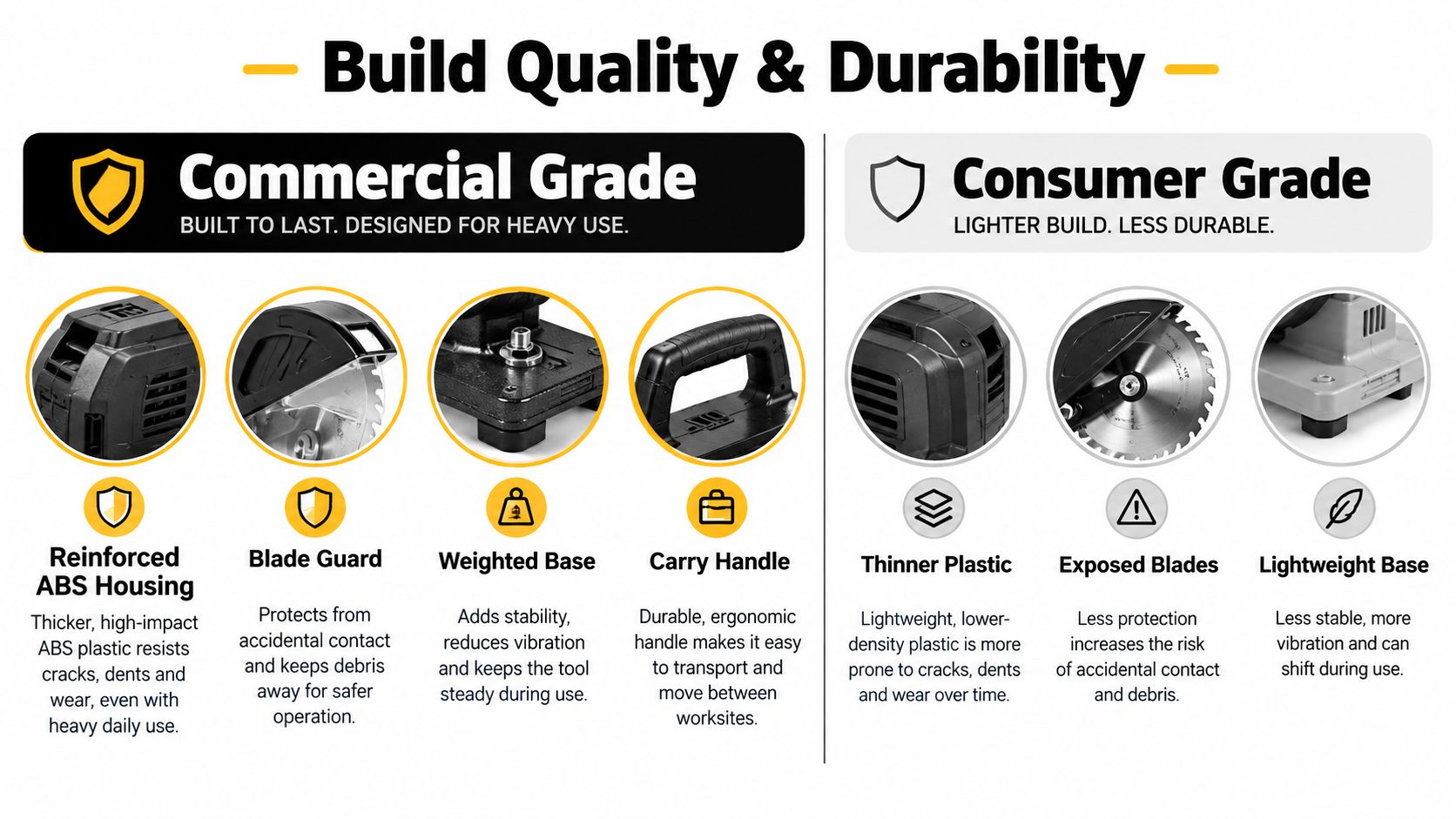
A freestanding unit needs a base that resists light knocks from plates, trays, and staff movement. A clamp model needs enough grip to stay fixed on a cart or rail without damaging the surface. In both cases, the blade guard should prevent casual contact and reduce the chance that nearby napkins or décor will reach the moving assembly.
Soft blades can make sense around guests, but softness doesn't eliminate the need for a guard or sensible placement. Keep the fan away from sauces, open containers, and areas where a server's sleeve could catch the housing. A stable position also improves acoustic consistency, because vibration against a thin table can make a quiet motor sound louder.
Placement flexibility
A restaurant patio may need a compact freestanding unit on a side table. A hotel buffet may benefit from a fan that fits along a service cart without blocking food labels. An off-site caterer needs a body that staff can carry, set down quickly, and recharge between events.
Mounting flexibility is valuable only when the attachment is secure and intuitive. A clamp that requires excessive force slows setup. A wall-mount slot may suit a fixed room but won't help a mobile banquet team. Adjustable heads can improve coverage, yet joints should hold their angle instead of drifting after repeated handling.
Cleaning and outdoor exposure
Look for smooth surfaces, accessible guards, and controls that staff can wipe without pushing debris into the motor. Battery compartments should close securely, and charging ports should be positioned away from likely spill paths. Portable fans aren't automatically weatherproof, so outdoor use requires protection from rain, condensation, direct splashes, and prolonged exposure.
Service test: Ask whether a new employee can place, adjust, clean, and recharge the unit without a separate instruction sheet.
The best hospitality design is visually quiet and operationally obvious. It shouldn't dominate a table, create a trip hazard, or force staff to choose between safe placement and effective airflow.
Real World Use Cases for Restaurants Hotels Caterers and Home Hosts
The same fan can be appropriate for one service and wrong for another. A strong personal fan may suit a staff station but fail as a dining-table barrier. A quiet tabletop unit may work beautifully at a home barbecue but lack the coverage a large patio needs.
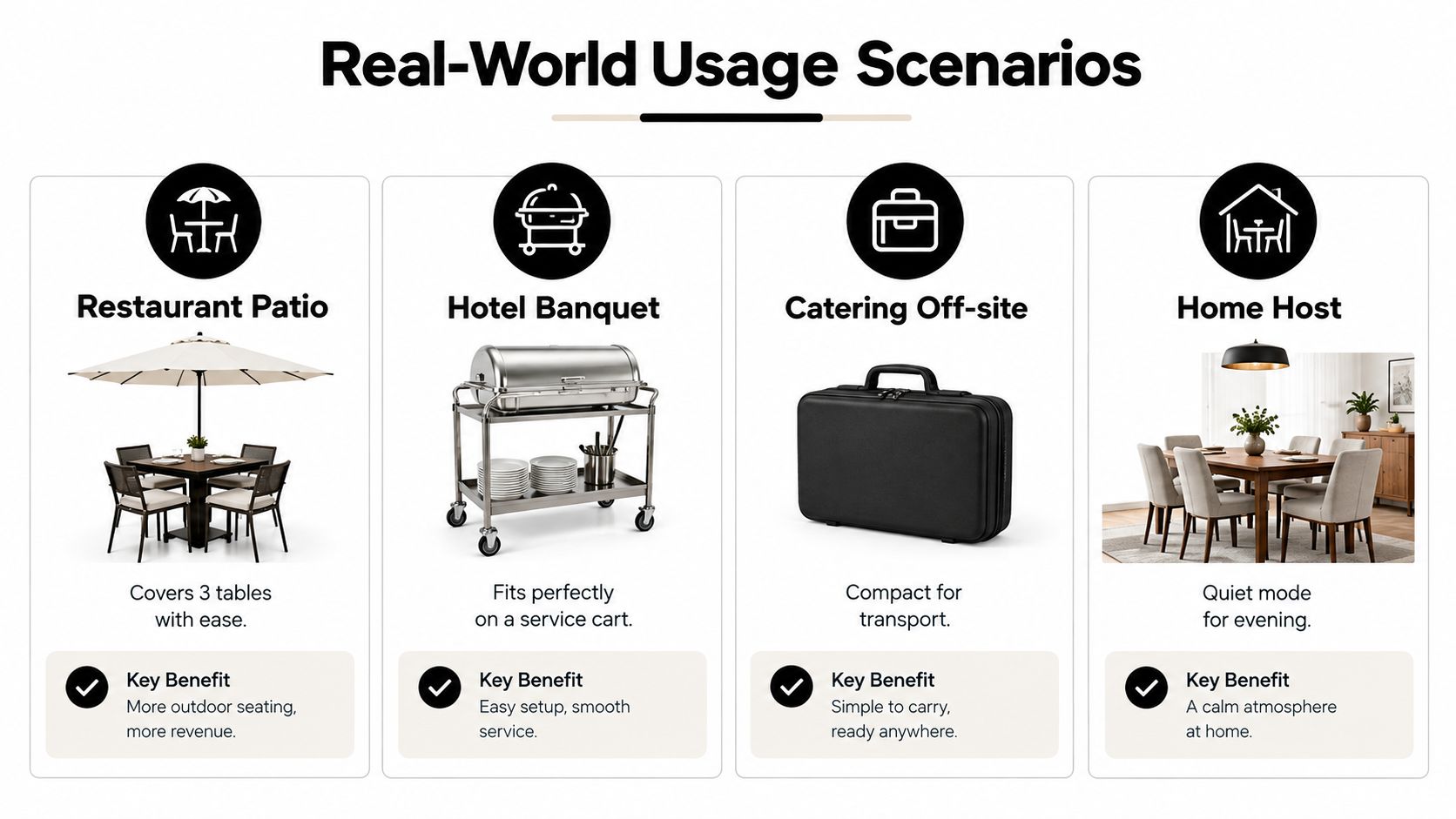
Restaurant patios
A patio manager should start with table geometry, not the highest airflow figure. Place the fan at the edge of the dining area so it creates circulation across the food or shared surface without directing a harsh stream into one guest's face. Low or medium operation usually deserves priority because the fan may run through an entire meal period.
If flies remain persistent, the fan shouldn't become the only control. Cleaning routines, covered food, waste management, and entry-point control still matter. The FullScope Pest Control guide to restaurant fly management provides broader operational context for reducing attraction and breeding conditions.
Hotel banquets
Banquet service rewards compact placement. A unit that fits on or beside a service cart can protect a buffet zone without competing with signage, linens, or the visual presentation. Quiet operation matters particularly during speeches, plated service, and networking.
Off-site catering and weddings
Caterers need transport-friendly equipment with straightforward controls and flexible power. A model that takes little space and can operate without immediate mains access may be more valuable than a larger fan with stronger peak output. Reviewers should test the setup process while wearing the gloves or carrying the cases staff use.
Home hosts
At a barbecue or outdoor dinner, guests sit closer to the equipment and notice tonal noise quickly. Choose a quiet usable mode, place the fan beside rather than directly in front of the table, and keep it clear of drinks and serving dishes. More planning guidance for portable battery powered solutions can help home hosts match power options to the setting.
| Setting | Primary priority | Sensible placement |
|---|---|---|
| Restaurant patio | Quiet sustained circulation | Table edge or side station |
| Hotel banquet | Compact integration | Buffet or service cart |
| Off-site catering | Portability and simple setup | Perimeter of the food station |
| Home hosting | Low-noise comfort | Beside the dining area |
The broader conclusion is simple. Use-case fit beats a universal ranking. Buyers should select the fan whose quiet mode, coverage, and mounting design match the room and service pattern.
How to Choose the Right Battery Fan and What to Expect Long Term
Start with the setting's quietest acceptable operating mode. A technical guide identifies 30 dB or below as library-quiet, 31 to 35 dB as a soft whisper, and readings above 38 dB as a noticeable hum. A sleep-focused review recommends at least six hours on the lowest usable speed, sound below 45 dB at one meter, and airflow that can be felt at the pillow. That sleep-fan guidance isn't a hospitality standard, but it provides a useful comfort reference.
Then verify capacity against the service pattern. A battery-life guide places typical portable models at about four to 12 hours on low and one to four hours on high, while an expert-tested fan with a 10,000 mAh battery lasted about five to six hours at maximum speed and longer on lower settings. The portable fan battery-life guide shows why claimed runtime should always be matched to speed and operating conditions.
For food service, choose guarded blades, wipeable housing, stable placement, and controls staff can understand quickly. Inspect the fan routinely, remove dust from the guard, keep charging connections dry, and don't place the device where spills can reach the motor or battery compartment. Check warranty terms, registration requirements, replacement support, and the process for handling a failed battery or charging component.
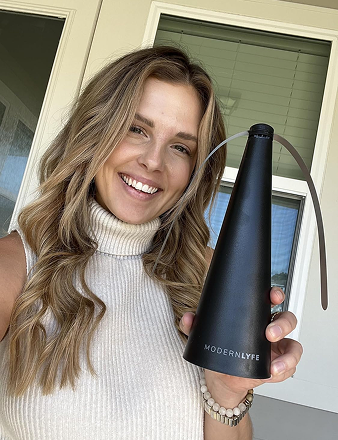
MODERN LYFE offers a Black Fly Fan for outdoor tables that can operate through the included USB cable or two AA batteries, making it relevant for buyers comparing fixed-power and battery-operated placement. Its compact fly-fan format is intended for tables and event setups where unobtrusive insect protection matters more than personal handheld cooling.
For hospitality teams, MODERN LYFE provides fly-fan equipment designed for restaurant tables, hotel service areas, catering events, and home gatherings, with flexible power and straightforward placement. Visit MODERN LYFE to review the available solution and choose a quieter, more practical approach to guest-facing fly control.