A wedding reception is minutes from opening. The buffet is dressed, the bar team is in position, and the outdoor dining area looks exactly as planned. Then someone needs a fan near the food, another team member needs light behind the service station, and the only available outlet is across a guest walkway. A cable appears, someone tapes it down, and the clean setup starts to look temporary. If the cable comes loose or the outlet trips, the problem becomes visible to every guest.
That's where battery powered solutions earn their place in hospitality. They remove cables from guest areas, support service in spaces that weren't designed around outlets, and let teams position equipment where it works best rather than where the building supplies electricity. But cordless equipment isn't automatically reliable. Runtime, charging discipline, battery aging, temperature, transport rules, and replacement planning determine whether it helps the operation or creates a new failure point.
Why Hospitality Professionals Are Going Cordless
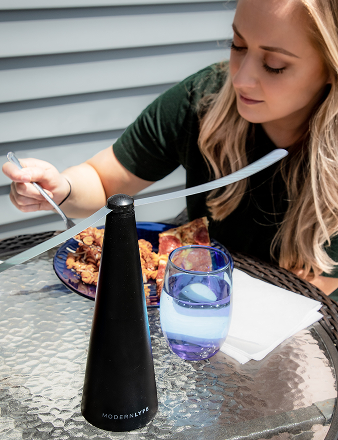
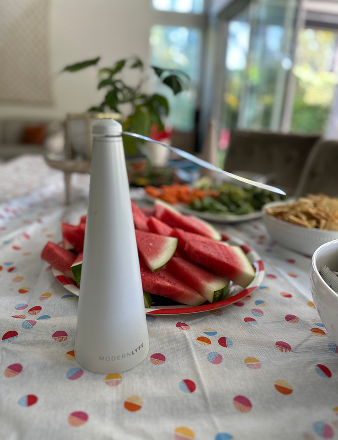
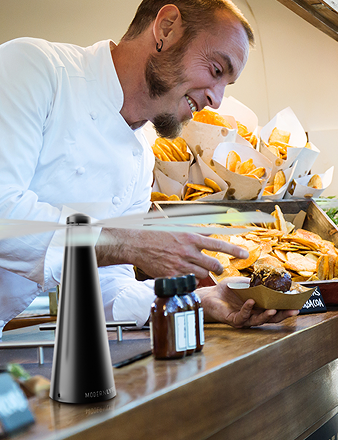
At a large outdoor function, the first cordless devices usually solve practical problems rather than dramatic ones. A portable light helps a bartender read labels after sunset. A fly fan protects a buffet station without a visible lead crossing the table. A cordless payment terminal lets staff move through a reception instead of sending guests to a fixed counter. Small improvements like these can protect the guest experience because they keep the operation flexible.
The most useful way to assess cordless equipment is by operational role. Hospitality teams can consider battery power for:
- Guest-facing comfort: Portable fans, insect-control devices, and quiet personal cooling equipment can support outdoor dining and temporary service areas.
- Presentation and visibility: Table lighting, accent lighting, inspection lights, and back-of-house task lights can work without extension leads.
- Service mobility: Cordless POS terminals, handheld order devices, scanners, and communication equipment help staff move with guests.
- Temporary food and beverage support: Mobile catering equipment, small pumps, dispensers, and selected refrigeration accessories may suit battery operation when their load is understood.
- Site movement: Electric carts and utility vehicles can move supplies around large venues without adding fuel fumes or engine noise. Teams comparing options should review practical details such as payload, turning space, charging access, and service support before they compare electric work cart models.

The strongest candidates share three characteristics. They're used away from fixed infrastructure, they draw a manageable amount of power, and a failed unit can be replaced quickly without stopping the entire service. A quiet table fan fits that profile better than a high-load cooking appliance expected to run continuously through a long shift.
Placement matters as much as power. A battery device can sit beside a buffet, at the end of a marquee, near a registration point, or in a garden area where running a cable would create a trip hazard. For fly-control equipment in particular, operators can review practical placement ideas in this guide to battery-powered fly fans, then test the position with real table layouts rather than relying on a product photograph.
Field observation: Cordless equipment works best when it removes a recurring obstruction. It works poorly when teams buy it simply because “wireless” sounds modern.
The shift isn't about replacing every mains-powered device. It's about giving operators a second infrastructure layer for temporary, mobile, or visually sensitive service points.
The Technology and Market Shift Behind Battery Power
A cordless fan at a remote buffet or a mobile terminal at registration may look like a small equipment choice. The underlying battery market is much larger. The International Energy Agency reports that the total volume of batteries used in the energy sector exceeded 2,400 GWh in 2023, about four times the 2020 level (IEA battery demand and supply analysis). More than 2,000 GWh of lithium-ion capacity had been added worldwide over the prior five years, supporting about 40 million electric vehicles and thousands of battery storage projects. Electric vehicles accounted for over 90% of battery use in the energy sector, with annual volumes exceeding 750 GWh in 2023, according to the IEA.

That scale changes what hospitality buyers can expect from suppliers. Transport and storage markets support wider manufacturing, more compatible charging systems, and better technical knowledge. They do not make every small device reliable. A low-cost unit may still have weak cells, poor heat management, an awkward charging port, or runtime claims based on ideal conditions.
The chemistry also has a longer history than current lithium-ion marketing suggests. Alessandro Volta invented the first battery in 1800, while Gaston Planté invented the first rechargeable battery in 1859, a milestone recorded in the National MagLab's history of the Planté battery. Modern systems combine rechargeable chemistry with electronic controls for charging, temperature, and protection. Buyers reviewing lithium-ion advances can also consult this guide to battery technology advances.
For event operations, the important shift is practical rather than technical. Battery packs age, charging routines vary, and usable runtime falls as cells lose capacity. A device that works through one service may need a spare pack or earlier recharge after repeated cycles. Replacement planning therefore belongs in the purchase decision, alongside the charger, enclosure, control board, and service process.
The market outlook explains continued investment in pack design. The IEA values the global battery-pack market for electric vehicles and storage applications at about USD 120 billion, with projections of nearly USD 500 billion by 2030 in its net-zero scenario and around USD 330 billion by 2030 under current policy settings (IEA market projections). These figures describe large energy markets, not hospitality pricing. They indicate why component makers and charging-platform developers continue improving the systems behind cordless equipment.
Event teams can connect this infrastructure shift with wider production choices, including practical event technology for New Zealand gatherings. The same test applies to battery equipment: it earns its place when it removes a real operational constraint.
Battery technology now suits many mobile, moderate-load tasks. Selection still matters more than the label. Check cells, controls, charger compatibility, enclosure, expected runtime, battery age, replacement access, and staff charging habits before approving a device. A mature market improves availability, but it cannot fix unrealistic runtime claims or a charging port that fails in daily service.
Battery Versus Mains Power for Events and Venues
The right comparison isn't “modern versus outdated.” It's mobility versus continuous supply. Mains power is usually easier for equipment that draws a steady load for long periods. Battery power is stronger where setup speed, placement, quiet operation, or visual presentation matters more than uninterrupted access to a socket.
| Criteria | Battery Powered | Mains Powered |
|---|---|---|
| Setup speed | Fast deployment with no cable routing or taping | Requires outlet checks, cable runs, and protection from foot traffic |
| Placement | Can operate in gardens, marquees, buffet lines, and temporary stations | Limited by outlet location and safe cable length |
| Appearance | Cleaner guest areas and fewer visible leads | Cables can affect presentation and require careful concealment |
| Service reliability | Depends on charge level, battery condition, and spare availability | Usually stable while the circuit and outlet remain available |
| Noise | Often quiet, but fans and motors still need testing in the room | Can be quiet, though mains motors and transformers may produce sound |
| Peak-load capability | Best for appropriately sized, moderate-load devices | Better suited to high-demand or continuously powered equipment |
| Maintenance | Requires charging, rotation, health checks, and eventual battery replacement | Requires electrical inspection, cable care, and outlet management |
| Failure response | Swap the battery or replace the unit if a spare is ready | Restore the circuit, change the outlet, or reroute power |
| Long-term cost | Includes chargers, spare packs, storage, and battery aging | Includes power distribution, cable management, and electricity use |
Outdoor receptions show the advantage clearly. A cordless device can move with the service plan, while a mains-powered alternative may force the team to redesign the space around a distribution point. Pop-up bars, temporary registration desks, buffet lines, and exhibition areas often benefit from that freedom. For temporary displays, the same clean-layout principle matters when planning expo booths, where visible cables can interfere with both access and presentation.
Mains power remains the sensible choice for equipment that must run continuously and has a high or unpredictable load. Large refrigeration systems, cooking appliances, heavy-duty heating, and fixed back-of-house machinery generally need a dependable supply that doesn't depend on staff remembering a battery swap. A cordless replacement can look efficient during setup and become a liability during the busiest service period if nobody has planned the energy demand.
A practical decision test
Ask four questions before moving a device to battery operation:
- Does the device need to move? If staff reposition it during service, cordless operation may remove repeated setup work.
- Would a cable create a guest, safety, or presentation problem? If yes, battery power has a clear operational benefit.
- Can the device complete its duty period with a realistic reserve? If not, a spare-battery routine is mandatory.
- What happens when the battery fails? If the answer is “service stops,” retain a mains fallback or a ready spare.
A hybrid venue is usually more resilient than a fully cordless one. Use battery powered solutions where they remove friction, and keep mains equipment for fixed, high-load, or mission-critical tasks.
Selection Criteria That Matter in the Field
A specification sheet gives you rated battery capacity, but rarely shows how equipment behaves beside a busy buffet, in cold evening air, or after repeated charging by different staff members. Select against the duty cycle, including runtime planning, battery aging, replacement timing, and the conditions around service.

Start with runtime, not capacity
Write down the device's operating pattern. A fly fan may run for the full service period, a handheld terminal may be used intermittently, and a light may operate only after sunset. Ask the supplier for runtime at the setting you will use, then add reserve for temperature, battery age, and differences in operator use. The visual checklist supplied with the equipment may describe a full 8-hour shift with 20% reserve, but verify that figure through testing rather than treating it as a guarantee.
A device that lasts through a demonstration may still fail during a full venue schedule. Test it during a real or simulated service, using the same speed, brightness, connectivity, and ambient conditions. Record the starting and ending charge, performance changes, and whether the unit needs a battery swap before the shift ends. That record also helps set replacement cycles as packs lose capacity.
Treat temperature as a performance variable
Lithium-ion batteries typically perform best between 15°C and 35°C, according to a review in Energies. Cold conditions can reduce charge acceptance, output power, and available energy. At −40°C, the review reports power output can fall to about 1.25% of the level at 25°C, while energy density can fall to about 5% of the 25°C level.
Hospitality operations rarely reach −40°C, yet outdoor service can expose equipment to cold storage, wind, and overnight temperature changes. Keep thermal margin in the operating plan, charge only within the approved conditions, and test winter performance outside a warm storeroom.
Check aging, load, sound, and handling
Heat and repeated cycling accelerate electrolyte decomposition, SEI growth, side reactions, resistance, and capacity loss. One experimental result reported that increasing discharge rate from 0.5C to 0.8C reduced cycle life by 52.9% at 25°C, while the predicted reduction at 45°C was 38.4% (AIP Conference Proceedings study). In practice, avoid running a small pack at its limit when a larger pack, lower setting, or different device can deliver the same service.
Check these points before purchase:
- Noise: Listen from guest distance, not beside the motor. Warehouse testing can miss a distraction that becomes obvious during dinner service.
- Ingress protection: Confirm the stated environmental rating and its limits. Spills, dust, and condensation create different risks.
- Ergonomics: Staff must be able to lift, carry, mount, and reposition the unit without awkward handling.
- Serviceability: Confirm battery availability, charger replacement, warranty handling, and the procedure for retiring damaged packs.
A lower purchase price can disappear if batteries age quickly, spares are unavailable, or staff need repeated swaps during service. Evaluate the equipment and its support process together.
Deployment Routines and Maintenance Best Practices
Reliable cordless service begins with a charging area, not with the device on the event floor. Give batteries and chargers a designated location away from guest traffic, food preparation, heat sources, and damp storage. Label each battery, record its condition, and prevent staff from treating every charger as interchangeable unless the manufacturer confirms compatibility.
After service, staff should wipe equipment, inspect housings, check connectors, and look for swelling, cracks, unusual heat, or damaged insulation. Outdoor equipment needs particular attention because moisture can enter during sudden rain or overnight condensation. The Electrical Safety Foundation International advises bringing cordless or battery-operated products indoors overnight, avoiding mixed fresh and discharged batteries or mixed battery types, and checking correct polarity during installation (ESFI outdoor electrical safety guidance).

Build rotation into the roster
High-volume venues shouldn't wait for a device to fail before introducing spare batteries. Assign charged units to specific equipment groups, keep service-ready spares in a known location, and use a sign-out process so the team knows what's available. Rotate batteries according to the manufacturer's guidance rather than repeatedly using the same pack until it becomes the weakest link.
A simple handover routine catches most preventable errors:
- Post-use inspection: Remove debris, wipe the unit, and check for visible damage.
- Staging: Place the battery on its designated dock or charger.
- Charge verification: Confirm the indicator and record any pack that won't reach its expected state.
- Pre-service check: Test the device at its intended setting before staff enter the venue.
- Return and quarantine: Separate damaged, swollen, wet, or unusually hot batteries from operational stock.
Monthly testing should measure practical runtime rather than only reading the indicator. If a fan becomes noticeably weaker or a terminal loses charge faster than expected, take it out of frontline service and investigate. The battery replacement guide can help teams think through replacement timing, compatibility, and responsible handling instead of waiting for a complete failure.
Operational rule: A spare battery only prevents downtime if someone can find it, identify it, and confirm that it's charged before service begins.
Keep charging records for shared equipment. A short log can reveal which devices work hardest, which batteries age faster, and whether the charging area is becoming a bottleneck. For critical service points, keep a mains fallback or a complete backup unit rather than relying on a single pack.
Safety Regulations and Venue Policy Gaps
“Use certified batteries” is useful advice, but it isn't a venue policy. Operators also need rules for charging, storage, guest-owned devices, transport, damaged packs, and disposal. The risk grows when many small batteries gather in a crowded indoor or outdoor setting and nobody owns the decision about where they're charged.
Battery incidents are becoming a systemic concern as the installed base expands, applications multiply, and energy density rises, according to a 2025 review of battery safety (Battery Safety 2025 year-end takeaways). That doesn't mean every portable product is unsafe. It does mean operators should treat battery condition and charging behavior as part of site risk management, not as a private matter between a guest and a device manufacturer.
Write rules for guest-owned products
Venues should define where guests, exhibitors, contractors, and staff may charge portable batteries. The policy should identify approved outlets or charging stations, prohibit damaged or visibly swollen packs, prevent unattended charging in guest areas, and specify where suspicious devices are isolated. Staff need an escalation route that doesn't depend on improvisation during a crowded event.
Portable chargers deserve particular attention in travel-linked operations. UL Standards & Engagement reporting cited by the Volta Foundation's 2025 battery report describes a 15% increase in thermal-runaway incidents from 2024 to 2025 and a 42% jump in portable-charger incidents, with portable chargers the leading device category involved. Those figures concern reported incidents in the referenced context, not a prediction that a particular venue will experience one. They do support a stronger policy around clustered charging and storage.
Plan logistics before the equipment ships
Air transport creates a separate constraint. From 1 January 2026, UN 3481 lithium-ion batteries shipped with equipment must have a state of charge no higher than 30% of rated design capacity, according to RRC's summary of the updated IATA requirements. For some battery-powered vehicles, the applicable limit is 30% or 25% indicated battery capacity, depending on classification.
The 2026 rules apply to cells or batteries above 2.7 Wh when batteries are packed with equipment, as explained by Lion Technology's IATA DGR update. Standalone lithium-ion cells and batteries shipped as UN 3480 are forbidden as cargo on passenger aircraft under IATA guidance (IATA lithium battery guidance).
For multi-venue operations, confirm classification, packaging, state of charge, carrier acceptance, and whether spare batteries are shipped separately. A device that performs perfectly on site can still miss an event if its battery logistics weren't checked early.
Cost Analysis and Real-World ROI for Hospitality Operators
A cordless unit that runs out of charge during service is not a saving. Its real cost includes chargers, spare batteries, storage, staff time, inspections, replacement packs, transport, and the labor required to recover a failed device. Mains equipment carries different costs: distribution, cable protection, electrical checks, setup time, and the disruption caused by a tripped circuit or inaccessible outlet.
Compare each device by duty period, not just purchase price:
- Acquisition: Device, battery, charger, mounting hardware, and required accessories.
- Availability: Operational units and charged spares required for the roster.
- Labor: Time spent charging, checking, moving, and replacing equipment.
- Aging: Battery replacement route based on manufacturer guidance and observed runtime.
- Downtime: Staff intervention, guest experience, and service disruption after failure.
- Deployment value: Cable routing, outlet hunting, taping, and late repositioning avoided.
Runtime planning often determines whether cordless equipment saves money. Record the expected duty period, keep a charged spare ratio appropriate to the service, and review actual swap frequency after each event. Battery aging changes that calculation. A pack that covered a full shift when new may require earlier replacement as capacity falls, so replacement cycles belong in the operating budget rather than being treated as an unexpected repair.
Start with low-risk, high-friction tasks. A venue can trial cordless table lighting, mobile payment devices, or a battery-operated fly fan before replacing fixed, high-load equipment. Track setup effort, service interruptions, battery swaps, guest feedback, and maintenance demands over several events. Expand only when the operational benefit is clear and the charging workflow is repeatable.
MODERN LYFE offers battery-operated fly fans for dining and event setups, including devices designed to run from AA batteries or USB power. That dual-power approach provides a practical fallback: use battery operation when placement matters, while retaining another power route when the venue has a suitable connection.
MODERN LYFE helps hospitality teams protect buffet lines, outdoor receptions, restaurants, and home gatherings with quiet, battery-operated fly fans designed for practical placement around dining areas. Visit MODERN LYFE to review the available options and choose a cordless setup that fits your service routine, charging policy, and venue layout.