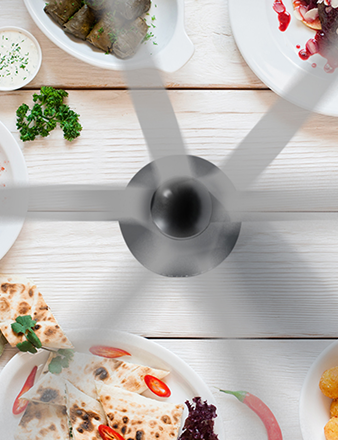
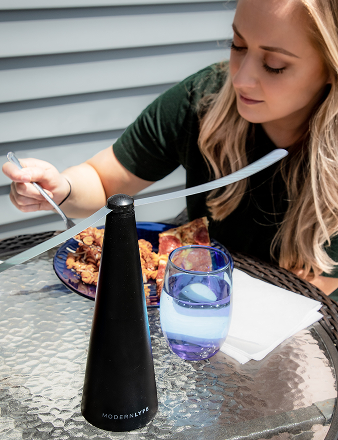
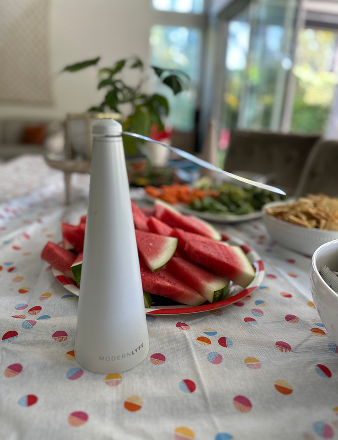
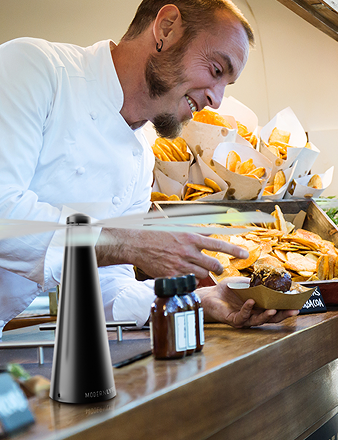
At an outdoor dinner, the first sign of trouble is often subtle. Guests wave at their faces, food covers stay open a little too long, and the buffet team starts swatting instead of serving. A battery-operated fan with timer can help control that airflow problem without adding extension cords, trip hazards, or another noisy appliance to the setup.
The timer matters for more than convenience. It lets you match operation to a dinner service, protect limited battery capacity, and prevent a fan from running unattended after guests have left. For restaurants, hotels, caterers, event planners, and homeowners, the right choice comes down to airflow, runtime, noise, placement, maintenance, and safe battery handling.
The Professional Solution to Outdoor Pest Control
Golden hour is when an outdoor reception looks its best, and it's also when a buffet can become difficult to manage. The dishes are arranged, guests are approaching, and flies begin circling exposed food. A team that reacts by moving plates, waving napkins, or dragging a plug-in unit across the patio is already compromising the presentation.
A cordless fan gives the service team a cleaner option. Positioned near the buffet rather than directly over the food, it creates localized airflow that can make the area less attractive to flying pests while also improving comfort for guests nearby. The timer adds operational control, so the fan can run through the planned service window and shut off without someone having to remember it at the end of the night.

Why cordless placement changes the setup
Traditional plug-in fans still have a place, especially where continuous mains power is available and fixed positioning makes sense. At a temporary event, though, cords create extra work. Staff must protect the cable, keep it away from walkways, and find an outlet that doesn't interfere with the room layout.
Battery operation removes that dependency. A fan can sit on a buffet counter, service station, patio table, or outdoor bar without an extension lead. That flexibility is one reason cordless models have moved beyond occasional household use. A market estimate places battery-operated portable fans at about 34.2% of the global portable fan market by power source in 2025, compared with roughly 26.7% in 2021. The figures are reported in a historical overview of fan development, and they point to growing acceptance of plug-free cooling.
Airflow isn't a complete pest-control plan. Food covers, sanitation, waste management, and appropriate insect-control equipment still matter. If a venue needs a broader approach, reviewing best fly zapper options in NZ can help the operator compare complementary solutions rather than asking one fan to do every job.
Practical rule: Use the fan to support a clean buffet strategy, not to compensate for uncovered food, poor waste control, or weak site hygiene.
The professional advantage is simple. A timer-equipped cordless fan keeps airflow targeted, preserves the visual standard of the event, and gives the closing team one less device to monitor.
How Timer Technology Extends Battery Runtime
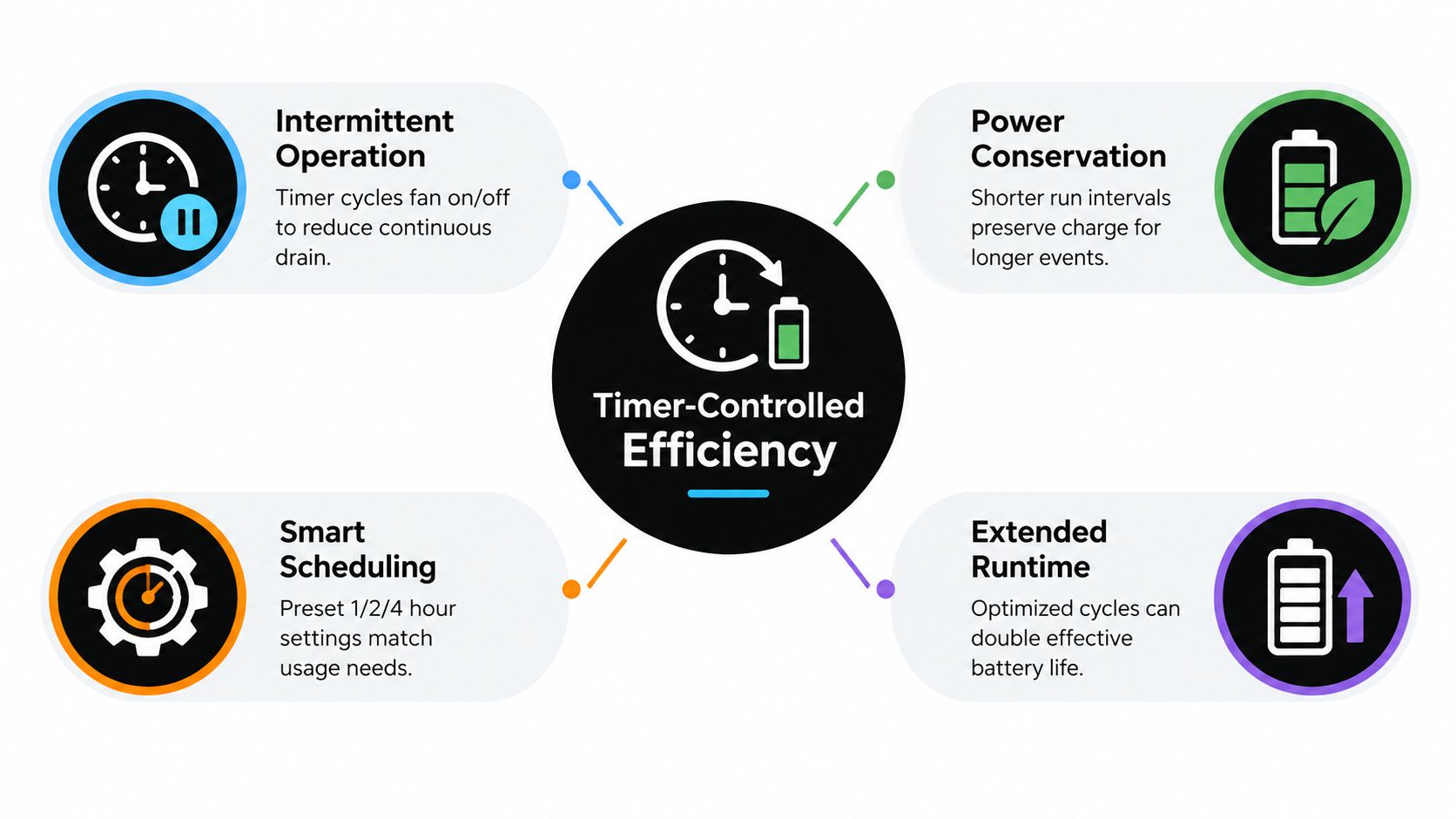
A timer doesn't make the motor more efficient while the fan is running. It controls how long the motor runs, which is often the more useful form of efficiency when the power source is a finite battery.
Many timer-equipped fans use preset intervals rather than minute-by-minute programming. One AA or AAA-powered model, for example, uses 30-minute steps up to 7.5 hours, then shuts down automatically after the selected period. The operating details are documented in the model's user manual. That hard cutoff prevents the common event mistake of leaving a fan running long after the service window ends.
Runtime is a power-draw problem
The useful planning question isn't, “How large is the battery?” It's, “How much power does this fan use at the speed and mode I'm selecting?”
Published technical data for one fan lists a 55 W input, 60.54 m3/min airflow, 0.17 W standby power, 0 W off power, and 16.57 kWh/year seasonal electricity use in mains operation, as shown in the technical documentation. Those figures illustrate why standby and off states matter, although they don't directly predict battery runtime.
Battery operation can also affect airflow. The same documentation notes that one battery model delivered about 8% less airflow than when operating from mains power. That means a speed setting that feels adequate on a plugged-in test may need reassessment when the fan is cordless.
Match the timer to the service window
For a dinner service, select the lowest speed that provides useful airflow across the target area, then set the timer to cover setup, guest service, and a reasonable close-down period. High speed may create stronger airflow, but it also increases consumption and can disturb lightweight napkins, table cards, or food presentation.
The battery technology behind cordless products is also evolving, so operators can review battery technology advances when comparing rechargeable designs with replaceable-cell models. The key operational point remains unchanged: a timer saves energy by preventing unnecessary operating hours, not by reducing the fan's draw during those hours.
A timer is most valuable when the operator treats it as a scheduling control. Set it for the actual task, choose a moderate speed, and verify the result during a real service rather than assuming the advertised runtime applies to every setting.
Key Specs and Features to Evaluate
A commercial buyer should start with the operating job, not the fan's appearance. A compact model may suit a counter, while a larger unit may be better for a wide patio zone. The right battery-operated fan with timer is the one that delivers enough airflow at an acceptable noise level for the required period, then fits securely into the venue's physical layout.
Start with capacity, then check the test conditions
Battery capacity is usually shown in mAh, but that figure is only useful alongside speed and runtime information. An independent buyer guide reports that a 10,000 mAh fan can run up to 40 hours on its lowest speed, while a 40,000 mAh model can run 136 to 150 hours on low, as described in this battery-fan comparison. These figures show the relationship clearly, but they shouldn't be treated as guarantees for high-speed operation, oscillation, or reduced airflow conditions.
Ask the seller or manufacturer:
- Battery format: Is it rechargeable, replaceable, or both?
- Runtime basis: Which speed produced the stated runtime?
- Charging process: Can the battery charge safely between events?
- Power fallback: Does the fan also work from USB or mains power?
For a broader look at compact placement, compare the design considerations in battery-operated table fans.
Noise belongs on the buying brief
A fan beside a wedding speech, hotel lounge, or intimate dinner must not become the loudest object in the area. Look for a sleep mode or a low setting, and test the fan in the kind of space where it will operate. A motor that seems quiet in a warehouse can be distracting beside seated guests.
One reviewed portable fan uses timer choices of 1, 2, 4, and 8 hours, while its sleep mode silences beeps, dims indicator lights, and moves the fan to its quietest setting. The described controls appear in this portable-fan review. That combination is more useful than a timer alone because it addresses both runtime and guest comfort.
Construction and mounting decide whether it survives service
Frequent transport exposes fans to knocks, dust, moisture, and hurried setup. Choose a stable base, protected controls, a grill that can be cleaned, and a mounting arrangement that keeps the unit clear of plates and guest elbows. A fan that can sit discreetly on a buffet line or counter is easier to deploy than one that needs permanent installation.
Cooling mist fans may suit some outdoor conditions, but moisture introduces another operational consideration around food, electronics, and surfaces. Buyers comparing that category can review the Living Air cooling mist fan as a separate product type, then decide whether dry, directed airflow is more appropriate for the venue.
Use Cases in Hospitality and Events
The same fan can serve different jobs depending on who controls it and what the space demands. A restaurant manager usually values repeatable placement and quick cleaning. A wedding planner needs quiet operation and an unobtrusive appearance. A homeowner often wants simple setup without a complicated power plan.
Restaurants and food-service counters
On a restaurant patio, place the unit where it supports airflow across the customer area or near a buffet boundary without blowing directly onto uncovered dishes. The timer can align with the meal period, reducing the chance that the fan remains active during cleaning or after closing.
Food trucks and outdoor market vendors face a different constraint. Their service footprint changes, and power outlets may be unavailable or already assigned to refrigeration, lighting, or payment equipment. A cordless unit can move with the stall and operate only during active service.
Weddings, hotels, and formal events
At a wedding, presentation matters as much as performance. A cord across a walkway is a liability, and a loud fan near speeches can disrupt the atmosphere. Battery placement lets the planner position airflow where it's needed while keeping cables out of the visual field.
Hotels and resorts can use the same approach at poolside stations, outdoor lounges, and temporary reception areas. Staff can assign a timer during setup, then check the unit during the service sweep rather than returning repeatedly to switch it off.
Backyard gatherings
Home use is less demanding, but the timer still solves a real problem. A host can run the fan through dinner, conversation, and cleanup, then let the automatic shutoff handle the final step. For more ideas on cordless equipment planning, battery-powered solutions offers useful context for outdoor setups.
The controls should fit the occasion. A formal event benefits from quiet sleep operation and concealed placement. A casual barbecue may prioritize quick access and easy cleaning over appearance. In every setting, choose the airflow direction deliberately, keep food protected, and use the timer as a defined operating schedule.
Setup, Maintenance, and Troubleshooting
Good performance starts before the fan reaches the table. Charge it with the supplied equipment, inspect the housing, test the controls, and run the timer before guests arrive. A quick pre-service check is far cheaper than discovering during dinner that the fan won't start or that the automatic shutoff isn't working.
Timer ranges vary considerably. Manuals describe options from 0.5 to 7.5 hours, while some devices offer settings extending from 0 to 24 hours. Other products use selected hourly options such as 1, 2, 3, and 4 hours. Those differences are documented in this comparison of timer behavior. Don't assume that a timer label tells you how speed or oscillation will affect runtime.
A practical pre-service workflow
- Confirm the charge: Check the battery indicator, then verify that the fan starts without the charger attached if cordless use is required.
- Test the timer: Select the intended interval and confirm that the fan responds as expected. If possible, test the shutoff before the event rather than trusting the button label.
- Inspect the placement: Set the fan on a stable surface with clear intake and exhaust paths. Keep it away from exposed food, wet areas, and busy handoff points.
- Clean the airflow path: Dust on the grill or blades makes the motor work harder and can reduce practical performance. Wipe the unit according to the manufacturer's instructions.
- Check the contacts: Moisture and corrosion can interrupt power, especially after outdoor use. Examine battery contacts and the charging port before packing the fan away.
Service habit: Record which speed and timer setting worked for each venue. That simple note becomes more valuable than a generic runtime claim.
If the fan won't hold a charge, first check whether the charger is compatible and connected correctly. Use the supplied charger only, and don't disassemble the battery, force it to discharge, or improvise a replacement. If the fan runs continuously after the timer is selected, stop relying on that function and arrange service because the switch or control circuit may be faulty.
For larger corporate setups, coordinate fan locations with the venue's broader requirements. An installation checklist for corporate events can help teams account for access, placement, and site logistics before equipment arrives.
Safety and Regulatory Considerations
A battery-operated fan belongs in the event safety plan, especially when it uses a rechargeable lithium battery or includes a remote control. Keep the supplied charger with the unit, protect the battery from impact and heat, and never disassemble, puncture, or force-discharge it. Batteries should be recycled through the appropriate local process rather than placed casually in general waste.
Small coin or button cells deserve separate attention. A current fan manual warns that lithium button batteries can cause severe internal burns if swallowed. In a hospitality environment, that warning matters because fans may operate near children, guests, staff bags, and temporary storage areas. Secure remotes and spare batteries where children can't access them.
Position the fan as part of food safety
Airflow equipment shouldn't sit where it can fall into food, contact preparation surfaces, or blow debris across an open buffet. Use a stable base, keep the fan outside the food-handling zone, and protect dishes with suitable covers. Outdoor operation also requires judgment around rain, condensation, irrigation, and wet tables. A cordless design removes the extension cord, but it doesn't make an electronic appliance weatherproof.
Consumer safety testing provides useful reassurance without replacing venue procedures. Hong Kong Consumer Council guidance says most tested portable fan models passed checks covering overheating protection, overcharging protection, abnormal operation, mechanical strength, mechanical safety, and flame resistance, as reported in the consumer safety document. Buyers should still inspect the specific model's instructions and certification information.
A timer reduces unattended operating time, but it isn't a substitute for supervision. Before guests arrive, confirm that the fan is stable, its grill is intact, the battery compartment is secure, and the selected timer behaves correctly. During service, staff should include the unit in routine floor checks.
Buyer's Checklist for Professionals
Use this checklist before approving a fan for a restaurant, event kit, hotel service station, or backyard setup:
- Battery capacity: Confirm the mAh rating and ask which speed produced the stated runtime.
- Timer control: Check the available range, preset intervals, and whether the fan shuts off automatically.
- Airflow performance: Test the lowest practical speed at the intended placement, not only at maximum power.
- Noise behavior: Look for sleep operation, muted beeps, dimmed indicators, and a quiet low setting.
- Physical stability: Verify that the base or mount stays secure on the counter, buffet, or patio table.
- Cleaning access: Choose a grill and blade area that staff can maintain without awkward disassembly.
- Battery safety: Confirm charger compatibility, replacement policy, storage guidance, and recycling instructions.
- Venue fit: Check whether the finish, size, and controls remain unobtrusive around guests and food.
- Support: Look for warranty registration, responsive assistance, quick shipping, and payment options that fit your purchasing process.
The best choice isn't the model with the longest advertised runtime or the most buttons. It's the one your staff can position safely, operate, clean quickly, and schedule accurately for the work in front of them.
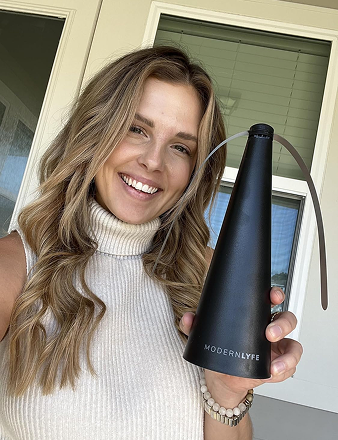
MODERN LYFE offers battery-powered fly fans designed for restaurants, hotels, catering events, and outdoor gatherings, with cordless placement that supports buffet and table setups. Visit MODERN LYFE to review the available options, check support and warranty resources, and choose a practical fan setup for your next service.