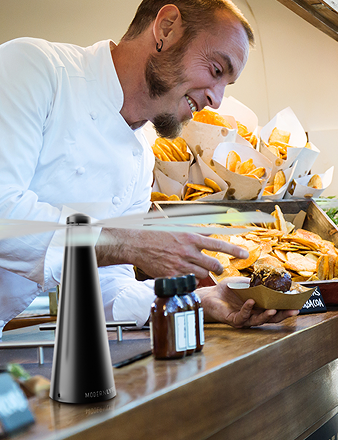
You're halfway through a summer reception when the buffet starts to hold heat, the cocktail hour stretches longer than planned, and the nearest electrical outlet sits far from the service area. Staff begin moving fans, guests use napkins to move air, and someone eventually runs a cable across a path. A battery operated pedestal fan can solve the placement problem, but only if you choose for the actual service window rather than the biggest battery label.
The practical decision is airflow versus endurance. A fan that runs all day but produces weak movement won't do much for guest comfort or flies around food. A powerful unit that empties its battery during the main service creates a different failure. This guide focuses on selecting, positioning, charging, and maintaining fans for restaurants, hotels, caterers, outdoor receptions, patios, and food-truck queues.
The Real Decision Behind Battery Operated Pedestal Fans
A late-July outdoor reception exposes the weakness in most buying decisions. The chafing dishes are still radiating heat, guests are waiting for dinner, and the only convenient power point is far away. A large battery capacity looks attractive on paper, but capacity alone doesn't tell you whether the fan will move enough air at the speed your venue can tolerate.
Portable fan testing shows why this matters. One heavier model ran for about 1 hour 52 minutes and delivered 334 m³ of total airflow, while another model lasted longer and delivered 440 m³ in testing (independent portable fan testing). The lesson isn't that one figure always beats the other. It's that runtime and air output must be assessed together.
Airflow changes the service outcome
At a buffet, directional airflow may help disturb the flight path of insects around food. At a reception, broad oscillation may matter more because guests are spread across a larger zone. At a food-truck queue, a compact unit that can be moved quickly may outperform a taller model that takes more space.
Noise adds another constraint. A fan that feels effective at maximum speed may be inappropriate beside a plated dinner, while a quieter low setting may preserve conversation but provide insufficient movement near a hot buffet.
Practical rule: Choose the fan setting and placement first, then determine how much battery capacity you need to sustain that setup.
Use the event, not the label, as the baseline
Start with three questions:
- How long is the active service window? Include setup, guest arrival, meal service, and breakdown if the fan must remain in operation throughout.
- What area needs airflow? A narrow buffet line, a dining patio, and a queue require different coverage patterns.
- What can guests hear? A busy queue tolerates more motor noise than a quiet dinner.
A mid-tier battery used mostly at an appropriate speed can be more useful than a high-capacity pack operated at a restrictive setting. The strongest purchase is the one that keeps the required airflow running for the complete service window without creating a noise, charging, or trip hazard problem.
What a Battery Operated Pedestal Fan Actually Is
A battery operated pedestal fan is a free-standing fan head mounted on an adjustable vertical pole and base. Instead of relying on mains power during operation, it uses a rechargeable battery, commonly a lithium-ion system, to drive the motor. Many models oscillate from side to side, tilt vertically, and offer multiple speed settings.
The pedestal form separates it from smaller personal devices. A handheld fan directs a narrow stream toward one person. A tabletop USB fan works well on a counter or desk but may sit too low for a buffet or crowded patio. A propane fly fan uses a different power source and is generally selected for a specialized insect-control role rather than broad guest cooling.
Think of airflow like a garden hose
CFM, or cubic feet per minute, describes the volume of air a fan moves. The easiest comparison is a garden hose. A wide hose can move substantial water at a moderate pressure, while a narrow spray nozzle produces a concentrated stream. Fans behave similarly. A larger airflow figure may indicate more volume across a zone, while a smaller outlet can feel sharper close to the face without moving as much air through the room.
Retail listings make airflow and acoustic output visible purchase criteria. A battery-powered portable fan category at Lowe's includes models reaching 650 CFM, with listings also showing sound ratings in the 51+ dB range (Lowe's battery-powered portable fan category). Those figures aren't interchangeable with a pedestal fan's real-world coverage, but they show why buyers should request measurable output rather than accept “strong breeze” as a specification.
Why commercial teams choose the pedestal format
The higher fan head can sit above food, trays, and seated faces. Oscillation distributes air across a wider area than a fixed handheld device, and the base keeps the unit independent of a table edge or railing. Correct placement also removes a power cable from a dance floor, buffet route, or queue.
That doesn't mean every pedestal fan belongs beside food. Keep the unit stable, avoid directing loose debris toward meals, and position the airflow so it supports comfort without disrupting table settings. For broader catering planning, Hen Hideaways catering help provides useful context on organizing service for large groups, where equipment placement and staff movement need to work together.
Specs That Matter for Restaurants, Hotels, and Catering
A venue manager should compare the fan's operating job, not battery capacity alone. The useful specification sheet connects runtime, airflow, sound, height, and charging with service length, guest comfort, and the staff routine for charging and storage.
Five specifications worth checking
Runtime must be tied to speed. Consumer guidance reports that 20,000 mAh fans may run about 14 to 24 hours on medium speed, while lower-capacity models may not exceed 2.5 hours under load (battery fan runtime guidance). Those figures do not predict every pedestal design. Ask whether the manufacturer tested low, medium, or high speed, then plan a reserve for setup, service, and breakdown.
Airflow should appear in CFM or another measurable unit. Peak CFM may come from ideal test conditions, sometimes at zero static pressure. Grilles, oscillation, battery condition, and placement can all reduce the air movement guests feel. A higher airflow setting can shorten endurance, so the practical choice is the lowest setting that covers the zone.
Noise should be stated in dB and, ideally, for each speed. A quiet dinner may need a low operating threshold, while a buffet or queue can tolerate more motor sound. Compare equivalent settings, not one product's low-speed reading with another's maximum-speed figure.
Height determines the airflow path. A typical commercial comparison may fall around 44 to 54 inches, but the right position depends on whether air must pass over a buffet, across standing guests, or toward seated diners. Check stability at the highest setting, especially where staff or guests may brush past the base.
Charging determines whether the fan fits daily operations. A proprietary dock keeps equipment tidy but leaves the venue dependent on one charger. USB-C Power Delivery can simplify storage, while a swappable battery can maintain service if trained staff replace packs safely. Label chargers, assign a charging shelf, and record which units are ready before load-in.
| Spec | What to Look For | Typical Commercial Range |
|---|---|---|
| Runtime | Speed-specific test results, not one maximum figure | 4 to 24 hours, depending on speed and battery design |
| Airflow | Published CFM and test conditions | Up to 650 CFM in listed portable battery fan models |
| Noise | dB readings for low and high settings | Listings may reach 51+ dB |
| Height | Stable adjustment for buffet or guest level | Typically 44 to 54 inches |
| Charging | Dock, USB-C PD, or swappable battery | Match the charging method to venue operations |
For outdoor catering logistics, this guide to battery-operated outdoor fans can help teams plan placement away from fixed outlets. Hen Hideaways catering help also provides planning context for large groups, where fan locations must preserve staff access, food presentation, and guest circulation. File both guides with the event setup checklist so placement decisions are made before load-in, not on site.
Matching the Fan to the Venue and the Event
The same fan can be suitable for one venue and wrong for another. A buffet line values directed movement near food. A wedding reception values comfort without overpowering conversation. A patio needs flexibility as shade and guest density change, while a food-truck queue rewards portability and fast repositioning.
Four common operating scenarios
Banquet buffet line. Prioritize directional airflow at table height and stable placement outside the staff route. Service may be relatively short, so a venue could accept a shorter high-output run if the unit can complete the meal period without a charging interruption. Keep the air path controlled. Excessive airflow can disturb lightweight napkins, labels, or delicate garnishes.
Outdoor wedding reception. Guests expect airflow without a distracting mechanical presence. A unit with strong CFM, oscillation, and a sound profile around the lower end of the 55 to 60 dB comfort ceiling may be more useful than a louder model operating at full power. Place fans around the perimeter rather than directly beside tables, and verify that the battery covers the reception plus setup and breakdown.
Patio dining. Variable speed matters because shade, sun, guest count, and wind conditions change during service. Low speed may be enough during a breezy lunch, while a higher setting may help when the patio fills. A fan that remembers settings or offers simple controls reduces staff intervention during a busy shift.
Food-truck queue. Choose a compact base, a manageable carrying weight, and quick battery replacement if the queue lasts through changing service periods. Maximum height is less important than a footprint that won't narrow the line or obstruct payment. Position the unit so it doesn't blow menus, receipts, or packaging from the counter.
| Venue | Airflow Priority | Runtime Need | Noise Tolerance | Key Feature |
|---|---|---|---|---|
| Buffet line | Directed movement near food | Short service window | Moderate | Stable height and controlled angle |
| Wedding reception | Broad, even guest comfort | Reception plus buffer | Low to moderate | Oscillation and quiet operation |
| Patio dining | Adjustable response to conditions | Variable across service | Low near tables | Multiple speeds and easy controls |
| Food-truck queue | Localized airflow and portability | Depends on queue duration | Moderate to high | Compact base and battery access |
If your operation includes temporary beverage stations, planning resources such as this guide to setting up a hot chocolate stand can help you coordinate equipment, staff movement, and customer flow. The fan should support that layout, not become another obstacle inside it.
Charging, Battery Care, and Safety for Commercial Use
Battery care belongs in the venue's closing routine. Commercial fans face repeated charging, transport, heat, dust, condensation, and rushed handoffs. A unit that works reliably at home may become unpredictable when staff leave it fully charged in a hot storeroom or return it wet after outdoor service.
The IEC 60335-2-80:2024 safety standard covers electric fans, including battery-operated appliances. Its scope includes rated voltages up to 250 V for single-phase appliances and 480 V for other appliances, including DC-supplied fans (IEC 60335-2-80:2024 scope). Ask suppliers which applicable safety standards and certifications their specific model carries. Don't assume that a USB connector alone establishes commercial suitability.
A routine staff can follow
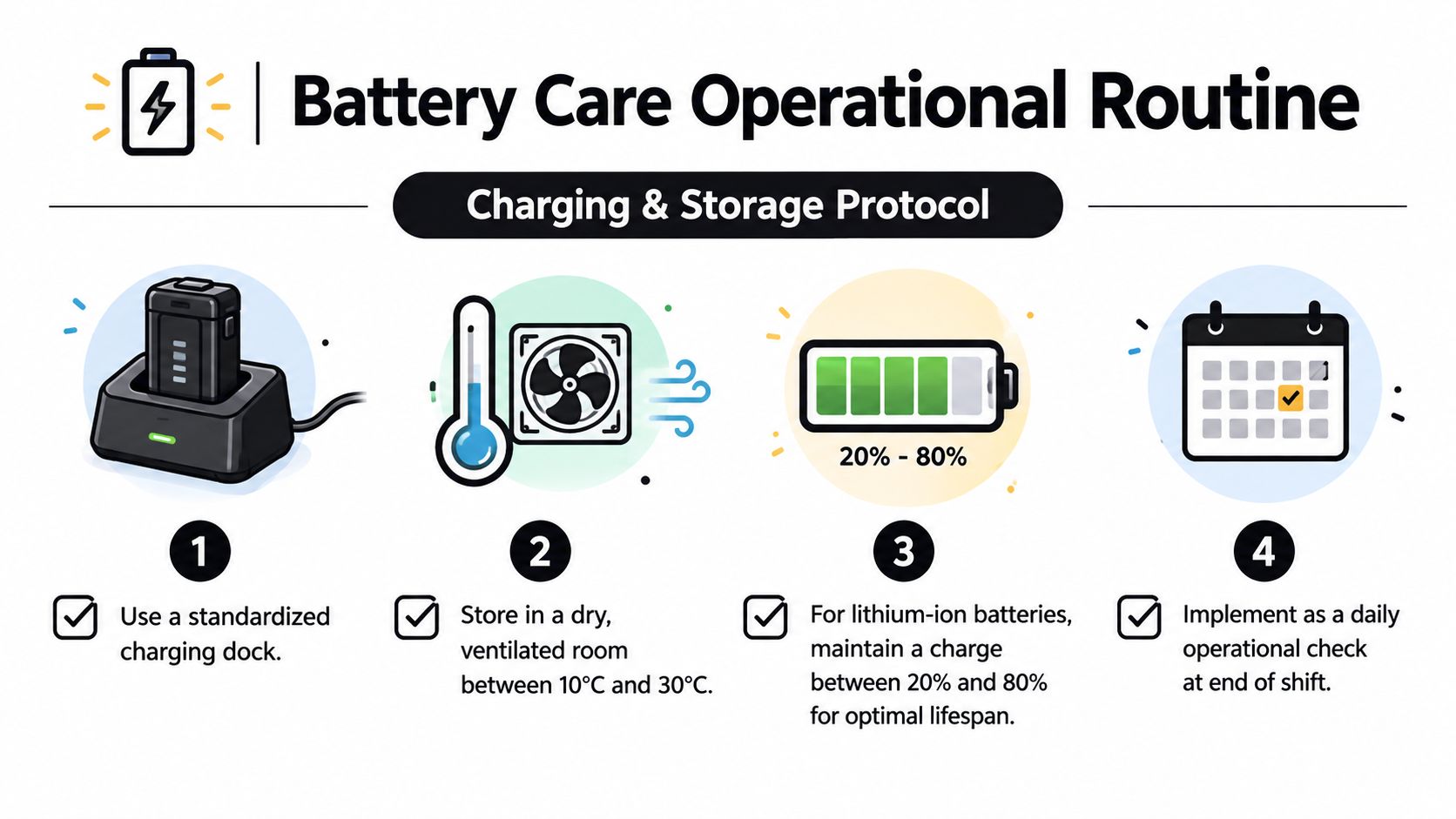
- Use one charging location. Set up a standardized charging dock in a dry, ventilated storage room between 10°C and 30°C. Keep chargers labeled and separate from wet cleaning equipment.
- Prepare before dispatch. Check the battery housing for swelling, damage, or unusual odor. Confirm charge level, run the fan for 10 minutes, and verify that the control, oscillation, and charging indicators work.
- Store deliberately. For long-term storage, keep lithium-ion batteries at roughly 40% to 60% state of charge rather than leaving every unit full. The supplied operational graphic uses a broader 20% to 80% lifespan range, so follow the manufacturer's instructions when they differ.
- Close the event safely. Don't leave a charging fan unattended overnight. Wipe the grille, dry condensation, inspect the cable, and record the event or cycle information in the equipment log.
- Plan replacement. Track declining runtime rather than waiting for a complete failure. A battery replacement guide can help managers build replacement decisions into seasonal maintenance.
Avoid daisy-chaining extension cords across walkways, even when the fan itself is cordless. Keep batteries away from direct heat, never use a swollen pack, and remove damaged equipment from service until a qualified supplier or technician provides guidance.
ROI, Operating Costs, and Guest Experience
The return on a battery operated pedestal fan isn't limited to the purchase price. It comes from avoiding a visible service failure: guests leaving a warm dance floor, staff improvising with unsafe cables, or a coordinator receiving repeated complaints about stagnant air near the dining area.
A simple operating model can clarify the decision. One fan running 80 events per year at roughly 200 watt-hours per charge would use an amount of electricity that costs under $20 annually at typical commercial electricity rates, based on the planning assumptions in this operating model. Battery replacement every 400 to 500 cycles brings the modeled annual operating cost to under $100 per unit, depending on the equipment price, energy rate, and replacement battery cost. These are planning assumptions, not universal product measurements, so managers should substitute their own event count and supplier pricing.
What failure costs you
A fan that dies before the main service can force staff to move furniture, borrow equipment, or run temporary power. Those actions consume labor and can change the guest experience at the exact moment the venue needs to look controlled.
A stronger ROI case appears when the equipment expands the dates and layouts you can accept. If reliable airflow helps a venue operate a heat-prone patio booking or an outdoor reception that would otherwise require extensive power planning, the value comes from protecting the booking and reducing operational uncertainty.
The cheapest unit is expensive if staff can't trust it during the service window.
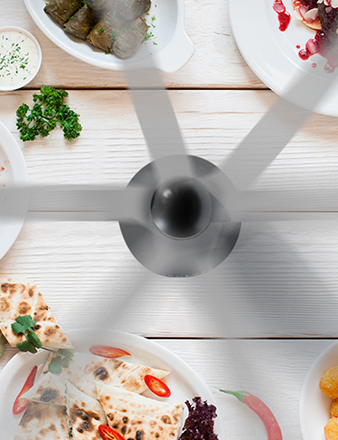
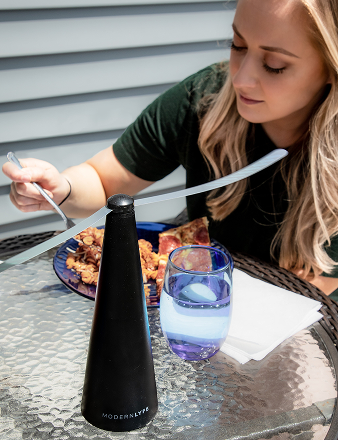
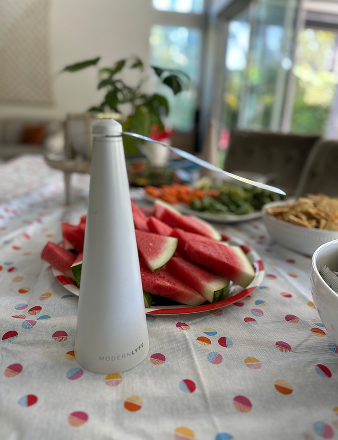
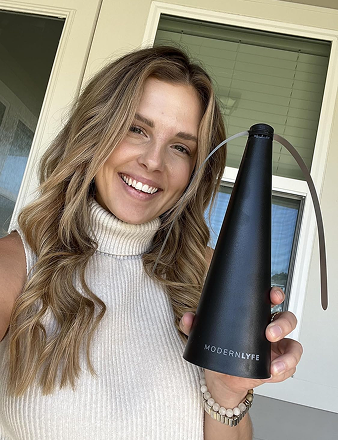
The same logic applies to insect control. A pedestal fan designed for guest airflow isn't automatically a dedicated fly-control device, and a small table fan may be more appropriate around a specific food station. MODERN LYFE offers battery-operated fly fans powered by 2 AA batteries or USB, designed for placement around tables and food areas. For broader planning around battery-powered solutions, compare the device's purpose with the airflow zone instead of treating every fan as interchangeable.
Choosing the Right Model with Confidence
A reliable buying decision starts with the venue map, not the product page. Mark the food zone, guest zone, staff route, charging location, and any area where a base could create a trip or access problem. Then select a fan that serves that specific space.
A five-step selection process
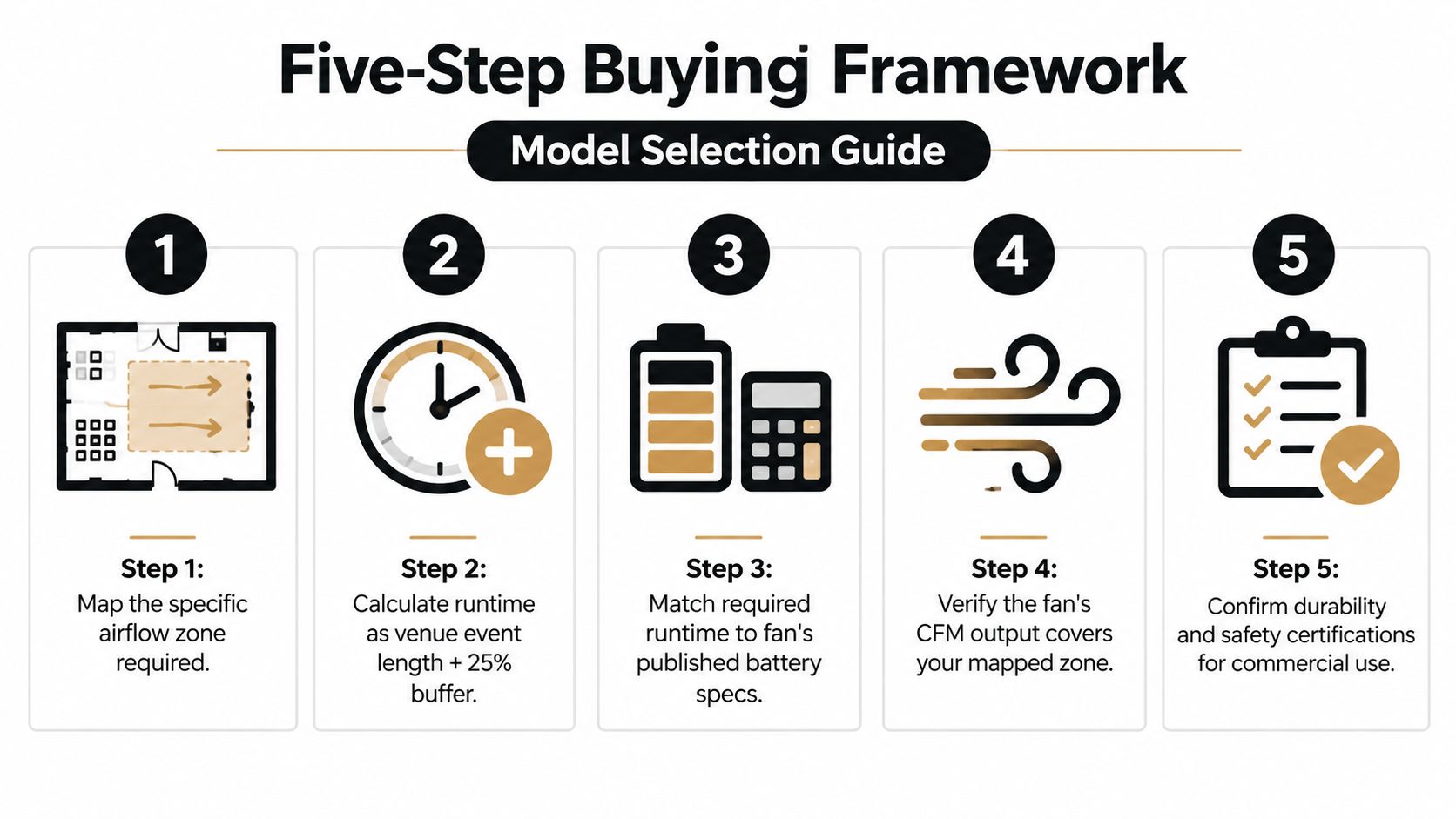
- Map the airflow zone. Identify whether you need coverage over a buffet, across seated guests, along a patio, or at a queue. Don't buy based on room size alone.
- Calculate realistic runtime. Use the event length plus a 25% buffer. A four-hour reception therefore requires planning for five hours of operation, not a product claim that barely reaches the event length.
- Match runtime to published battery data. Review the test speed, charging time, battery chemistry, and whether the battery is replaceable. A high mAh figure isn't useful if the fan only reaches that runtime on its lowest setting.
- Verify CFM for the mapped zone. Compare measurable airflow with the fan's intended placement. Check whether the stated figure reflects peak output, and test the unit in the position where staff will use it.
- Confirm commercial durability and safety. Check the warranty, replacement battery availability, charger design, outdoor protection rating, grille cleanability, and applicable safety certification.
For a worked example, consider a 150-guest evening reception lasting 4 hours. A 20,000 mAh fan on medium speed may cover that operating window with the required buffer only if its manufacturer's test data supports the planned duration. The manager should verify the exact model, run a pre-event test, and decide whether one spare unit or battery is needed for the layout rather than treating the capacity label as proof.
Vendor checks that prevent avoidable problems
Ask for speed-specific runtime results, CFM test conditions, dB readings, charging instructions, and battery replacement pricing. Confirm that the warranty applies to commercial use, not only occasional household operation. Check whether the base folds or separates for transport, whether the grille can be cleaned without specialist tools, and whether the supplier can support replacement parts during the season.
A short demonstration is often more informative than a polished listing. Run the fan at the intended height, listen from the guest position, observe the oscillation path, and measure how long setup takes. If the model works in the service layout, it has earned a place on the equipment list.
Record the chosen speed, placement, charging time, and post-event battery level after each use. That operating log turns a purchase into a repeatable system, helping the next coordinator select the right fan before the weather, guest count, and service plan change.
MODERN LYFE offers portable fly fans powered by AA batteries or USB for tables, buffets, patios, and event setups where targeted insect protection matters. Visit MODERN LYFE to review battery-operated options and choose a practical solution that fits your food-service layout.