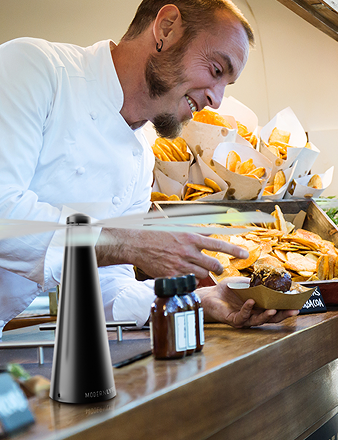
When a restaurant owner searches for a battery operated pest repeller, they usually want a simple answer: something portable, quiet, and effective enough to keep flies away from food and guests. The popular advice is to buy an ultrasonic gadget, switch it on, and forget about the problem. That advice confuses portability with performance.
There are two very different products in this category. Ultrasonic emitters produce sound, often without any visible sign that they're doing anything. Physical fly fans create moving blades and airflow, which interrupt an insect's flight path immediately. For hospitality, that difference matters more than battery size, product packaging, or impressive claims.
A wire-free device can be useful at a buffet, food truck window, wedding table, or outdoor bar. But it has to create a real barrier. If it only broadcasts a sound that pests ignore, you've bought convenience without protection.
The Reality of Battery Operated Pest Repellers
The phrase battery operated pest repeller hides a serious product distinction. Some units are electronic ultrasonic emitters. Others are mechanical fly fans that use rotating blades and a visual or physical interruption to discourage insects from landing. Both may sit on a table and run from batteries, but they don't solve the problem in the same way.
Ultrasonic devices have been commercially active for decades. A 2014 University of Arizona review noted that the first United States patents for sonic pest devices appeared in the 1960s, with issued patent filings continuing to rise through 2010. The review also identified two common power formats, plug-in and battery-powered, confirming that portable battery operation is part of the category's established product history. The University of Arizona review of sonic pest devices also found that scientific evaluations were mixed and that many residential devices hadn't demonstrated effectiveness in rigorous studies.
That history explains why battery-powered units remain attractive. Outdoor catering areas often lack convenient outlets. A hotel may need temporary protection during a garden reception. A food market vendor may need a compact device that can move from one stall position to another. Portability is genuinely useful, but portability doesn't make an ineffective technology effective.
Practical rule: Choose the mechanism first, then choose the power source.
For dining and events, the question isn't whether a gadget turns on. The question is whether it keeps insects away from food in a busy, open environment. A physical fly fan gives staff something they can inspect at a glance. The blades are turning, the barrier is visible, and placement can be adjusted when wind, table layout, or service flow changes.
An ultrasonic emitter offers no comparable visual proof. It may be operating normally while flies continue landing on platters. That makes it a poor primary control for any venue where food presentation and guest confidence matter.
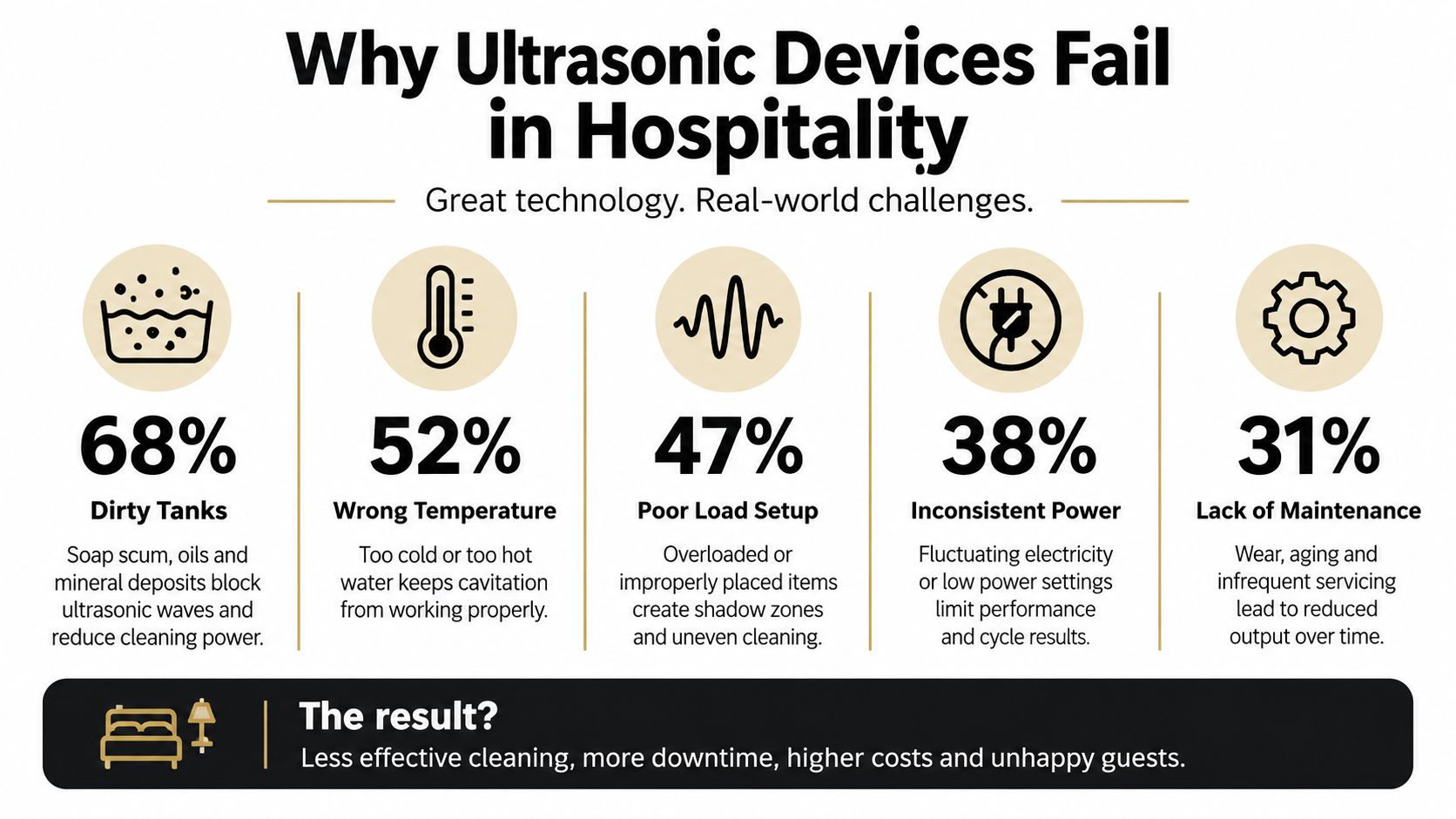
Why Ultrasonic Devices Fail in Hospitality
Ultrasonic pest control sounds plausible because many pests respond to vibration, movement, or environmental disturbance. The problem is that commercial devices must generate a strong, targeted, and sustained effect in a space filled with competing sounds, furniture, walls, people, food aromas, and air movement. Most don't provide a reliable behavioral barrier.
Commercial ultrasonic pest repeller devices typically operate in the 20–100 kHz range, but a 2026 review found that this output falls far below the greater-than-160 dB behavioral threshold intensity associated with avoidance in even sensitive pests such as cockroaches. The review concluded that commercially viable ultrasonic intensities generally produce negligible or no meaningful effect for common pests, including ants, cockroaches, spiders, and fleas. The 2026 review of commercial ultrasonic pest repellers provides the relevant technical context.
The gap between sound and control
Frequency alone doesn't create a useful repellent. A device can emit a high-frequency sound and still fail to deliver enough intensity where the pest is moving. Sound also behaves poorly as a room-wide barrier. Furniture, counters, food displays, walls, and bodies interrupt or weaken the signal, while an outdoor setting introduces wind and open escape routes.
Pests don't need to understand the device. They only need to keep moving toward food. If the stimulus isn't strong or consistent enough to trigger avoidance, a fly can continue approaching a serving table. Even when a pest initially reacts to an unfamiliar disturbance, habituation can reduce the response over time.
A 2012 Journal of Economic Entomology study found that commercially available ultrasonic devices neither repelled nor attracted bed bugs in choice trials. The University of Arizona review also reported no effective ant control and no effect on bed bugs in the tests it summarized. In one reported case, bite rates increased by as much as 50% when devices were activated. The Journal of Economic Entomology study on ultrasonic devices and bed bugs is useful reading for buyers who want evidence rather than product demonstrations.
Why hospitality exposes the weakness
A residential room is already a difficult environment for ultrasonic claims. Hospitality settings are harder. A buffet line is open, food is exposed, guests move around constantly, and staff reposition equipment. Outdoor dining adds wind, vegetation, nearby bins, lighting, and multiple food sources.
A 2021 peer-reviewed study tested nine commercial ultrasonic repellent devices against the Australian paralysis tick and found overall repellency of less than 19.5%, too low to recommend for bite prevention. Most devices tested were portable and battery-operated, while only two required AC power. The study and its reported findings reinforce an important buying lesson: a portable device can be common in the market without delivering reliable protection.
A hotel team also needs practical operating information. Staff communication, service alerts, and inspection records often matter more than another gadget. A mobile-first hotel operations app can help teams coordinate cleaning, maintenance, and event setup, but it can't turn an ineffective ultrasonic emitter into a working fly barrier.
The University of Arizona's neutral review reaches the blunt conclusion that ultrasonic pest control devices are generally not effective, and that prevention, direct control, and exclusion deserve the resources instead. Its review of pest-control approaches aligns with the operational reality: use physical controls where food is served, and treat any electronic repeller as an optional experiment, never as your main protection.
Physical Fly Fans vs Electronic Emitters
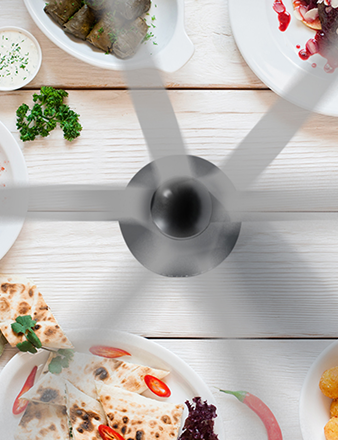
A physical fly fan doesn't need an insect to believe a marketing claim. It creates movement in the space where the insect wants to land. Rotating blades interrupt the approach, produce airflow, and create a visible obstacle over a plate, tray, or table.
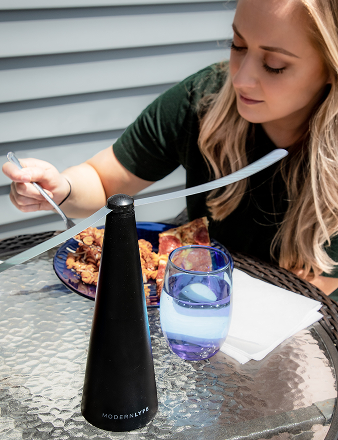
That direct action is valuable in hospitality. Staff can see whether the fan is running. Managers can place it beside a buffet, adjust it around a centerpiece, and remove it after service. Guests don't need a technical explanation, and the device doesn't rely on chemicals or a sound frequency that may have little practical effect.
Ultrasonic emitters have a place only if you accept uncertain results and use them as a minor supplementary measure. They aren't a substitute for sanitation, covered food, screens, waste control, or physical interruption. Fly fans work best as one layer in a clean, well-managed service environment.
| Feature | Ultrasonic Emitters | Physical Fly Fans |
|---|---|---|
| Operating principle | Emits high-frequency sound | Uses rotating blades and airflow |
| Result guests can see | None | Yes, the barrier is visible |
| Response to placement changes | Often difficult to verify | Easy to observe and reposition |
| Suitability for exposed food | Uncertain protection | Directly disrupts landing approaches |
| Battery-powered portability | Common | Common |
| Main operational weakness | Pests may ignore or habituate to the sound | Requires sensible placement and maintenance |
| Best role | Optional, non-primary experiment | Practical protection for tables and service areas |
The most elegant solution is often the least mysterious one. A quiet mechanical fan positioned near exposed food creates a physical zone that insects must traverse. It won't solve every pest issue, especially where waste, standing water, or poor screening attracts insects from the surrounding area. It does give staff a credible tool that works at the point of risk.
For restaurants comparing portable devices, look at battery-powered fly zappers and related food-area options, but don't confuse killing insects with preventing them from landing on food. A fly fan is designed around the more important hospitality objective, keeping insects away from the serving surface.
Key Features for Event and Dining Environments
The right fly fan should disappear into the setting while doing an obvious job. A wedding planner doesn't want a bulky machine dominating a carefully styled table. A restaurant manager doesn't want motor noise competing with conversation. A caterer doesn't want a battery warning during the busiest part of service.

Start with power reliability
Choose a model that matches the service pattern, not an imaginary average day. For a short setup, disposable batteries may be simplest. For repeated catering work, rechargeable cells can reduce waste and make stock control easier. Either way, keep charged or unused replacements with the event kit and test every unit before loading the vehicle.
Battery access matters too. A sealed compartment that requires tools is inconvenient for a busy team. Look for clear polarity markings, a secure cover, and controls that staff can operate without dismantling the housing.
Treat noise as a guest-experience issue
A fly fan can be mechanically effective and still be unsuitable if its motor is intrusive. Test it in a quiet dining room, not only in a noisy warehouse. Listen from the guest's position, beside the dessert table, and near the head table at a reception.
Quiet operation is especially important for fine dining, hotel lounges, ceremonies, and speeches. The device should protect the table without becoming part of the conversation.
Service test: Run the fan beside an empty place setting and listen from a seated guest's position before approving it for an event.
Inspect the design, not just the specifications
A compact footprint, stable base, protected blades, and neutral finish make placement easier. Look for a form that can sit near a buffet without touching food, blocking serving utensils, or creating a trip hazard. Outdoor models also need durable housings and controls that staff can manage with clean hands.
Aesthetic integration supports hygiene because staff are more likely to place and maintain equipment that looks intentional. For food-area planning, food certification renewal tips can help operators keep broader compliance responsibilities visible alongside equipment checks.
Watch a product demonstration in context before buying several units. The important questions are simple: does the airflow reach the landing zone, does the fan remain stable, and can a manager tell immediately whether it's operating?
For food presentation, review practical guidance on battery-powered fly fans for food. The focus should stay on placement, visibility, food protection, and ease of service rather than novelty features.
Strategic Placement for Maximum Protection
A fly fan only protects the area its airflow and movement cover. Place it too far from the food, behind a centerpiece, or where a strong breeze carries the disturbance away, and performance will suffer. Placement should be part of the service plan, not an afterthought during setup.
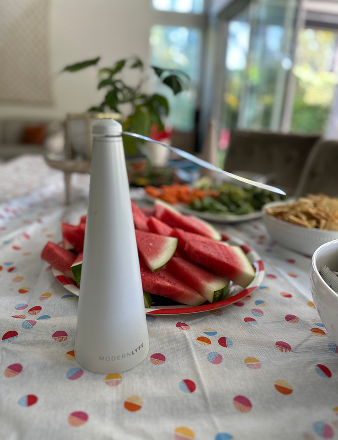
Consider a wedding buffet. Put a fan at the end where guests approach the uncovered dishes, while keeping the unit clear of serving handles and labels. If the buffet is long, use more than one protection point rather than expecting a single fan to cover every platter. Keep the equipment visually aligned with the table design so it looks like part of the presentation.
At an outdoor barbecue, place the fan near the food surface, not beside the seating area. The objective is to interrupt flies before they reach meat, salads, desserts, and condiments. Keep it away from direct cooking heat, grease, splashing liquids, and locations where guests might knock it over.
A market vendor or food truck operator should focus on the service window and preparation counter. The unit belongs near the opening where food leaves the protected interior, while staff should still use covers and clean surfaces. A fan can't compensate for uncovered waste containers or food residue around the stall.
Use the environment as part of the plan
Wind direction can help or hurt. Set the fan so natural airflow doesn't immediately carry its effect away from the food. Sun exposure also matters because heat can affect battery performance and make a dark housing uncomfortable to handle. Shade the unit where practical, but don't bury it behind signage or décor.
The best setup leaves no obvious gap between the physical barrier and the food. Keep fans upright, stable, and accessible for staff inspection. Avoid placing them where their blades could contact napkins, packaging, flowers, or loose table decorations.
A service captain should check the setup before guests arrive, then include the units in the same visual sweep used for covers, utensils, labels, and waste stations. If a fan stops, staff should replace or reposition it immediately rather than leaving an inactive device on the table.
Maintenance and Battery Management
Reliable pest protection depends on boring routines. A fan with weak batteries, dirty blades, or a loose housing may still appear present while producing less airflow and creating less disruption. Hospitality teams should treat each unit like any other service tool.
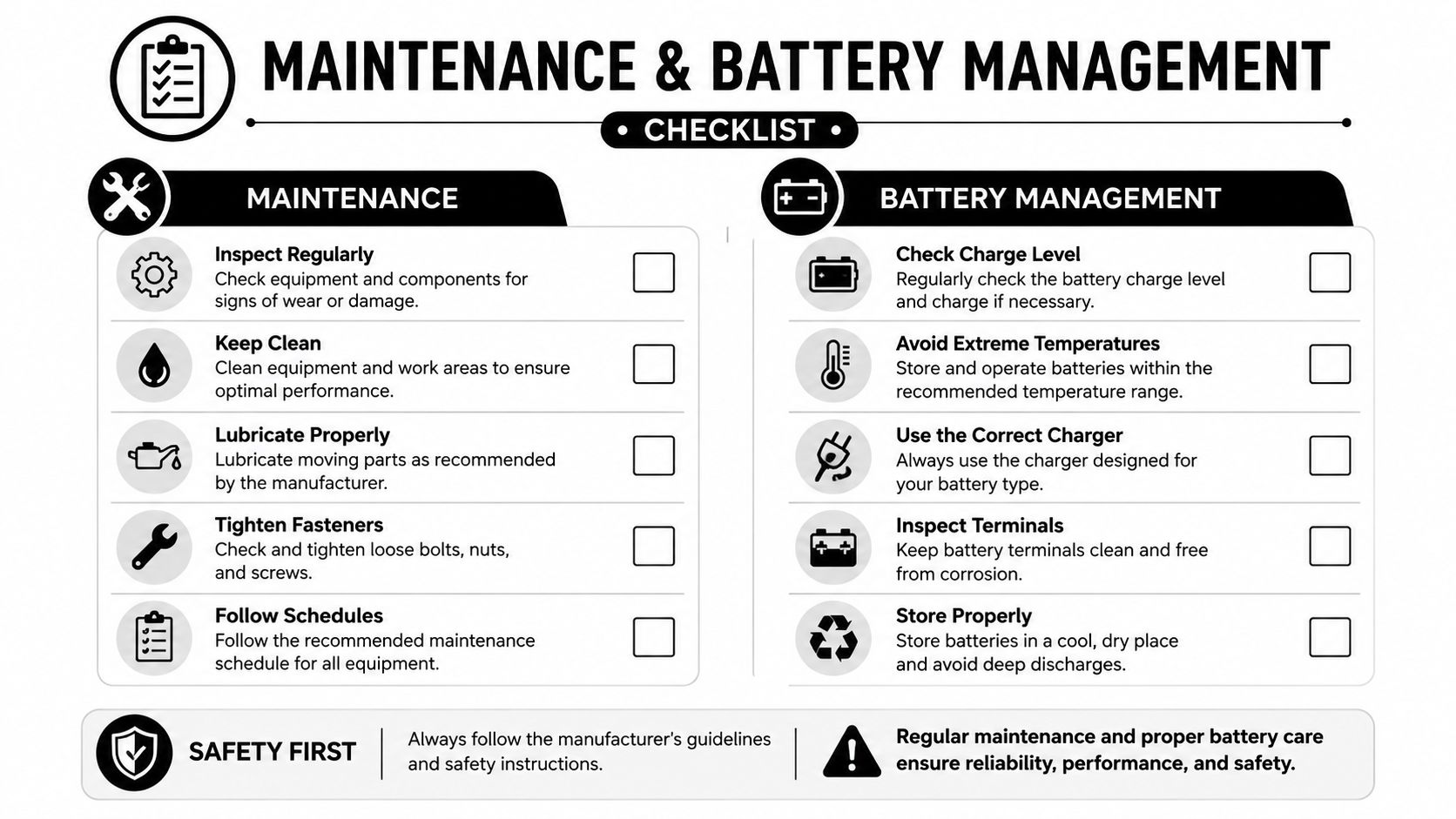
Use a fixed inspection schedule. Check the battery compartment, run the motor, inspect the blades, and confirm that the base or mount is stable. Don't wait for a device to fail during a reception or dinner rush.
Build a simple operating routine
- Before service: Install known-good batteries or fully charged rechargeable cells, then run the fan long enough to confirm smooth operation. Check for unusual vibration or scraping.
- During setup: Wipe the housing and blades with an appropriate cleaning cloth. Remove dust and residue that could restrict airflow or make the unit look neglected beside food.
- After service: Switch the unit off, remove disposable batteries if it will be stored for an extended period, and record any fault. Store fans in a dry, protected area where blades won't bend.
- Before the next booking: Match each unit with its battery supply, inspect the cover, and test the controls. A labeled equipment case prevents staff from treating replacement batteries as an emergency purchase.
Rechargeable cells suit teams that use fly fans repeatedly and can maintain a charging routine. Alkaline batteries suit occasional events and emergency backups. Don't mix old and new batteries, and follow the product's instructions for battery type, storage, and disposal.
For a practical reference on changing cells and organizing replacements, use this battery replacement guide. The key operational point is consistency. A written log is more dependable than someone's memory at the end of a long event.
Keep cleaning practical
Never spray liquid directly into the motor or battery compartment. Remove visible debris from the blades with a dry or lightly damp cloth, following the manufacturer's cleaning guidance. If grease or food residue reaches the housing, take the unit out of service until it can be cleaned safely.
Store batteries separately when the equipment will sit unused. Keep spare cells cool and dry, and rotate stock so older batteries get used first. These small controls protect the fan, reduce interruptions, and keep the physical barrier ready when service begins.
Elevating the Guest Experience
Hospitality pest control isn't a gadget contest. Guests care about clean food, calm surroundings, and a table that feels thoughtfully managed. They don't care whether a device uses an impressive technical term. They care whether flies land near the meal.
Ultrasonic emitters fail the hospitality test when managers can't verify their effect and independent evidence shows little reliable protection for many pests. The 2021 tick study, the bed bug trials, and the broader reviews all point to the same purchasing lesson: a battery-operated device can be portable and commercially popular without being a dependable repellent.
Physical fly fans are more honest. They create a visible, immediate interruption where food is served. They still require clean operations, covered food, waste management, sensible placement, and routine inspection, but they support those controls instead of replacing them with a questionable promise.
Audit your current equipment before the next event. Remove ultrasonic units from any role where staff assume they protect exposed food, test a quiet mechanical fan in the actual service environment, and give your team a clear setup and battery checklist. Select products with accessible support, clear maintenance requirements, and warranty information that a manager can act on.
MODERN LYFE offers battery-powered fly fans designed for tables, buffet lines, outdoor receptions, restaurants, hotels, catering events, and home gatherings. Visit MODERN LYFE to review portable fly-fan options and choose a practical physical barrier for your next service.