A trap next to the plates is often the worst tool on a patio. It pulls flies toward the food instead of keeping them off it. The best fly deterrent for patio service is a quiet fan at table height, used with sealed waste, fine screens, and covered dishes. Airflow protects the meal in front of guests. Screens stop entry. Traps belong at the edge. Sprays belong on empty porches, not over dinner.
Flies landing on plates need moving air and covers. Flies only hovering in shade need air across the seats. Flies breeding in bins and drains will ignore whatever sits on the tabletop.
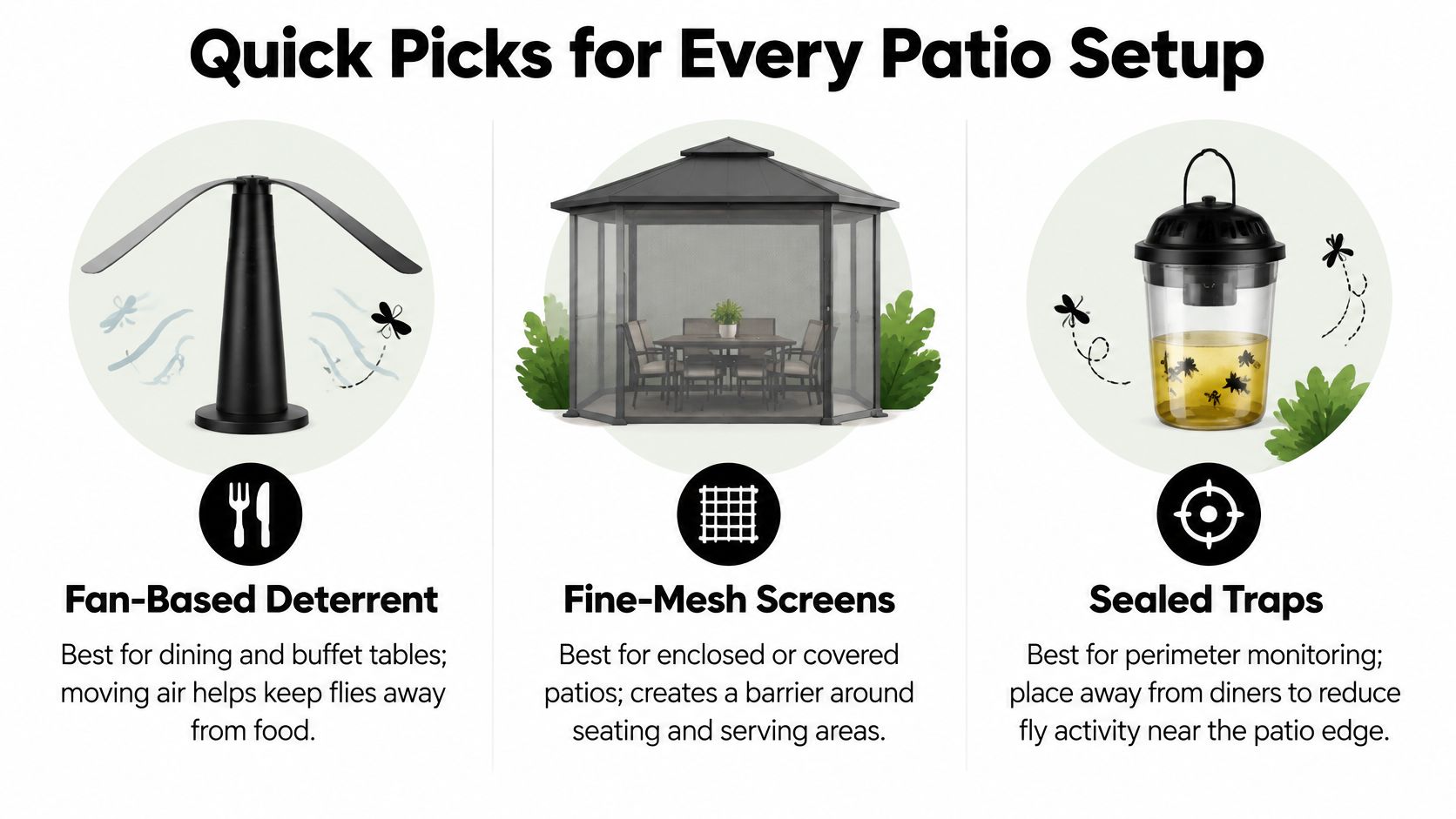
Quick Picks for Every Patio Setup
For dining tables, buffet lines, and event tables, use a fan-based table deterrent. It wins where people eat because it keeps flies off food without a scent and without calling more insects in.
Other tools still have a job. Fine-mesh screens win on enclosed or covered patios and at doorways. Sealed traps win for perimeter checks, placed away from diners. Residual spray wins only on resting surfaces such as empty porches. Fly paper belongs in waste corners, not in sight of guests.
Watch the insects before you buy. If they land on plates, trays, or open drinks, you need table-height airflow and covers. If they only swarm overhead, you need air moving across the seating area, not a bait meant for a different fly.
| Deterrent type | Best setting | How it works | Main limit |
|---|---|---|---|
| Fan-based table deterrent | Dining tables, buffet lines, event tables | Airflow and light reflection keep flies off food at table height | Covers only the zone it is placed in and needs power or charging |
| Fine-mesh screen (22 openings per linear inch, 0.038 in or smaller) | Enclosed or covered patios, doorways | Physical exclusion stops most outdoor flies from entering | Does not handle flies already inside or on food |
| Light trap | Perimeter monitoring, away from service | Attracts and captures flies | Can draw flies toward the area if placed near food |
| Residual spray | Porches and resting areas, not active dining | Chemical residue on surfaces | Unsuitable near guests, food or pets |
| Fly paper or sticky trap | Waste areas and low-traffic corners | Captures flies that land | Visually unpleasant and weak alone |
University of Arizona guidance sets the screen benchmark at 22 openings per linear inch and openings no greater than 0.038 inches (0.965 millimeters), which stops most flies from walking in from outside.
Practical rule: No single option eliminates flies. Pair the pick with sanitation and food covers, or the next generation shows up anyway.
Identify the Fly Before You Choose a Deterrent
Buy for the behavior you can see, not for a generic "outdoor fly."
- Watch the food. Landing on plates, buffet trays, or open drinks means table-height airflow and covers come first. Hovering only overhead is a swarm, so move air across the seats.
- Check time and shade. Small flies that pile up in still, shaded patio edges, entryways, or garages often ignore house-fly bait. Pest control guidance on outdoor flies notes that strong air movement can break up those swarms when bait does nothing.
- Look for waste. Clustering on bins, drains, pet waste, or grease means cleanup comes before any device. A deterrent only shields the zone around it. Fruit flies on scraps are a different job, covered in our fruit fly control guide.
- Check entries. Flies arriving through open doors or torn screens need exclusion, not another candle.
- Write the pattern down. Landing, swarming, breeding, or entry tells you whether the next purchase is a fan, a screen, or a sanitation fix.
Why Deterrence Works Only With Sanitation
A table fan keeps flies off the plate. It does not stop the next brood. Purdue University Extension calls sanitation the "first line of defense" because house flies breed in wet, decaying organic matter and can complete a generation in as little as 7–10 days. Scraps, pet waste, and overflowing bins left for a week are already a nursery.
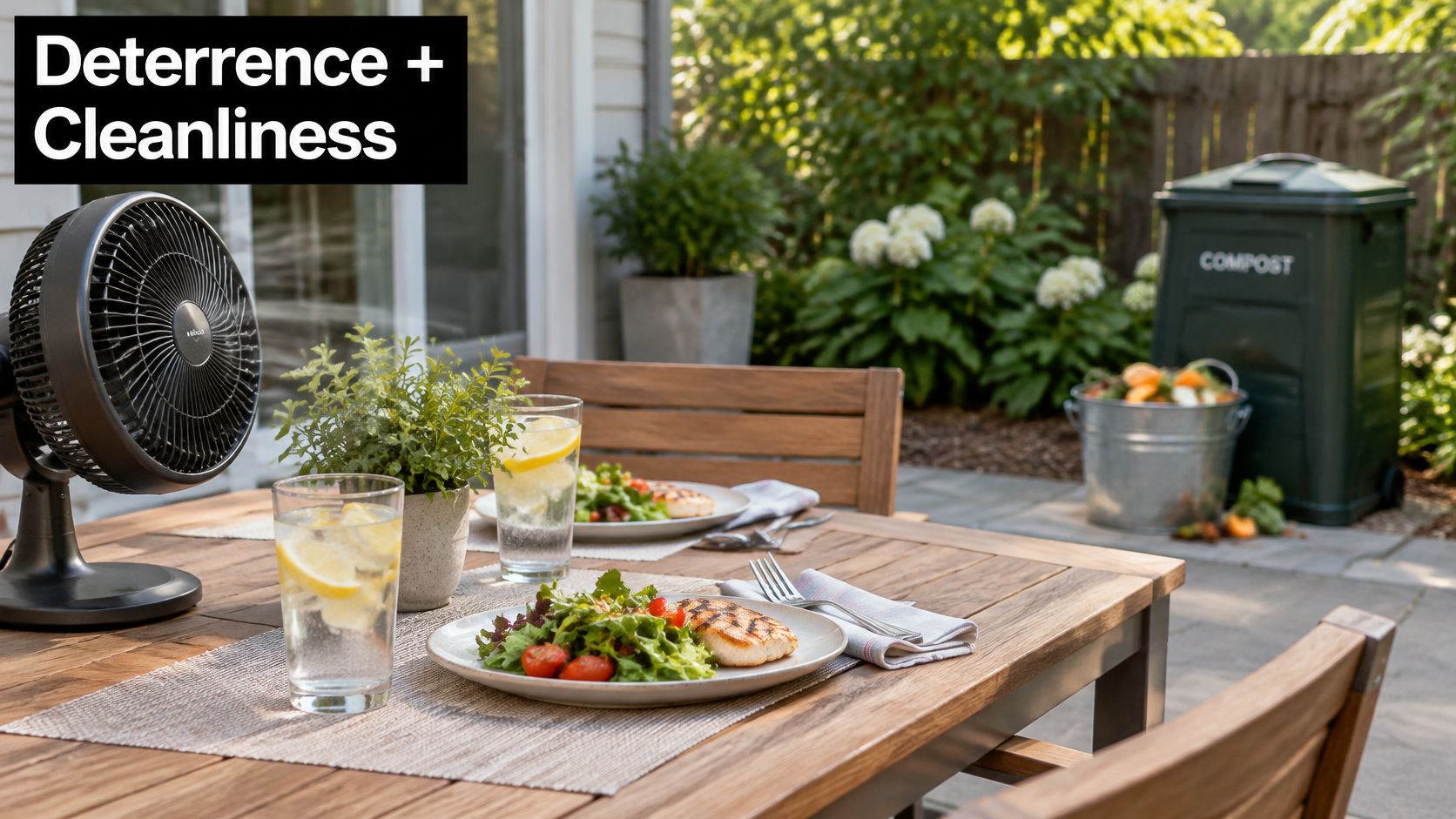
The EPA integrated pest management toolkit treats sanitation as the "first and most important step." Remove food debris, sweep crumbs, fix dripping faucets, dry wet spots, clean prep gear promptly, and clear grease. Clean floor drains weekly so buildup doesn't sit under the service line.
Virginia Tech house-fly guidance is blunt about attractant devices. Light traps may help outdoors, but they can pull flies in from a wider area. Don't set one beside the tables and hope it thins the crowd. Seal cans, wipe outdoor spills, and keep door and window screens tight.
Purdue also allows residual sprays on outdoor resting spots such as porches, and it lists screened, closed doors and windows as core exclusion. Spray is the wrong call once guests, food, pets, or a buffet are in that zone.
Hard surfaces hold the same crumbs and grease as the bins. Patio care advice for Dublin homeowners from Top Cleaners is a practical reminder to wash the slab, not only the containers. After the sources are gone, a quiet rechargeable fan is the guest-facing layer. Our effective fly control notes show how that fan sits in the sequence, not in place of it.
Run the work in this order.
- Remove attractants: Clear scraps, pet waste, and standing spills before service.
- Seal waste: Tight lids, emptied and washed on a set schedule.
- Cover food: Lids or covers on anything that isn't being served right then.
- Add airflow last: Aim it at table height only after the sources are handled.
Deterrents for Dining and Buffet Tables
An open buffet is a landing strip. Warm trays, cut fruit, and uncovered drinks give flies a reason to stop, and a candle or scented spray adds odor without a barrier. Put the deterrent where the food is, at serving height, and keep every attract-and-kill device off that line.
Placement that actually covers the food
Set the fan at table level, not on a high shelf. Aim the breeze across the food line so it crosses plates and trays, not into guests' faces. On a long run, one unit at the end leaves the far dishes open. If you're laying out a banquet surface, choose the right patio table size from Woodstock Furniture & Mattress Outlet first, then plan one airflow zone per stretch of exposed food.
Walk the line before guests arrive and check four things.
- Full perimeter: Every open station sits inside moving air.
- Clear path: Nothing blocks the breeze at serving height.
- Quiet running: Conversation stays normal. No scent competing with the food.
- Distance from waste: Bins and drains stay outside the dining zone.
EPA cafeteria and kitchen IPM guidance is clear that insect light traps can monitor and catch some flies, but they must not sit where they draw flies into food preparation or serving areas. A light trap beside the chafing dishes fails that test. Park monitoring traps at the perimeter, after breeding sites are already under control.
A fan built for the table
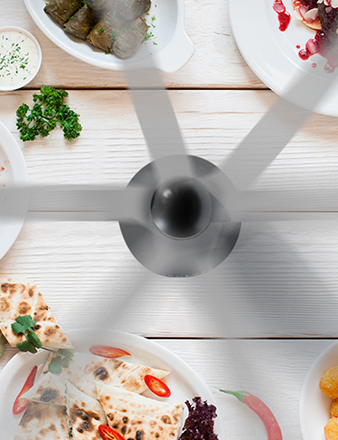
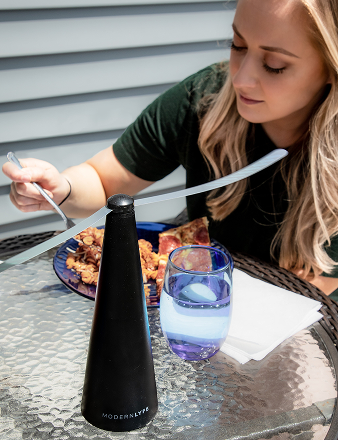
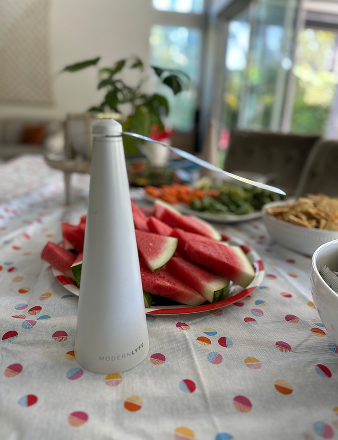
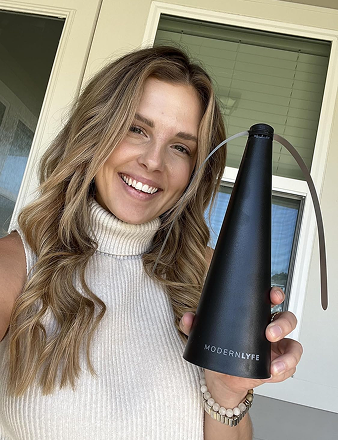
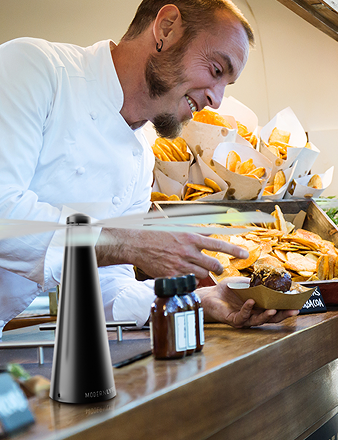
The MODERN LYFE Fly Fan for Tables is a rechargeable unit for outdoor and indoor tables that keeps flies and pests off food. It is an odor-free alternative to bug repellents, so it doesn't perfume a buffet. An automatic safety stop is built in, and the soft holographic blades stop when touched, then restart when released. The reflective pattern breaks up light in a way flies avoid. A charge lasts over 8 hours, which covers a dinner service or a long reception. It runs on the included USB cable or on two AA batteries, which aren't included, so a food truck can use either outlet or cells.
"Excellent fly repellent. Keeps flies at bay, no noise.", Bryant
That quiet running is the hospitality test. If staff have to raise their voices, the device is in the wrong place or it's the wrong device.
Matching the Deterrent to Your Event or Home Patio
| Use case | Primary deterrent | Key sanitation step | Escalate when |
|---|---|---|---|
| Restaurant patio | Table fan plus fine-mesh doors | Sealed bins and weekly drain cleaning | Counts stay high after two weeks |
| Buffet or hotel reception | Table-height fan at each food station | Cover food during service | Flies keep landing on uncovered food |
| Wedding or catered event | Battery table fans, staged near food | Clear scraps and spills between courses | Waste area draws flies all evening |
| Food truck or market stall | Battery or USB fan at service counter | Remove waste hourly | Flies persist despite fan and clean bins |
| Home barbecue | One table fan and sealed bins | Remove pet waste and grill grease | Breeding source found near the house |
The University of California Agriculture and Natural Resources puts exclusion, sanitation, and habitat change first. Fly paper and electrocution light traps work only after those steps have already cut numbers, and they should sit near the highest concentration of flies, not in the guest cluster.
Restaurant patios need both a fan on each dining zone and mesh on doors that stay open for service. Weekly drain cleaning matters more here than another spray, because grease in the floor drain feeds the problem overnight. Call a pest professional when counts are still high after two weeks of sealed bins, clean drains, and working fans.
Hotel and resort buffets fail when one fan covers a single station and the carving board sits in still air. Cover food the moment service pauses. Escalate the same day if flies keep landing on uncovered dishes. Comfort for guests and protection of food are not the same result.
Weddings and catered events run on battery units because power drops are scarce and cables across a lawn are a trip hazard. Stage fans beside food, not beside the dance floor. Clear scraps between courses. A lawn bar makes this harder, since citrus, syrup, and open garnishes sit out for hours. Backyard party bartending by BeeHive Mobile Bar shows how those drink stations get built, and each of them needs the same cover-and-air treatment as the dinner plates. If the waste tent pulls flies all evening, move it farther out before you add traps near the cake.
Food trucks and market stalls have almost no storage and unreliable power. A battery or USB fan at the service window is the right primary tool. Haul waste hourly. If flies stay after the fan is running and the bins are clean, look for a shared dumpster or a neighbor's grease trap, then bring in a pro.
Home barbecues are usually one fan plus tight lids. Pet waste and grill grease are the sources people skip. Residual spray can go on an empty porch rail, never over the food. Escalate when you find an actual breeding spot, such as a wet bin or a drain that stays damp, near the house.
Checking That Your Setup Protects Food
Guest comfort and food hygiene are different scores. A quiet table can still hold food that sat out too long, and a fly-free photo doesn't prove the trays were safe.
The World Health Organization says cooked food should not stay at room temperature for more than 2 hours, perishable food should be refrigerated promptly, preferably below 5°C, and hot food should be held above 60°C. The same guidance says food and kitchen areas should be protected from insects and other animals. A deterrent helps with that last point. It does not replace the clock or the thermometer.
Flies are not only a nuisance at the table. A peer-reviewed study of flies around restaurants documented potentially pathogenic and antibiotic-resistant bacteria on flies collected near food service, and controlled work summarized with that research found that as few as five flies could thoroughly contaminate a hamburger in about 15 minutes. Treat that as a lab result, not a promise about every patio, and still don't leave ready-to-eat food open.
Service checks and thresholds
| Check | When to run it | Threshold for action |
|---|---|---|
| Flies at food stations | Fixed times during service | Any landing on exposed food, or a higher count than the previous check |
| Uncovered food time | Logged continuously during service | Cooked food above room temperature beyond 2 hours |
| Waste and drain inspection | Start and end of service | Grease, food residue, or standing moisture present |
| Food temperature | Before serving and during holding | Perishables above 5°C or hot food below 60°C |
| Corrective actions | Recorded as they happen | Every fly sighting near food |
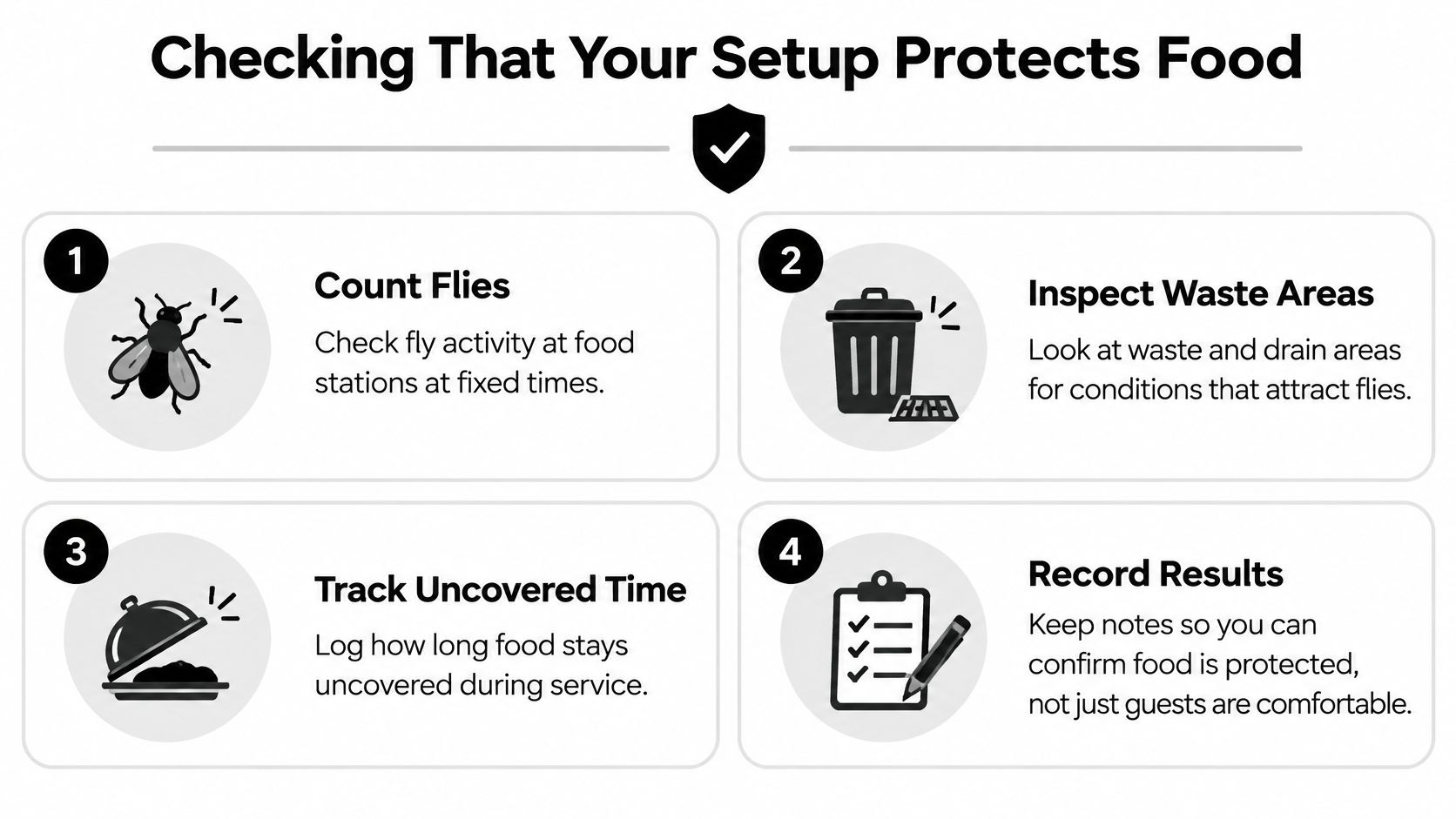
Run the fly count at the same stations, such as openers, midpoint, and last seating. Inspect bins and drains at the start and again at close. Log uncovered time as dishes go out, and use outdoor food covers on anything that isn't being served in that moment. Write the corrective action in the same note as the sighting, whether that was a cover, a removed tray, or a moved bin.
A fan lowers contact. Time and temperature still decide whether the food was safe to serve.
Confirm Your Setup Before You Buy
Buy a table-height fan for every dining, buffet, and event zone where flies land on food. Add fine-mesh screens wherever doors or an enclosure can take them. Treat sealed bins and scheduled drain cleaning as essential, not as extras.
For those dining and event tables, our Fly Fan for Tables is the primary option. It is rechargeable, quiet enough for conversation, and built with an automatic safety stop so the blades halt when touched. The MODERN LYFE fan comes in Single Pack, Two Pack, Four Pack, and 8 Pack options. The Four Pack is marked most popular, and the 8 Pack is marked best value. The current sale price is $99.99 USD, against a regular price of $139.99 USD. An extended warranty is included. Prices can change without notice, so confirm the live price and pack before you order.
- Count zones. One fan per table or serving station, enough that air covers the full perimeter.
- Lock the basics. Screens on doors, sealed bins, drains on a weekly clean, food covered during service.
- Log the first week. Use the service checks above. Add fans or tighten cleanup if landings continue.
MODERN LYFE builds quiet, battery-operated fly fans that sit on restaurant, hotel, catering, and home tables and keep flies off food without a scent. If patio service, a buffet line, or a backyard event is where flies keep landing, start with a table fan and the sanitation around it. Visit MODERN LYFE to compare pack sizes, check current pricing, and set up the zones you serve.