Approximately 47.8 million foodborne illnesses occur in the United States each year, according to the Centers for Disease Control and Prevention. That doesn't mean uncovered food caused those illnesses. It does explain why outdoor food covers belong in a food-safety system, not just on a shopping list of table accessories.
The useful question isn't which cover looks best. It's which cover staff and guests can keep using correctly throughout service, alongside temperature control, clean utensils, protected storage, and pest management.
Four Outdoor Food Cover Types at a Glance
Four cover types handle almost every outdoor setting, but each solves a different problem. Start with the food's exposure and serving pattern, then choose the equipment.
Outdoor food cover types compared
| Cover Type | Form | Main Strength | Main Limit |
|---|---|---|---|
| Mesh dome | Dome or cone of fine mesh over a plate or platter | Ventilated, lightweight, easy to see through | Mesh can snag and tear, and it stops only coarse debris |
| Plastic or acrylic lid | Rigid clear dome or cloche | Fully enclosed, easy to wipe clean | Traps heat and condensation, heavier to lift repeatedly |
| Pop-up tent | Folding fabric or mesh canopy over the whole table | Covers a full buffet line and resists wind when properly anchored | Bulky to store and needs staking outdoors |
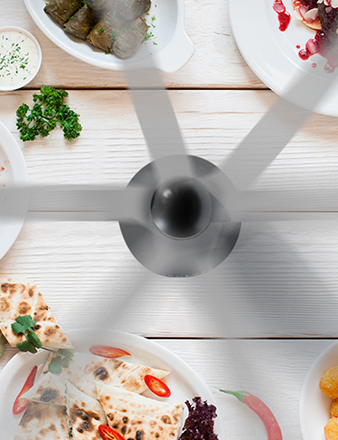
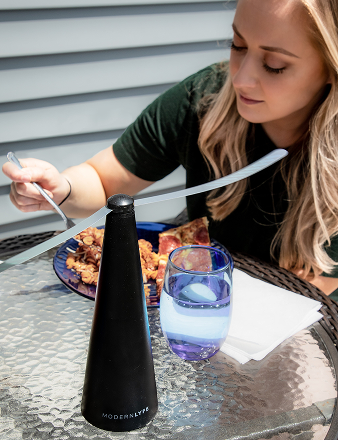
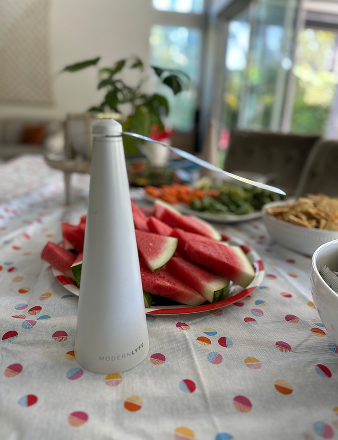
| Battery fly fan | Fan placed on the table to keep flies off food | No lifting, food stays open to guests | Does not block debris or dust, needs charging and placement |
Match the barrier to the serving pattern
A mesh dome is the default for an individual plate or modest platter. It lets heat escape, weighs little, and allows guests to identify the food before lifting it. Choose a frame that clears the highest garnish, with a rim that lands on the tray rather than across the food.
A rigid clear lid suits cold dishes when you want a more complete enclosure. It also gives staff an obvious surface to wipe clean. The trade-off is moisture: a chilled platter under a solid dome can become difficult to see, and a heavy cloche becomes awkward when guests are holding plates.
A table-sized pop-up tent is the option in this group that can cover a full buffet line. Specify the design carefully: an overhead canopy alone doesn't enclose food, while screened sides provide a more complete barrier. Wind resistance comes from suitable anchoring, not from the word “outdoor” on the packaging.
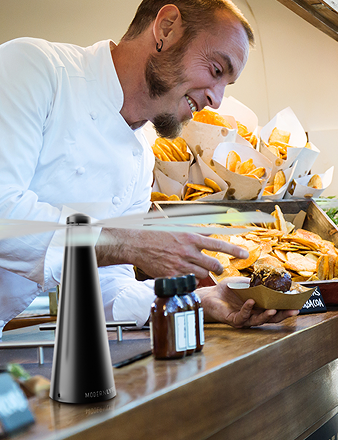
A battery fly fan removes the lifting step altogether. That makes it useful around shared dishes with frequent access, but it's a deterrent rather than a physical enclosure. Leaves, dust, and other debris can still reach the food.
Buying rule: Choose for the busiest part of service, not for the empty table before guests arrive.
Check where a removed lid will go, too. A cover that guests must balance against a bowl will quickly become a nuisance. The right choice depends on what the food is, how long it sits out, and how often guests reach in.
Why Covers Alone Do Not Keep Food Safe
A food cover is an umbrella, not a fridge. It shields food from insects, dust, and incidental handling; the refrigerator, ice bed, or hot box manages the conditions that allow bacteria to multiply.
The distinction is visible in a properly arranged serving station.
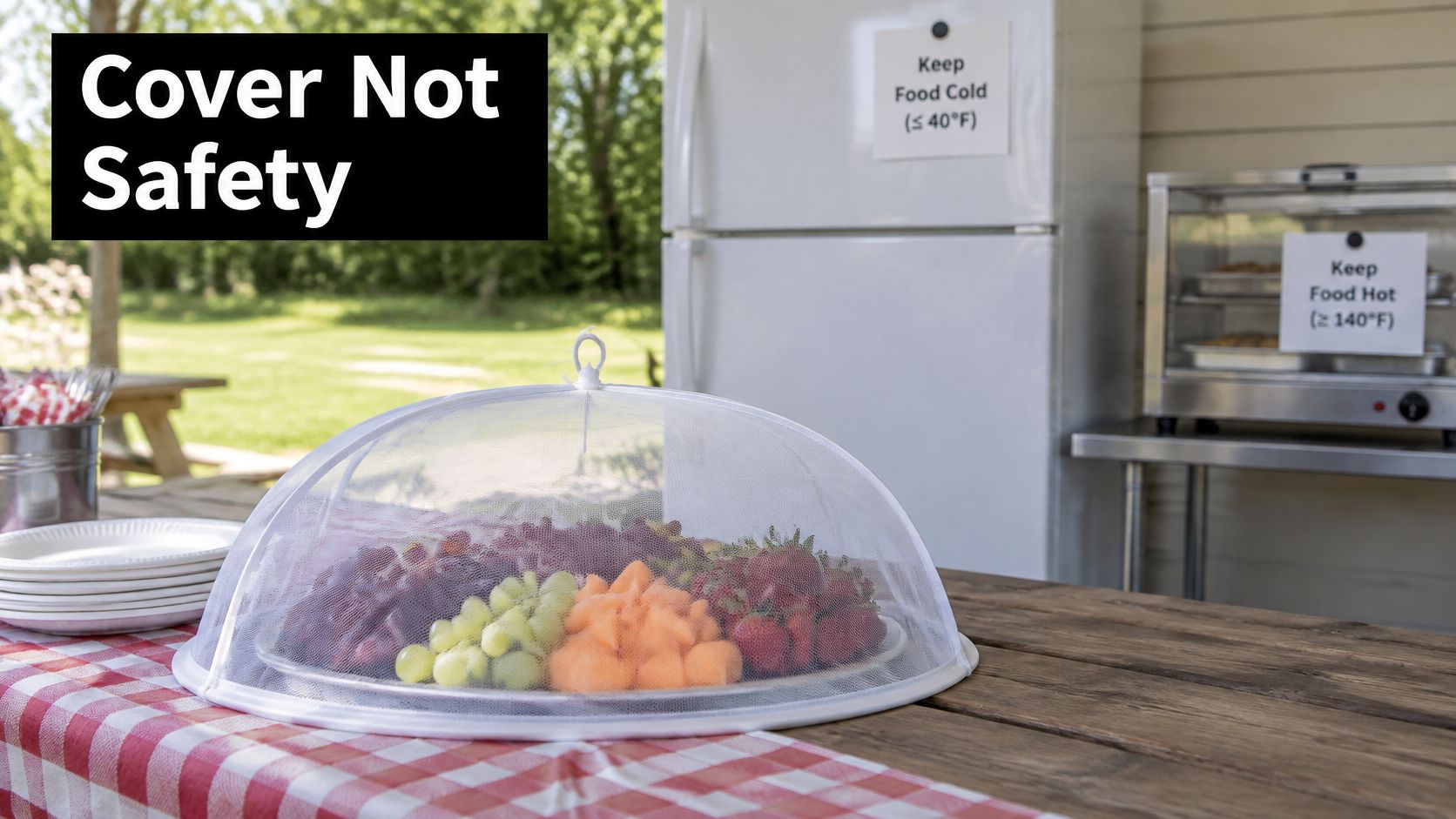
Under FDA outdoor-food guidance, perishable food shouldn't remain in the 40°F-to-140°F Danger Zone for more than two hours, or more than one hour when outdoor temperatures exceed 90°F; keep cold foods at or below 40°F, hot foods at or above 140°F, and hot food well wrapped in an insulated container until serving.
Apply the clock to the food, not the cover
Say a salad buffet sits beneath a perfectly fitted dome on a hypothetical 92°F afternoon. If the salad isn't being maintained at a safe cold-holding temperature, staff still need to check its one-hour clock. Once that limit passes, the salad goes in the bin, however fresh it looks.
Don't restart the clock when someone changes the lid or moves the platter into shade. Label the batch when it leaves controlled storage, and keep its service record with the station rather than relying on someone's memory.
A probe thermometer gives staff useful information that a clear dome cannot. Check the food itself, clean the probe between uses, and avoid treating the temperature of surrounding ice as the temperature of the dish.
Use this food-safety video alongside a practical staff briefing.
Build a holding plan before service
Keep reserve portions in controlled storage instead of displaying the entire menu at once. Use shallow replacement trays that staff can exchange cleanly, without tipping fresh food over an older batch.
The outdoor food safety tips are useful for planning the surrounding setup, including handling and storage. Assign responsibility before guests arrive so the person watching the buffet knows when to check, replenish, or remove each dish.
Covers reduce contamination at the serving point. Staff must still monitor holding temperatures and elapsed time throughout service. Neither a clean-looking platter nor an expensive lid changes that responsibility.
Materials Compared for Outdoor Food Covers
| Material | Visibility | Weight and Durability | Cleaning Method |
|---|---|---|---|
| Polyester or nylon mesh | See-through, good airflow | Light, tears if snagged | Shake out away from food, hand wash, air dry fully |
| Polycarbonate | Clear | Rigid, can crack on impact | Wash first, then wipe with a compatible food-safe sanitizer |
| Acrylic | Very clear and glossy | Heavier, scratches easily | Soft cloth only, no abrasive pads |
| Stainless steel mesh | Visible through the mesh | Heavy, longest lasting of these options when well maintained | Wash with hot detergent solution, rinse, dry, check for corrosion |
| Polyester canopy fabric | Opaque | Lightweight, holds shape if stiff | Spot clean, dry completely before storage; machine wash only if permitted |
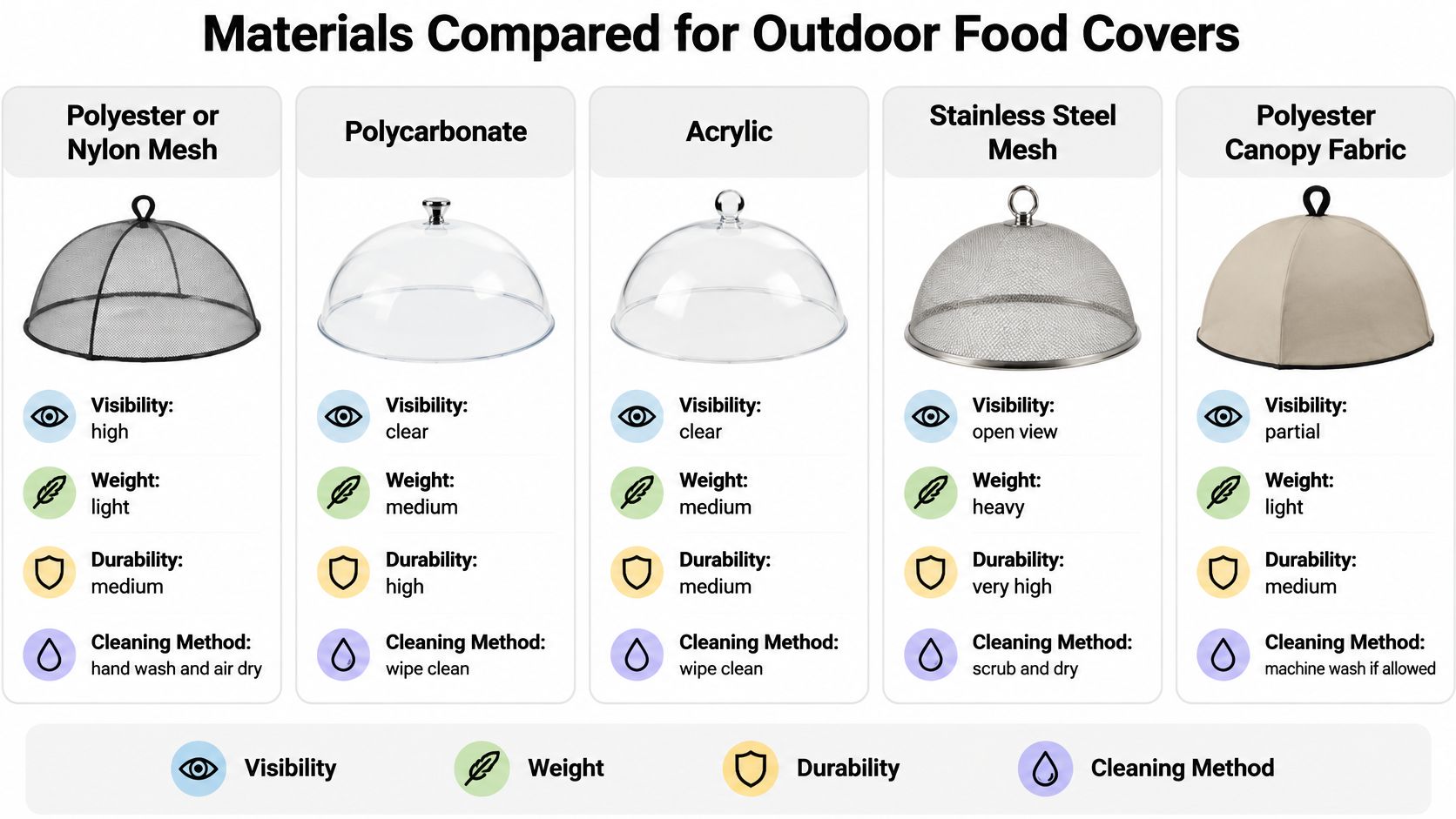
Outdoor food cover materials compared
Mesh gives you ventilation without much lifting weight, but thin fabric catches on tray corners and cutlery. Inspect the seams as closely as the visible mesh: a sound panel doesn't compensate for an opening beside the frame.
Polycarbonate is a practical rigid option for frequent handling, although it isn't immune to impact damage. Acrylic offers excellent presentation clarity but needs gentler handling, especially during washing and stacking.
The material differences are summarized below.
Judge the finished cover, not just the material
Stainless steel mesh is the durable choice when you can accept the weight of every lift. Check folded edges and joints for roughness, and don't assume a metal frame makes the entire assembly dishwasher-safe.
Polyester canopy fabric serves a different purpose. It provides overhead coverage but sacrifices visibility, and an opaque roof without screened sides leaves the serving area open around its perimeter.
For openings requiring pest protection, the FDA Food Code lists 16-mesh screens, properly designed and installed air curtains, or other effective means; it also specifies that food-equipment covers overlap openings and slope to drain. Treat that screen specification as a design benchmark, not a universal certification standard for portable food domes.
A fine weave won't rescue a dome with gaps beneath its rim. Likewise, a lid that pools liquid or directs it toward the food is a poor fit for hygienic service.
If you're evaluating flexible seals or accessories alongside rigid lids, HYDAWAY's explanation lets you explore silicone for food contact. Evaluate the finished product's suitability rather than relying on a material name alone.
Hold the cover to the light to inspect seams and holes. Then place it on the actual tray: it should sit flat, overlap the opening where applicable, and drain without pooling.
Hidden Problems Covers Create During Service
The prettiest cover isn't automatically the safest. A polished cloche that staff leave beside the platter provides less protection than a plain dome they replace after every portion.
The FDA Food Code addresses hygienic food-service equipment and protection against insect contamination. For operators, the practical implication is to assess how a cover gets handled, parked, cleaned, and returned throughout a busy service.
Pair each failure with a usable fix
- Condensation over chilled food. Droplets can obscure the contents and encourage unnecessary opening. Keep the dish properly chilled, exchange wet lids for clean, dry spares, and don't wipe an interior surface with the general service cloth.
- Repeated lifting by guests. People carrying plates may grab the rim instead of the handle. Choose an obvious handle positioned away from food-contact surfaces, and provide a clean landing place for removable lids.
- Gusts moving lightweight covers. A dome that slides across the platter can touch food or expose it completely. Use compatible clips or secured frame weights, without placing loose objects where they could fall into a dish.
- Covers resting on food or serving edges. Oversized garnishes and crowded trays eliminate clearance. Test the fully plated dish under the cover before service, and use a taller dome or smaller presentation.
- Transparent lids that no longer reveal the food. Scratches, fogging, and glare can make staff lift a supposedly see-through lid to check stock. Reposition the display, add clear menu labels, or replace a lid that has lost useful visibility.
- Transfers between allergens or menu items. Residue on the rim or handle can move to another dish. Keep covers assigned to their dishes, and wash them before reassignment rather than giving them a cosmetic wipe.
Give someone authority to intervene
Assign a named staff member to monitor exposure and temperature, not merely refill platters. That person should be able to remove an unsuitable cover, replace a contaminated utensil, and pause service when the setup stops working.
Establish a simple rule: covers stay on between portions. If staff can't follow it because access is awkward, change the hardware or serving arrangement instead of repeating the instruction louder.
A broader approach to food protection systems helps connect those decisions with station layout and staff responsibilities. A cover works only when the service routine is designed around it.
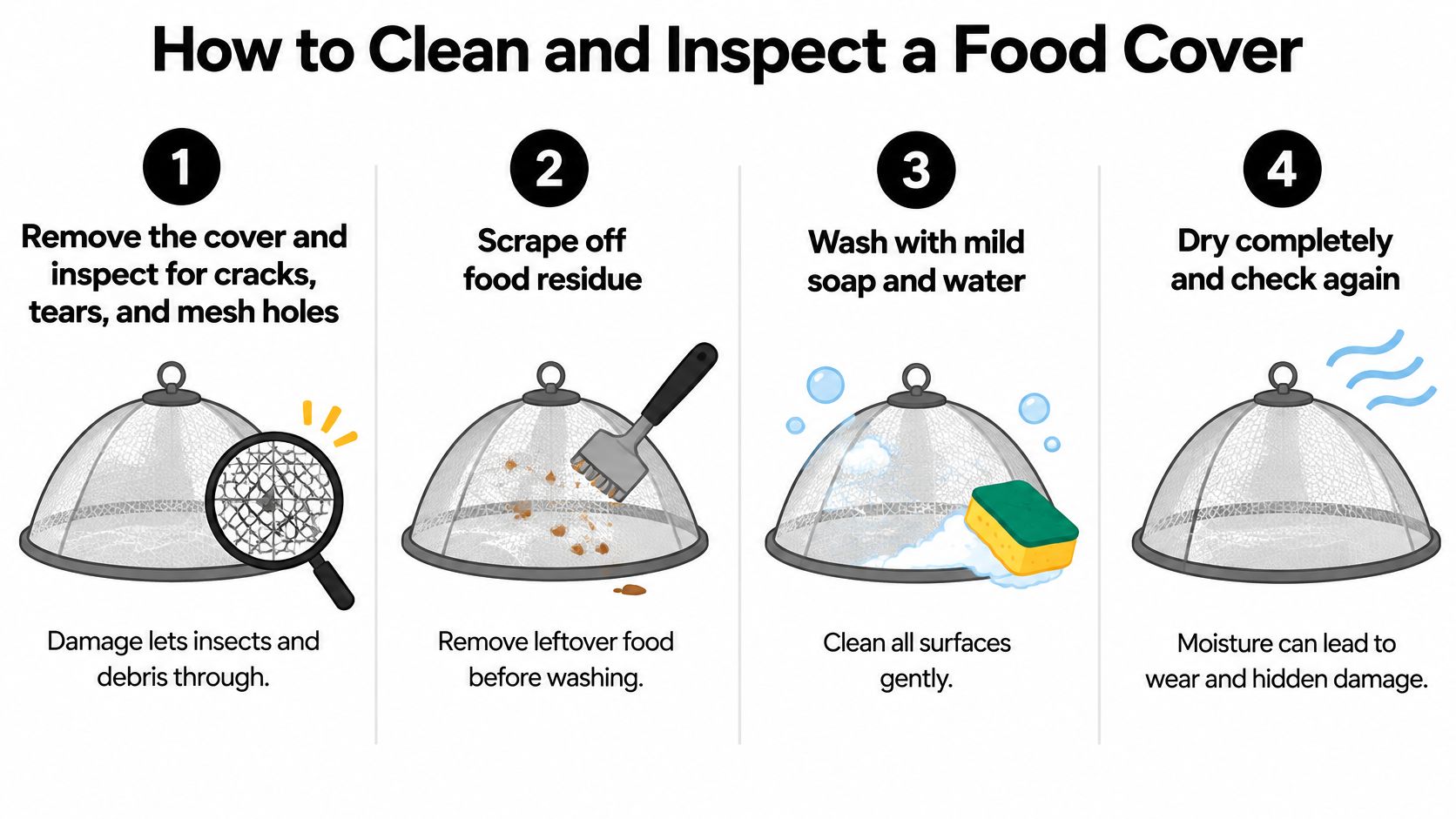
How to Clean and Inspect a Food Cover
Clean a food cover as service equipment, not as décor. Set up a wash area with detergent, a dedicated soft brush, compatible sanitizer, and a clean drying rack before collecting dirty covers.
Follow a consistent cleaning sequence
- Remove and inspect the cover. Check the frame, seams, hinges, and underside for cracks, tears, and mesh holes, because damaged barriers let insects and debris through.
- Scrape off food residue. Use a soft scraper or cloth over the waste bin, since leftover food attracts pests and makes washing less effective.
- Wash with hot water and detergent. Use water the material can tolerate and a dedicated soft brush for mesh, working around seams and handles where residue collects.
- Rinse and sanitize appropriately. Remove detergent, then use a material-compatible food-contact sanitizer at its labeled concentration and contact time, following local code because a quick spray isn't a complete sanitation procedure.
- Air dry fully on a clean rack. Position the cover so water drains from joints and folded edges, because storing it damp encourages mould and leaves hidden moisture trapped inside.
- Check hinges, handles, and clips. Operate each moving part and replace anything that won't hold securely, since a loose handle or failing latch can drop the cover during service.
- Store flat or in a clean, sealed bin. Keep the dry cover away from pests and avoid crushing mesh beneath heavier equipment, because storage damage can undo careful cleaning.
The visual guide provides a simple reminder for the wash area.
Know when cleaning isn't enough
Don't use abrasive pads to remove stubborn marks from clear plastic. Soften residue with a compatible detergent solution, then lift it gently; scratched surfaces become harder to inspect and keep presentable.
Keep electrical fan components out of the wash sink. Clean removable washable parts separately, and follow the equipment's care instructions for its motor housing and power connections.
Replacement rule: Retire a cover when mesh tears, plastic clouds or cracks, or the rim no longer sits flat on its tray.
Keep questionable equipment out of the clean-storage bin. Mark it for repair or disposal so another staff member doesn't return it to service just because it looks washed.
Matching a Cover to Your Setting
| Setting | Recommended Cover | Why It Fits | Watch For |
|---|---|---|---|
| Restaurant patio table | Battery fly fan or small mesh dome | Single plates, minimal lifting | Charging schedule and wind |
| Outdoor buffet line | Pop-up tent or full-length hinged lid | Covers the whole line at once | Lifting frequency and condensation on chilled trays |
| Food truck or market stall | Clear lid plus overhead canopy | Overhead protection and visible food | Cleaning between shifts and gusts |
| Catered plated reception | Individual mesh domes | Protects each plate and keeps service fast | Many units to wash between courses |
| Backyard barbecue | Mesh dome or fly fan | Inexpensive, quick to set up | Food left out past its safe service window |
Recommended cover by service setting
Plated receptions need coordinated handling
At a catered plated reception, individual mesh domes protect each plate while allowing staff to identify meals. Stage the covered plates on clean trays, with enough clearance that neighboring domes don't catch when servers lift them.
The operational challenge is collecting the covers. Give servers a separate return tray, rather than asking them to stack used domes among clean plates or carry them against uniforms.
Count washing capacity as part of the choice. A lightweight dome may be easy to serve but still create a substantial turnaround task between courses.
Market stalls need more than a lid
At a farmers' market stall, pair a clear lid with overhead protection so customers can see the food without repeated opening. Keep the handoff point separate from the protected display, and reserve clean storage space behind the counter.
The FDA Food Code requires overhead protection for outdoor food-vending machines and addresses protected openings and safe placement of insect-control devices. That requirement shouldn't be presented as a blanket rule for every market stall, but the protection logic is useful: shield the display from above and control exposure around it.
Don't position insect-control equipment where insects or fragments could fall onto food. A canopy, lid, and pest-control device have different jobs.
Choose the layer guests can actually use
A physical cover suits food that sits untouched between portions, particularly where debris is a concern. A battery fly fan suits shared tables with frequent reaching, but it doesn't enclose the food.
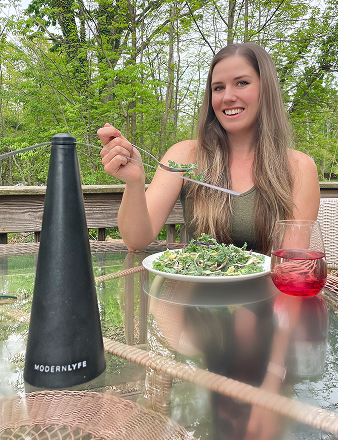
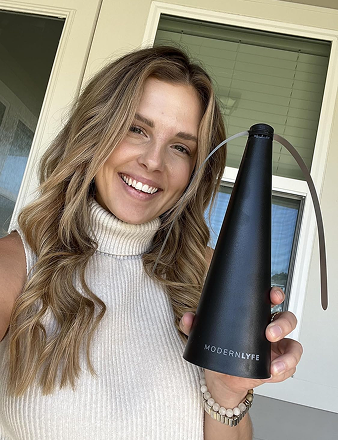
Our Fly Fan for Tables is rechargeable for indoor and outdoor use and is intended to keep flies and pests away from food on outdoor tables, patios, at parties, food trucks, and al fresco cafes. Returns are covered for 30 days from purchase; after 30 days, no refund or exchange is offered.
On a buffet, combine layers deliberately: a fan for fly deterrence and a cover for debris protection between servings. Use these outdoor buffet table ideas to plan access, clean lid parking, and replenishment routes.
Before accepting the table's recommendation, check:
- Wind speed. Test whether the assembled setup stays secure under the actual conditions.
- Outdoor heat. When conditions exceed the FDA's hot-weather threshold, activate the shorter service window rather than trusting the cover.
- Lifts per hour. Observe how often guests remove the lid and whether they reliably replace it.
Map your setting to the table, choose the appropriate layer, and log lifts, temperatures, and cover condition during a real service this week.
Quick Reference Checks
A useful final check tests the whole station, not just the item over the platter. Walk the guest route carrying a plate and serving utensil, then walk the staff route carrying a replacement tray.
If either person needs to balance a lid against food, reach across another dish, or place equipment on an unclean surface, change the arrangement before opening.
Before guests arrive
| Check | Ready for Service | Needs Attention |
|---|---|---|
| Tray compatibility | Rim sits securely with food clearance | Rocking frame, exposed gaps, garnish touching mesh |
| Access | Handle is obvious and reachable | Guests must touch the underside or food-facing rim |
| Lid parking | Dedicated clean landing space | Lid must rest on the table edge or neighboring dish |
| Monitoring | Thermometer and service record are available | Staff must leave the station to find equipment |
| Replenishment | Protected reserve stock and clean utensils are ready | New food will be added over old food |
| Weather response | Staff know when to secure, relocate, or stop service | Equipment is left outside regardless of conditions |
Test the setup with the actual menu, not an empty tray. A tall cake, heaped salad, and shallow platter of sliced fruit need different clearance even when they use the same serving footprint.
During the busiest service period
Watch behavior rather than assuming the equipment works because it's present. A lid parked beside its platter, guests reaching beneath a tent wall, or staff skipping checks are signs that the setup needs adjustment.
- Check the handoff. Confirm guests can serve without touching protected surfaces.
- Check the return. Make sure removable lids return to their own dishes rather than drifting between stations.
- Check the response. Staff should know who removes food after a temperature failure or contamination event.
- Check the backup. Keep clean replacement covers accessible, not buried beneath spare linen.
A successful setup is one staff can maintain when the queue is longest.
After service, record what failed and what staff improvised. If someone repeatedly moved a fan, removed a lid, or propped open a tent, ask what task the original placement prevented.
Use those observations for the next purchase. Buy the cover that fits the routine you can sustain, and redesign the routine when food protection depends on constant workarounds.
MODERN LYFE offers rechargeable table fly fans for indoor and outdoor dining, giving frequently accessed dishes a fly-deterrent layer without repeated lid lifting. Visit MODERN LYFE to choose a fan for your patio, buffet, or event table, and pair it with suitable covers, temperature monitoring, and a clear cleaning routine.