A buffet can look perfect at setup and still fail in service.
You've seen it. Chafers are polished, salads are plated, garnish is fresh, and then the environment starts working against you. A patio door stays open too long. Guests lean over the display. A few flies circle the fruit tray. Staff react with improvised fixes: plastic wrap on one station, a spray used too close to service, a lid left half-open because guests need access.
That's where most operations get exposed. Not because they don't care, but because they're relying on scattered tactics instead of a real system. In hospitality, food protection isn't just about passing inspection. It shapes guest confidence, service flow, waste control, and whether people remember your event for the meal or for what landed on it.
Protecting Your Food and Your Reputation
An outdoor wedding buffet is a good example of how fast the pressure builds. Service starts on time. The layout is elegant. Then the wind shifts, insects show up, and the cold table becomes the staff's main concern instead of the guests. Someone grabs extra lids. Someone else starts moving platters indoors. The chef gets pulled from production to troubleshoot the setup.
That's not a pest problem alone. It's an operations problem.
In restaurants and catered events, guests don't separate hygiene from hospitality. If they see exposed food, hovering flies, or staff making obvious last-minute adjustments, they assume the whole program is shaky. The food may still be safe, but the perception damage is immediate. Online reviews don't wait for a lab result.
What operators usually get wrong
The most common mistake is treating food protection as a single product decision. Operators ask whether they need covers, screens, sprays, or fans. The better question is what combination will control exposure without slowing service or damaging presentation.
A banquet hall has different risks than a golf course patio. A brunch station has different vulnerabilities than a plated dinner pass. If you run restaurants in urban areas, recurring local pressure also matters. Teams dealing with recurring service-area infestations often need support beyond line-level cleaning, which is why practical resources on addressing GTA restaurant pest issues can help frame the wider operating environment.
Practical rule: If your protection method only works when the room is empty and the weather is calm, it isn't a usable hospitality control.
What a modern approach looks like
Strong food protection systems do three things well:
- They prevent exposure early: They reduce the chance that food ever reaches a risky condition.
- They fit live service: They work during guest traffic, not just before doors open.
- They protect presentation: They don't turn the buffet into a storage shelf.
That's the shift. Stop thinking in terms of emergency fixes. Start thinking in terms of designed protection that holds up under pressure.
The Core of Modern Food Protection
Clean-looking service isn't the same as controlled service. A polished buffet line can still fail if nobody has defined the hazards, the control points, and the response when something slips out of spec.
Modern food protection systems were built on that realization. A foundational milestone was HACCP, first developed in the 1960s by NASA and Pillsbury to ensure food for astronauts was pathogen-free, a shift that moved the industry from end-product inspection to risk-based prevention according to this historical review of HACCP's development.

Why prevention beats inspection
Old thinking asks, “Does the final product look acceptable?”
Professional food safety asks, “Where can this process fail, and how do we stop that failure before food reaches the guest?”
That difference matters in every hospitality format. On a buffet, the hazard may be guest exposure, poor holding practice, or cross-contact at the service point. In catering, transport and staging can create the weak link. In a hotel breakfast room, the risk often sits in routine. Staff get used to the setup and stop noticing that lids remain open or replenishment tools move between stations.
Prevention is less dramatic than crisis response, but it works better. You identify likely failure points, define the control, train the team, and verify that the control is being followed.
HACCP changed how professionals think
HACCP matters because it gave operators a disciplined way to manage risk instead of relying on appearance and intuition. You don't wait for a complaint, a spoilage sign, or an inspector's comment. You map the process, find the hazards, and control them where they matter most.
That's why even smaller hospitality businesses benefit from understanding the logic behind it. If you need a practical overview of HACCP plan requirements for Irish food businesses, that reference is useful because it translates the concept into operational expectations instead of academic language. For a simpler refresher on the basics, this guide on what HACCP means in food safety is also a good starting point.
Food protection systems work best when staff stop asking, “Does this seem fine?” and start asking, “What control is supposed to hold here?”
What that means on the floor
A preventive mindset changes day-to-day decisions:
- At setup: Staff place food where exposure is reduced, not just where the display looks full.
- During service: Supervisors watch conditions that create risk, not just speed of replenishment.
- When something goes wrong: The team uses a defined corrective action instead of improvising.
That's the essential core of modern food protection. Not a prettier checklist. A different operating mindset.
The Five Layers of an Effective Food Defense
Most failures happen when operators depend on one layer and assume it will carry the whole service. It won't. Food protection systems work as a stack. Each layer covers a weakness the others can't fully handle.

Layer one sanitation workflows
Sanitation is the base layer because every other control gets weaker in a dirty environment. If residue builds up, drain areas are neglected, or service utensils are handled poorly, you create attraction points and contamination routes before the buffet even opens.
What works is scheduled, visible discipline. Clean as a workflow, not as an end-of-shift event. That means pre-service wipe-downs, utensil swaps, spill response, and reset points during longer service windows.
What doesn't work is relying on “staff know what to do.” When nobody owns the task, sanitation drifts.
Layer two temperature control
Temperature control is less visible to guests, but it's one of the clearest signs of a professional operation. Hot holding, cold holding, and timing at ambient exposure need rules that staff can follow under pressure.
This layer breaks down when operators treat equipment as the control instead of treating the process as the control. A chafing unit or cold well helps, but somebody still has to verify performance, rotate product, and stop service if the condition isn't acceptable.
On-site advice: If the only person checking food conditions is the chef, the system is understaffed. Service teams need control responsibilities too.
Layer three physical barriers
Many operators begin here, and for good reason. Retail food rules require non-prepackaged food and food-contact surfaces to be protected by barriers that interrupt a direct line from the consumer's mouth to the food, using packaging, sneeze guards, lids, display cases, dispensers, or other effective barriers, as outlined in retail food facility construction guidance.
Physical barriers are straightforward and code-friendly. They're often the fastest way to reduce guest-side exposure. But they also have trade-offs.
| Layer | What it does well | Where it falls short |
|---|---|---|
| Covers and lids | Protects food at rest | Slows guest access if used poorly |
| Sneeze guards | Reduces direct guest exposure | Doesn't address surrounding insect pressure |
| Display cases | Strong control for fixed stations | Less flexible for mobile or outdoor service |
The mistake is assuming a lid solves every service risk. It doesn't. Once the lid is left open, the protection is gone.
Layer four environmental controls
Environmental controls shape the room before food even comes out. Doors, screens, openings, airflow, and perimeter discipline all matter.
The same guidance specifies 16-mesh-per-square-inch screening for openings and expects self-closing, tight-fitting exterior doors. It also allows air curtains only as an auxiliary fly-control measure, not as a substitute for proper enclosure. That tells operators something important. Building-level controls come first. Supplemental airflow comes after.
For patios, food trucks, and event tents, this is the layer that often gets ignored because the setting feels temporary. The risks aren't temporary. If the environment invites contamination pressure, your service line absorbs it.
Layer five active air displacement
This is the most overlooked layer in open service. Air displacement systems, including targeted fly fans, don't replace barriers or sanitation. They fill a gap those controls can't always cover, especially where food must remain visible and accessible.
Their best use case is live service where heavy covers, enclosed display, or chemical approaches would either disrupt presentation or create guest discomfort. They're especially useful when you need a non-contact control at the final point of exposure.
Use them as part of the stack, not as a magic fix. That's the difference between a gadget and a system.
Building Your Custom Food Safety Blueprint
No operator needs a generic plan. A rooftop cocktail reception, a resort breakfast buffet, and a food truck window all require different controls. The right blueprint starts with the actual environment, the menu, and the way staff work during service.

Start with the risk map
Walk the service as if you're trying to break it.
Where is food exposed longest? Which stations attract guest clustering? What happens when replenishment gets delayed? Which openings, doors, or outdoor edges create insect pressure? If weather changes, can the setup still hold?
At this point, many managers learn the hard truth. Their weak point isn't the menu. It's the service pattern.
Build controls that are measurable
ISO 22000 requires a food safety management system built around hazard analysis and control, and industry guidance emphasizes that critical limits must be measurable and absolute, such as a minimum internal temperature or a maximum pH, as explained in ISO's overview of ISO 22000 food safety management. That matters because it turns food protection from a visual judgment into a control system.
A usable blueprint needs defined checks. “Keep food protected” is too vague. “Buffet lids remain closed when guests aren't actively serving” is observable. “Patio access door must not be propped open during service” is enforceable. “Assigned staff member verifies each station at set intervals” is manageable.
A practical planning checklist
Use questions like these before service goes live:
- Exposure point: Which foods will sit open to guests, and for how long?
- Barrier decision: Do these stations need lids, sneeze guards, display cases, or a different layout?
- Environmental pressure: Are there doors, windows, loading areas, or outdoor edges that raise insect risk?
- Responsibility: Which specific staff member owns monitoring during peak traffic?
- Corrective action: What happens if a control fails during service?
The best blueprint is boring on purpose. Staff know the rule, know who owns it, and know what happens if the condition fails.
Match the plan to the setting
A quick comparison helps:
| Setting | Main risk pattern | Better control focus |
|---|---|---|
| Indoor banquet hall | Guest exposure and service tool misuse | Sneeze guards, utensil control, staff monitoring |
| Hotel patio | Air movement, open access points, flying pests | Door discipline, shielding, active airflow support |
| Catering tent | Temporary setup variation | Portable barriers, role assignment, reset checks |
| Food truck window | Tight workspace and open service hatch | Workflow discipline, hatch control, rapid sanitation |
Many managers also like simple public-facing summaries when training front-line staff. If you want a plain-language example of public health food safety measures, that kind of checklist can help translate policy into habits.
Train for service reality
Training should reflect what happens at speed. Staff need to practice lid use, utensil changes, exposure checks, and escalation. A written plan that nobody rehearses won't survive a busy brunch or a wedding rush.
Good blueprints are specific. Great ones are repeatable.
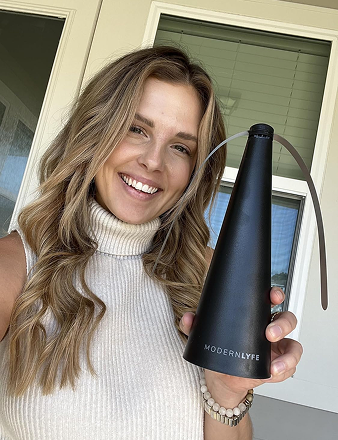
The Modern Answer to Flying Pests Fly Fans
Flying pests create a stubborn problem in hospitality because the usual solutions often come with side effects. Heavy covers interrupt access. Chemical methods can feel wrong near active food service. Crude barriers hurt presentation. That leaves operators trying to protect exposed food without making the setup look defensive.

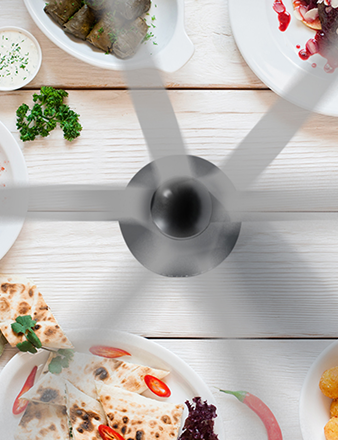
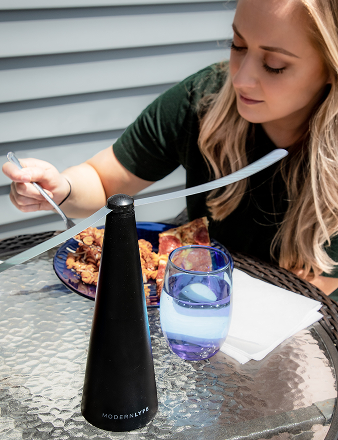
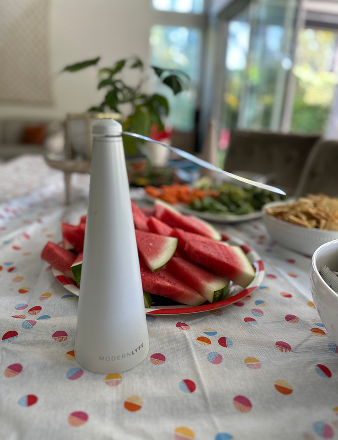
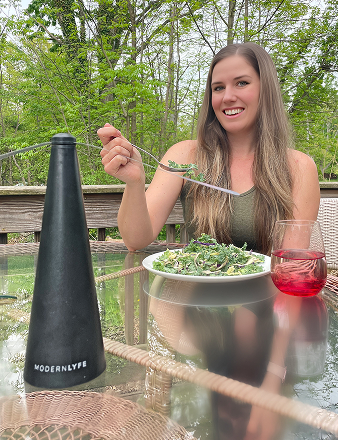
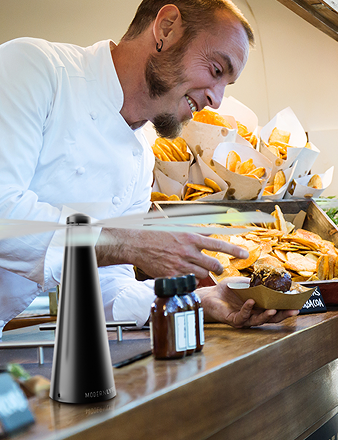
A useful modern answer is air displacement. Instead of trapping or killing insects at the food line, these systems disturb the approach path around the service area. In practical terms, they create a localized air pattern that makes it harder for flies to settle where they want to land.
Why this category matters
There's a real information gap here. A 2024 review in the Journal of Food Protection noted a 40% gap in literature regarding passive, non-contact fly exclusion in open-air dining, leaving operators without clear metrics on how air velocity reduces contamination vectors. That matters because many hospitality teams are already looking for controls that don't rely on chemicals or visually intrusive barriers.
The absence of perfect data doesn't make the tool useless. It means operators should evaluate it the way they evaluate any other supplemental control. Look at fit, practicality, service compatibility, and whether it closes a real gap in the setup.
Where fly fans fit well
Fly fans are strongest in scenarios like these:
- Buffet lines outdoors: Food needs to stay visible, and guests need easy access.
- Open-air receptions: Aesthetic standards are high, so bulky shields aren't ideal.
- Patio brunch service: Insect pressure rises quickly when doors and outdoor zones stay active.
- Temporary catering stations: Battery-powered equipment is easier to place where power access is limited.
For hospitality teams comparing options, this overview of food service applications for fly fans shows where this style of protection tends to fit operationally.
What they do better than older tactics
The biggest advantage is that they work at the service edge without requiring direct contact with the food or obvious structural changes to the display. That makes them useful when the operator wants protection that guests barely notice.
They also avoid a common failure of static covers. Covers only protect food when staff and guests keep using them correctly. Air displacement can keep working while service remains active.
A quick demonstration helps clarify the concept in a way specs often don't.
What they do not replace
This is where operators need to stay disciplined. Fly fans do not replace sanitation. They do not replace proper food holding. They do not replace enclosure requirements where code expects physical barriers first.
If flies are present because the surrounding environment is unmanaged, no tabletop device will rescue the operation on its own.
Use air displacement as the finishing layer in a broader program. It's especially valuable when you've already handled cleanup, door control, screening, and display setup, but still need a non-invasive way to protect food at the point of service.
That's what makes fly fans worth serious consideration. Not because they replace the fundamentals, but because they solve a visible hospitality problem in a way older methods often don't.
Ensuring Success ROI and Long-Term Compliance
Good food protection systems pay off subtly. They reduce last-minute scrambling, protect presentation, support smoother inspections, and lower the chance that staff make bad decisions under pressure. In hospitality, that kind of stability is valuable because guests usually notice failure before management does.
The compliance side is moving the same way. In the United States, FSMA shifted federal policy from reacting to contamination toward preventing it, explicitly recognizing preventable foodborne illness as both a public-health issue and an economic threat to the food system, as discussed in this historical analysis of preventive food safety regulation. For operators, the message is simple. Prevention isn't extra polish. It's the baseline.
How to judge whether the system is working
Don't measure success by whether you bought the equipment. Measure it by whether service improved.
Look for signs such as fewer emergency resets, better buffet discipline, fewer guest-facing contamination concerns, and more consistent staff response when conditions change. Compliance habits matter too. If managers review logs, verify setup standards, and correct drift quickly, the system is alive.
Maintenance decides whether controls last
A lot of operations install controls and then stop managing them. Screens tear. Doors get propped open. Covers disappear. Supplemental devices go uncharged or are stored badly. The result is predictable. The written program looks stronger than the actual one.
That's why routine review matters. Teams that want a tighter operational standard should also align food protection with broader hygiene and compliance practices, especially in multi-station service environments.
Strong compliance isn't built on inspection day. It's built in the routine nobody applauds.
The businesses that get this right don't separate safety, service, and brand protection. They run them as one discipline.
If you want a cleaner, more modern way to protect open food service areas from flying pests, explore MODERN LYFE. Their quiet, battery-operated fly fans are designed for restaurants, hotels, catering setups, and outdoor dining where presentation matters as much as protection.