The meal has just arrived. A couple on the patio lifts their forks, and a fly lands on the man's pasta. The server apologizes, removes the plate, and calls for a replacement. The guests may still finish dinner, but the experience has already changed. One careless insect can turn into a complaint, a poor review, or a customer who never books the patio again.
For restaurants, hotels, caterers, and event planners, the best insect repellent outdoor strategy is not just the strongest spray. It must protect food presentation, avoid unwanted contact with guests, fit the venue's design, and work within the service routine. Skin-applied repellents have a place, but dining areas need a different operational answer.
| Solution | Best use | Main advantage | Main limitation |
|---|---|---|---|
| DEET or picaridin | Personal mosquito and tick protection | Strong, well-established topical performance | Not designed to protect tables, buffets, or open food |
| Mesh screens and enclosures | Fixed patios and enclosed dining zones | Creates a physical separation from insects | Can alter views, access, and venue aesthetics |
| Electronic traps | Back-of-house or carefully placed perimeter control | Can reduce insect activity in selected locations | Poor placement may draw insects toward guests |
| Fly fans and airflow devices | Tables, buffets, receptions, and outdoor service | Non-contact protection with no residue on food or tableware | Requires correct placement and routine checks |
| Layered control | High-pressure hospitality environments | Combines prevention, capture, and table-level protection | Needs a clear operating plan |
The High Stakes of Outdoor Dining Pest Control
The fly on the pasta is rarely the only problem. Once guests notice insects around a dining area, they start watching every plate, glass, and serving dish. The kitchen may have followed its hygiene procedures perfectly, yet the customer judges the visible moment in front of them.
A restaurant manager can recover a single damaged plate. Recovering trust takes more work. The server needs to respond quickly, the kitchen needs to remake food without delay, and the floor manager needs to identify whether the incident came from a nearby bin, open service door, standing water, landscaping, or an unprotected table.

Comfort and confidence are linked
Guests don't separate comfort from safety as neatly as an operations manual does. The EPA consumer survey found that 48% of consumers buy insect repellent primarily to avoid itching and discomfort, while 46% seek it for disease protection (EPA consumer survey). In a hospitality setting, both concerns appear in the same question: “Can I enjoy this meal without insects bothering me or landing near my food?”
That question applies across the property. A hotel's poolside bar, a wedding buffet, a food truck queue, and a homeowner's barbecue all expose food and guests to the same operational weakness. Spraying a guest's skin doesn't protect a canapé tray, a dessert station, or the tablecloth beneath a plated meal.
Operational rule: Treat insect control as part of food presentation and guest experience, not as a seasonal accessory stored in a back room.
Managers should also look beyond the patio itself. Vegetation, timber, drainage, waste collection, and neighboring properties can all influence insect activity. For broader property maintenance context, Prescott tree care from R E and offers a useful reminder that landscaping conditions deserve attention alongside dining-area controls.
The visible response matters
A fly landing on food creates a service emergency because everyone can see it. Staff need a response that looks controlled, not improvised. Keep replacement plates available, give servers a clear escalation path, and use practical protection around exposed food rather than relying on guests to solve the issue with personal spray.
A focused effective fly control routine helps teams inspect the sources of activity instead of repeatedly treating the symptom. The strongest outdoor setup combines sanitation, sensible layout, physical separation where appropriate, and quiet protection at the point of service.
Chemical Repellents - Efficacy and Limitations
DEET and picaridin remain serious options for personal protection. DEET was developed by the U.S. Army in 1946, registered for civilian use in 1957, and remains one of the most widely used and studied repellents in the United States, according to the EPA's DEET overview. EPA information also identifies registered DEET products as approved to help prevent bites from mosquitoes, ticks, and other biting insects that can transmit diseases.
That record matters. Operators shouldn't dismiss topical repellents as ineffective just because they don't solve a table-protection problem. A guest hiking near a hotel, a groundskeeper walking through landscaping, or a wedding planner working in a wooded venue may benefit from a properly selected personal repellent.
What the efficacy data actually says
The concentration and formulation matter. A field study reported 98.36% repellency for 20% picaridin versus 98.60% for 20% DEET, while 10% picaridin recorded 95.36% repellency in the same study (PLOS Neglected Tropical Diseases field study). The practical conclusion is clear: 20% picaridin performs at roughly the same efficacy level as 20% DEET for outdoor mosquito protection, while a lower concentration shouldn't be treated as an equivalent substitute for demanding conditions.
Duration also varies by product and formulation. Independent reviews and EPA-linked label data report DEET protection windows of about 0.5 to 3.88 hours for landing and probing protection, and about 1 to 5.63 hours depending on the formulation and test measure. EPA-reviewed 20% picaridin products are typically labeled for 8 to 14 hours of mosquito and tick protection, while 10% picaridin is typically labeled for 5 to 12 hours (independent efficacy review and EPA-linked label data).
Why skin protection doesn't equal area protection
A topical product protects the treated person. It doesn't create a reliable perimeter around a buffet, stop a fly from crossing a dining table, or keep an insect away from uncovered food. Applying it near serviceware introduces an avoidable residue and odor concern, even when the product is appropriate for skin use.
Chemical repellents can also clash with the dining experience. Strong scents compete with food aromas, and staff shouldn't spray around guests, plated dishes, open ingredients, or table settings. Use topical products for people who need personal protection, away from food handling and service zones. Don't make them the core pest-control system for outdoor dining.
Physical Barriers and Electronic Devices
Physical barriers give operators the most direct form of protection. A mesh screen, mosquito net, or enclosed canopy prevents insects from reaching a defined area. That makes barriers useful for fixed patios, private dining structures, and event zones where the layout can accommodate a more enclosed design.
The trade-off is operational. Screens affect entry points, sightlines, ventilation, cleaning, and the feeling of openness that often makes outdoor dining attractive. A canopy can protect a wedding buffet, but it may also require anchoring, storage, inspection, and coordination with venue design.
Electronic devices take a different approach. UV light traps attract insects to a capture or zapping mechanism, while fan traps use airflow to draw insects into a contained device. Sonic emitters claim to repel insects through sound waves, but operators should evaluate any device against the actual pest problem, placement, maintenance needs, and manufacturer instructions rather than buying on novelty.
Compare the control methods by venue impact
| Method | Protection model | Operational strengths | Operational weaknesses |
|---|---|---|---|
| Mesh screen | Blocks insects physically | Predictable separation and no chemical contact | Fixed installation can affect access and appearance |
| Mosquito net | Portable full coverage | Useful for selected tables or small zones | Can feel intrusive and requires careful setup |
| Enclosed canopy | Dining cage enclosure | Strong protection for a defined event area | Changes the visual character of the venue |
| UV light trap | Attracts and captures or zaps | Useful when positioned away from guest areas | Can draw insects toward the property if poorly placed |
| Fan trap | Uses airflow capture | Suitable for targeted perimeter control | Needs power, cleaning, and correct orientation |
| Sonic emitter | Repels via sound waves | Compact and easy to deploy | Performance may not match the venue's pest pressure |
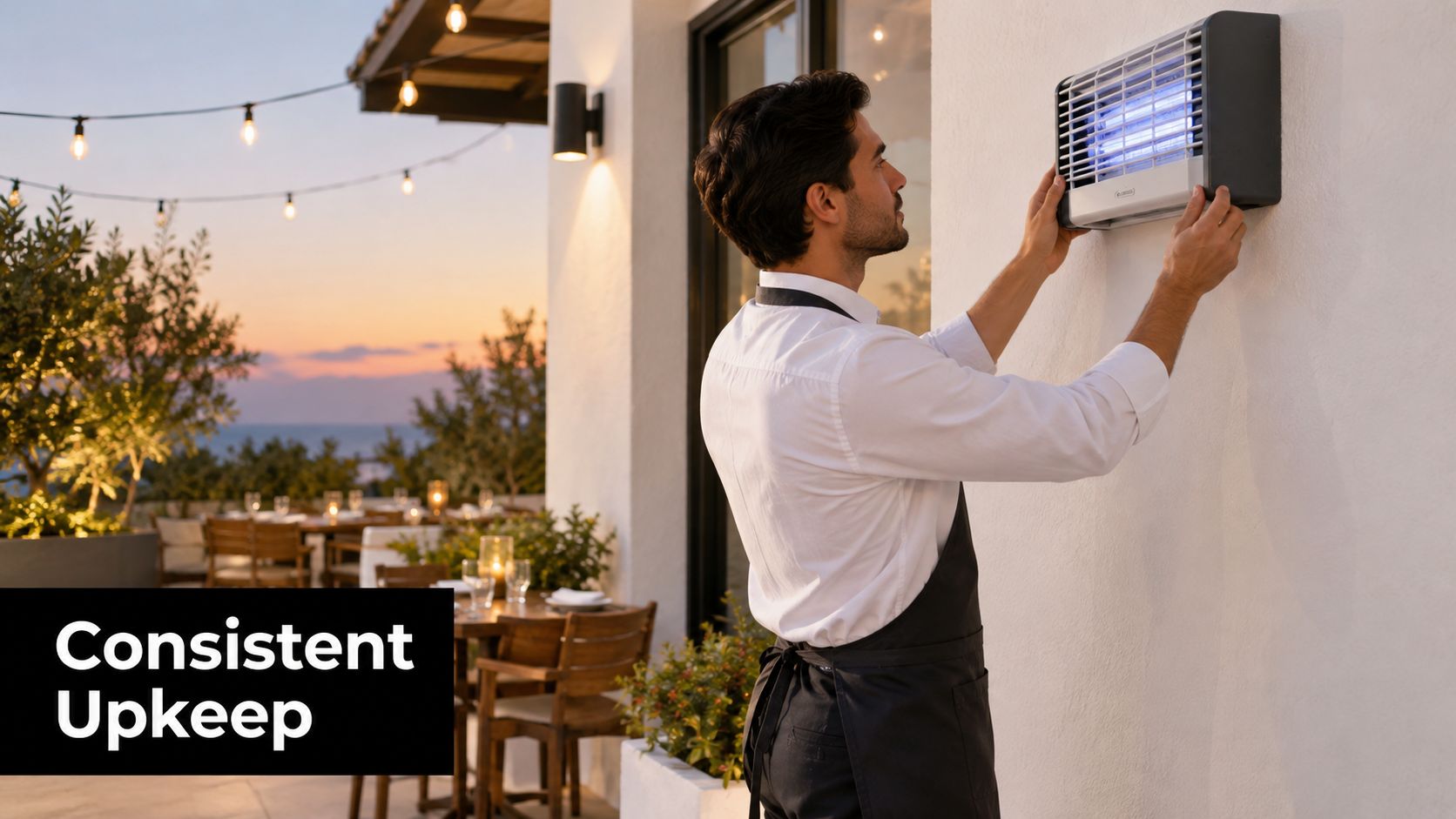
Placement decides whether electronic equipment helps or hurts. A light trap positioned beside a buffet can make the buffet the most active point in the area. Put capture devices away from guests and exposed food, and use them as part of a broader system rather than as a substitute for source control.
A physical barrier is strongest when the venue accepts the visual and access changes. An electronic device is strongest when staff can place, inspect, and clean it without compromising the guest area. Neither option removes the need to manage waste, standing water, open doors, and food exposure.
The Power of Air Flow - Fly Fans and Circulation
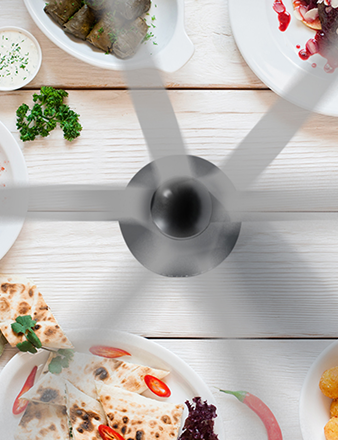
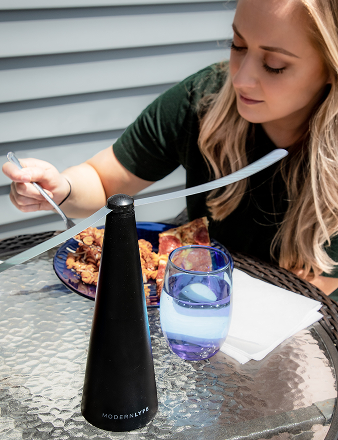
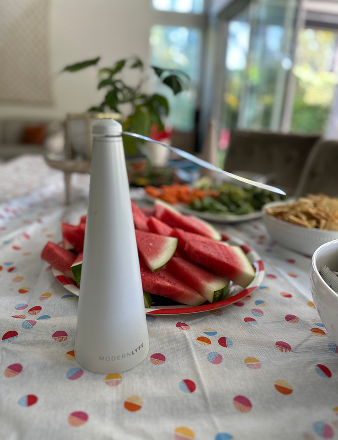
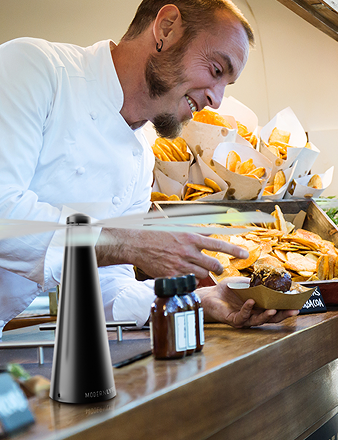
A fly fan protects the table differently from a topical spray. Its moving air disrupts the flight path around a plate, buffet tray, or serving station, creating a non-contact zone without applying a substance to skin, food, or tableware. That makes airflow especially valuable where presentation matters as much as pest control.
Most advice about the best insect repellent outdoor solution assumes a skin-applied spray. That leaves a practical gap for restaurants, hotels, caterers, and homeowners who need a method that protects guests and food presentation without touching skin, food, or décor, a gap also visible in Wirecutter's coverage of bug repellents.
Why airflow fits hospitality
The first advantage is contact control. Staff don't need to spray around a table, ask guests to apply a product, or worry about a chemical scent competing with the menu. A fly fan sits near the point of risk and addresses the space where insects become visible, such as a cake table, canapé display, breakfast station, or outdoor dining table.
The second advantage is design flexibility. Battery-operated and quiet formats can move with the service layout, work at indoor or outdoor events, and avoid the visual obstruction of a screen. The device shouldn't dominate the table or create a new noise complaint. Its value comes from staying present without becoming part of the guest conversation.
The third advantage is integration. Airflow works well beside basic controls such as covered food, fast clearing of empty plates, closed waste bins, and screened preparation areas. It doesn't replace sanitation or source management. It gives the team a point-of-service defense while the property addresses the conditions attracting insects.
A fly fan for dining and events is most useful when the operator treats it as equipment with a defined placement, charging, and inspection routine. The device needs to sit where air can move across the exposed food zone without blowing napkins, disturbing candles, or interfering with service.
The following video demonstrates the type of compact airflow approach operators can evaluate before choosing equipment:
Don't confuse quiet airflow with universal coverage. A fan protects the zone it serves, so large patios may need several strategically placed devices or a combination of fans and structural controls. The right question isn't whether one gadget solves every pest problem. It's whether airflow can protect the guest-facing points where an insect incident would damage the experience.
Selecting the Right Solution for Your Venue
Start with the exposure point, not the product category. Ask where insects create the greatest operational risk. Is the problem an open buffet, individual plates, a bar garnish station, a queue at a food truck, or guests sitting beside dense landscaping? The answer determines whether you need table-level airflow, a fixed barrier, perimeter capture, or a layered arrangement.
Match the solution to the service model
A casual food truck or outdoor market vendor usually needs portability. Equipment should move quickly between the service window, condiment station, and customer queue. A compact fly fan can protect a small exposed-food area while staff keep ingredients covered and clear waste promptly.
A hotel breakfast terrace has a different profile. The service window is longer, guests circulate between tables, and buffet presentation remains exposed as staff replenish it. Use table-level airflow at vulnerable displays, place capture equipment away from diners, and consider screens or enclosed structures where the building layout supports them.
Wedding receptions and fine-dining events demand discretion. Guests notice noise, clutter, odors, and anything that interrupts photographs or conversation. Quiet, low-profile airflow is the stronger default for tables and food displays, while barriers make sense only when they preserve the intended design.
EPA guidance indicates that products with less than 10% active ingredient may give only 1 to 2 hours of protection (CDC Yellow Book guidance). That short window makes repeated application a poor operating model for an extended event, especially around food service. It also reinforces the value of non-chemical controls that can remain in place throughout service.
Use a practical buying filter
Choose equipment that staff can operate without a specialist. Check the power method, charging routine, noise level, cleaning access, footprint, stability in wind, and storage requirements. A device that works well in a showroom but lacks a clear place in the opening checklist will become forgotten equipment.
Consider local pressure, too. A breezy terrace with occasional flies may need only targeted table protection. A sheltered courtyard near landscaping, waste areas, or standing water may require source correction, barriers, capture devices, and airflow together. For broader property planning, this guide to yard mosquito repellents for 2026 can help operators think beyond the dining table and inspect the surrounding grounds.
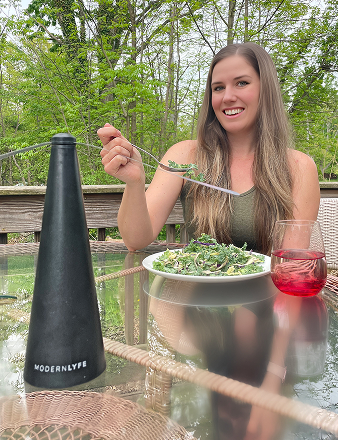
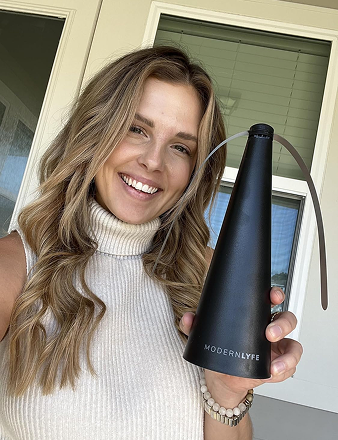
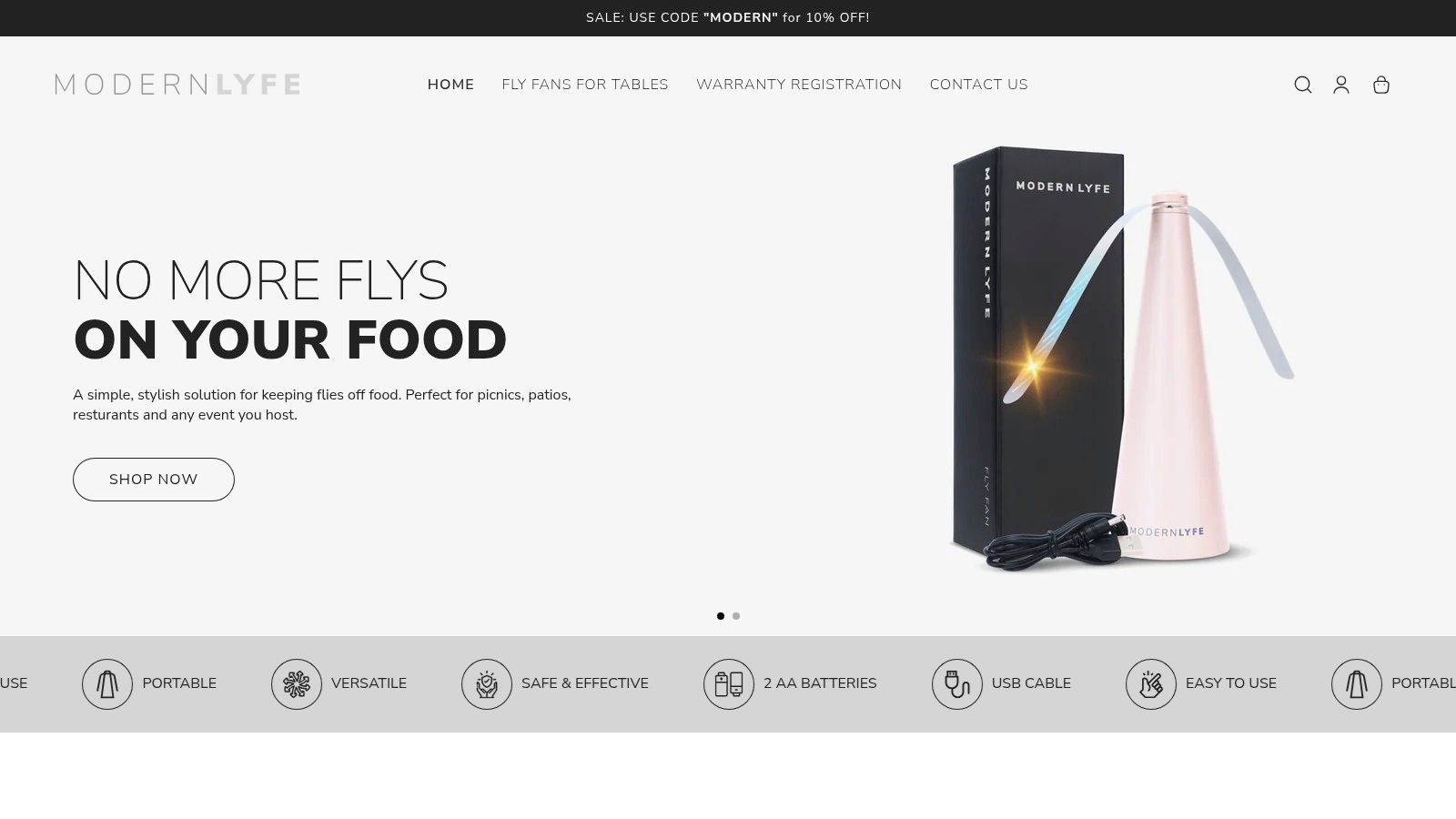
For venues seeking a compact non-contact option, the MODERN LYVE Black Fly Fan is described as an indoor and outdoor dual-power fly fan designed for dining and food areas. Evaluate it alongside comparable equipment against your own table layout, power access, noise expectations, and maintenance process. The recommendation is simple: choose the method staff will deploy at every service.
Implementation and Operational Best Practices
A good device fails when the team treats it as decoration. Assign ownership before the first event, define the placement, and add the equipment to the same opening routine as table settings, refrigeration checks, and buffet covers.
Set the venue before guests arrive
- Inspect the risk points: Walk the patio, buffet, bar, waste area, doors, landscaping edge, and food-preparation route. Look for exposed food and locations where insects gather.
- Place airflow at the point of exposure: Position a fly fan near the table, tray, or display it protects. Keep the stream from disturbing napkins, flames, menus, or delicate table arrangements.
- Move capture devices away from people: A UV trap belongs where it can draw insects away from guests and food, not beside a dessert station or dining table.
- Protect the food itself: Keep ingredients and prepared dishes covered whenever service allows. Airflow supports food protection, but it doesn't replace covers, lids, or disciplined replenishment.
- Assign a closing check: Staff should clean devices as directed, recharge battery units, inspect cords and mounts, and return equipment to a known storage location.
Make pest control part of service language
Servers need a short response for an insect incident. Remove the affected item, notify the floor lead, protect the nearby table, and record the location. Don't leave staff improvising while guests watch.
Managers can use a restaurant pest control checklist to standardize inspections and handoffs. The checklist should cover equipment condition, placement, sanitation, waste handling, and any recurring location where insects appear.
Review the setup after service. If guests complain about airflow, adjust the angle or move the device rather than switching it off without a replacement. If insects concentrate near a trap, reassess its location. Operational control comes from observing the room and correcting the system, not from buying more equipment automatically.
Conclusion - Elevating the Guest Experience
The strongest outdoor dining operations don't wait for the first complaint. They identify the exposed food points, protect them without creating new hazards, and give staff a simple routine to follow. A fly fan near a buffet, a screen around a fixed patio, and a correctly placed capture device can each serve a different role.
Topical repellents still matter for personal mosquito and tick protection. They aren't the right primary answer for an open plate or a guest-facing food station. Hospitality operators need protection that respects the meal, the design, and the service rhythm.
A successful patio feels effortless to the guest. The server clears plates before they attract insects, the buffet remains covered between replenishment, the airflow device runs near exposed food, and the manager knows who checks it. That is what operational peace of mind looks like. It doesn't come from one universal product. It comes from matching the control method to the venue and making the process repeatable.
Restaurants, hotels, caterers, and event planners should audit their most vulnerable food and seating zones before the next busy outdoor service. If the current plan depends on guests applying spray or staff reacting after an insect lands on food, the venue needs a better system.
MODERN LYFE offers practical fly fans for indoor and outdoor dining, buffets, receptions, and gatherings where food presentation and guest comfort matter. Review the available options at MODERN LYFE and choose a non-contact airflow setup that fits your tables, service routine, and venue design.