An event can look profitable on the quote sheet and still lose money by the end of service. Food overages show up after the second trim, labor shifts expand when a bartender calls out, vendor fees stack up, and a last-minute guest-experience purchase eats the margin you thought was safe. That's why budget planning tips for hospitality need to work like an operating system, not a static spreadsheet, and why the best plans follow due dates, prep cycles, and event calendars instead of neat monthly theory. The practical goal is simple, build a budget that survives real service conditions, protects food and labor cost, and gives you a fast way to adjust when reality changes.
For hospitality teams, the smartest approach is usually a blend of allocation methods, reserve rules, and variance checks. A wedding planner might keep the budget tight on vendor spend, a restaurant might use a weekly review to catch drift before payroll closes, and a caterer might set a separate line for outdoor guest comfort so fly control doesn't become an afterthought. If you want a quick example of how budget timing changes by event type, the budget timeline for Central Texas weddings shows how calendar pressure shapes spending decisions. The point isn't to make finance complicated. It's to make it visible, usable, and fast enough for service work.
Practical rule: if a budget can't be checked in a few minutes before prep, it's too heavy for hospitality.

1. The 50/30/20 Budget Framework
The 50/30/20 rule is still one of the cleanest ways to organize a budget, because it gives you a hard split instead of vague intentions. Major financial institutions present it as 50% for needs, 30% for wants, and 20% for savings or debt repayment, with monthly review and adjustment so the plan stays aligned with actual income and spending Bank of America's budget framework. In hospitality, that simple structure translates well when you stop thinking like a consumer and start thinking like an operator.
For a restaurant, the 50% needs bucket can cover payroll, food, rent, insurance, and other essentials that keep doors open. The 30% wants bucket becomes controlled growth, better guest amenities, patio comfort, or a service upgrade that supports revenue instead of just looking nice. The 20% reserve bucket is where preventive maintenance, equipment replacement, and surprise repair needs live, so a broken fan or a failing refrigerator doesn't blow up the month.
A wedding planner can use the same split with vendor deposits, client-experience upgrades, and a protection fund for rebooking or weather-related shifts. The decision rule is straightforward, if an expense doesn't keep operations running, improve the guest experience, or protect future cash flow, it doesn't belong in the first half of the budget.
Good operators review the split weekly, not just at month-end. That's how they catch drift before labor, food, or amenities start eating into reserves.
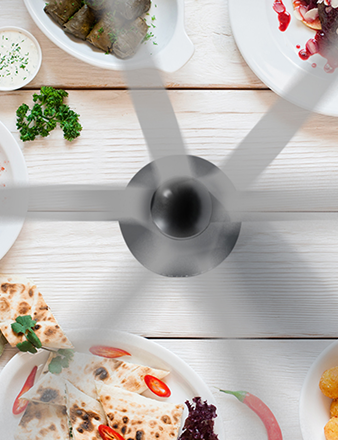
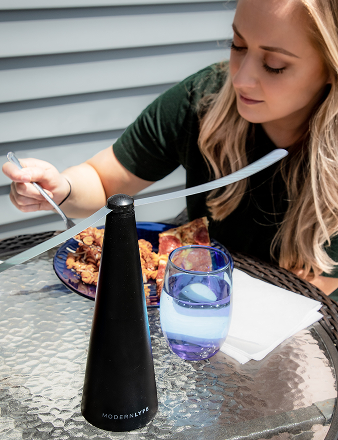
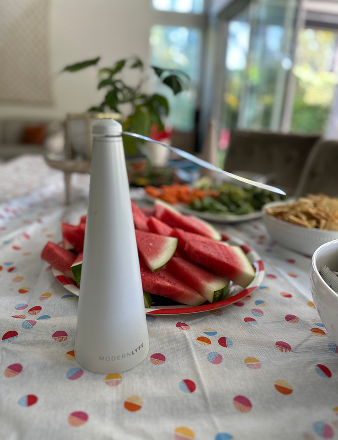
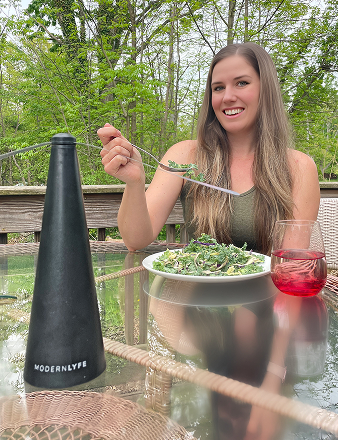
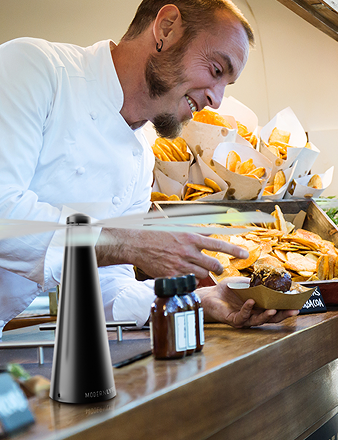
For outdoor dining, some teams use the 30% lane for comfort investments that support sales, including fly control systems or other guest-facing improvements. Modern Lyfe fly fans fit that kind of decision because they sit in the middle ground between utility and presentation, which is exactly where hospitality spending should be judged.
2. Zero-Based Budgeting for Event Operations
Zero-based budgeting works because it refuses to assume last month's spending was right. Every dollar gets a job before the period starts, which makes it a strong fit for event operations where each booking can have a different guest count, menu, setup, and service level. That discipline helps event coordinators and caterers justify every line, from linens and rentals to guest comfort tools that prevent avoidable service problems.
A catering company might approve fly prevention as an intentional event expense instead of tucking it into miscellaneous costs. If an outdoor reception has a real risk of guest disruption, that line belongs in the budget up front, not as a scramble on event day. Zero-based thinking also keeps luxury add-ons honest, because every upgrade has to earn its place against the rest of the event's priorities.
Build the category list from the service model
Start with categories that match how you operate, not how accounting software labels expenses. Food safety, guest comfort, staffing, presentation, and cleanup are easier to manage than broad buckets that hide cost drivers.
- Food safety: Covers covers, storage, and sanitation items that prevent waste.
- Guest comfort: Covers fan placement, climate comfort, and small experience upgrades.
- Ambiance: Covers visual presentation, table readiness, and outdoor polish.
- Contingency: Covers last-minute changes that don't fit the original plan.
A hotel event coordinator can use the same method to zero-base each wedding package and include aesthetic enhancements only when they're tied to the event brief. That keeps pricing clean and helps prevent underquoting. The trade-off is time, because zero-based budgets take more upfront work, but the payoff is tighter control and less leftover waste.
3. Envelope Budgeting for Venue Operations
Envelope budgeting works because it puts a hard boundary around spend. The digital version uses apps or spreadsheets so each category has its own allocation, and once that envelope is empty, the category waits until the next period. For restaurants and venues juggling food, labor, maintenance, and guest-facing upgrades, that creates a much clearer picture than one pooled account with no guardrails.
A restaurant can create envelopes for food costs, labor, maintenance, and guest amenities. If the guest amenity envelope is set aside for a season, then a fly fan purchase, a patio refresh, or another comfort upgrade has to compete against other items in that same bucket. That's healthy, because it forces a decision instead of letting small purchases pile up as “just this once” expenses.
The digital version works best when money moves automatically. Set transfers on payday, then review balances weekly with the management team so no one is guessing what's left. Apps like YNAB are built around envelope-style control, and spreadsheet users can do the same thing with separate tabs or categories that mirror real spending. A small contingency envelope, even when kept modest, gives you room for unexpected opportunities like a seasonal promotion or a short-notice add-on.
The rule is simple, if the envelope is empty, the decision is over until next cycle.
That discipline matters in event work because categories blur fast. A caterer may want to cover a service issue with the marketing line, or a venue might try to squeeze comfort upgrades into operations. Clear envelopes stop that drift and keep each cost center accountable to its own purpose.
4. Activity-Based Budgeting for Catering and Events
Activity-based budgeting is the right tool when overhead hides the truth. Instead of funding departments the same way every month, it allocates money to the actual work being performed, which is a much better fit for catering companies, planners, and venue teams that price by event type and guest count. The budget starts to look like the service itself, which is exactly what you want when the margin depends on execution.
A caterer can build the budget around per-guest activities such as prep, service, cleanup, and guest protection. A wedding planner can break out ceremony coordination, reception setup, and vendor management so the event's real labor load is visible before quoting. Guest-experience items like fly-free dining areas then become measurable line items instead of vague “nice to have” costs.
Use the activity that drives the cost
The most useful activity-based budgets start with the question, what makes this event more expensive? Outdoor duration, guest count, season, and service complexity all change the number behind the quote. That means a standard package and a premium package should not share the same assumptions.
- Track the activity: Measure time and resources for each major service block.
- Name the driver: Tie the cost to guest count, duration, indoor or outdoor setup, or season.
- Price the tier: Build basic, standard, and premium options from those drivers.
- Review the event: Compare the actual result against the assumption after each major booking.
This method is where discipline turns into pricing power. If an activity is consistently underpriced, you can raise it before it eats the margin. If a service is overstaffed, you can trim it without cutting guest value. For planning teams, that's a better outcome than guessing with a flat percentage and hoping the event behaves.
5. Seasonal Budgeting and Cash Flow Planning
Hospitality doesn't spend evenly, and pretending it does is one of the fastest ways to create cash strain. Seasonal budgeting separates high season, shoulder season, and low season so the budget follows actual demand instead of an annual average. That matters for restaurants, caterers, and event planners because the timing of revenue is just as important as the total amount.
The CFPB's budgeting guidance makes the timing problem explicit, budgets should account for when bills are due, not just what the categories are. That's the hidden issue in hospitality too, because a business can look solvent on paper and still run short when invoices land before collections. A calendar-based budget fixes that by aligning due dates, payroll, deposits, and reserve targets.
A restaurant that expects most of its annual revenue in the warmer months can budget more aggressively for summer upgrades, then tighten spending once the rush ends. Wedding planners do the same thing by leaning into peak season spend during busy months and shifting capital toward infrastructure during slower periods. The key decision rule is to stop averaging the year, because averages hide the months when cash gets tight.
Build the year around your busiest window
Look at several years of monthly revenue, then map the spikes. Separate columns for each season make the pattern easier to see in a spreadsheet and help you time equipment purchases before peak demand starts.
- Use peak season for reserves: Build cash when the calendar is strong.
- Use slow season for maintenance: Schedule upgrades when disruption hurts least.
- Use off-season for vendor talks: Suppliers are often more flexible when business is slow.
- Use the calendar for purchases: Buy long-lead equipment before you need it.
A practical reserve target is to build enough checking buffer so bills don't collide with irregular income. That doesn't remove seasonality, but it keeps the business from taking on avoidable late fees or emergency borrowing. In hospitality, timing isn't a side issue. It's the budget.
6. Capital Equipment Budgeting With ROI Analysis
Capital equipment should never be bought on instinct alone. In hospitality, every long-term purchase needs a simple return-on-investment test so the team can see whether the item protects revenue, reduces labor, or improves guest experience enough to justify the spend. That's especially true for visible, operational tools like fan systems, prep equipment, or service gear that change the day-to-day rhythm of a venue.
A useful example is the catering equipment checklist, which helps teams think through what belongs in a real operating setup before they buy. The point isn't just to collect tools, it's to make sure each purchase solves a documented problem. If a piece of equipment doesn't reduce waste, save time, or support a better guest outcome, it's probably too early to buy.
Judge the purchase by total cost, not sticker price
Sticker price is only part of the decision. Installation, maintenance, energy, training, and replacement parts all belong in the conversation, because a cheap purchase can become expensive after a season of use. Get multiple quotes and compare the full operating picture, not just the invoice.
For outdoor service, a fan system may be chosen because it lowers disruption and protects food presentation, which is a direct business benefit. For venues, the better question is whether the equipment helps the team serve more cleanly, more comfortably, or with less labor.
If it doesn't pay back through operations, guest experience, or avoided waste, it belongs on the wish list, not the purchase order.
That mindset also improves planning for replacement cycles. When you document lifespan and expected residual value, you stop treating equipment as a surprise expense and start treating it like a managed asset. That's a much stronger budget habit than buying whatever feels urgent in the moment.
7. Vendor and Supplier Cost Negotiation Strategy
Vendor negotiation is one of the most underused budget planning tips in hospitality, mostly because teams treat quotes as fixed. They aren't. Pricing shifts with timing, volume, package scope, and relationship quality, which means a smart operator can often improve the budget before a single item is ordered. The biggest gains usually come from preparation, not pressure.
Restaurant groups often have the most negotiating power because they can show annual volume and tie multiple purchases together. Catering companies can use that same logic when they ask for quotes from multiple suppliers and compare terms, not just prices. If you're buying both consumables and equipment, you have more room to negotiate than you think, especially when the vendor wants repeat business.
The internal advantage comes from planning the ask before the budget is locked. A vendor review meeting should cover spend history, service reliability, and pricing changes, then turn that conversation into a revised purchasing plan. For a deeper look at the category, the best practices for vendor management reinforce how relationship management strengthens cost control over time.
Negotiation works best when you bring receipts, not pressure
- Ask for written volume discounts: Many suppliers won't offer them unless you request them directly.
- Time non-emergency orders for slow periods: Suppliers are often more flexible when demand is light.
- Bundle related purchases: Larger packages create more bargaining power than scattered small orders.
- Keep backup vendors active: Two or three alternatives per category protects your position.
- Review annual spend openly: Clear history gives you more credibility in the next negotiation.
The trade-off is commitment. If you promise volume to earn better pricing, you need the budget discipline to hit that target. That's why negotiation and budgeting belong together, because one without the other just creates a missed forecast. For hospitality operators, vendor influence is not a one-time win. It's a recurring budget habit.
8. Real-Time Budget Monitoring and Monthly Variance Analysis
A budget only works when someone checks it before the damage rolls into the next service, event, or booking cycle. Real-time monitoring compares actual spend against the plan on a weekly or monthly rhythm, then forces a decision while the numbers are still actionable. For restaurants, venues, caterers, and event teams, that usually means catching a labor spike, a food-cost jump, or a supplier overrun before it turns into a margin problem.
Budgeting data shows why operators need that discipline. 44% of Americans do not use budget-planning tools, only about one quarter have any written financial plan, and 70% say their financial planning needs work budget planning statistics. The same source notes that only 39% say they could cover an unexpected $400 expense. In hospitality, that gap shows up fast because every service period resets the risk profile. Teams that review spend in real time can adjust ordering, staffing, and event pricing before the next job locks in the same mistake.
Use accounting software like QuickBooks, Xero, or Wave to generate variance reports, then set a review threshold for any category that moves far enough off plan to need action. A simple monthly dashboard should show the budgeted amount, actual amount, variance, owner, and reason code. If food cost or labor keeps running hot, the issue is usually process, purchasing, scheduling, or menu mix, not the spreadsheet itself. For a tighter operating read, pair the budget report with performance metrics for hospitality teams so managers can connect variance to service output, guest count, or sales mix.
Track the reason, not just the number
The fastest way to improve next month is to record why the variance happened. A weather shift, a menu change, a rushed vendor order, or a guest count swing all create different budget problems, and they should trigger different fixes.
If one category keeps running over, the next budget should be adjusted instead of defended. If another category stays under plan, that money may be better used elsewhere. The goal is not perfect line-by-line accuracy, it is a smarter budget cycle that reflects how the business operates. That is also where financial variance analysis Australia fits in, because the review only has value when it leads to a concrete operational decision.

Keep the dashboard short
- Budgeted amount: What you planned to spend.
- Actual amount: What you really spent.
- Variance: The gap that needs an explanation.
- Owner: Who is responsible for the line.
- Next action: What changes before the next event.
Monthly discipline keeps the budget useful in the field. It also turns finance into an operating habit, which is where hospitality teams get better control over cost, timing, and follow-through.
8-Point Budget Planning Comparison
| Budget Approach | Implementation Complexity (🔄) | Resource & Time Requirements (⚡) | Expected Outcomes (📊) | Ideal Use Cases & Tips (💡) | Key Advantages (⭐) |
|---|---|---|---|---|---|
| The 50/30/20 Budget Framework | 🔄 Low, simple percentage allocations | ⚡ Low, minimal tools, periodic reviews | 📊 Balanced operating vs. growth vs. savings; steadier cash flow | 💡 Small-to-medium hospitality businesses; review quarterly | ⭐ Easy to implement; reduces decision fatigue |
| Zero-Based Budgeting for Event Operations | 🔄 High, justify every line from zero | ⚡ High, detailed tracking and documentation | 📊 Eliminates waste; clearer ROI on purchases | 💡 Discretionary spend or event-by-event budgeting; start small | ⭐ Strong cost control and accountability |
| Envelope Budgeting (Digital Version) for Venue Operations | 🔄 Medium, app/spreadsheet setup required | ⚡ Moderate, digital tools + disciplined transfers | 📊 Prevents overspend by category; clear visual status | 💡 Multi-cost-center venues; use YNAB/Mint and weekly reviews | ⭐ Immediate visibility; enforces category limits |
| Activity-Based Budgeting for Catering and Events | 🔄 High, maps budgets to activities/cost drivers | ⚡ High, activity tracking and historical data needed | 📊 Accurate cost-per-event/guest; improves pricing decisions | 💡 Caterers and planners who price per guest or event type | ⭐ Reveals true profitability by activity |
| Seasonal Budgeting and Cash Flow Planning | 🔄 Medium‑High, requires seasonal segmentation | ⚡ Moderate, needs 2–3 years data and forecasting | 📊 Smoothes cash flow; times investments for peak season | 💡 Seasonal hospitality businesses; build reserves in high season | ⭐ Prevents off-season cash crunches; aligns purchases with demand |
| Capital Equipment Budgeting with ROI Analysis | 🔄 Medium, structured ROI calculations | ⚡ Moderate, cost data, quotes, spreadsheet models | 📊 Data-driven buy/skip decisions; clearer payback timelines | 💡 Major purchases (equipment, fans); set payback thresholds | ⭐ Prioritizes high-impact investments; reduces impulse buys |
| Vendor and Supplier Cost Negotiation Strategy | 🔄 Medium, relationship & negotiation planning | ⚡ Variable, time investment; potential volume commitments | 📊 Lower unit costs; improved payment/terms | 💡 Businesses with repeat purchases; bundle and time orders | ⭐ Reduces costs across categories; strengthens supply reliability |
| Real-Time Budget Monitoring & Monthly Variance Analysis | 🔄 Medium‑High, continuous monitoring & reporting | ⚡ High, accounting software and frequent reviews | 📊 Early detection of overruns; enables quick course correction | 💡 Event-driven operations with variable revenue; set variance thresholds (e.g., 10%) | ⭐ Prevents slow budget creep; increases accountability |
Turn the Budget Into an Operating System
The strongest hospitality budget isn't one method, it's the right combination of methods working together. Use activity-based budgeting to price events accurately, seasonal planning to manage cash flow, zero-based review to challenge discretionary spend, ROI analysis to approve equipment, vendor negotiation to stretch purchasing power, and variance monitoring to catch drift before it becomes loss. Then keep a reserve that can absorb the inevitable surprises, because food service and event work always produce timing issues, labor changes, and guest-facing exceptions that no spreadsheet can fully predict.
A practical rollout over the next 30 days is enough to get the system moving. Start by defining categories and KPIs that match your operation, then build the next event budget from actual guest count, menu, labor, and setup assumptions. Set a contingency reserve, review actuals weekly, and update assumptions after the event while the details are still fresh. That habit is what keeps a budget from becoming stale.
For decision-making, watch the metrics that matter in hospitality, food cost percentage, labor cost percentage, event contribution margin, average variance, vendor savings, equipment payback, and reserve coverage. Those numbers tell you whether the budget is protecting cash or just documenting waste. A budget that stays connected to service reality gives managers faster answers, better pricing, and fewer surprises on the back end.
If you want a budget that works in the field, not just in a spreadsheet, use staffing and venue budget tips to tighten the labor and space side of the plan, then keep refining the rest from actual event results. The goal is simple, build a living operating tool that helps the team spend with intent and adjust fast when the event changes.
MODERN LYFE helps hospitality teams protect food presentation and guest comfort with sleek, battery-operated fly fans built for restaurants, hotels, catering setups, and outdoor events. If you're tightening budgets for 2026, visit MODERN LYFE to see how a practical, low-maintenance fan can support better guest experience and smarter equipment planning.