You've set the table, the guests are seated, and the bread basket looks perfect. Then a fly makes a straight line for the hummus, and the whole setup starts to feel sloppy fast. Eco friendly insect control only works in hospitality when it protects the food, keeps guests relaxed, and doesn't turn the dining area into a science project.
The mistake many make is shopping for a “green” product before they've fixed the actual problem. Flies show up because of food residue, standing water, open access, bad airflow, or poor service flow. If you ignore those causes, you end up with a prettier label and the same nuisance.

The right approach is layered. You reduce attractants, block access, move air where food is exposed, and use products only when the evidence says you need them. That's the standard that holds up on buffet lines, patios, catering decks, hotel terraces, and backyard receptions.
The Outdoor Dining Moment Every Host Knows
A chef finishes plating, a server sets the first tray on the buffet, and the whole room looks ready for photos. Then one fly lands on the bread, another circles the fruit, and guests start doing that quiet hand-wave that says the evening is already slipping. That's the true test of eco friendly insect control, not whether the spray bottle has a natural label.
The fix has to protect the guest experience without making the space feel overmanaged. Most quick fixes fail because they only address one piece of the problem. A candle, a mist, or a tabletop gadget won't save you if the dumpster is open, the prep station is sweating, or the service door stays propped wide.
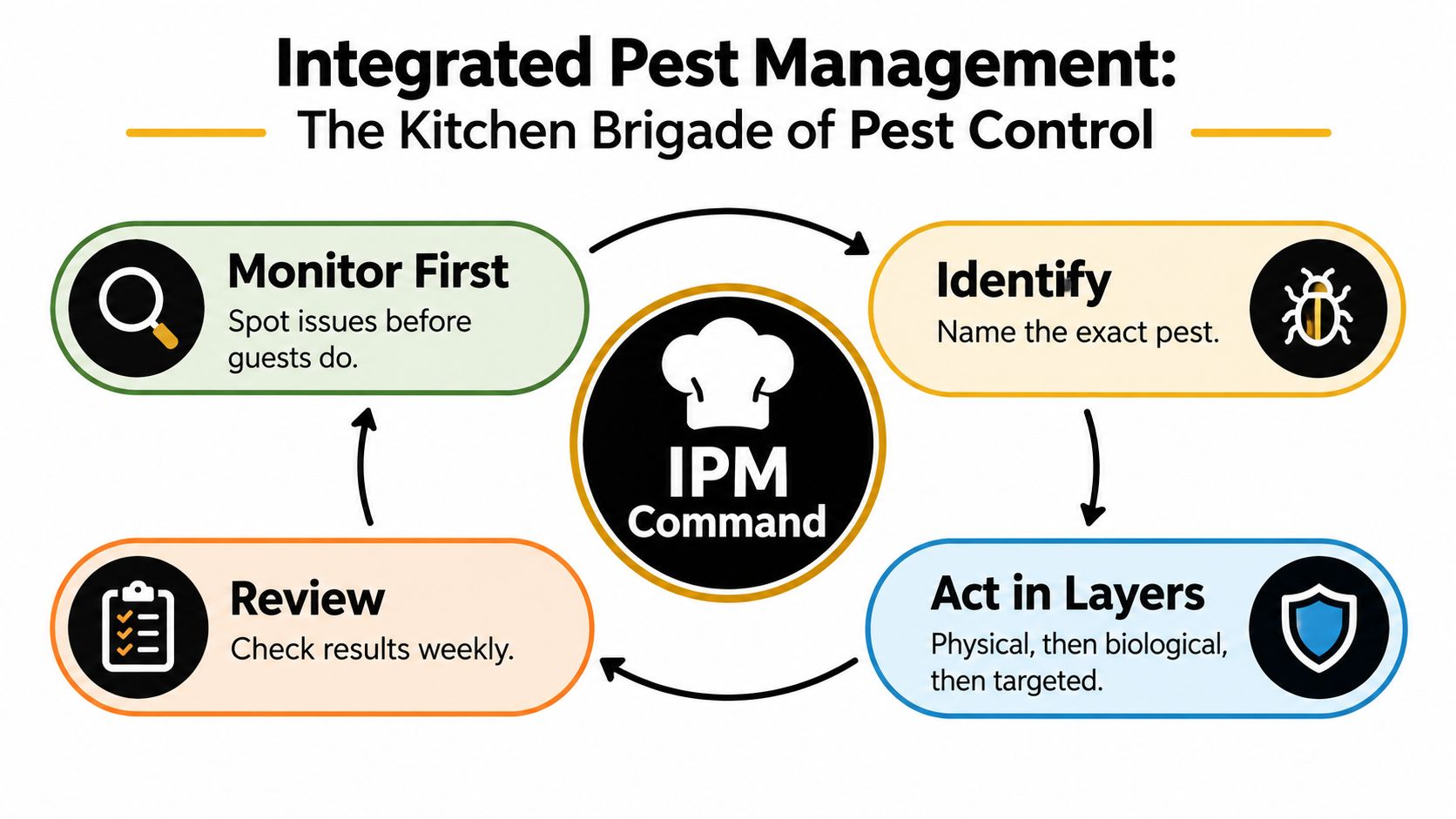
What works is a decision framework. You need the right mix of sanitation, access control, monitoring, airflow, and only targeted products when the situation deserves it. Integrated pest management is the structure underneath all of that.
Practical rule: If a tactic doesn't reduce access, food, water, or shelter, it's probably cosmetic.
That's the lens I use for restaurants, hotels, caterers, and homeowners hosting outdoors. The setting changes, but the logic doesn't. Protect the food first, then layer in the controls that keep flies away without ruining the service.
Why Integrated Pest Management Is the Real Foundation
IPM isn't a buzzword, it's the operating backbone. The U.S. EPA describes it as a framework that combines monitoring, prevention, biological control, physical methods, and carefully targeted pesticide use, instead of routine chemical treatment, and says it can reduce pesticide reliance while lowering risks to people, property, and the environment. That's why it belongs at the center of eco friendly insect control. (EPA IPM guidance)
Think Like a kitchen brigade
Sanitation is your prep station. Monitoring is your line check. Exclusion is the barrier between the kitchen and the pests. Chemical treatment is the expediter you call only when the other stations can't keep up.
That's the mindset hospitality operators need. You don't start by “treating flies.” You wipe the buffet, check the entry points, confirm the pest you're dealing with, and document what's happening before you touch a product. The EPA's commercial toolkit also lays out prevention as a sequence, assign responsibilities, inspect and identify pests, monitor activity, evaluate results, implement prevention strategies, and document actions. (EPA toolkit)
What IPM looks like on a real service
On a patio lunch, the host or manager should know who owns the pest walk, who checks the doors, and who clears attractants before guests arrive. On a catered event, the team should know where the monitoring notes live and what triggers escalation. On a hotel terrace, the answer can't be “someone will handle it.” It has to be assigned.
IPM earns the label sustainable because it lowers total exposure, not just visible spraying. That matters in guest-facing spaces, where trust disappears fast if staff start reaching for chemicals every time a fly appears. The framework is the test. Every other tactic has to fit inside it or it doesn't belong.
Habitat Reduction Before Anything Else
Service areas fail fast when food, water, and shelter are left in place. Remove those conditions first. The EPA puts sanitation first in food-service IPM, and that is the right order for a patio, buffet line, or banquet setup. (EPA toolkit)
Run the venue like a checklist
Assign ownership before service starts. One person walks for pests, another acts on the findings. Then inspect the spots that draw activity, dumpsters, drains, service doors, prep areas, and any place grease, crumbs, or moisture collect.
Fix the attractants without delay. Clear grease from vents, sweep crumbs, dry wet floors, repair dripping faucets, store food in sealed plastic, glass, or metal containers, and keep prepared food covered. Remove waste between service periods, not after guests have already noticed the smell. Those steps cut off the food, water, and shelter that keep flies coming back.
Operational truth: If the buffet looks clean but leaks and waste flow stay ignored, half the problem is still there.
Don't confuse cleanliness with control
Habitat reduction is the most guest-friendly tactic because it adds no noise, scent, or hardware to the dining experience. It makes the area less attractive to flies. Clean before service, not after complaints, and check outdoor storage, bar backs, and waste routes before you call anything under control.
If you are building or resurfacing an outdoor dining area, the material around the space matters too. A resource like best composite decking can help when you want easier cleanup and less harborage around service zones. For a venue-level checklist that fits outdoor service, use insect control outdoors. I have seen patios look polished on day one and turn into maintenance problems by the end of the season because the surface and the service flow were never designed together.
Airflow Based Deterrence and Why It Wins Near Guests
Near guests, subtle airflow beats gimmicks. Screens and air curtains are excellent at the boundary, traps belong in back-of-house or away from the dining line, and table gadgets that promise miracles usually deliver noise or clutter. A gentle, steady air barrier over the food is the cleaner answer when the problem is happening right at the plate.
Where each option belongs
Air curtains belong above exterior doors near cafeterias and food-storage areas, which is exactly how EPA commercial IPM guidance frames them. Mechanical capture methods also have a place, as long as they're positioned where captured insects won't become a contamination issue. Routine preventive spraying doesn't belong on that list. (EPA commercial guidance)
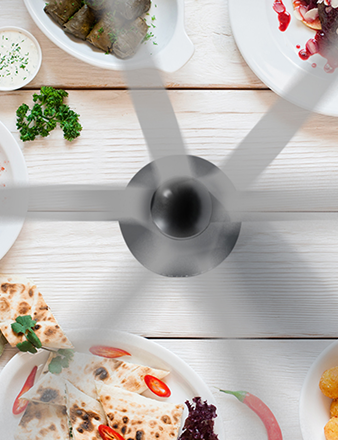
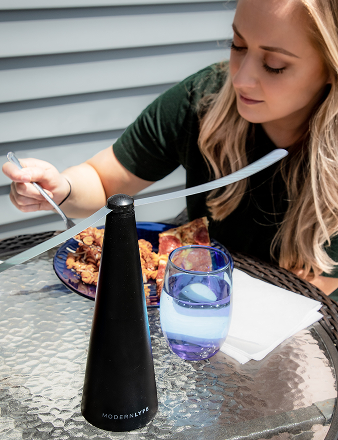
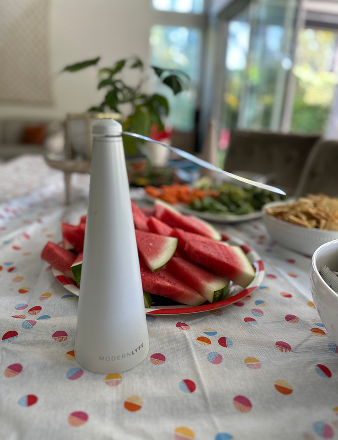
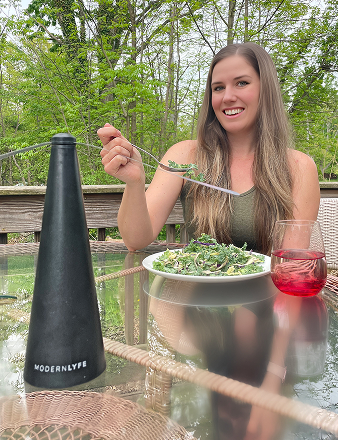
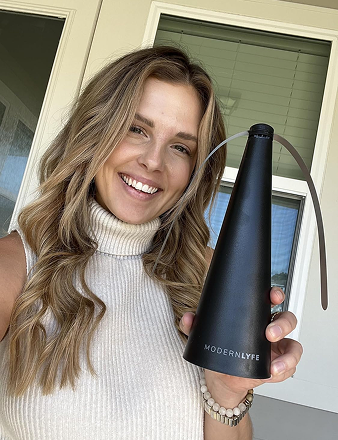
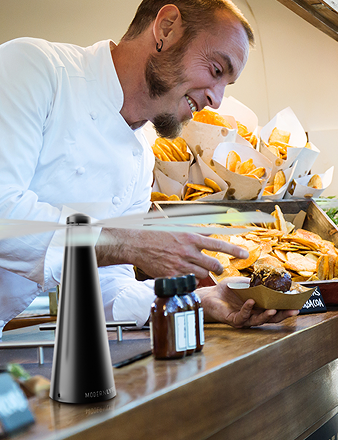
Table-level battery-operated fly fans fill the gap between the kitchen and the guest. They create localized airflow right over the bread basket, carving board, dessert tray, or buffet section where flies try to land. The logic is straightforward, flies struggle to settle and feed in steady airflow, so they move on.
Why this layer is different
This is not a substitute for sanitation or exclusion. It's the layer that protects exposed food during service when the room is already set and the guests are already seated. That's why airflow belongs on the table, not as an afterthought at the doorway.
The right setup should disappear into the tablescape. No chemical residue, no scent, no visible spray pattern, just a quiet physical barrier that keeps the plate usable. For operators looking at tools that do exactly that, do fly fans work is the kind of question worth asking before you buy anything else.
Physical Barriers and Smart Exclusion
Once the food is protected on the table, move outward and block the paths flies use to get in. The FDA Food Code 2022 requires food-establishment premises to be maintained free of insects, recognizes physical flying-insect controls like screens with openings from 16 mesh to 25.4 millimeters, and requires electrocution devices to retain insects so fragments can't fall onto exposed food, clean equipment, or utensils. (FDA Food Code 2022)
A good exterior setup starts at the doors. Use tight-fitting screens on service windows, door sweeps on back-of-house entries, self-closing hardware near waste and receiving areas, and air curtains where traffic is constant. If you've got an outdoor bar or buffet pass-through, don't leave it half-open because “service is faster that way.” That shortcut is exactly how flies get into a polished setup.
There's also a common failure mode that operators miss. The door is closed, but the service window stays open. Or the outdoor kitchen looks clean, but the trash station sits just a few steps away with no barrier between them. That's not exclusion, that's an invitation.
For exterior screening and porch-level protection, Superior Home Improvement's exterior expertise is a useful reference point if you're comparing how physical barriers hold up around active entrances. The key is fit and placement, not just the material name.
Good exclusion is invisible to guests. They notice the lack of flies, not the hardware you used to keep them out.
When and How to Use Products Responsibly
Eco-friendly doesn't mean product-free. It means you use the least disruptive tool that will solve the problem, and you apply it only when the situation earns it. The green-label conversation gets sloppy when it treats every botanical spray or “natural” product as harmless.
A 2025 review on insecticide impacts makes the point clearly, even targeted insecticides can harm beneficial biological-control agents, while integrated programs that combine biological control with carefully targeted chemical use can reduce those nontarget effects, making monitoring and adaptive management essential. (PMC review)
Use products like a manager, not a shopper
Start by confirming the pest. Then check that the label allows the site and the surface. Apply only to approved areas, document the result, and review whether the next service still needs treatment. If a method keeps getting repeated without changing the result, it isn't a strategy, it's habit.
Biological controls, botanical products, insect growth regulators, and targeted residuals each have a place. None of them should be first just because they sound green. If flies are showing up because the prep area is open to waste, no label fixes that.
The other trap is visibility. Guests don't separate the chemistry from the experience. If staff are spraying around a dining area, they assume the venue is behind on control, even when the ingredient list looks clean. Responsible use is what separates a real eco-friendly operation from a green-marketed one.
Putting It Together in Real Settings
A backyard barbecue needs one person clearing food, one person watching the door between the kitchen and patio, and one person checking the table fans and waste flow before the first plate goes out. That's the whole system. Prevent first, monitor continuously, keep the food under gentle airflow, and use products only if the pattern says you need them.
A catered wedding works the same way, just with more moving parts. The prep team covers food, the event lead checks screens or access points, and the service captain watches the buffet line for fly activity. If guests are moving in waves, the airflow layer goes directly over the exposed trays, not somewhere decorative in the corner.
On a busy restaurant patio, the manager should assign the opening inspection, confirm that exterior barriers are intact, and keep the fly deterrent where the bread, dessert, or bar snacks are exposed. Traps and treatments stay away from guest sightlines. The sequence doesn't change, even if the hardware does.
That's the point. Eco friendly insect control is not a shopping category, it's a service rhythm. The venues that get it right run the same disciplined sequence every time and adjust the tools to the setting, not the other way around.
Your Operating Rhythm and a Short Reference Checklist
The repeatable loop is simple. Inspect, sanitize, monitor, deter, exclude, document, review. If you run that sequence before each service, you'll catch most problems before guests do, and you won't need to lean on chemicals as a habit.
The FAO's global figures on crop loss and pesticide use are a reminder that sustainable pest control has to reduce risk without giving up prevention. That logic applies in hospitality too. The goal is not zero tools, it's the right tool at the right time, used inside a prevention-first system. (FAO overview)
Quick self-audit
- Green-only thinking: If you bought a “natural” spray but ignored waste, leaks, and access points, you're not controlling the problem.
- Single-tool dependence: If one fan, one trap, or one spray is carrying the whole plan, the setup is too thin.
- No documentation: If nobody logs where flies appeared, you can't tell whether the fix worked.
- Poor placement: If airflow or barriers are nowhere near the food, they're helping less than you think.
- Late sanitation: If cleanup happens after service instead of before, you're feeding the next round of flies.
Run the loop consistently, and the payoff is practical, not theoretical. Fewer flies. Less resistance pressure. A better-looking service line. Better guest comfort. That's what eco friendly insect control should deliver.
If you want a cleaner, more intentional outdoor service setup, visit MODERN LYFE for airflow-based fly control designed for tables, patios, and event service. MODERN LYFE focuses on practical fly fan solutions that fit hospitality settings without adding chemicals to the guest experience.