Food loss reduction gets treated like a sustainability talking point. In food service, it's an operations problem first.
The UN reports that the food service industry contributes 28% of global food waste, and food loss and waste generate 8 to 10% of annual global greenhouse gas emissions while representing a major share of the estimated $940 billion in annual economic losses tied to food that's produced but never eaten, according to the EPA summary of international wasted food recovery efforts. If you run a restaurant, hotel kitchen, catering operation, buffet, food truck, or banquet program, that number shows up in a less dramatic form every day. It's in over-prepped pans, bad deliveries, unlabeled cambros, wilted garnish, contaminated buffet trays, and plate returns nobody learns from.
Most operators don't need a grand initiative. They need a tighter system. Buy better. Receive harder. Store faster. Prep with discipline. Measure what's leaving the building in a trash bag instead of on a plate. Then get the team to treat waste like cash.
The Hidden Cost of Kitchen Waste
One bad case of produce can cost you three times. You pay for it, you pay someone to prep it, and you pay again to haul it out when it dies in the trash.

Food loss in food service is an operating cost with a sanitation bill attached. It shows up in margin first. A bruised delivery that should have been rejected. A prep batch made six hours too early. Herbs buried behind dairy in the walk-in. Buffet food exposed too long on a patio. Product touched by pests, flies, or guests and no longer safe to serve. None of that starts as trash. It starts as purchased inventory.
The global scale is large enough to matter to any operator. The UN reporting summarized by the EPA shows the food service sector accounts for 28% of global food waste, while food loss and waste overall generate 8 to 10% of annual global greenhouse gas emissions and contribute to roughly $940 billion in annual economic losses from food that never gets eaten through the EPA's overview of international food recovery efforts. In a restaurant, hotel, catering kitchen, or banquet operation, that same problem lands in tighter margins, higher food cost, more labor spent handling product twice, and more inconsistency during service.
Waste exposes weak systems
A full trash can is not just a cleanup issue. It is a record of missed controls.
Over-ordering, loose receiving standards, poor rotation, oversized prep, weak holding discipline, and bad communication between front and back of house all leave fingerprints in the bin. That is why operators who want to improve kitchen efficiency should start by looking at waste. Few metrics show operational mistakes this clearly.
I've seen kitchens blame staff carelessness when the underlying problem was the system. The pars were wrong. Storage was crowded. Outdoor service had no cover, no insect control, and no plan for what happened to food once traffic slowed. The team was left to improvise, and product was lost exactly where you would expect.
Waste shows where the process breaks under real service conditions.
Good operators treat waste like any other operating signal. They build simple controls that prevent repeat losses and keep the fix practical. The same approach shows up in strong operational efficiency systems for hospitality teams, where small process changes remove recurring friction and protect profit.
Where the hidden cost usually sits
The expensive losses are often the ones managers do not review closely enough because they happen before the plate hits the table.
Watch for patterns like these:
- The same item spoils every week: Forecasting, receiving specs, or storage placement needs work.
- Prep trim is consistently high: Product quality, knife skills, or menu specs are off.
- “Just in case” batches keep piling up: Production is being driven by anxiety instead of demand.
- Outdoor and buffet product gets discarded early: Holding setup, guest exposure, and pest pressure are eating into sellable inventory.
- Returns from the line cannot be reused safely: Batch size and replenishment timing are too loose.
Food loss reduction starts with process control. Composting and donation have their place, but operators save more money by stopping the loss before it reaches the trash.
Buy Smarter Not Harder
Most waste is purchased before it's thrown away.
That sounds obvious, but a lot of kitchens still buy from habit. Static pars. Broad guesses. “We always bring in two cases.” That approach works until weather shifts, reservations dip, a banquet count changes, or one special underperforms. Then the walk-in starts carrying your forecasting mistakes.
Build menus that share ingredients
The cleanest food loss reduction move is menu design. If one ingredient only belongs to one slow-moving dish, it's a spoilage risk the moment it crosses your back door.
Cross-utilization fixes that. If roasted tomatoes go into a pasta, a brunch hash, and a sauce base, you've created flexibility. If herb stems go to stock and stale bread becomes croutons or breadcrumbs, you've reduced dead-end inventory. The point isn't to get cute. The point is to avoid buying ingredients with only one path to revenue.
A simple test helps here.
| Ingredient decision | Usually smart | Usually risky |
|---|---|---|
| Used across several menu items | Yes | No |
| Easy to freeze, preserve, or repurpose safely | Yes | No |
| Requires narrow demand to move | No | Yes |
| Only bought for one occasional special | No | Yes |
Order from sales patterns, not kitchen folklore
Purchasing should follow demand signals, not memory. Last week's sales mix, current reservations, event counts, daypart traffic, and weather patterns all matter more than “we've always done it this way.”
The best buyers I've worked with do three things consistently:
- They review movers and non-movers: Fast sellers get protected. Slow sellers get questioned immediately.
- They split orders when possible: Smaller, more frequent deliveries often beat one big “value” order that sits too long.
- They challenge par levels: Pars should be living numbers, not kitchen scripture.
This mindset isn't just for restaurants. Household planning advice on strategies for better grocery lists applies surprisingly well to small operators too. The principle is the same. Buy what fits actual usage, not what feels complete on paper.
Buy for the whole ingredient
A good chef sees product in layers. A bad buyer sees only the primary use.
Onion tops, carrot peels, celery ends, herb stems, parmesan rinds, mushroom trim, chicken bones, stale bread. Those can support stock, soup, sauce, crumbs, staff meal, and specials if your systems are tight. But this only works if the menu and prep plan are built for it. Buying “for the whole ingredient” means the trim has a destination before the case is even ordered.
Practical rule: If an item enters the building without a primary use and a secondary use, it's already a waste candidate.
Know when not to buy in bulk
Bulk purchasing isn't automatically smart. It's smart only when turnover, storage conditions, and production rhythm support it.
A lower unit price means nothing if the product degrades before service. Operators get trapped by the idea of savings at invoice level while ignoring losses at usage level. You didn't save money if half the deal spoiled in the walk-in.
The sharper play is selective bulk buying. Dry goods with stable demand, yes. Highly perishable specialty greens for one menu item, probably not. Food loss reduction at the buying stage comes down to discipline. Fewer vanity purchases. Fewer orphan ingredients. Better alignment between menu, demand, and storage reality.
Protect Profits from Receiving to Walk-In
Some losses happen before your cooks touch a knife.
That's why receiving and storage need the same seriousness as service. If your back door process is sloppy, your P&L will carry it all week. Good operators don't just count boxes. They inspect condition, question temperatures, reject weak product, and move perishables into proper storage immediately.

Tight receiving prevents expensive surprises
Receiving should be boring, consistent, and documented. If it feels rushed every time, that's a management problem.
Use a simple receiving discipline:
- Match invoice to actual product: Check counts, pack sizes, and substitutions before signing off.
- Inspect quality on arrival: Bruising, broken seals, off odors, crushed packaging, and short-coded items should trigger questions.
- Move cold product immediately: Time on the dock is lost shelf life.
- Refuse what won't hold: Don't let the kitchen “try to use it up.” That's how bad deliveries become your loss.
Temperature control belongs here too. Teams that need a practical refresher on managing food temperature risks should treat it as a receiving issue as much as a cooking issue. Product that arrives in poor condition rarely gets better in storage.
Make FIFO visible, not theoretical
Every kitchen says it uses FIFO. A lot of kitchens don't.
FIFO only works when the system is obvious at a glance. Date labels need to be readable. Shelves need to be organized so older stock sits in front. New deliveries should never get dropped on top of old inventory. If your night crew can't tell what needs to be used first in five seconds, the system is too loose.
A solid setup usually includes:
- Clear date labeling: Delivery date and use priority should be easy to read.
- Dedicated shelf lanes: Similar items grouped together so rotation isn't guesswork.
- Opened-product controls: Once a case is broken down, the inner containers need the same labeling discipline as the master case.
- Daily line check habits: Not a deep audit. Just enough to catch drift before it becomes spoilage.
For kitchens building broader storage discipline, practical guidance on how to prevent food contamination fits directly into this stage. Clean storage and organized storage are the same conversation.
Older stock gets used only when staff can see it, reach it, and trust the label.
Don't ignore pest pressure in service zones
Operators often think about inventory loss inside the walk-in and forget what happens in buffet lines, patio stations, outdoor bars, event setups, and satellite service points.
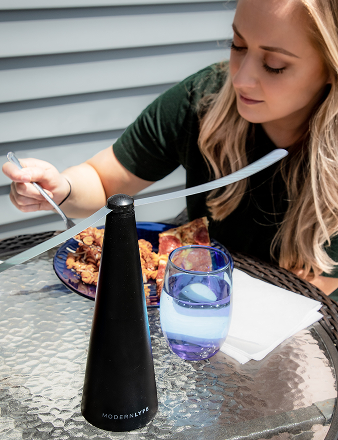
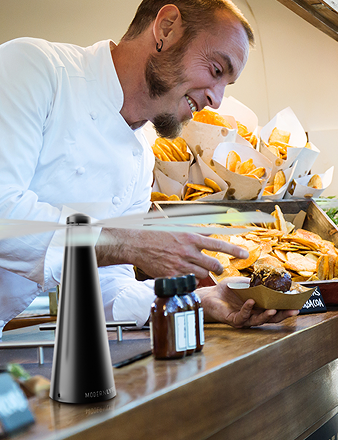
Open food attracts pests. Poorly covered garnishes, exposed buffet trays, and outdoor service stations create two problems at once. First, product becomes less appealing. Second, contamination risk rises, which can force disposal. In practice, pest control is part of food protection, not just guest comfort.
Pay attention to:
- Outdoor plating and garnish stations: These get hit first.
- Buffets and brunch lines: Long exposure windows create avoidable loss.
- Loading areas and waste zones near prep: These can increase pest activity around receiving and storage.
- Unsealed dry storage and ingredient bins: A small access point can turn into repeated product loss.
Food loss reduction isn't only about what you buy and cook. It's also about what you successfully protect.
From Prep Waste to Creative Profits
Prep waste is where margin leaks in plain sight.
A kitchen can negotiate well, receive clean product, and store it correctly, then lose those gains at the cutting board. Heavy trim, overfilled pans, loose portioning, and backup prep made on instinct all chip away at profit. None of it looks dramatic during service. It still shows up on the P&L.

Tight prep systems cut silent loss
The fix is usually boring. That is why it works.
Operators get better results when prep is tied to specs, demand, and station discipline instead of habit. A cook who portions chicken by eye may only be off by half an ounce. Across a week, that can erase the margin on the item. The same goes for produce trim. If one employee peels too deep or cuts too aggressively, yield drops fast on high-volume items.
The kitchens that control this well usually have a few basics in place:
- Written recipes that are used on the line: Current specs, current yields, current portions.
- Portion tools at the station: Scales, scoops, ladles, slicers, and cutting guides.
- Prep sheets based on forecasted covers and sales mix: Enough for demand, with less insurance prep.
- Yield training on key ingredients: Especially proteins, herbs, fruit, and produce with variable trim loss.
One practical step helps more than operators expect. Review prep variances the same way you review labor or sales. Teams already watching restaurant performance metrics that affect food cost and labor spot waste patterns faster and fix them before they become routine.
Turn unavoidable trim into planned output
Some trim is part of production. The question is whether it already has a job.
Vegetable trim can feed a stock program. Tomato ends can support sauce prep. Day-old bread can become crumbs, croutons, stuffing, or staff meal. Citrus peels can move into syrups or infusions if the bar uses them. Bones can go into soups or sauces if the volume and cooling process make sense.
That only works when the second use is built into the system. If trim sits in a random container with no label, no date, and no owner, it is not inventory. It is delayed trash.
| Planned recovery | Margin loss in disguise |
|---|---|
| Trim goes into a labeled container for a scheduled stock batch | Trim gets held "just in case" and dies in the walk-in |
| Extra bread is assigned the same day to crumbs or croutons | Bread sits until quality drops too far |
| Surplus product is routed through an approved reuse path | Product gets reheated repeatedly because no one wants to toss it |
Good repurposing programs feel routine, not clever.
Safety sets the limit
Food loss reduction can turn into bad decision-making fast if managers chase savings without clear rules. Repurposing only pays when the product is still safe, the next use is defined, and the team can execute it consistently during a busy shift.
That means drawing a hard line between planned reuse and wishful thinking.
A few essential rules help:
- Set approved reuse paths: Staff should know what can become stock, sauce, crumbs, family meal, or disposal.
- Label hold times clearly: If the timing is unclear, discard it.
- Limit touch points: Every move, cool-down, reheat, and rehandle adds risk and labor.
- Train managers to stop bad saves: Saving a few dollars on product is never worth a guest complaint, comp, or health issue.
Creative profit comes from controlled reuse that fits the operation. If the process creates confusion, extra handling, or safety risk, it is not reducing food loss. It is shifting the problem downstream.
Track Your Waste to Shrink Your Waste
Food loss usually hides in routine. A pan cooked too early. Produce buried behind newer product. A garnish station that gets overfilled every shift. Operators see the final discard, but the underlying cause happened hours earlier.
That is why tracking matters. Food loss reduction works best when operators treat it as an operating control, not a sustainability side project. If the goal is better margin with less chaos, the kitchen needs a simple way to show where product is getting lost from receiving through service, including outdoor service areas where exposure, handling, and pests can turn usable product into waste fast.

Measure first, fix second
Operators often blame plate waste because it is visible. In practice, the bigger drain is often overproduction, spoilage, or prep loss on a short list of expensive items.
Start by sorting waste into a few categories the team can use without slowing down service:
- Spoilage: Product lost to age, temperature abuse, poor rotation, or storage failure
- Prep waste: Trim, cutting loss, mistakes, and batch errors
- Overproduction: Food made but not sold in time
- Plate waste: Food served but left behind
- Contamination or pest exposure: Product discarded because it was compromised, especially on patios, bars, and other outdoor service setups
That last category gets missed all the time. If insects, birds, heat, wind, or poor cover procedures affect outdoor stations, that is an operations issue with a food cost consequence. Track it.
Keep the audit light enough to last
The best waste log is the one your team will still use on a slammed Saturday.
A workable setup is simple:
- Use one logging point: Keep the sheet, clipboard, or tablet near the dish area, prep sink, or dump station
- Stick to a short list of categories: Four or five causes are usually enough to spot the pattern
- Weigh at the same times: End of prep, post-lunch, post-dinner, or close
- Name both item and cause: "Steak trim, overcut" is useful. "Meat waste" is not
- Assign one manager to review it daily: A log with no review turns into paperwork
Teams that want to make this part of day-to-day accountability can pull ideas from standard performance metrics for shop-floor accountability. The job is to connect waste to a decision someone can change.
This short video is a useful visual prompt for getting a tracking routine started:
Watch for measurement traps
Bad tracking creates false confidence. Memory is unreliable, rough estimates vary by employee, and vague notes like "small amount" do not help anyone fix the problem.
Use consistent units. Train the team on what belongs in each bucket. Review the log against actual purchasing and sales so obvious mismatches get caught. If a site buys heavy on herbs, berries, fryer oil, or patio garnishes but the waste sheet stays clean, the sheet is wrong.
One week of honest measurement usually identifies the actual problems. Then the fix gets easier. Reduce batch sizes on the item that dies after lunch. Change par levels on the station that overpreps every Friday. Tighten patio food covers and pest control checks if outdoor losses keep showing up. Good tracking does not create extra work forever. It gives operators enough proof to make fewer, better changes that hold.
Make Food Savings Everyone's Job
Food loss programs fail when one chef, one KM, or one manager carries the whole thing. In a busy operation, that setup lasts about as long as the first rough Friday night.
Shared ownership works better because waste happens at different points in the shift. The receiver sees weak product first. The prep team sees poor yield. The line sees overportioning and dead stock. FOH sees what comes back untouched from buffets, patios, and large-party service. Managers decide whether those patterns get corrected or ignored.
Make the standard clear. Staff need to know what counts as preventable loss, what can be repurposed safely, what gets logged, and who makes the call. If that is vague, food savings turn into extra work that disappears the second tickets start stacking.
Tie waste to daily roles
The cleanest systems assign one waste-control task to each role and build it into normal shift work.
A receiver checks temperatures, pack dates, and case condition, then flags product that will not hold. A prep cook follows yield specs, labels trim for approved uses, and avoids cutting three pans of garnish for one pan of sales. A line cook follows portion standards and calls out slow-moving items before they die on the rail. A floor manager records buffet returns, catering leftovers, and patio losses, including food that has to be discarded because pests got to it or exposure made it unusable.
That last point gets missed all the time. Outdoor service creates a real loss point. Flies, wind, heat, and long table times can turn good product into trash fast, especially on patios, buffets, catered events, and poolside service.
A simple role map keeps the conversation specific:
- Receivers protect shelf life at the door
- Prep cooks protect yield and label accuracy
- Line cooks protect portion control and hold times
- Service teams protect buffet, patio, and event losses
- Managers protect follow-through and correction
Use team metrics that help you act
Skip vanity numbers. A full compost bin does not mean the operation improved. It may just mean the team got better at throwing food into a different container.
Use a few measures the team can influence and management can review fast. Pounds or trays discarded by station. Top five discarded items by dollar value. Number of mislabeled or expired items found during line check. Buffet or patio losses by event type. Recovery only matters if it follows source reduction, safe reuse, and clean handling.
Contamination matters here too. If compost or recovery bins are full of gloves, sauce cups, foil, or mixed trash, hauling costs go up and the recovery stream loses value. Operators should score the quality of separation, not just the volume collected.
Reinforce the behaviors you want
Teams repeat what leadership notices. If managers only talk about sales and ticket times, staff will treat food loss like background noise.
Recognition does not need a bonus program. Call out the prep lead who tightened knife specs and improved yield on proteins and produce. Back the receiver who rejected weak berries instead of passing shrink into the walk-in. Use the server's idea for covering patio displays better during outdoor brunch. Those are operational wins, and the team should hear that.
What tends to work:
- Short pre-shift reminders tied to one problem item
- Simple scoreboards posted where the team can see them
- Fast manager follow-up when standards slip
- Staff suggestions from the people doing the work
What fails:
- Targets nobody can connect to a task
- Discipline without training
- Forms that take too long to fill out
- Programs launched once and ignored after week one
The goal is a kitchen and service team that protect margin as part of normal work. Better receiving, tighter prep, cleaner holding, smarter buffet control, and stronger patio protection all reduce food loss without adding a pile of admin.
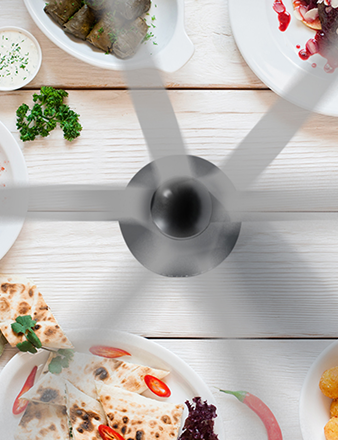
If you're tightening food handling in buffets, patios, catering lines, or outdoor service, MODERN LYFE offers a practical way to protect presentation and hygiene with sleek fly fans built for hospitality settings. For operators who want cleaner food displays without adding clunky equipment or extra hassle, it's a smart upgrade worth a look.