Saturday service starts well, then the cracks show. A server gets pulled to cover a no-show. The host seats three tables at once. The bar printer jams. A patio guest waves away flies while their food sits in the pass window. Nobody on the floor thinks, “We have an operational efficiency problem.” They think, “We're drowning.”
That's how hospitality chaos usually looks. Not dramatic failure, just constant friction. Tiny delays pile up into longer ticket times, tired staff, comped dishes, missed upsells, and guests who leave with a vague sense that the place felt off. The same thing happens at weddings, resort receptions, food truck lines, and backyard parties. Different setting, same pattern.
Operational efficiency matters because it turns that friction into something you can resolve. In hospitality, that means boosting profit without making the place feel robotic, and without grinding down the people doing the work.
The Hidden Costs of Hospitality Chaos
A busy operation can look successful from the outside. Full patio. Packed buffet. Lobby buzzing. But inside, waste hides everywhere.

Chaos rarely starts with one big problem
It usually starts with five small ones.
A restaurant patio loses momentum because runners take the long route around planters and furniture. A caterer sends staff back to the van because backup serving tools weren't staged. A hotel banquet team spends too much time answering the same guest questions because signage is weak. None of those failures look serious on their own. Together, they drain margin and morale.
The hardest part is that many owners normalize this. They assume hospitality is supposed to feel frantic, and that staff stress is proof the team is working hard. It isn't. In most cases, stress is a sign that the system is asking people to compensate for bad flow.
Practical rule: If your best employees are succeeding by “figuring it out on the fly,” your process is leaking money.
Where the money disappears
In a service business, hidden operational costs often show up in places leaders don't review closely enough:
- Labor drift: Staff spend time walking, waiting, re-answering, re-plating, resetting, and apologizing.
- Quality slips: Food cools off, drinks die at the bar, buffet presentation deteriorates, and guests notice.
- Guest friction: Check-in lines feel longer, service feels uneven, and small annoyances crowd out the experience.
- Manager overload: Supervisors stop coaching and spend the shift firefighting.
If you want a useful finance lens for this, the thinking behind controlling clinic overhead costs translates well to hospitality because it forces you to separate necessary operating spend from waste that has crept into the system.
Operational efficiency doesn't remove pressure from hospitality. It removes unnecessary pressure. That difference matters.
What Operational Efficiency Really Means for Your Guests
Operational efficiency in hospitality isn't about making people work faster for the sake of speed. It's about removing friction so guests experience smooth service, consistent quality, and calm confidence from the team.
A good operation feels like choreography. The host knows what the floor can absorb. The kitchen knows what's firing and when. The banquet captain has backup tools within reach. Staff aren't sprinting to recover from preventable mistakes. Guests feel that rhythm even if they never see the machinery behind it.
Think of service as uptime, pace, and quality
Manufacturing has a useful concept called Overall Equipment Effectiveness, or OEE, built on availability, performance, and quality. In that framework, 100% OEE means producing only good parts, as fast as possible, with no stop time, and 85% is often treated as a world-class benchmark according to operational efficiency metrics guidance.
That sounds industrial, but the translation to hospitality is straightforward.
| OEE component | Hospitality translation | What guests feel |
|---|---|---|
| Availability | Is the service system up and ready? | Fewer delays, fewer “just a moment” failures |
| Performance | Is work moving at the right pace? | Timely seating, steady courses, faster resolution |
| Quality | Is the output right the first time? | Correct orders, clean presentation, fewer defects |
When a POS station freezes, availability drops. When servers walk too far between pickup and patio, performance drops. When buffet food attracts pests or arrives looking tired, quality drops. Different symptoms, same operational efficiency problem.
Guests don't buy efficiency. They buy the feeling it creates
A guest never says, “Your resource utilization was excellent tonight.” They say the place felt organized. They say dinner was easy. They book the private event because setup looked polished and the staff seemed in control.
That's why efficiency and guest satisfaction belong in the same conversation. If your team is less distracted by preventable friction, they have more bandwidth for eye contact, timing, problem-solving, and hospitality that feels personal. A smoother operation also supports the basics that guests remember most: clean tables, hot food, clear communication, and shorter waits.
Teams working on service design often benefit from looking at hospitality-specific ideas for improving guest satisfaction, especially when they want process changes to strengthen the experience rather than flatten it.
Smooth service is not a soft outcome. It's the visible result of hard operational discipline.
The businesses that get this right don't chase speed alone. They protect pace, consistency, and recovery. Guests notice all three.
Key Metrics to Uncover Hidden Inefficiencies
Most hospitality operators already know when a shift felt rough. The problem is that memory is selective. One manager blames staffing. Another blames the kitchen. A third blames weather or a difficult group. Metrics force clarity.
The useful question isn't, “Are we busy?” It's, “Where does work slow down, cost more than it should, or break quality?”

Start with one financial anchor
A practical baseline is the operating expense ratio, calculated as operating expenses divided by total revenue. In one published example, $100,000 in operating expenses and $1,000,000 in annual revenue equals a ratio of 0.1, or 10%, and a lower ratio indicates higher efficiency, as explained in this operational efficiency overview. The same guidance also points to cycle time, resource utilization, and error rate as useful service metrics.
That ratio won't tell you where the issue sits. It tells you whether your cost structure is getting heavier relative to revenue. Then you investigate the operation underneath it.
The floor-level metrics that expose waste
The most useful hospitality metrics tell a story, not just a score.
- Table turn time: Track how long a table stays occupied from seating to reset. If patio turns drag, don't blame demand first. Check payment flow, bussing sequence, and server travel paths.
- RevPASH thinking: Revenue per available seat hour helps you see whether your highest-value seating is producing steadily or sitting underused during profitable periods.
- Labor cost percentage: This is useful only when paired with sales pattern and service standard. Cutting labor blindly can make the ratio look cleaner while guest experience gets worse.
- Food waste percentage: Waste usually points to prep mismatch, poor forecasting, overproduction, or buffet presentation decisions that create unnecessary discard. Restaurants trying to tighten this area should study practical methods for reducing food waste in restaurants.
- Setup time for events: If teams regularly scramble before guests arrive, measure staging and reset time by event type.
- Order error rate: Wrong modifiers, missing sides, duplicate fires, and beverage misses all create hidden labor and recovery cost.
Read metrics in pairs, not in isolation
A single number can fool you. Faster turns may mean rushed service. Lower labor cost may mean weaker upselling or dirtier resets. Lower prep volume may create stockouts.
Use a simple paired view:
| Hard metric | Pair it with | Why it matters |
|---|---|---|
| Cycle time | Guest feedback | Fast service that feels hurried can still hurt retention |
| Labor utilization | Staff workload | An efficient schedule that exhausts the team won't hold |
| Error rate | Recovery effort | Small mistakes become expensive when managers keep comping |
| Waste | Product availability | Overcorrecting waste can leave you short during peaks |
The best metric review sounds less like accounting and more like diagnosis. Where did time go, who had to compensate, and what did the guest experience on the other side?
If you run a restaurant, hotel event department, or catering business, don't build a giant dashboard first. Pick a handful of measures that expose motion, waiting, rework, and waste. Review them weekly. Trends matter more than one ugly Saturday.
Four Pillars of a High-Efficiency Operation
High operational efficiency in hospitality comes from design, not heroics. The strongest operations usually do four things well. They tighten process, use staffing intelligently, shape the physical environment for flow, and apply technology where it removes friction instead of adding another system to babysit.

Process
Bad process creates repeatable chaos. Good process creates repeatable calm.
Look first at handoffs. Ordering, firing, expediting, payment, room flip, buffet replenishment, guest arrival, and breakdown all fail at the seams. If a step regularly depends on memory, you probably need a checklist, default sequence, or clearer ownership.
Useful low-cost fixes include:
- Simplify decision points: Fewer menu exceptions, fewer approval bottlenecks, fewer “ask the manager” moments.
- Standardize pre-shift staging: Put tools, backups, signage, and service items where teams need them before service starts.
- Tighten payment flow: Handheld payment, clearer closeout steps, or a better check-drop routine can unclog table turns.
Staffing
Hospitality leaders often frame staffing as a headcount issue. It's usually a deployment issue first.
A strong team can still underperform if the wrong people are placed in the wrong moments. Cross-training matters because demand changes fast. The host may need to support takeout flow. Banquet staff may need to switch from setup to guest guidance. A barback may protect service pace more than an extra bartender during specific peaks.
What works is flexible coverage with clear role triggers. What fails is a schedule that looks efficient on paper but leaves nobody free to absorb surprises.
A useful companion read on this point is building sustainable frontline operations, because sustainable efficiency depends on whether the frontline can execute the system day after day.
Field note: If one employee is the only person who knows how to save the shift, you don't have resilience. You have a dependency.
Layout
You can't coach your way out of a bad floor plan.
Watch how people move. Count the steps between prep and service, host stand and kitchen, bar and patio, buffet line and replenishment storage. In event settings, look at where guests hesitate, bunch up, or double back. The physical setup often creates more waste than labor policy.
Common fixes include moving high-use items closer to the point of service, reducing crossing traffic, widening obvious choke points, and separating guest circulation from staff replenishment routes. In kitchen environments, airflow and heat also affect pace, comfort, and consistency. That's one reason operators often revisit commercial kitchen ventilation systems when they're trying to improve both output and working conditions.
Technology
The best technology in hospitality reduces coordination friction. It doesn't just digitize a messy process.
Think about tools that eliminate repeated manual work, reduce waiting, and preserve service quality. Scheduling software can improve staffing visibility. Kitchen display systems can tighten handoffs. Portable payment can speed closeout. Event communication tools can reduce radio chaos. Outdoor service tools can also matter when they protect food presentation and guest comfort without adding labor.
There's one important caution. The drive for efficiency can also weaken resilience. Lean systems, just-in-time thinking, and tightly optimized operations are more vulnerable to disruption, especially with weather, labor shortages, and supply interruptions, as discussed in this piece on the resilience tradeoff in operational efficiency.
That matters a lot in hospitality. Outdoor dining gets hit by wind, heat, and insects. Event timelines slip. Deliveries arrive late. Staff call out. Efficient operations need some planned slack, backup tools, and fallback procedures. Don't optimize so tightly that one disruption wrecks the guest experience.
Operational Efficiency in Action Four Scenarios
Theory gets clearer when you watch it on the floor. These four scenarios come straight from the kind of issues hospitality teams deal with every week.

The patio that felt busy but earned unevenly
A restaurant had strong demand for outdoor seating, but table turns were inconsistent. Staff spent too much time weaving around furniture, guests delayed payment, and food quality softened on the trip from kitchen to patio.
The core inefficiency wasn't effort. It was flow. The fix was a tighter route for runners, better patio station setup, and a cleaner payment process at the table. Service felt smoother because staff stopped wasting motion. Guests noticed timing before they noticed anything else.
The outdoor reception with hygiene complaints
A hotel events team ran beautiful receptions, but warm-weather events created repeat complaints about food exposure and guest discomfort around buffet stations. The team's first instinct was to add more staff presence near the setup.
That helped only a little. The better move was to pair food safety and presentation standards with equipment choices that protected the setup during service. In service-heavy environments, efficiency has to include outcome measures like guest satisfaction and food safety, not just hard measures like cycle time and cost per unit, as noted in this service-operations perspective.
The caterer with a slow buffet line
A caterer kept losing time before service because buffet layout changed from event to event with no standard logic. Plates were placed too far from the start, utensils were missing from the proper side, and replenishment routes crossed the guest queue.
The answer wasn't expensive software. It was a repeatable setup map by event format. Once the team standardized line order, support-stock placement, and replenishment responsibility, setup became calmer and service looked more polished. The gain came from fewer interruptions and less last-minute correction.
The host who wanted a better backyard event
Operational efficiency matters at home too, especially when one person is trying to host and manage everything. A backyard barbecue falls apart when the host keeps leaving guests to deal with pests, reset serving trays, find supplies, and monitor food exposure.
The efficient home setup uses the same logic as professional hospitality. Stage supplies close to use, reduce unnecessary trips, keep the serving area protected, and remove small irritants before guests arrive. Good systems create freedom. The host spends less time managing problems and more time hosting.
Better operations in hospitality don't feel mechanical. They feel effortless to the guest and less exhausting to the team.
Build Your Hospitality Efficiency Roadmap
Most operators don't need a massive transformation. They need a disciplined starting point.
Audit what actually happens
Walk the operation during a busy period and write down friction in plain language. Where do staff wait? Where do they walk too far? What gets re-done? What creates apologies? What pulls managers into repetitive rescue work?
Don't rely on policies. Watch the actual shift.
Identify one profit leak and one experience leak
Pick one issue tied to margin and one tied to guest experience. That keeps your operational efficiency work balanced.
Examples might include:
- Profit leak: Excess prep waste, slow payment closeout, duplicated setup labor.
- Experience leak: Check-in delay, buffet disorder, uneven patio service, food exposure concerns.
Implement a small fix first
Start with changes that are cheap, visible, and easy to test.
- Clarify ownership: Assign one person to each recurring handoff.
- Re-stage tools: Move high-use items closer to the point of service.
- Simplify the sequence: Remove extra approvals, duplicate steps, or unclear reset standards.
- Standardize training: If the process depends on tribal knowledge, document it. Teams looking to standardize operations with Learniverse often do well when they turn recurring tasks into simple, repeatable learning assets.
Measure whether the fix worked
You don't need a complex model. Use a simple before-and-after review.
| Ask this question | What to look for |
|---|---|
| Did the team spend less time on the task? | Less waiting, walking, or rework |
| Did the guest experience improve? | Fewer complaints, smoother flow, cleaner presentation |
| Did the fix create new problems? | Bottlenecks elsewhere, confusion, overload |
| Would you keep it during a peak shift? | Real durability under pressure |
For an equipment or software decision, the basic ROI logic is simple. Compare the cost of the tool against the labor time saved, waste reduced, and service failures avoided over time. If the investment lowers friction repeatedly without adding new complexity, it's probably worth it.
Operational efficiency is never “done.” But once you start seeing the operation as a system instead of a series of emergencies, better decisions come faster.
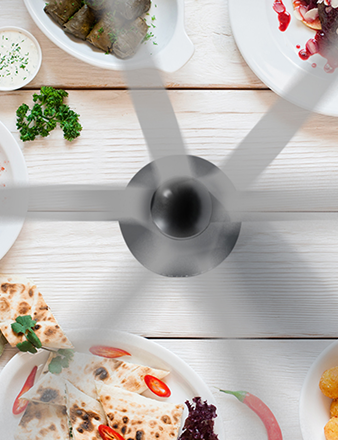
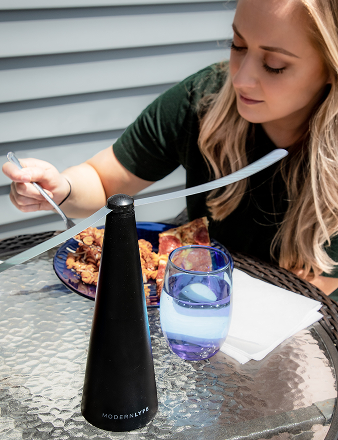
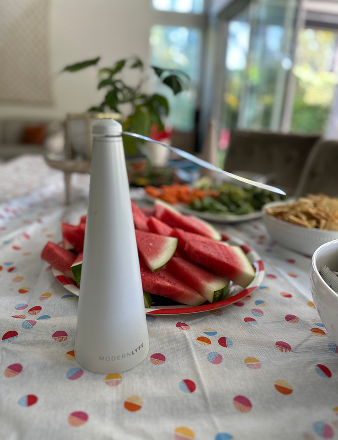
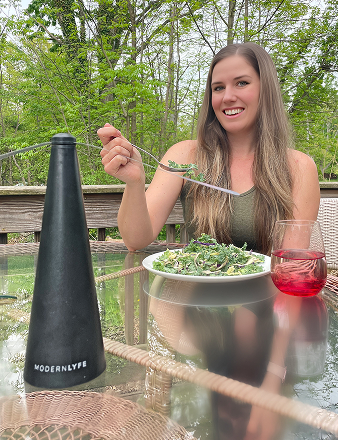
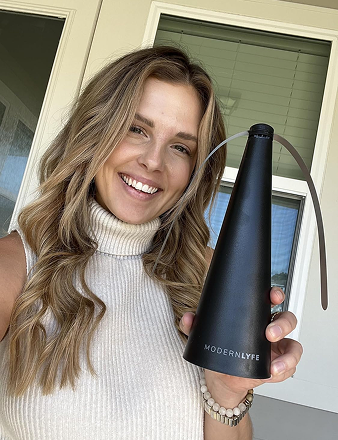
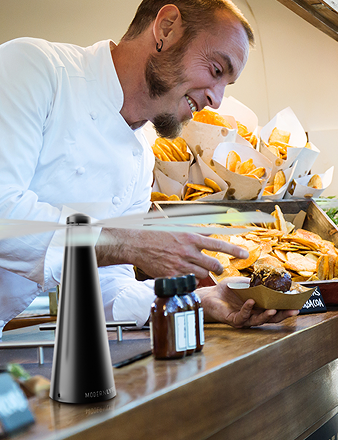
If you want a practical way to improve outdoor dining, buffet presentation, and guest comfort with less staff intervention, take a look at MODERN LYFE. Their fly fans are built for restaurants, hotels, caterers, and hosts who want cleaner food presentation and smoother service in open-air settings.