A health inspector's visit can be stressful, but it doesn't have to be. Your food truck health inspection checklist isn't a list of chores—it's your game plan for success. It’s the tool that helps you master everything from food handling and temperature control to sanitation and paperwork, turning a stressful audit into a validation of your hard work.
Why Health Inspections Are More Than a Score
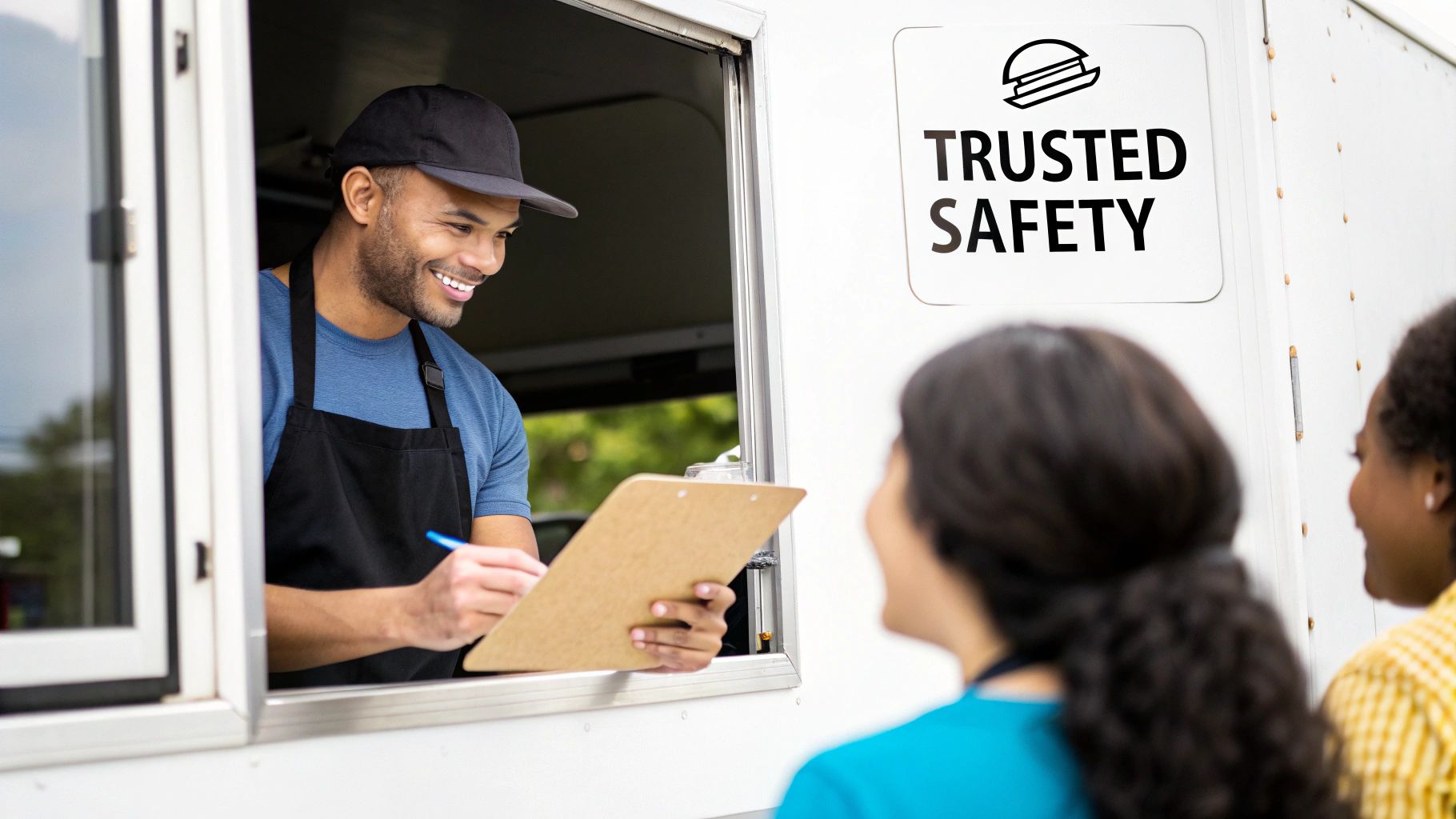
An inspector's job is to protect public health, but for you, that inspection is an opportunity. Passing with flying colors is one of the best ways to build a brand that people trust.
Your reputation isn't just about great food; it's built on the confidence that every meal you serve is safe. A high inspection score is a powerful marketing tool—it tells customers you’re serious about their well-being.
From Reactive Fear to Proactive Preparation
The key is to stop dreading the inspection and start preparing for it every day. The best food trucks don't scramble when an inspector arrives; they integrate safety into their daily operations. They prove you can be fast and compliant. This guide shows you how.
A proactive approach includes:
- Daily Self-Audits: Your team actively monitors critical points, like food temperatures and surface sanitation, just as an inspector would.
- Organized Documentation: All permits, licenses, and logs are organized in one binder, ready for review.
- A Culture of Safety: Everyone on the truck understands why proper handwashing and preventing cross-contamination are non-negotiable.
When you operate this way, the inspection isn't a test you didn't study for. It's a routine check-in that confirms you're already doing everything right. Treat every day like inspection day, and the real thing will be simple.
The Stakes of an Inspection
Failing an inspection is a serious setback. Most food trucks get inspected 1-2 times per year, but this can vary based on local regulations. Some jurisdictions require checks every few months.
A temporary shutdown means lost revenue, but the damage to your brand can be far worse. In a world of social media and instant reviews, news of a failed inspection can destroy the customer loyalty you’ve worked hard to build.
On the flip side, acing your inspection proves your commitment to quality. To understand the general rules that inform most local codes, this restaurant health inspection checklist for 2025 is a great resource. The first step to avoiding violations is knowing what they are. You can get up to speed on the most common (and avoidable) mistakes by reading up on them here: https://modernlyfe.com/blogs/articles/restaurant-health-code-violations. This guide provides the actionable checklist you need to protect your reputation, streamline your process, and keep your service window open.
Organize Your Paperwork: The First Impression
Before an inspector even looks at your equipment, they'll ask for your paperwork. Your documents are the first test. A messy, disorganized pile of papers suggests your kitchen operations are just as chaotic, setting a negative tone from the start.
This isn't just about having the right permits. It's about presenting them professionally to show you take food safety seriously. A neat, organized binder signals control and respect for the process. A frantic search through a glovebox is a major red flag.
Build Your Inspection-Ready Binder
Create a go-to "inspection-ready" kit that anyone on your team can access immediately. This binder should be the single source of truth for all your compliance documents.
Use a heavy-duty, waterproof binder with clearly labeled tabs. In the tight, often wet environment of a food truck, spills are common. Alternatively, a dedicated cloud folder on Google Drive or Dropbox, accessible on a tablet, works just as well.
The key is instant accessibility. If an inspector requests a specific permit, you should be able to produce it in under 30 seconds. Hesitation makes them wonder what else you've overlooked.
Getting your documents in order is a foundational step in any successful food truck health inspection checklist.
The "Why" Behind Each Document
Understanding the purpose of each document helps you manage renewals and ensure your operation is fully legal. At a minimum, your binder or digital folder needs these items.
- Business License & Mobile Food Vendor Permit: Your legal right to operate. It proves you're a registered business.
- Food Handler Permits for All Staff: Every person who handles food needs a valid permit. Inspectors often check these against the staff roster for the day.
- Certified Food Manager Certificate: Most health departments require at least one certified food manager to be on-site during operating hours.
- Your HACCP Plan: Your Hazard Analysis and Critical Control Points (HACCP) plan is your written strategy for preventing food safety hazards. It shows you’ve identified risks and have systems to manage them.
Essential Records and Logs
Beyond permits, inspectors need to see proof of your daily safety practices. These logs are your paper trail, demonstrating that you consistently follow procedures.
Key Logs You Must Maintain:
- Temperature Logs: This is non-negotiable. Maintain daily records for your refrigerators, freezers, and hot-holding units.
- Sanitation & Cleaning Schedules: A checklist showing what was cleaned, when, and by whom.
- Pest Control Records: Keep every receipt and service report from your professional pest control service.
- Most Recent Inspection Report: Always keep your last report in the binder. It shows you are aware of your history and have corrected any past violations.
Navigating permit requirements can be complex, as many are interconnected. For a complete overview, check out our guide on food truck permit requirements. Getting this right is your first—and easiest—win of the inspection.
A Top-to-Bottom Tour of Your Truck’s Critical Systems
Now for the hands-on part. Picture an inspector stepping onto your truck—we're going to walk through it as they would, checking every critical system from front to back. This isn't just about a surface-level clean; it's about ensuring the core mechanics of your mobile kitchen are functioning perfectly.
The first impression inside your truck is just as important as your organized paperwork. An inspector's eyes are trained to spot small issues that hint at larger problems. A flickering light, a dripping faucet, or a messy prep station immediately raises questions about your attention to detail.
This flow chart shows how permits, certifications, and daily records create a solid foundation of compliance.
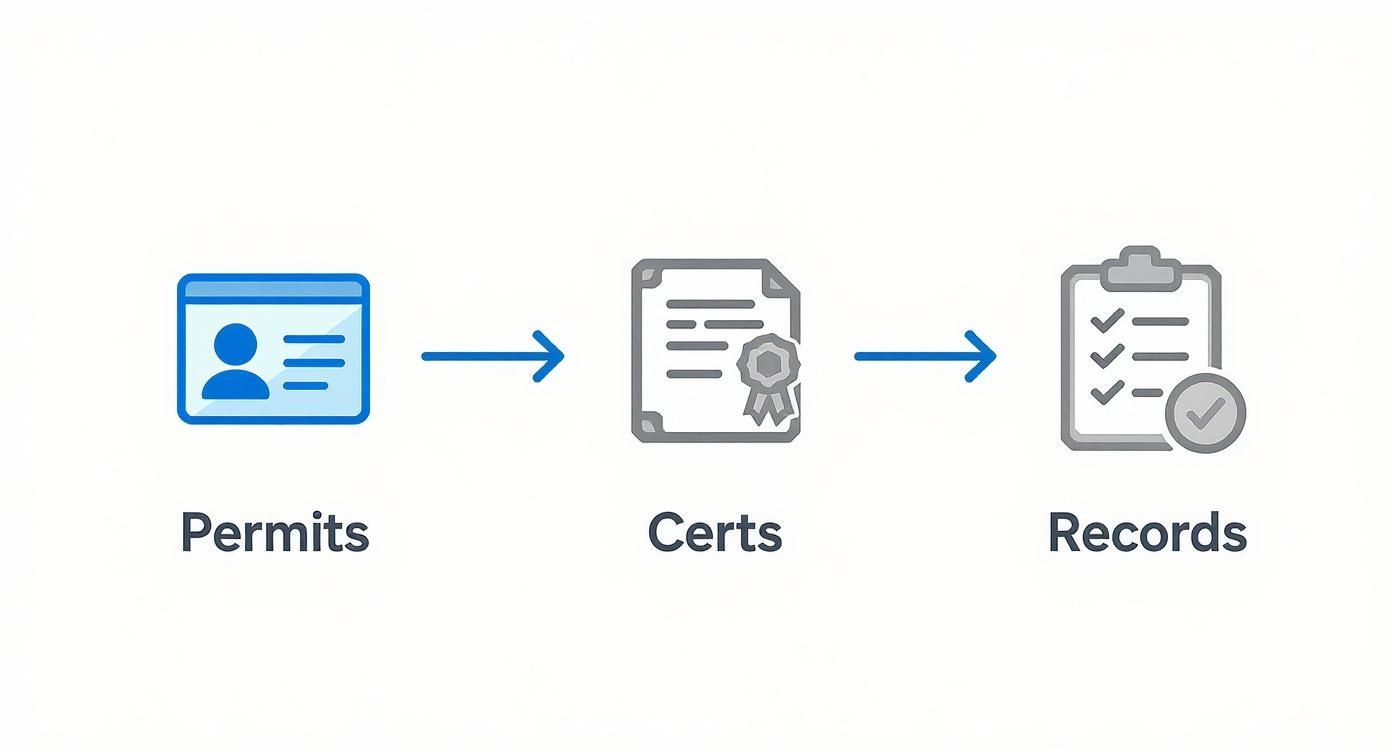
Each element validates the next, proving you run a tight ship before they even inspect your equipment.
Mastering Temperature Control
Temperature control is the most critical area of food safety. Your entire workflow must be designed to keep food out of the "temperature danger zone"—the range between 41°F and 135°F where bacteria multiply rapidly.
Your best tools are your thermometers. You need a calibrated food thermometer for checking internal temperatures and separate, easy-to-read thermometers inside every refrigerator and freezer.
Here is a quick reference for the temperatures you must maintain. An inspector will check these with their own calibrated thermometer.
Critical Temperature Zones for Food Safety
| Equipment/Storage | Required Temperature Range (Fahrenheit) | Purpose |
|---|---|---|
| Refrigerators | 40°F or below | Slows bacterial growth in cold foods. |
| Freezers | 0°F or below | Keeps food frozen solid, halting bacterial growth. |
| Hot-Holding Units | 135°F or above | Keeps cooked food safely hot, preventing bacteria from multiplying. |
A refrigerator that's even a few degrees too warm can lead to an immediate shutdown. Checking these temperatures multiple times a day is essential.
Equipment and Surface Integrity
Every piece of equipment and every surface in your truck will be scrutinized. The rule is "smooth and easily cleanable." Inspectors look for cracks, deep gouges, or materials like unsealed wood where bacteria can hide.
For example, your stainless steel surfaces must be spotless. Using the right cleaners for stainless steel not only sanitizes them but also protects your investment. Your cutting boards must be non-porous and free of deep knife grooves that can trap germs.
Inspectors often run a hand along the side of a prep counter or under a shelf to feel for grease. Any sticky or grimy residue is an instant violation, as it reveals poor daily cleaning habits.
Plumbing and Ventilation Systems
Your plumbing and ventilation are just as important as your grill. An inspector will verify that you have a functional three-compartment sink (wash, rinse, sanitize) and a separate, dedicated handwashing sink.
Here's what they'll check:
- Hot and Cold Running Water: You need adequate pressure at every sink.
- A Fully Stocked Handwashing Sink: It must have soap, paper towels, and a sign reminding employees to wash their hands. This sink is for hands only.
- Proper Drainage: All sinks must drain into a wastewater (grey water) tank. The grey water tank's capacity must be larger than your freshwater tank's to prevent overflows.
Your ventilation hood is another major checkpoint. It must be free of grease buildup, which is both a sanitation issue and a serious fire hazard. A clean hood and filter system shows an inspector you're serious about safety. You can learn more about commercial kitchen ventilation systems in our article. Mastering these details proves you understand how to run a safe, professional mobile kitchen.
Mastering Food Flow from Delivery to Service
Food safety is a chain that starts with delivery and ends with service. An inspector is trained to find weak links in that chain. Mastering your inventory flow is a critical part of your operation.
It starts with receiving. Don't just sign the invoice. Inspect every box for pests or damage. Most importantly, use a thermometer to confirm that cold items are at the correct temperature. If a delivery of chicken arrives at 50°F, you must reject it. No exceptions.
Once you’ve accepted the product, proper storage is key. In the tight space of a food truck, your refrigerator organization is under a microscope. A messy fridge isn't just an eyesore—it's a cross-contamination hazard.
Organizing Your Refrigerator for Safety
The number one rule of fridge storage is to organize everything by its final cooking temperature. This top-to-bottom system prevents raw juices from dripping onto and contaminating ready-to-eat foods.
This is the layout every health inspector expects:
- Top Shelf: Ready-to-eat (RTE) foods like prepared salads, cooked proteins, and washed vegetables.
- Middle Shelves: Raw seafood and whole cuts of beef and pork.
- Bottom Shelf: The lowest point is for items requiring the highest cooking temperature: raw ground meat and, at the very bottom, raw poultry.
An inspector's first check is often the bottom of the fridge. If they see raw chicken stored above lettuce, they know they'll find other problems. It’s a simple check that reveals your team's training level.
This system is non-negotiable. Make it second nature for your entire crew. It's a cornerstone of any food truck health inspection checklist.
Smart Labeling and Thawing Practices
Once your fridge is organized, focus on your labeling and thawing procedures. Simple mistakes here can lead to major violations. During a lunch rush, a solid labeling system is essential for managing inventory with the First-In, First-Out (FIFO) method.
Anything removed from its original packaging needs a new label. Use painter's tape and a marker to clearly write the product name and its "use-by" date. This takes seconds and proves you are managing inventory correctly.
Thawing is another critical checkpoint. An inspector seeing frozen meat sitting on a prep counter is a guaranteed violation.
There are only a few approved thawing methods:
- In the Refrigerator: The safest method, but it requires planning.
- Under Cold, Running Water: The water must be 70°F or colder and strong enough to wash away loose particles.
- As Part of the Cooking Process: For items like frozen burger patties that go directly from freezer to grill.
Never thaw food at room temperature. It's a direct invitation for bacteria to grow in the temperature danger zone—a risk that will fail an inspection every time.
Building Your Sanitation and Pest Control Defense
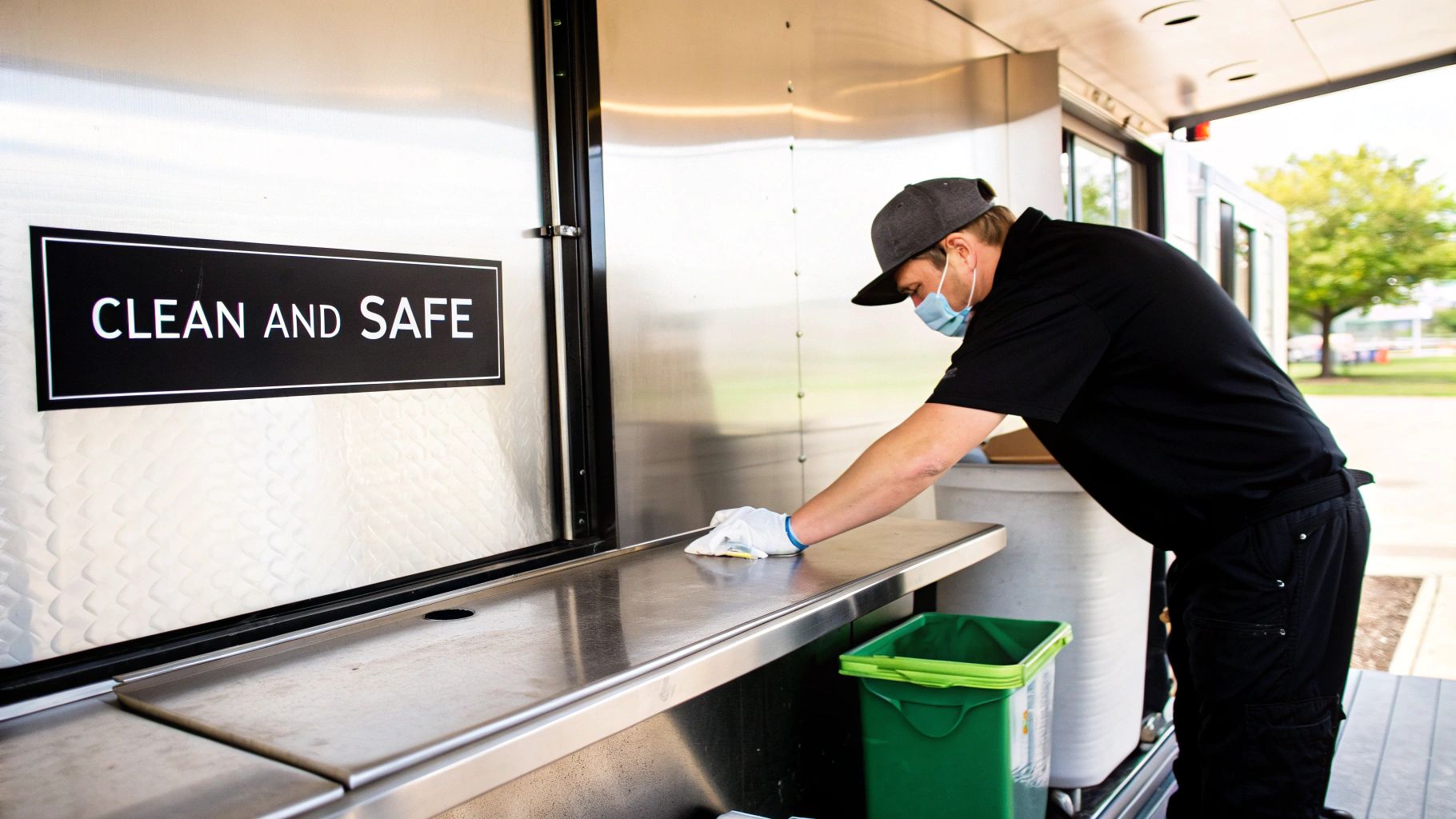
A spotless truck is your best defense in a health inspection. Inspectors are trained to see the subtle grime that customers don't. A solid cleaning and pest control strategy is about professionalism and protecting your reputation.
This requires more than a quick wipe-down at closing. You need a system of daily, weekly, and monthly habits that become second nature. This consistency shows an inspector you run a tight ship.
Crafting Your Cleaning Schedules
An inspector won't just look at your surfaces; they will ask to see your cleaning logs. A documented schedule proves your commitment and ensures no task is missed. This should be a core part of your food truck health inspection checklist.
Break your schedule into manageable tasks for your team.
Daily Cleaning Tasks (End of Every Shift):
- Wipe & Sanitize All Food-Contact Surfaces: Prep tables, cutting boards, service counter.
- Clean Cooking Equipment: Scrape the flat-top, clean the fryer, wipe down all appliances.
- Wash, Rinse, Sanitize: Process all utensils and pans through the three-sink method.
- Sweep & Mop Floors: Remove all food debris and grease.
- Empty & Sanitize Trash Bins: Take trash to the dumpster and clean the cans.
Weekly Deep-Cleaning Tasks:
- Clean Inside Refrigerators & Freezers: Empty and wipe down all shelves and walls.
- Degrease Hood Vents & Filters: A critical fire safety checkpoint.
- Clean & Organize Dry Storage: Check for spills or signs of pests.
Monthly Maintenance Tasks:
- Inspect & Clean Seals: Check refrigerator and freezer door gaskets for mold or damage.
- Deep Clean Walls & Ceilings: Remove any built-up splatter or grease.
An inspector can tell the difference between a consistently clean truck and one that was "panic-cleaned" before they arrived. Deep-seated grime tells a story a quick wipe-down can't hide.
Mastering the Three-Sink Method
Inspectors are strict about proper warewashing. Your three-compartment sink is a mandatory system for preventing cross-contamination. Each sink has a specific job.
- Sink 1: Wash: Use hot water (at least 110°F) and detergent to scrub off food and grease.
- Sink 2: Rinse: Use clean, hot water to remove all soap residue.
- Sink 3: Sanitize: Submerge items in a chemical sanitizer (like chlorine or quat) mixed to the correct concentration, or use hot water at 171°F for at least 30 seconds.
After sanitizing, all items must be air-dried. Using a towel can reintroduce bacteria and is a common, easy-to-spot violation.
Proactive Pest Control Strategies
A clean truck is your first line of defense, but you also have to think like a pest. Your job is to make your truck as unappealing as possible.
Start by inspecting every delivery. Check boxes for droppings, chew marks, or insects before bringing them on board. Be just as thorough with your trash area. Keep dumpster lids closed and the surrounding area clean to deter rodents and flies.
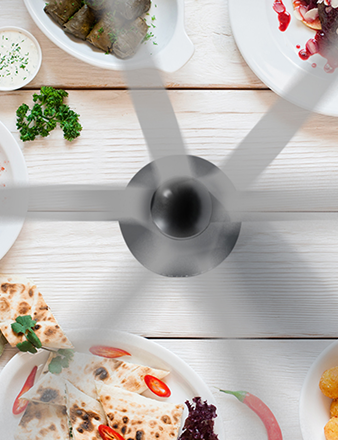
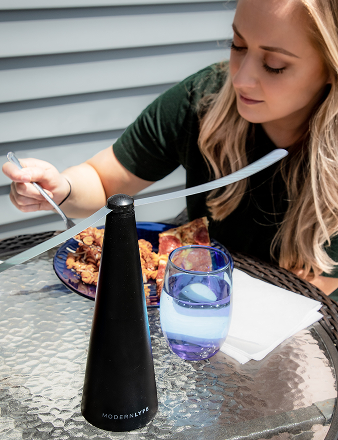
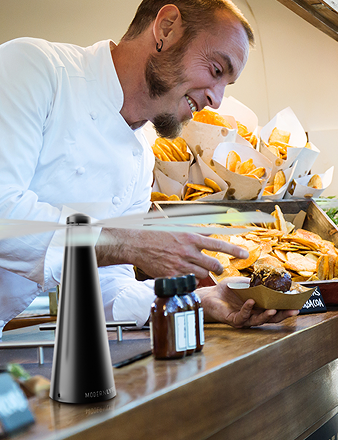
Finally, create barriers. An air curtain or fly fan over your service window creates an invisible wall of air that keeps flying insects out. When an inspector sees this, it signals that you're a smart operator who thinks ahead—not just reacting to problems, but actively preventing them.
Answering Your Lingering Food Truck Inspection Questions
Even with a great checklist, some questions always come up. Let's tackle the most common ones to eliminate any last-minute stress.
We’ve covered the systems and routines, so now let's demystify the inspection process itself. This will ensure there are no surprises when the inspector arrives.
How often should I expect an inspector?
This depends on your local health department's regulations. As a general rule, expect a routine inspection once or twice a year. In high-traffic urban areas with stricter health departments, this could increase to quarterly visits.
Remember, every new food truck must pass an initial inspection to get a permit. After that, nearly all routine inspections are unannounced. You must be ready every single day you're open for business.
What are the easiest violations to avoid?
The most common violations are also the most preventable. Inspectors see the same simple mistakes repeatedly. If you master these fundamentals, you’re already ahead.
Top easily avoidable slip-ups include:
- Temperature Control: Food in the "danger zone" (41°F to 135°F) is an immediate red flag.
- Handwashing Sinks: No soap, paper towels, or hot water is a guaranteed violation.
- Cross-Contamination: Using the same utensil for raw and ready-to-eat foods is a critical error.
- Staff Hygiene: Missing hair restraints, improper glove use, or staff eating in prep areas are easily spotted.
When an inspector sees you have these basics locked down, it sets a positive tone for the entire visit. Mastering these fundamentals accounts for a huge part of your final score.
What happens if I fail my health inspection?
Failing an inspection doesn't always mean you're out of business, but the consequences are serious. The outcome depends on the severity of the violations.
For minor infractions, like a torn refrigerator gasket, you'll typically get a deadline to fix the problem and pass a follow-up inspection while continuing to operate.
However, for critical violations that pose an immediate public health threat—such as a pest infestation, no hot water, or failed refrigeration—you will likely be shut down on the spot. You cannot legally operate until the issues are fixed and you pass a re-inspection, which means lost revenue and damage to your reputation.
Keeping your service window free from flies is a proactive step that shows inspectors you care about every detail. MODERN LYFE offers elegant and effective fly fans that create a pest-free zone, protecting your food and enhancing your customers' experience. Explore our solutions and see how they work.