Yes, fruit flies are attracted to light, but it's not why they're crashing your dinner party. Light is their GPS, but the destination is always the smell of fermenting food and drinks.
Why Fruit Flies Are in Your Space
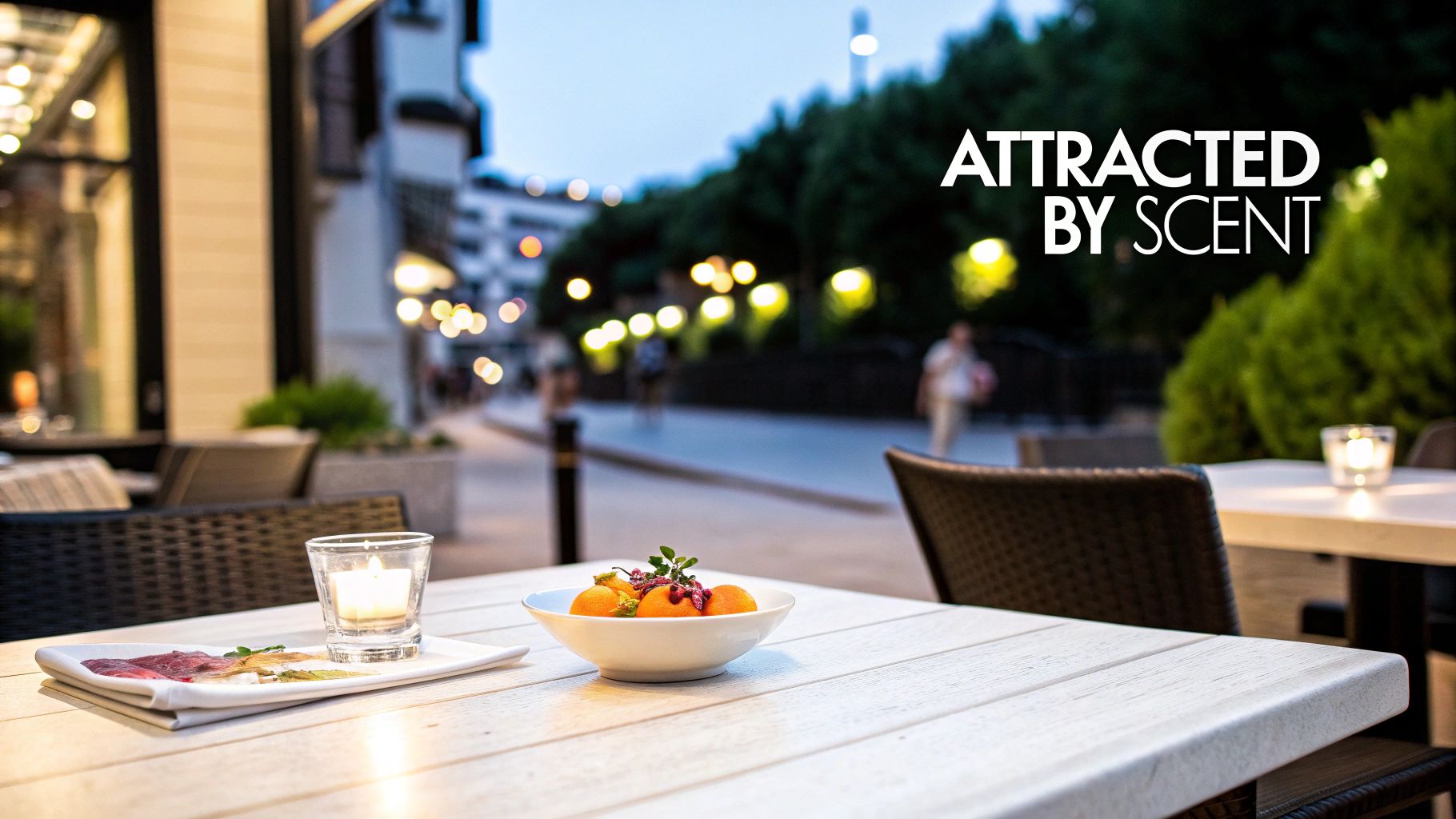
It’s a familiar scene: a perfect evening on the patio, ruined by tiny, buzzing pests. They seem to appear from nowhere, turning a great meal into a game of swat-the-fly.
While lights often get the blame, the reality is more complex. Fruit flies exhibit phototaxis—an instinct to move toward light. For them, specific light wavelengths act as a beacon, guiding their search for food. But the light itself isn't the prize.
Scent Is the Real Magnet
The #1 reason a fruit fly is in your space is scent. They have an incredible sense of smell, fine-tuned to detect the aromas of fermentation from far away.
They're drawn to odors from:
- Overripe fruit on the counter
- Spilled wine or beer
- Sugary soda residue
- Vinegar and ketchup
- Gunk in drains and disposals
Once they catch that scent, they use light to navigate toward it. This is why you see them swarming near kitchen windows or buzzing around a lamp on the bar. They’re following their nose and using light to guide the way. Understanding what actually attracts fruit flies is the first step to getting rid of them.
For hospitality pros: Focusing only on light traps without fixing the scent sources is like mopping the floor to fix a leak. You're managing a symptom, not solving the problem.
A fruit fly problem is more than an annoyance; it's a serious sanitation issue. Found in over 50% of North American restaurants, these pests can carry and transfer harmful bacteria from drains directly onto clean plates and food prep surfaces.
Here's a quick guide to what drives them.
Fruit Fly Behavior Quick Guide
This table breaks down how light and other factors guide fruit fly behavior, with practical takeaways for businesses and homeowners.
| Factor | Fruit Fly Response | Key Takeaway |
|---|---|---|
| Scent (Fermentation) | Primary Attractant: Their strongest motivator. They follow scent trails to food and breeding sites. | Priority #1: Manage sanitation aggressively. Clean spills, cover fruit, and treat drains. |
| Light (UV & Blue) | Navigational Tool: Used to orient and move toward scent sources. | Use strategic deterrents like fly fans instead of relying only on light traps. |
| Airflow | Deterrent: Creates an environment that is difficult for them to fly in. | Position fly fans over vulnerable areas like bars, buffets, and outdoor seating. |
| Darkness | Resting State: Flies are less active in the dark, but they don't leave. | Don't assume the problem is gone at night; they're hiding near food sources. |
Ultimately, the most effective defense combines scent management, an understanding of their relationship with light, and physical deterrents.
How Fruit Flies See the World
To understand why fruit flies flock to some lights and avoid others, you have to see the world their way. Unlike our single-lens eyes, a fruit fly sees through two large compound eyes, each made of hundreds of individual lenses (ommatidia).
It’s like looking at a pixelated image. While they don't see in high-definition, this setup makes them incredibly sensitive to motion and shifts in light. It’s why they can dodge your swat so easily.
This unique vision is also key to their relationship with light—a behavior called phototaxis.
The Push and Pull of Light
Phototaxis is the automatic movement of an organism toward or away from light. For fruit flies, it’s not as simple as "light good, dark bad." Their reaction depends entirely on the light's wavelength, or color.
-
Positive Phototaxis (Attraction): Fruit flies are pulled toward certain lights, especially in the ultraviolet (UV) and blue-to-green range. This light acts as a beacon, helping them navigate.
-
Negative Phototaxis (Aversion): They tend to ignore or actively avoid light on the other end of the spectrum, like yellow and amber wavelengths.
They are essentially tuned to specific frequencies. UV and blue light come in loud and clear, while they fly right past yellow light. This isn't a choice; it's a hardwired instinct. To manage them effectively, you have to control the light in their environment. Understanding how to increase natural light in your home can even provide insight into how ambient light shapes their daily behavior.
Why Wavelengths Matter
Why the preference for UV and blue light? In nature, these shorter wavelengths signal open skies and safe passage. More importantly, the yeasts and microorganisms feasting on decaying fruit—a fruit fly’s favorite meal—reflect UV light.
When a fruit fly follows a UV light source, it's not just moving toward a bright spot. It's following a biological signpost that points directly to its next meal and a place to lay its eggs.
This is the secret to outsmarting them. Once you realize fruit flies see the world as a spectrum of "come here" and "go away" signals, you can use light to your advantage. It’s about more than just setting out a trap; it’s about making your environment less appealing from the start.
Using Light Color to Your Advantage
Now that we know fruit flies see the world in a spectrum of attractive and repulsive colors, we can put that knowledge to work. It’s not about getting rid of light; it's about choosing the right kind.
Different light colors are just different wavelengths, and fruit flies react strongly to some while ignoring others. Think of it as a hidden traffic light system that only they can see.
This visual shows the key cues that guide a fruit fly's behavior.
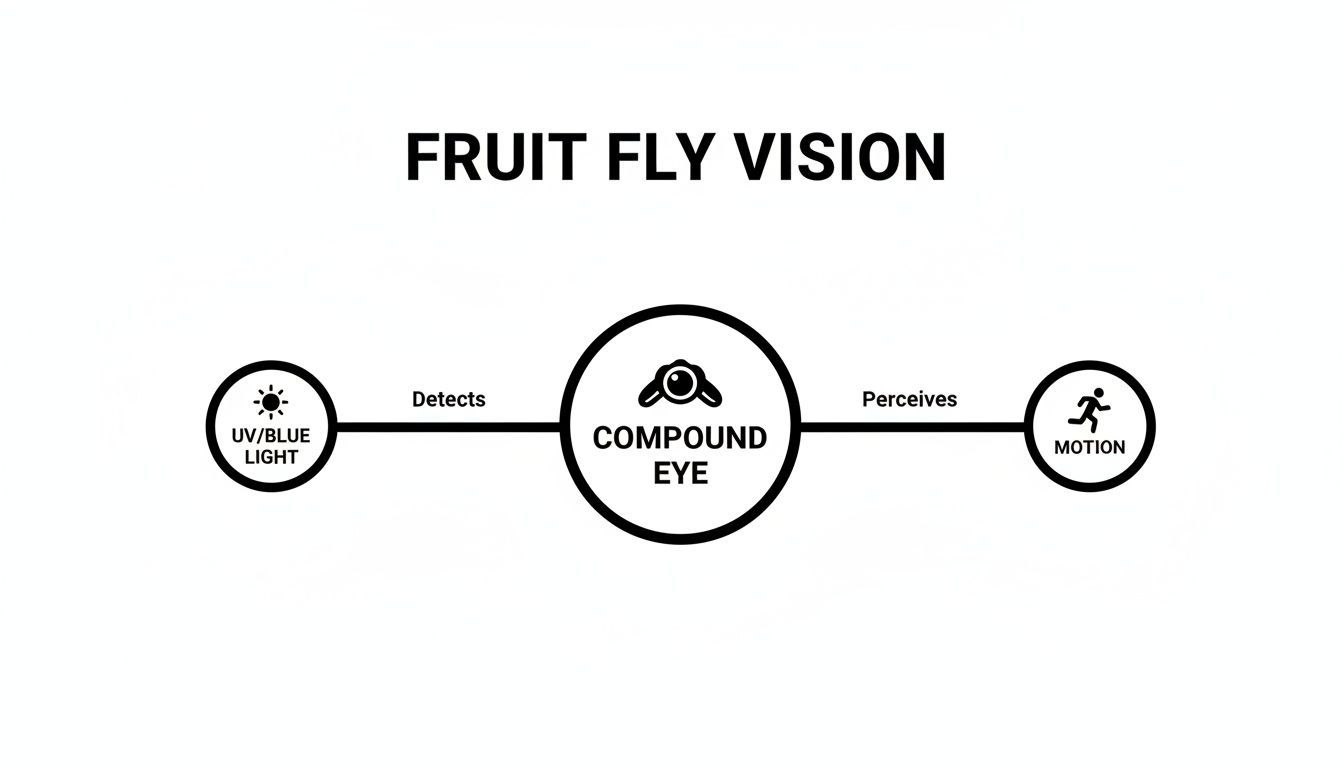
As you can see, their compound eyes are tuned to pick up UV/blue light and motion, the primary signals they use to navigate and find their next meal.
The Most Attractive Light Colors
Fruit flies are most powerfully drawn to the blue and ultraviolet (UV) end of the light spectrum. Research has identified light in the 365-395 nanometer (nm) range as a particularly strong magnet.
In nature, this light signals open skies and helps them navigate. It also happens to be the same wavelength reflected by the yeasts on fermenting fruit. This double-whammy explains why standard UV bug zappers and light traps are so effective at luring them in. Green light is also moderately attractive, meaning many common cool-white fluorescent and LED bulbs are basically a welcome beacon.
Key Takeaway: Any light source emitting significant blue or UV light is rolling out the welcome mat for fruit flies. This includes many bright white LEDs, fluorescent tubes, and even device screens.
This is a critical insight for any food-related business. Those bright, sterile-looking lights common in commercial kitchens and dining areas might actually be making your fruit fly problem worse.
The Least Attractive Light Colors
On the flip side, fruit flies are largely indifferent to light with longer wavelengths. They have trouble perceiving colors like yellow, amber, and red, so these lights are practically invisible to them.
This principle makes managing them surprisingly easy. By understanding which light wavelengths attract or repel these pests, you can strategically alter your environment.
The table below breaks down how different colors of light impact fruit fly behavior.
Light Wavelength Effects on Fruit Flies
| Light Color/Type | Wavelength Range (Approx.) | Effect on Fruit Flies | Practical Application |
|---|---|---|---|
| UV-A Light | 315–400 nm | Highly Attractive | The core technology in most effective fly traps and bug zappers. |
| Blue/Violet | 400–495 nm | Highly Attractive | Common in cool-white LEDs. Avoid using in problem areas. |
| Green | 495–570 nm | Moderately Attractive | Also emitted by standard white lights. Can contribute to attraction. |
| Yellow/Amber | 570–620 nm | Minimal Attraction/Neutral | Ideal for "bug lights" in outdoor areas or near entryways. |
| Red | 620–750 nm | Repulsive/Invisible | Flies can't see it well. Good for areas needing light but no bugs. |
By simply swapping out bulbs in key areas, you can turn your lighting from an attractant into a passive deterrent.
For instance, changing a standard white bulb on your patio to a yellow "bug light" can dramatically reduce the number of flies congregating there. It doesn't kill them, but it makes the area far less appealing, encouraging them to go elsewhere.
The Reality of UV Light Traps
When dealing with flying pests, it’s tempting to grab a quick fix like an ultraviolet (UV) light trap. The concept is simple: the device emits a UV-A light that fruit flies can't resist, luring them toward a zapper or a sticky glue board.
It sounds like a perfect, hands-off solution. But if you rely on these traps as your only defense, you're likely to be disappointed. Their success hinges on factors that are easy to overlook.
For a light trap to work, it has to be the most attractive light source in the room. If it's competing with bright kitchen lights or sunlight from a window, its pull weakens dramatically. The flies might head in its general direction but never make it to the trap.
Limitations You Must Consider
Here's the biggest issue with UV light traps: their main feature is also their biggest flaw. They attract flies. A poorly placed trap doesn't just catch the flies already inside; it can actively draw more pests into your space from outdoors if it's visible from an open door or window.
The purpose of a light trap is to reduce an existing indoor population, not to act as a barrier. It is a monitoring and control tool, not a preventative shield.
On top of that, these traps are not "set it and forget it." They require constant attention.
- Regular Maintenance: Glue boards get full and lose their stickiness. They need to be changed regularly to remain effective.
- Bulb Lifespan: UV bulbs lose their attractive power long before they burn out, typically becoming less effective after about six months.
- Strategic Placement: Traps need to be placed away from competing lights and hidden from outside view to avoid attracting more pests.
Because of these limitations, you have to see the bigger picture. Light traps are a useful tool, but they are just one piece of a complete pest control strategy. You can learn more about how ultraviolet light traps function to better understand their role.
Building a Modern Fly Defense System
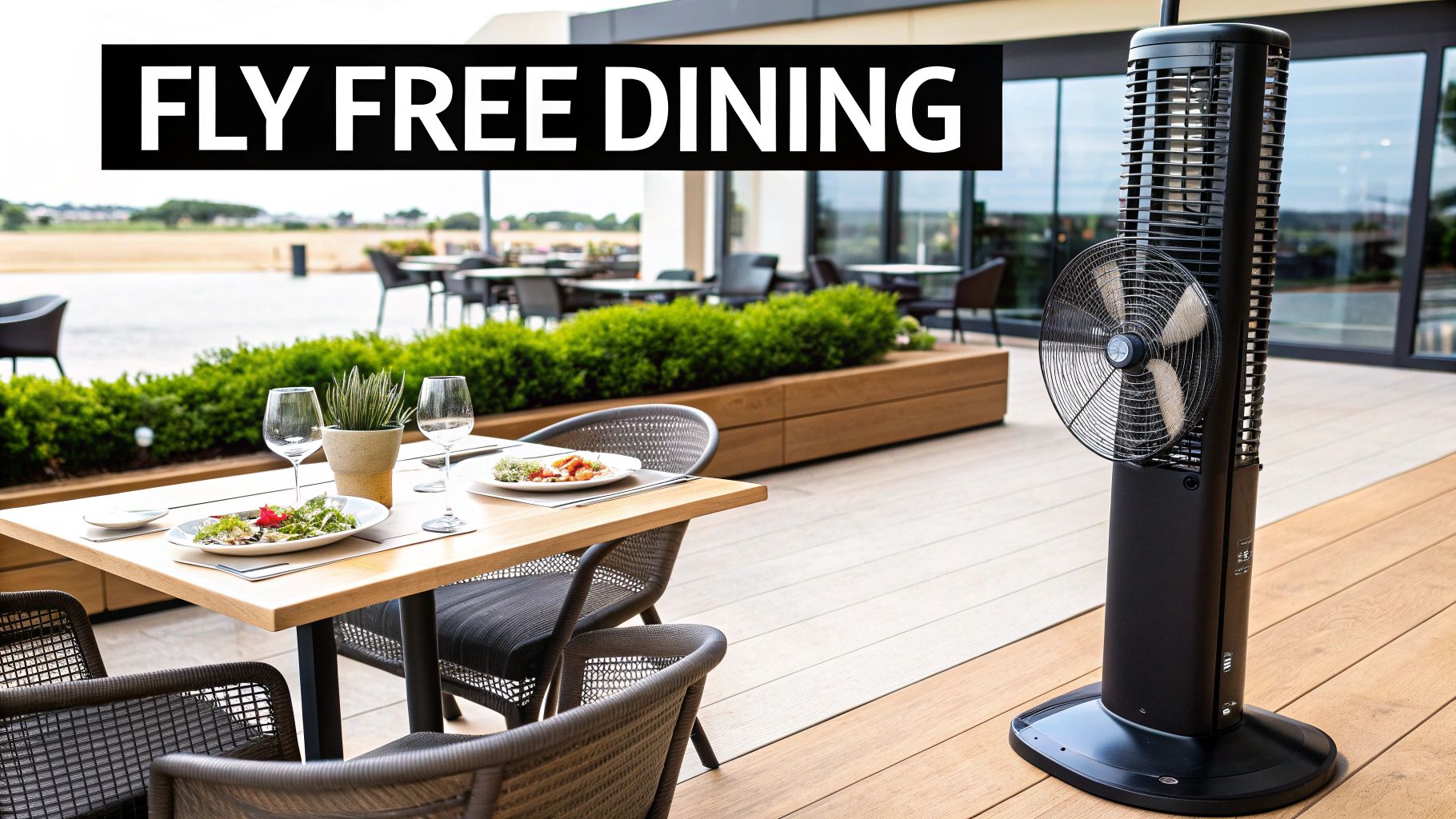
Knowing how fruit flies react to light is a great start, but it's just one piece of the puzzle. The best strategies don't just react with traps; they create an environment that's actively hostile to pests. This means layering your defenses with smart lighting, rigorous sanitation, and strategic airflow.
Think of it like building a fortress. Your first defense is making the perimeter less attractive. The second is removing anything that might feed intruders. And the third is setting up a physical barrier where you need it most.
Pillar 1: Strategic Lighting
This is where your knowledge of fruit flies and light pays off. We know they are drawn to blue and UV light but are essentially blind to warmer, longer wavelengths.
Turn your lighting into a passive deterrent. Swap out bright, cool-white bulbs near doorways, windows, and outdoor seating areas. Replace them with yellow or amber "bug lights." This simple change makes your space less visible and appealing to flies without leaving you in the dark.
Pillar 2: Proactive Sanitation
Sanitation is the non-negotiable foundation of any successful fly defense. Fruit flies don't just appear—they're drawn in by the scent of decay and need organic matter to breed. One overlooked spill can quickly become a full-blown infestation.
The explosive reproductive cycle of fruit flies is what makes sanitation so crucial. A female can lay up to 500 eggs in her short life, and those eggs can become adults in just one week. Getting ahead with cleaning is your most powerful weapon.
Be relentless. Clean your drains, wipe up spills immediately, store fruit in sealed containers, and ensure trash bins are emptied and cleaned regularly. When you remove their food and breeding grounds, you remove their reason for being there.
Pillar 3: Strategic Airflow
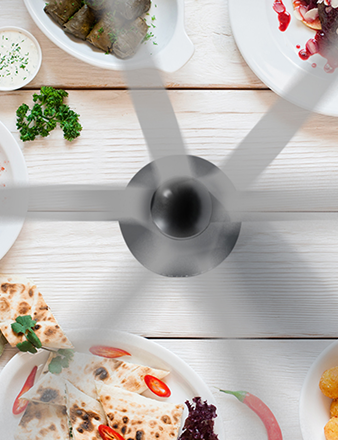
The final layer is a physical, chemical-free barrier created by moving air. Fruit flies are weak flyers. Even a gentle breeze makes it impossible for them to navigate or land. This is where modern fly fans offer an elegant and effective solution.
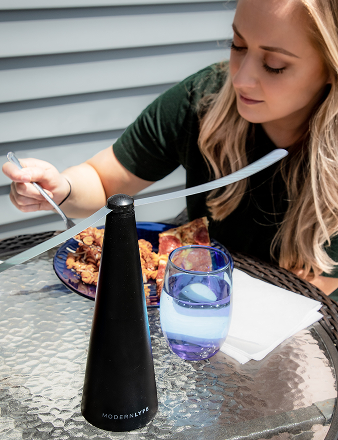
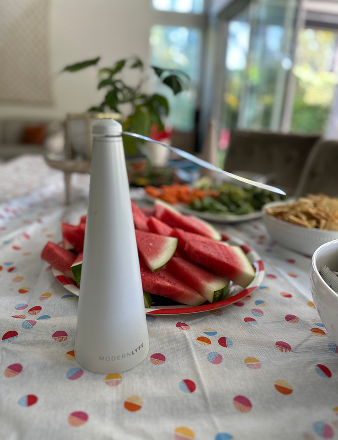
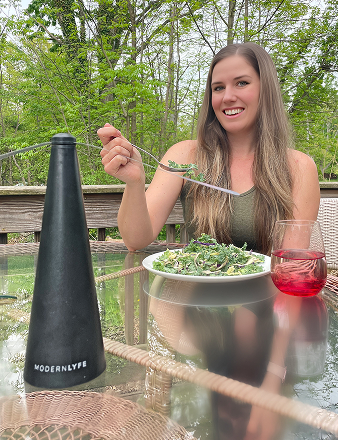
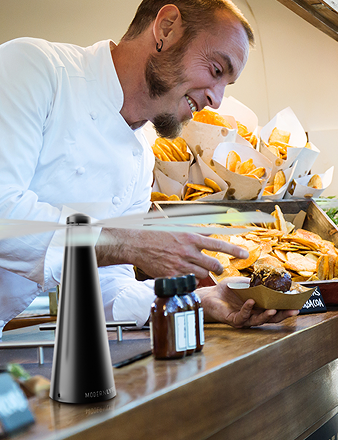
Placing a stylish, quiet fan on a buffet line, dining table, or bar creates an invisible shield. The air currents disrupt their flight patterns, protecting food and guests without noise, chemicals, or unsightly traps. Learn more in our guide on choosing the right fly repellent fan.
By combining these three pillars—strategic lighting, proactive sanitation, and targeted airflow—you build a robust, modern defense system that tackles the problem from every angle.
Got Questions About Fruit Flies and Light? We've Got Answers.
Even with a solid plan, a few questions always come up when dealing with a pest as stubborn as the fruit fly. Let's clear the air and tackle the most common ones.
Here are the practical answers you need for your restaurant, home, or event space.
Will turning off all lights at night get rid of fruit flies?
No. Turning off the lights won't solve your fruit fly problem. While they are less active in the dark, they don't disappear. They simply rest on a nearby wall or ceiling and wait for morning.
More importantly, flipping a switch does nothing to fix the root cause of the infestation: a food source and a place to breed. Think damp drains, a sticky spill, or forgotten fruit.
The Bottom Line: To get rid of fruit flies, you must cut off their food supply and eliminate their breeding grounds. Lighting is a secondary tactic.
Are LED lights better for preventing fruit flies?
It depends entirely on the LED's color. Standard "cool white" or "daylight" LEDs emit a lot of blue-spectrum light, which is a huge welcome sign for fruit flies.
However, the great thing about LED technology is the variety. You can easily find "warm white," yellow, or amber LED bulbs that produce the longer wavelengths fruit flies dislike.
Swapping a harsh white fluorescent tube over your bar for a warm-toned LED can make a real difference. It’s not about the bulb technology—it’s about the color of the light it emits.
What's the best setup for an outdoor event?
For any outdoor gathering, think in layers. A combination of smart lighting and physical deterrents is the best way to ensure guests have a good time without swatting at pests.
Here’s a winning setup:
- Use Warm Ambient Lighting: Bathe your event space in yellow or amber light. These warmer colors are far less appealing to fruit flies.
- Keep Bright Whites Away: Place any bright white or blue-hued lights well away from food stations and seating areas.
- Deploy Fly Fans: This is your secret weapon. Place elegant fly fans directly on tables and buffet lines. The gentle breeze creates an invisible shield that physically stops flies from landing on food and drinks.
This one-two punch of repellent lighting and targeted airflow keeps flies away while providing direct protection right where it counts.
Can I use a bug zapper in my restaurant kitchen?
Absolutely not. Using a classic bug zapper in a commercial kitchen is a bad idea and often a direct violation of health codes. When an insect hits the electric grid, it can explode, sending tiny body parts and bacteria onto food and prep surfaces.
A much safer indoor option is a glue board trap. These often use UV light to attract flies but capture them on a sticky surface—no mess, no contamination.
But remember, even a glue trap is reactive. It only catches flies that are already inside. Your best defense is always prevention: spotless sanitation, strategic lighting, and physical barriers like fly fans at every entrance.
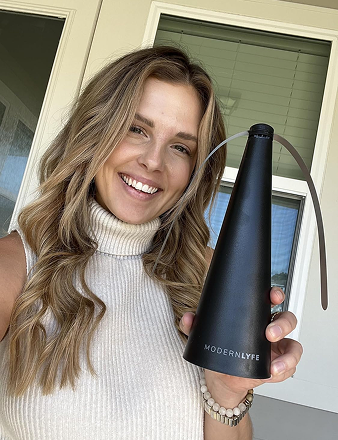
Ready to create a space where guests can truly relax? The Modern Lyfe fly fan is an elegant, chemical-free solution that protects your food without ruining the vibe. Its gentle airflow creates an invisible barrier that weak fliers like fruit flies just can't cross, ensuring your dining experience is perfect. Discover the perfect fly fan for your space at Modern Lyfe.