You’ve seen them—the glowing blue lights in restaurant kitchens or hotel lobbies. These are ultraviolet (UV) light traps, also known as Insect Light Traps (ILTs), and they are a quiet powerhouse in modern pest management.
They’re common in sensitive environments like hospitality for one simple reason: they capture flying pests without chemicals. It's a science-backed method that provides clean, 24/7 control over insect populations.
How Ultraviolet Light Traps Work
How does a light bulb stop pests in their tracks? It taps into an insect's natural instincts through a process called phototaxis—the innate attraction many creatures have to light. The UV bulb in a trap acts as a silent, irresistible beacon that flying insects are biologically wired to follow.
But not just any light works. These traps are specifically designed to emit UV-A light, typically in the 350-400 nanometer wavelength range. To an insect, this "black light" glow mimics natural light sources they use for navigation, like the moon. They can't help but fly towards it.
This flowchart breaks down the simple but effective process.
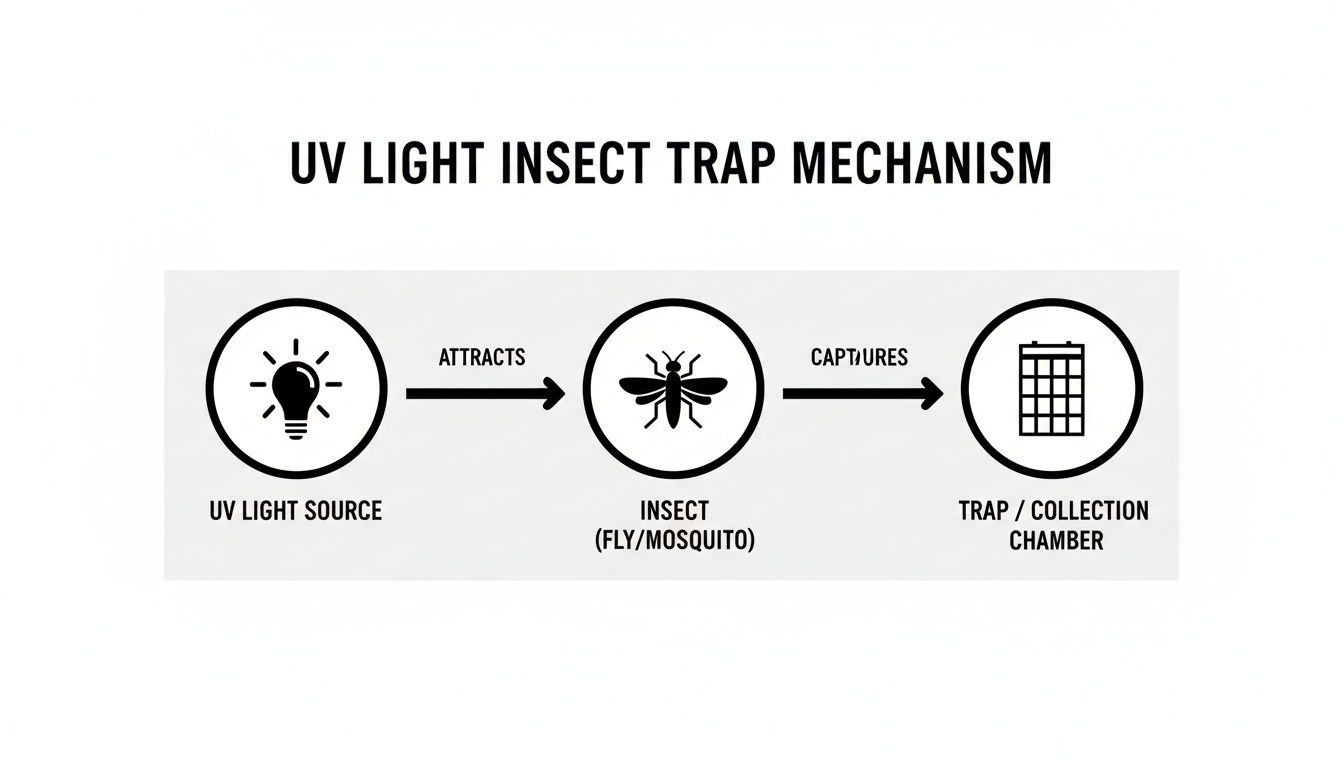
The trap doesn't chase the insect; it uses the insect's own instincts to guide it directly into the capture zone.
Capturing the Insects
Once the UV-A light lures an insect close, the trap needs to finish the job. This is where the technology splits into two main types. Knowing the difference is critical for guest experience and sanitation.
The two main capture methods are:
- High-Voltage Electric Grids: This is the classic "bug zapper." An electrified metal grid surrounds the UV bulb, and when an insect makes contact, it completes a circuit and is instantly killed.
- Adhesive Glue Boards: This is the modern, discreet approach. These "silent traps" use a sticky, non-toxic glue board placed behind the UV light. Insects fly in and get permanently stuck.
Comparing UV Light Trap Technologies
Let’s compare the two primary types of UV traps to help you choose the right one for your business.
| Feature | Electrocution Grid ('Zapper') | Adhesive Glue Board ('Silent Trap') |
|---|---|---|
| Capture Method | Instant electrocution via a high-voltage grid. | Insects are trapped on a sticky, non-toxic surface. |
| Sanitation Risk | High. Can cause insect bodies to explode, scattering fragments ("insect blow") up to several feet. | Low. Insects are captured whole and contained on the board, preventing airborne contamination. |
| Noise Level | Loud. Creates an audible and often startling "zap" with each kill. | Silent. Operates with no sound, making it ideal for guest-facing areas. |
| Guest Perception | Can be seen as unhygienic and disruptive due to the noise and visible "zap." | Discreet and professional. Guests are often unaware of its function. |
| Best Use Case | Outdoor areas, loading docks, and back-of-house spaces far from food prep or guests. | Dining rooms, kitchens, bars, lobbies, hallways—any indoor area where sanitation and discretion are important. |
| Maintenance | Requires cleaning the grid and collection tray, which can be messy. | Involves simply peeling off the old glue board and replacing it with a new one. Clean and quick. |
For restaurants, hotels, and any food service environment, the choice is clear. While zappers are effective, they come with a major issue known as the "sizzle factor."
The electrocution process can cause insect bodies to explode, scattering small fragments up to several feet away. This creates a serious sanitation risk near food preparation surfaces or dining areas.
This contamination risk is why adhesive glue boards have become the gold standard for indoor hospitality use. They trap insects quietly and completely, containing the pest without creating airborne particles or an unpleasant "zap."
It's a more hygienic and subtle solution. While a specialized fruit fly light trap might use different attractants, the principle of silent, sanitary capture is the same. It’s about choosing the right tool for the job to keep your establishment clean, safe, and welcoming.
Do UV Traps Actually Work?
The science is solid, but what matters in a restaurant or hotel is results. Do these traps reduce the number of flies in your kitchen or dining room? Yes—but only if you target the right pests and use the traps strategically.
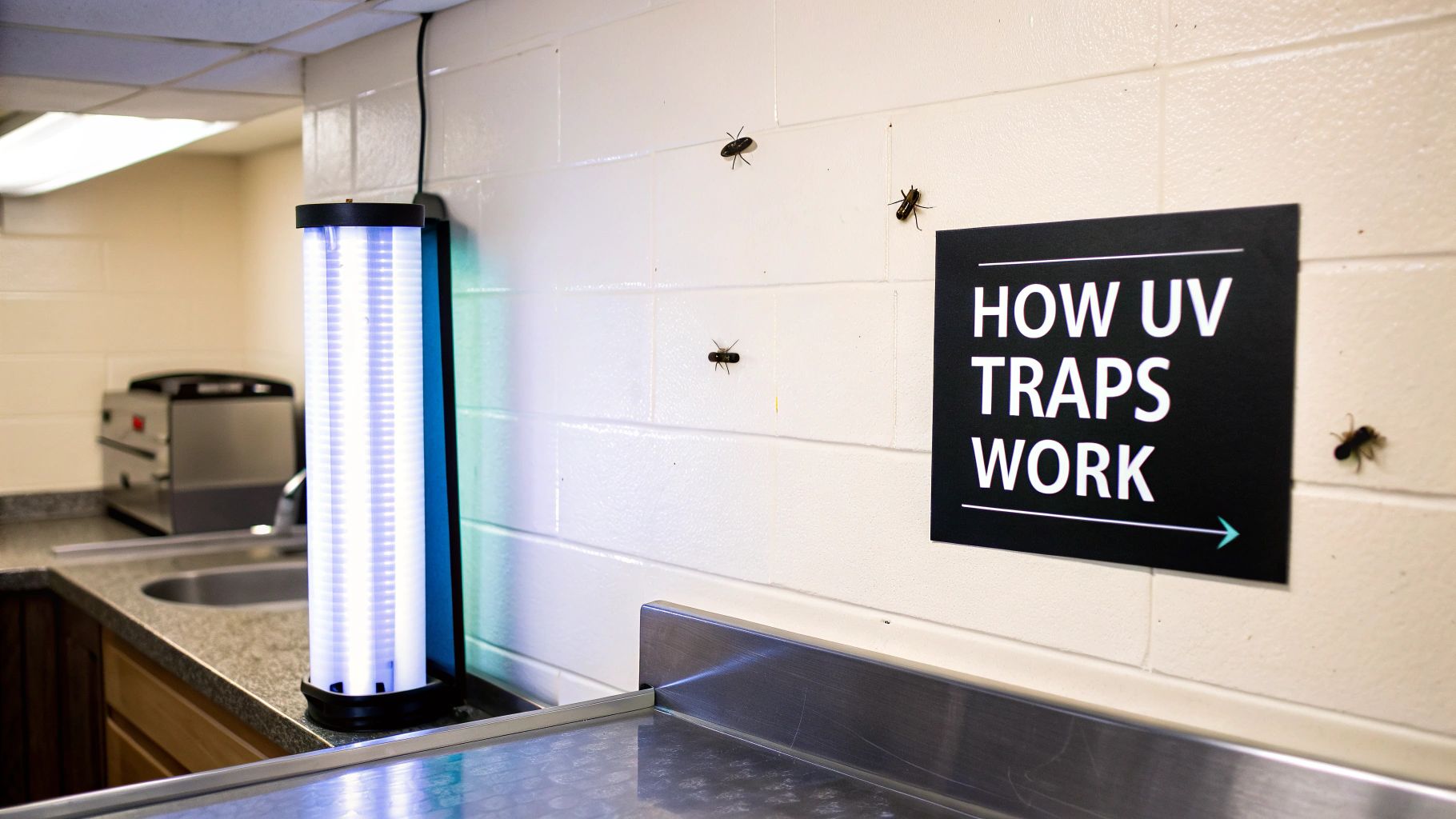
Not all flying insects are drawn to UV-A light. The devices are designed to lure pests that use natural light to navigate, which makes them highly vulnerable to the trap's glow.
High-Success Pest Targets
UV light traps are most effective against a specific lineup of common pests.
- House Flies: The most persistent pest in any food service operation. House flies are strongly attracted to the 365nm wavelength, making them the number one target for UV traps.
- Moths: Many moth species, including pantry moths that ruin dry goods, navigate by moonlight. To them, a UV-A light trap is an irresistible supermoon.
- Fruit Flies and Gnats: These tiny pests are also phototactic. A well-placed light trap can intercept a huge number of them before they become a full-blown infestation.
It's also important to know what these traps can't do. For example, UV traps are ineffective against mosquitoes. Mosquitoes hunt using CO2, body heat, and specific scents—not light. Using a UV trap for a mosquito problem will only lead to disappointment.
Gauging Performance With Data
The number of insects these traps can catch is impressive, making them valuable for both control and monitoring. In a high-traffic kitchen or loading dock, a single trap can capture thousands of insects in just a few days.
A UV light trap is more than a pest control device; it’s a data tool. The number and type of insects on a glue board give you valuable information about pest activity, entry points, and seasonal spikes. This data helps you refine your entire Integrated Pest Management (IPM) program.
Field studies confirm their effectiveness. Research in high-pressure environments like agriculture showcases their potential. In one series of studies, a commercial UV trap was tested in Florida poultry houses. When two traps ran continuously, they caught the most flies—averaging over 13,500 insects per day in a facility with a serious house fly problem.
These numbers prove that UV traps can remove a massive volume of insects. But they also show that performance can vary by up to 50% depending on placement and operating hours. You can dig into the full study on operating schedules to see just how critical a smart strategy is.
Factors That Influence Trap Success
A UV light trap is not a "set it and forget it" solution. Its success depends directly on how and where you use it.
- Competing Light Sources: A UV trap placed next to a bright window, an open door, or decorative lights will struggle to compete. The trap's bulb must be the most attractive light source in the area.
- Placement Height: The right height depends on your target. For house flies, 3-6 feet off the floor is the sweet spot, putting the trap directly in their typical flight path.
- Operating Schedule: As the study showed, running traps 24/7 delivers the best results. This ensures they are active during peak pest hours, including early mornings and overnight for nocturnal insects like moths.
While the technology is powerful, its real-world effectiveness comes down to smart, strategic use. Deployed correctly, UV light traps are a reliable first line of defense against the most common flying pests in hospitality.
A Proven Technology for Modern Hospitality
When running a hotel or restaurant, you need solutions that work. Ultraviolet light traps aren't a trend; they're a professional workhorse that has been protecting sensitive environments for decades.
Think of them as a well-established scientific tool. With roots in agriculture and public health stretching back nearly a century, this technology has earned its place. That long history is why hospitality managers trust it to uphold their standards for cleanliness and safety.
From Farm Fields to Five-Star Kitchens
Long before UV traps were common in commercial kitchens, they proved their worth in some of the most demanding environments. The technology was born from the need to control massive pest populations in agriculture.
The core idea behind ultraviolet light traps is so effective that it has remained fundamentally the same for generations. It works because it taps into a simple, predictable aspect of insect biology, making it a reliable tool you can count on.
This long-term validation provides peace of mind. You're investing in a method with a proven track record.
The technology is deeply connected to public health science. Near-ultraviolet (UV-A) “black-light” lamps first appeared in 1935. Within a few years, they were adapted into insect traps for professional use. By the 1950s, the U.S. Department of Agriculture was using them as a primary tool for tracking major crop pests.
A 2016 safety review noted that these traps have been widely used in food-service settings for “at least 75 years,” highlighting how deeply embedded this technology is.
A Recognized Tool for Modern Compliance
This history is why ultraviolet light traps are a key part of today's food safety and health codes. Health inspectors recognize these devices as a legitimate component of a comprehensive Integrated Pest Management (IPM) plan. Their presence shows you’re proactive about hygiene.
This acceptance is built on decades of data. By choosing a scientifically-backed tool, you align your business with industry-wide best practices. While there are many different types of fly traps, professionals prefer UV-based systems because they're non-toxic and operate continuously.
The long, documented history of UV light traps makes them a stable, predictable, and trustworthy asset. For any hospitality manager, that reliability is essential for keeping your space clean, safe, and welcoming.
Strategic Placement for Maximum Pest Control
An ultraviolet light trap is a powerful tool, but its success depends entirely on placement. Think of it like a high-performance speaker—if you put it in a closet, you won't hear much. Smart placement is what makes a trap effective.
The goal is to make the trap's UV light the most attractive object in the room for a flying insect, guiding pests away from sensitive areas before they can bother a guest or land on a food prep surface.
Core Principles of Trap Placement
Getting placement right is a science, not a guess. It’s about understanding insect behavior and anticipating their flight paths.
One of the most common mistakes is putting traps right where the pest problem is most visible, like directly over a salad bar. This is counterproductive—you end up drawing pests to the areas you're trying to protect. The goal is to intercept them, not invite them over.
Here are the essential dos and don'ts:
- DO Place Traps Away from Competing Light: Your trap’s UV bulb needs to be the main attraction. Don’t install it next to bright windows, open doors, or decorative lighting. Opt for darker corners or interior walls where the trap's glow is the dominant light source.
- DO Install at the Right Height: Most flying insects, especially house flies, fly between three and six feet off the ground. Placing your ultraviolet light traps in this zone puts them directly in the flight path, dramatically increasing capture rates.
- DON'T Position Traps to Lure Pests Inside: Never install a UV trap where it can be seen from outside. A glowing blue light visible through a window is a giant "welcome" sign for every bug in the area. Mount them on interior walls to catch pests that have already slipped inside.
Creating an Interception Zone
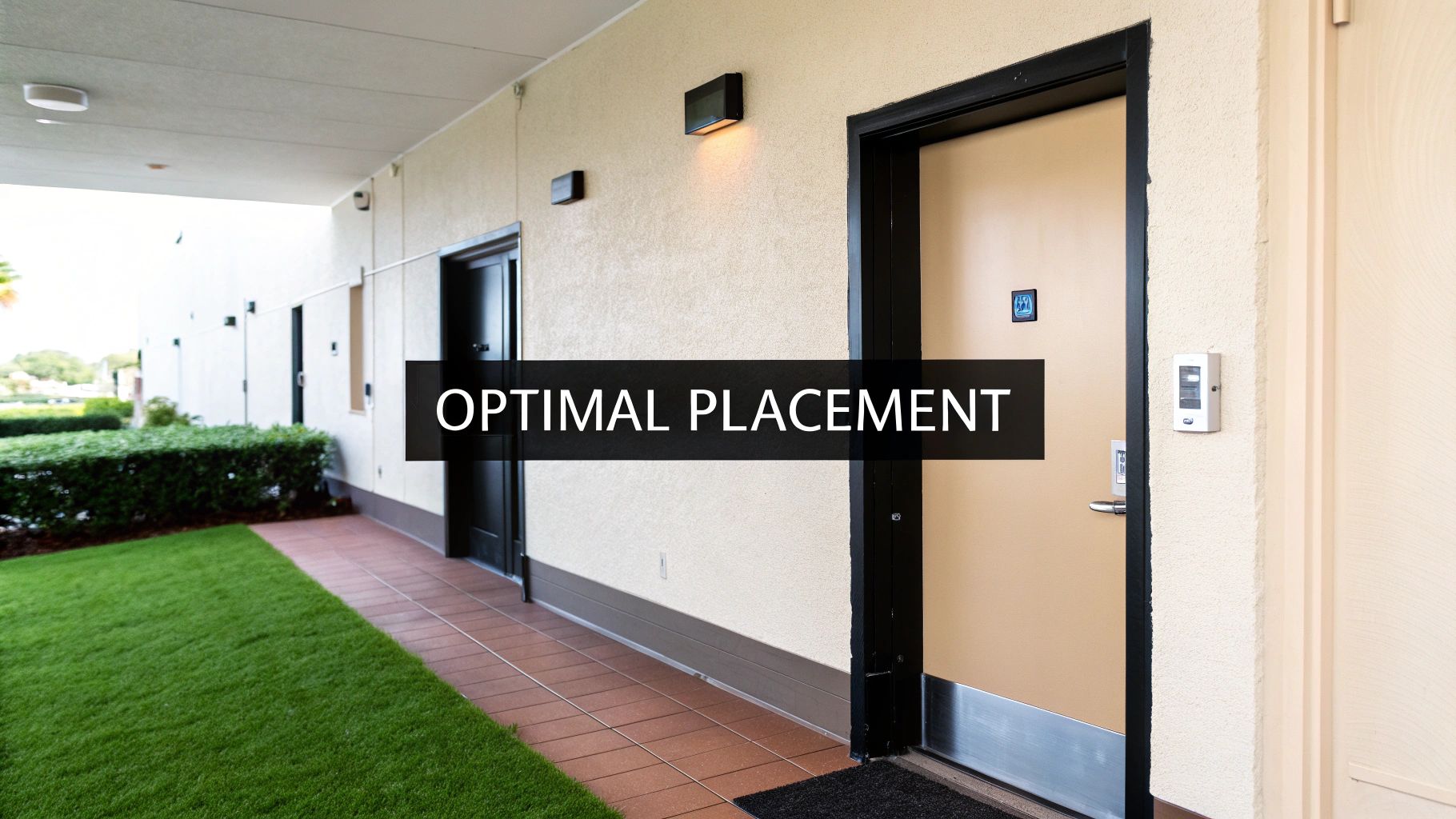
The most effective strategy is to create an "interception zone." Place traps along the routes insects are most likely to travel after they enter, such as near back doors, by loading docks, or in hallways leading from the kitchen. This allows you to capture insects in transit before they become a visible problem.
Pro Tip: A good rule of thumb is to position traps about 25 feet from main entrances. This gives the device enough room to attract and capture insects that have just snuck in, without being so close that its light pulls in more bugs from outdoors.
Maintenance and Hygiene
Perfect placement is only half the battle. A consistent maintenance schedule is non-negotiable for performance and sanitation. A neglected trap is ineffective and can become a source of contamination.
Older zapper-style units have a hidden problem. The "ZAP!" sound comes from a process that can create "insect blow"—a fine mist of fried insect parts that can scatter onto nearby surfaces. In any food service setting, that's a major health code violation. Modern glue board traps solve this by capturing insects whole, but they still require maintenance.
A simple maintenance checklist keeps your traps working hygienically:
- Replace Glue Boards Regularly: In high-activity areas, check boards weekly. In quieter spots, check bi-weekly. A full board is no longer effective.
- Change UV Bulbs Annually: The invisible UV-A light that attracts insects fades long before the visible blue light does. Most manufacturers recommend replacing bulbs every 12 months to maintain peak performance.
- Clean the Unit: Regularly wipe down the trap's housing and guards. Dust and grease can block the light and reduce its reach.
- Keep Records: Logging board and bulb changes is crucial for health inspections and helps you spot trends in pest activity over time.
By pairing smart placement with diligent maintenance, your ultraviolet light traps become a quiet, reliable, and hygienic part of your pest control program.
Building a Layered Pest Defense System
Even the best ultraviolet light traps don't offer a 100% pest-free guarantee. Think of them as your first line of defense. They work 24/7 to intercept flying insects and reduce their numbers. But in a restaurant or hotel, one fly buzzing a guest’s table can ruin their experience.
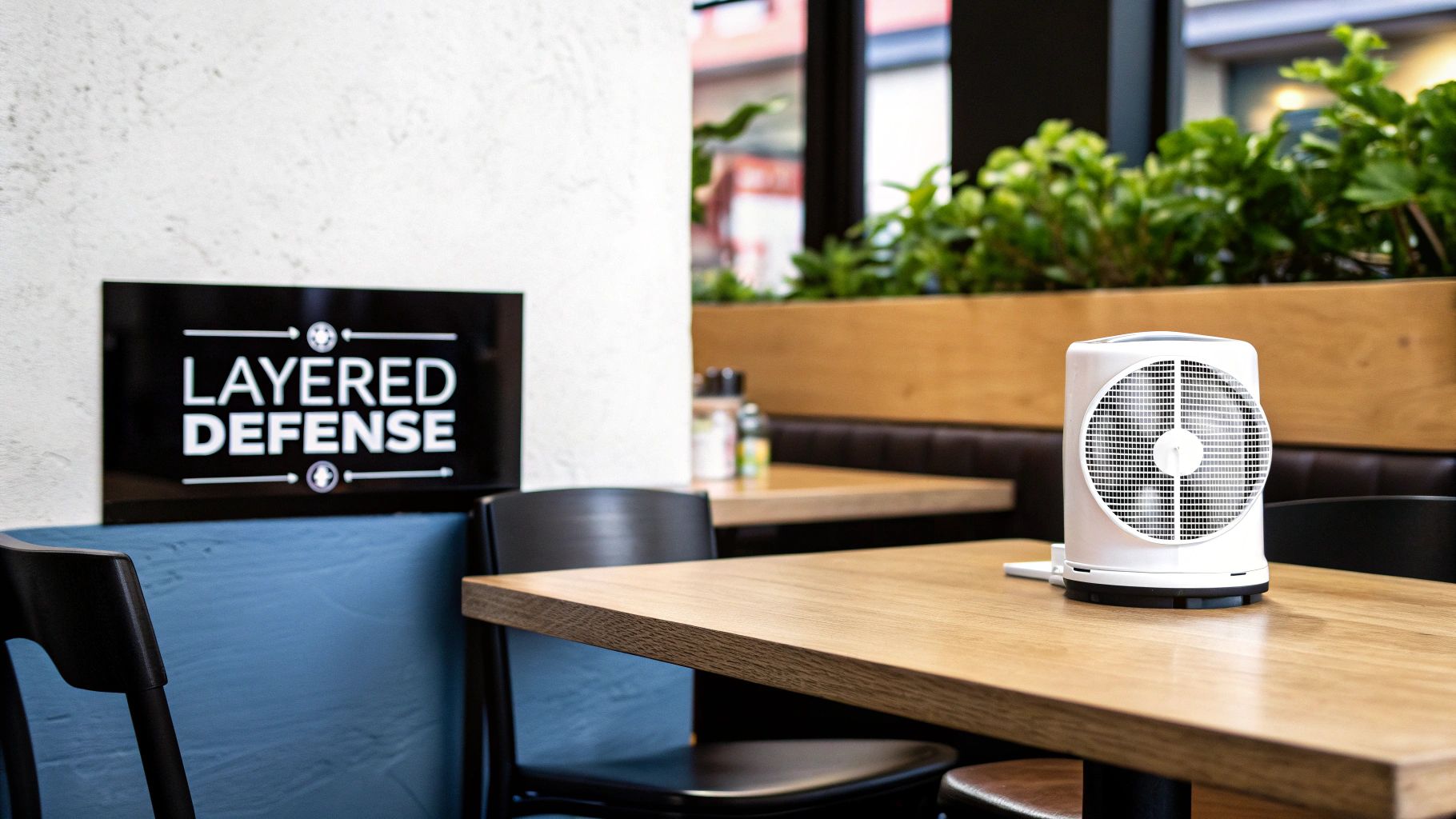
This is why a layered defense is crucial. The idea is to add a final, targeted layer of protection right where it matters most—your guest spaces. By combining different technologies, you create a complete strategy that handles both the big picture and the immediate experience.
This approach is at the heart of modern pest control. Instead of relying on a single tool, you integrate multiple methods for a more resilient and effective system.
Attraction vs. Repulsion: A Two-Part Strategy
Your pest control plan has two complementary parts: attraction and repulsion. Each plays a specific role in keeping your establishment free of flying insects.
Ultraviolet light traps are all about attraction. They use a precise UV-A wavelength to silently draw pests like house flies and moths away from high-traffic spots. They lure them into a capture zone, drastically reducing the overall indoor pest population.
But for the last few critical feet—the space around a dining table or buffet—you need a different approach. This is where repulsion comes in.
Think of it like defending a castle. Your UV traps are the high walls and moat, stopping most of the army. Your repulsion tools are the guards at the gate, offering immediate, localized protection for the most valuable areas.
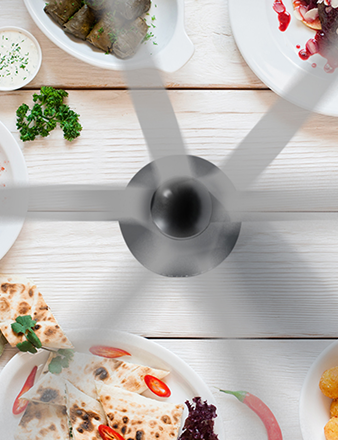
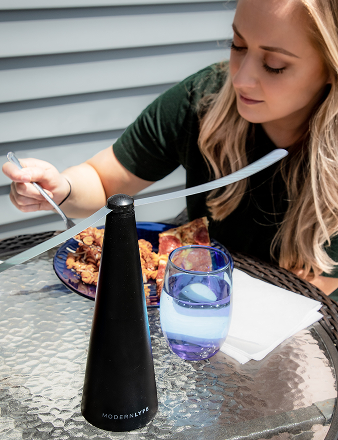
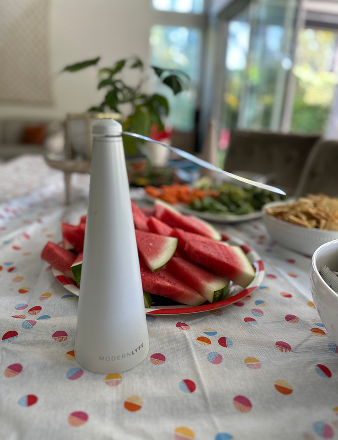
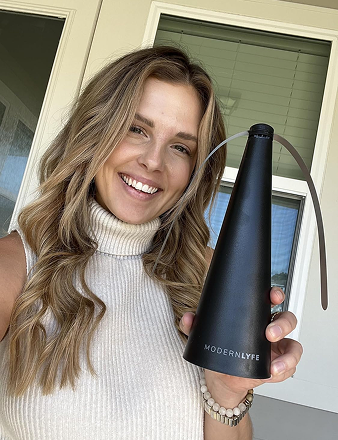
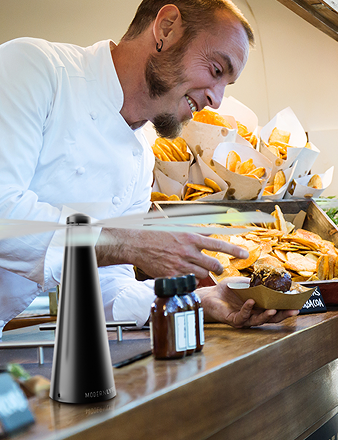
This final layer is often best managed by a device like a bladeless fly fan. These fans create a gentle column of air that makes it nearly impossible for a fly to navigate or land. They don't attract or kill anything; they simply create an invisible, pest-free bubble around your guests.
Creating the Ultimate Guest Experience
When you combine these two methods, you get a seamless defense. The UV traps work quietly in the background to manage overall pest pressure, while fly fans provide a direct, visible sign of your commitment to guest comfort at their table.
This layered system means that even if a stray fly gets past your first line of defense, it’s actively stopped from becoming a nuisance.
Here’s how the two strategies work together:
- UV Light Traps (Attraction): Placed in hallways, near entryways, and in back-of-house areas, these devices pull insects out of main operational zones. They are the silent workhorses of population control.
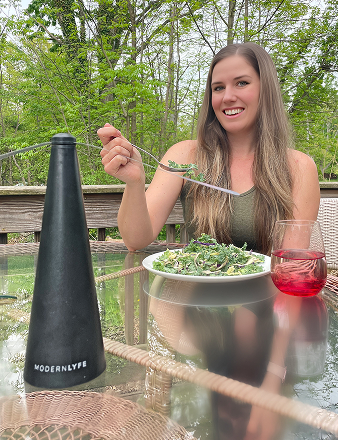
- Bladeless Fly Fans (Repulsion): Positioned directly on dining tables, host stands, or buffet lines, these create a localized "no-fly zone." They offer immediate protection and enhance the perception of cleanliness.
Of course, pest control is just one piece of the puzzle. For a truly holistic approach, consult a comprehensive restaurant kitchen design guide. Integrating smart pest management with efficient design from the start builds a robust defense, ensuring every guest enjoys a pleasant, comfortable, and hygienic visit.
Answering Your Ultraviolet Light Trap Questions
New equipment always brings new questions. Here are answers to the most common concerns from hospitality managers about using UV light traps.
Are UV Light Traps Safe for Guests and Food Prep Areas?
Yes—as long as you use the right type and install it correctly. The light these traps emit is UV-A, the lowest energy band of the ultraviolet spectrum. It’s not the same as the UV-B or UV-C rays that cause sunburn, so it's considered safe for continuous operation around people.
For food safety, the capture mechanism is the make-or-break factor. You should only use adhesive glue board traps in kitchens, dining rooms, and any area where food is handled. Never use electric "zappers" in these spaces.
Zapper-style traps create "insect blow"—an unsanitary mist of insect fragments that can contaminate nearby surfaces and lead to health code violations.
Glue board traps solve this problem. They capture insects silently and whole, holding them securely on the sticky surface. This makes them the only hygienic and acceptable choice for any food service environment.
Stick with glue boards and follow local health regulations for placement, and you'll have zero safety issues.
How Often Do My UV Traps Need Maintenance?
Think of maintenance as fuel for your traps. A neglected trap is a useless trap. Staying on top of it is simple with a consistent schedule.
You only need to worry about two things: the bulbs and the glue boards.
- UV Bulb Replacement: This is a common oversight. The bulb may still glow blue, but the invisible UV-A light that attracts insects fades over time. To maintain peak performance, most manufacturers recommend replacing bulbs annually (every 12 months).
- Glue Board Replacement: This depends on pest activity. In a high-traffic spot like a kitchen entrance, you might change them weekly. In a quiet hallway, checking every few weeks is likely enough.
Also, remember to give the unit a quick wipe-down. Dust and kitchen grease can build up and block the light, reducing its effective range.
Will a UV Trap Eliminate Every Fly in My Restaurant?
No single device can provide 100% pest elimination. Ultraviolet light traps are excellent at reducing the overall population of flying insects, but they work best as part of a larger strategy.
Think of your UV traps as your 24/7 air defense. They intercept and remove the vast majority of insects that get inside, dramatically cutting the chances of a fly bothering a customer. They are a core piece of an Integrated Pest Management (IPM) program, which must also include sanitation, exclusion (sealing cracks and gaps), and regular monitoring.
For ironclad protection, layer your defenses. UV traps handle the big picture inside, while point-of-use deterrents provide the final line of defense right where it matters most—in the guest's immediate space.
Could a UV Trap Attract More Bugs Inside?
This is a valid concern. A bright UV light shining out a window can act like a beacon for every bug in the neighborhood.
The solution is simple: never install an ultraviolet light trap where it can be seen from the outside. Keep them away from windows and doors with a direct line of sight outdoors.
The purpose of an indoor UV trap is to catch pests that have already gotten inside. The best placement is along their likely flight paths—down hallways, near kitchen entrances, or in back-of-house areas. This way, you intercept them before they reach guest-facing zones. Positioned correctly, they become an internal capture system, not an external lure.
A layered defense system is the most effective way to ensure a pleasant, pest-free experience for your guests. While MODERN LYFE specializes in the final layer of point-of-use protection, understanding how all the pieces work together is key to success. For an elegant and effective solution to protect your tables and buffets, explore our innovative fly fans at https://modernlyfe.com.