A server notices it first. A guest notices it second. By the time management notices it, the damage is already public.
A few fruit flies circling a wine station or buffet garnish tray can undo a polished service standard fast. In a restaurant, hotel lounge, banquet hall, or catering setup, guests don't separate “small pest issue” from “overall cleanliness.” They connect the dots immediately. If flies are visible near food, they assume sanitation is slipping somewhere behind the scenes too.
That's why the search for fruit fly poison usually starts in a rush. Service is live. Staff is frustrated. Someone wants a fast kill product, a bait, a spray, or a trap that solves the problem before the next seating. The instinct makes sense. The problem is that poison is often the wrong first move in a foodservice environment.
In hospitality, pest control isn't just about killing insects. It's about protecting plated food, guest confidence, inspection readiness, and the reputation attached to your name. A product that kills flies but creates residue concerns, guest complaints, or visible chemical clutter in dining areas hasn't solved the actual problem. It has just traded one liability for another.
That Buzzing Problem in Your Five-Star Establishment
The usual scenario is painfully familiar. A barback reports flies around the citrus caddy. Banquet staff spot them near the dessert station. A prep cook finds activity around a floor drain, then someone places a quick trap near a service counter and hopes for the best.
That response is understandable. It's also where many operations make the mistake that keeps the issue alive longer than it should.
What the guest sees
Guests don't care whether the flies came from a drain line, produce storage, a sticky recycling bin, or a poorly cleaned soda gun area. They see motion near food. They see staff reacting in real time. If they also see a poison trap or chemical spray bottle in the same area, the impression gets worse.
The liability is operational as much as sanitary:
- Guest confidence drops: A single visible pest issue can overshadow an otherwise strong meal or event.
- Staff make rushed decisions: People grab consumer products that were never chosen with food-contact risk in mind.
- Managers lose control of the narrative: Once a guest mentions “flies” and “chemicals” in the same review, the brand takes the hit.
A fruit fly problem during service is never just a pest problem. It's a perception problem, a sanitation problem, and a management problem at the same time.
What the operator should see
A seasoned operator reads fruit flies differently. They're not random. They're a symptom. Somewhere in the building, organic residue, moisture, or neglected cleaning detail is giving them a breeding source and a reason to stay.
That changes the question. Instead of asking, “What poison kills them fastest?” the better question is, “What removes the source without creating a second risk near food and guests?”
That's the professional lens. It separates a quick reaction from a compliant response.
The professional standard
In a food business, the best pest decision is rarely the most aggressive one. It's the one that holds up under scrutiny from guests, inspectors, corporate oversight, and your own team. If a treatment can contaminate surfaces, create handling hazards, or look sloppy in a dining room, it doesn't belong near active service.
Fruit flies are annoying. The bigger issue is what a bad response can cost you. A rushed poison choice can create residue concerns, staff exposure issues, and visible guest-facing clutter, all while leaving the actual breeding site untouched.
Decoding What "Fruit Fly Poison" Actually Means
Most operators use the phrase fruit fly poison loosely. In practice, it can refer to several different product types with very different uses and risks. Some are true insecticidal baits. Some are liquid traps. Some are residual products used around structural areas. Lumping them together causes bad decisions.

Chemical baits
Professional bait products are designed to attract fruit flies first, then kill them after ingestion. One clear example is GF-120 Fruit Fly Bait, which contains 0.02% spinosad and uses protein hydrolysates and sugars to pull flies in from several meters away, according to the GF-120 label from Corteva.
How bait works: The attractant brings the fly in. The toxicant finishes the job after feeding.
With spinosad, the mode of action matters. The same label states that it disrupts nicotinic acetylcholine receptors in the insect nervous system, leading to paralysis and death within 24 to 72 hours after ingestion. That timeline alone tells you something important for hospitality settings. This is not a wipe-and-done instant sanitation fix for a live buffet or event floor.
There's another trade-off. The same product guidance includes a 7 to 14 day pre-harvest interval, which is an agricultural context, but it still underscores a practical point for food operators. Products designed around managed crop use come with residue and timing considerations that don't translate cleanly into active service environments.
Liquid traps
Consumer traps are often treated as the “safe” option because they don't sound like pesticides. That assumption is sloppy. They still use active chemical mechanisms.
Products in this category often rely on acetic acid to attract and kill flies. The fly is drawn into the reservoir by fermenting-type odors, then dies in the liquid environment. For a household pantry, that can be acceptable. For a hospitality operation, placement, ventilation, and handling matter much more.
Residual sprays and contact killers
Residual sprays are the most misunderstood category in foodservice. They can knock down visible adults, but they usually don't solve the root problem if the breeding source remains in drains, under equipment, in recycling areas, or inside neglected organic buildup.
They also create the highest risk of misuse near prep zones, service counters, utensils, garnish stations, and exposed food. In commercial hospitality work, “it killed the flies” is not a sufficient standard if the method creates food-contact concerns or visible guest unease.
Quick comparison
| Product type | Main purpose | Typical strength | Main weakness in hospitality |
|---|---|---|---|
| Chemical bait | Attract and kill after feeding | Targeted action | Can create residue and placement concerns near food |
| Liquid trap | Lure and contain adults | Useful for monitoring | Still requires careful handling and smart placement |
| Residual spray | Contact kill or lingering control | Fast visible knockdown | Easy to misuse, poor source control if sanitation is weak |
A professional operation has to know what each tool does. Baits attract. Traps monitor and catch. Sprays suppress visible adults. None of them replaces cleaning, exclusion, and source removal.
The Real Risks of Poisons in Foodservice Environments
Poison looks efficient on paper. In a restaurant or hotel, it can create risks that are bigger than the flies.
The most serious mistake I see is treating a foodservice environment like a backyard or home kitchen. It isn't. In hospitality, every pest response sits next to food safety, staff conduct, guest perception, and liability.

Residue is not a theoretical problem
A critical issue with bait-based fruit fly poison is persistence. A 2023 USDA study found that 28% of citrus treated with spinosad showed detectable residues exceeding safe thresholds for direct food contact, as summarized by the University of Hawaiʻi fruit fly guidance.
That matters far beyond orchards. In hospitality, food is exposed in staging, garnish prep, buffet service, beverage assembly, and event plating. If residue is a concern in produce treatment, it should absolutely get your attention when people start talking about bait products anywhere near active food environments.
The risk categories operators miss
Expert groups often focus exclusively on whether a poison is “approved.” They overlook whether it is operationally smart.
- Food-contact exposure: Drift, splash, or careless placement can put product near prep surfaces, utensils, service ware, and open food.
- Staff handling errors: A line cook or banquet captain may move a trap or wipe a surface without understanding the product's handling requirements.
- Guest visibility: Guests who see poison stations near food don't think “integrated pest management.” They think “why is there pesticide near my meal?”
Practical rule: If a fly control product would make you uncomfortable sitting beside a plated entrée, it doesn't belong in guest view.
Brand damage starts fast
The reputation problem is simple. Guests are already unsettled by flies. If they also notice a sticky trap, a chemical odor, or a bait station beside a buffet riser, you've doubled the issue.
Foodservice brands spend years building trust through polished service details. Pest poison used badly can undercut that trust in one shift. Even when no one gets sick and no violation is written, the optics are bad. In hospitality, optics count.
Visible poison can work against the room
A refined dining room, wedding reception, rooftop bar, or hotel breakfast setup depends on controlled presentation. Fruit fly poison products often fail that standard for three reasons:
- They look improvised, especially when placed by staff mid-service.
- They invite questions from guests who notice them near food.
- They signal loss of control, even if the actual infestation is still small.
The right response in foodservice is measured, documented, and mostly invisible to the guest. Poison-heavy reactions are often the opposite.
Navigating Regulations and Sanitation Mandates
Fruit flies may be tiny, but regulators don't treat them as trivial. In a food business, visible fly activity usually points to a sanitation lapse, moisture issue, or waste-handling problem that management is expected to control.
That's why the conversation can't stop at “What product can I buy?” It has to include what your local health authority expects, what your internal food safety program requires, and what you can defend if an inspector asks how you're managing the issue.
Why inspectors care
According to the USDA APHIS overview of fruit flies, exotic fruit flies attack over 400 plant types, and these pests contribute to billions in agricultural losses annually. In commercial food settings, that broader context matters because pest prevention is tied to food protection, product integrity, and sanitation controls.
A restaurant won't be judged by orchard standards, but the principle is the same. If flies are active, something in the operation is giving them access to food, moisture, waste, or harborage. Health codes are built around preventing exactly that.
What a compliant response looks like
A proper response is structured, not emotional. It usually includes:
- Documented sightings: Record where flies are seen, when activity peaks, and what nearby condition may be supporting them.
- Corrective action: Clean drains, remove organic buildup, rotate produce, sanitize recycling zones, and inspect under equipment.
- Professional oversight: If pesticides or bait products are used, management should know who applied them, where, and under what label conditions.
- Verification: After cleaning and intervention, someone checks whether the activity dropped.
If your operation uses HACCP principles, the fly issue belongs inside that same mindset. Hazards are identified, controls are assigned, and verification follows. If your team needs a refresher, this overview of HACCP food safety principles is a useful baseline.
The legal and operational divide
There's a big difference between a product being sold to the public and a product being appropriate in a food business. Managers often assume that if a trap is sold online or at a hardware store, it's automatically acceptable anywhere in the building. That's not how professional compliance works.
A health inspector is looking at the full picture:
| Inspection concern | What they're really evaluating |
|---|---|
| Visible flies | Whether sanitation and source control are failing |
| Product placement | Whether control methods create food-contact or guest-area risk |
| Documentation | Whether management runs pest control as a system, not a panic response |
The strongest operators treat fruit flies as evidence. Evidence of a gap in cleaning, storage, drainage, or waste control. Once you see it that way, the compliance path becomes much clearer.
Building Your Proactive Defense with IPM
The most reliable fruit fly program in hospitality isn't poison-centered. It's IPM, or Integrated Pest Management. That means you control conditions first, monitor intelligently, and use the least risky intervention that still does the job.

Start where fruit flies actually breed
Fruit flies don't appear because the building is unlucky. They appear because organic residue and moisture are available somewhere. In commercial settings, I'd inspect these first:
- Floor drains and drain covers: Especially near bar stations, dish areas, prep sinks, and beverage service lines.
- Recycling and trash zones: Syrup residue, wine drips, juice film, and fermented liquid at the bottom of liners are classic sources.
- Produce storage and garnish prep: Soft citrus, bruised fruit, cut fruit scraps, and forgotten backup stock feed the problem.
- Hidden wet points: Under speed racks, around condensate, below equipment legs, and inside damp mop storage areas.
In many facilities, fruit flies persist because teams clean visible surfaces well but miss the hidden organic film underneath and behind equipment. That's where support from structured deep cleaning can matter. For operators trying to reset sanitation in hard-to-reach areas, resources like professional maid services in Dane County can help illustrate the level of detail needed for true source removal.
Use traps as monitoring tools, not magic fixes
Traps have a place. They just shouldn't be mistaken for complete control.
Consumer traps such as the TERRO T2500 use acetic acid, and the safety data discussed in the BASF monitor documentation indicates corrosive handling concerns that call for gloves or PPE and good ventilation, which is why these products belong in a thoughtful sanitation plan rather than as casual décor beside food or guests, as reflected in the BASF fruit fly monitor material.
That's the central lesson. Even a common trap needs professional discipline.
Put monitoring devices where they give you information, not where they reassure staff emotionally.
Build the program in layers
A good IPM setup in hospitality usually looks like this:
-
Sanitation first
Remove breeding material. Clean drains mechanically. Empty and wash waste containers. Rotate produce aggressively. Clean under fixed equipment. -
Exclusion next
Tighten doors, screens, service openings, and waste handling routines. Don't give flies easy access from receiving areas or patio transitions. -
Monitoring after that
Use traps in strategic, low-visibility areas to identify where pressure is highest. Track patterns by station, not just total captures. -
Targeted intervention only if needed
If a licensed professional recommends a product, keep it tightly controlled, away from food and guest areas, and tied to a documented plan.
For teams that need a framework, this guide to integrated pest management basics lays out the prevention-first approach clearly.
What works best in real operations
IPM works because it treats fruit flies as a systems issue. Poisons can suppress adults. Only sanitation and source control stop the cycle. In a hospitality business, that's what protects service.
Safer Alternatives That Protect Guests and Your Brand
A lot of operators assume poison is the serious option and non-chemical control is the soft option. In hospitality, the opposite is often true.
The strongest solution is the one that prevents flies from reaching food and guests in the first place. That's more professional than setting out bait and hoping a visible nuisance turns into an invisible one.

Why poison often underperforms indoors
Indoor hospitality spaces are a poor match for many bait strategies. A common and often ignored issue is that chemical baits can be ineffective indoors because flies often prioritize drains and moist equipment over bait traps, with capture rates under 30% in EPA trials, and APHIS guidance also warns that spilled bait can attract more flies and worsen the outbreak, as summarized by Beyond Pesticides on fruit fly control.
That lines up with what operators see in practice. The bar sets a bait. The kitchen puts out a trap. The flies still hover around drains, syrup residue, and damp equipment edges because that's where the primary attraction is.
Better fit for guest-facing service
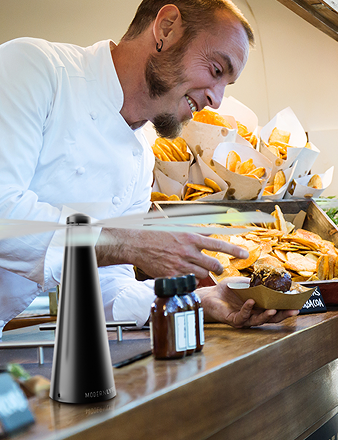
In a restaurant, hotel breakfast room, catering tent, or patio reception, the best fly control method is often a physical barrier. It doesn't rely on chemical attraction. It doesn't leave residue. It doesn't ask guests to ignore a trap sitting near serviceware.
That's especially important at:
- Buffets and carving stations
- Outdoor weddings and cocktail hours
- Open-air bars and rooftop lounges
- Food truck windows and market stalls
- Hotel breakfast lines and banquet setups
These are all spaces where guest experience and presentation are part of the product. Chemical clutter undermines both.
Think like a brand operator, not just a pest buyer
The right question isn't “Which fruit fly poison kills fastest?” It's “Which method protects food, keeps the room polished, and doesn't create a new safety or perception issue?”
That shift matters. It turns pest control from a reactive purchase into a service-quality decision.
For operators comparing preventive tools, this article on food-safe fly repellent options is worth reviewing because it focuses on approaches that fit active food environments better than poison-first tactics.
The smarter standard
In hospitality, the most effective fly strategy has three qualities:
| Better control standard | Why it matters |
|---|---|
| Prevents access | Keeps flies off food instead of waiting to kill them later |
| Protects perception | Maintains a clean, intentional guest-facing setup |
| Reduces liability | Avoids unnecessary chemical handling near service |
That's why physical deterrence and disciplined sanitation outperform casual poison use in so many commercial settings. They solve the underlying problem without creating a second one.
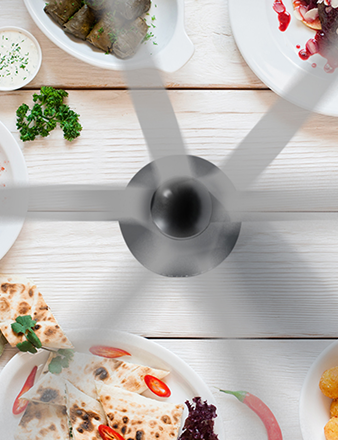
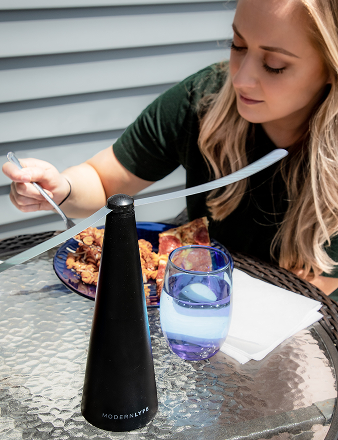
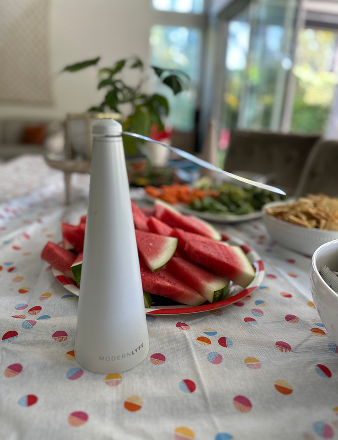
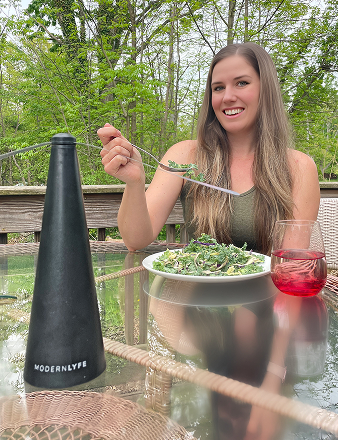
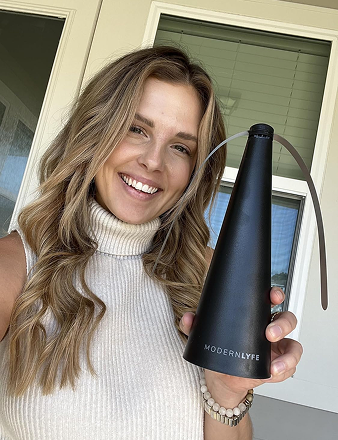
If you want a cleaner, more guest-friendly way to protect buffets, outdoor dining setups, and service stations, MODERN LYFE offers quiet, battery-operated fly fans built for hospitality environments where presentation matters as much as pest control.