To get rid of flies, you need a system, not a single trick. Effective fly control stops them at the source by eliminating breeding grounds, blocking their entry, and using modern tools to handle any that get through. This is how you create a fly-free space, not just fight an endless battle.
A Modern Strategy for Fly Control

A single fly is more than an annoyance—it's a health hazard. Flies carry over 100 pathogens, and their presence immediately signals poor sanitation to guests and customers.
Fly swatters and sticky tape are reactive, dealing with the symptom, not the cause. An effective plan is proactive. It builds an environment where flies can't find food, can't breed, and can't get in. This approach is based on a professional framework called Integrated Pest Management (IPM).
IPM uses a pest's lifecycle and habits to control it, favoring smart, preventative tactics over chemical sprays. It’s about building a fortress, not just fighting endless skirmishes.
This strategy is your blueprint for fly control. Here's a quick overview.
| Pillar | Objective | Primary Method |
|---|---|---|
| Identification | Know your enemy. | Pinpoint the fly species to understand its habits. |
| Sanitation | Remove their resources. | Clean up all food, water, and potential breeding sites. |
| Exclusion | Block entry points. | Seal cracks, repair screens, and keep doors shut. |
| Control | Eliminate stragglers. | Use fly fans, traps, and targeted baits. |
By layering these four pillars, you create a comprehensive defense that makes your space inhospitable to flies.
The Four Core Pillars of Fly Control
This system works because each step builds on the last, creating a powerful, layered defense. It works for commercial kitchens and residential patios alike.
-
Identification: First, know what you’re up against. Are you dealing with large house flies from the dumpster or tiny fruit flies breeding in a slow drain? Different flies require different tactics.
-
Sanitation: This is the cornerstone of fly control. No food, no water, no breeding sites. If you remove what they came for, they have no reason to stay. This is your most impactful step.
-
Exclusion: Keep them out. A fly that can't get inside can't become a problem. This means sealing cracks, fixing torn screens, and ensuring doors close tightly and quickly.
-
Control: For the few flies that get past your defenses, modern control methods are your final barrier. This is where tools like Modern Lyfe fly fans, light traps, and discreet bait stations eliminate the rest without broad chemical sprays.
With rising temperatures and waste management challenges, major fly infestations are becoming more common globally. Effective fly control is now a serious public health matter. For anyone in hospitality, a fly-free environment is non-negotiable. Adopting a modern, proactive framework is the best way to protect your guests, your food, and your reputation.
To understand this proactive methodology better, read our guide on what is Integrated Pest Management.
Building Your First Line of Defense
To control flies, start by making your space a place they don't want to be. The most effective, long-term solutions are not in a spray can—they are built through prevention. This comes down to two key efforts: relentless sanitation and impenetrable exclusion.
Sanitation takes away the reason flies show up; exclusion blocks the way they get in. Nailing both creates a truly fly-free zone, making every other method more effective.
Start with a Deep Clean: Make Your Space Uninviting
Flies are hardwired to find three things: a meal, water, and a place to lay eggs. Your mission is to eliminate all three. A surface-level clean won't work. You need to target the hidden spots where they thrive.
This is about managing every crumb and drop of moisture. With flies maturing from egg to adult in as little as 7-10 days, you can't afford to let things slide.
- Aggressive Waste Management: Empty all trash cans daily. Use sturdy liners and ensure every bin has a tight-fitting lid.
- The Forgotten Drain Gunk: Drains are a top breeding ground. The slime in your floor and sink drains is a nursery for drain flies. Scrub inside the pipes weekly with a stiff brush and use a biological drain cleaner to eat the organic buildup.
- Constant Crumb and Spill Patrol: Wipe up food and drink spills immediately. Routinely sweep or vacuum under appliances, counters, and tables where crumbs hide.
- Airtight Food Storage: Store all food in sealed containers. Never leave produce out, especially ripening fruit. For more on this, see our guide on how to keep flies away from food.
This detail is vital for businesses. The Mediterranean fruit fly (Medfly), a single pest, can cause up to $200 million in damage to U.S. produce during an outbreak. This shows why restaurants and grocers must be militant about sanitation.
Fortify Your Space: Seal It Up Tight
Once you’ve removed attractants, physically block flies from entering. This process, exclusion, means auditing your building and sealing every crack and crevice a fly could use. If you can slide a credit card through a gap, a fly sees an open door.
A proactive building audit is the most cost-effective pest control available. Sealing an entry point is a one-time fix that stops thousands of future pests.
Walk the perimeter of your building with a critical eye. Methodically check every window, door, vent, and utility entry point.
The Exclusion Checklist
- Windows and Doors: Ensure all screens are in perfect condition. A tiny tear is a highway for pests. Regularly inspect and repair torn window screens.
- Door Sweeps and Weather Stripping: Gaps under doors are a major pest entry point. Install door sweeps and replace any cracked or worn weather stripping around doors and windows.
- Utility Gaps: Look where pipes, wires, and AC lines enter your building. Use caulk for small cracks, expanding foam for medium gaps, and copper mesh for larger holes to create a pest-proof seal.
- Vents and Openings: Cover all vents—dryer, attic, and soffit—with fine-gauge mesh screen to allow airflow but block pests.
For commercial spaces with high foot traffic, an air curtain is a game-changer. Mounted over an entrance, it creates an invisible barrier of air that flies can't cross. It keeps the door open for customers but closed to pests, making it ideal for restaurant entryways and receiving doors.
Putting Modern Mechanical Controls to Work
Even with perfect sanitation and exclusion, a few flies will get in. A clean, sealed space is your foundation, but you need an active defense for the stragglers. This is where modern mechanical controls create a fly-free zone without chemicals.
These devices proactively make an area uninviting. The key is to choose the right tool and place it for maximum effect.
The Simple Genius of a Fly Fan
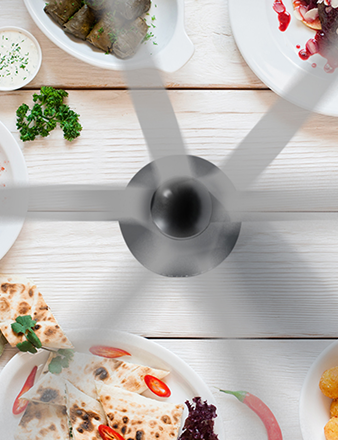
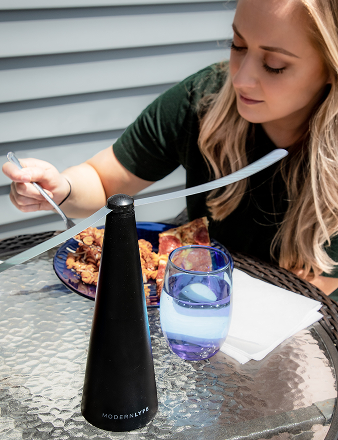
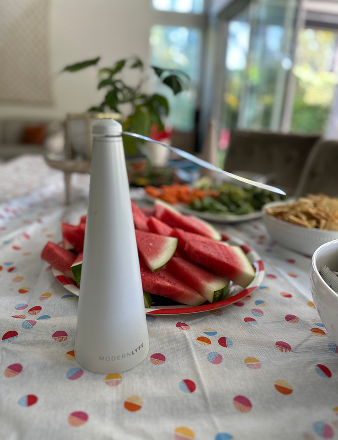
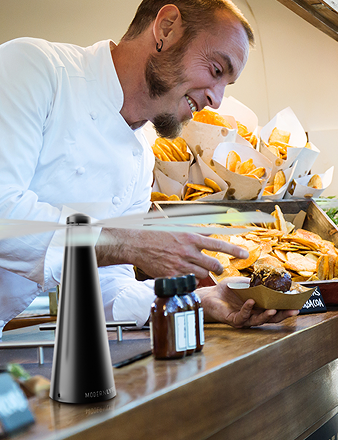
The most elegant, non-toxic solution is a fly fan. A well-designed tool like the Modern Lyfe fly fan is effective because it targets two of a fly's biggest weaknesses.
First, it creates a persistent breeze. Flies are poor fliers in anything but still air and can't navigate a steady current, making it impossible to land on your food.
Second, the best fans use soft, holographic blades. This is a game-changer. A fly's compound eyes are highly sensitive to shifting light. The spinning, light-refracting patterns from holographic blades create a visual storm that disorients and repels them. They see it as a danger zone and stay away.
This combination of air movement and visual disruption uses a fly's own biology to gently persuade it to leave. You aren't killing them; you're just making the area uninhabitable.
This dual-action design is perfect for creating a protected bubble over food and guest seating areas. These controls work best when built on a solid foundation of sanitation and exclusion.

This process shows that mechanical tools are the final, active layer added after your fundamental barriers are in place.
Smart Placement for Total Protection
Device placement is as critical as the device itself. The goal is to create overlapping zones of protection, leaving no calm air for a fly to land.
On the Restaurant Patio For a standard four-person table, one central fly fan is enough. For long, rectangular tables, place one fan every 4-6 feet to ensure there are no "dead zones" where flies can land.
For a Backyard BBQ or Buffet Line Buffets are a magnet for flies. Place one fan at each end of the buffet line and another every 4-5 feet, focusing on high-value targets like meats, fruits, and desserts. This creates an unbroken curtain of air.
Inside Your Home Kitchen A single fan on the dining table during meals is often sufficient. Also, keep one on your kitchen island during food prep to keep flies from investigating your ingredients.
Beyond the Fan: Choosing the Right Tool for the Space
While fly fans are best for active dining areas, other mechanical tools are better for back-of-house or areas away from guests.
Insect Light Traps (ILTs) are a classic, but modern versions are far from the old "zappers."
- Zapper Traps: These use an electrified grid to kill flies. The "zap" can create a mist of insect parts, a major contamination risk. Zappers should never be used in kitchens or food prep areas.
- Glue Board Traps: Modern ILTs use UV light to attract flies to a hidden glue board. This method is silent, sanitary, and perfect for monitoring and controlling fly populations in kitchens, storage rooms, and near delivery doors.
Position ILTs correctly: away from windows and doors (to avoid competing with sunlight) and about 3-6 feet off the floor, in the typical flight path of house flies.
Modern Fly Control Device Comparison
Match the tool to the environment for a complete defense system. This comparison helps you choose the right device for your specific needs.
| Device | Best Use Case | Key Advantage | Modern Lyfe Integration |
|---|---|---|---|
| Modern Lyfe Fly Fan | Dining tables, buffets, patios, outdoor events | Chemical-free, safe around food, quiet, portable | Your primary tool for protecting guests and food in active areas. |
| Glue Board ILT | Kitchens, storage areas, receiving docks | Sanitary capture, silent, effective monitoring | Complements fans by controlling flies in back-of-house areas. |
| Air Curtain | High-traffic commercial entrances | Creates an invisible barrier to block entry | Works with fans by reducing the number of flies that enter. |
By layering these tools, you create a robust defense. An air curtain minimizes entry, a glue board ILT captures flies in the kitchen, and your Modern Lyfe fly fans provide the final layer of protection at the table.
Using Traps and Treatments Strategically

When you already have flies, act fast to reduce their numbers. But "fast" can't mean careless. A layered strategy with the right traps and targeted treatments yields better, safer results than a generic approach. This is a two-pronged attack: intercepting new flies while eliminating existing ones.
Choose Your Traps Wisely
Trap placement is as important as the trap itself. The goal is to create layers of defense, catching flies on the perimeter before they reach your patio or kitchen.
Think of your property in zones: the outer perimeter (fences, dumpsters), back-of-house (kitchens, loading docks), and front-of-house (dining areas). Each zone needs a different tool.
The Outer Perimeter Defense
Your first move is a strong defense far from your main building. Outdoor bait traps are invaluable here. They use a scented attractant to lure flies in, where they can’t escape.
-
Placement is Everything: Hang these traps 20-30 feet away from doorways and patios. You're drawing flies away from people, not toward them. Good spots are along a back fence, near a compost pile, or near (but not beside) your dumpster pad.
-
Homemade Bait Boost: In a pinch, make your own attractant with water, a spoonful of sugar, and a small piece of raw meat or fish. This odor is irresistible to filth flies.
This perimeter defense is your first line of attack.
The most common mistake is placing powerful bait traps right next to the area you want to protect. This just rings a dinner bell for every fly nearby. Always use these to build a defensive perimeter away from your gathering spots.
Back-of-House Control
For indoor areas away from guest view, like kitchens or basements, classic sticky traps and ribbons are a great, low-cost option. They're chemical-free and provide a clear visual of your fly problem's severity and location.
Place them discreetly near windows, above doorways (never over food prep surfaces), and in upper corners where flies rest. If you're catching a lot, it’s a sign to find and fix the source. To see all your options, read our guide on the different types of fly traps.
When Chemical Treatments Are Necessary
If you follow the other steps, you should rarely need chemical treatments. The old "spray and pray" method is ineffective and risky. A modern strategy uses insecticides for surgical strikes, not fogging.
Despite a noted 63% drop in the total flying insect population in the UK since 2021, localized pest fly numbers are surging in many areas. This means we can't rely on nature alone; smart, targeted control is critical.
Targeted Application Points
If you must use an insecticide, be precise. Treat the specific spots where flies land, rest, and breed—away from people and food.
-
Dumpster Pads and Loading Docks: These are fly magnets. A residual insecticide spray labeled for outdoor use is perfect here. Apply it to the exterior walls around dumpsters and loading bay doors. It kills flies on contact and can work for weeks.
-
Fly Baits: Granular fly baits are another excellent tool. Put them in shallow, covered bait stations and place them in out-of-the-way spots like loading dock corners or near trash cans (inaccessible to pets).
No matter what you use, always read and follow the label instructions. For businesses, verify the product is approved for commercial use and follow all local health codes. The goal is precision, not a chemical blitz.
Creating Your Year-Round Fly Management Plan
The biggest mistake is waiting until you see flies. By then, you're already playing defense. An effective strategy is a year-long plan that anticipates their behavior and stops them before they start. Thinking seasonally helps you get ahead of the curve.
Spring: Fortifying Your Defenses
As weather warms, dormant flies emerge, hungry and seeking breeding sites. Every fly you stop now prevents thousands later, as a single female can lay up to 500 eggs. Your goal is to make your property a non-starter for them.
- Check Your Perimeter: Winter damages buildings. Inspect every window and door screen for tears. Check door sweeps for gaps—if you see daylight, a fly can get in.
- Scour the Drains: Floor and sink drains fill with gunk over winter. Scrub them and use a biological drain cleaner to eliminate residue.
- Clean Up Outside: Rake old leaf piles, clean gutters, and maintain compost bins. Move woodpiles away from the building, as they are a prime hiding spot for overwintering cluster flies.
Summer: Active Management is Key
Welcome to peak fly season. Summer heat speeds up the fly lifecycle, sometimes to just one week. A small issue can become a major infestation overnight. Your focus must shift to active, daily management. Complacency is not an option.
Consistency is everything. A single missed trash day or a propped-open door can undo weeks of work. The summer plan is about relentless, repetitive tasks that give flies zero opportunity.
Here's how to hold the line:
- Ramp Up Sanitation: Empty trash cans at least daily. For busy restaurants, this might mean twice a day. Hose down dumpster pads weekly to remove sticky spills.
- Deploy Your Controls: Put your tools to work. Place Modern Lyfe fly fans on outdoor tables and over buffets. Check indoor insect light traps weekly and replace glue boards as needed.
- Control Moisture: Flies need water. Fix leaky spigots, manage A/C condensation drips, and ensure your property drains properly after rain.
Autumn: The Shutdown Phase
As temperatures drop, flies seek warm shelter for winter. This is your chance to break the cycle and reduce next year's population. Your final push is to deny them shelter.
- Seal Every Opening: Do another thorough exterior inspection. Use caulk to seal new cracks around pipes, vents, or the foundation.
- Focus on Resting Spots: On cool afternoons, flies gather on sunny, south-facing walls. A targeted application of a residual insecticide on these exterior surfaces can eliminate a huge portion of the population.
- Clear Out the Hideouts: Quiet attics, wall voids, and basements are perfect winter homes for flies. A deep clean and thorough vacuuming in these areas can remove hundreds of dormant flies.
This proactive, year-round mindset is the key to managing all sorts of property issues, from pest control to swimming pool algae prevention. Stopping a problem at its source is always more effective than reacting to it later.
Common Questions About Controlling Flies
Here are straightforward answers to some of the most common questions about dealing with flies.
Are Fly Fans Like The Modern Lyfe Fan Safe?
Yes. Modern fly fans are one of the safest fly control methods available.
They use soft, flexible blades with a built-in safety-stop feature. The moment they touch anything, they stop instantly. This makes them safe to place on a dining table, even around children and pets.
Unlike sprays that can contaminate food or unsanitary zappers, these fans release no chemicals and create no mess. They are ideal for food prep areas, dining tables, and anywhere kids and pets are present.
My Restaurant Is Clean, So Why Do I Still Have Flies?
This is a common and frustrating problem. What looks clean to us isn't always clean from a fly's perspective. They are drawn to hidden sources of food and moisture.
You have to think like a fly. Check for gunk inside floor drains, look for sticky residue under bar mats, and inspect recycling bins. A back door propped open for 60 seconds is an open invitation. Flies can also travel from neighboring businesses.
This problem proves why cleaning alone isn't enough. A complete strategy—excellent sanitation, sealed entry points, and active mechanical controls like fly fans—is the only approach that delivers lasting results.
How Many Fly Fans Do I Need For My Outdoor Patio?
A good rule of thumb is that one fan creates a protective bubble with a radius of about three to four feet.
- For a standard four-person table, one fan in the middle is usually sufficient.
- For longer, rectangular tables, place a fan every four to six feet to ensure full coverage.
The goal is to create overlapping zones of air movement, eliminating any "calm air" spots where a fly might land. During peak summer, it's always better to have more coverage than not enough.
What Is The Single Most Overlooked Fly Breeding Spot?
Without a doubt, it's the drains. This is the number one spot people forget to clean properly.
Grease, food scraps, and organic sludge build up inside floor drains, bar drains, and sink pipes. This creates a dark, moist, nutrient-rich paradise for flies—especially drain flies and fruit flies—to lay their eggs.
Regularly scrubbing your drains with a stiff brush and a good biological drain cleaner is one of the most effective things you can do. These cleaners use enzymes to eat the gunk, destroying the breeding ground and stopping the fly life cycle.
Ready to create a truly fly-free zone? The MODERN LYFE fly fan is the final piece of your defense, providing elegant, effective, and safe protection right where you need it most. Explore our collection and reclaim your space today.