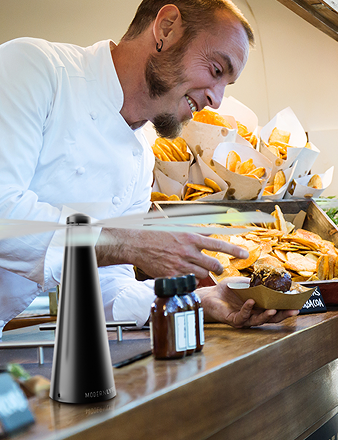
You're probably dealing with downtime right now, even if nobody has labeled it that way.
A buffet attendant keeps swatting at flies instead of replenishing the station. A POS terminal lags just long enough to create a line. A battery-powered tabletop device cuts out for a moment, then starts again, and the team shrugs because it “came back.” None of those issues looks dramatic on its own. Together, they drag service down, distract staff, and chip away at guest confidence.
That's the trap. Most operators look for one big failure. In hotels, restaurants, and events, the more dangerous pattern is often a string of small interruptions that keep stealing attention during the busiest hour of the day. If you want to learn how to reduce downtime, start by widening your definition of it. Downtime isn't only a dead oven or a network outage. It's also the repeated friction that forces your team to stop, reset, explain, improvise, and recover in front of the guest.
Beyond Big Failures The Hidden Cost of Micro-Downtime
At a catered outdoor reception, the service can look fine from ten feet away while the floor feels like it's slipping. One table wobbles, a card reader hesitates, a server leaves the buffet to find extra backup gear, and guests start hovering because flies are getting near the food. No single problem shuts the event down. But each one pulls a staff member off task.
That's micro-downtime. It's the short interruption that lasts seconds or a few minutes, then disappears before anyone logs it. Most content focuses on catastrophic “big” downtime events and misses the cumulative effect of micro-stops under five minutes in dining and event settings. For low-tech assets, visual escalation and two-minute standup meetings at the line can be more effective than automated monitoring, as noted by Vorne's guidance on reducing downtime.
What micro-downtime looks like in hospitality
It usually shows up as:
- Short resets: A host stand printer stalls and needs to be restarted.
- Guest-facing interruptions: Staff pause service to handle pests, replace a weak battery, or move guests away from a problem area.
- Workflow breaks: A bartender walks away to troubleshoot instead of serving the next order.
- System handoffs: Online orders need manual correction because integrations are clunky, which is why many operators look for ways to connect delivery apps to POS before those small entry errors turn into repeated service delays.
Small failures rarely stay small during a rush. They spread by stealing labor from the next task.
Big outages get attention because they're obvious. Micro-downtime is harder to spot because the team absorbs it in real time. That's exactly why it matters. Guests don't care whether your disruption came from a major breakdown or ten tiny ones. They only see hesitation, inconsistency, and a service experience that feels less controlled than it should.
Pinpoint Your Most Disruptive Problems
Downtime is often addressed by memory. That's a mistake. The loudest issue is not always the one doing the most damage.
The practical way to diagnose disruption is the Pareto Principle. In downtime analysis, 20% of failure causes typically generate 80% of total downtime, and organizations that sort unplanned events by frequency and cost, then fix the top 20% of problems, report 30–50% downtime reductions within the first year according to Volpis on fleet downtime reduction.

Stop tracking only major breakdowns
In hospitality, your log should include both the dramatic failures and the annoying repeat interruptions.
Track these in one place:
| Interruption type | What to record | Why it matters |
|---|---|---|
| Equipment issues | Time, location, asset, symptom, who responded | Shows recurring weak points |
| Service delays | Shift, station, guest impact, workaround used | Reveals friction the maintenance log misses |
| Pest-related disruptions | Area, time of day, weather conditions, response taken | Identifies predictable exposure windows |
| Tech slowdowns | Device, system affected, duration, recovery step | Separates one-off glitches from repeat failures |
Keep the categories simple. If the team needs five minutes to decide which code to use, they won't log the event.
Look for repeat pain, not random noise
A useful review sounds like this:
- The patio ice machine fails on peak heat days
- The same payment terminal freezes during outdoor service
- The buffet line needs repeated intervention at dusk because pests start hovering
- Banquet staff keep replacing batteries mid-event because pre-shift checks are inconsistent
That's the short list. Not everything deserves the same attention.
Operational rule: If a problem repeats, interrupts service, and forces staff to improvise, it belongs on your downtime board even if the interruption only lasted a minute.
A lot of managers already track labor, covers, and ticket times. Add interruption patterns to the same review rhythm. If you need a sharper framework for reading service performance, it helps to align downtime logging with broader hospitality performance metrics.
Use post-mortems that don't turn into blame sessions
When a disruption repeats, gather the people who were there. Don't ask who messed up first. Ask what failed, what the guest saw, what workaround the team used, and what should change before the next shift. If your team needs structure for those conversations, this guide to effective post-mortem facilitation is worth using.
The point isn't paperwork. The point is focus. Once you know which few problems are responsible for most of the operational pain, your maintenance effort, training time, and backup planning become much easier to aim.
Build a Proactive Maintenance Schedule That Works
Reactive maintenance feels productive because people are moving. It's also expensive in labor, attention, and guest experience. Good operators don't wait for visible failure on guest-facing assets.
In hotels, the unofficial maintenance rule is 80/20. Dedicate 80% of staff time to preventive maintenance and 20% to unplanned issues, which significantly reduces costly repairs and guest-facing downtime according to IMEG's hospitality maintenance guidance.

Start with the assets guests notice first
Don't build your first schedule like an engineering thesis. Start with the things that create visible service disruption when they fail.
A practical hospitality list usually includes:
- Front-of-house tech: POS terminals, receipt printers, handheld devices, guest Wi-Fi touchpoints.
- Kitchen essentials: Refrigeration, hot holding, prep equipment, temperature-monitoring points.
- Comfort systems: HVAC in dining rooms, event spaces, and guest corridors.
- Small but exposed assets: Coffee equipment, mini-fridges, buffet tools, battery-operated tabletop devices, and outdoor service gear.
If you need a simple framework to map those checks into daily, weekly, and monthly tasks, a structured equipment maintenance schedule keeps the routine usable.
Use three layers, not one giant checklist
The schedule should fit the pace of the operation.
Daily checks
These are fast and visible. Staff or supervisors can handle them.
- Power and battery readiness: Confirm charge levels or backup units before service.
- Cleanliness and obstruction checks: Dust, grease, crumbs, and airflow blockages create preventable failures.
- Function test: Turn it on, run it briefly, verify normal operation before guests arrive.
Weekly checks
These go a level deeper.
- Inspect wear points: Look for frayed cords, loose fittings, weak switches, or slow startup.
- Review repeat complaints: Match guest-facing issues to the equipment used in that zone.
- Test backup items: Spare devices and replacement accessories are useless if nobody confirms they work.
Monthly checks
Managers usually slip here. Don't skip it.
- Review maintenance history: Which assets are interrupting service more than once?
- Adjust frequency: If an asset repeatedly drifts, inspect it more often. If it's stable, keep the schedule simple.
- Replace before failure: Consumables and high-use parts should not reach the point of visible breakdown.
If the maintenance program only lives in a spreadsheet, it won't survive a busy season. The usable schedule is the one supervisors can run in real time.
For smaller guest-room and beverage equipment, even niche maintenance routines matter. A focused guide like unlock peak Keurig performance is a good example of how small appliance care prevents outsized guest complaints.
What doesn't work is overbuilding the system on day one. What works is a short list, clear ownership, and a review habit that catches drift before the guest does.
Empower Your Staff to Prevent Interruptions
The best maintenance plan in the building won't save service if the team treats small failures as “not my department.”
Human error accounts for approximately 30% of all unplanned downtime in industrial operations, and organizations that run regular training programs see measurable improvement in operation and faster incident resolution, which lowers MTTR, according to PagerDuty's downtime reduction overview.

Train for recognition, not just response
Organizations typically teach what to do after failure. Fewer are taught how to spot the warning signs before service takes a hit.
Staff should know how to recognize:
- Battery fade: Slower startup, weaker performance, inconsistent runtime.
- Mechanical drift: New noise, wobble, resistance, vibration, or blocked movement.
- Service risk signals: Flies near food zones, recurring resets at one station, devices that only work after fiddling.
That training needs plain language. “The patio unit is fading and needs swap-out” is better than vague talk about something “acting weird.”
Standardize the language on the floor
When a problem appears, staff need one way to call it.
Use a simple format:
- Asset or station
- What's happening
- Guest impact
- What's needed now
Example: “Buffet left side, airflow unit is intermittent, flies are approaching food, need immediate replacement.”
That kind of phrasing cuts confusion fast. It also helps supervisors separate inconvenience from real service exposure.
Teams prevent downtime when they know what normal looks like, what early failure looks like, and who owns the next move.
Build the habit in pre-shift huddles
The strongest downtime prevention tool in hospitality is often the shortest one. A tight pre-shift huddle can flag weak spots before the room fills.
Cover things like:
- Known risks tonight: Outdoor stations, weather exposure, heavy banquet volume, fragile equipment setups.
- Assets under watch: The unit that needed a reset yesterday, the terminal with intermittent lag, the station likely to draw pests at dusk.
- Backup location: Who has spares, where they're stored, and who can authorize a swap immediately.
After that briefing, the team is faster because they aren't surprised.
A short visual example helps reinforce that standard in training sessions:
Give staff permission to act
Frontline teams lose time when they have to ask for approval on every minor disruption. Set clear boundaries instead.
Let staff:
- replace a failing small device with a tested spare,
- move a guest-facing setup before the disruption becomes visible,
- escalate immediately when food hygiene or guest comfort is affected,
- log the issue after service if the immediate action protected the guest experience.
What doesn't work is punishing people for reporting small issues. That teaches silence. What works is rewarding early escalation, clean handoffs, and fast swaps that stop a minor interruption from becoming a floor-wide distraction.
Develop a Rapid Recovery Plan for Common Failures
Even strong operations still get hit. The difference is recovery speed.
A rapid recovery plan isn't a thick binder nobody opens. It's a short checklist for the failures that happen in real life, written for the people who will use it during service. For commercial kitchens, downtime is reduced by installing temperature sensors with alerts in critical zones, maintaining a limited menu plan for refrigeration or cooking failures, and pre-vetting repair providers that offer emergency response availability, as outlined by The PKI Group on restaurant continuity planning.

Build checklists for the failures you already know
Don't chase rare scenarios first. Write recovery cards for the disruptions your team has experienced.
A strong starter set includes:
- POS slowdown or outage
- Refrigeration issue during service
- Oven or cooking line failure
- Pest pressure at buffet or outdoor dining station
- Power loss to a small but guest-facing device
- Staff shortage caused by an urgent equipment issue
Store those playbooks where the floor can reach them. A digital file buried in a manager's inbox isn't a recovery plan. A shared, visible set of troubleshooting guides is.
Keep each checklist brutally simple
A useful recovery checklist answers four questions:
| Question | What the checklist should say |
|---|---|
| Who leads? | Name the role, not just “management” |
| What happens in the first minute? | Immediate containment action |
| How does service continue? | Backup workflow, limited menu, manual process |
| Who communicates? | Staff, guests, vendors, internal leadership |
For example, if refrigeration fails mid-service, the checklist might direct the chef or manager on duty to verify product safety, shift to the limited menu immediately, call the pre-vetted repair provider, and reassign one team member to guest communication instead of letting five people improvise at once.
Plan around continuity, not perfection
Your goal in a failure isn't to run a perfect operation. Your goal is to protect safety, keep service coherent, and reduce visible chaos.
That's why practical recovery plans include:
- Backup gear that's already tested
- Repair contacts with real emergency availability
- Alternate production workflows
- Clear guest messaging for changed service
- Defined authority to make fast decisions
Recovery fails when everyone is waiting for the same manager to solve everything at once.
What doesn't work is writing generic crisis language. “Assess the situation and proceed accordingly” is useless at 7:15 p.m. on a packed terrace. Your team needs direct instructions, role ownership, and fallback options they've already seen before.
Shifting Your Mindset from Reactive to Resilient
The operators who handle downtime best don't rely on heroics. They build systems that absorb disruption without letting the guest feel the full impact.
That mindset matters because hospitality rarely falls apart all at once. More often, the operation gets worn down by interruptions, patch jobs, delayed decisions, and recurring weak points that everyone has learned to tolerate. If you're serious about learning how to reduce downtime, the shift is simple to say and harder to live: stop treating downtime as a maintenance event and start treating it as an operating standard.
Key principles for resilient operations
Treat small interruptions as real downtime
If a recurring two-minute problem keeps pulling staff away from guests, it counts. Log it, review it, and fix the cause instead of accepting it as “part of service.”
Put ownership close to the floor
The best signals come from the people running the station. Supervisors need to make it easy for staff to report abnormalities early and act within clear boundaries.
Prevent what you can see coming
A weak battery, a station prone to pests, a terminal that lags in outdoor service, a piece of equipment that starts each weekend already under strain. None of that is random. Resilient teams look for patterns and intervene before the shift gets busy.
Resilience is not the absence of failure. It's the presence of preparation.
Keep the plan usable
Long procedures impress auditors. Short procedures save service. If the team can't understand the checklist in one read during a rush, rewrite it.
Review without blame
People hide problems when every review turns personal. Strong operators separate accountability from embarrassment. They ask what repeated, what the guest experienced, and what system change will prevent a replay.
What resilient hospitality actually looks like
It looks like a banquet captain who spots risk before guests cluster around the buffet. It looks like a kitchen that can move to a limited menu without panic. It looks like a service team that knows how to escalate a small issue before it becomes a hygiene problem or a guest complaint.
It also looks modern. Not flashy. Modern in the sense that the operation is direct, visible, and controlled. People know what to do. Backups are ready. Minor interruptions don't get the chance to multiply.
The best-run properties don't win because nothing ever fails. They win because failure doesn't take over the room.
That's the playbook. Track the small interruptions. Prioritize the few issues that do the most damage. Build a preventive schedule your team can run. Train staff to spot trouble early. Keep recovery checklists short and ready. When you do that consistently, downtime stops being a surprise and starts becoming something the operation knows how to contain.
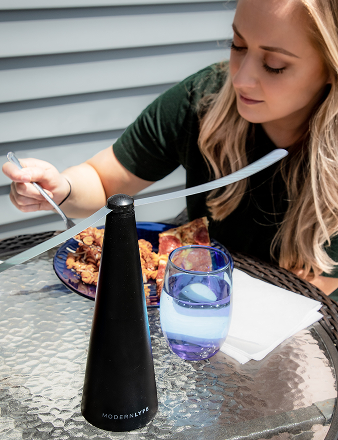
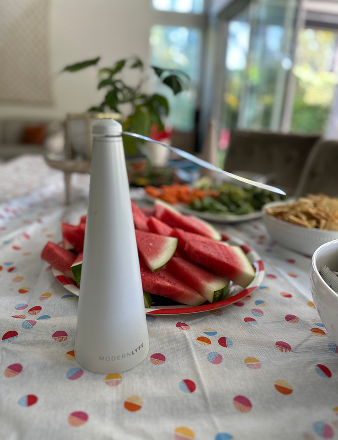
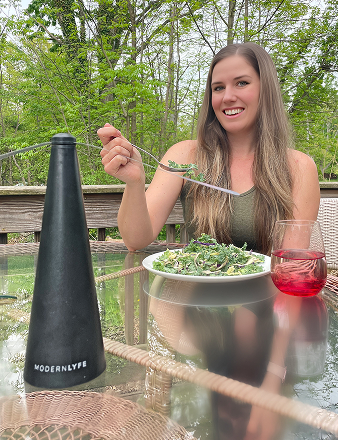
If your operation needs a low-maintenance way to protect food presentation and guest comfort in dining rooms, buffets, patios, and event setups, MODERN LYFE offers quiet, battery-operated fly fans built for hospitality environments where small interruptions can quickly become guest-facing problems.