In 2022, the world wasted 1.05 billion tonnes of food, equal to 19% of the food available to consumers. Households produced 631 million tonnes, while food service contributed 290 million tonnes and retail contributed 131 million tonnes, according to the UNEP Food Waste Index report. That scale changes the question. How to reduce food waste isn't mainly about telling people to be more careful with leftovers. It's about measuring where food leaves the system, then redesigning purchasing, preparation, service, storage, and end-of-life decisions around what the data shows.
For hospitality operators, waste is also a workflow problem with a direct operating cost. A hotel buffet, restaurant pass, catering production kitchen, or outdoor event can lose food through over-ordering, trim, spoilage, display, overproduction, and uneaten portions. At home, the same pattern appears in a smaller system. The solution is similar in both settings: establish a baseline, identify the largest avoidable stream, and change one process at a time.
The True Scale of Food Waste and Why Measurement Matters
Households account for 60% of total food waste, according to the UN Food Waste Index. That figure matters to restaurants, hotels, caterers, and event operators because commercial kitchens control several points where edible food becomes waste: ordering, preparation, display, plating, returns, and disposal.

The same reporting estimates that the average person wastes 79 kilograms of food per year, while household food waste represents more than one billion meals each day globally. Those numbers show the scale, but they do not identify the product, station, or service period responsible. Operators need that detail before changing a forecast, portion, recipe, or replenishment routine.
Recycling and disposal are end points. Prevention starts earlier, through demand forecasting, purchasing controls, portion standards, and buffet production rules. A kitchen that tracks what is discarded can test whether smaller batches, different pan sizes, or revised par levels reduce waste without reducing availability or guest satisfaction.
Waste reduction needs an operating baseline
The European Union's 2014 policy impact assessment framed food-waste reduction as an operational target. Its roadmap proposed halving edible food waste by 2020 across retail, food service, and consumption sectors, representing roughly 32 million tonnes of potential reduction in the assessment. It projected that EU food waste would increase from about 89.3 million tonnes in 2006 to 126.2 million tonnes in 2020 without stronger intervention. The European Commission impact assessment also identifies losses between harvest and retail as an upstream issue, citing an FAO estimate that about 13.2% of food is lost at that stage.
A global estimate cannot show a chef which station is wasting the most product. The operation needs its own baseline, built from consistent records rather than visual impressions. Without that baseline, managers may focus on conspicuous plate waste while missing spoilage, overproduction, or purchasing errors.
Operational rule: If waste isn't categorized and weighed, it's an impression, not a management metric.
Record each discarded item by outlet and meal period, then classify it as prep trim, spoilage, buffet or display waste, plate waste, or overproduction. Link the category to the relevant decision, such as a supplier order, recipe yield, forecast, service format, or storage failure. That connection turns food waste reduction into a series of measurable workflow changes rather than a general sustainability goal.
Establishing Your Waste Tracking Baseline
A useful baseline starts with the bin, not the spreadsheet. For several operating days, inspect what the kitchen, event team, or household discards. Look for normalized habits such as unopened ingredients, vegetable trim, buffet pans returned with food, oversized portions, and prepared items held beyond their usable window.
Build a simple five-step audit
- Audit current bin contents. Record the item, quantity, outlet, meal period, and disposal reason. At home, keep a notebook beside the bin. In a hotel or restaurant, use a shared digital form or waste-tracking scale.
- Separate waste streams. Keep prep waste, spoilage, buffet or display waste, plate waste, and overproduction distinct. A mixed bag shows volume, but not the workflow that caused it.
- Weigh and log consistently. Weighed records are more dependable than memory or staff estimates. A live-tracking study reported average restaurant waste of 73.4 grams per customer, about 17% of daily food output. Hotels and caterers recorded 138.4 grams and 140.0 grams per customer, respectively, in the hospitality waste-tracking study.
- Analyze patterns for two weeks. Compare meal periods, menu items, stations, and service types. A breakfast buffet can produce a very different waste profile from a plated dinner in the same property.
- Set a reduction target. Start with the largest controllable stream. Tie the target to a specific test, such as reducing a batch size, changing a garnish, or adjusting a replenishment trigger.

The audit must remain practical during a busy service. Assign ownership by shift, display the categories, and review findings with the people who can change the process. Survey responses alone can understate the problem. The cited live-tracking research found differences between staff estimates and recorded waste, so a scale and routine logging provide a firmer basis for action.
Use the baseline to judge whether technology solves a defined problem. Hotel-sector guidance reports that 88% of hotel groups adopt at least one food-waste action, while 69% use operational redesign and 69% use technology to track waste. Technology still comes after the basic controls: a scale, clear categories, and consistent records.
For practical household and commercial-kitchen ideas that support a measurement program, review these tips to reduce kitchen waste from PureHQ Inc..
Keep each review focused. Ask which stream is largest, whether it is avoidable, who controls it, and what change can be tested without harming the guest experience. That discipline turns waste reduction into an owned workflow rather than a broad campaign with no measurable result.
Smarter Procurement and Storage Workflows
Waste prevention starts before ingredients enter the kitchen. Purchasing based on habit, supplier minimums, or last season's assumptions can fill a walk-in with products that demand never supports. A better workflow links each order to a current forecast, a menu requirement, an expected cover count, and the storage capacity available.
Purchase against demand, not optimism
Use short forecast cycles for events and high-variation outlets. Confirm guest counts, menu selections, dietary requirements, and service style before finalizing an order. For a home gathering, distinguish confirmed guests from hopeful attendance and build a shopping list around dishes that share ingredients. Guidance on planning cheap meals simply can help households make a realistic plan before they shop.
Flexible procurement reduces exposure to uncertainty. Choose ingredients that can move across multiple menu items, but don't confuse versatility with overbuying. A product is only flexible if the team has a defined use for it and the recipe can absorb the quantity without creating a new surplus.
Treat storage as an active control
A receiving check should verify quantity, condition, temperature, packaging integrity, and date information. Store products in the correct temperature zone, label opened or prepared items clearly, and place older stock where staff will see it first. FIFO, or first in, first out, only works when shelving, labels, and shift handovers make rotation obvious.
Use packaging that protects quality without making stock difficult to inspect. Portion bulk ingredients when practical, seal exposed foods, and separate raw products from ready-to-eat items according to food-safety procedures. A clean, organized refrigerator is not cosmetic. It prevents hidden stock from expiring and helps cooks use what the business already owns.
For a broader operational perspective on prevention, connect these workflows with food loss reduction. The strongest system combines ordering, receiving, storage, and production records rather than treating each stage as an isolated task.
Home hosts can apply the same logic with a “use first” shelf or container. Put delicate produce, opened dairy, cooked food, and ingredients approaching their quality limit in one visible area. In a commercial kitchen, use a dated prep label and a daily walk-in review. In both settings, visibility beats good intentions.
Optimizing Preparation and Menu Engineering
A menu can generate waste before a guest returns a plate. Each item has a yield, trim profile, portion specification, forecast risk, and storage requirement. The operational question is not which dishes sell. It is which dishes sell predictably, use ingredients efficiently, and can be produced close to the moment of demand.
Design for yield and cross-utilization
Compare menu demand with waste logs. A garnish used on one low-volume dish may create disproportionate trim or spoilage. A vegetable used in several preparations gives the kitchen a clearer purchasing target and more ways to use a full case. Cross-utilization works when recipes share compatible ingredients and the prep schedule protects quality.
Standardized recipes control portion size and yield. Record usable weight, trim method, batch size, serving vessel, and finished portion. Train cooks to follow the same process, then review deviations as operating data rather than treating every variance as misconduct. Inconsistent knife work and unrecorded substitutions can create waste that never appears in the theoretical recipe cost.
Replace bulk assumptions with controlled production
Large batches protect speed during busy periods, but they also magnify forecast errors. Smaller batches, shorter production runs, and clear replenishment points let the kitchen respond to actual demand. The trade-off is coordination. A just-in-time approach fails without a prep plan, holding standards, and reliable communication between front and back of house.
FAO guidance reports that plate waste represents 52% of waste in boutique hotels, 54% in hotels, and as much as 74% in restaurants, according to its hospitality food-waste guidance. Menu engineering therefore has to include portion design. A popular dish can still produce avoidable waste when its standard serving regularly exceeds what guests finish.
The same guidance cites a hotel-sector study in which organizations that measured waste and reviewed the results for management reduced food waste by an average of 44% and food costs by 56%. The practical sequence is clear: measure the item, test a smaller or more useful format, monitor guest response, and retain the change only when quality remains acceptable.
At home, apply the same method to versatile base ingredients. Prepare a manageable quantity of grains, sauces, roasted vegetables, or proteins, then assign their next uses before cooking. Batch preparation without that plan creates a larger quantity of leftovers.
Rethinking Service and Buffet Management
Service design determines whether prepared food reaches a guest or becomes display waste. Traditional buffets often treat abundance as value, so teams fill every tray early and keep it looking full despite uneven demand. Guests see variety. Operators see exposed food, unsold portions, and rising disposal volumes.
Compare the service models
| Service Model | Primary Waste Driver | Reduction Strategy |
|---|---|---|
| Large prefilled buffet | Overproduction and display waste | Use smaller pans, shorter production runs, and replenishment thresholds |
| Plated service | Fixed portions and returned food | Offer appropriate portion choices and review plate-return patterns |
| Family-style service | Excess food placed on the table | Stage dishes and replenish only when demand is clear |
| Live-action station | Forecast error and holding time | Cook in small batches against the queue |
| Passed or staged courses | Unclaimed portions | Match production to confirmed attendance and service timing |
Plate and display decisions deserve priority because hospitality waste often accumulates after food reaches the guest or service line. Plate waste can represent a large share of that total, reaching 74% in restaurants, as reported in the FAO hospitality guidance. The operational response is not to serve insufficient portions. Separate perceived abundance from the amount placed in front of each guest.
A smaller vessel or pan can maintain a full visual presentation while limiting the quantity exposed at one time. Replenish from a controlled reserve instead of topping up automatically. Set a clear low-pan threshold, and give the buffet lead authority to pause a slow-selling item without making the display appear neglected.
Protect the guest experience
Portion flexibility usually works better than reducing every serving. Offer smaller and standard portions where the menu allows, let guests request more when appropriate, and train servers to describe the choices positively. Front-of-house staff should record which items return unfinished. Those observations give the kitchen evidence for reviewing recipes, serving sizes, and presentation.
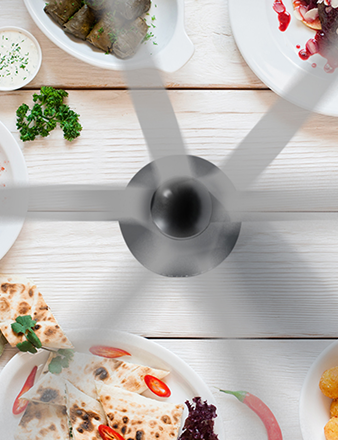
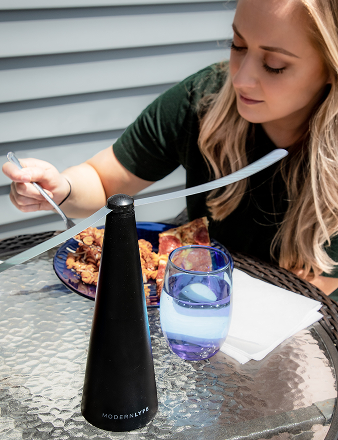
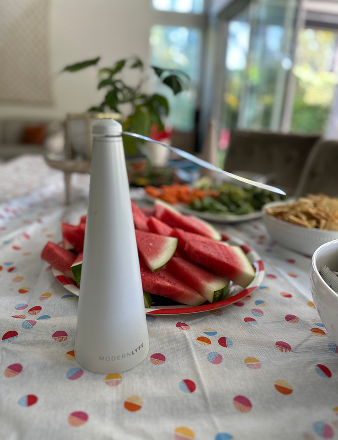
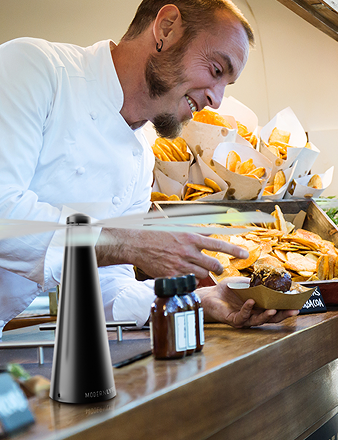
For events, staged service is often safer than placing every dish out at once. Keep family-style courses protected until demand is clear. Home hosts can use smaller platters and replenish them as guests eat, reducing exposure and preserving presentation. Outdoor service also requires protection from insects and contamination. MODERN LYFE fly fans are designed for placement near tables, buffet lines, patios, and events to help keep flies away from exposed food without dominating the presentation.
Use this buffet table setup guide to plan traffic flow, dish placement, and replenishment access. A layout that supports observation and easy movement helps staff respond to demand, remove slow-selling items, and prevent a full tray from becoming waste.
Navigating Date Labels and End of Life Decisions
A package date doesn't automatically answer the question, “Should this be discarded?” The answer depends on the label, the food, its storage history, and whether safety has been compromised. Date-label confusion is a measurable waste driver. The FDA cites research estimating that confusion over date labeling accounts for about 20% of consumer food waste, as explained in its food date-labeling resource.

Separate safety decisions from quality decisions
Treat “use-by” language as a safety instruction where applicable, especially for foods that require strict temperature control. “Best-before” generally addresses quality, such as flavor or texture, while “sell-by” supports retail inventory management. Labels don't replace safe handling, and sensory checks can't make food safe if it has been stored improperly.
For food that remains within a safe handling window, inspect the packaging, storage record, smell, appearance, and texture. Don't taste questionable food as a test. If the product has mold, a swollen package, an abnormal odor, or a known temperature-abuse history, discard it. If the label reflects quality rather than safety and the item has been stored correctly, evaluate whether it can be used in a cooked dish or another planned application.
Businesses should make the decision process visible. Label opened products, record preparation dates, train staff on the meaning of the labels used by suppliers, and keep uncertain items out of service until a responsible manager resolves the question. For a practical explanation of temperature risks, review this guide to the food safety danger zone.
Plan donation before surplus appears
Donation is not a last-minute rescue for food that has already lost its quality or safe handling history. In the United States, 43% of Americans reportedly throw out food because it is nearing or just past the package date, while only 12% of food eligible for donation gets donated, according to the ReFED 2025 Data Report. The operational fix is to establish a partner and a pickup process before an event or production cycle creates surplus.
Ask a local food rescue organization what foods it accepts, how it wants items packaged, what documentation it needs, and when pickups occur. Keep donated food separate from waste, protect it during holding, and follow applicable food-safety requirements. A donation pathway works only when staff can execute it quickly and confidently.
Finish each shift with a short checklist:
- Review the log: Confirm the largest waste stream and its cause.
- Rotate stock: Move older, opened, and prepared items into visible priority positions.
- Adjust tomorrow's batch: Use demand and waste records, not habit.
- Protect service food: Cover, label, and hold items under approved conditions.
- Escalate repeat losses: Assign an owner to any ingredient or menu item discarded repeatedly.
The U.S. USDA and EPA set a national goal in 2015 to cut food waste by 50% by 2030. The USDA explains that the EPA baseline was 218.9 pounds of food waste per person sent for disposal in 2010, implying a target of 109.4 pounds per person, as detailed in the USDA food waste FAQs. For an operator or home host, the useful lesson is immediate: track what leaves your kitchen, change the workflow that causes it, and review the result before moving to the next problem.
MODERN LYFE offers practical fly-fan solutions for restaurants, hotels, caterers, outdoor events, and home gatherings, helping protect exposed food and guest comfort during service. Visit MODERN LYFE to explore options that fit buffet lines, dining tables, patios, and event setups where food protection matters.