The hostess has just seated a four-top when gnats gather around the bread basket. One guest waves them away, another asks to move indoors, and the server starts apologizing before the first drink arrives. That isn't a landscaping problem. It's a dining-zone failure.
Effective insect repellent for patio use starts with a simple operational question: what protects the person, the table, or the entire seating area? Personal repellents protect skin. Area products create a limited, weather-sensitive zone. Airflow changes the physical conditions insects need to land. Screens and source reduction support all three.
The objective isn't total eradication. Outdoor patios are open environments. The objective is fewer insects in the seat zone, less food contamination, and a guest experience that doesn't end early. For a covered patio or pergola, the structure matters too, and this Ottawa-Gatineau pergola guide offers useful context on designing outdoor spaces around comfort, shade, and enclosure.
The Patio Bug Problem and What Actually Works
Operators usually reach for candles or sprays because they're visible, familiar, and easy to buy. Visibility isn't the same as coverage. A candle may produce a scent plume, while a spray may treat a surface, but neither automatically protects every chair around a busy table.
Start by separating interventions into three categories:
- Personal repellents sit on exposed skin. DEET, picaridin, IR3535, oil of lemon eucalyptus, PMD, and 2-undecanone are recognized options in EPA guidance on using insect repellents safely and effectively. They help the person wearing them, not an uncovered neighboring guest.
- Area repellents include candles, torches, diffusers, and labeled outdoor sprays. Their performance depends on wind, product placement, active ingredient, and how openly the patio is configured.
- Airflow-based solutions use fans to make landing difficult. Consumer Reports found citronella candles and a battery-powered geraniol diffuser ineffective in its testing, while an oscillating pedestal fan performed much better because moving air disrupts mosquito flight, as described in this Consumer Reports patio mosquito control guidance.
That leads to the stack I recommend for service operations. Airflow is the base. Barriers are the support. Topical or area products are the patch. Put the strongest protection where people sit still, eat, and wait for food. Treat the perimeter and breeding sources separately.
Practical rule: Protect the table first, then the patio.
A fan centered over a dining table can provide immediate help during service. A screen can stop insects from entering through a doorway. A skin repellent can help a guest who leaves the protected zone. Each tool has a job. Problems begin when operators expect one decorative product to perform all of them.
Why Backyard and Patio Insect Exposure Is Underestimated
Patio exposure isn't just the occasional mosquito finding an ankle. It can involve sustained pressure from mosquitoes, gnats, no-see-ums, houseflies, and yellow jackets attracted by food, drinks, waste, body heat, and carbon dioxide. Dusk often increases mosquito activity, while fermenting sugars, spills, and food residue keep flies active around service areas.
The public-health burden is larger than most hosts assume. A study summarized by the National Center for Biotechnology Information estimated 10,101,320 emergency department visits in the United States for non-canine bite and sting injuries from 2001 through 2010. Insects accounted for 67.5% of those injuries, and the same source reported an average of about 1,010,132 visits per year across that period. Poison-control systems also documented 28,087 arthropod exposure cases in 2015, although minor encounters often go unreported, according to that source.
A separate survey found that 59% of Americans encountered the most bug bites or stings in their backyards, 37% said mosquitoes and other insects kept them from spending time outside, and 86% said mosquitoes affected their outdoor experience in some way, as reported in this Outdoor Perspectives survey summary. Nearly two-thirds of respondents identified mosquito bites as the most aggravating insect bite or sting. Those findings matter because patios are exactly where people dine and socialize, not remote wilderness settings.
The microclimate drives the outcome
The patio itself creates a concentrated operating environment. Standing water in planters, umbrella bases, condensation trays, drains, and discarded containers can support mosquito pressure. Dumpsters and poorly managed waste attract flies and wasps. Warm, sheltered corners under furniture can give insects a resting zone close to guests.
A back-of-house spray-and-pray routine misses that geography. Treating the far edge of the property won't help much if insects are already resting beneath the table or entering beside the service door. The relevant control point is the space between the guest's chair, the food, and the nearest attractant.
Operational risk follows quickly. Guests shorten meals, move tables, mention bugs in reviews, or decline patio seating altogether. A single bite isn't the only issue. Repeated annoyance changes where guests sit, how long they stay, and how staff spend service time.
How Patio Insect Solutions Actually Protect
The most useful comparison isn't “natural versus chemical.” It's what does the solution protect, how quickly does it work, and where does it fail?
| Solution Type | Protection Mechanism | Coverage | Time to Effect | Best For |
|---|---|---|---|---|
| Personal repellent | Creates a treated barrier on exposed skin | The wearer only | After application | Guests or staff outside the airflow zone |
| Area repellent | Releases or applies an active ingredient around a defined area | Limited and weather-dependent | Varies by product and application | Targeted perimeter or temporary support |
| Airflow solution | Disrupts insect flight and landing | The fan's airflow cone or cross-breeze | Immediate | Tables, bars, buffets, and waiting areas |
| Screens and netting | Blocks entry into an enclosed or semi-enclosed zone | The protected opening or structure | Immediate when closed | Doorways, pergolas, tents, and dining rooms |
| Traps | Captures or reduces insects over time | The trap's attraction range | Gradual | Perimeters, waste zones, and population reduction |
Personal products have a clear role. The EPA lists DEET, picaridin, IR3535, oil of lemon eucalyptus or PMD, and 2-undecanone as effective repellent ingredients, with label directions controlling application and reapplication. The EPA mosquito-control overview also reinforces the distinction between products intended for people and broader outdoor control measures.
Concentration affects duration, but more isn't automatically better. EPA says registered DEET products range from 5% to 99%, while Oregon State University's National Pesticide Information Center notes that CDC guidance recommends DEET products at 20% or more and that products above 50% DEET provide no extra protection. For short outdoor meals, a Repellent Information concentration guide gives a planning benchmark of up to two hours of bite protection from a 10% EPA-registered repellent.
Airflow is different because it protects the zone rather than the skin. It doesn't need to coat a guest, scent the table, or wait for a population to decline. That makes it the strongest first response during active service.
Chemical Sprays, Candles, Torches, and Traps
Chemical sprays can work when applied to the correct surfaces and used according to the label. They may target resting areas, vegetation, cracks, or a patio perimeter, but dining tables require discipline. Never treat food-contact surfaces casually, and don't spray while guests, uncovered food, or beverages occupy the area.
Essential-oil formulas appeal to hosts who want a botanical option, but public-health guidance says the effectiveness of non-EPA-registered repellents, including some natural products, isn't known, as reflected in the CDC mosquito-bite prevention guidance. Use a registered product when the label and intended application matter. Treat decorative scent as an atmosphere choice, not a performance guarantee.
Candles and torches
Citronella and soy candles can support the mood of early-evening dining, but their protective footprint is small and inconsistent. A flame produces a localized plume that wind can move away from the table. Tiki torches face the same problem, with added fire-code considerations near umbrellas, awnings, overhead lighting, linens, and crowded walkways.
The right placement is the perimeter, not the center of a food table. Keep flames away from traffic and combustible materials, follow local requirements, and don't assume adding more flames creates a sealed barrier. For a practical look at the limited role candles may play around flies, see these candles designed to get rid of flies.
Traps
Traps earn their place when they reduce pressure away from guests. CO2-baited mosquito traps can help with longer-term population management. UV zappers may attract insects toward the device, but they aren't a substitute for immediate seating-zone protection. Sticky boards and glue traps can help with flies and gnats near service corridors, refuse areas, or food-preparation boundaries.
Don't place a loud, visually unpleasant trap beside a guest's plate. Put it where insects originate or gather, then monitor whether captures justify the device.
| Method | Effective Radius | Duration | Best Placement |
|---|---|---|---|
| Labeled outdoor spray | Product and application dependent | Label-dependent | Perimeter, vegetation, and resting zones |
| Citronella candle | Localized plume | While burning, weather permitting | Decorative perimeter |
| Tiki torch | Localized plume | While burning, weather permitting | Open perimeter away from traffic |
| CO2-baited trap | Attraction range varies by device | Ongoing operation | Property edge or mosquito source area |
| UV zapper | Attraction range varies by device | Ongoing operation | Away from tables and food |
| Sticky or glue trap | Immediate at the trap surface | Until full or contaminated | Service and waste zones |
Fly Fans and Airflow-Based Patio Protection
A busy patio exposes the weakness of scent-based products quickly. Guests move, staff cross the seating area, and doors open repeatedly. Moving air is the most dependable first defense for an active dining zone because it protects the space guests occupy rather than treating the whole property with fragrance.
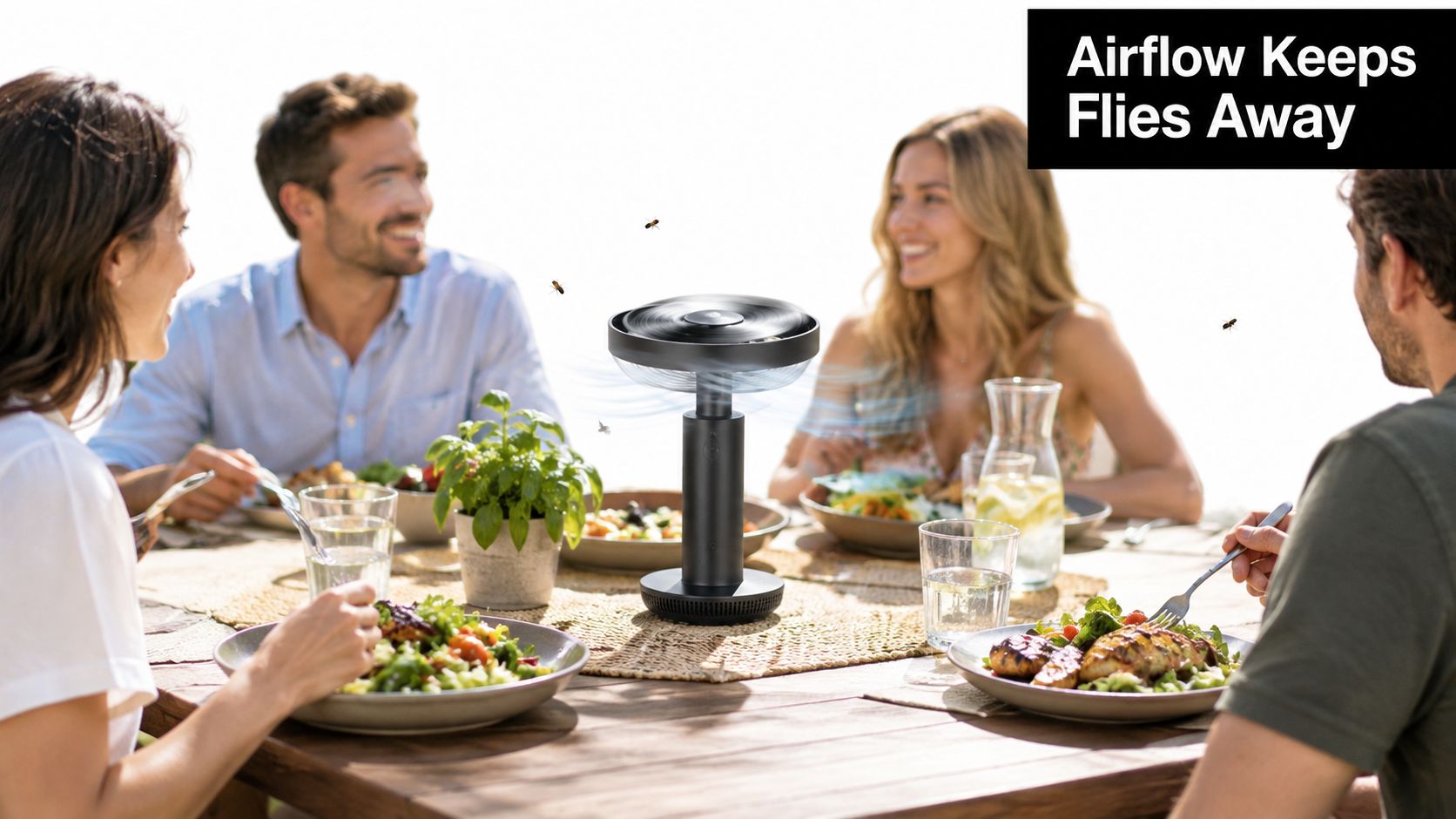
Mosquitoes, no-see-ums, and flies need controlled flight to approach, steer, and settle. A fan disrupts that sequence before an insect reaches skin or food. It starts working as soon as it is correctly positioned and switched on, with no waiting period and no chemical residue in the dining area.
Match the fan to the layout
A ceiling fan suits a covered patio when its airflow reaches the full seating footprint. Tables should sit beneath the moving air, not beyond the fan's effective pattern. Floor fans offer more flexibility on open patios, but staff must secure each base and route cords away from walkways. Clip-on fans fit small tables, host stands, and food stations where a larger unit would obstruct service.
For a restaurant, center a commercial fan over the table or direct airflow across the table's downwind edge. A 42-inch commercial fan can outperform a ring of candles when it creates a steady cross-breeze through the seating zone. Aim the air at guests sitting still and at exposed food. Blowing randomly into the yard wastes coverage.
Outdoor bars need airflow at ordering and standing zones, where guests linger with drinks. At buffet lines, direct air across the front of the food and along the guest approach. Keep the setting strong enough to disrupt insects without sending napkins, menus, or uncovered dishes across the service area.
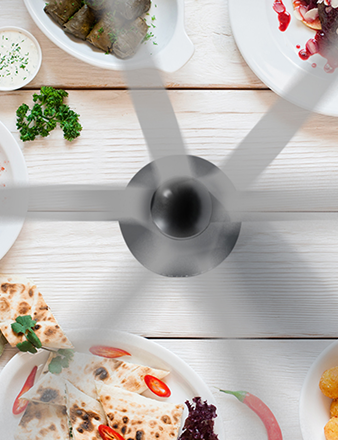
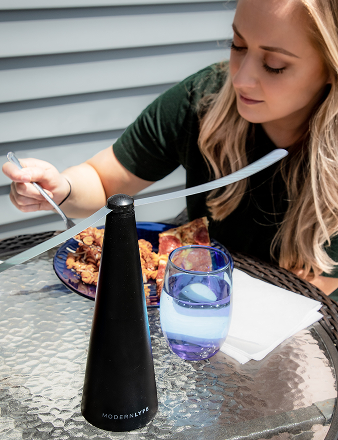
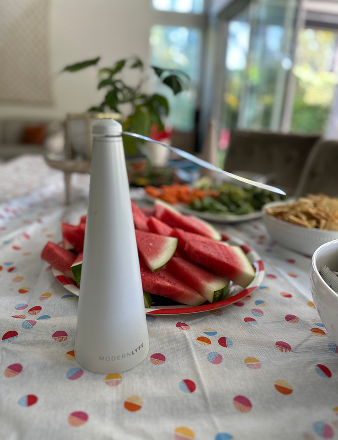
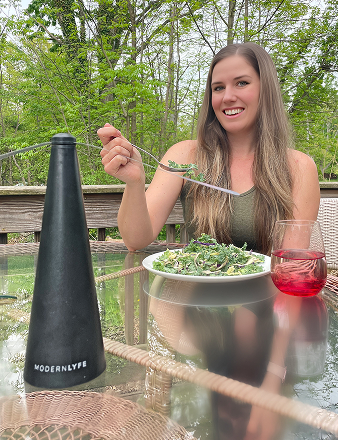
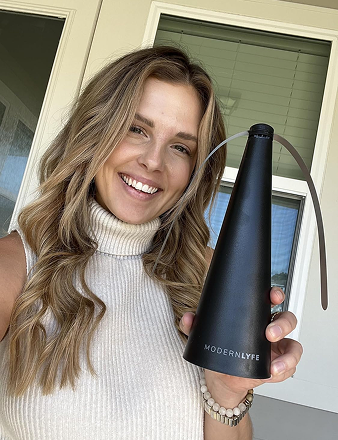
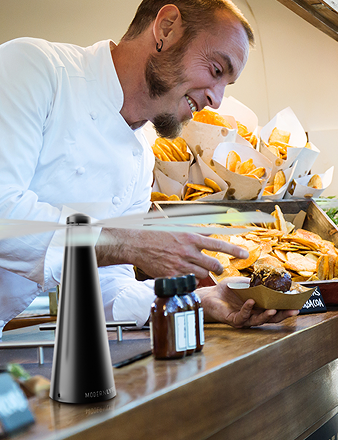
Multiple tables require overlapping airflow paths. Eliminate dead pockets between fans instead of adding isolated units that leave gaps. A Modern Lyfe-style table fan fits a smaller dining or food-service position without adding chemicals to the guest area. Its practical advantage is placement flexibility, not magic coverage. This guide explains whether fly fans work in more detail.
Show staff the difference between air aimed across a table and air aimed past it. That brief demonstration improves setup consistency during service.
Maintain the protection
Clean blades regularly. Dust reduces airflow and can spread debris around food. Inspect motors and power connections after humid service, and use equipment rated for the intended outdoor environment. Keep noise below the level that competes with conversation, especially at intimate tables and hotel events.
Fans protect guests inside the airflow cone. People walking between tables, standing beyond the breeze, or sitting in a dead spot remain exposed. Use airflow as the base layer, then cover gaps with physical barriers or personal protection.
Screens, Netting, Covers, and Source Reduction
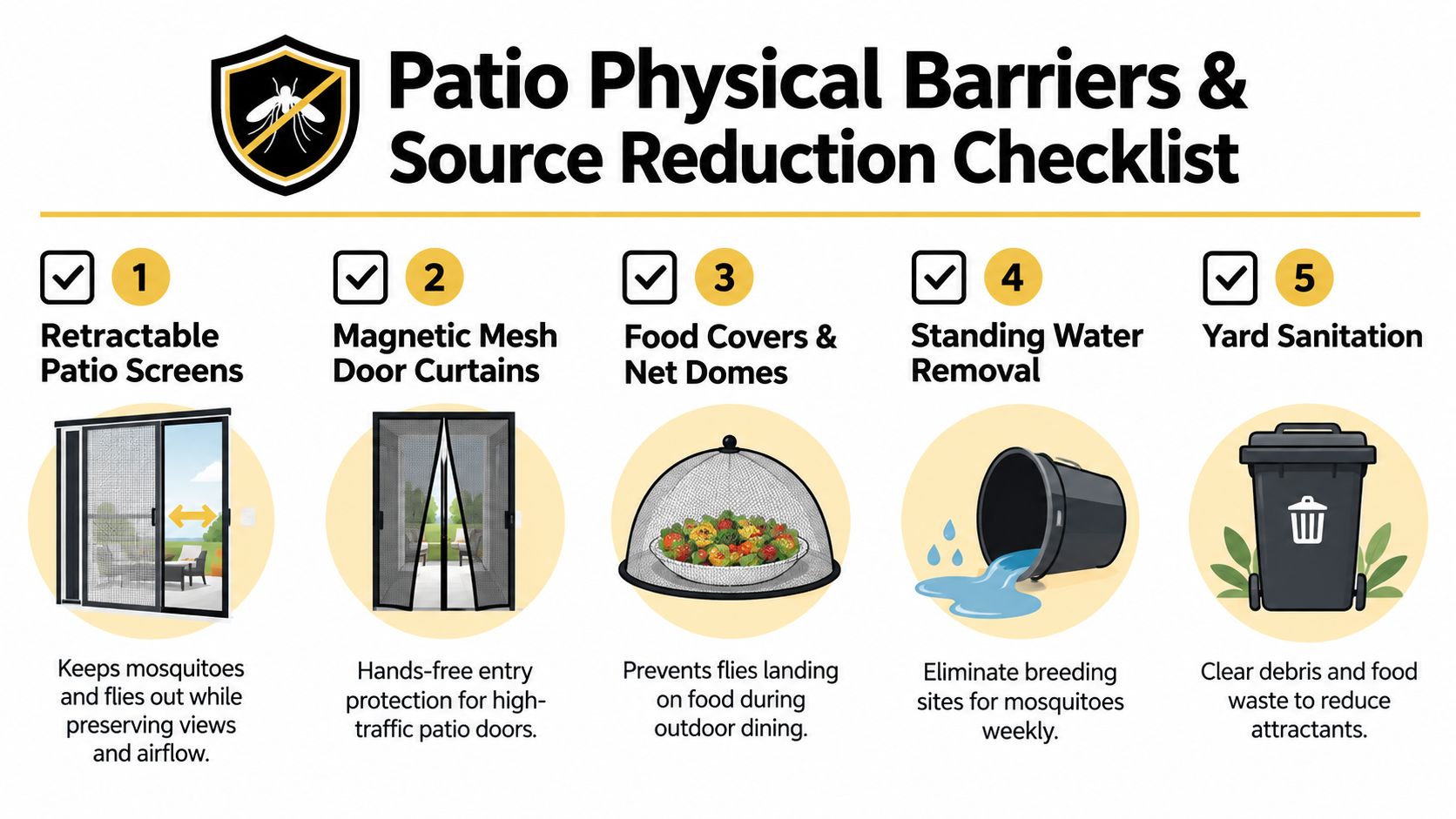
Physical barriers are the cheapest insurance many patios overlook. A retractable screen can preserve the view while blocking an open side. Magnetic mesh curtains help at high-traffic doorways because staff and guests can pass without handling a latch. Zippered enclosures provide stronger separation for seasonal service, while permanent screen rooms offer the most consistent protection but may affect ventilation, sightlines, permits, and code compliance.
Event tents and pergolas need flexible treatment. Use mesh panels with weighted edges where wind regularly lifts curtains. Food covers and net domes stop flies from landing directly on dishes, which matters even when the surrounding air remains open.
Remove the reasons insects arrive
Inspect the area within 50 feet of seating for standing water and waste. Check planters, condensation trays, flat umbrella surfaces, blocked drains, French drains, buckets, and neglected containers. Empty or correct the source before service, rather than compensating with stronger scent or spray.
Lighting also changes the experience. Warm LEDs in the 2000K to 2700K range generally create a less insect-attracting atmosphere than cool blue-white lighting, while still supporting a comfortable dining environment. Keep trash cans away from guest tables, close lids, clear spills, and remove food waste promptly.
A patio beside a breeding or feeding source will defeat a decorative repellent.
Screens need maintenance too. Dirt and grease reduce visibility and can make mesh doors stick, so use these screen cleaning tips from Aloha Window Bros when planning routine upkeep. Clean barriers preserve airflow, appearance, and reliable closure.
Matching Solutions to Restaurants, Events, and Home Use
A restaurant shouldn't buy the same stack as a homeowner hosting a barbecue. The right setup depends on guest density, service duration, staff control, noise tolerance, and whether food stays exposed for long periods.
| Scenario | Primary Solution | Secondary Support | Key Trade-Off |
|---|---|---|---|
| Restaurant patio | Modern Lyfe-style fly fan for each 15 to 20 seat zone | Targeted zappers near trash, candles as ambient backup | Requires placement checks and routine cleaning |
| Hotel event or wedding | Perimeter airflow around the tent or reception edge | Pre-event landscape treatment, screens, food covers | Large open areas need more equipment and coordination |
| Home gathering | One directional fan aimed at the main table | Torch perimeter and personal repellents for standing zones | Guests outside the airflow remain exposed |
For restaurants, prioritize the revenue-producing seat zone. A fan covering a table is more valuable than a trap hidden behind landscaping because the fan changes the guest's experience during service. Place traps near waste and service edges, not beside plates. Staff should check alignment during opening and reset equipment after furniture moves.
Large events need perimeter control. Treat edges before guests arrive when a labeled product and qualified applicator are appropriate. Use airflow around entrances, buffet lines, and standing areas rather than trying to push air across an entire open field. Keep fire features away from fabric, exits, and guest circulation.
Home hosts can keep the setup simple. Aim one directional fan across the main dining table, use a torch perimeter only where local safety rules allow it, and make personal repellent available for guests who stand away from the table. The effective fly-control guidance is useful when deciding whether a table fan, perimeter device, or sanitation change should come first.
Cost and labor should be judged qualitatively. Fans require an equipment purchase, placement, power, and cleaning. Screens require installation and upkeep but reduce repeated treatment. Candles and sprays may seem inexpensive individually, yet their recurring labor and inconsistent coverage make them weak foundations for nightly hospitality.
A Practical Patio Pest Control Checklist
The one-product mindset fails because insects don't use one access route. They arrive from standing water, waste, doorways, landscaping, and open air. Your response should follow the same logic.
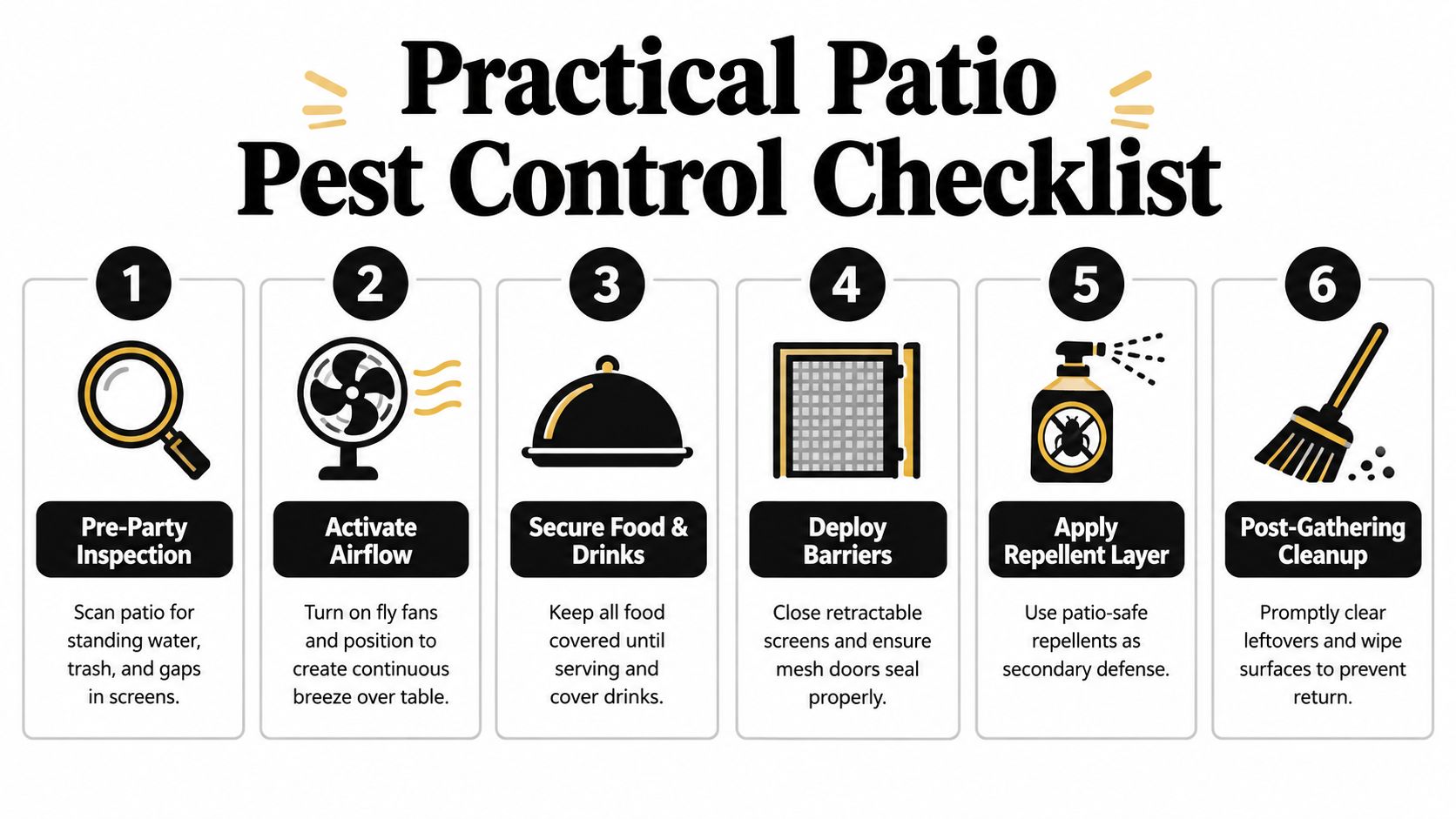
Before the next gathering:
- Inspect the perimeter: Scan within 50 feet of seating for standing water, trash, food residue, and gaps around screens.
- Activate airflow: Turn on fans and direct a continuous breeze across the table, buffet, bar, or host stand.
- Secure food and drinks: Keep food covered until serving and use covers for exposed beverages where practical.
- Deploy barriers: Close retractable screens and confirm magnetic or zippered mesh doors seal cleanly.
- Apply the repellent layer: Use labeled skin or patio products as secondary protection, not as the entire plan.
- Clean after service: Clear leftovers, wipe surfaces, empty waste, and remove conditions that bring insects back.
For a broader approach to creating comfortable outdoor spaces, these backyard patio design ideas for California and Arizona can help connect layout, shade, screening, and maintenance decisions.
Guest comfort is a hospitality decision, not just a pest-control task. Put protection where people eat, verify it during service, and layer the system in the right order.
MODERN LYFE offers chemical-free fly fans designed for tables, buffet lines, patios, restaurants, hotels, and home gatherings. Review the available airflow-based options at MODERN LYFE and choose a setup that protects the food and seating zone your guests use.