If you've ever watched a patio meal start smoothly, then spent the next half hour swatting flies away from drinks, bread, and plated food, you already know the problem isn't just annoying. It breaks the service, distracts guests, and puts pressure on your team to solve something that usually has more than one cause. The fix that holds up is layered, not improvised, and it starts before the first fly lands.
Why Fly Control Matters Beyond Comfort
Keeping flies away from patio dining is part of food safety, not just hospitality. The FDA Food Code 2022 says food-establishment premises must be kept free of insects, rodents, and other pests, and operators should inspect incoming food and supplies, check the premises for pest evidence, and remove conditions that let pests hide and breed (FDA Food Code 2022).
For temporary outdoor service, the same Code recognizes 16-mesh screens, properly designed air curtains, or other effective means for protecting openings from flying insects. It also says insect-control devices must be placed so insects or fragments cannot fall onto exposed food, clean equipment, utensils, linens, or unwrapped single-use items.

That matters because a patio setup cannot be treated like a decoration problem. It is a live food-service environment, and the standard is practical, not theoretical. If you want a useful companion point of view on the guest-facing side of the issue, this patio food-protection article covers the same problem from the diner's angle.
Research backs up why barriers matter. A CDC-published study found that when fly screens were introduced on Danish broiler farms, Campylobacter-positive flocks dropped from 41.4% to 10.3%, and the researchers estimated that screens on all Danish broiler farms could have prevented 77% of summer Campylobacter-positive flocks nationally (CDC-published study). Poultry houses aren't patios, but the mechanism is the same: flies are a controllable pathway, not just a nuisance.
Practical rule: source control, protected food, and a barrier that does not create a new contamination risk belong together. A plan that skips one usually breaks down at service speed.
Eliminating Attractants Around Your Patio
The fastest way to cut fly pressure is to make the patio less interesting to flies in the first place. House flies can complete a generation in as little as 7 to 10 days (Purdue Extension), so a messy bin or a missed cleanup does not stay a one-day problem for long. If the breeding material stays, the fly count keeps rising.
Start with the ground, the bins, and the edge of service
Inspect roughly 50 feet around the dining area for wet organic matter, overflowing bins, pet waste, compost, and food residue. That radius matters because flies do not need to breed right beside the tables to create a patio problem. They can start far enough away that staff stop checking that zone unless the routine is built into the shift.
Use tight-fitting garbage lids that control odor, clean bins on a set schedule, and move waste out before it starts warming up in the sun. Purdue Extension also recommends placing dumpsters as far from occupied areas as practical, and USU Extension recommends at least 50 feet from the building (USU Extension). That is not about appearances. It keeps the attractant source outside the dining boundary, where it is easier to control.
Sanitation beats reaction every time. If the source stays open, sprays and traps end up handling a problem that should have been removed first.
Make the service area less inviting
Clean spills immediately, especially sweet drinks, sauces, and anything sticky on floors or table edges. Keep food covered until service, and do not let dirty plates stack up near guests. After a Friday rush, sweet drink spills and stacked dirty plates can reappear within an hour unless someone is assigned to reset the service area on a timer.
If a fly problem looks like fruit flies but keeps coming back from storage or delivery areas, this fruit-fly article is a useful companion reference. The source may be different, but the response is the same, remove the attractant, contain what cannot be removed, and keep the area dry and clean.
Building Physical Barriers That Work
Once attractants are under control, exclusion becomes the next layer. On a patio, barriers fail when they are chosen for appearance alone or installed without thinking about traffic, seals, and service speed. The goal is simple, keep flies out without creating a choke point for staff.
Protect the openings first
Self-closing doors work better than relying on memory during a rush. Repair torn screens, seal gaps with weather-stripping or door sweeps, and keep every opening tight enough to stop flies from drifting into kitchens or enclosed dining rooms. For a commercial opening where an air curtain fits the layout, aim for roughly 1,500 feet per minute of airflow, as Oregon State Extension source link notes.
If you are replacing a screen system or upgrading an entry, the fit matters as much as the frame. That is where choosing a trusted screen installer becomes practical, especially when the work has to hold up under real service traffic.
Put traps where they help, not where they bother guests
Traps and fly-control devices belong at the perimeter and near waste sources, not beside plated food. Wind direction matters too. Odors should move from the trap toward the breeding source, not toward guests, and the device should stay away from buffet lines, doors, and seating.
Competing food and dumpster odors can weaken trap attraction, so a trap catching a few flies does not prove control. A device can look active while guests still swat at the table. The real test is whether the food boundary and entry points stay clear.
Using Airflow as a Fly Deterrent
Airflow helps because it makes landing harder and dries out damp spots that attract flies. On a patio, that only works as part of a layered protocol. Source removal, sanitation, exclusion, and airflow have to support one another.
Decide what the air is supposed to protect
A fan pointed across a buffet edge does a different job from one aimed at the guest boundary. If plated food is exposed, the air should protect the food zone first. If flies are hovering around diners, the device needs enough distance from plates and drinks to avoid blowing debris or making service awkward.
That trade-off matters. Airflow works best after food is covered and open-display time is kept short. The fan reduces landings, it does not replace line discipline. For layouts that need a quieter comfort layer, Task Masters Inc. shade and cooling can handle guest comfort while airflow handles fly pressure.
Keep the device in the right lane
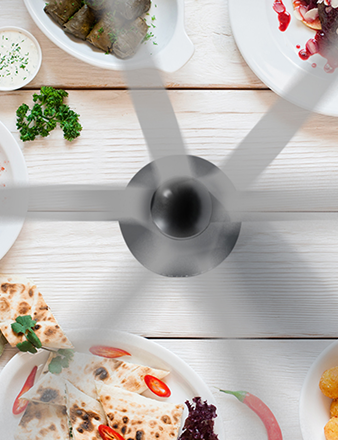
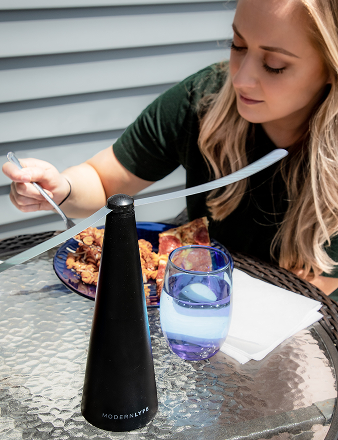
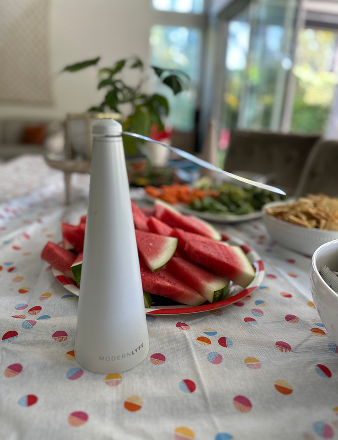
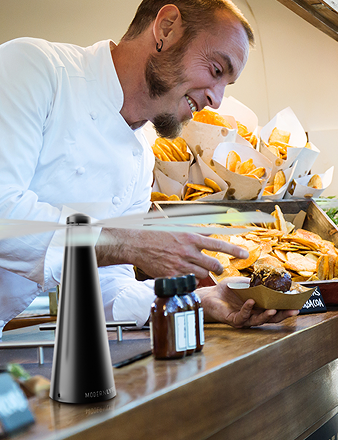
Modern Lyfe table fly fans run on batteries and create a downward airflow cone over a plate-sized zone, which is why they belong at the food boundary rather than the seating edge. Used that way, they stay clear of food-contact surfaces and away from dust, droplets, and tray traffic. For placement ideas, these outdoor fan notes are useful when you are deciding how close the unit can sit to the meal without becoming part of the problem.
Weather changes the setup fast. Rain, constant door traffic, and shifting wind can change where flies approach from, so the device has to be checked during service instead of left alone. If the airflow makes guests uncomfortable or draws attention to the table, it is in the wrong spot.
The point is practical. Use air to support clean service, covered food, and tight entry control, then adjust when conditions change.
Diagnosing Fly Type and Source
Not every fly problem is the same problem. House flies, fruit flies, and drain flies point to different breeding sources, so the fastest way to waste time is to treat them all the same.
Read the pattern before you treat it
Tiny flies near bar drains, sinks, produce, or liquor service usually suggest fermentation, drain biofilm, or wastewater issues. Larger flies around dumpsters, food waste, or open refuse point more toward house-fly pressure tied to sanitation. If flies show up near doors over and over, the issue may be entry or airflow rather than breeding nearby.
A sudden fruit-fly outbreak can come in on produce or beverage deliveries and start breeding in sweet, fermenting material even when the kitchen looks clean. That's why delivery inspection matters as much as drain cleaning. If the source arrives with the product, the patio only sees the result.
Visible flies don't always mean sloppy operations. Unexplained recurring activity does mean somebody needs to trace the source before service keeps slipping.
Match the fix to the source
Inspect produce and beverage deliveries before they hit storage. Refrigerate susceptible items, clean drains and grease-related areas, and seal waste tightly. When the source is fermentation, the answer is not just swatting more flies. It's removing the material they're using to reproduce.
The cleanest diagnosis is practical, not academic. Larger flies near refuse, tiny flies near drains or sweet goods, repeated activity at entry points. Once you know the pattern, you can stop guessing and start correcting.
Implementing a Layered Patio Protocol
A patio fly plan works only when the layers support one another. Source removal cuts off breeding, sanitation reduces attraction, exclusion blocks entry, and airflow makes landings harder. Any one of those can fail once service gets busy.
Use food handling as part of fly control
The World Health Organization says to keep clean, separate raw and cooked food, cook thoroughly, keep food at safe temperatures, and use safe water and raw materials (WHO Five Keys brochure). It also says to wash hands before handling food and often during preparation, clean and sanitize food-preparation surfaces and equipment, and protect food from insects and other animals (WHO Five Keys brochure).
For outdoor service, that means keeping prepared food covered, separating raw and ready-to-eat handling, and not leaving surfaces wet or sticky any longer than needed. It also means treating fly control as part of food protection, not as a side issue.
Hold the line during service
The WHO guidance also says cooked food, especially meat, poultry, eggs, and seafood, should reach at least 70°C (WHO temperature guidance). That matters because patio buffets and catered events leave food exposed long enough for contamination and fly contact to become real risks.
In my own service routine, I record fly counts at the same table or buffet position before opening, then recheck at 15-minute intervals after each course change, and keep the method that lowers counts without drawing flies toward guests or food. That gives the team a clear signal instead of guessing whether the patio feels better.
The same logic applies to the rest of the setup. If sanitation is weak, flies keep coming back. If exclusion is sloppy, they keep getting in. If airflow is aimed poorly, it can push them toward people or food instead of away from them.
A layered protocol is plain work, but it holds under pressure. Remove what attracts flies, block what lets them in, and use airflow only where it supports the rest of the system.
If you want patio fly control that looks clean and works during real service, MODERN LYFE builds table fly fans for outdoor dining and event setups, and that kind of tool fits naturally into a layered plan. Visit MODERN LYFE if you want a practical option to pair with sanitation, exclusion, and better patio operations.