You're an hour from doors, the guest list just jumped, and the patio kit is still a pile of coolers, cords, and a tent bag nobody has opened. That's when outdoor event supplies stop being a shopping list and start deciding whether the buffet stays safe. A missing cover, a bin parked beside dessert, or a cooler left in full sun can undo a correct cook temperature in minutes. I would build the kit as one system: food protection, insect control, and airflow working together, with quantities tied to the headcount.
The Outdoor Event Supplies Checklist by Category
Say it's 3 p.m., the air is 92°F, and the buffet is already wrong. Trays sit uncovered. The cooler is in full sun. An open bin stands beside the dessert table. Flies have a path, and the food clock is already running. The fix starts with a complete kit, not one more gadget.
| Category | Core items | Quantity rule | Practical note |
|---|---|---|---|
| Furnishings | 6 ft tables, chairs, linens and table weights | 1 table per 6 guests; 1 chair per guest plus 10% spare | Weight tables and tent poles against wind |
| Food protection | Insulated coolers, ice or gel packs, chafing dishes, mesh and dome covers, probe thermometer | 1 insulated cooler per 25 cold-food guests; 1 probe thermometer per buffet | Sets the holding window; see the next section |
| Lighting | Battery LED lanterns, string lights, buffet task lights | 1 light per 10 ft of walkway or buffet edge | Lights must hold through dusk |
| Power | Battery packs, outdoor-rated cords, GFCI-protected outlets, generator if needed | 1 GFCI-protected circuit per corded station; 1 spare battery pack per cordless device | Battery-powered devices avoid cord runs across walkways |
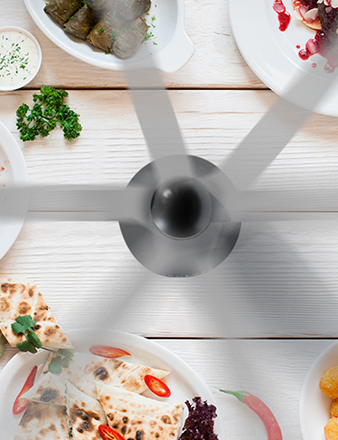
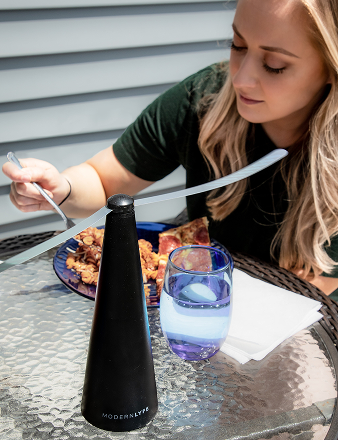
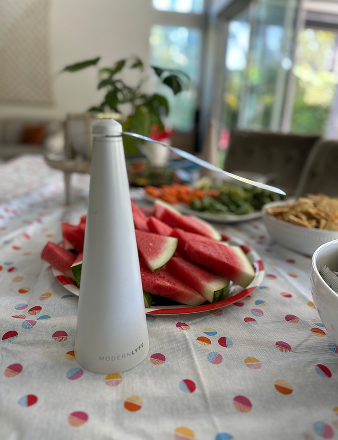
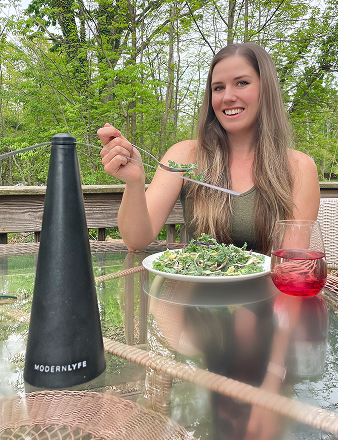
| Pest control | Lidded waste bins, quiet battery fly fans, spill kits | 1 lidded bin per 20 guests, placed away from food | Airflow supports covers and does not replace them |
| Hygiene | Handwash station, sanitizer, serving tongs, clean platters | 1 handwash station per 50 guests | Replace platters used for raw meat before serving cooked food |
| Weather cover | Canopy or tent, sidewalls, rain covers for food | Covers the full food and seating footprint plus 3 ft on each side | Tents are not pest-proof; keep food covered |
| Signage | Check-in, food-rule and restroom signs | Letter height 1 inch per 10 ft of viewing distance | Increase letter size 30-50% for glare or noise |
That demand isn't niche. In 2024, exhibitions directly involved about 317.7 million visitors and 4.7 million exhibiting companies across more than 180 countries, with direct spending of about €150 billion (about US$162 billion), according to the UFI global economic impact report. Those totals describe the exhibition economy, not outdoor-supply sales, and they still show why hotels, caterers, and venues treat temporary kit as core infrastructure.
Practical rule: A correct temperature on a probe means nothing if the tray is uncovered next to an open bin.
Multiply every row by your guest count using the sizing table below. Add a 10% spare on anything that fails outdoors, especially batteries, ice, and cords. Treat this list as the baseline. The next sections tighten the numbers, the clock, and the layout.
Sizing Tables, Chairs, Lighting and Stations by Guest Count
Use four assumptions before you rent a single chair. Seat six guests per 6 ft rectangular table and eight per 60-inch round. Order one chair per guest plus 10% spare. Plan one buffet service station per 50 guests, so a line doesn't stall and food doesn't sit out while people wait.
| Guest count | 60 in round tables | Chairs with 10% spare | Buffet service stations |
|---|---|---|---|
| 25 guests | 4 | 28 | 1 |
| 50 guests | 7 | 55 | 1 |
| 100 guests | 13 | 110 | 2 |
| 150 guests | 19 | 165 | 3 |
Worked count for 80 guests
An 80-guest reception needs 14 rectangular tables (80 ÷ 6, rounded up) or 10 rounds (80 ÷ 8). Chairs land at 88. Two service stations cover the 50-guest rule. A 120 ft walkway needs about 12 lights at one light per 10 ft. Write those four numbers on the rental order before you add linens.
The Lounge Wagon outdoor seating guide is a useful cross-check when you're choosing lounge pieces against banquet chairs, because soft seating changes both the footprint and the spare count.
When the numbers should change
- Standing reception: Cut seated chairs to about half and add high-top tables plus an extra station so guests don't bunch on one buffet.
- Windy site: Use heavier weights on every table and pole than you would on a calm lawn. A light sandbag that works indoors will skate across a patio.
- Three-hour lunch: Add a second serving line, not a longer one. A bigger single line keeps more food in warm air.
- Power: Add the running load of every device, then add 25% headroom. Prefer battery fans and lights wherever a cord would cross a guest path.
Shade changes the furniture count too. A 10 x 20 shade canopy has to cover the buffet and the aisle, not just the tables you already placed. Write the guest count at the top of the checklist. Recalculate if the count moves by more than 10%.
Holding Food Safely Outdoors Within Time and Temperature Limits
Treat the danger zone like a two-hour clock that starts the moment food leaves the cooler. Between 40°F and 140°F (about 4°C to 60°C), bacteria multiply fast. Above 90°F, that clock halves to one hour. The CDC serving guidance puts hot food at or above 140°F (60°C) and cold food at or below 40°F (4°C), and it says to discard perishable food after 1 hour when the air is hotter than 90°F (32°C), not the usual 2 hours.
| Food | Target temperature | Outdoor time limit | Equipment |
|---|---|---|---|
| Cold perishable food (salads, dairy, cut fruit, deli meat) | At or below 40°F (4°C) | 2 hours; 1 hour above 90°F | Ice bath, insulated container with gel packs |
| Hot held food (sides, sauces, grilled items) | At or above 140°F (60°C) | 2 hours; 1 hour above 90°F | Chafing dish, warming tray, grill |
| Whole cuts of beef, pork, lamb or veal (cooking target) | 145°F | Hold under the rules above after cooking | Probe thermometer |
| Ground meat (cooking target) | 160°F | Hold under the rules above after cooking | Probe thermometer |
| Poultry (cooking target) | 165°F | Hold under the rules above after cooking | Probe thermometer |
Those cooking targets come from USDA cookout guidance: 145°F for whole cuts of beef, pork, lamb, and veal, 160°F for ground meats, and 165°F for poultry.
Rules that keep the clock honest
Keep cold food in insulated containers with ice or frozen gel packs until the moment of service. Put small replenishment trays on the line. Don't park the full hotel pan in the sun because it looks fuller. Assign one person to log the time each tray left refrigeration and to probe it on a set interval, not when someone remembers.
Cooked food moves to a clean platter. The plate that held raw meat stays in the wash bin. Cross-contamination doesn't care that the grill temperature was right.
Airflow, a mesh cover, and a fly fan never restart a clock that has already run out. Food past its limit is discarded, not rescued.
More field habits sit in these outdoor food safety tips. Your holding log only needs four columns: tray name, start time, temperature, discard time. If the discard time hits before the tray is empty, pull it.
Placing Insect Control and Responding When Flies Show Up
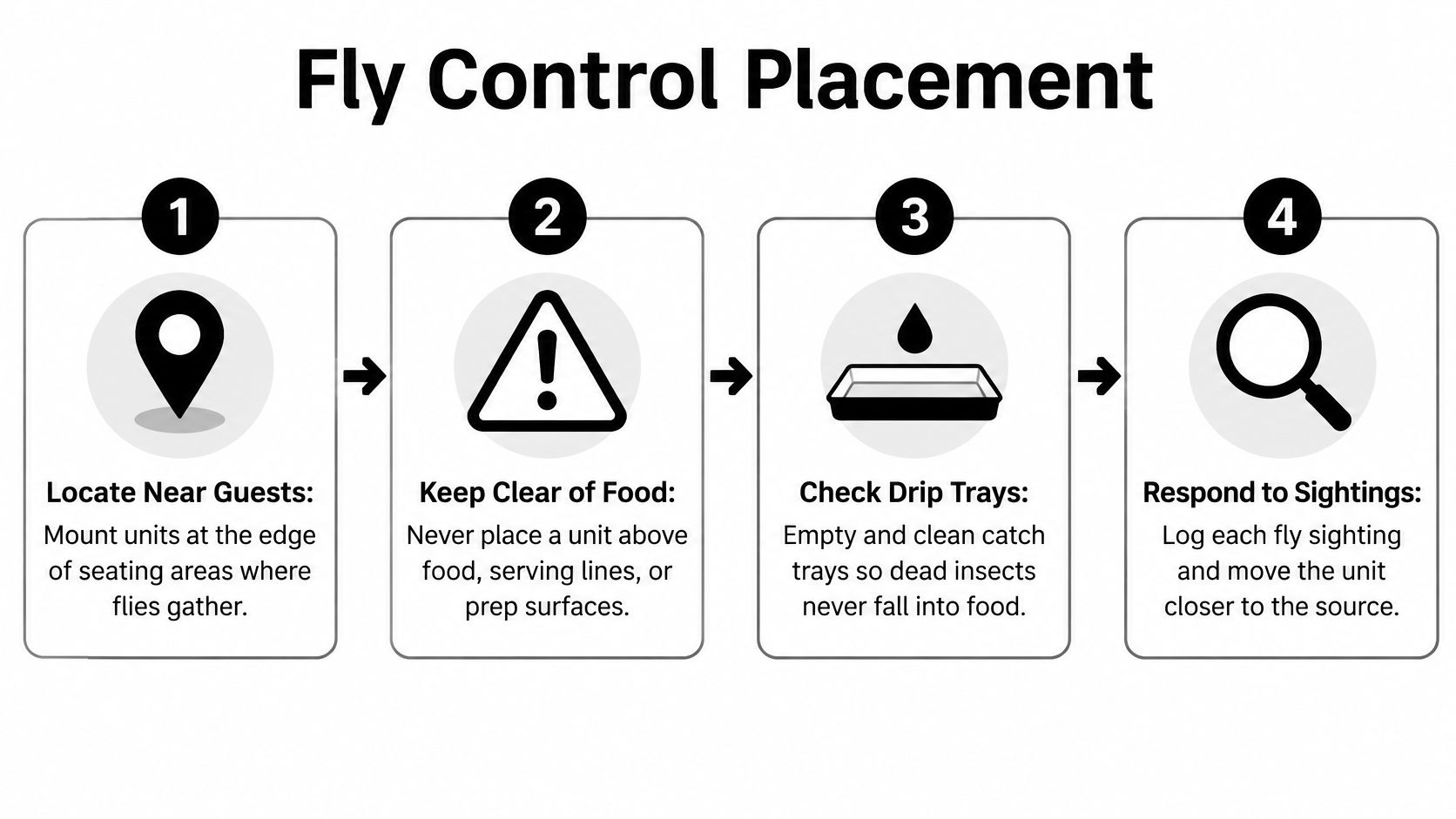
Place a fly-control device so it intercepts insects near guests and food without becoming a contamination source.
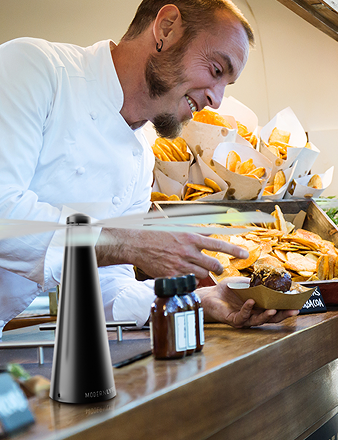
The FDA Food Code requires food to be protected from weather and insect entry, and it says insect-control devices must not sit over food-preparation areas or be arranged so dead insects or fragments can fall onto exposed food, clean utensils, linens, or unwrapped single-use articles. In practice, set battery fly fans laterally along the buffet or dining edge, offset from plating, and keep overhead cover on outdoor food-vending gear. A low-profile cordless fan belongs beside the line, not above it, and it shouldn't trail a cord across the walkway.
Response sequence during service
- Cover exposed dishes immediately. Lids or mesh go on before anyone debates whether the flies are "just a few."
- Remove food flies have repeatedly contacted. Don't wipe the surface and put it back out.
- Clean spills at once. Sugar, sauce, and meat juice are the main invitation.
- Relocate waste bins away from food and seating so odors stop pulling insects back to the line.
- Inspect nearby attractants, including drains, recycling, and bins that were "temporarily" left open.
- Raise airflow along the dining perimeter. A steady breeze makes flying harder. It doesn't sanitize a tray.
Sprays and repellents next to open food create a chemical-exposure problem, and guests notice the smell before they notice the flies. For the yard itself, away from the buffet, a separate plan to prevent mosquito bites in your backyard belongs on the property, not on the serving table. Quiet cordless units are covered in this outdoor fly repeller note.
Airflow is one layer. It fails if covers, temperature control, or waste handling are missing. A fan pointed at an uncovered salad next to an open bin is décor, not control.
How to Set Up the Event Zone in the Right Order
Set the zone in this order. Skipping a step usually means moving furniture twice.
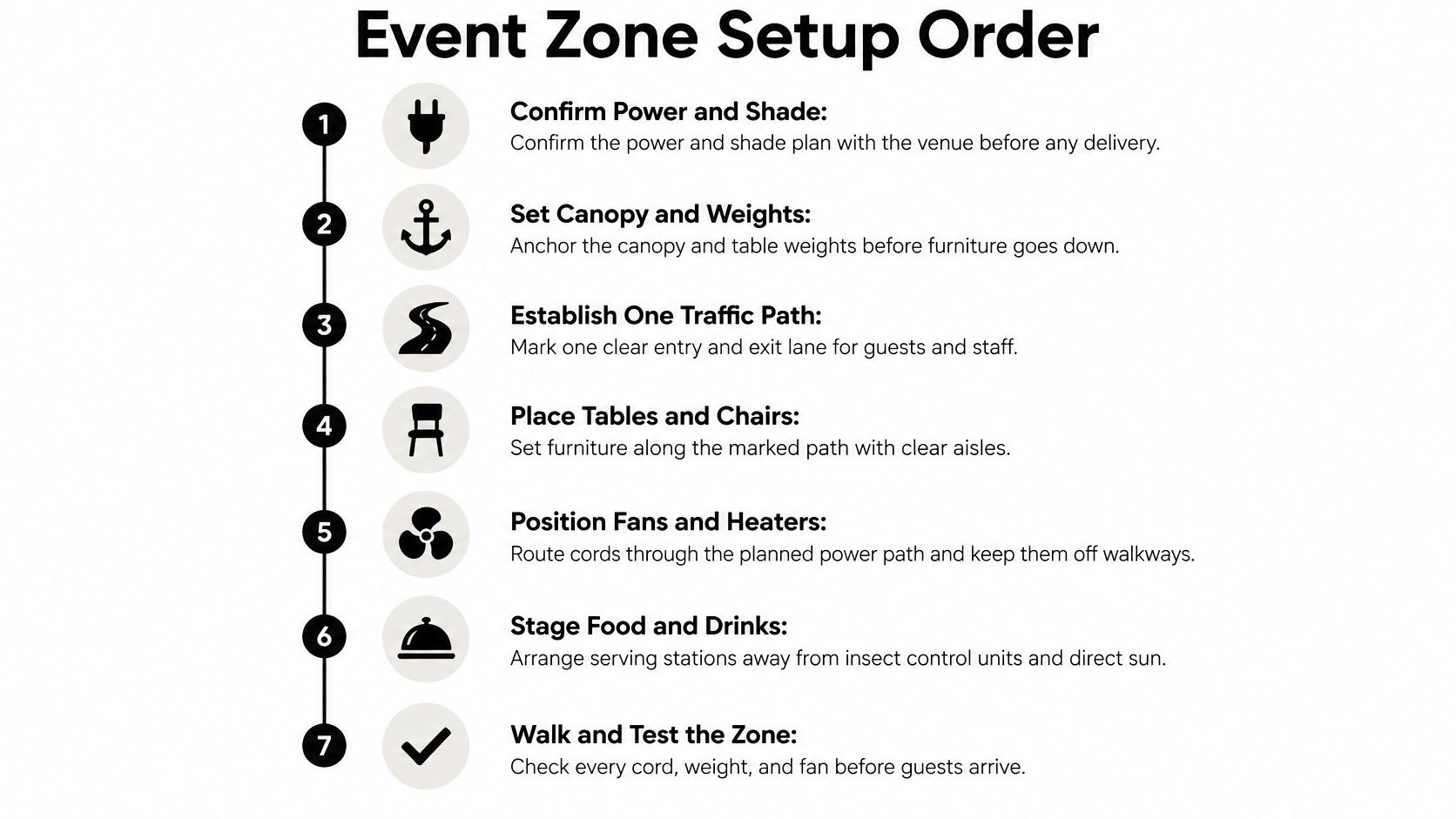
- Confirm power and shade with the venue before any delivery. If the GFCI is on the wrong side of the lawn, every later cord plan is fiction.
- Set the canopy and table weights before furniture goes down. Weights first stop a tent from lifting in the first gust while chairs are still on the truck.
- Establish one staffed communication hub at check-in. The National Environmental Education Foundation outdoor-events guide calls for a central staffed point and a channel chosen in advance, group text or radio, with a named point person.
- Lay out tables with buffet lines facing away from waste bins and direct sun. Guests should walk toward food, not toward refuse.
- Position fly fans lateral to the buffet, and set bins far enough that odors don't reach the food. Same edge, not the same spot.
- Hang signage for the actual viewing distance. Arrowhead Sign Company's 2026 signage guidance uses about one inch of capital-letter height per 10 feet. A sign read from 50 feet needs letters about five inches tall, and about 6.5 to 7.5 inches when glare, crowd movement, or noise makes reading harder.
- Load cold food last, cover it, and start the holding log. The shortest time in warm air is the whole point of going last.
This short walkthrough shows the same sequence on a real patio, from power to the final test:
Venues that prepare concert venues for festival crowds treat cleanliness as part of the layout, not a mop at the end. Name one supervisor to walk the zone 30 minutes before doors. That person checks weights, bin distance, covers, the log, and the radio check.
Maintaining, Storing and Renting Supplies Without Surprises
Supplies fail in the garage as often as they fail on the lawn. A damp canopy and a swollen battery connector will show up on the next job, not on the invoice from the last one.
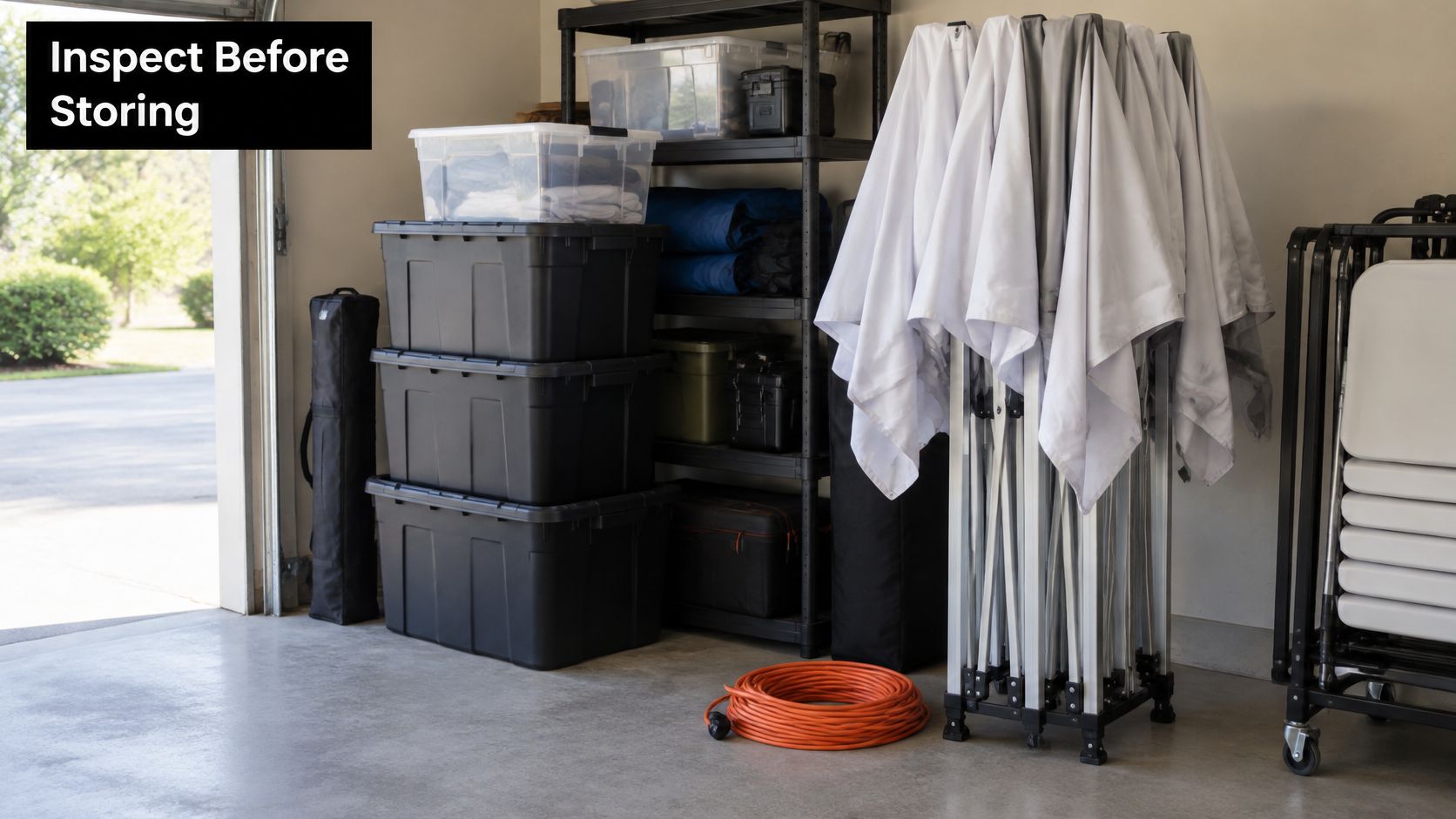
After every event
- Wipe tables and fans before anything goes in a bin. Grease left on a housing attracts insects next time.
- Empty every waste bin and bag it off site. A "mostly empty" bin in a hot truck is a breeding box.
- Check cords and battery connectors for cuts, corrosion, and loose plugs. Retire the damaged piece the same day.
- Dry canopies and sidewalls fully before you fold them. Trapped moisture grows mildew that you can't air out on event morning.
- Store batteries cool and dry at the charge level the manufacturer specifies, and top them up on a set schedule, roughly every few months.
- Keep fabric off concrete and on shelving so ground damp doesn't wick into the bag.
Before you sign a rental
Confirm delivery and pickup windows, who handles setup and teardown, damage-waiver terms, cleaning fees, the minimum rental period, weather rescheduling, and whether tables and chairs are cleaned between uses. Three red flags should stop the signature: no written delivery window, a damage waiver that is optional but unpriced, and a cleaning fee defined as "at our discretion."
Rent when the event happens once a year and storage is the problem. Buy when the same supplies serve weekly service.
Confirm Your Supply List Before You Order
Match the buy-or-rent call to how often you serve outside.
Restaurants, caterers, hotels, and food trucks with recurring service should buy the core kit and standardize the holding log. The probe, covers, lidded bins, and spare batteries earn their cost on the second weekend. Homeowners and one-off weddings should rent furnishings and buy only the food-protection and pest-control pieces they'll use again. Chairs for 150 guests don't belong in a garage you open once a year.
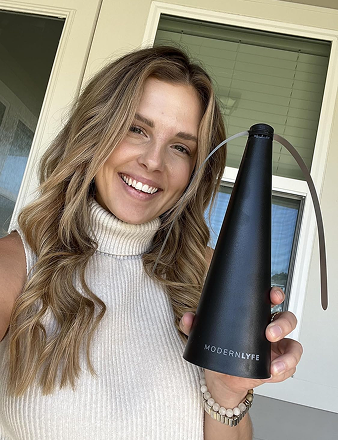
MODERN LYFE battery-operated, quiet fly fans fit restaurant patios, hotel receptions, catering lines, and backyard barbecues as one layer beside covers, refrigeration, and sanitation. They don't replace a lid, a cooler, or a discard time.
Do these four things before you spend:
- Count guests and apply the sizing table. Rounds or rectangles, chairs with the 10% spare, stations at 50 guests, lights at 10 ft.
- Complete the checklist and mark rented items. Furnishings and the canopy are the usual rentals. Covers, probes, and bins are the usual purchases.
- Name the holding-log owner and the check interval. One person, one sheet, discard times written before service starts.
- Order insect control and battery equipment from modernlyfe.com early enough to test every unit and swap a weak battery before the date.
Order against a known date, not against a hope that the venue will have extras. A tested fan and a full ice plan beat a rush delivery that arrives as guests do.
MODERN LYFE builds quiet, battery-operated fly fans that sit beside buffet lines, patio tables, and catered receptions so flies stay off the food without cords across the walkway. Pair them with covers, cold holding, and a real discard clock, and the outdoor service kit finally works as one system. Visit MODERN LYFE to choose the units for your next outdoor service and test them before guests arrive.