You're setting a patio for lunch service, the buffet lids are up, and the first flies are already working the line before guests sit down. Swatting doesn't help, a spray near food isn't an option, and the trap you hung last week is either ignored or covered in flies beside the tables. An outdoor fly trap only earns its place when you judge it by where it sits, how often it's serviced, and captures per trap per day, not by the biggest catch photo on the box.
Pick the Trap Type That Fits Your Setting
A buffet line and a dumpster pad need different traps. Match the attractant, the smell, and the surface to how close guests stand, then judge the unit by where it sits, captures per trap per day, and whether someone can service it on a real interval.
Outdoor fly trap types by setting
| Trap type | Attraction method | Best setting | Main limit |
|---|---|---|---|
| Baited jug trap | Food-based bait | Yards and waste areas away from guests | Bait loses strength within a few days; heat shortens that window |
| Sticky trap | Visual, sticky glue surface | Monitoring counts in service corridors | Saturates quickly when fly populations are high |
| Sheltered dry-bait trap | Dry bait under cover | Covered patios close to guests | Needs regular bait checks |
| UV light trap | Ultraviolet light | Covered or semi-enclosed dining areas | Light can compete with patio and building lights |
| Pheromone trap | Chemical lure | Waste-facility monitoring | Targets one species, so a mixed house-fly problem stays |
Reading the table like an operator
Baited jug traps pull hard. I would not park one beside a buffet. A strong food smell belongs near bins, compost, or a back-yard corner, where it draws flies off the tables. In heat, bait fades fast. A jug you cannot check every few days stops earning its place, even if the first catch looked huge.
Sticky traps show you what is happening. Count the bodies in a service corridor, a loading area, or by a door, and you get a daily capture number without opening a jar. They fail as mass control when pressure is high. Dust and flies cover the glue, and the surface stops catching until you swap the card.
For covered patios, sheltered dry-bait traps are usually the workable compromise. The cover keeps rain and direct sun off the bait, and guests do not get the wet-bait odor next to food. Baited jug traps caught most of their flies during the first two days, and collections fell after four days as the bait deteriorated, while sheltered dry-bait traps collected substantially more flies than the tested alternatives, according to USDA field research on trap performance. Service the jug on that short interval, or move the job to a dry bait you can check on a set schedule.
UV light traps fit covered or semi-enclosed dining where you control the other lights. In full sun, or under string lights, they compete poorly. Sited on the wrong wall, they can pull insects toward the building instead of away from plates. Pheromone traps are monitoring tools for a known species at a waste facility. A lure aimed at one insect will not clear mixed house flies off a lunch service.
If you are comparing models before you buy, work through types of fly traps for different settings and read the limit column before the catch claim. Homes dealing with flies around pots and planters face a different micro-setting, so advice on indoor plant care for Los Angeles homes can help you separate a potting-soil problem from an outdoor waste problem before you add another trap.
Traps are one layer under sanitation, not a substitute for closed bins and covered food. Choose the trap you would still want standing there when it is half full, warm, and visible to a guest. If you would not, move that type farther from food.
How to Place and Install an Outdoor Fly Trap
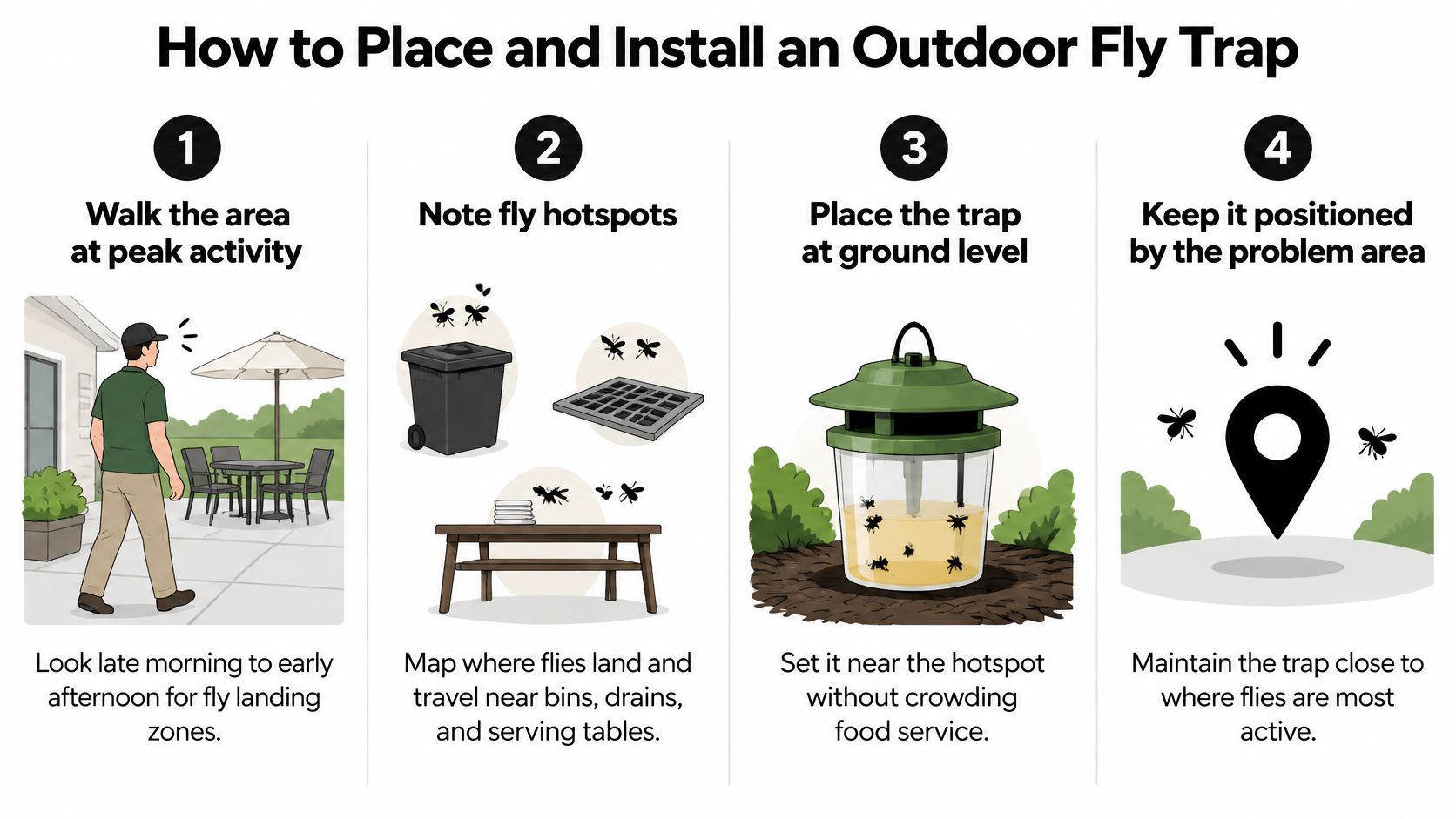
Placement decides whether a good trap looks useless. Follow the flies first, then fix the unit in place and write down what you did.
Installation steps
- Walk the area at peak activity. Go out late morning to early afternoon and watch where flies land and travel. Check bins, drains, damp corners, service doors, and the ends of serving tables, not just the dining area.
- Place the trap low, near that activity. In a USDA Agricultural Research Service study in central Florida, 18 traps over 8 weeks captured 3,626 house flies, an average of 453 flies per week, and units placed on the floor captured more flies during most observation periods than traps mounted 6 feet above the floor. Don't assume high placement works best outdoors.
- Use shade where you can. Heat weakens bait and dries glue and dry lures faster. A shaded spot near the hotspot usually holds its attraction longer than a sunny post in the middle of the patio.
- Keep light traps away from competing lights. Separate UV units from patio string lights, path lights, signage, and door lights. You want the trap to intercept flies already in the zone, not advertise your terrace to insects outside it. Details on pairing placement with lure choice are covered in this guide to a fly trap with bait.
- Pick the right surface color for sticky units. That same USDA work found black glue boards captured up to 50% fewer flies than white glue boards. If you're buying sticky refills, favor white unless a specific species target tells you otherwise.
- Secure it out of traffic. Stake it, strap it to a table leg or bin enclosure, or set it on a stable surface where staff won't kick it and guests won't handle it. Keep it near the approach route to food, but not on the food line itself, where a full trap becomes a hygiene and presentation problem.
- Log it and set an inspection day. Write the date, exact position, trap type, and weather in a simple notebook or sheet. Without that record, you can't tell whether a change in catch came from the device, the temperature, or the bin schedule.
What good placement looks like
You should see captures per trap per day trending down over about two weeks after you fix the source, and you shouldn't see flies clustering around serving tables. A trap that fills forever at the same rate is telling you flies keep arriving or breeding nearby. That's useful information, not proof the patio is protected.
Service, Troubleshoot and Fix Your Traps
Most outdoor traps don't fail outright. They fade. Bait dries, glue loads up, a tube dims, and the catch drops for reasons that look like success until flies show up on the food again.
Service intervals and warning signs by trap type
| Trap type | Check interval | Refresh or replace | Sign it needs service |
|---|---|---|---|
| Baited jug trap | Every 2 days in hot weather | Refresh bait every 2 to 4 days | Captures falling after day 4 |
| Sticky trap | Weekly, or daily in high fly pressure | Replace surface when saturated | Surface covered with flies or dust |
| Sheltered dry-bait trap | Weekly | Refresh dry bait per manufacturer | Bait dried out or clumped |
| UV light trap | Weekly | Clean grid and check tube | Dim or no light output |
| Pheromone trap | Weekly in monitoring use | Replace lure per manufacturer | Lure past its listed life |
Measure the right number
Inspect on the same day each week, record position and weather, and compare captures per trap per day rather than raw totals. A trap left out six days will almost always beat one left out two days, even if it's performing worse. Divide the count by the days exposed to fairly compare locations, weeks, and trap types.
Don't crown a winner from one hot corner. In a USDA field experiment at a poultry facility, three mass traps were rotated weekly and one location produced the greatest biomass despite having lower measured ambient fly density. Airflow, competing odors, shade, temperature, nearby waste, and fly movement all skew the count. Use at least three comparable locations where you can, rotate traps on a fixed schedule, and replace saturated surfaces and refresh baits on time so a dead lure doesn't masquerade as low fly pressure.
Practical rule: If you didn't record the days, the weather, and the position, you don't have a result. You have a bucket of flies.
Symptoms and fixes, in the order you'll meet them
- Catches drop after a few good days: The bait is spent, dried out, or cooked by sun. Refresh it, check for clumping in dry bait, and move the unit into shade. Don't wait for the weekly round if heat has shortened the bait's life.
- The trap fills within a day: The sticky surface is saturated or the jug is at capacity. Replace the surface or empty and rebait the unit, then add a second trap nearby. A full trap catches almost nothing and looks terrible near guests.
- Flies ignore the trap completely: Look for competition first. A brighter patio light, a fresh spill, an open bin, or a stronger odor source will beat your lure. Relocate the trap closer to the main activity zone and remove the competing source.
- One trap always wins, the others catch little: Suspect the microenvironment, not the model. Rotate the units between positions for a week and compare again. If the location still wins regardless of device, you've found a fly travel route worth keeping covered.
- Flies still reach the buffet: Move interception nearer where flies approach the line, without putting the trap on the line itself, and add a barrier at the opening. A CDC technical document on fly control states that fans mounted over doorways leading to food-serving establishments will keep out most flies. Directed airflow disrupts their flight path at doors and semi-enclosed boundaries, but it's a barrier, not a sanitation substitute.
Monthly reset
Once a month, clean housings, wipe dust and grease off UV units, confirm tubes still output properly, and check that glue hasn't yellowed, dried, or skinned over. Retire or relocate any trap that has caught nothing for two inspections in a row after a bait, surface, and position check. Keeping a dead unit in place only gives staff false confidence.
Finally, separate device problems from source problems. If flies keep returning to bins you've emptied, wash the bin, check the drain, look for spilled fat or food under the enclosure, and tighten the lid. No trap fixes a breeding source you haven't removed, and rising captures per trap per day after service are your warning to go looking.
Where Traps Fit in Food Safety and Event Plans
Say it's a summer wedding buffet. Salads are out, glasses are filling, and a fly works from the bin area straight to the serving spoons. The trap by the fence may be catching well, but that one fly only needs one landing.
Proper bin hygiene beside service areas looks like this.
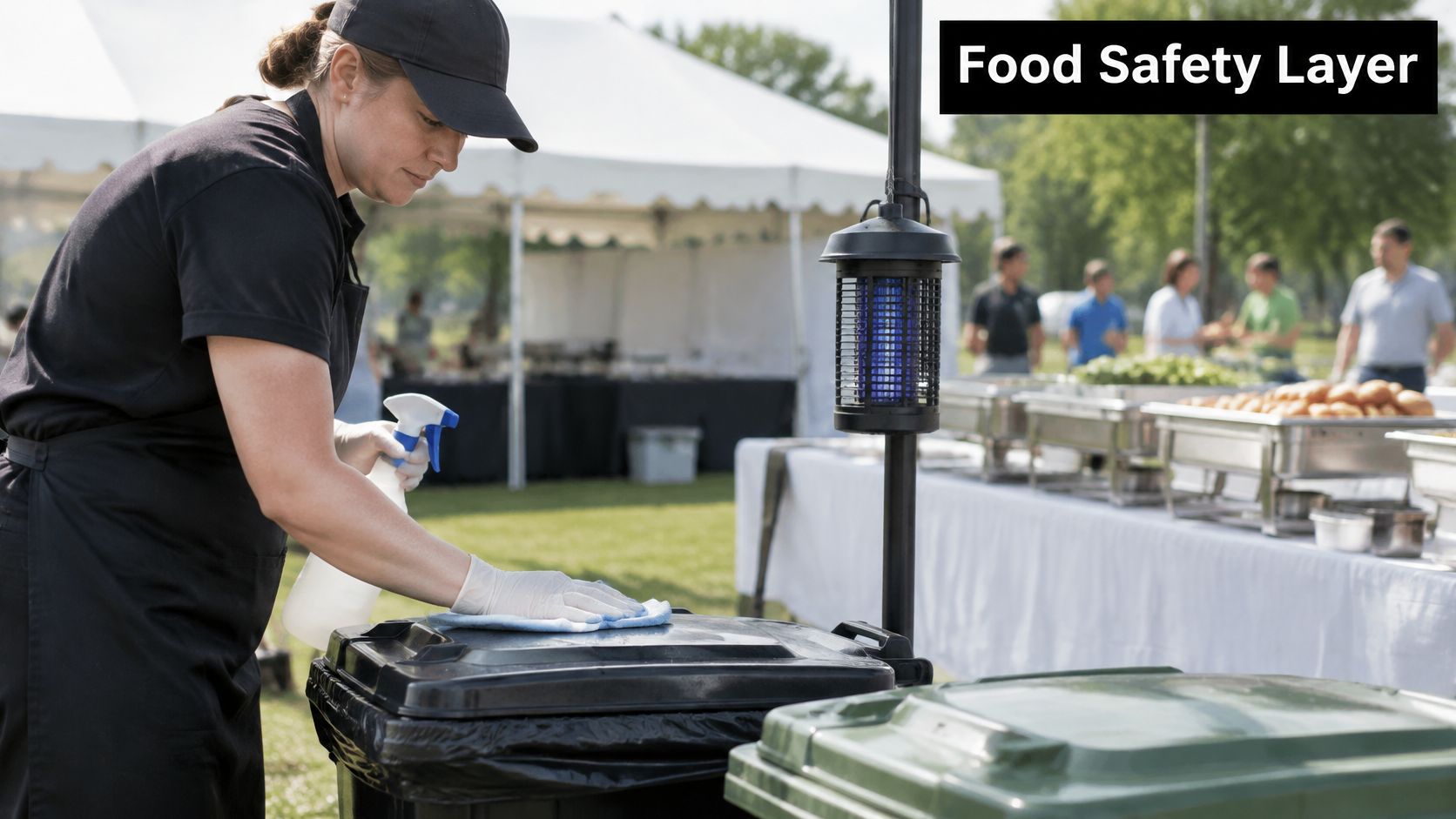
Flies can carry Campylobacter after contact with feces or contaminated raw foods and move it on their feet, proboscis, legs, and body hairs, or through regurgitation and defecation, as described in CDC-published research on flies and Campylobacter. Keeping flies off ready-to-eat food reduces that mechanical transfer. It doesn't replace hand hygiene, temperature control, cleaning, or safe food handling.
The layers that carry the load
Cover ready-to-eat food whenever practical, keep bins covered and separated from display areas, and remove scraps promptly. CDC sanitation guidance says uneaten dog or cat food should be removed shortly after an animal finishes eating because food left in place can provide a breeding place for flies, and it recommends sanitary disposal of putrescible waste. The same logic applies to plate scrapings, fruit waste, and spill residue at an event. Put those controls together with the basics in these outdoor food safety tips before you rely on any device.
The short video below is useful for training staff on how small lapses around waste and uncovered food undo trap work.
Apply it by setting. Buffet lines need covers on between service and a trap positioned where flies approach, not over the food. Food trucks should keep the service window closed between orders and the waste point away from the hatch. Weddings and private events, including gatherings at a family-owned wine estate, need waste cleared between courses so dessert isn't served beside main-course scraps. Markets need stalls cleaned at each close, because overnight residue restarts the problem the next morning.
A trap reduces fly visits. It doesn't make uncovered food safe.
Set Up Your Fly Plan Before the Next Event
Run this in one visit before guests arrive. Don't add traps until each zone has a job.
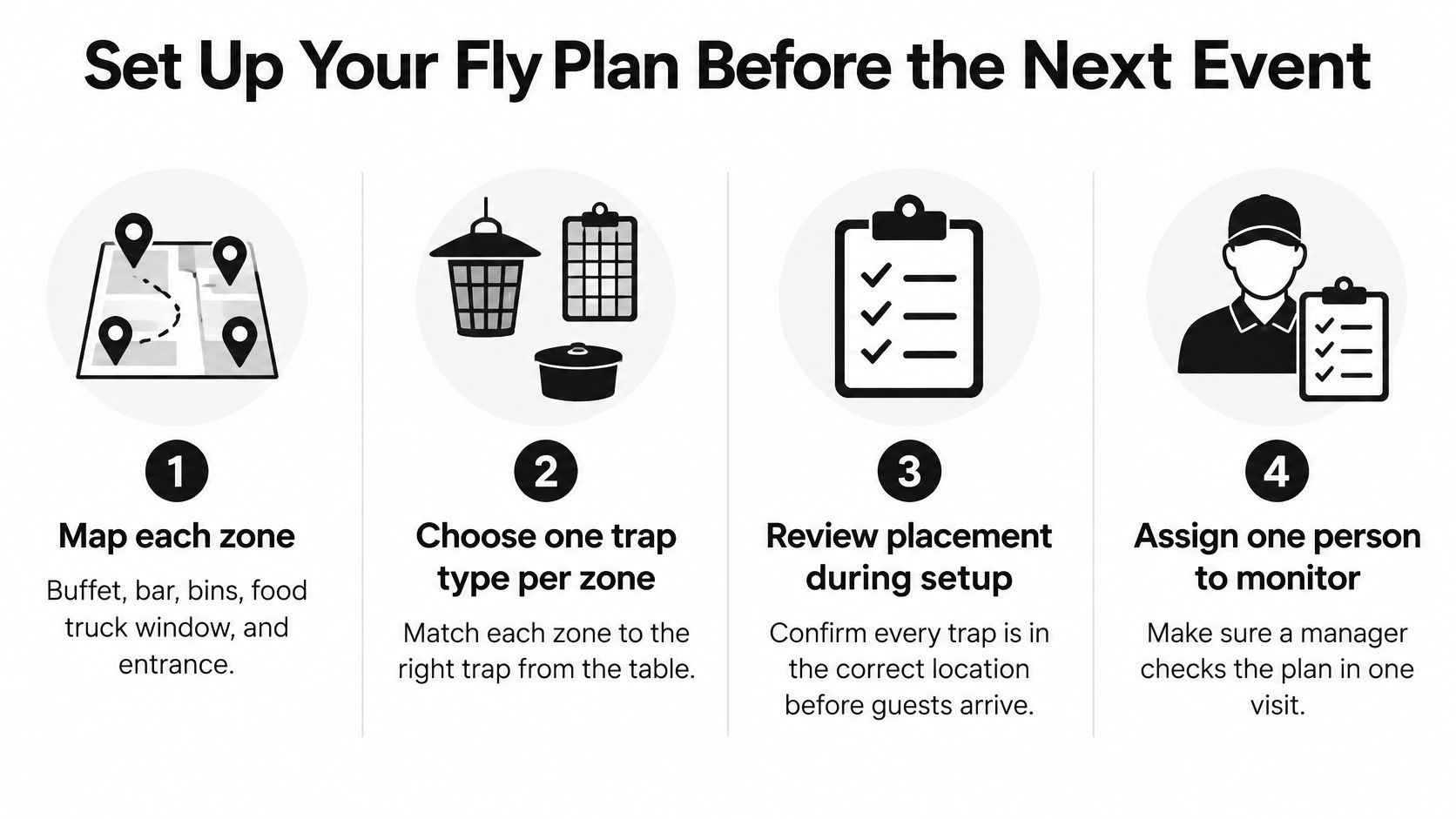
Pre-event checklist
- Map each zone. Mark the buffet, bar, bins, food truck window, entrance, and any drain or damp corner. Note where flies will travel between waste and food.
- Choose one trap type per zone. Put stronger baited units out by waste, monitoring sticky traps in corridors, and lower-odor sheltered units near covered guest areas.
- Place traps low and shaded. Keep light-based units away from patio and building lights, secure every base, and keep full traps out of guest sightlines.
- Confirm the waste routine. Covered bins in place, liners ready, scraps removed between courses, spills cleaned at once, and no waste left beside the service line during the event.
- Assign inspection and logging. Name one person, set the check time, and record captures per trap per day with position and weather. Unowned traps don't get serviced.
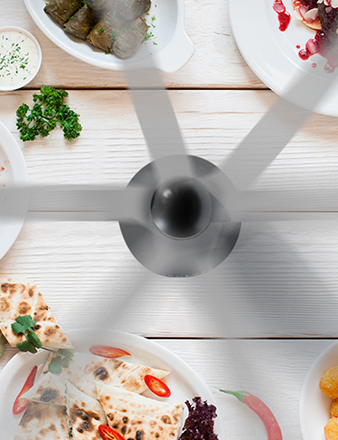
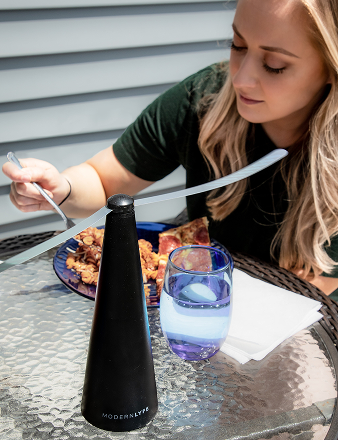
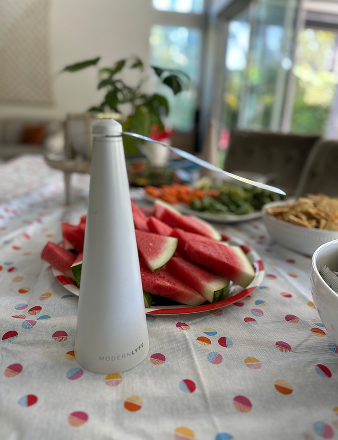
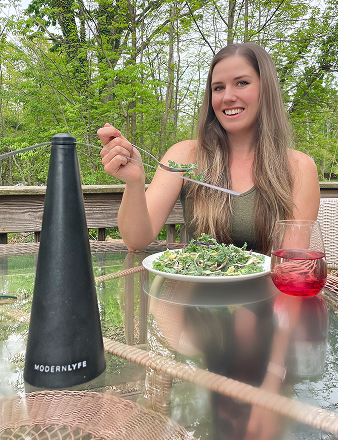
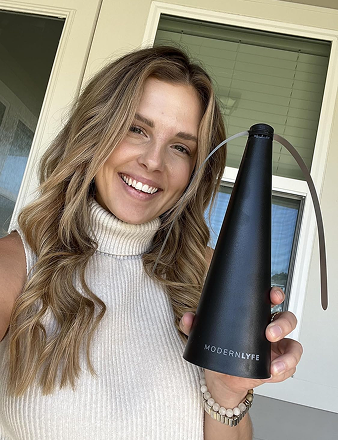
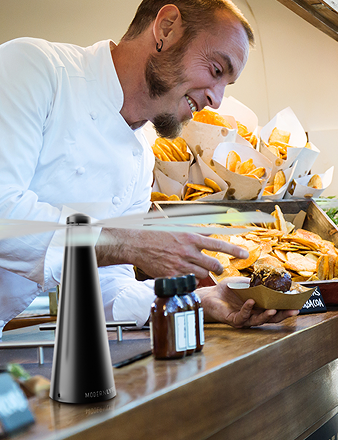
- Add airflow where flies enter. At doors, hatches, and semi-enclosed boundaries, directed air cuts fly visits to food. On tables, our Fly Fan for Tables is a rechargeable fly fan for outdoor and indoor use that keeps flies and pests away from food, it's intended for outdoor tables, patios, parties, food trucks and al fresco cafes, and it has an automatic safety stop if the blades are touched.
That combination is the plan. Traps intercept and monitor, airflow blocks entry at the table and doorway, and sanitation removes what flies came for. Skip the last part and you'll keep buying devices to fight a source that's still feeding the problem.
Set your zones up before the next service, then protect the food itself with the quiet, table-ready fly fans from MODERN LYFE, designed for patios, buffet lines, food trucks, and catered events where a bait trap doesn't belong beside guests. Visit us to choose the pack size and color that fit your tables, and give your sanitation and trapping routine a clean final layer right where people eat.