A stronger fan isn't automatically a better patio fan. In a simulated aircraft-doorway study, carefully angled air curtains excluded 95–100% of house flies when mean airflow in the critical central region exceeded 4 m/s. That result came from a controlled barrier, not a fan sitting beside a dinner plate. Where the air travels matters as much as how fast it moves.
For restaurants, caterers and backyard hosts, the practical buying question is simple: can this fan deliver useful airflow to the people and food that need it? Choose for coverage, power and service conditions, then treat insect deterrence as one layer of food protection, not a replacement for it.
Patio Fan Types and Which One Fits Your Space
Start with three questions: Does the space have a roof? Is there a power point or a workable battery plan? Which zone must the air reach? Answer those before comparing blade sizes or speed settings.
A roofed dining area with permanent power calls for a different solution than a food truck counter or temporary lawn reception. Buying the largest unit available usually creates a placement problem rather than solving one.
Patio fan types by space, power and main limit
| Type | Best for | Power source | Main limit |
|---|---|---|---|
| Outdoor ceiling fan | Covered patios, porches, pergolas | Hardwired mains | Needs a ceiling mount and wiring |
| Pedestal or floor fan | Open patios and lawn seating | Mains or rechargeable battery | Takes floor space and can tip in wind |
| Wall-mounted fan | Narrow walls, under eaves, small decks | Hardwired or plug-in | Fixed mounting direction and limited coverage |
| Table-level fan | Dining tables, buffets, cafe seating | USB or battery | Small zone and shorter runtime at high speed |
| Misting fan | Hot, dry climates with open patios | Mains plus water supply | Adds humidity and needs a water line or tank |
| Solar patio fan | Off-grid spots and sunny patios | Solar panel with battery | Output depends on sunlight |
Choose broad circulation or local coverage
Outdoor ceiling fans are my first choice for permanent covered seating. They keep equipment off the floor and provide broad overhead circulation. Confirm that the structure supports the installation; an open pergola isn't automatically a suitable mounting location.
Outdoor ceiling fans are an established category: the Research and Markets ceiling-fan assessment puts their global revenue at approximately $3.86 billion in 2023, representing 28% of total ceiling-fan-market revenue. That's a market benchmark, not evidence that overhead airflow suits every dining setup.
Choose a pedestal fan when seating moves regularly. Choose a wall-mounted unit when floor space is scarce, but check its usable aiming range before fixing the bracket. For an existing deck, Utah Deck Supply's guide to decking materials is a useful planning resource when assessing the surface and broader installation, although fan mounts still need appropriate structural support.
Buying rule: Match the fan to the occupied zone, not to the largest footprint printed on the box.
Reserve misting fans for conditions where added moisture is welcome. Solar models make sense when mains power is unavailable and the panel receives reliable sunlight, but don't build an evening service plan around daytime sunshine alone.
How Moving Air Keeps Flies and Mosquitoes Away
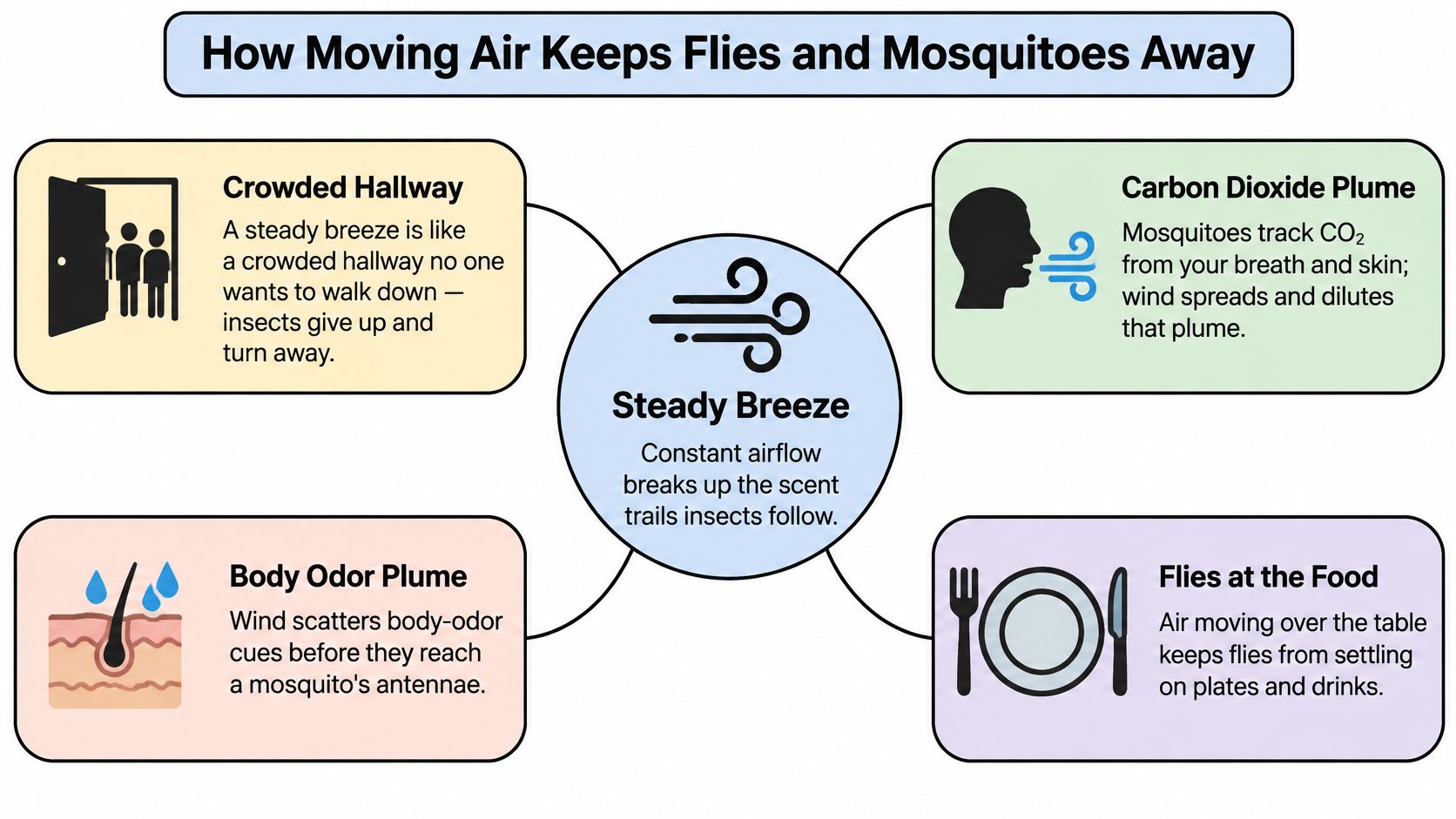
A steady breeze works a little like a crowded hallway: getting through becomes less straightforward. For insects, though, the problem isn't just resistance. Moving air changes the signals they follow and the conditions they must handle.
Mosquitoes track carbon dioxide and body-odor plumes. Wind spreads those cues, making the trail less concentrated. In a Central Michigan wetland study, fan-generated wind reduced mosquito trap catches as tested air speeds increased from 0 to 3.7 m/s, approximately 0 to 8.3 mph. Those are mosquito findings, not a universal house-fly threshold.
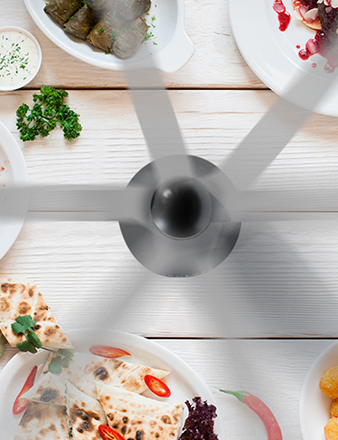
The airflow mechanisms are easier to distinguish visually.
Deterring an approach isn't blocking entry
Flies also respond directly to air movement. A peer-reviewed study of flying Drosophila found that antennal mechanoreceptors detected airspeed changes and triggered a fast flight response before a slower visual response. That explains why directed air can disturb an approach, but it doesn't establish guaranteed performance against house flies around a buffet.
Airflow doesn't kill insects, seal a patio or guarantee clean plates. A fly can enter from outside the protected zone, land behind an obstruction or approach when an oscillating fan turns away.
For dining, angle the fan so its useful breeze reaches the table rather than slipping behind the chairs. A fan aimed past the table may feel active while contributing little where insects approach the food. Our guide to outdoor fans to keep bugs away offers additional context for choosing airflow-based deterrence.
A running fan isn't proof of useful coverage. Check where its breeze actually goes.
Treat reduced insect approaches as a practical benefit, not a promise of exclusion. The question to ask is: Is the airflow crossing the food and seats, or just passing them?
Where to Place a Patio Fan for Real Coverage
Use roughly 0.3–0.4 m/s of cross-flow as a starting point for testing, not a guaranteed pest-control specification: controlled mosquito findings associate that range with altered host-seeking behavior through dispersed odor cues. Measure at the food and seated guest zone, not beside the blades.
A handheld anemometer makes this a placement exercise rather than a guessing game. The targets below apply that starting range to practical layouts; they aren't validated exclusion thresholds for every insect or setup.
Placement and airflow target by setup
| Setup | Placement | Airflow target | Main risk |
|---|---|---|---|
| Dining table | Table edge, angled across the plate zone | 0.3–0.4 m/s at plate height | Direct blast lifts napkins |
| Buffet line | Several units along the serving edge | 0.3–0.4 m/s along full length | Dead zones behind risers |
| Covered patio | Centred over seating, clear of the grill | 0.3–0.4 m/s at seated head height | Umbrellas and beams block flow |
| Open windy patio | Low, on the side facing the breeze | 0.3–0.4 m/s at seat height, rechecked when wind shifts | Wind shifts the flow pattern |
Aim along the service zone
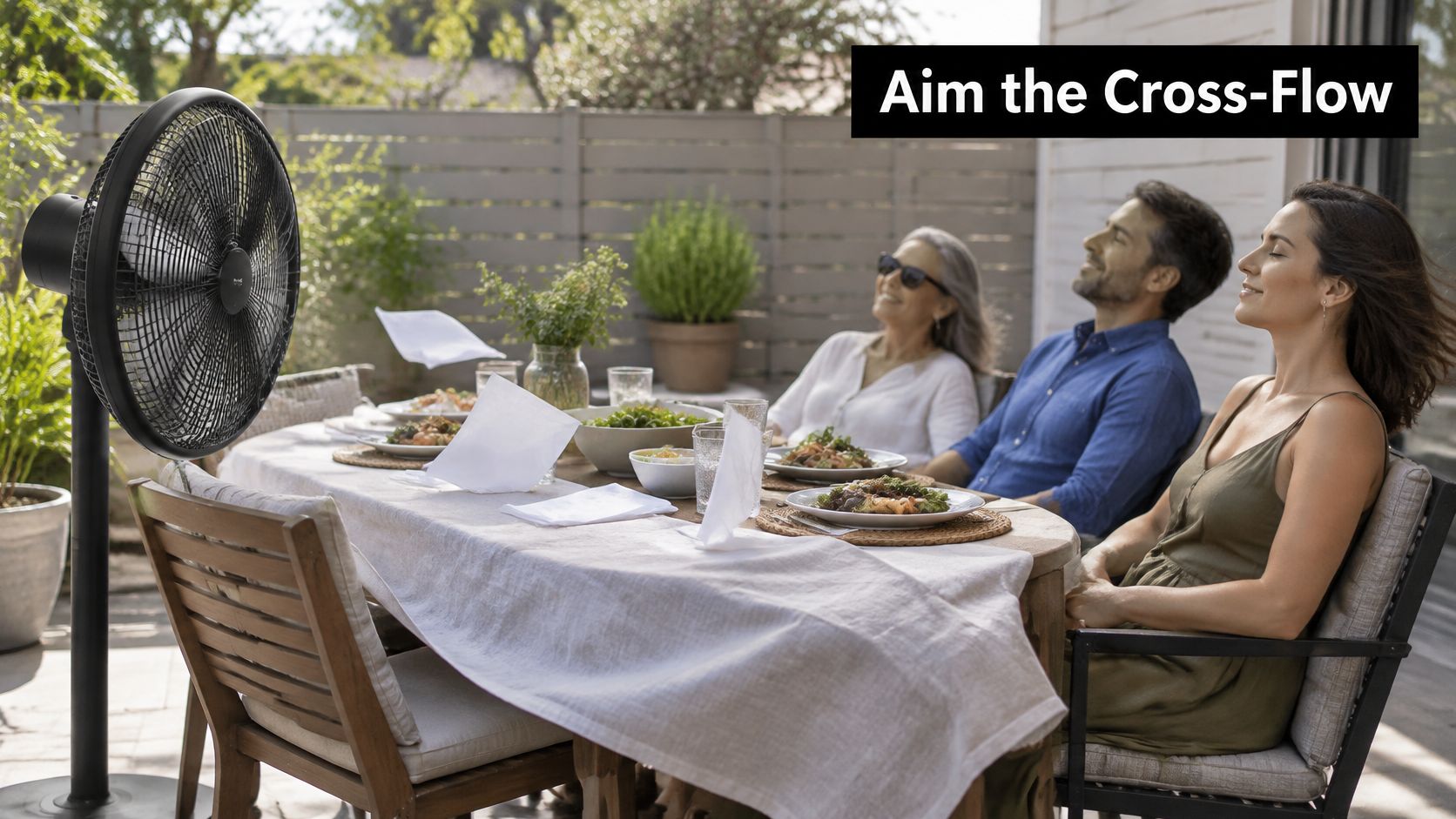
Place a dining-table fan near the edge and direct it tangentially across the food zone. Don't aim straight into someone's face or across a dirty surface toward uncovered dishes. Check both the near and far sides of the table.
Before choosing positions, plan your outdoor seating layout using Guynn Furniture & Mattress's arrangement advice. Leave clear walking routes and space for servers, then work fan placement around those routes rather than adding equipment where guests must step over it.
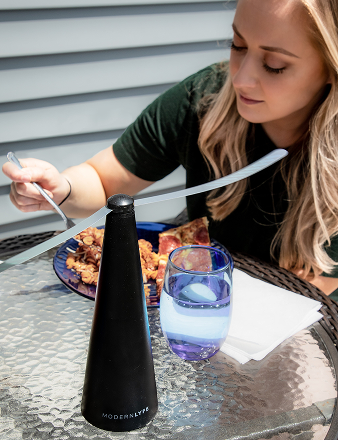
This patio arrangement illustrates the relationship between seating and a nearby floor fan.
Close the gaps rather than increasing speed
Buffet risers, decorations, umbrella supports and wind screens interrupt airflow. Keep fans reasonably close to their intended zone, because useful air speed weakens with distance. Reposition them when the natural breeze changes direction.
Consider a hypothetical three-metre buffet with two units, positioned at opposite ends and aimed along separate portions of the serving edge. That arrangement can reach more of the line than a single side-mounted fan whose breeze strikes a central riser. It still needs measurement: opposing streams or tall displays may leave an unexpected pocket.
Watch lightweight covers, place cards and napkins while adjusting. If they lift, change the angle or location before increasing speed again. Continuous coverage beats a powerful blast through the wrong part of the layout.
What a Patio Fan Cannot Do for Food Safety
A patio fan doesn't replace food protection. The Long Beach Food Handlers Guide treats pest and environmental protection as part of operating an outdoor food-service area, including keeping openings controlled when flies, dust or unsuitable weather create a problem.
Flies matter because they can carry contamination from waste to food. Los Angeles County public-health guidance identifies organisms associated with house flies, including E. coli and Salmonella, and explains how their feet, bodies and feeding behavior can transfer microorganisms.
Keep the controls that remove the risk
- Contain waste. Use covered bins away from serving areas, and remove spills and food residue promptly.
- Protect dishes. Keep food covered between serving periods and protect clean utensils and food-contact surfaces.
- Control openings. Use suitable screens or doorway protection, and close openings when pest activity requires it.
- Document the response. Give staff a clear procedure for reporting insects, addressing contaminated food and correcting the source.
The Oregon food-code pest-control fact sheet recommends a pest-control plan with monitoring and response procedures for open-air dining. A table-level fan serves a local dining zone; an air curtain protects an opening; a ventilation fan manages broader air movement. They aren't interchangeable.
Temperature control stays separate
USDA guidance summarized in the outdoor-service notes calls for cold food at or below 40°F (4°C), hot food at or above 140°F (60°C), and no more than two hours for perishables in the danger zone, reduced to one hour above 90°F. These limits require actual temperature and time controls, alongside the reasonable pest-prevention measures described in Logan's outdoor-dining guidance.
A caterer who sets uncovered trays beside an open waste bin hasn't solved the problem by adding a fan. Move and close the bin, protect the trays and clean the surrounding area first. Use our outdoor food safety tips to organize those checks, and don't operate a fan where it blows dust or allergens across food.
Features That Matter Before You Buy
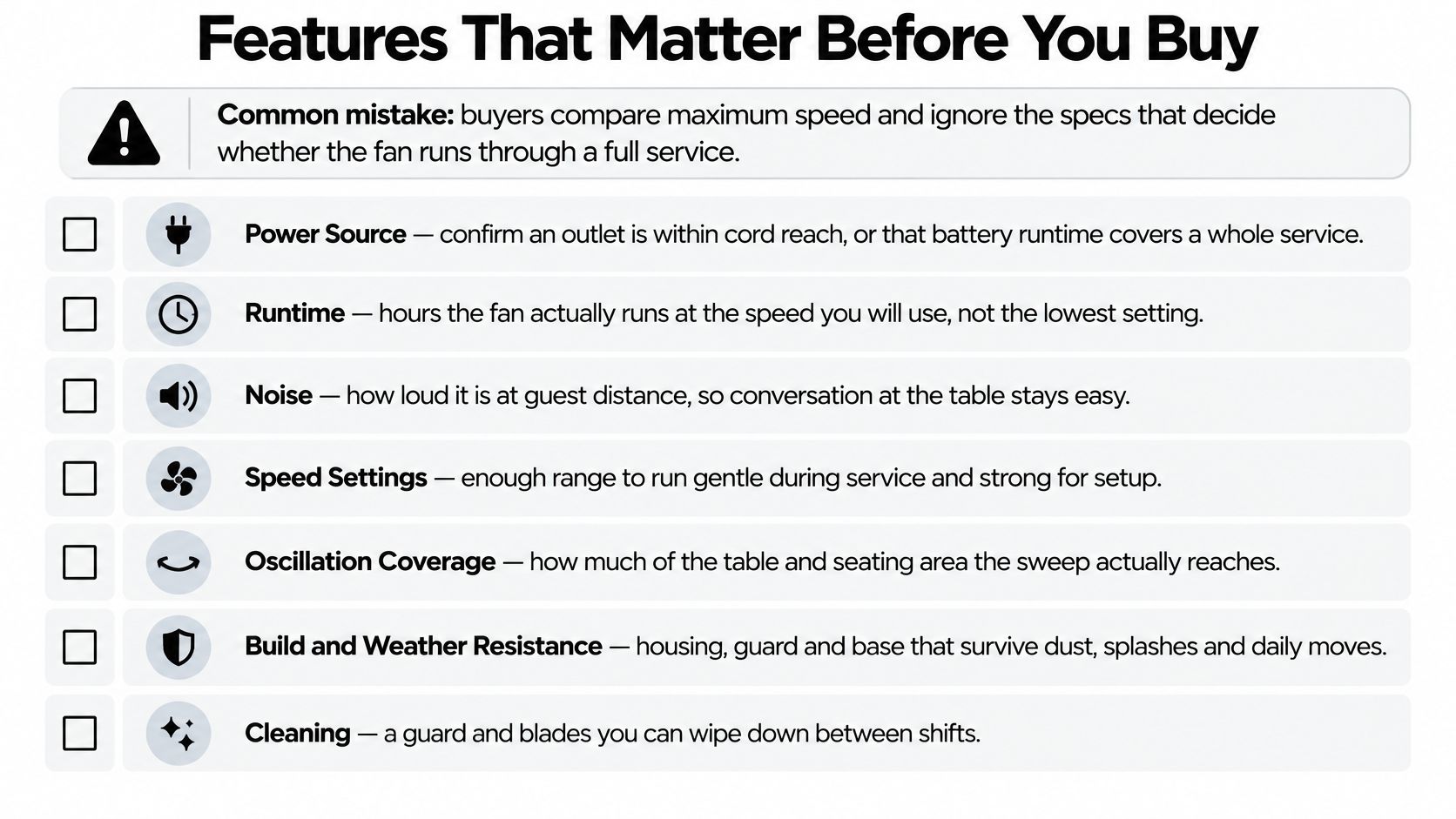
Buyers often compare maximum speed and overlook the specifications that determine whether a fan can finish a service. Working-speed runtime, guest-distance noise and weather suitability matter more than an impressive top setting.
Use the following checks to reject unsuitable models before comparing appearance. A compact unit that stays useful throughout dinner is a better purchase than a powerful one that needs charging before dessert.
Buying criteria for a patio fan
| Feature | What to check | Why it matters |
|---|---|---|
| Power source | Hardwired, mains plug-in, USB or battery | Sets where the fan can go and how often it must be recharged |
| Runtime | Hours at the speed you actually use | Short runtime fails mid-service at weddings or long shifts |
| Noise | Demo or rating at normal speed | Loud fans compete with speeches and conversation |
| Blade and guard design | Soft or guarded blades, automatic safety stop | Matters where children and guests sit close by |
| Weather rating | Outdoor or damp-location rating matched to exposure | Helps avoid using equipment beyond its moisture protection |
| Airflow range | Number of speeds and oscillation | Lets you tune airflow without blowing napkins away |
Read the operating conditions
USB or battery power suits movable tables. Mains power suits a fixed patio, provided the cable route is safe and the electrical supply is appropriate for outdoor use. Our battery-operated outdoor fan guide can help you compare portable arrangements.
Don't treat a damp-location designation as permission to expose a fan to rain. Match the manufacturer's stated protection to the actual site, including wind-driven water, and check dust suitability separately. Moisture protection doesn't automatically establish dust protection.
This checklist keeps the everyday buying checks together.
Evaluate the setting guests will experience
Ask for runtime at the speed you intend to use, not merely the gentlest setting. Listen from a chair at normal dining distance, and assess whether the motor, blade noise or oscillation mechanism distracts from speech.
Check stability and cleaning access as carefully as blade design. Guards should remain secure, bases shouldn't rock, and routine wiping shouldn't require awkward handling around exposed electrical parts.
Service-setting advice: Choose the lowest speed that maintains useful coverage. It generally reduces noise and battery demand without adding unnecessary disturbance.
Oscillation deserves a practical check, too. A broad sweep may suit seating comfort while leaving a food zone intermittently without airflow.
How to Test a Patio Fan Before a Busy Service
Test the fan with the actual table dressing, serving equipment and power arrangement. An empty-table demonstration won't reveal what happens behind a cake stand or when a server opens the buffet lids.
Use this visual sequence to organize placement, measurement and adjustment.
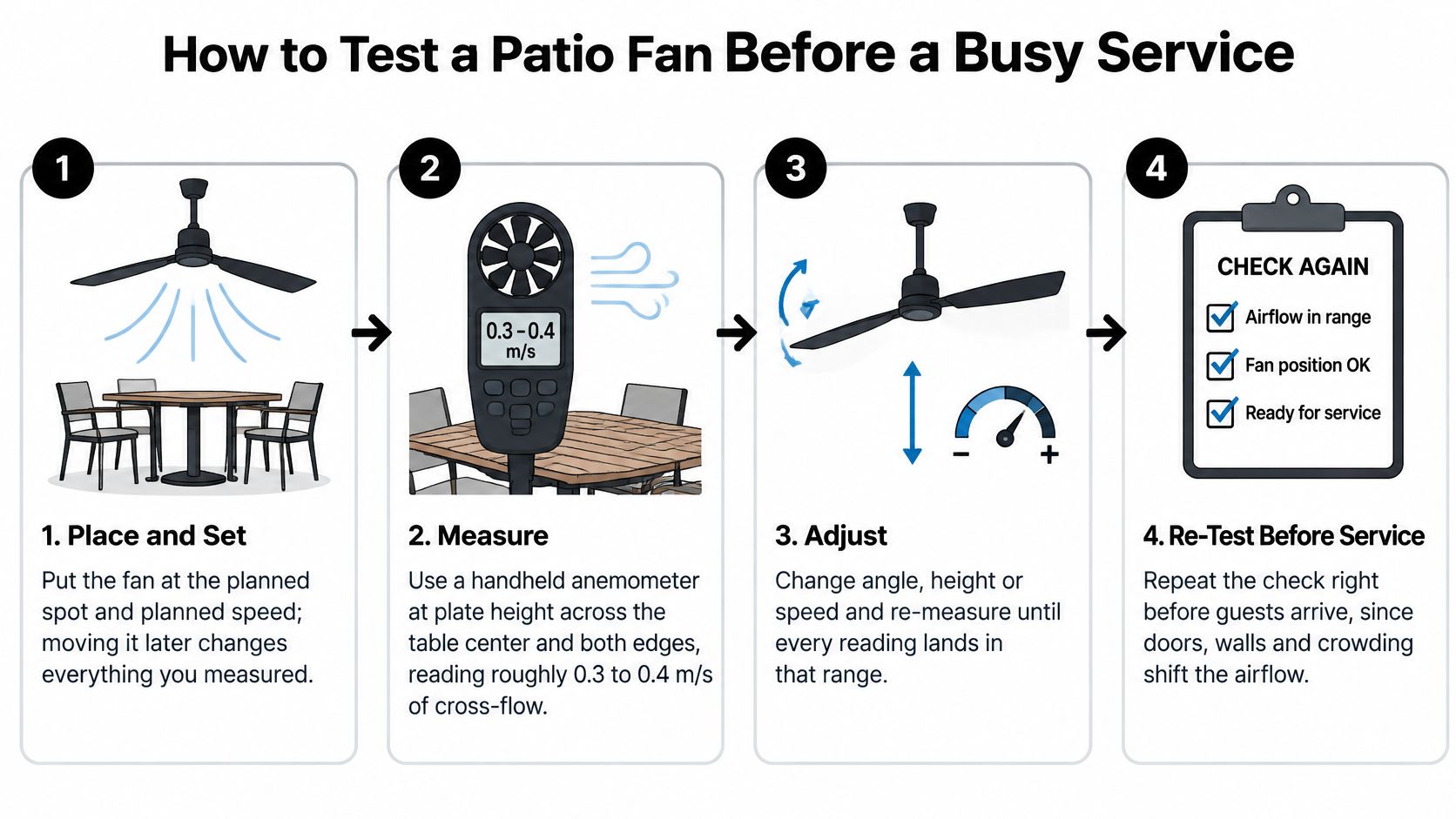
Run a service rehearsal
- Place and set. Put the fan at its planned location, height and working speed. Moving it afterward changes the conditions you tested, so establish the layout before measuring.
- Measure the occupied zone. Hold a handheld anemometer at plate height across the table centre and both edges, comparing readings with the starting range in the placement table. Check the far side as carefully as the side nearest the fan, because an outlet reading won't reveal a weak dining zone.
- Find sheltered pockets. Measure behind risers, decorations and other obstructions, then adjust angle or height and measure again. If relocation doesn't reach the sheltered area, change the obstruction or add local coverage rather than assuming more speed will solve it.
- Test the power arrangement. Run the fan through the intended service period using the battery or cable you'll deploy, and record how long it remains useful. This exposes charging gaps, loose connections and impractical cable routes before guests arrive.
- Listen during conversation. Ask another person to speak normally while you sit at guest distance. Check for distracting rattles as well as steady fan noise, since a loose base can be more intrusive than the motor.
- Watch the table dressing. Leave napkins, cups, cards and lightweight covers in their service positions while the fan runs. If they slide or lift, lower the speed or redirect the breeze, then confirm that coverage remains useful.
- Record and repeat. Mark the base position with removable tape and record the angle and speed setting. Repeat the check before service because occupied chairs, open doors and changed displays can alter the result.
Check the finished furniture arrangement
Use Lucas Furniture & Mattress's deck and patio furnishing advice when assessing furniture suitability and arrangement. Complete the rehearsal with chairs pulled out and service routes open, not tucked into a display layout.
For an additional visual reference, watch the fan demonstration below.
Record the result, not just whether the fan switched on. A repeatable position and working setting turn a coverage guess into an operating procedure.
Choose the Right Patio Fan for Your Setup
Buy for the zone you need to serve. A covered patio with permanent power and a suitable mount points toward an outdoor ceiling fan. An open patio or lawn arrangement favors a stable pedestal fan, while a dining table, buffet or food stall calls for local table-level coverage.
Mixed sites often need different tools rather than a larger version of the same tool. A hotel terrace might use overhead circulation above lounge seating and local fans at a separate serving station. That division lets staff adjust the food-service area without changing the breeze for every seated guest.
Decide the unit count from the layout
Don't order from table count alone. A long, narrow buffet presents a different coverage problem from a compact round table, even if both serve the same group.
- Individual tables. Start by testing an edge position that doesn't crowd plates, glasses or shared dishes.
- Long serving lines. Distribute units along the serving edge and check sheltered spaces around displays.
- Changing event layouts. Keep a position record for each arrangement rather than copying a setting from a different venue.
- Persistent gaps. Add another unit and retest when repositioning leaves part of the food zone unserved.
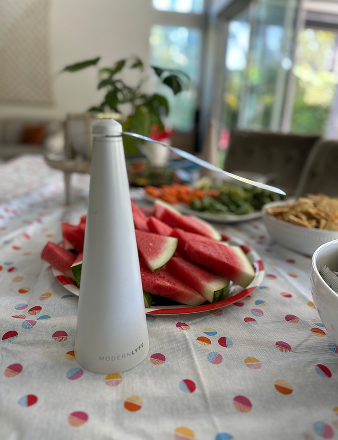
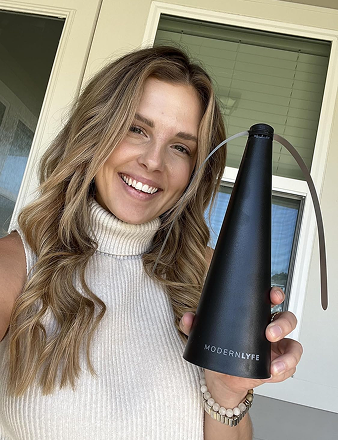
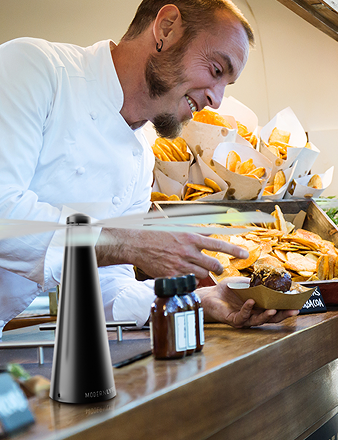
For table-level coverage, our Modern LYFE Fly Fan for Tables is an option for indoor and outdoor tables, patios, parties, food trucks and al fresco cafes. It powers on with the included USB cable or two AA batteries, which aren't included, and comes with an extended warranty.
Order after the layout works
Treat the fan as a complement to covered food, clean surroundings and a functioning pest-response procedure. Don't assume that a tabletop product can replace broad seating circulation or a doorway barrier.
Before placing a larger order, test the proposed arrangement during a representative service period. Confirm useful coverage, acceptable noise, stable placement and a practical power plan. Order the quantity that passes the layout test, not the quantity that merely looks sufficient on paper.
MODERN LYFE offers table-level fly fans for patio meals, catered events and everyday food-service setups, with USB or battery power for flexible placement. Visit MODERN LYFE to explore the options and choose fans for the dining zones you've tested.