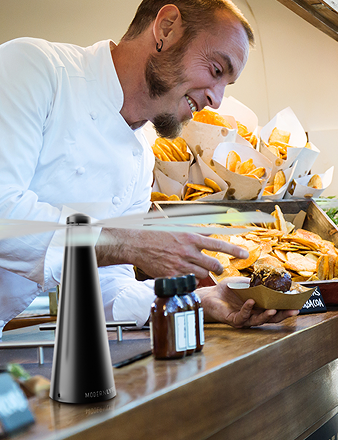
The patio is full, the first plates are leaving the kitchen, and guests are starting to swat at insects as daylight fades. At the buffet, a fly lands near the serving spoon. Someone suggests bug spray, but nobody wants it drifting across dinner.
Patio insect control is two jobs: keep nuisance flies away from food and protect people from biting insects. Treating those jobs separately makes your decisions clearer. Start with the insect and its source, define the area you need to protect, and judge your setup during actual service, not by the promise on a package.
Match the Insect to the Patio Zone
Two insects can share the same patio and need opposite responses. Mosquitoes around occupied seating call for personal protection and water management. House flies, blow flies, and fruit flies around dishes call for food protection, sanitation, and exclusion. A product that helps with one job won't automatically handle the other, so judge each method by where it works and when you need it, not by the hours printed on its label.
Skin repellent doesn't protect serving utensils, exposed dishes, or food-contact surfaces. The EPA-approved repellent label warns against use near food, so spraying guests isn't a buffet plan. Keep application away from meals, food preparation, and service equipment.
Use the insect and zone as your working sheet
Don't start by asking which product to buy. Ask what the insect is approaching and where it could be breeding or feeding.
Patio insect control by insect and zone
| Insect | Zone to protect | First control | Do not |
|---|---|---|---|
| House flies and blow flies | Waste storage and exposed food | Remove wet organic matter, lid bins, cover food | Place attractant traps next to plates |
| Fruit flies and drain flies | Drains, spills, and damp mats | Clean residue and drains on a weekly cycle | Treat them with a house-fly bait |
| Mosquitoes | Dusk seating and standing water | Empty containers weekly; use screens; apply repellent away from food | Put skin repellent on dishes or on guests at the table |
| Ants | Spills and open scraps | Wipe sweets and seal food | Rely on airflow alone |
Use appearance and location as clues rather than a definitive identification. Small flies around a syrup bottle need a different investigation from larger flies moving between a refuse area and the pass. If identification is uncertain, save a specimen or take a close photograph before selecting a treatment.
Keep the food zone free of pest-control sprays
A fly moving from a dumpster to a serving utensil is a contamination risk, not a minor annoyance. Flies that travel between waste areas and food can carry bacteria onto serving surfaces, so protect food with covers, clean handling, exclusion, and physical deterrence rather than pest-control chemicals around exposed meals.
Say a caterer notices flies while setting out dessert. The immediate response is to cover the trays and inspect nearby waste, spilled drinks, and service equipment. Giving guests repellent won't correct any of those conditions.
Working rule: Protect the person from bites. Protect the plate from insect contact. Don't confuse the two.
Before prep begins, write the insect, the zone, and the first control on the opening list. "Small flies, beverage station, clean beneath syrup pumps" gives staff a useful task. "Deal with bugs" doesn't.
Run the Weekly Sanitation Cycle
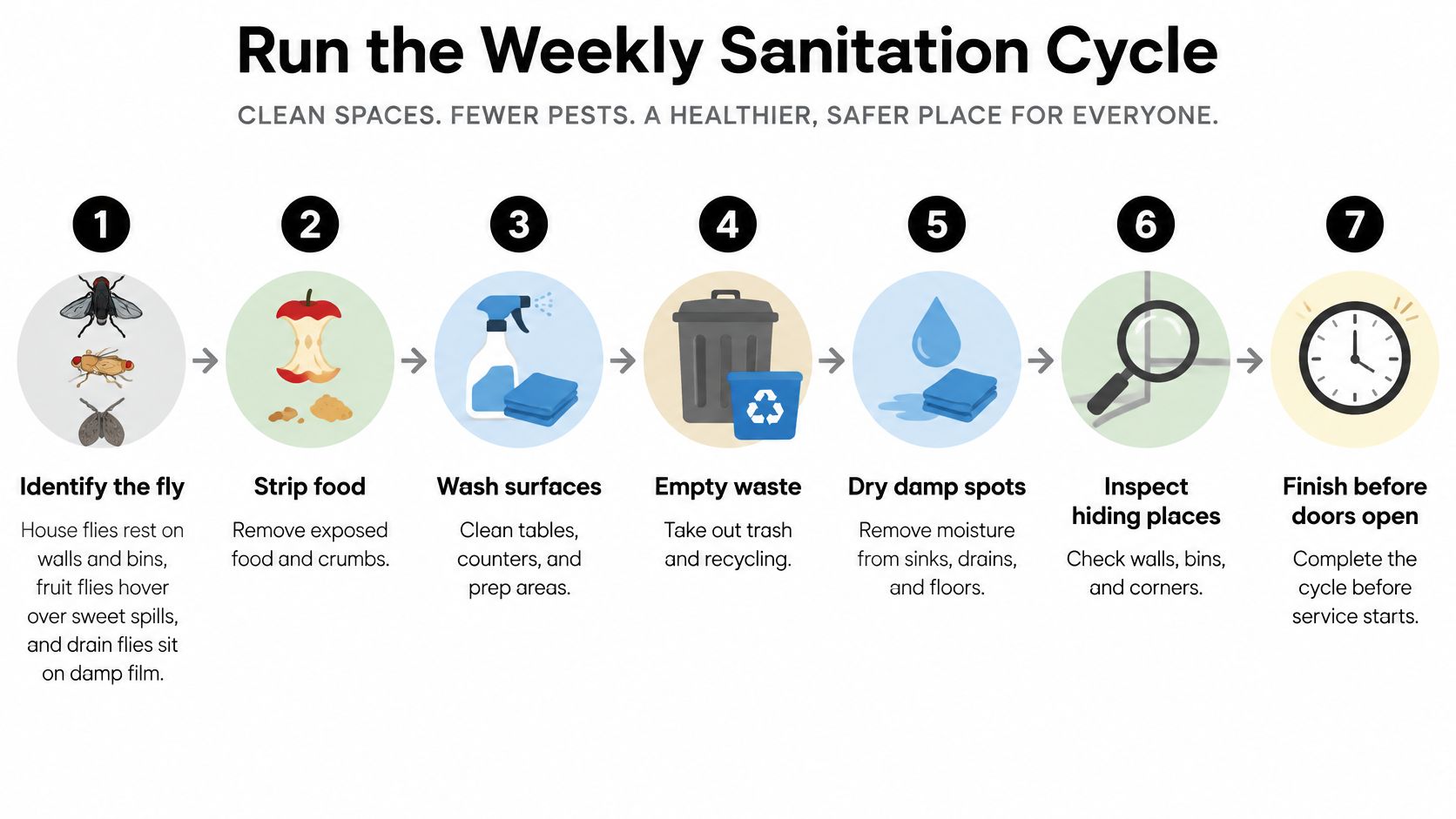
Sanitation needs an owner, a sequence, and a completion check. The EPA integrated pest-management toolkit treats sanitation as the first and most important control step. A trap can catch adults, but it can't scrub food residue from a bin seam.
Use this visual as a reminder of the opening workflow.
Complete the cleaning work before service
- Identify the fly and inspect its likely source. House flies resting on walls and bins, fruit flies hovering near sweet spills, and drain flies sitting around damp film offer different starting clues. Inspect the material beneath the activity rather than treating whichever surface the adults happen to occupy.
- Strip away food residue and wet organic matter. Remove crumbs, grease, pet waste, and decaying material from the patio, grill area, and service path. Pull movable equipment forward so staff can reach the sticky strip underneath instead of cleaning only the visible floor.
- Empty and wash refuse containers. Remove waste, wash the container and lid, and let cleaned surfaces dry. Fit the lid properly afterward. Replacing the bag without cleaning leaked liquid leaves the source in place.
- Dump standing water and repair leaks. Check planter saucers, buckets, cooler drips, and the space beneath outdoor sinks. Fix the drip instead of assigning someone to mop the same puddle indefinitely.
- Cover prepared food and seal ingredients. Use fitted covers or suitable food covers until service requires access. Store ingredients in tightly sealed plastic, glass, or metal containers rather than folded bags that leave scraps accessible.
- Clean floor drains on the weekly schedule. Remove accessible debris and scrub the buildup with a dedicated drain brush and an appropriate cleaning process. The EPA food-service toolkit recommends weekly drain cleaning because accumulated grease and food waste attract pests.
- Record activity before choosing additional treatment. Start a monitoring log and observe a full service cycle across the week. Keep protective measures in place while collecting observations, then choose traps or targeted treatment based on the insect and the remaining source.
Make weekly cleaning a minimum, not a delay
House flies can complete a generation in as little as 7–10 days, according to Purdue University Extension. That's why a weekly inspection is a practical minimum in warm weather, not permission to leave a spill until cleaning day.
Assign the deeper work to a named shift and keep spill removal continuous. A closing employee can flag a leaking bin; the opener should verify that it was washed and repaired, not just moved out of sight. Use our restaurant pest-control checklist to turn these tasks into shift responsibilities.
Two mistakes undermine the work: spraying visible adults while a damp bin stays full, and hanging an attractant trap beside the buffet. The first leaves breeding material untouched. The second can pull insects toward the meals you're trying to protect.
The same-day pass-fail is straightforward: lids on, no standing water, food covered, and drains on the schedule. If an item fails, assign the correction before guests arrive.
Seal Entries and Place the Waste Corral
Treat exclusion as building hardware, not a reminder to staff to be more careful. A door that won't latch needs adjustment. A torn screen needs repair.
Inspect the door frame and its seals as closely as the screen itself.
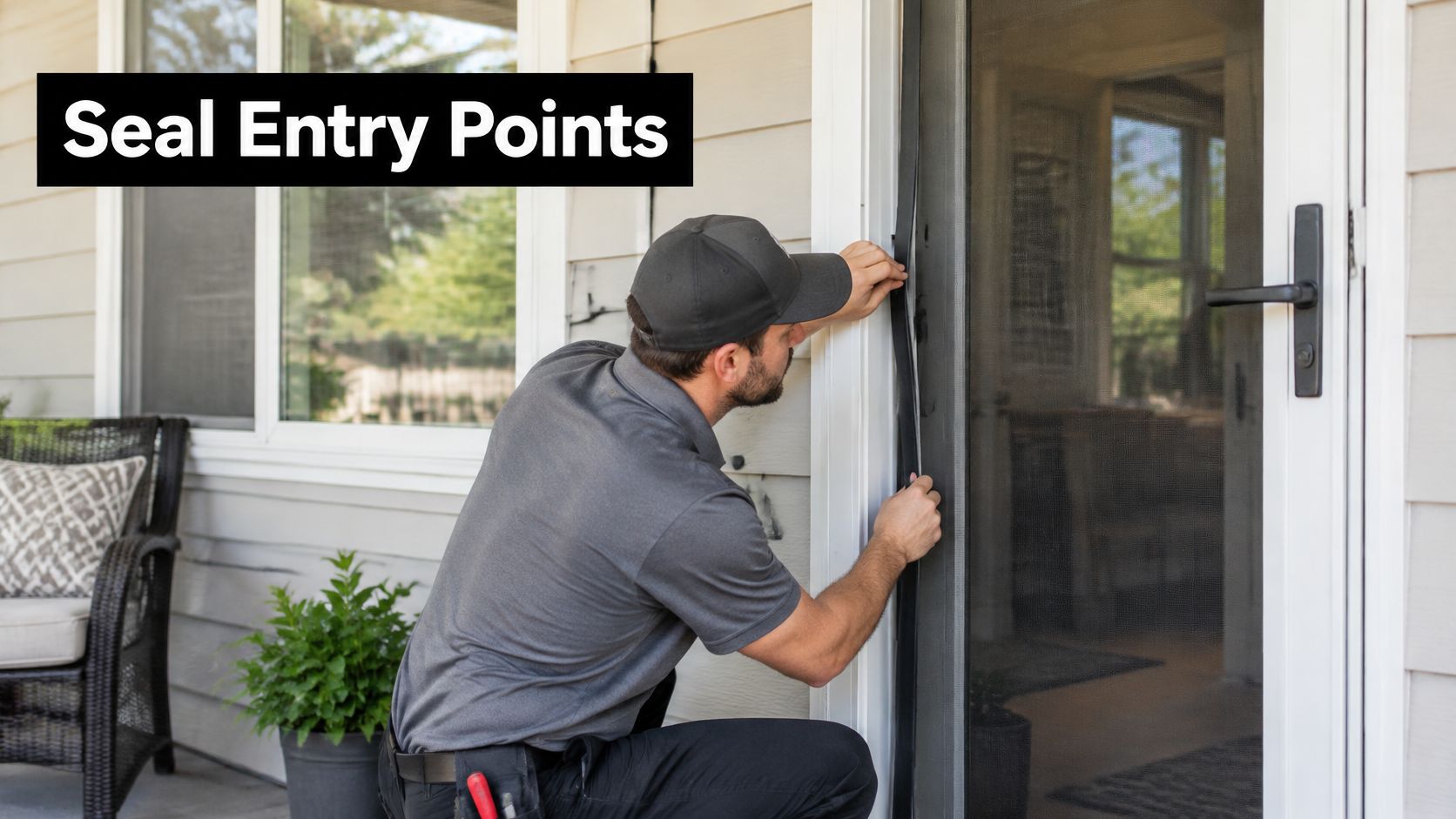
The University of Minnesota Extension fly guide recommends 14- to 16-mesh screens for doors and windows. Open service doors also deserve attention: repeated kitchen-to-patio traffic creates an entry opportunity that a clean dining table can't correct.
Walk from the kitchen toward the guest edge
Begin at the kitchen pass. Look for gaps around service openings, damaged screening, and equipment that prevents a shutter or panel from closing. Keep unused sections closed rather than leaving the whole opening exposed for a small handoff area.
At the patio door, inspect the bottom and frame. Fit a door sweep where needed, replace damaged weather stripping, and adjust the automatic closer so the door latches after a server passes through. Test it with the normal service route clear, then check whether a cart or floor mat interferes with closure.
Where deliveries require an open doorway, consider a professionally selected air curtain. Aim it at the opening, not across plated food, and check that its operation doesn't interfere with door use or staff communication.
Use the video alongside a physical inspection of your own entry points.
Separate waste handling from guest circulation
Continue to the waste corral. Place it downwind of seating when the site allows, but don't rely on wind direction alone. Keep the route accessible for collection without making servers carry waste through an active buffet line.
Move compost containers, pet-relief areas, and grease bins away from the guest edge. Clean the ground beneath containers and give staff enough room to close lids without shifting stacked supplies. A lid that's awkward to reach is likely to stay open during a rush.
At the guest edge, check that furniture, decorations, or stored equipment haven't blocked access to screens and door hardware. Repairs need to remain visible and reachable.
- Food truck: Close the service-window gap you can, cover waste, and keep the bin away from the order window.
- Hotel reception: Check the loading entrance during deliveries. A propped-open back door can matter more than anything placed on the centerpiece table.
- Restaurant patio: Stop using a wedge as a substitute for a properly adjusted service door.
Finish the day with a brief hardware check: screens intact, doors latched, bins lidded. Record defects for repair rather than leaving the next shift to discover them during service.
Lay Out Fans Lights and Seating
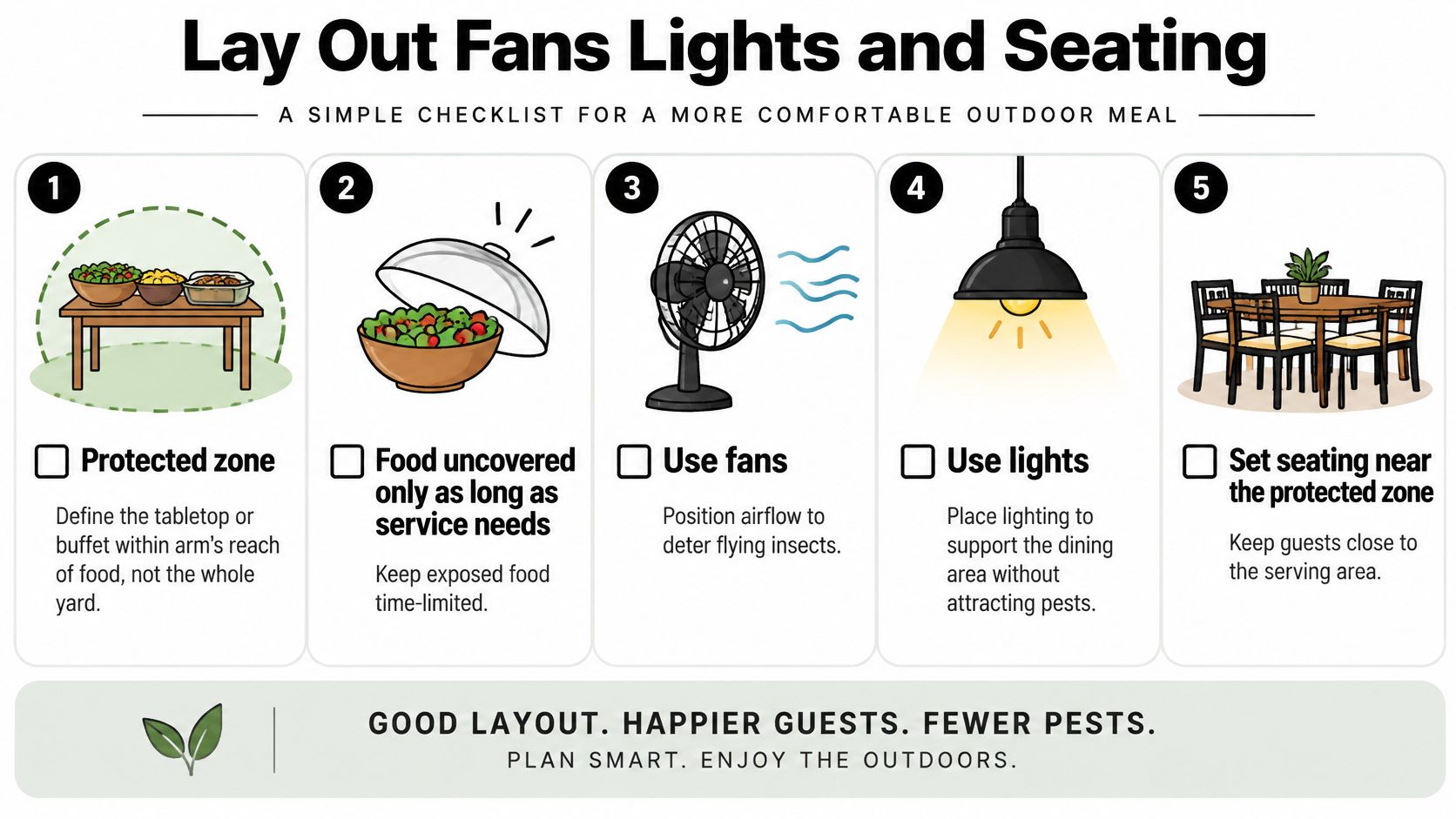
Define the protected food zone as the tabletop or buffet within arm's reach of exposed food, not the whole yard. That gives you a useful place to test airflow, covers, lighting, and staff access.
A fan operating in an empty corner may look reassuring while doing nothing at the serving platter. Position physical deterrents where food is exposed, then watch what happens when guests sit down and servers move through.
Test the layout during the service window
Judge each method against practical conditions:
- Food exposure: Dishes stay covered until guests or staff need access.
- Guest comfort: Air doesn't blow into faces, lift napkins, or disturb garnishes.
- Conversation: Guests can speak normally without competing with equipment.
- Staff effort: Servers don't have to keep moving, restarting, or repositioning devices.
Personal-repellent duration isn't a measure of dining-area protection. EPA-approved labels can specify up to eight hours for certain biting flies or up to two hours for several insects, but those are skin-use claims, not protection for a shared platter; follow the EPA guidance on safe and effective repellent use. Don't build an evening around unregistered repellents whose effectiveness hasn't been established.
Use this checklist while arranging the dining area.
Arrange equipment around plates and people
Set airflow across the dining-table or buffet food zone without blowing from waste storage toward clean dishes. Keep the waste area well separated, leave a clear server path, and don't let stacks of menus or tall decorations block the intended airflow. Our guide to outdoor fans to keep bugs away can help with the placement decision.
Use warmer, lower-intensity lighting away from plates, while preserving enough task lighting for safe service. Keep bright yard fixtures behind seating where practical rather than directly above the buffet. For a residential layout, R.E. and Sons Landscaping's guide to landscape lighting for Prescott homes offers useful context for coordinating paths, seating, and outdoor fixtures, not proof of insect-control performance.
Where children or pets can reach equipment, choose stable devices with guarded moving parts or a touch-stop design. Keep them visible rather than hidden beneath fabric or decorations. If a natural breeze already crosses the table comfortably, use covers instead of adding unnecessary wind.
A useful setup protects exposed food without making guests notice the equipment.
Before the first course, walk the route carrying an empty tray. Check reach, noise, airflow, and cover removal from the server's position. For dusk mosquito protection, provide a separate application location away from food and drinks, then let guests return to their seats after following the repellent label.
Check Counts Before You Add Products
A trap count works like a thermometer reading: it reports conditions where the sensor sits, not the whole building. Set monitoring cards at fixed locations near waste storage, the patio perimeter, and the service zone. Keep them away from food, customer contact, and places where staff could brush against them. Label each spot so successive shifts record the same point rather than whichever location looks busiest that day.
Don't judge the whole patio by the fly someone noticed at a single table. Location-specific records distinguish a dirty source from an entry problem or insects arriving from outside the property.
Read the pattern rather than the total alone
Sticky traps draw flies from the area around them, so a heavy catch confirms activity nearby without pinning down where each fly originated. A card baited for house flies also reads some species poorly: gnats, fruit flies, and mosquitoes respond to different cues and need their own assessment.
Keep flies and mosquitoes in separate columns. Fly counts measure risk to exposed food during the service window. Mosquito pressure measures guest comfort, and it often peaks near dusk as fly activity eases. Judging a food-zone fix by a people-zone complaint hides whether the change worked.
Use the EPA integrated pest-management framework to connect monitoring with action: record counts at the same time each day for at least seven days, then compare the weekly average after sanitation, exclusion, and physical deterrence. Keep the card type and location consistent so a change in your method doesn't masquerade as a change in insect activity.
For each location, add the daily counts and divide by the number of days recorded. Keep those averages separate. Combining the waste and service readings can hide an improvement at the table behind continued activity at the corral.
What high fly counts mean
| Pattern | Where counts stay high | Next fix |
|---|---|---|
| Adults still on plates after cleanup | Food line or waste still wet | Re-clean bins and cover food before adding devices |
| Rush of flies at the building | Doors and passes | Correct screen mesh, closers, and a door sweep |
| High only at the yard edge | Incoming from outside the patio | Investigate and correct the outside source, not the table |
| Small flies after bins are clean | Drains and damp mats | Weekly drain cleaning, not a house-fly trap |
Choose one correction you can evaluate
If the waste card stays high, inspect the container bottom, lid seam, surrounding pavement, and collection routine. Another table device won't remove liquid beneath a dumpster.
If activity clusters at doors, watch the opening during a rush. A working closer won't help if a delivery cart holds the door open. At the perimeter, investigate neighboring sources or drainage conditions without treating property you don't control.
Persistent small flies require identification before treatment. A low house-fly catch says nothing about fruit flies or drain flies.
A targeted pesticide belongs after monitoring and an action threshold show that prevention isn't enough. Agree with a qualified pest-management professional on what triggers intervention, including repeated insect contact with exposed food. Mosquito treatment runs on a different clock and a different zone than fly control at the table: South Mountain Window Cleaning, LLC's discussion of safe mosquito spraying times of day provides planning context, while the product label, weather, and food-service restrictions govern the application.
End the log with the weekly average for each location and one corrective change for the coming week. One change keeps the result readable: if counts drop, the next review knows what to credit.
Run the Pre-Service Food-Zone Check
Start the final walk before doors open, with enough time to correct a failure. Carry the opening checklist and inspect physical items, not just whether the patio looks tidy.
For receptions and catered meals, coordinate the walk with whoever releases food from the kitchen. Resources on event food safety at Texas Old Town provide event-planning context, while our outdoor food-safety tips help connect the dining setup with food handling.
Walk the actual service route
- Read the insect record. Confirm yesterday's identification and busiest location. A high waste-area reading means the opening assignment is source correction, not distributing more devices.
- Inspect the bins and drain schedule. Check for closed lids, overflow, leakage, and a signed-off drain-cleaning task. Look beneath the container rather than accepting a clean lid as proof that the area passes.
- Check water-holding items. Empty planter saucers, buckets, and cooler-drip collections. Assign any continuing leak to maintenance.
- Verify food covers and storage. Keep every plate, bowl, and tray protected until service requires exposure. Confirm that backup ingredients are sealed and replacement covers are within reach.
- Remove repellent products from the food zone. No skin repellent, fogger, or pest-control aerosol belongs on the dining table or buffet. Direct guests who need personal protection to the separate application area.
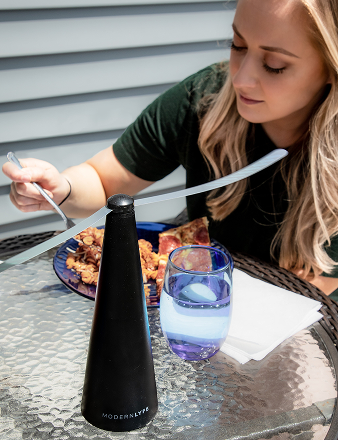
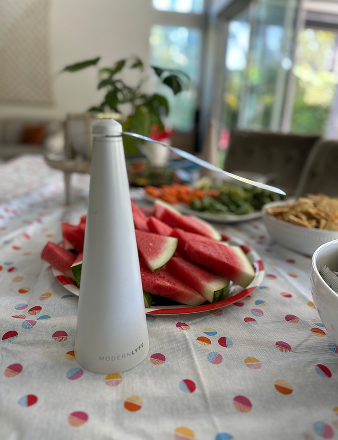
- Test the physical deterrent. Position a non-chemical device for the table or buffet it serves, not an unused corner. Check power, stability, reach, and operation for the service window you run.
- Test the door. Release it from the normal opening position and confirm that it latches. Check the sweep and screening while you're standing there.
Judge performance at the table
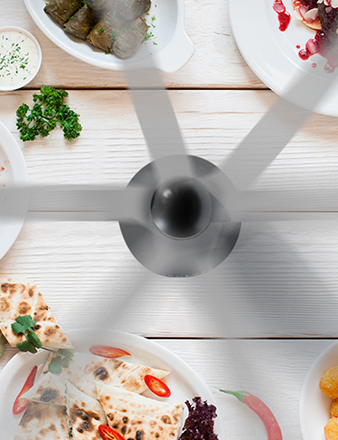
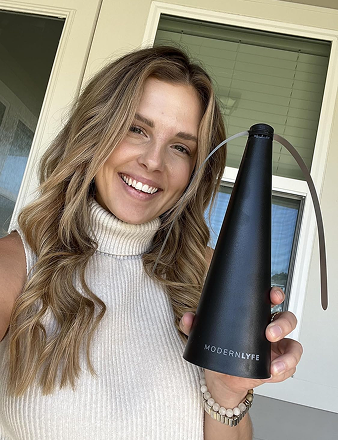
Our Fly Fan for Tables is rechargeable for indoor and outdoor use, keeps flies and pests away from food, and offers an odor-free alternative to bug repellents. It lasts over 8 hours per charge. Treat that runtime as an operating specification, not a promise of whole-patio or mosquito protection.
During service, look for insect contact with plates and listen to the dining area. If dishes stay clear and guests can talk without raising their voices, keep the arrangement. That observation supports the setup's practical use, but it doesn't guarantee disease prevention.
If the setup fails, return to the first failed check and correct that item before adding anything. Give the opening lead authority to delay an uncovered buffet until the food zone is ready.
MODERN LYFE offers rechargeable fly fans for dining tables, patios, food trucks, and event buffets where keeping flies away from food matters. Visit MODERN LYFE to choose a table setup that fits your service window, alongside clean waste areas, covered food, and well-maintained entries.