An outdoor reception can look perfect on the run sheet and still go sideways in ten minutes. The food is out, guests are arriving, the florist nailed the brief, and then a piece of equipment fails at exactly the wrong moment. In hospitality, that kind of failure rarely stays small. It becomes a guest complaint, a stressed client, and a reputation problem.
That's why I don't treat a peace of mind guarantee as soft marketing language. I treat it like an operational document. If a supplier uses that phrase, the question is simple: what risk are they taking off your plate, and what risk are they leaving with you?
For restaurant operators, caterers, venue managers, and event planners, this matters most in the details that guests never notice when things go right. Timing. Setup reliability. Outdoor performance. Clean presentation. Fast replacement if something fails. The guarantee should support those realities, not distract from them.
Your Reputation is on the Line
You're setting for an upscale garden wedding. The marquee is up, tables are dressed, and service staff are moving into final positions. Then one of the table-side protection devices you counted on either underperforms or stops working. Guests start noticing flies around plated food. Nobody cares whether the supplier's ad promised “confidence” or “satisfaction.” They care that the experience now feels sloppy.
That's the cost. In hospitality, equipment failure doesn't stay in the equipment category. It spills into food presentation, hygiene perception, guest comfort, and client trust. If you're already comparing temporary structures, power needs, and weather backup plans, a practical guide for choosing your event's marquee is useful because it pushes the same discipline you should apply to every supplier promise. Specs matter. Terms matter more.
A guarantee only helps if it reduces event-day exposure. If it kicks in after the event is over, after the client has complained, or after your team has spent hours improvising, it didn't protect your reputation. It protected the supplier's marketing copy.
That's also why operators should connect product guarantees to compliance risk. A guest who sees pests around food may not know whether the issue came from weather, layout, or equipment. They just see a lapse. If you work in food service, that concern sits close to the same operational discipline behind avoiding restaurant health code violations.
A weak guarantee refunds a purchase. A strong guarantee helps prevent the service failure that triggers the refund discussion in the first place.
Hospitality buyers don't need comforting language. They need terms they can use before a purchase, during setup, and under pressure.
What a Real Peace of Mind Guarantee Means
A real peace of mind guarantee is a supplier-backed transfer of risk. It means the seller accepts responsibility for a defined set of failures, conditions, or service problems instead of leaving you to absorb all the disruption yourself.
That's why the closest practical analogy isn't a slogan. It's a narrow, event-specific insurance layer underwritten by the supplier. Not broad coverage for everything. Targeted protection for the things they claim their product or service can reliably control.

It's not the same as a basic warranty
A standard warranty often focuses on defects. If a unit breaks because of a covered manufacturing issue, the seller may repair or replace it. That can be useful, but it doesn't automatically protect an event operator.
A peace of mind guarantee should answer broader operational questions:
- Before the event: Is the product suitable for the environment you described?
- During service: If it fails, who responds and how fast?
- After a problem: Do you get a replacement, a repair, a refund, or just instructions to file paperwork?
This distinction matters because hospitality buyers usually aren't purchasing a product in isolation. They're buying an outcome. Clean buffet presentation. Reduced pest interference. Smooth guest flow. Less staff intervention.
Why buyers pay for reassurance
Consumers have shown that reassurance has real value, not just emotional appeal. A 2019 survey by Life Happens found that 69% of people with life insurance reported lower stress, and the same source notes that 56% of Americans are willing to pay a premium for enhanced financial peace of mind in related research, which helps explain why guarantee-based offers influence buying decisions in practice (Life Happens on protection and peace of mind).
Hospitality works the same way, but with a sharper operational edge. Buyers aren't paying for vague comfort. They're paying to reduce uncertainty around service delivery.
For a parallel outside events, facility teams often evaluate sanitation tools the same way. A piece on elevating facility cleanliness is useful because it reminds buyers to think beyond the headline promise and ask how the tool performs in actual use.
If the guarantee doesn't tell you what happens on a bad day, it's not a risk-control tool. It's brand language.
The simplest test
Ask one question: What problem will this guarantee solve for me at the exact moment a guest experience is at risk?
If the answer is specific, the guarantee may be real.
If the answer is fuzzy, it's probably fluff.
The Anatomy of a Trustworthy Guarantee
A trustworthy guarantee has three moving parts. Clear language, meaningful coverage, and a workable claim process. If any one of those is weak, the whole promise gets shaky under event conditions.
Start with the scope
In warranty engineering, a strong guarantee is a time-bounded risk transfer covering both parts and labor, because labor can be the more expensive variable when something goes wrong in the field (Qmerit warranty example). That principle matters well beyond electrical installation. In hospitality, the hidden cost is often not the item itself. It's staff time, disruption, rushed replacement, and setup delays.
If a supplier says they'll “stand behind the product,” look for the missing operational details:
- Parts only: You may still absorb diagnosis, handling, and replacement effort.
- Repair only: That may be useless if your event is tomorrow.
- Replacement only after return receipt: That may create a service gap you can't afford.
Read for clarity, not warmth
Some guarantees sound generous because they use broad language. Broad language is often where trouble starts.
Practical rule: If two people on your team would interpret the same sentence differently, the guarantee is too vague.
Strong wording names the trigger. Weak wording describes a feeling.
| Attribute | Weak Guarantee (Red Flag) | Strong Guarantee (Green Flag) |
|---|---|---|
| Coverage trigger | “If you're unhappy, contact us” | “If the product fails under covered use during the stated term, we will repair, replace, or refund” |
| Scope | “Backed by our commitment to quality” | “Covers specified defects, stated components, and defined service actions” |
| Buyer cost | “Terms apply” | “States whether shipping, labor, and replacement handling are covered” |
| Timing | “We'll work to resolve the issue promptly” | “Explains response steps and resolution path in writing” |
| Eligibility | “Valid with proper use” | “Defines what counts as proper use, environment, and setup” |
| Claims process | “Reach out to support” | “Lists required documentation, contact method, and approval steps” |
Ask the questions sellers hope you won't ask
Experienced buyers separate solid suppliers from polished ones. Borrow the same skeptical habit you'd use when protecting your home from vent cleaning fraud. The lesson transfers cleanly to hospitality procurement. Bad actors rely on urgency, vague promises, and buyer assumptions.
Use a direct checklist in vendor calls:
- What exactly is covered? Product defects, batteries, motors, housings, accessories, shipping damage, setup error.
- What exactly is excluded? Outdoor misuse, water exposure, heavy-use commercial environments, third-party damage, consumables.
- Who pays the friction costs? Return shipping, diagnosis, replacement shipping, onsite labor.
- What must we do to keep coverage valid? Registration, proof of purchase, approved use conditions, maintenance steps.
- How fast does support respond? Not “fast.” Written expectations.
- What happens if a failure occurs during an active service window? Replacement, troubleshooting, temporary workaround, refund only.
A strong supplier should handle these questions calmly. If the answers drift into general reassurance, stop there.
Reliability beats reassurance
Hospitality teams should also tie guarantee language back to the product itself. If the item is exposed to repetitive transport, outdoor conditions, frequent handling, or long operating windows, the supplier should be able to explain how design and support reduce failure risk. That's where broader purchasing discipline around product reliability becomes inseparable from guarantee review.
“Peace of mind” only has value when procurement can translate it into response steps, covered scenarios, and cost responsibility.
That's the standard. Anything less is ad copy.
How Guarantees Drive Business Value
A strong guarantee creates value because it lowers hesitation at the point of purchase and reduces chaos after the purchase. Buyers get a clearer risk picture. Sellers get a cleaner trust signal.

For hospitality buyers, the business case is practical. A usable guarantee can protect margins by reducing last-minute replacements, emergency sourcing, and staff distraction during service. It also helps protect guest experience, which is the category that usually matters most when a client decides whether to rebook, refer, or complain.
What buyers actually gain
The biggest win isn't emotional comfort. It's decision speed with fewer blind spots.
When teams know what happens if a product fails, they can plan better. They can stock the right backup units, set client expectations more accurately, and choose suppliers based on actual support behavior instead of broad claims. Procurement gets easier because the guarantee clarifies total risk, not just purchase price.
This also changes internal conversations. A finance lead may question a higher upfront price. An operations lead may support it if the guarantee reduces field disruption. A good guarantee gives both sides a common framework.
Why sellers should want stronger terms
A supplier that offers clear, bounded protection usually signals confidence in its product and processes. That doesn't mean every claim will be approved or every issue will vanish. It means the company has done enough homework to define where it can responsibly absorb risk.
That discipline helps sellers in a few ways:
- It supports premium positioning: Buyers understand what they're paying for.
- It reduces pre-sale friction: Fewer unanswered “what if” questions.
- It improves post-sale learning: Claims reveal design, packaging, or support gaps.
- It builds repeat business: People remember who helped when service was under pressure.
Here's a useful discussion of trust and business commitment in action:
Guarantees also force operational honesty
This is the underrated part. A company can only write a good guarantee if it understands its own failure points. That often improves everything upstream. Packaging gets better. Instructions get clearer. Support scripts tighten up. Product teams start hearing about the same recurring issue and fix it.
For buyers, that's useful because the guarantee becomes a proxy for supplier maturity. Not perfect maturity. Real maturity. The kind you can see in how they define coverage, set boundaries, and resolve edge cases.
A vague guarantee can still sell products. It just won't help much once guests are seated and service has started.
Navigating the Fine Print and Legal Realities
Verbal promises don't count for much in procurement. The written terms control the outcome. If a sales rep says “you're fully covered” but the policy excludes your use case, the exclusion wins.
That's not just a commercial issue. It's a legal one. In the United States, the H&R Block Peace of Mind settlement in 2003 became a major consumer-protection example. The company entered a settlement with 41 states plus the District of Columbia, agreed to pay $1 million in consumer restitution, and had to change its disclosures because customers were not adequately informed that the add-on guarantee was optional (California Attorney General settlement summary). The lesson for hospitality buyers is straightforward. A guarantee that isn't transparent can create confusion, complaints, and regulatory trouble.
The fine print that changes everything
Most guarantee problems don't come from the headline. They come from the qualifiers underneath it.
Read for these issues:
- Registration requirements: Some coverage only applies if the buyer registers within a defined window.
- Use-condition exclusions: Outdoor use, commercial use, prolonged use, or exposure to moisture may void coverage.
- Proof burdens: The supplier may require photos, video, serial numbers, packaging, or original receipts.
- Return-first policies: You may need to send the defective item back before a replacement is approved.
- Discretion clauses: Phrases that leave the final decision entirely to the provider.
- Narrow remedies: Replacement may be offered, but not expedited shipping or event-critical support.
What to ask before you sign off
Don't ask whether the product has a peace of mind guarantee. Ask questions that force specifics.
-
Does this guarantee apply to my actual operating environment?
If you run patios, buffets, mobile catering setups, or outdoor weddings, say that clearly and ask for written confirmation. -
What voids the guarantee?
Many buyers are often caught unaware. “Improper use” can mean almost anything if the supplier hasn't defined it. -
What is the remedy, exactly?
Repair, replacement, store credit, refund, troubleshooting support, or some mix. -
Who pays for the logistics?
If you're paying return shipping or replacement freight, that should be visible before purchase.
The more a guarantee relies on undefined terms like “misuse,” “reasonable wear,” or “case-by-case review,” the more risk stays with the buyer.
Treat the guarantee like a contract
Hospitality teams often review service agreements carefully and skim product guarantees. That's backwards. Small equipment can create outsized disruption when it fails in front of guests.
A useful working rule is this: if the guarantee affects event execution, procurement should review it with the same seriousness used for delivery windows, setup obligations, and cancellation terms. If the supplier won't share the terms before payment, that's a signal on its own.
How Modern Lyfe Delivers on Its Promise
A practical peace of mind guarantee starts before the guarantee language. It starts with product fit. In hospitality, that means asking whether the item is built for visible service environments, repeated handling, and mixed indoor-outdoor use, not whether the marketing sounds reassuring.

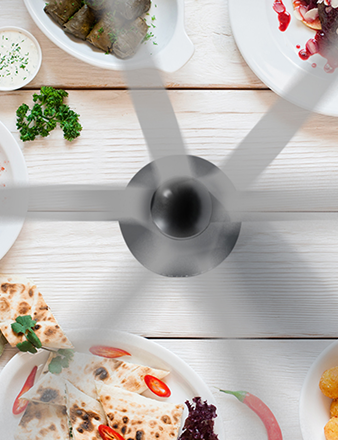
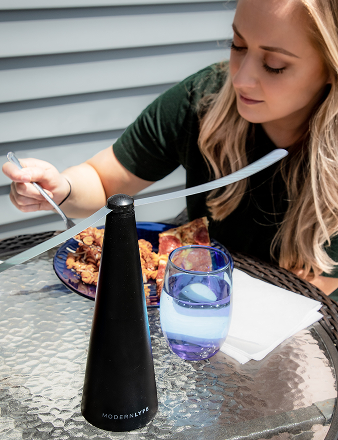
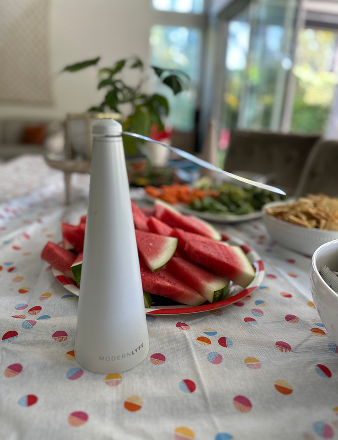
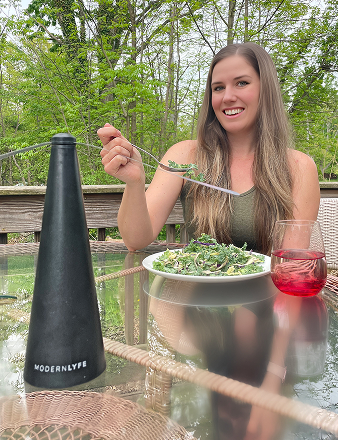
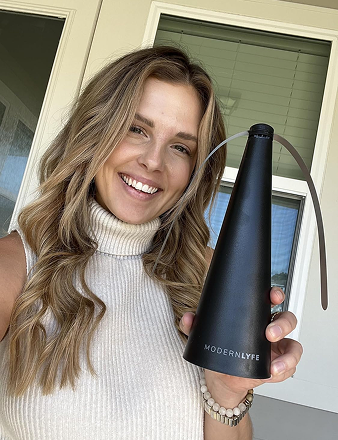
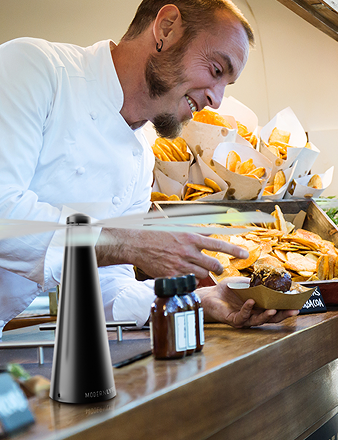
For table protection against flies, one workable example is MODERN LYFE, which focuses on battery-operated table fly fans designed for restaurants, hotels, catering setups, buffets, and outdoor gatherings. From an operator's perspective, the relevant point isn't branding. It's that the product category addresses a specific service risk: keeping flies away from food and guest areas without creating visual clutter or adding much staff overhead.
What operators should verify
The right evaluation standard stays the same no matter the supplier:
- Match the use case: Does the product suit buffet lines, plated outdoor dining, or temporary event service?
- Check support mechanics: Is there a documented way to register coverage and request help?
- Confirm operating expectations: Battery use, runtime expectations, handling instructions, and placement guidance should be easy to understand.
- Review durability cues: Materials, controls, and construction should fit repeated service use rather than occasional home use.
The support side matters as much as the hardware. If a company offers warranty registration, responsive customer assistance, and clear purchase documentation, that usually gives buyers a more usable path when problems arise. With Modern Lyfe, buyers can review the warranty registration process to understand how support is tied to ownership records and post-purchase follow-up.
The signal that matters most
Good suppliers don't hide behind the phrase “peace of mind.” They make it concrete through process. You should be able to answer, in plain English, what happens if a unit arrives damaged, stops working under normal use, or creates a problem close to an event date.
Buy from suppliers whose promise survives practical questions. Coverage should still make sense after you ask about timing, exclusions, shipping responsibility, and support access.
That's the ultimate test. Not whether the guarantee sounds polished, but whether your operations team can rely on it without guesswork.
A hospitality buyer doesn't need unlimited promises. They need a bounded, written, supportable commitment that fits the way service runs. When a supplier can deliver that, a peace of mind guarantee becomes useful. Until then, it's just a phrase.
If you're evaluating service-risk tools for restaurants, catered events, patios, buffets, or guest-facing outdoor setups, MODERN LYFE is worth reviewing as one option in that process. Look at the product fit, the support path, and the written terms the same way you'd vet any operational supplier.