Friday-night service is underway. Chafing dishes are open, garnishes sit uncovered, and a cloud of fruit flies appears above the dessert table just as guests start lining up. The immediate temptation is to grab the strongest spray on the shelf, but that's usually the wrong first move. The right products to get rid of fruit flies depend on where the flies are landing, where they're breeding, and what guests or customers can see.
A home kitchen, restaurant dining room, covered wedding reception, and food truck have different constraints. One needs drain treatment and source removal. Another needs quiet protection at the dining surface. An outdoor vendor may need airflow, exclusion, and rapid deployment. The practical decision is fourfold: identify the environment, choose the right product category, deploy it correctly, and combine it with source control.
The Fruit Fly Problem in Kitchens, Restaurants, and Events
A buffet can look clean while fruit flies gather above the desserts. The source is often elsewhere: fermenting sugar, ripened produce, beverage residue, damp organic buildup, or a drain. One soft piece of fruit, an unwashed recycling container, or a concealed spill can create enough odor to attract flies into an otherwise orderly kitchen.
The operational risk is immediate because guest perception forms at the surface. A caterer may maintain spotless prep areas, yet several flies around fruit tarts can make the whole service appear careless. Tented weddings face added exposure around dessert tables, bars, and uncovered food. A directory of wedding vendors in Mauritius that includes tent setup considerations also helps coordinators account for airflow, access, and food presentation when planning pest-control measures.

The setting decides the product
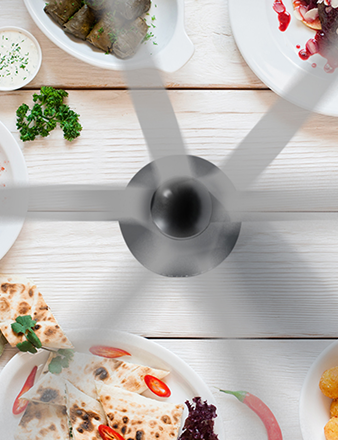
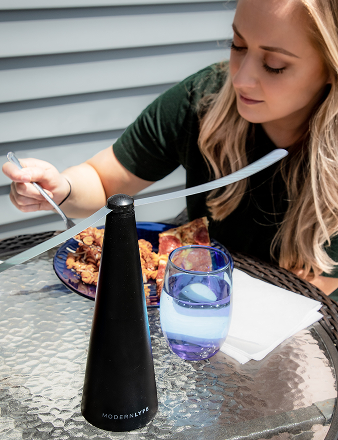
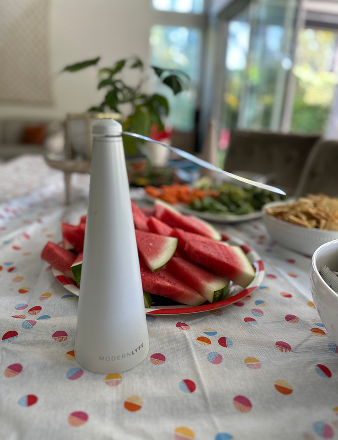
Product choice should follow the working environment, not an online ranking. A trap under a beverage station may suit a back-of-house area but look unacceptable on a dining table. A residual spray may have a controlled role away from prepared food, while a fly fan can protect a buffet edge without bait, residue, or dead insects in view.
Ask what the tool must accomplish in that location:
- Home kitchen: Locate the breeding source, treat drains, and trap adults near fruit or waste.
- Restaurant dining room: Protect guest-facing surfaces while keeping traps and treatments in back-of-house zones.
- Outdoor event: Check wind, rain, access, and appearance before selecting a lure or device.
- Food truck: Choose compact airflow, sealed storage, and tools that deploy quickly during service.
Operational rule: Use the least visible tool at the guest surface and the most direct source-control tool where flies breed.
Fruit fly control has developed from basic sanitation into integrated management. Research reviews cover biological, chemical, behavioral, sterile insect, and quarantine approaches, while practical non-chemical measures still emphasize removing breeding sources through sanitation, pruning, soil disturbance, and trapping (review of integrated fruit fly management).
The conclusion is straightforward. Products work better as a program than as isolated purchases. Match the device to the environment, keep guest-facing protection discreet, and address the source behind the visible flies.
Why Fruit Flies Are So Hard to Eliminate
Fruit flies are difficult to eliminate because adults are the final, visible stage of a much larger cycle. At around 25°C, or 77°F, they can complete their life cycle in about 8 to 10 days (fruit fly life cycle overview). By the time you see adults around a fruit bowl, eggs, larvae, and pupae may already be hidden in damp organic material.
A breeding site can sit inside a drain, beneath a piece of equipment, in a mop bucket, around a trash container, or under a beverage station. The Max Planck breeding guide describes a sequence at 25°C in which the embryo hatches after one day, the larval stage lasts five days, and the adult emerges from the pupa after a further four days (Max Planck fruit fly breeding guide).

Four places to inspect first
Start with the locations that combine food residue, moisture, and limited visibility:
-
Produce storage
Soft or overripe fruit can release fermentation odors that attract adults and support egg laying. Check fruit bowls, under-counter storage, crates, and damaged produce. -
Fermentation stations
Bars, breweries, cafés, juice counters, and kombucha areas generate the exact kind of volatile signals fruit flies seek. Clean residue around bottles, taps, recycling, and drip trays. -
Beverage service
Sweet drinks, wine residue, cocktail garnishes, and damp cloths create attractive conditions. A bar can look clean while a hidden spill beneath a mat continues drawing flies. -
Floor and sink drains
Organic film inside drains provides a protected breeding area. If adults keep returning after traps catch them, inspect drains before buying another surface product.
Why bait chemistry matters
Fruit flies don't respond to “fruit smell” as a single universal signal. A synthetic vinegar lure used for trapping contained 0.7% acetic acid, 0.13% acetoin, and 0.007% isobutyric acid, demonstrating that attraction depends on a specific blend of chemicals (synthetic vinegar lure research).
Another study found that apple cider vinegar volatiles attracted flies, while carbon dioxide alone was avoided. Adding carbon dioxide changed trap performance and entry behavior, which means bait concentration, airflow, gas cues, and trap geometry all matter (vinegar and carbon dioxide attraction study).
Surface sprays fail when they only address adults already flying. A durable solution removes or treats the breeding material, monitors the remaining population, and protects the areas where food is displayed.
Comparing the Main Product Categories Side by Side
No single product category wins in every environment. Each tool solves a different part of the problem, and several create trade-offs around food safety, visibility, noise, cleanup, or weather.
What each category does well
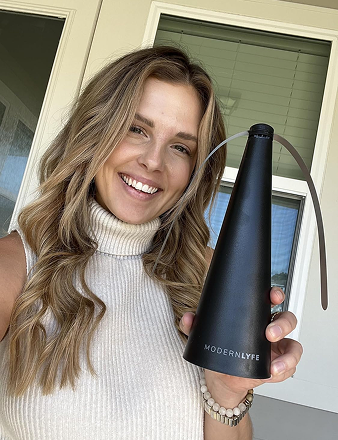
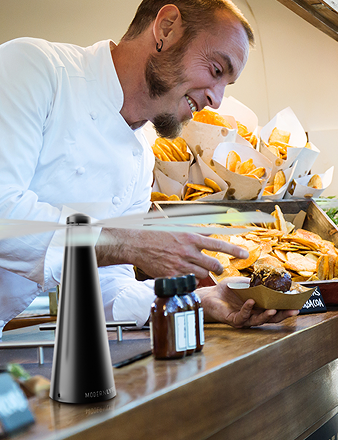
Mechanical fly fans create an airflow barrier over a specific surface. They're useful where guests can see the food and where chemical-free operation, quiet performance, and appearance matter. They won't remove a drain breeding site, so they belong at the dining surface, not as the entire control program.
Liquid traps and jar baits are practical in back-of-house zones. Vinegar-based formulations can attract adults, but performance is sensitive to chemistry and trap design. A simple jar with apple cider vinegar and dish soap is inexpensive and easy to test, although it looks poor on a buffet or dining table. For a practical overview of trap construction and placement, the Sunset Shine Home Cleaning trap guide offers a useful starting point.
Sticky strips catch flying adults without liquid spills, but they collect visible insects and can become unhygienic or visually unpleasant. Keep them away from customer-facing food and replace them before they look neglected.
UV zappers can monitor or reduce flying insects in suitable locations, but dead insects near prepared food create an obvious sanitation concern. They're more appropriate for controlled back-of-house spaces than dessert tables.
Residual sprays can reduce active populations when used precisely and according to the product label. Agricultural insecticide results don't translate cleanly to indoor kitchens, dining areas, or prepared-food environments, where exposure, residue, and placement rules are different (research on fruit fly control and insecticide use). A targeted spray should be a last resort, not a substitute for cleaning and drain control. For a broader look at spray use, see this fly control spray guide.
Screens, sealed bins, and drain covers prevent access and reduce new breeding opportunities. They're foundational, but they can't remove flies already inside.
| Category | Effectiveness | Food Safety | Aesthetic Fit | Best Environment |
|---|---|---|---|---|
| Mechanical fans | Strong at protecting one exposed surface | Chemical-free and residue-free | High | Dining tables, buffets, bars |
| Liquid traps | Useful for catching adults near sources | Keep away from prepared food | Low at guest surfaces | Kitchens, beverage stations |
| Jar baits | Practical for localized adult control | Risk of spills or bait exposure | Low | Back-of-house areas |
| Sticky strips | Captures adults visibly | Keep away from food and guests | Low | Storage and service areas |
| UV zappers | Useful in selected indoor zones | Dead insects require management | Low near food | Back-of-house spaces |
| Residual sprays | Targeted reduction of active adults | Requires strict label compliance | Moderate after treatment | Controlled service or utility areas |
| Exclusion methods | Prevents entry and access | Strong foundation | High when integrated well | Doors, windows, drains, bins |
A pheromone-based field test on papaya fruit fly showed that lure release rate and trap design affected female captures, while male captures did not significantly increase against the control across the tested release rates. That result reinforces the practical point: species-specific lure chemistry and physical design matter more than a generic odor claim (pheromone trap research).
Why Fly Fans Stand Out at the Dining Surface
Fly fans solve the part of the problem that traps and sprays handle poorly: keeping flying insects away from food while guests are watching. A quiet fan directs airflow across or downward over a defined surface. Fruit flies are small and weak fliers, so a steady air barrier can make a buffet edge, dessert station, bar top, or dining table harder to cross.
That isn't the same as killing the population. A fan won't clean a drain, remove fermenting fruit, or eliminate larvae. Its value is different. It protects the moment when food is exposed and presentation affects whether guests trust the service.
Why appearance changes the decision
A sticky strip above a dessert table announces a pest problem. A jar of vinegar beside pastries looks improvised. A zapper introduces dead-insect cleanup near the food people are about to eat. Sprays create a different concern, because operators must control residue, ventilation, and re-entry according to the label.
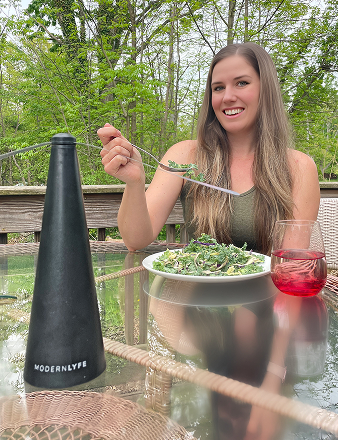
A decorative fan can blend into the table setting instead of competing with it. For indoor dining, catered buffets, covered receptions, and bar tops, that makes it a stronger fit than a high-kill device that customers can see.
| Criterion | Fly Fans | Sticky Traps / Zappers | Sprays |
|---|---|---|---|
| Primary job | Block access to a surface | Capture or kill adults | Reduce insects after application |
| Guest visibility | Low when designed for décor | Often high | Usually low after use |
| Chemicals near food | None from airflow | None from the trap itself, but placement matters | Requires careful control |
| Residue or bait exposure | None | Sticky surfaces or liquid bait may spill | Possible if misapplied |
| Noise | Quiet models suit dining | Zappers may create noticeable sound | Silent after application |
| Maintenance | Wipe and recharge or replace power source | Empty, replace, or clean | Reapply only as permitted |
| Best fit | Tables, buffets, dessert stations | Back-of-house monitoring | Targeted utility areas |
The limitation is equally clear. Open-air venues with strong wind can disperse the protective airflow, and heavy infestation zones still require source control and adult trapping. Fans are not a replacement for sanitation. They're the visible-surface defense in a layered program.
For an explanation of how this product category fits dining and event setups, see Modern Lyfe's fly fan guidance. The strongest fit for a Modern Lyfe fan is a guest-visible indoor or covered-outdoor surface where quiet operation, clean presentation, and chemical-free airflow matter more than raw kill count.
Placement, Maintenance, and Pairing Strategies That Work
A good product fails when operators place it in the wrong zone. Traps belong close enough to intercept adults but far enough from food prep to avoid contamination or visual clutter. Fans belong where the food is exposed, with airflow crossing the approach path rather than blowing randomly into the room.
Start with placement
Use these practical rules:
- Separate traps from prep: Keep bait traps away from food preparation and service surfaces. The exact distance depends on the product, room, and label, so follow the manufacturer's placement directions.
- Match height to activity: Place traps near likely flight paths, fruit bowls, drains, beverage stations, or waste areas rather than in an empty corner.
- Protect the guest line of sight: Hide traps beneath counters, behind service equipment, or near utility zones. Put fans where their finish and position suit the table.
- Control the airflow path: A fan should cover the exposed edge of a buffet or tabletop, not point toward a nearby guest's face or scatter napkins and garnish.

Build a maintenance rhythm
A neglected control product becomes part of the problem. Wipe fan blades and housings, inspect batteries or power connections, refresh liquid bait as directed, and replace sticky surfaces before they become visually repulsive. Clean spills around traps immediately, because an attractant that leaks onto a counter can create a new source.
Drains need their own schedule. Treating them only after adults appear keeps the operation reactive. Sealed waste bins, clean recycling containers, covered produce, and dry mops reduce the material that supports breeding.
Pair tools by job
A buffet line might use airflow along the front edge, with traps hidden beneath the beverage station and drain treatment performed during closing. A food truck can combine a compact fan at the service window with sealed waste storage and a quick-deploy sticky strip in a restricted utility area. A home kitchen can use a quiet fan near exposed fruit or trash while a drain treatment addresses the hidden source.
Best combination: Use fans for visible protection, traps for monitoring and adult capture, and sanitation or drain treatment for the breeding source.
Outdoor conditions change the equation. Field research has found that lure systems can lose performance through rainfall, placement problems, theft risk, and maintenance demands. One study reported that wooden-block male annihilation devices outperformed plastic traps and cost less while showing lower weather vulnerability, which demonstrates why form factor and durability can matter as much as the lure (field comparison of fruit fly control devices).
Choosing the Right Product Mix for Your Setting
Start with the environment, not the product page. The same trap, fan, or spray can be useful in one location and inappropriate in another.
Home kitchen
- Primary tool: Treat the drain and remove fermenting produce, residue, and waste sources.
- Supporting tool: Use a liquid trap near the fruit bowl, recycling area, or trash zone.
- Skip: Don't put sticky strips or open bait jars beside food that people are preparing or eating.
A practical vinegar trap can use about 1/4 cup of apple cider vinegar plus a few drops of dish soap, while another example uses 1/2 inch of vinegar with one drop of soap to break surface tension (vinegar trap example). Treat those recipes as localized adult-control tools, not a cure for the breeding source.
Restaurant dining room
- Primary tool: Place quiet fans at exposed tables, buffet edges, dessert stations, and bar tops.
- Supporting tool: Keep traps in back-of-house produce, beverage, drain, and waste zones.
- Skip: Don't rely on guest-visible zappers, sticky strips, or spray applications beside prepared food.
Outdoor event or wedding
- Primary tool: Use airflow where food is displayed and where guests gather.
- Supporting tool: Stage durable attractant systems away from guest sightlines, and use physical barriers where the site allows.
- Skip: Avoid assuming a small lure or candle will control a large open-air space. Wind and rain can change performance quickly.
Candles positioned near a dining setup may serve as a deterrent, but they shouldn't replace traps, sanitation, or airflow. Keep every flame, device, and treatment compatible with the venue's fire and food-safety requirements.
Food truck or open-air vendor
- Primary tool: Use high-airflow protection around the service window and exposed ingredients.
- Supporting tool: Tighten exclusion, seal waste, and keep a rapid-deployment capture tool for restricted areas.
- Skip: Avoid cluttering the customer-facing counter with jars, strips, or devices that look like emergency pest control.
A Modern Lyfe fan fits most naturally on a guest-visible indoor or covered-outdoor dining surface when silence, presentation, and chemical-free operation matter more than the number of insects killed. The decision rule is simple: match the tool to the setting, then add a second tool for the hidden source.

An Integrated Mindset for Long-Term Fly Control
Fruit-fly control requires a daily operating routine, not a single product. Use the Prevent, Monitor, Respond framework and match each step to the kitchen, dining room, or service area.
Prevent access with clean drains, sealed bins, covered produce, screens, drain covers, and airflow over exposed dining surfaces. Remove residue and standing moisture before adult flies establish a population.
Monitor activity with traps or suitable indoor capture devices. Location matters. A trap that fills quickly under a beverage station points to a different source than one near a window or produce shelf.
Respond with tools suited to the active zone. Fans protect guest-facing service surfaces, baits capture adults near sources, and selected treatments address utility areas. Use sprays only where the label and food-safety controls permit them.
Agricultural programs show the value of layered management. A guava field study found lower fruit-fly infestation in an integrated pest management plot than in an untreated control. Large coordinated programs have also been required in the United States, as documented in a USDA fruit fly suppression review. The lesson applies to hospitality: control the source, monitor activity, and protect exposed food and guest areas at the same time.
Tape this checklist inside the prep-room door:
- Drain every sink nightly.
- Empty trash during service.
- Inspect drains and hidden wet areas weekly.
- Deploy airflow at exposed dining surfaces.
- Review trap activity on a consistent weekly schedule.
For the broader method, read Modern Lyfe's guide to integrated pest management. Products work hardest when they support a routine rather than replace it.
For guest-facing protection at buffets, dining tables, covered receptions, or bar tops, explore MODERN LYFE for quiet fly fans and related fruit-fly control solutions. Choose equipment for the setting, then pair it with sanitation and monitoring.