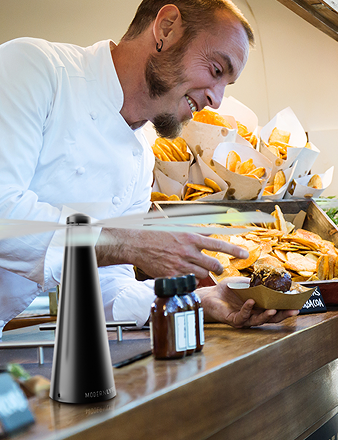
You're mid-service. The bar's two deep, the patio's full, and a guest is waving a fruit fly away from her glass while the line keeps plating behind you. Someone grabs a spray, the air clears for ten minutes, and the flies are back before dessert. That's not bad luck. That's a breeding source you haven't removed yet, and restaurant fruit fly control starts by finding it, not by clearing the air.
Why Fruit Flies Keep Returning
You see it first at the garnish station. Two small flies over the citrus, then one over a wine glass, then a guest doing that discreet hand wave that every manager dreads. The bartender wipes the rail, tosses a lemon, and tells you it's handled. It isn't. By the next course they're back, because the adults you can see are the last stage of a problem that's already weeks deep.
Restaurant fruit fly control is a sanitation and exclusion problem first. These insects develop rapidly wherever fermenting produce, beverage residue, organic waste, or moist deposits stay available. Kill the adults tonight and the residue under the soda gun, in the bar drain, or behind the lowboy keeps producing the next round.
A Week Is Enough to Restock the Bar With Flies
The cycle runs through four stages, egg, larva, pupa, and adult. A 2019 temperature study of Drosophila melanogaster found the complete life cycle generally takes about 8 to 11 days under favorable conditions, stretching to approximately 18 to 20 days in cooler conditions, with measured development ranging from 10.47 days at 30°C to 18.35 days at 18°C as documented in the 2019 temperature study of Drosophila development. Read that as a manager, not a biologist. One missed spill doesn't give you one bad night. It gives you generation after generation across a whole season.
Temperature speeds things up, but it's not the only driver. Food availability, how densely residue is left, and the surrounding conditions decide whether the population keeps building. A warm bar with a wet drain and sugary film is a production line, even if the dining room feels cool.
Spraying adults is theater. Removing what larvae feed on is control.
Where Your Eye Should Go First
Walk the building like a fly would. Start with produce storage, where overripe fruit sits warm and fermenting. Move to bar drains and drip trays coated in beer and juice. Check mop sinks, where a damp mop head sits in dirty water overnight.
- Garbage and recycling areas: Bottle and can residue ferments fast and rarely gets rinsed during a busy close.
- Under-counter spills: Syrup and soda run where nobody looks until the smell turns.
- Equipment gaps: The space between a dishwasher and a wall holds moisture and organic film undisturbed for weeks.
None of those spots looks dramatic. That's the point. Each one holds enough food and moisture to run the cycle again while your crew chases adults in the dining room.
Your goal tonight isn't a one-time knockdown. It's one system run together, rapid cleanup, frequent waste removal, dry and clean drains, stock rotation, and monitoring of adult activity. Pull any one piece out and you're back to waving at glasses by Friday.
Trace the Breeding Source First
Stop treating where you see flies. Adults forage away from where they breed, so a fly over table twelve tells you almost nothing about the source. A guest sighting is a symptom. Your job is to prove which site is producing them.
Separate three location types in your notes. Primary breeding sites hold larvae and active development. Secondary breeding sites hold enough residue to support a smaller population. Foraging locations are just where adults land to feed, usually garnish, glasses, and fruit displays. Treat only the third type and you'll do it forever.
Not Every Small Fly Is the Same Problem
Crews lump fruit flies, drain flies, and phorid flies together because they're all small and annoying. Their breeding sites differ. Organic buildup inside drains and pipes points one way. Excess moisture and scattered debris point another. If you're working through what draws them in the first place, that breakdown of what attracts fruit flies is worth comparing against your own walk-through before you assign any cleaning.
Moisture is the common thread most managers underweight. University guidance identifies leaking pipes, drains, and tubing around soft-drink, beer, and milk dispensers as restaurant risk points, and notes that improperly grouted floors or walls can allow contaminated water containing food residues to collect, as described in university guidance on fruit fly breeding sites. Your produce display can look perfect while a cracked grout line under the dish pit breeds flies all month.
For a broader look at causes before you start opening drains, fruit fly guidance from FullScope Pest Control gives useful background to pair with your on-site inspection. Background is not proof, though. Proof comes from the scrape.
Where to Look Before You Treat
| Clue | Check first | What confirms it |
|---|---|---|
| Flies clustered at the bar | Beverage dispenser drains, soda and beer tubing, drip trays | Larvae or heavy film in drain residue |
| Flies near the dish pit | Floor drains, cracked grout, equipment feet | Organic deposits scraped from drain lips |
| Flies in dry storage | Produce boxes, under-counter voids, spilled juice | Fermenting item or sticky residue with larvae |
| Flies after close only | Mop buckets, mop sinks, garbage containers | Standing dirty water or unrinsed residue |
| Flies with no obvious source | Concealed plumbing, leaking pipes, wall edges | Wet contaminated material behind or under fixtures |
Work the table physically. Pull the drain cover. Scrape the drain lip and the surfaces around it, then inspect what comes up. Larvae in that material confirm an active breeding site. Adults hovering nearby confirm nothing except that adults exist.
The rule on the scrape: No larvae and no heavy film means you haven't found it yet. Keep moving to the next zone.
End this pass with a map, not a guess. Your log should answer one question with evidence. Is this a drain, a grease trap, a produce item, a mop area, a dumpster, or a structural leak? Until you can point at the site and show what you scraped out of it, don't spend money on treatment.
Clean the Sites That Actually Breed Flies
Once larvae or heavy film identify the site, the job changes from finding to removing. Split it between porter and bartender at close so it gets done. The infographic below lays out how that shared routine divides the floor.
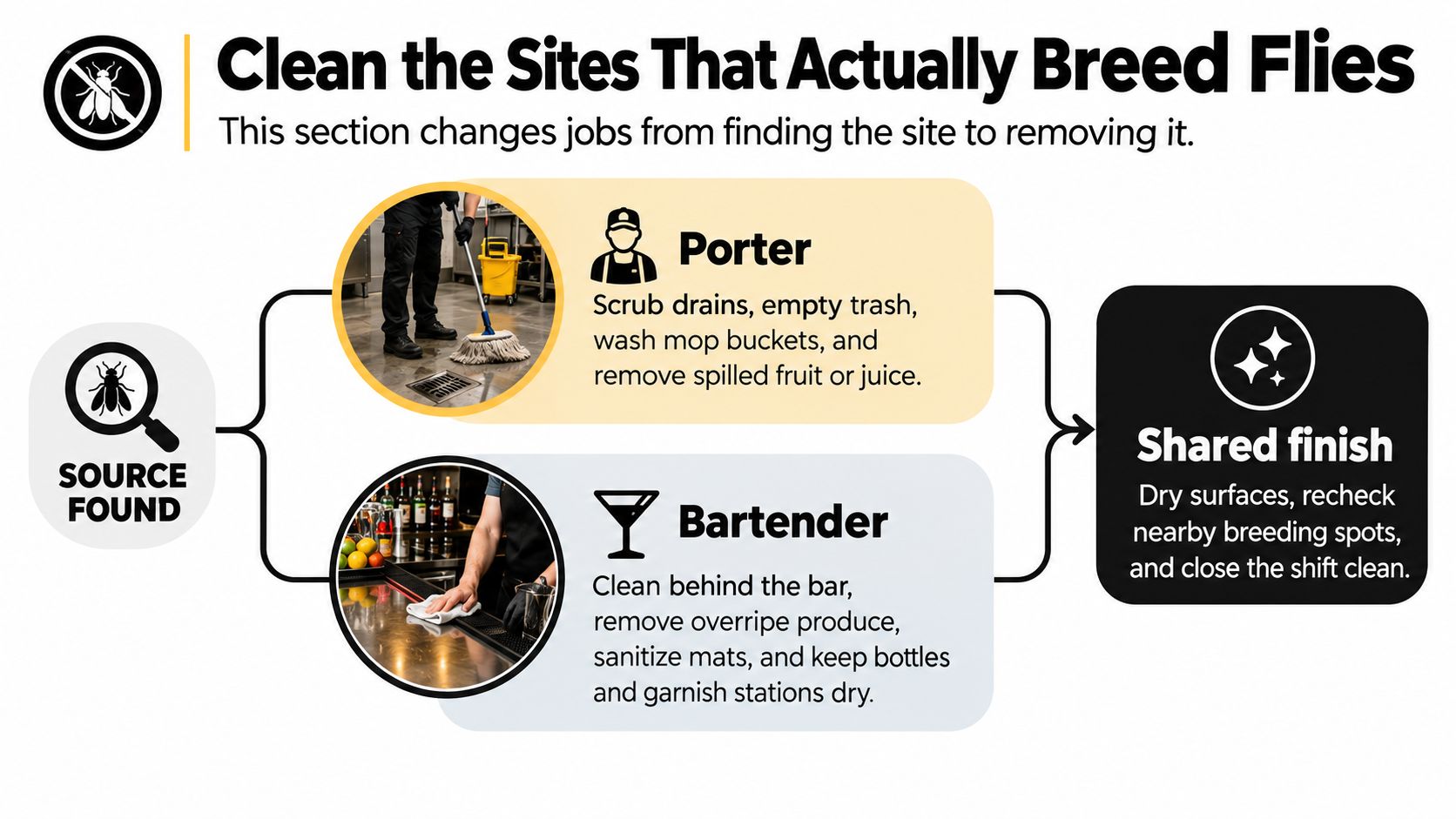
Start with mechanical removal, always. Scrape organic deposits from drain lips and surrounding surfaces before any product touches the drain. Then work drains, traps, and strainers with a stiff brush or an equivalent physical method. You're breaking up biofilm, not rinsing it.
Only after that physical clean does a label-approved biological or enzymatic cleaner earn its place. It works on residual film left after scrubbing. Poured onto untouched sludge, it sits on top and does next to nothing while larvae keep feeding underneath.
Set the Cadence and Hold It
This isn't a monthly deep clean. Maine extension guidance recommends cleaning drains, traps, and strainers at least twice weekly, and Purdue entomology guidance notes that effective weekly drain cleaning can minimize many fly problems, as set out in extension guidance on drain cleaning for fly control. The same guidance makes the sequencing point plain. Source verification comes before pesticide use, because larvae confirm an active breeding site while adult sightings alone do not identify the source.
Build the twice-weekly clean into closing duties with names attached. If you're tightening how your kitchen documents and schedules this kind of recurring sanitation work, the Renue Systems Four Points kitchen guide is a practical reference for structuring commercial cleaning routines. Structure matters because memory fails on a Saturday close.
The close-of-shift video below shows the physical side of the work in practice, which is where most crews cut corners.
After drain work, clean food-contact surfaces before anything goes back on them. Keep food debris out of the pipes instead of hosing the floor's problems into the drain you just scrubbed. Dry the floors and the space under equipment. A clean drain under a wet floor is half a job.
The Failures That Restart the Cycle
- Spraying only flying adults: The air clears, the film stays, the next generation is already in it.
- Pouring chemical into uncleaned biofilm: The product never reaches the larvae feeding under the deposit.
- Skipping soda and beer residue: Dispenser lines and drip trays are sugary, wet, and ignored at close.
- Pushing debris under equipment: You've relocated the breeding site to somewhere darker and harder to reach.
- Ignoring mop heads and buckets: A sour mop stored wet is a standing invitation.
Tag leaks and broken drain lines for repair the same day you find them. Don't let maintenance become next month's problem while water feeds the site nightly.
If counts stay high after a verified clean on this cadence, stop repeating adult treatments. Order a plumbing inspection for sub-slab breaks or hidden wet lines. Large, persistent numbers usually mean poorly managed waste or inadequate cleaning beneath and behind equipment, and sometimes a structural source no amount of spraying will fix.
Brief your closing crew on what done looks like. Drains scraped and brushed. Cleaner applied after, not instead. Floors dry. Mop gear clean and stored dry. Leaks written down. If you can't say all five happened, the site isn't clean yet.
Monitor Until the Trend Stays Down
Cleaning and proving the clean worked are two different jobs. Most restaurants do the first and guess at the second. Monitoring is how you stop guessing. The cycle below shows how to place, record, and read your counts.
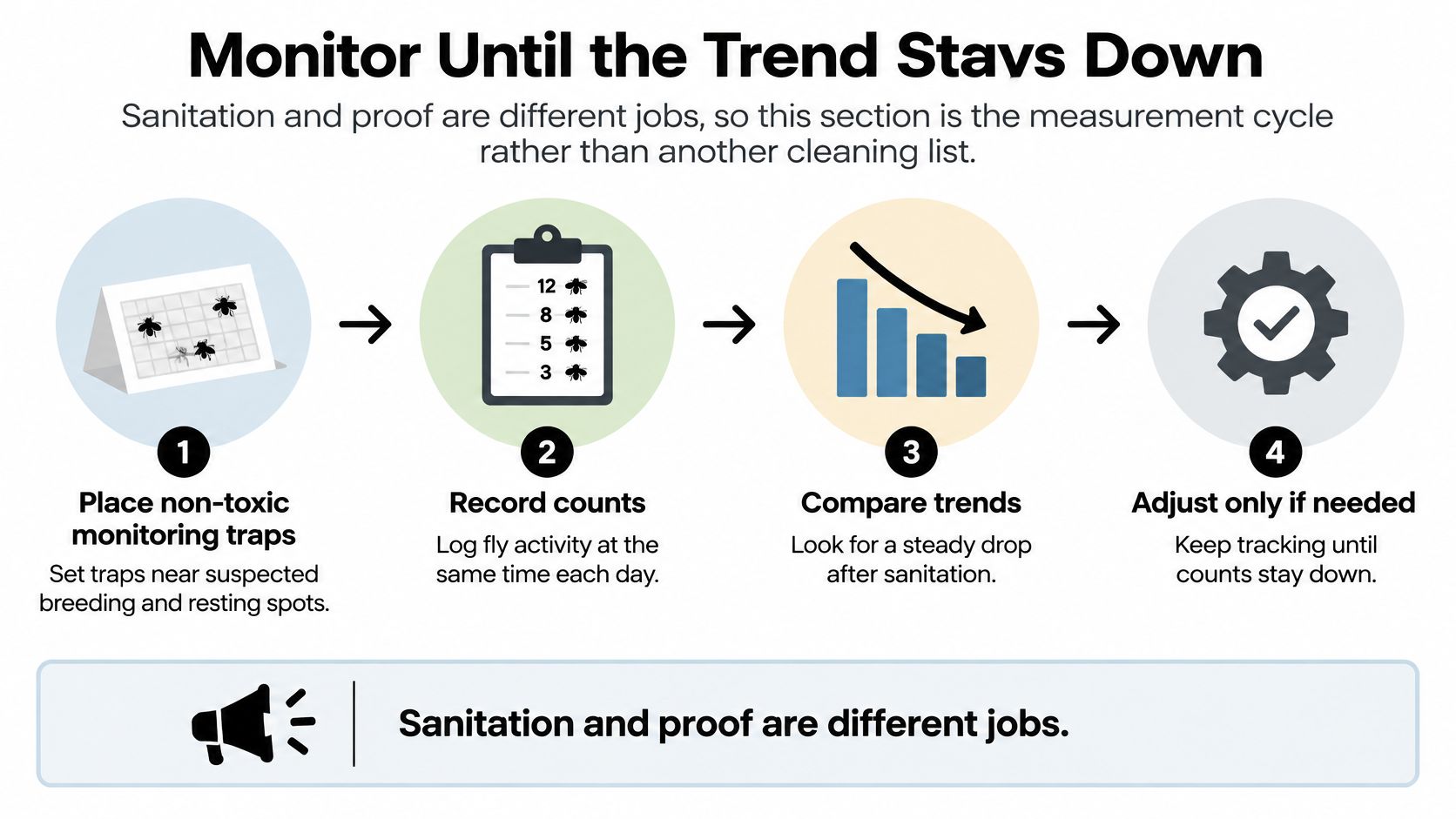
Place non-toxic monitoring traps near suspected breeding and resting areas, not randomly around the dining room. Record counts by location at consistent intervals and read the trend across those readings. One quiet night proves nothing. A location-by-location decline after sanitation changes tells you the clean reached the source.
This is the measurement half of integrated practice, and if you want the wider framework behind layering sanitation, exclusion, and monitoring, this overview of integrated pest management connects the pieces. In your building, it comes down to a sheet with dates, locations, and numbers.
Pair Every Count With the Actions That Break the Cycle
Traps don't break the cycle. Sanitation does, and your log should show both side by side.
- Produce discipline: Refrigerate or discard overripe produce the day it turns, not the day it smells.
- Bottle and can rinsing: Rinse empties before they sit in recycling with fermenting residue inside.
- Sealed storage: Keep food and sugary liquids closed between uses, including syrups at the bar.
- Waste handling: Empty and clean waste containers, and keep dumpsters closed between runs.
- Moisture removal: Eliminate standing water and condensation wherever it collects.
- Exclusion hardware: Maintain functional door sweeps and screens so you're not restocking from outside.
Long Beach public-health guidance identifies sanitation as the primary prevention method because it breaks the fly life cycle, and the recommended benchmark is zero larvae in inspected drain residue plus a sustained downward monitoring trend across at least two cleaning cycles, rather than a single trap reading, per Long Beach guidance on flies in food facilities. Put that benchmark at the top of your log. It's the line between managed and wishful.
Don't call eradication on a temporary dip. Hidden larvae keep emerging if organic film remains, so adult counts can bounce back days after a good-looking reading. Keep monitoring through the bounce. The trend across two full cleaning cycles is your evidence.
One good trap night is an anecdote. Two cleaning cycles trending down, with zero larvae on the scrape, is proof.
If flies persist after verified sanitation, change the investigation, not the trap count. Look for leaks, drain breaks, wall voids, or contaminated soil beneath the slab. Those sources need repair and removal of wet contaminated material. More traps around a broken line just give you better documentation of a plumbing problem.
Keep the log where a health inspector can read it. Trap location, count, date, larvae check result, cleaning completed. That sheet is your proof that you managed a source, not a symptom.
Choose Controls for Open Dining Areas
Indoor sources verified and cleaned, you still have the patio problem. Open-air service can't be sealed, and standard advice about closed doors and covered food only goes so far when guests, plates, and a buffet line sit in moving air. Sort your controls by zone instead of buying one device for the whole space. The comparison below frames those zone choices.
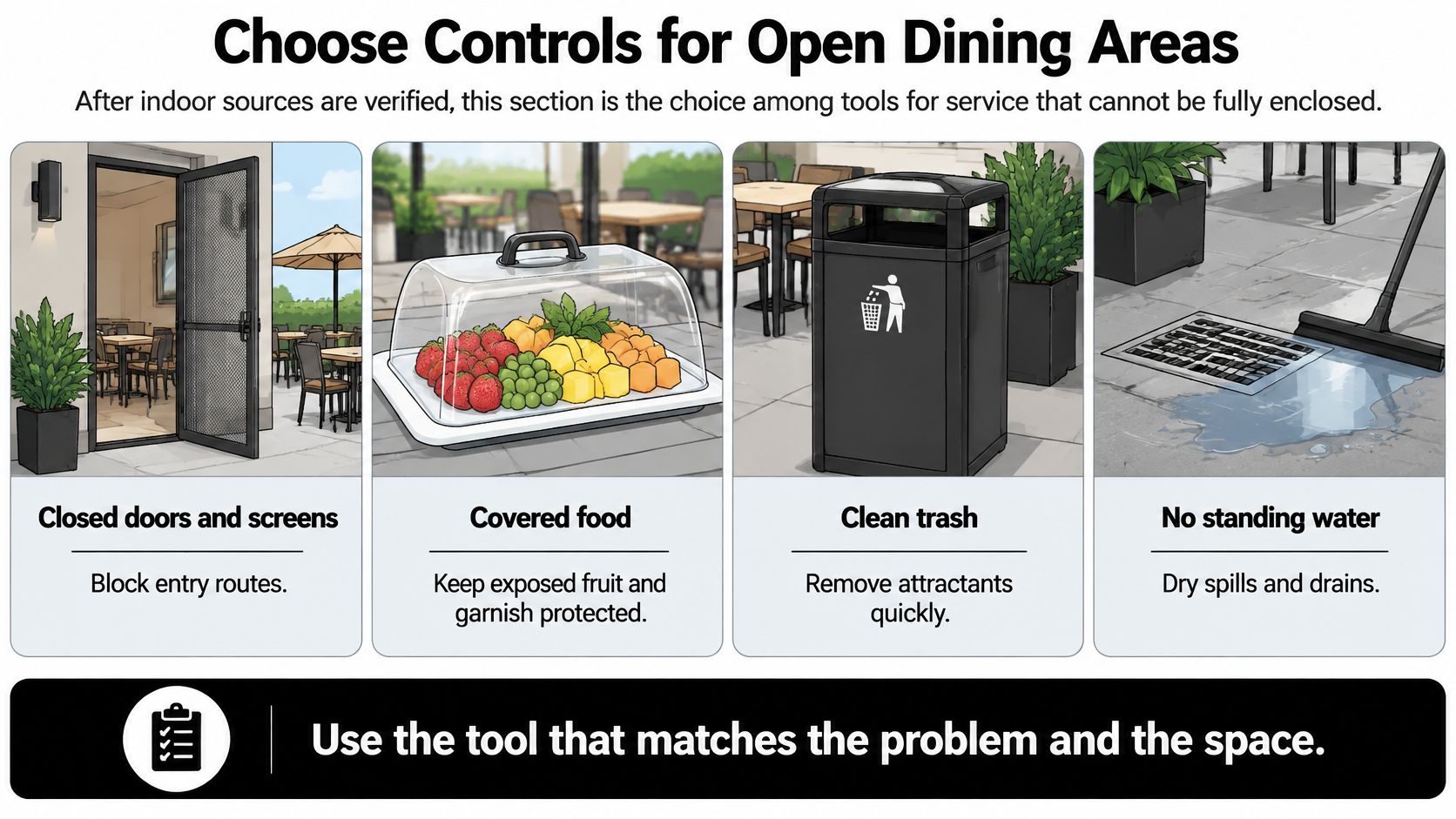
Match the Tool to the Zone
Food-contact and buffet surfaces need coverage, refrigeration where the menu allows it, and rapid spill response. A chafing dish left open beside a sugary drink station is an open invitation no device outruns. Guest seating needs comfort measures that don't interfere with eating. Waste points need distance and discipline. Move the bus tub and the trash away from where people eat, empty them before they ferment in the heat, and rinse what goes into them. Entrances take physical barriers. Drains near outdoor bars get the same scrub routine as indoor ones. Outdoor doesn't exempt them.
For protected openings, the FDA Food Code recognizes properly designed air curtains and 16-mesh screens as methods for limiting insect entry, as stated in the FDA Food Code provisions on insect control devices. Use those where the structure allows an actual opening to protect. A screen on a service door does real work. Nothing mounted on a patio railing does the same job.
Where Airflow Fits, and Where It Doesn't
Airflow pulls double duty when you place it well. Fans directed at problem areas can help keep moisture down in spill-prone kitchen locations, which makes airflow a prevention aid rather than just a last-second deterrent. A drier floor and a drier bar top give flies less to work with.
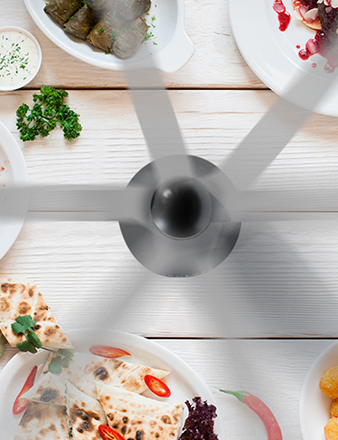
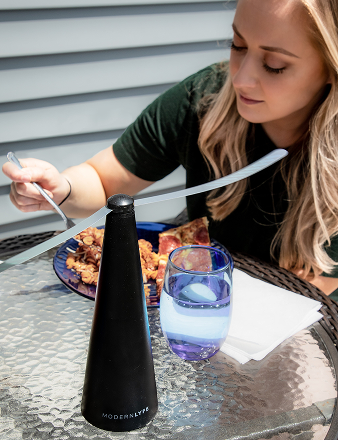
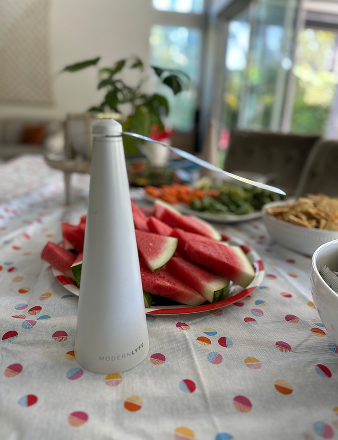
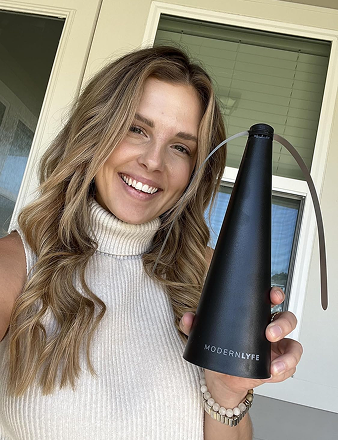
At the table layer, Modern Lyfe offers battery-operated, quiet fly fans sized to sit on dining tables and along buffet lines without a cord crossing a guest path. The controls are simple and the profile is low, so units can run through a reception or a casual patio service without dominating the table. If you're weighing how that layer fits a full dining room, this guide to fly fans for restaurants covers placement in service settings. Be clear with your team about the limit. Table fans protect exposed food and guests. They do not clean a drain, and they don't substitute for waste control.
Place any airflow deliberately. Keep it off open flames, aim it so it doesn't blow dust onto plated food, and keep units out of the server's path so they aren't knocked into a water glass mid-rush. Airflow that dries out a buffet item or fights a candle all night is placement you got wrong.
Killing Devices Carry Food-Safety Rules
Electrocute-and-drop is not a food-service strategy. Devices that electrocute or stun flying insects must be designed to retain the insect within the device. They cannot be installed over food-preparation areas, and they must sit where dead insects or fragments cannot fall onto exposed food, clean equipment, utensils, linens, or unwrapped single-service articles. If you're evaluating that category for a café or a back-of-house corridor away from food, you could find a bug zapper for cafés that fits a hospitality setting, then check its placement against those restrictions before it goes on a wall.
Contrast the two layers. A retaining device kills insects that reach it and carries contamination rules you must manage. Airflow at the table discourages landing where guests eat and carries none of that fragment risk, but kills nothing and fixes nothing upstream. Most open dining operations need the zone thinking more than they need another device. Cover the food, move the waste, dry the surfaces, protect the openings, then add the comfort layer where guests sit.
Start the Program on Your Next Shift
This isn't optional polish for a nice dining room. It's a food-safety duty with your name on it. The assignment below turns that duty into one shift your closing lead can run tonight.
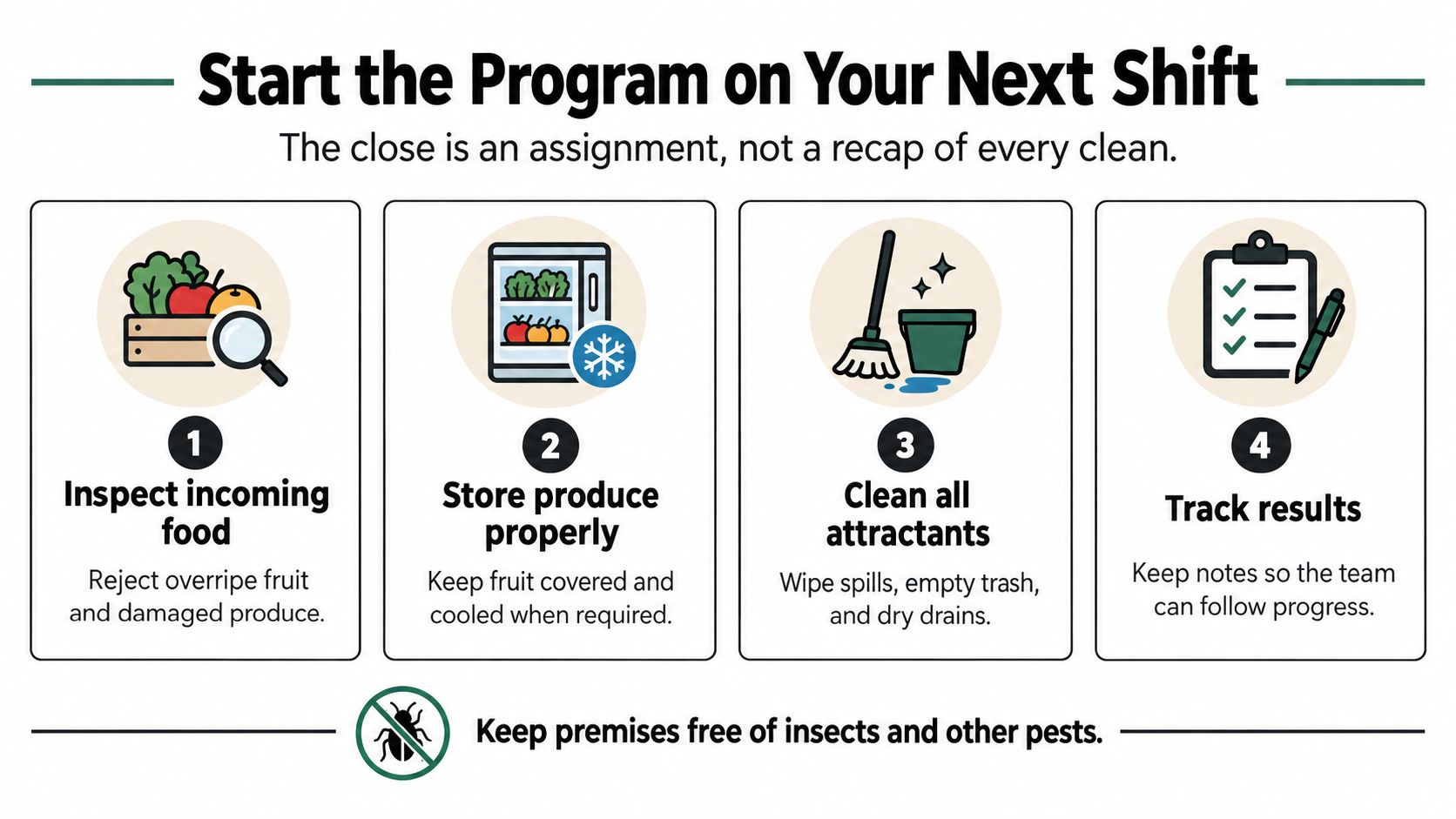
The U.S. Food and Drug Administration's Food Code requires that food premises be maintained free of insects, rodents, and other pests through four practices, routinely inspecting incoming food and supplies, routinely inspecting the premises for evidence of pests, applying appropriate control methods when pests are found, and eliminating harborage conditions, as required under the FDA Food Code pest control provisions. Note the order. Inspection comes before control methods. Harborage removal is named as its own duty. That sequence is your program.
Tonight, in Order
At receiving, check fruit and produce before it reaches the line. Reject or immediately refrigerate anything overripe or damaged. Don't let a supplier's problem become your breeding site by Friday.
On the floor, open the highest-risk drain or dispenser line from your source map. Scrape it, check the residue for larvae, and write down what you found. Pick the site your counts point to, not the one that's easiest to reach.
At close, empty and rinse the waste and recycling points that filled during service. Dry the mop sink and the floor under equipment. Store the mop clean and dry, not sitting in gray water until morning.
Write it down or it didn't happen. An unlogged clean gives the next shift nothing to verify and an inspector nothing to read.
For open dining or a buffet, place quiet table or line fans where guests and exposed food sit, positioned clear of flames and service paths. Keep any electrocuting device away from prep areas and anywhere fragments could reach food or clean equipment. Set non-toxic monitoring traps only where last night's counts were highest, so tomorrow's reading is comparable to tonight's.
What the Log Must Show Tomorrow Morning
Four entries, every shift, no exceptions.
- Larvae result: Found or not found, and at which drain or site you scraped.
- Trap data: Location and count for each trap, recorded at the same point in the shift.
- Repairs tagged: Every leak, broken line, or failed door sweep, with an owner and a date.
- Next drain clean: The scheduled date inside your twice-weekly rhythm, so the cadence survives a manager's day off.
That's the whole program in one page. Inspect what's coming in. Prove where they're breeding. Remove the site physically. Monitor until the trend holds across two cleaning cycles. Layer guest-area protection only on top of verified sanitation. Do it in that order and the flies over the bar stop being a nightly surprise, because you've cut off the thing that was making them.
Your patio and buffet line still need protection while the source work does its job, and that's exactly where quiet, battery-operated table fans belong, on the table with your guests, not as a substitute for a scrubbed drain. Visit MODERN LYFE to see the fan options built for restaurant tables, buffet lines, and outdoor receptions, then place them on top of the sanitation and monitoring routine you've just put in writing.