Indoor and outdoor settings differ mainly in control, airflow, and exposure. Indoors, walls, ceilings, ventilation, and doors let you manage conditions. Outdoors, the wind can shift in seconds, and food sits much closer to insects, dust, and waste.
Why the Difference Between Indoor and Outdoor Spaces Matters
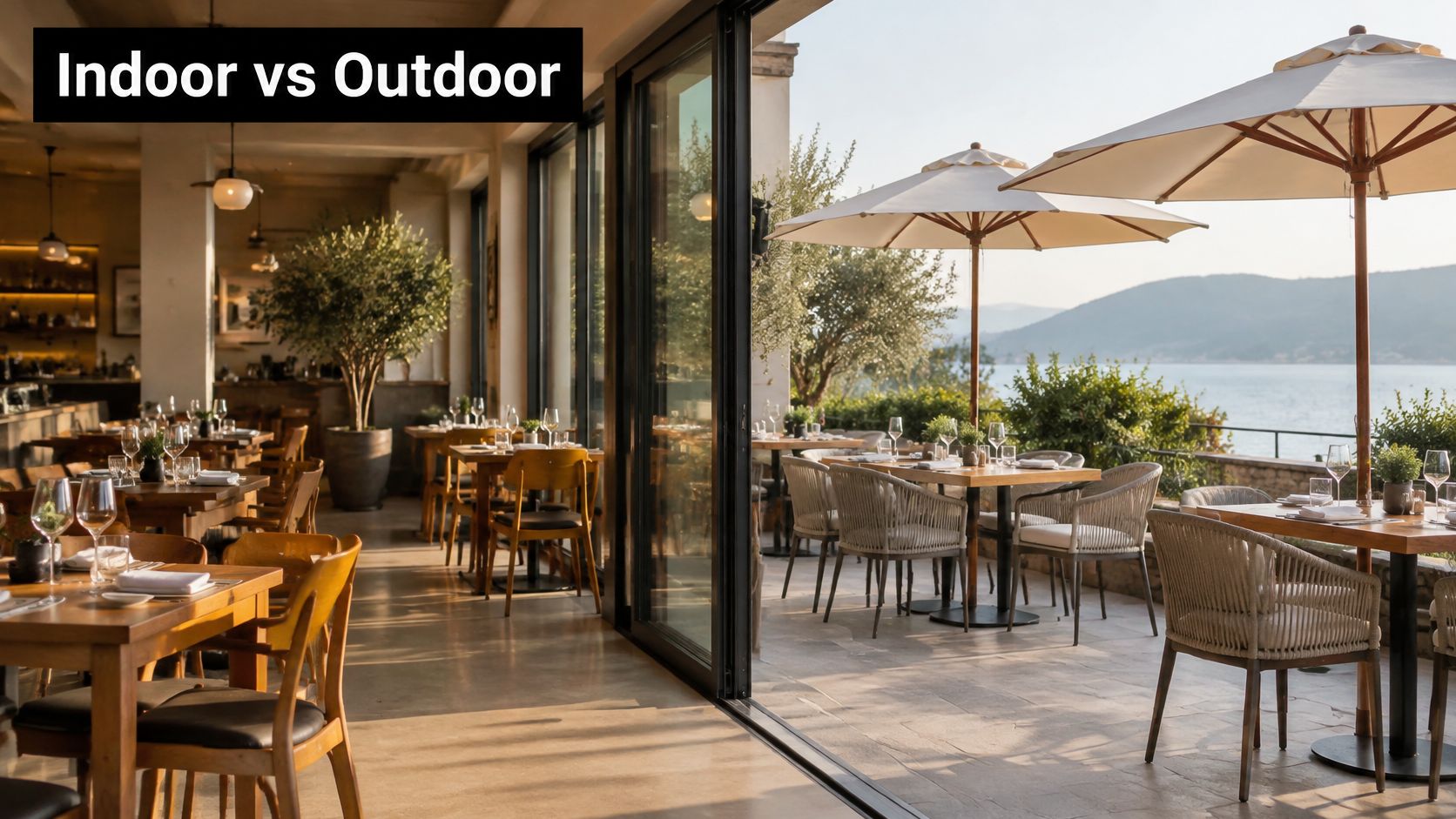
Both environments can run well, but each needs different assumptions. Many operators treat a covered patio like an indoor room. That mistake causes most of the trouble.
- Air movement: Indoor air follows the ventilation system. Outdoor air changes with every gust.
- Control: Indoor managers set temperature, lighting, and door policy. Outdoor hosts work with whatever the weather delivers.
- Exposure: Indoor food picks up pests mainly through entry points. Outdoor food sits within easy reach of open air and nearby waste.
The gap goes beyond food safety. The U.S. Environmental Protection Agency reports that Americans spend roughly 90% of their time indoors, whether at home, at work, at school, or in restaurants and hotels. Indoor pollutant levels are often 2 to 5 times higher than typical outdoor levels, and some studies have measured them as much as 10 times higher, according to EPA indoor air quality research.
A wall can block the wind, but it will never keep insects out.
Indoor vs Outdoor at a Glance
| Factor | Indoor Setting | Outdoor Setting |
|---|---|---|
| Airflow | Set by ventilation and doors | Changes with the wind |
| Control | Strong over temperature and entry | Limited to placement and timing |
| Exposure | Enters through doors and kitchen traffic | Direct contact with insects, dust, and waste |
| Pest risk | Comes through hidden entry points | Arrives in the open air |
Use this table as a starting point. The sections below show how these differences shape daily planning, from equipment to food protection.
Where Each Setting Fits Best
Some venues benefit from both. A hotel ballroom suits seated service well, while a garden reception needs wind and insect planning from the start.
- Indoor: Dining rooms and banquet halls, where temperature and entry points are easier to control.
- Outdoor: Patios, food trucks, and backyard gatherings, where airflow and nearby pests need constant attention.
Most operators run both, so the goal is to match protection to each space rather than apply one routine everywhere. Start with the space that carries the most risk.
The same fan, heater, or cooling unit can perform very differently depending on where it sits. A spec sheet shows ideal performance. The room or patio shows what the unit actually does during a busy Friday service.
Design Choices Follow the Space
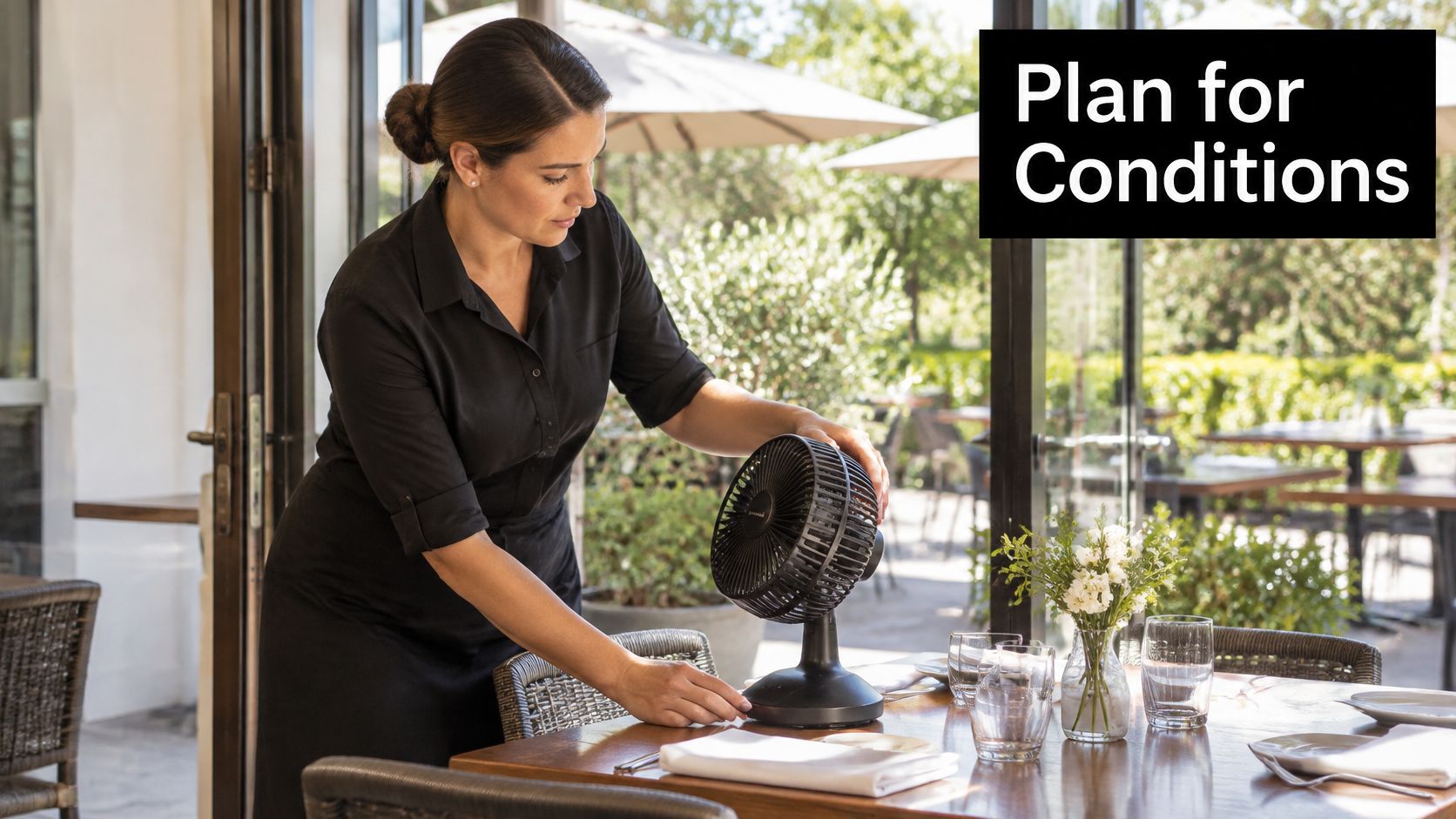
When a space moves from sheltered to open, the enclosure, power source, noise tolerance, and placement all change. Manufacturers design for expected conditions. A unit built for a dining room often struggles on a patio.
Indoor venues typically offer:
- Stable temperatures, which keep components within a predictable range
- Limited wind, so lightweight items stay where you put them
- Reliable outlets, which reduce cord and battery worries
- Quieter surroundings, where even a faint hum gets noticed
Outdoors, most of that disappears. Gusts push against light frames, direct sun bakes housings, humidity seeps into electronics, and dust clogs vents. A product that suits a quiet dining room is like a light rain jacket: it works until the weather turns.
Equipment that works indoors is not automatically built for a patio. The environment decides how much punishment a product must survive.
Why Sturdiness and Power Planning Matter Outdoors
Outdoor gear needs a heavier build, better-sealed housings, and a base that won't tip when someone bumps the table. Power is the other weak spot. A unit that runs all evening on a wall outlet can drain a battery fast, especially in hot weather.
A reliable power plan comes down to a few habits:
- Fully charge every unit before doors open, not during service
- Label each unit with its charge status
- Keep a spare battery or charging station within reach
- Compare expected runtime with the length of the event
Placement Near Food, Away From Drafts
Placing equipment close to food helps it work, but a spot in the path of a draft scatters the effect. Air moves toward open doors, kitchen traffic, and gaps beside patio umbrellas.
Take a unit beside a buffet line. It may perform well at the start of service, but once a nearby door swings open, that spot can lose its effect entirely. Moving the unit a few feet so it sits between the food and the main draft often fixes the problem.
Setup Time and Pre-Service Checks
Setup time varies by environment. A ballroom usually comes with fixed tables, outlets, and clear floor space. A garden reception needs stakes, weights, and a wind check before anything is safe to place.
Pre-service checks should cover:
- Testing every unit at the exact spot where it will run
- Confirming charge levels and cable routes
- Walking the space at service time to spot shifting drafts
- Noting where waste bins and vegetation sit
A setup that works at noon can fail by evening, once doors open and the wind shifts.
A Quick Checklist for Managers
Run through these questions before you choose equipment for a space:
- Airflow: Is the area sheltered, semi-open, or fully exposed?
- Power: Is there a reliable outlet, or will batteries carry the load?
- Noise: Will guests notice the unit during conversation?
- Durability: Can it handle heat, humidity, dust, and frequent table moves?
- Placement: Can it sit near food without blocking service?
Performance depends on the environment as much as the product. Read the spec sheet, then picture the room at its busiest hour.
Airflow, exposure, and food protection draw the sharpest line between indoor and outdoor dining. Each setting opens different doors for insects, and each calls for its own defense.
Where Flies Find Their Way In
Flies don't need much. A whiff of sugar, some warmth, and a gap in the wall are often enough.
The risk appears in both settings, but the entry points differ. The World Health Organization notes that flies can pick up microorganisms from contaminated sites and transfer them to food while they feed. Read the full WHO research on fly-borne food risks.
Indoor Entry Points Are Easy to Overlook
Indoors, walls block wind well but do little about foot traffic. Open doors, loading areas, and kitchen entrances let insects slip in between service runs.
Common indoor routes include:
- Service doors propped open during peak hours
- Kitchen traffic carrying waste or food scraps
- Windows left ajar near the dining room
Outdoor Exposure Starts at the Edge
Outdoors, the problem starts well before food reaches the table. Plants, waste containers, and neighboring properties sit within a short flight of patio tables, food trucks, and market stalls.
How Each Setting Shapes Food Exposure
Compare both settings side by side before choosing a defense. The table below shows four factors that determine how pests reach food and what you can realistically control.
| Criteria | Indoor Dining | Outdoor Dining | Practical Implication |
|---|---|---|---|
| Airflow | Set by doors and ventilation | Shifts with every gust | Indoor airflow can be managed; outdoor airflow mostly cannot |
| Entry Points | Doors and service gaps | Plants, bins, neighboring lots | Indoor effort goes to sealing; outdoor effort goes to what sits nearby |
| Control Options | Sealed entries and sanitation | Covered food and smart placement | Indoor control is structural; outdoor control is behavioral |
| Typical Pest Routes | Kitchen traffic into the dining room | Vegetation and waste to patio tables | Map the route first, then choose the fix |
A patio can feel sheltered, yet one bin three tables away can change the risk entirely.
Matching Protection to Each Setting
Protection works best when it follows the exposure path. Indoors, sealing entry points and tightening kitchen traffic do most of the work. Outdoors, covered food and smart placement carry the load.
Airflow matters just as much. Air moves very differently through an enclosed kitchen than through an open or semi-outdoor setup, and a kitchen exhaust hood is the main tool for controlling it. Operators can review AS/NZS 1668.1 ventilation requirements for guidance on sizing and compliance.
The infographic below compares airflow, pest entry, and protection strategies for each setting.
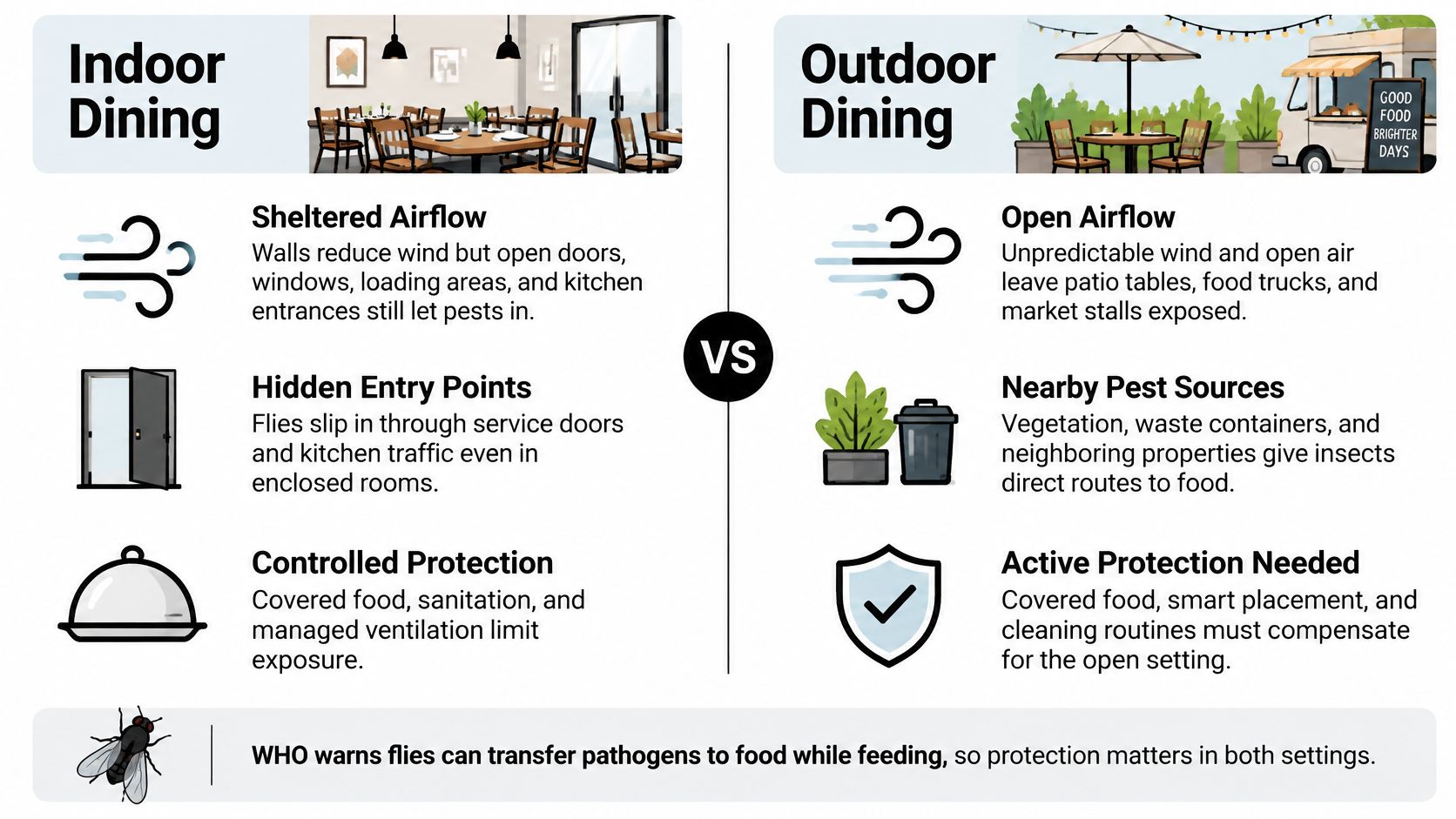
The pattern is clear. Indoor risks hide in doors and traffic. Outdoor risks sit in plain sight. Both need active protection.
Next Steps for Each Environment
For steps you can apply this week, read our guide on keeping flies away indoors.
Start with a simple audit:
- Walk the room during peak service and mark every open door or gap.
- Check waste bin placement against outdoor seating before doors open.
- Keep food covered whenever it sits out, indoors or outdoors.
Small habits like these close most gaps before guests notice a problem.
Key takeaway: The right protection depends on where food is served. One rule applied to every room won't do the job.
Reading about indoor and outdoor setups only goes so far. The differences become obvious once you watch a real service day unfold.
Restaurant Patios Beside Dining Rooms
A restaurant with both a dining room and a patio effectively runs two separate venues. The dining room sits under a ventilation system that stays fairly predictable. The patio answers to the weather.
- Patio tables: Wind, sun, and insects change by the hour, so a table that works at lunch may need moving before dinner.
- Dining room: Doors and ventilation set the pace, but kitchen traffic still carries risk into the room.
Staff who work both spaces should treat each one as its own room with its own rules.
Hotel Buffets in Ballrooms and Gardens
A banquet manager controls the doors, ventilation, and temperature in a ballroom, which makes the room easy to manage. Buffets, though, can run for hours. Food left out through a long service needs covers and frequent checks.
A ballroom buffet can look perfectly safe in the first hour and still need attention by the fourth.
A garden reception flips that picture. Wind direction, nearby flower beds, and waste bins matter far more than walls do, so the protection plan starts with the layout.
Caterers Working Across Venues
Professional caterers rarely stay put. One weekend might bring a tented wedding, a ballroom gala, and a rooftop corporate lunch, all within a few days.
Each site brings its own airflow, power access, and pest pressure. A checklist that worked at one venue can fail at the next, which is why experienced caterers rely on a few habits:
- Walk every site before the event date
- Note outlets, shade, and wind exposure
- Build a separate plan for each setting
Backyard Barbecues on the Same Day
A homeowner hosting a barbecue may find that a covered porch behaves very differently from an open lawn, even on the same afternoon. The porch stays shaded and calm. The lawn catches every breeze and every hungry fly.
Moving the food to the porch when the wind picks up often solves more than buying a bigger fan.
Choosing the Protection That Fits Each Scene
Every scenario above teaches the same lesson. Start by naming the environment, then list its main risks to food and guests.
Those answers should drive the purchase decision. Operators who run mixed spaces usually need equipment that adapts. Single-setting venues can focus on one solution.
Ready to plan your layout? Our guide to outdoor event setup walks through placement and timing step by step.
A food truck operator, for example, deals with outdoor air and insects from the moment the service window opens. The setup has to hold up against shifting weather all day.
The right protection follows the scene, not the category. Keep that rule in mind at every service.
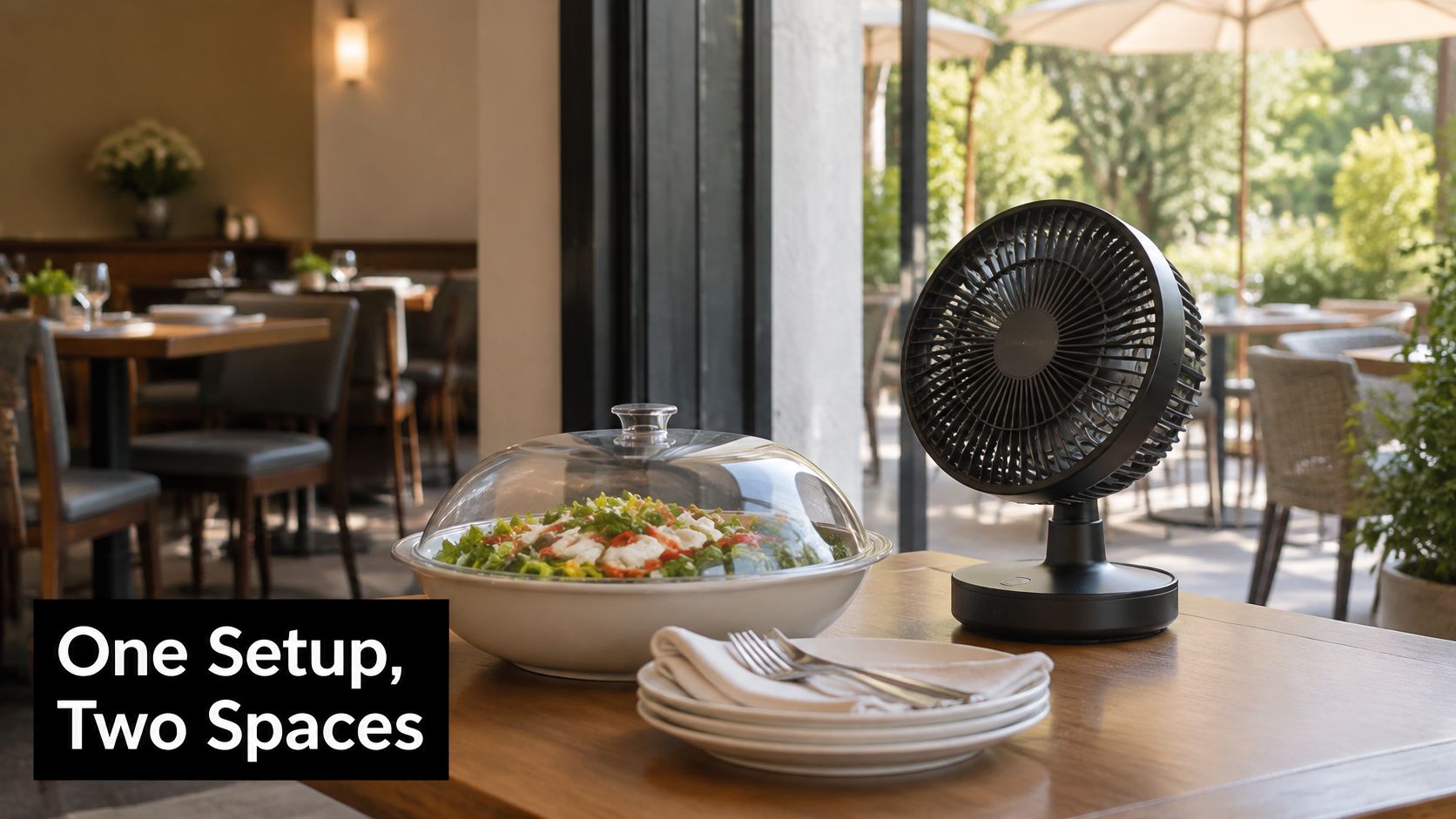
Indoor and outdoor setups differ mainly in how predictable they are. A dining room gives you reliable power, calm air, and furniture that stays put. A patio brings wind, shifting sunlight, and tables that get dragged around. If your business works both spaces, running two separate product lines often costs more time than it saves.
Where budget and workflow allow, look for equipment that handles both. You don't need a perfect device. You need a setup that keeps up with a full service day.
Check the Criteria That Matter
Power comes first. A corded unit works fine in a ballroom, but a patio table usually needs battery power or a dual power option.
A product that only works beside an outlet is not a mixed-space product.
Noise matters just as much indoors. A fan that blends into patio chatter can sound harsh in a quiet dining room.
Durability is the next test. Outdoors, heat, humidity, and dust find every weak spot. Look for sealed housing, a stable base, and parts that hold up over time. Placement matters too. The unit should sit near food and buffet lines without getting in the way of guests or staff.
Maintenance rounds out the list. Ask how often filters, blades, and batteries need attention, and whether your team can handle that during a busy shift.
Here's a quick side-by-side:
| Factor | Indoor Priority | Outdoor Priority |
|---|---|---|
| Power | Standard outlet, tidy cord management | Battery or dual power |
| Noise | Low enough not to disturb guests | Can run louder to cut through open air |
| Durability | Light-duty housing is usually enough | Sealed, weather-resistant parts |
| Placement | Fixed positions, clear pathways | Flexible, moves with the setup |
Know When a Dual Use Fan Fits
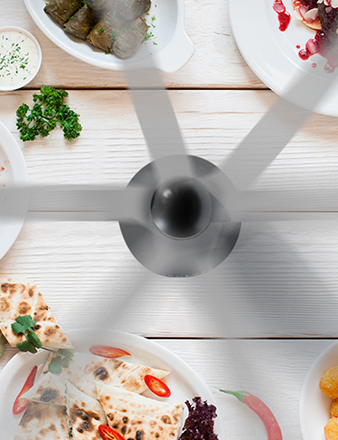
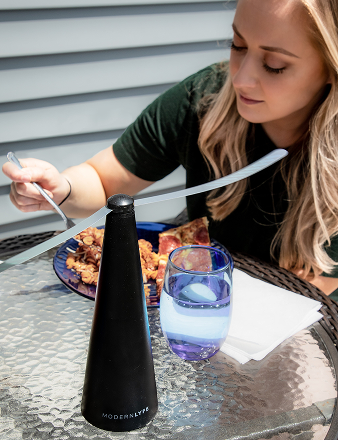
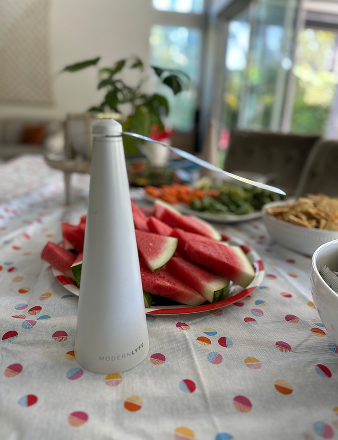
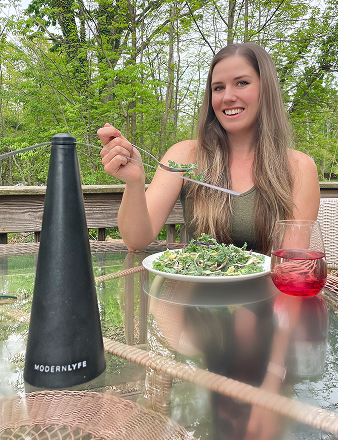
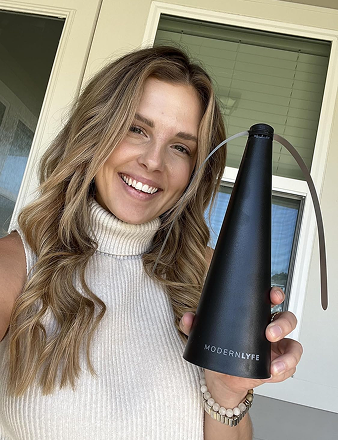
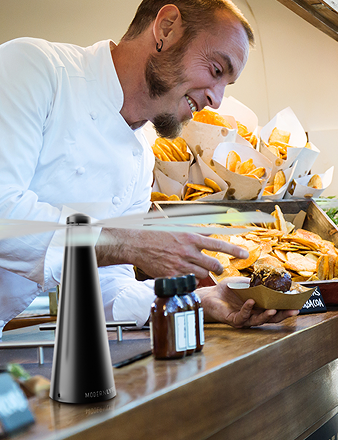
The Modern LYFE Fly Fan is a dual power table fan built for both outdoor and indoor use. It suits operators who move between patios, dining rooms, and event spaces without rebuilding their setup each time.
A dual use fan makes sense when:
- Your team works across several spaces in a single day
- Power access changes from room to room
- Setup time is short and storage space is tight
- Guests need quiet operation near tables
Other layouts point elsewhere. A fixed screen can work well at a permanent serving window. Covers and cleaning routines often matter more than any fan, especially when food sits out for long stretches.
Choose the tool based on where the exposure happens, not on what the catalog offers.
For portable options between events, see our guide to battery operated fans for outdoor tables.
Buy for both spaces when your workflow truly overlaps. If it doesn't, start with screens, covers, and cleaning. That order protects food while you test new equipment and keeps costs in check.
Most planning errors happen when operators assume one setting behaves like the other. On paper, these oversights look minor. They show up during the busiest hour of service.
Mistakes Indoors Often Make
- Assuming walls keep pests out. Walls stop wind, but they do almost nothing about foot traffic. Fix: Check door seals and kitchen entrances before each service period.
- Ignoring open doors and kitchen entrances. A service door propped open for twenty minutes is enough for insects to slip in during a rush. Fix: Assign one person to keep doors shut between runs.
- Placing equipment too far from food. A unit across the room may keep guests comfortable but won't reach the buffet. Fix: Set it between the food and the main draft.
Mistakes Outdoors Often Make
- Treating every event as the same setup. Wind direction and bin placement shift from site to site. Fix: Walk the space and mark exposed food zones before guests arrive.
- Underestimating charging needs. A battery that lasts through lunch can be empty by dinner, especially on a hot day. Fix: Charge every unit fully before doors open, and keep a spare close by.
- Skipping equipment tests. If a unit fails at the table, the whole plan falls apart. Fix: Run each device at its exact spot for several minutes before service begins.
No single product can replace good sanitation, sound habits, and regular inspection.
Equipment does its best work when it fits a routine you already follow. Close these gaps before your next service, and most problems will never reach your guests.
What Is the Most Important Difference for Food Safety
The real gap is exposure. Indoors, pests usually enter through doors and the steady foot traffic of a kitchen, so sealing those entry points matters most. Outdoors, food sits in open air beside vegetation and waste bins, which makes covering food and placing it with care the habit that counts.
Can One Product Work in Both Settings
Yes, but only if it's built for both. The Modern LYFE Fly Fan is a rechargeable, dual-power table fan made for indoor and outdoor use. It keeps flies away from food, and customers say it runs quietly enough that guests can enjoy a meal outside.
How Should You Plan Power for Outdoor Events
Charge every unit fully before doors open, not while service is underway. Keep a spare battery or charging station close at hand, and check expected runtime against the length of the event. Hot weather drains batteries faster than most people expect, so build in extra margin.
Is Mixed-Use Equipment Worth the Investment
Often, yes, especially when your team moves between patios, dining rooms, and events in a single day. If your work stays in one setting, screens or covers may serve you better. Permanent serving windows and long buffet runs usually need a more specialized solution.
Buy for the space you actually work in, not the one the catalog suggests.
Equipment helps, but it works best alongside covered food and consistent cleaning. Think of the fan as one layer of protection, not the whole plan. Covers, sealed doors, and routine sanitation still do most of the work in any setting.
Where to Start Before Your Next Service
Start with the area that carries the most risk. Walk it during peak service, mark open doors and exposed food, and test each unit in its exact spot. These small checks catch most of the problems guests would otherwise notice.
Ready to protect your next service? Explore the fly fans from Modern LYFE and find the setup that suits your tables. Shop the fly fan collection at MODERN LYFE and keep your food and guests free from flies today.