Buying a stronger spray or adding another tabletop device isn't usually the best answer to flies around food. A fly repellent can make guests more comfortable while leaving the underlying problem untouched: exposed dishes, dirty waste containers, or airflow that misses the serving area. Start by separating fewer fly landings from safer food, then choose controls that address both without introducing chemical contamination.
Fly Repellent Types Compared at a Glance
Fly repellent types and their food-safety status
| Option | How it works | Safe near food? | Best setting | Main limit |
|---|---|---|---|---|
| Airflow fans | Moves air so flies struggle to land | Yes, no chemicals | Buffets, tables, patios | Covers only the airflow zone |
| UV and light traps | Attracts flies to a trap | Only if placed away from food | Perimeter and back-of-house areas | Can draw flies toward food if misplaced |
| DEET skin and clothing repellents | Masks human scent on skin and clothing | No, EPA lists no food uses | Personal protection | Not for food or food-contact surfaces |
| Essential oil sprays and candles | Scent-based deterrent | Keep off food and prep surfaces | Guest seating areas | Lab-tested, field results vary |
| Screens, mesh and food covers | Physical barrier | Yes, as covers | Doors, windows, buffet covers | Needs constant closing and cleaning |
| Source control | Removes breeding and food attractants | Yes | Bins, drains, spill areas | Needs a daily routine to work |
These six practical groups solve different problems, so read the food-safety column first, not the product description. Fans belong where their airflow can reach approaching flies; light traps belong where attraction won't bring insects through the dining area; personal repellents protect people rather than dishes. Essential oil products aren't automatically suitable for food contact just because their ingredients sound familiar, while properly fitted covers offer a direct barrier without applying anything to the meal. Source control isn't technically a repellent, but it removes reasons for flies to gather and deserves a place in every purchasing decision. Choose an option that works without touching food, then pair it with a physical barrier or sanitation routine. A covered dessert station beside a clean, lidded bin is a more sensible starting point than an uncovered station surrounded by devices. Each option works best in a specific setting, not everywhere at once.
Why Flies Are a Food-Safety Problem, Not Just a Nuisance
The World Health Organization's food-hygiene guidance identifies flies, cockroaches, ants, and other insect pests as carriers that can move organisms from toilets, refuse heaps, and contaminated sites into food-handling areas. It also describes how flies regurgitate previous meals onto food to help liquefy it, potentially depositing microorganisms.
That matters whenever waste handling and food service share a site. A fly moving from discarded scraps to a sandwich creates a potential contamination event, not an unpleasant moment for a guest.
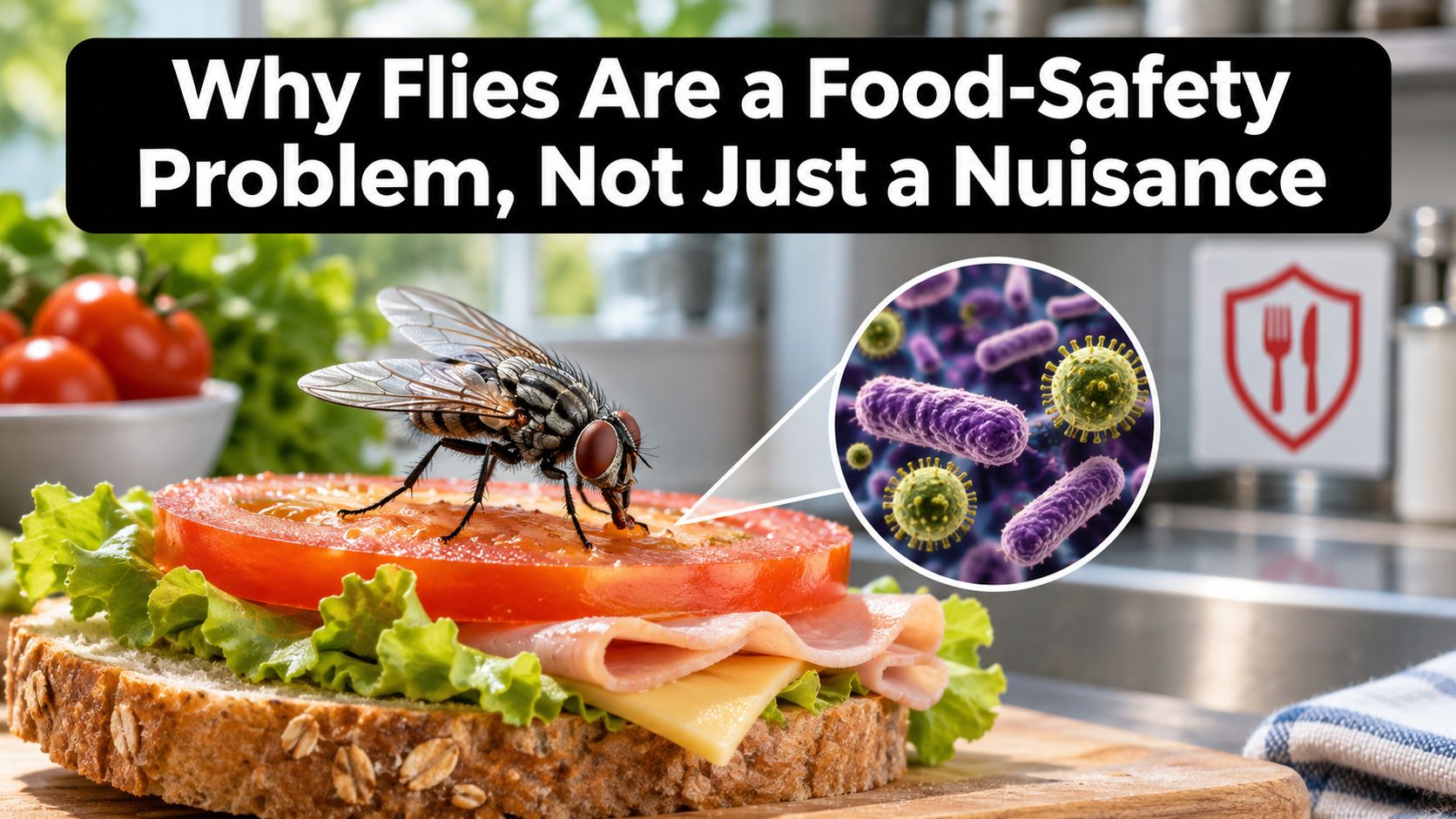
The WHO Five Keys to Safer Food framework includes protecting food and kitchen areas from insects and pests alongside clean hands and utensils, separation of raw and cooked food, thorough cooking, and safe temperatures. Hong Kong's Centre for Food Safety applies the same preventive principle by advising businesses to keep food covered or in closed containers.
For a private gathering, the logistics deserve the same attention as the menu. Hen Hideaways' guide to catering for large hen groups is useful planning context when organizing shared meals, where serving arrangements and clearing responsibilities need deciding before guests arrive.
Our guidance on flies landing on food addresses the food-contact concern directly. Don't judge protection solely by whether guests stop swatting.
A fly repellent is one layer inside a hygiene procedure, not a replacement for covering food, cleaning surfaces, and managing waste.
Which Chemicals Belong Near Food and Which Do Not
A skin or clothing repellent isn't a food-area treatment. Keep personal repellent application away from exposed meals, utensils, and preparation surfaces, and don't use a general fly spray over a service station.
The U.S. Environmental Protection Agency's DEET registration review describes effectiveness against biting flies, black flies, deer flies, horse flies, sand flies, stable flies, and mosquitoes, but explicitly lists no food uses. Its registered uses include human skin and clothing, households, domestic animals, and animal living areas. None of those uses authorizes application to a chopping board, buffet tray, or plate.
Check the application, not just the ingredient
- Read the permitted-use wording. Look for explicit food-area restrictions and food-contact instructions. A label limited to personal protection fails this check.
- Confirm authorization for the setting. Before commercial treatment, confirm that the product is registered for the proposed food-area use under the rules that apply locally.
- Prepare and restore the area. Remove food, removable covers, and utensils before application. Follow the product's cleaning, rinsing, ventilation, and re-entry directions before service resumes.
Cleaning afterward doesn't make an unauthorized application acceptable. Don't improvise a dilution or assume a household aerosol is suitable because the kitchen is temporarily empty.
Use our fly-away spray guide to help distinguish spray options from controls that don't require application around meals. Keep chemical products outside active food zones, and bring in a licensed pest-control contractor when treatment involves a commercial food area.
This video provides an additional visual reference for considering fly-control options.
Non-Chemical Deterrents Using Airflow, Light and Scent
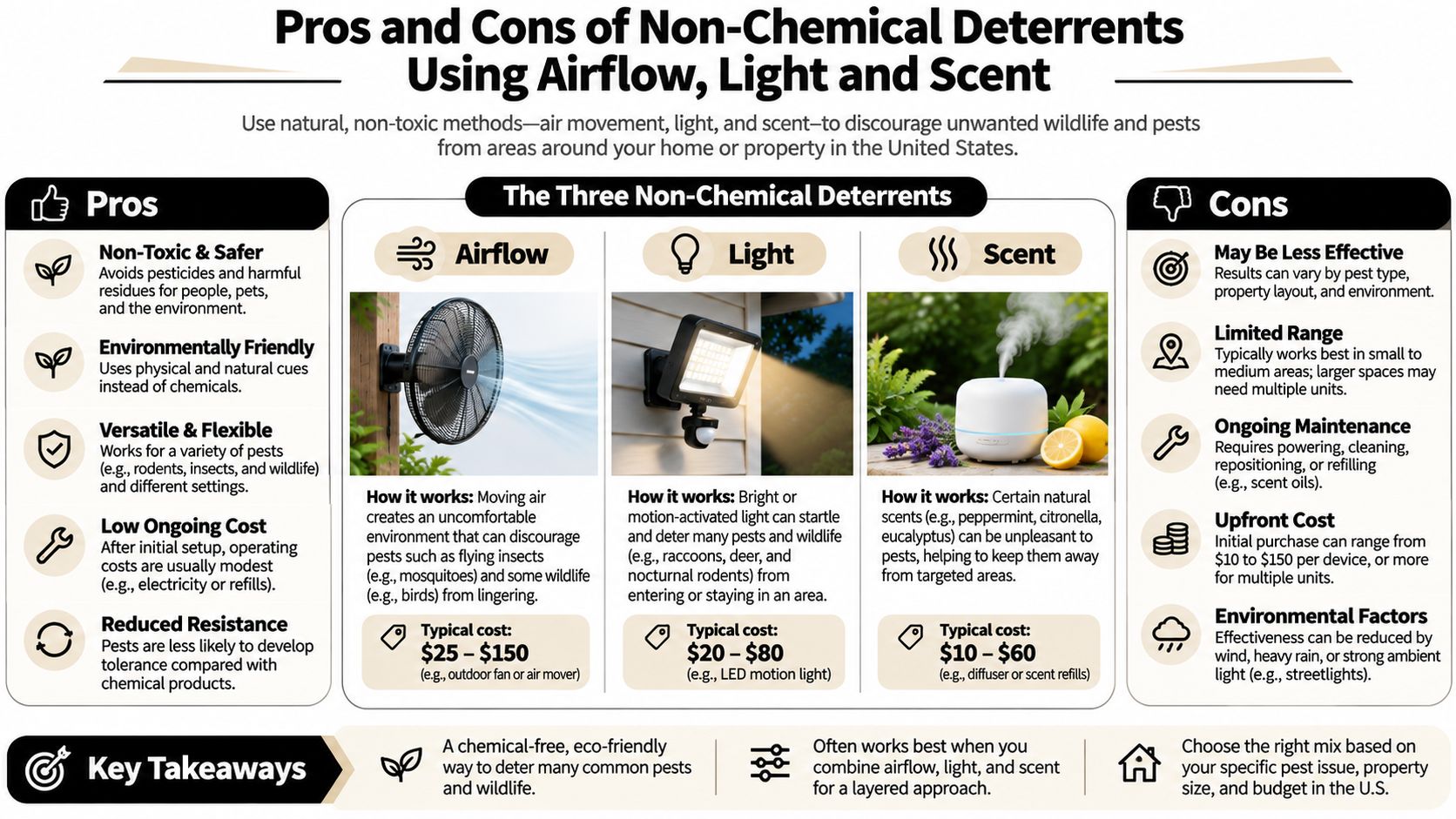
Airflow and light are physical controls; scent products still contain active chemicals, even when those chemicals come from plants. Treat the categories differently rather than grouping everything sold as natural into a single safety claim.
Airflow interrupts access
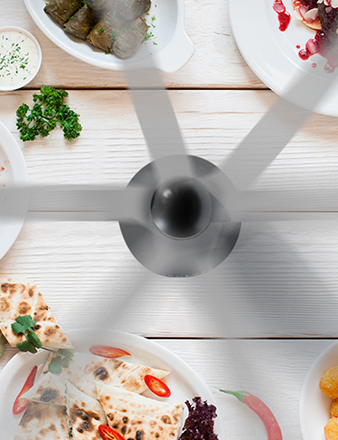
Fans disturb flight and landing rather than killing flies. Their limitation is coverage: a breeze that reaches guests' shoulders may leave serving dishes almost untouched, and a centerpiece can create a sheltered pocket behind it.
Don't equate visible blade movement with an effective barrier. Check the air where flies approach the food, and account for gusts, furniture, and guests moving chairs.
Light attracts rather than repels
A Journal of Medical Entomology study describes house-fly photoreceptor responses around 340–370 nm for ultraviolet light and 480–510 nm for blue-green light, with behavioral attraction to white and blue targets and avoidance of yellow in its experiments. That doesn't make a yellow tablecloth a universal repellent: intensity, background lighting, and context affect behavior.
A review of house-fly phototaxis reports that, during a 2.5-hour test, a UV source switched on for one minute and off for 14 minutes attracted as many flies as continuous illumination. That's an experimental result, not a timer setting every restaurant should adopt.
Scent has narrower evidence than its marketing suggests
A 2024 study in Insects found 34.6% to 51.2% increased repellency from combinations of lemongrass essential oil and a principal star-anise constituent. A 2026 essential-oil candle study reported 90% repellency for tea-tree oil and 75% for lemongrass oil against houseflies.
These experimental findings don't establish equivalent protection on a windy terrace. Keep scent products off food and prep surfaces, and don't substitute candles for covers.
- Fans move air. Use them to interfere with approaches and landings.
- UV traps attract and capture. Give them a location separate from serving.
- Scent devices deter within a seating zone. Treat them as supplementary, not as food protection.
Where to Place Fans and Traps Around Food and Guests
Place airflow across the approach path at food height, rather than aiming a strong stream directly over open dishes. Start with clean air from the side away from waste, dish returns, and dirty service routes.
The peer-reviewed review of house-fly controls reports approximately 80% exclusion with air moving at 8–9.1 m/s at 91 cm above ground, while doorway air curtains achieved 98–100% exclusion at mean velocities as low as 4 m/s in a test facility. Those are test results, not promised performance from a tabletop fan.
Use a handheld anemometer to check airflow at the serving edge when practical. Fan height, wind, fly species, food odors, and obstructions can change the result, so a decorative fan may disturb flies without forming a complete barrier.
Fly deterrent placement by food setting
| Setting | Where to place the device | Keep away from |
|---|---|---|
| Buffet line | Airflow across the approach path at the open end, at food height | Bins, dish returns, open drains |
| Plated dining table | One fan at table height on the side away from the kitchen door | Bins, kitchen door traffic |
| Outdoor patio or terrace | Airflow between seating and the nearest waste point, supplied from the clean side | Compost, grease bins, pet waste |
| Food truck service window | Airflow across the window opening | Waste bags, generator exhaust |
| Home barbecue | Fan upwind of the food and guests | Trash cans, compost heap |
| Back-of-house waste area | UV trap at the perimeter, shielded from guest view | Food prep, storage and service zones |
Keep waste and compost downwind or physically separated. Don't create a stream from a dirty area toward customers' plates, and don't route guests past an attractant trap to reach the buffet.
Our guide to types of fly traps helps distinguish capture devices before selecting their location.
Placement check: Watch the food during actual service, when doors open and guests interrupt airflow. If flies still land, adjust immediately, then revise the setup before the next service.
Cutting Off Breeding Sites in Waste and Spills
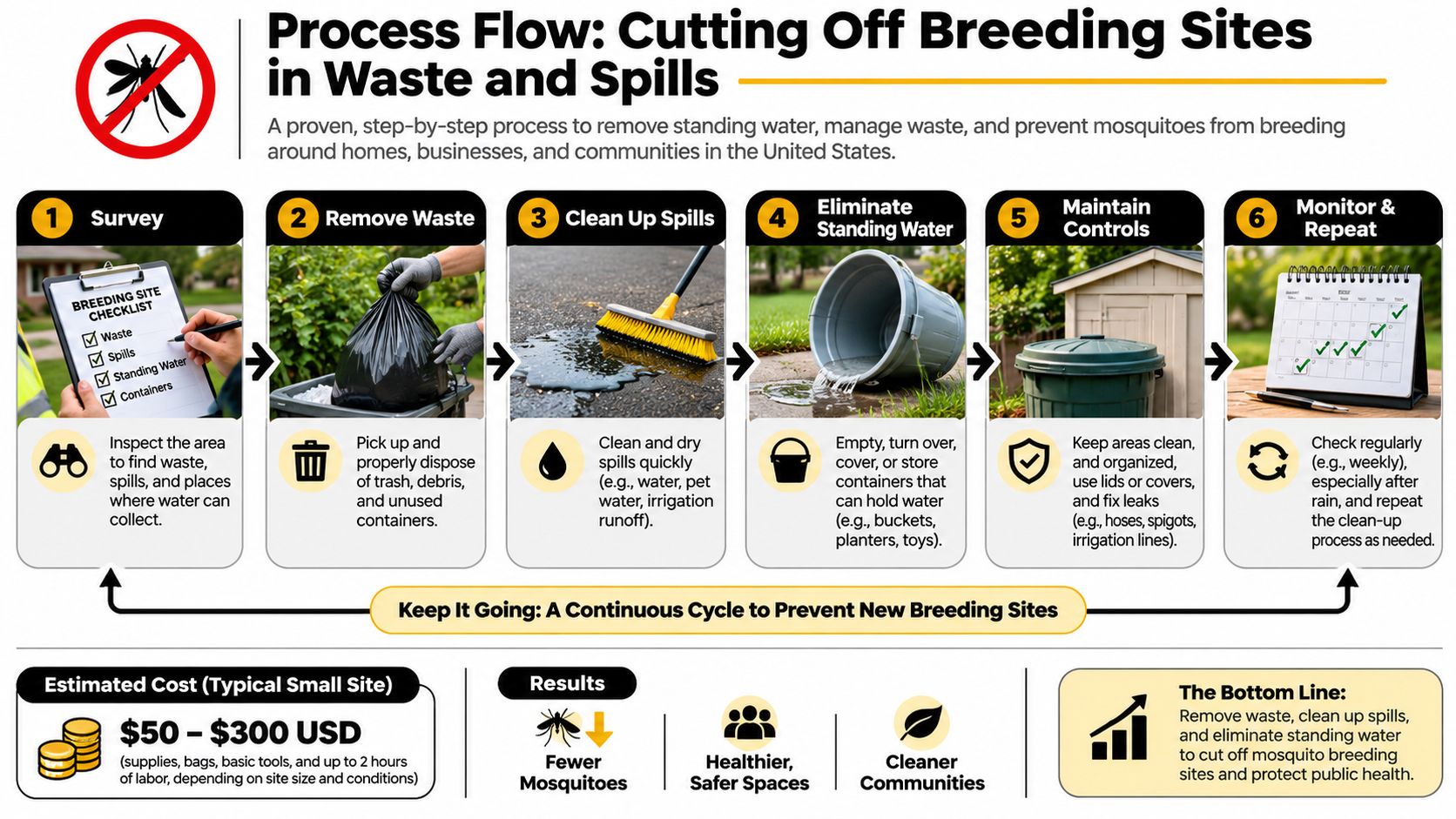
A trap beside a leaking bin harvests adults while the container keeps producing the next wave. Source removal comes first because fly pressure near food is a sanitation problem before it is a device problem: fans and traps can reduce landings, but they cannot cancel a breeding site under the service line.
Purdue University Extension explains that flies breed in wet, decaying organic matter and that some species can complete a generation from egg to adult in as few as 7 to 10 days. That pace means a missed spill under a buffet skirt or residue on a bin rim can stay active between routine cleans.
Make cleanup part of service
- Remove organic waste daily. Take garbage, animal waste, and decaying material out of dining and service areas rather than leaving bags beside the exit.
- Fit tight lids. Keep bin lids shut and dumpster enclosures secured. Replace damaged lids instead of relying on a loose cover.
- Empty and wash bins on schedule. Remove residue from the base, lid, and rim, then let cleaned containers drain and dry before liners go back in.
- Clear spills immediately. Check underneath buffet skirts, trolley wheels, service counters, and floor mats, not just the visible floor.
- Remove standing water and drain buildup. Clean drains and garbage disposals, and investigate recurring wet patches rather than repeatedly mopping around them.
- Maintain exclusion. Fit screens to suitable windows and doors, repair gaps, and keep service doors closed whenever access isn't needed.
The Texas Department of State Health Services' restaurant fly-control guidance.pdf) supports combining spill removal, sealed food storage, clean drains, standing-water removal, dumpster sanitation, and screens.
For weddings and catered functions, connect clearing duties with the wider waste plan. The Creventa guide to event food waste offers useful planning context for managing leftovers and disposal.
Assign each task to a role, not to whoever notices the problem. When staff reduce the local supply of breeding material, fans and traps have less work to do.
Fixing Flies That Keep Coming Back
Flies landing despite a running fan usually call for a placement check before another purchase. Look at the fan's height and the sheltered spaces behind trays, bottles, and decorations. An unobstructed fan can still miss the actual approach route.
Recurring clusters around bins or dishwashing areas suggest a different problem. Inspect food residue, overflowing containers, drains, and wet mats before assuming every fly came through the nearest door.
Fly symptoms, likely causes and fixes
| Symptom | Likely cause | Fix |
|---|---|---|
| Flies land on food although a fan runs | Fan too high or too low, or airflow blocked | Set the fan to food height and clear obstructions |
| Flies cluster around bins or dish areas | Uncovered or overfilled waste | Lid bins and empty them more often |
| Flies return after every service | Drains or wet mats holding breeding material | Clean drains and remove standing water |
| Flies land on open food repeatedly | Food left uncovered | Use lidded containers or washable net protectors and discard repeatedly landed food |
| Spray residue on food or prep surfaces | Chemical used too close to food | Remove exposed food and clean all contact surfaces |
Separate immediate fixes from routine changes
Moving a fan, closing a lid, or replacing an uncovered platter takes minutes. Drain maintenance and improved waste handling need sustained attention: use a week of changed routine as an operational review period, not as a guaranteed eradication deadline.
The London Borough of Bromley's public-health guidance recommends minimizing the time food remains uncovered and using lidded containers or washable net protectors. It also warns against fly sprays around food or preparation surfaces because of chemical contamination.
Repelling flies doesn't sanitize food. Discard food subjected to repeated landings or showing visible droppings as a practical precaution, not because a universal landing-count threshold exists. Keep sealed storage and prompt refrigeration in place regardless of how well a deterrent appears to work.
Logan City Council's outdoor-dining pest guidance supports food covering and precautions against pesticide contamination. After accidental spraying, isolate exposed food and follow the product-specific decontamination instructions before reopening the station.
Set Up Your Fly Control Plan Before Service
Give the shift lead a short pre-service walk-through, with roughly five minutes reserved as a planning allowance. The check should produce decisions, not just confirm that devices are switched on.
- Check food protection. Confirm dishes have suitable covers or lidded containers, with a clear place to put lids during serving.
- Inspect waste containers. Tight lids must close fully, and bins shouldn't be overfull or leaking onto the floor.
- Test the approach route. Put airflow at food height and check that decorations, trays, or chairs don't block it.
- Confirm the chemical plan. No one should be preparing to spray beside food or preparation surfaces.
- Record and observe. Note device positions and watch for landings during the first peak hour. Move the device if flies still reach food.
Choose equipment for the remaining gap
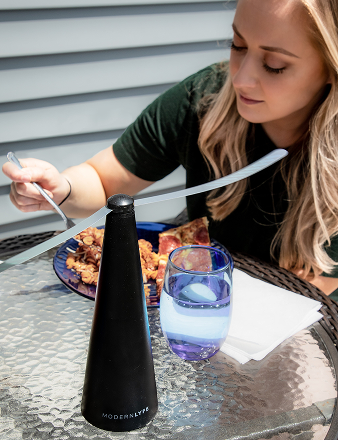
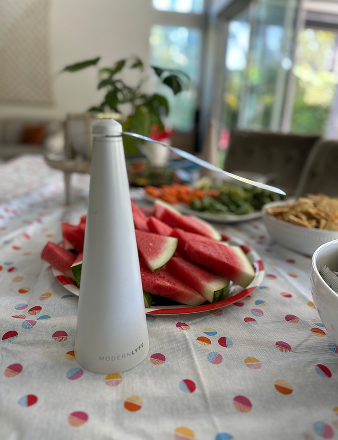
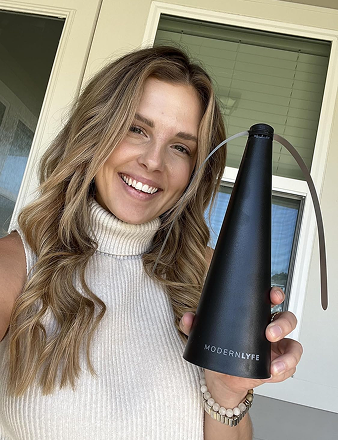
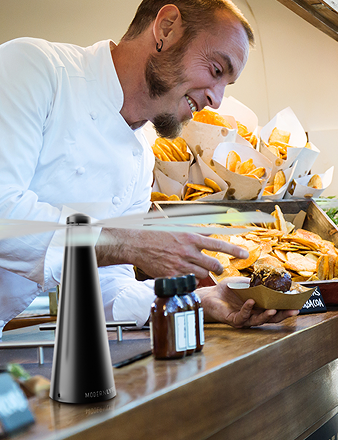
Where table-level deterrence is missing, our Modern Lyfe Fly Fan for Tables is described as keeping flies and pests away from food and is intended for outdoor tables, patios, parties, food trucks, and al fresco cafes. It lasts over 8 hours per charge, but runtime doesn't establish airflow strength or exclusion performance. Check its placement and actual service performance against the airflow evidence rather than assuming it matches a tested air curtain.
Choose the layer that closes the largest gap first. For indoor food areas, that's usually sanitation and covers; for outdoor tables with those basics already handled, airflow is often the next practical addition.
MODERN LYFE offers table fly fans as an odor-free alternative to applied bug repellents for dining and event setups. Visit MODERN LYFE to explore options for your tables, then pair your choice with covered food, clean waste areas, and a placement check during service.