Two flies land on the same buffet table. One is a speck you barely notice until it moves; the other is gray, the length of a grain of rice, walking across the butter. Does the difference change what you do, or is a fly just a fly?
It changes everything, and not for the reason most guides give. Color and size are the easy part, learnable in under a minute. What pays off is what each fly's presence tells you about where to look and how urgently to act. A cloud of tiny flies over the bar points to a drain, a drip tray or a bottle of syrup inside the building. A steady trickle of large flies at the loading door points somewhere else entirely, and that somewhere usually starts beyond your property line.
So treat the question as source diagnosis plus risk calibration. The fly you see tells you where its breeding site is; the setting you see it in tells you how much the exposure matters. Get both right and the control plan writes itself. Skip them and you'll buy traps all season and still have flies.
Fruit Fly vs House Fly at a Glance
A fruit fly runs about 1/8 inch long, roughly half the length of a house fly at about 1/4 inch, and that one measurement settles most identification calls in a working kitchen.
| Trait | Fruit fly | House fly |
|---|---|---|
| Body length | About 1/8 inch | About 1/4 inch, roughly twice as long |
| Color and markings | Tan, brownish-yellow or brownish-black, often with red eyes | Gray with four dark stripes on the thorax |
| Where it is seen | Around fruit, drains, beverage residue and fermentation | Landing on exposed food, near garbage and outdoor waste |
| What it breeds in | Fermenting produce, juice, wine, beer, soda and drain residue | Garbage, animal feces, manure and rotting food waste |
| Typical travel range | Stays close to its food source | Roughly 1 to 2 miles to find feeding or egg-laying sites |
| Food-safety role | Mainly a nuisance, but can contaminate food through contact | Stronger concern, since it contacts feces and decaying matter |
Fruit flies are also called vinegar flies, and the nickname tells you most of what you need about their habits. University of Maryland Extension places adult fruit flies at about 1/8 inch long, while the University of Arizona identifies common house flies at about 1/4 inch, roughly twice the length. In a dining room or a prep area, that gap is the fastest working rule you have.
What the markings add
Color reinforces size. Fruit flies run tan, brownish-yellow or brownish-black, and many show conspicuous red eyes that catch light when they hover. House flies are a flat, non-reflective gray, and the four dark stripes across the thorax are the giveaway when one settles long enough to look at.
Behavior splits them further. Fruit flies hover and drift in loose swarms around produce, drain mouths and sticky bottle rims. House flies land hard, walk in short bursts, and go straight for whatever is open.
One caution before you commit. A single fly in a hallway proves nothing, and a tired house fly can look small at a distance. Watch where the group gathers, because the gathering place is the answer you need.
Fastest identifier: size first, then landing site. Tiny and hovering near a drain or a fruit bowl means fruit fly. Large, gray, striped and walking over the plate means house fly.
Identify before you buy a single trap. Every decision after this point depends on which answer you got.
Where Each Fly Breeds and Why It Changes Control
Breeding material decides where your labor goes. Both insects need wet organic matter, but not the same kind, and that difference sets the whole plan.
The Illinois Department of Public Health guide to house flies and other filth flies separates them by substrate. Fruit flies are drawn to sweet or fermented liquids, ripening fruit, syrup, soda, liquor and vinegar, and females lay eggs in or on those materials so the larvae feed right there. House flies breed in animal feces, garbage, manure and carrion.
A detail explains why a spotless bar can still produce flies every morning. Fruit fly larvae feed mainly on the yeast growing on overripe fruit and other fermenting matter, so the residue nobody can see is often the nursery (Wisconsin Extension). Wiping a surface until it looks clean doesn't remove a yeast film.
Walk the building in this order:
- Drains and drink station trays. Pull the grate and look at the pipe wall, not the strainer.
- Fruit storage and produce displays. Check the bottom of the carton, where juice collects.
- Bins, dumpster pads and loading zones. Lift lids and look at the concrete beneath.
- Animal areas and outdoor waste. Pet waste, kennel runs and grease drums belong on the list.
Travel range explains the shape of the problem. Illinois public health guidance puts house fly travel at roughly 1 to 2 miles in search of feeding or egg-laying sites, so the adults you swat at the back door may have started well off the property. Fruit flies stay close to their source, which makes them far easier to trace.
A fruit fly cluster usually means a source inside the building. A continuous stream of house flies usually means a source outside it.
Expect to find something physical on inspection: a brown film inside a drain, a full bin, a split lid, a puddle under a case. Where several tenants share a waste yard or a common drain line, the fix sits outside any one kitchen's reach, and who to call for shared drains becomes a practical question rather than a last resort. If traps keep filling after you clean, what actually draws fruit flies into a bar covers the attractants people miss most often.
How Fast Each Fly Multiplies
Speed is the reason a small sighting becomes a service problem. The fruit fly's timeline is short enough to memorize.
| Stage or trait | Duration |
|---|---|
| Egg to hatch | About 24 hours |
| Three larval stages together | About 4 days |
| Pupal stage | About 4 to 4.5 days |
| Egg to adult at 25 degrees Celsius | About 9 to 10 days |
| Egg to adult at 18 degrees Celsius | About 19 days |
| Sexual maturity after emerging | 8 to 12 hours |
| Adult lifespan in hot weather | 20 to 30 days |
At 25 degrees Celsius, a fertilized egg becomes an adult in about 9 to 10 days. Cool the room to 18 degrees Celsius and the same species stretches the cycle to roughly 19 days, according to a review of Drosophila development and genetics. The stage breakdown is short by any standard: about 24 hours as an egg, roughly 4 days across the three larval stages, then 4 to 4.5 days in the pupa.
Sexual maturity arrives 8 to 12 hours after emergence, which is why a warm, food-rich room can turn a handful of flies into a visible swarm inside a week. In hot weather an adult may live 20 to 30 days, long enough for one female to lay approximately 700 to 800 eggs over that span, per the same review. Several generations can overlap within a single month.
The operational result is blunt: killing the adults you can see, without removing the residue they came from, produces a rebound within days rather than weeks. Removing visible flies is tidying. Removing residue is control.
A 2024 preprint reported an average lifespan of 41.7 days across tested Drosophila genotypes and conditions (bioRxiv), but that's a laboratory figure across many strains, not a forecast for your bar. The same research gives no matching development timeline for house flies, so judge house fly pressure by how often they reappear after sanitation. Repeated arrivals after a cleanout mean an outside source, not a slow life cycle.
The 10-day recheck: write down the date of the first sighting, clean, then inspect again around day ten. That's when the next generation from any residue you missed becomes visible.
Health Risks That Set the Priority
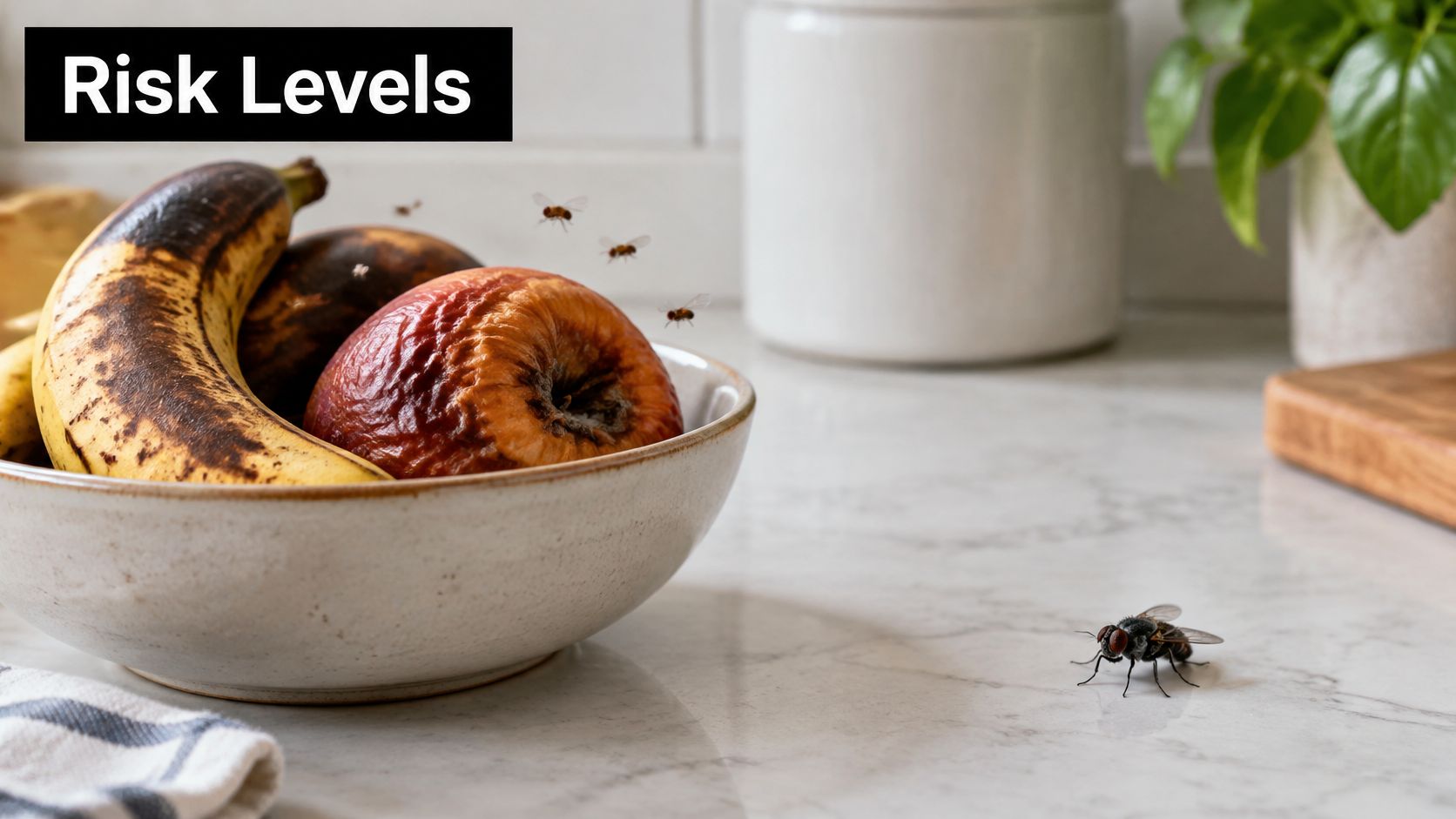
Most guidance splits flies into two crude categories: disgusting, or harmless. Neither holds up. Fruit flies aren't clean, and house flies aren't a walking biohazard every time one lands.
Penn State Extension's urban pest guide describes fruit flies primarily as nuisance pests, while noting they can still contaminate food or carry organisms through contact. House flies earn a stronger food-safety rationale for a specific reason: they commonly contact fecal matter and decaying material, then liquefy solid food by regurgitating saliva before feeding. That habit is what turns a landing into a contamination event.
The pathogen list is real. A CDC-published review of flies and foodborne illness reports that flies can carry Campylobacter and links fly exposure to gastrointestinal pathogens including Shigella, Campylobacter, Cryptosporidium, Giardia, Cyclospora and pathogenic E. coli O157. Read the scope carefully: the review covers synanthropic flies as a group, house flies among them, and doesn't claim every fly carries every organism.
Three exposure levels and what each one demands
- Nuisance. A few fruit flies around intact produce or a sealed bottle. Pull the fruit, clean the tray, discard nothing.
- Contact risk. Flies on serving surfaces, utensils, garnish trays or bottle rims. Cover or relocate the item, then clean and sanitize the surface before it's used again.
- Contamination. Flies on open ready-to-eat food, a buffet line, a cake or a prepared salad. Discard the exposed food. Decide this in advance so nobody has to win an argument mid-service.
Behavior is easier to read in motion than in a still description, and the difference between hovering and feeding is what separates level one from level three.
The practical rule for restaurants, caterers, events and outdoor dining is simple. Keep larger flies off exposed food and serving surfaces, and remove waste, spills and breeding sites promptly rather than at the end of the night. When flies keep reaching plated food despite your best effort at service, what to do when flies land on food is the decision path worth having in advance.
Which Fly Shows Up in Each Setting
The setting narrows the likely fly before you've identified a single insect. Use this map to decide which risk to manage first.
| Setting | Likely fly | Main risk | First action |
|---|---|---|---|
| Restaurant kitchen | Both, house flies at the dock and fruit flies at prep drains | Contamination of prep surfaces | Clean drains and move bins away from doors |
| Bar or beverage station | Fruit fly | Swarms around open drinks and garnish | Clear residue, cover fruit and clean drip trays |
| Hotel banquet or buffet | House flies, with fruit flies from displays | Flies landing on open food | Cover food and place a fan at the buffet line |
| Outdoor wedding or reception | House flies from waste lines | Flies on exposed food and cake | Relocate bins and cover tables during service |
| Food truck or market stall | House flies from waste bins | Contamination of serving windows | Lid all bins and keep the window area clean |
| Home barbecue | House flies from trash | Flies on grill trays and salads | Move the trash away and cover food |
Two quick scenarios show how differently the same evening can go. Set the barbecue next to the bin and house flies arrive in numbers, landing on the grill tray and the potato salad within minutes; the fix is lids and relocating the bin, not a spray. Set out a wine table with a bowl of cut fruit and fruit flies appear from nowhere, hovering over the garnish; the fix is covering the fruit and wiping the drips under the bottles.
Many events get both at once, because house flies come in from the waste line while fruit flies work the drink table. That's why a single control method rarely finishes the job.
Once the fly is identified, the response narrows to three moves: remove the source, exclude the fly, or protect exposed food during service. University of Maryland Extension matches each insect to its breeding material before recommending action, which is the same order of operations that works on site.
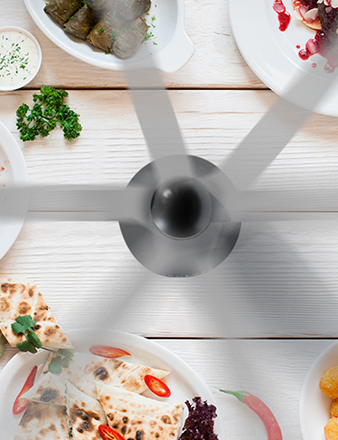
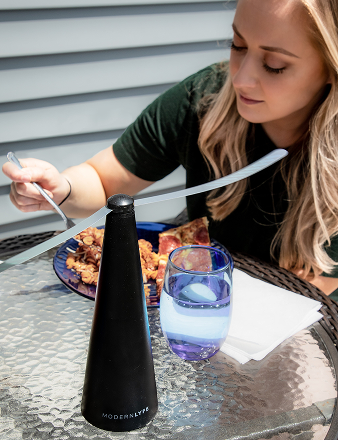
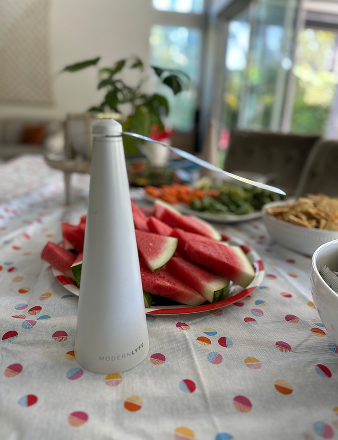
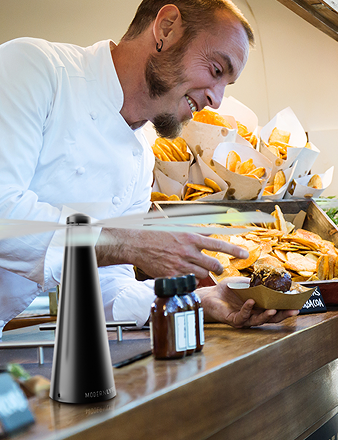
A fan is a physical layer for the third move. The Fly Fan for Tables from MODERN LYFE is a rechargeable fly fan for outdoor and indoor use that keeps flies and pests away from food, and it's built for outdoor tables, patios, parties, food trucks and al fresco cafes. Placement is the whole trick: put it where the food is exposed, not where the bins are, so it disrupts the approach to the plate instead of drawing traffic toward the waste.
A fan protects the plate. It cannot fix the bin.
Control Methods and Your Next Step
Work the job in order and most fly problems close out without a service contract. Reverse the order, buying devices before locating the source, and you'll repeat the same week indefinitely.
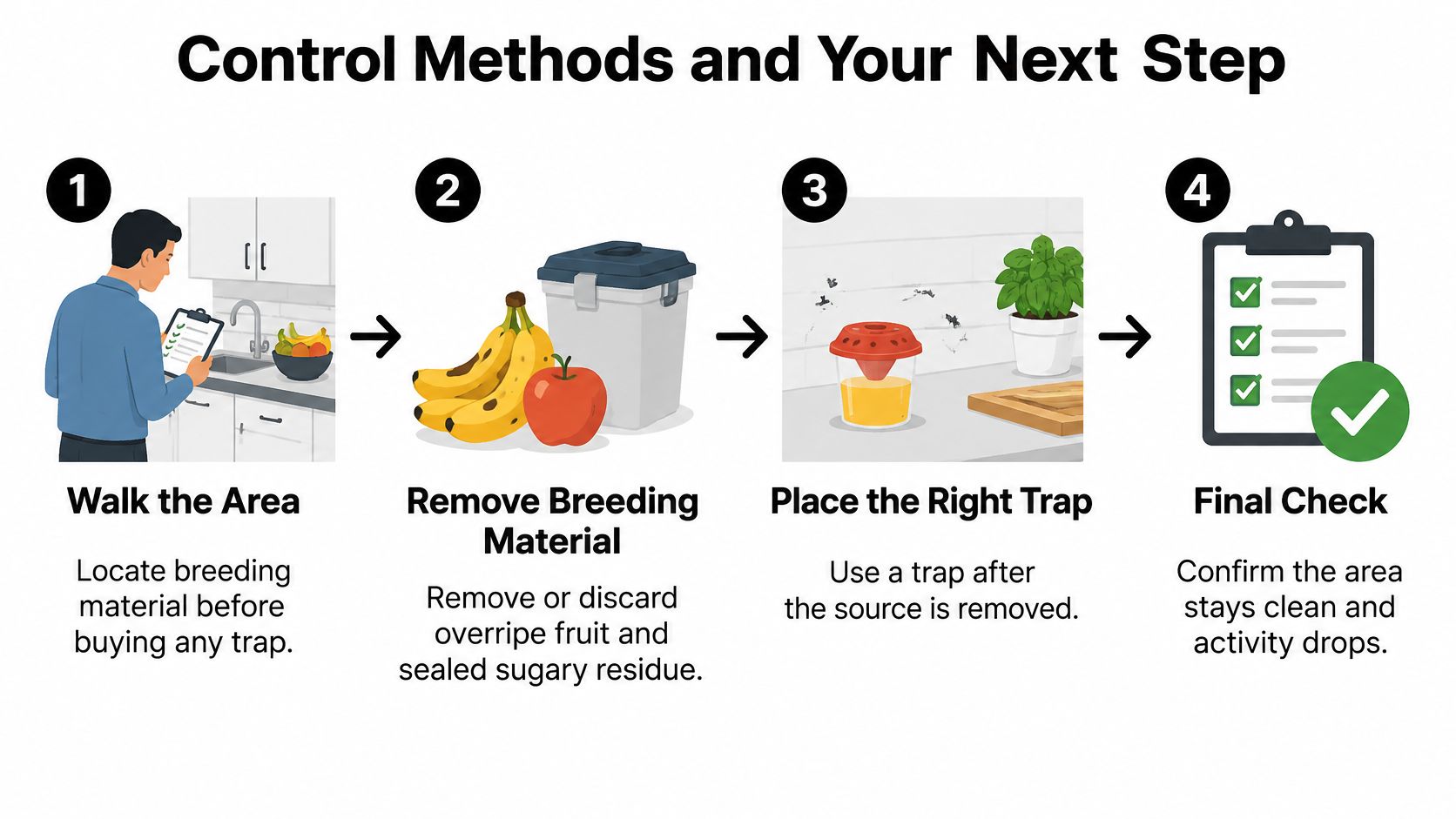
- Walk the area before you spend anything. Ten minutes with a flashlight beats a cart of traps. The common slip is shopping first and hunting later, which means buying for the wrong fly.
- Remove overripe fruit and any sugary residue. Bottle dregs, syrup rings, juice in the tray and cut garnish left out overnight all keep larvae developing. The slip is moving produce to the back room, where it keeps breeding out of sight.
- Clean drains, disposal collars, mop trays and beverage stations with a degreaser, then let them dry. A drain that looks clean but holds a film inside keeps producing flies. The slip is a splash of sanitizer down the pipe and calling it done.
- Empty and lid every bin, and clean the spills around the dumpster pad. The slip is swapping bags but never washing the container, so the film on the bottom stays.
- Seal gaps, check screens and keep doors closed during service. The slip is propping the back door through a delivery rush and inviting the outside population in.
- Place simple traps near the source, never on the food line. A trap beside a buffet draws flies toward the food you're protecting. The slip is setting it on the pass because that's where the flies are visible.
| Control | Fruit flies | House flies | Limit |
|---|---|---|---|
| Remove breeding material | Discard overripe fruit, clean drains and beverage trays | Empty bins, clean spills and waste pads | Main fix for both; adult control alone fails |
| Exclude flies | Cover produce displays and drink stations | Use screens, close doors and seal dumpster areas | Needs regular checks of seals and lids |
| Trap adults | Place vinegar or wine traps near the source | Place traps near refuse, away from food | Reduces adults but does not remove breeding |
| Protect exposed food | Cover ready-to-eat food and drinks during service | Keep all food covered on buffet and serving lines | Does not fix the source behind the fly |
Read the limit column as the honest part. Adult control never fixes a breeding source, no matter how many flies it catches.
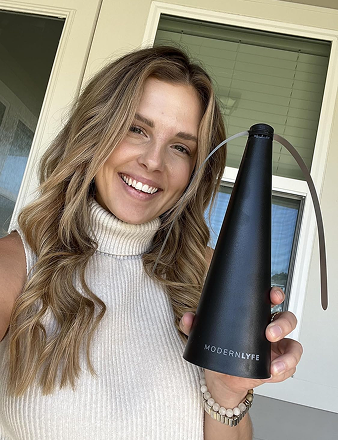
For the protection layer during service, a fan beats a spray because it adds nothing to the air over the plate. The Fly Fan for Tables from MODERN LYFE is described as an odor-free alternative to bug repellents, priced at $99.99 USD on sale from a regular $139.99 USD, and offered in Single Pack, Two Pack, Four Pack and 8 Pack options, with the Four Pack marked most popular and the 8 Pack marked best value. It supports sanitation. It doesn't replace it.
House fly pressure that keeps returning from outside needs a longer plan than a single cleanout, and a step-by-step house fly plan covers bins, doors and waste pads in the order that works.
Then run the check that closes the job. Count the adults you see in a fixed spot one week after cleaning, and compare them to the count on day one. If the number hasn't dropped by two weeks, the source is still there and you haven't found it. That's the point to bring in a licensed pest professional, because a second pair of trained eyes on a drain line or a shared waste yard is cheaper than losing a week of service to flies.
MODERN LYFE builds rechargeable fly fans for tables, the protection layer that keeps flies off food at buffets, patio seating and food truck windows once the cleaning is handled. The Fly Fan for Tables is $99.99 USD on sale from $139.99 USD, runs over 8 hours per charge, and comes in Single, Two, Four and 8 Pack options. Visit MODERN LYFE to pick the pack size and color that fit your next service.