A lot of hospitality operators are staring at the same puzzle right now. The dining room looks fine on paper. Reviews are solid. Staff is showing up. Yet the tables you expected to turn twice are moving once, while a competitor with a simpler menu or smaller footprint is suddenly the place everyone wants.
That usually isn't random.
Customers shift how they spend, where they linger, what they photograph, and what they tend to avoid. Those shifts create growth trends. If you run a restaurant, hotel, catering company, food truck, or event venue, you're already dealing with them whether you track them or not. The only real choice is whether you spot them early enough to act.
Most operators overcomplicate this. They treat growth trends like something for economists, investors, or tech companies. That's a mistake. In hospitality, a growth trend often shows up first in very ordinary places. Patio covers that book faster than indoor seats. Private dining inquiries replacing standard dinner reservations. Guests asking where ingredients came from. Weekend brunch holding steady while late-night traffic softens.
The operators who win don't chase every shiny idea. They learn which market shifts are structural, which are seasonal, and which are just noise. Then they make small operational changes that improve revenue and guest satisfaction fast.
Your Business Is Facing a Growth Trend Right Now
It's a warm spring evening. Your patio should be full. Instead, half the tables are empty by sunset.
Two blocks away, another venue is packed. Their menu isn't dramatically better. Their prices aren't radically lower. But they made a few sharper decisions. Better shade. Cleaner outdoor table flow. Faster drink service outside. Staff who treat the patio like prime real estate instead of overflow seating.
That gap is what growth trends look like in practice.
Hospitality owners often assume weak demand is the problem when the actual issue is mismatched demand. Guests still want to go out. They just want a setup that fits how they're choosing to spend their time now. If your offer reflects last year's priorities, the market will punish you quickly.
Where operators miss the signal
The mistake usually starts with broad thinking. An owner says, “People are spending less,” or “Guests don't stay as long anymore.” Those statements are too vague to help. What matters is who is still spending, what experience they value, and where your operation creates friction.
You can see it in simple patterns:
- Outdoor seating underperforms: Guests may want fresh air, but not direct sun, unstable tables, or slow service.
- Banquet leads stall: Clients may still want events, but they expect more flexibility, more personalization, and fewer generic packages.
- Repeat traffic softens: Guests may like your core product but feel the experience hasn't evolved.
Practical rule: If a nearby operator is filling seats you expected to win, assume a trend is forming before you assume customers are irrational.
Growth trends hit operations before they hit strategy decks
That's why this topic matters. Growth trends aren't abstract charts. They show up in reservation patterns, ticket mix, guest complaints, server routes, and how long people linger over a second drink. In hospitality, market shifts become operational problems first. Then they become financial problems.
The upside is that the reverse is also true. If you identify the shift early, operational improvements become growth moves. Better table placement, smarter scheduling, stronger outdoor comfort, sharper partnerships, and tighter guest experience design can move revenue faster than a full rebrand ever will.
What Are Growth Trends Really
A growth trend is a sustained upward movement in demand, behavior, or market development over time. Not a busy Saturday. Not one viral post. Not a lucky month. A real trend keeps showing up long enough to change how businesses should operate.
The easiest way to think about it is water movement.
A macro-trend is the deep current. It changes the environment for years, sometimes decades. A micro-trend is the tide. It changes local conditions more quickly and creates near-term opportunities. A fad is the wave that crashes loudly and disappears.

Macro-trends change the playing field
If you want one clean example, use population. The world reached 8 billion people in 2022, up from 4 billion in 1974, and that long-run expansion is now slowing, according to Our World in Data's population analysis. That matters because real macro-trends don't just create more demand. They reshape labor, urban density, travel patterns, service expectations, and where businesses can grow.
For hospitality, macro-trends don't tell you what cocktail to add next month. They tell you which markets mature, which guest expectations harden, and which formats become more resilient over time.
Micro-trends create tactical openings
Micro-trends are where operators make money faster. They're narrower and more actionable. Think rooftop demand, neighborhood brunch migration, earlier dinner reservations, low-alcohol beverage interest, weekday remote-work occupancy in hotel lounges, or private dining demand from smaller groups that still want a premium feel.
These shifts matter because they affect layout, staffing, menus, and marketing. They're not permanent in the same way as a macro-trend, but they last long enough to justify action.
Here's a simple filter:
| Type | What it feels like | Hospitality response |
|---|---|---|
| Macro-trend | Deep market shift | Adjust business model and capital priorities |
| Micro-trend | Emerging guest behavior | Test offers, service design, pricing, and space use |
| Fad | Sudden buzz | Run a limited experiment and protect margin |
Fads deserve restraint
Operators waste money when they confuse attention with demand. A fad gets social traction fast, but it doesn't hold consistently enough to deserve a major operational commitment. If the idea requires expensive equipment, staff retraining, or a full menu rebuild, pause. Test first.
Don't build your floor plan around a wave. Build it around the tide.
The discipline is simple. Put long-term resources behind structural shifts. Use quick tests for local movements. Treat hype like a trial balloon, not a strategy.
How to Measure and Forecast Key Trends
Most hospitality teams already have enough data to spot growth trends. They just don't organize it well. You do not need a data science team to see what's changing. You need cleaner questions.
Start with your own systems. Your point-of-sale, reservation platform, event inquiry logs, and guest feedback already show whether demand is shifting by daypart, menu category, table type, and occasion. If dessert attach improves while starters soften, that means something. If patio bookings rise but average check lags outdoors, that means something else.
Read patterns, not spikes
One busy weekend is noise. A repeating pattern is signal.
Historical market behavior makes that point clearly. Over the past 128 years, the Dow Jones has moved through major bull and bear cycles, which shows that long-run growth is rarely linear and trends don't move in straight lines, according to Guggenheim Investments' historical market view. Different sectors also compound differently over time, so copying another business category without context is lazy analysis.
For hospitality operators, the lesson is practical:
- Track by period: Compare the same daypart and occasion repeatedly, not random dates.
- Separate event effects: Weather, holidays, festivals, and local closures can distort a week.
- Watch combinations: Revenue matters, but so do guest mix, pacing, labor strain, and margin quality.
Use a simple forecasting routine
A useful forecast doesn't need to be fancy. It needs to be useful enough to guide staffing, purchasing, and promotion.
Build a monthly review around these questions:
- What is growing consistently Look at covers, average check, event inquiries, repeat bookings, and category mix.
- Where is growth happening Break it by patio, bar, private dining, banquet, weekday stay, weekend stay, rooftop, lobby, or off-site catering.
- What changed around the number Menu edits, staffing levels, local events, weather, hours, and service speed all affect outcomes.
- What will we test next Forecasting without a test plan is just commentary.
If your team needs a practical framework for setting assumptions and building better projections, AnchOps' forecasting methods offer a useful business planning model that translates well to hospitality demand planning.
Measure what managers can actually improve
Don't flood your team with vanity metrics. Focus on the handful that change decisions. A tight dashboard should tell you whether demand is shifting, whether the guest experience is holding up, and whether the operation is making money while it scales. This guide to hospitality performance metrics is a useful reference point for choosing measures that operators can act on.
A metric earns its place only if a manager can change something because of it this week.
The best forecasting habit is boring. Review the same signals on the same cadence, ask the same hard questions, and act before the trend becomes obvious to everyone else.
Major Market Trends Impacting Hospitality in 2026
Hospitality growth in 2026 won't come from being broadly available. It will come from being more relevant than the place nearby. Operators who keep trying to attract “everyone” usually end up serving no one especially well.
That's why the most important shifts are operational, not theoretical. Guests want stronger reasons to visit, better use of physical space, and a more local, less generic experience. If you treat those as marketing themes only, you'll miss the money.

Experiential dining is now a revenue design issue
People don't just buy a meal anymore. They buy a reason to leave home.
That changes how restaurants and hotels should package offers. Tasting events, chef-led moments, pairing nights, seasonal menus, tableside finishing, rooftop music, cooking demos, and small-format private experiences all create a stronger motive to book. The winning move is not “be more experiential” as a slogan. The winning move is to make ordinary service feel intentional.
A standard dinner can feel premium when the sequence, pacing, lighting, presentation, and staff scripting are sharper. Event coordinators should apply the same logic. A banquet room without a point of view is just expensive square footage.
Outdoor space is no longer overflow seating
Too many operators still treat patios, courtyards, rooftops, and poolside zones like seasonal extras. That's outdated. Guests often evaluate the outdoor setup before they evaluate the food.
If outdoor areas are becoming a primary demand driver, then operators should manage them like core revenue assets:
- Design for comfort: Shade, airflow, lighting, table stability, and acoustic control matter.
- Protect service quality: Don't let outdoor tables wait longer for drinks or payment.
- Engineer the menu: Use items that travel well, hold temperature, and fit the pace of outdoor dining.
A weak outdoor setup doesn't just lose patio sales. It damages the entire brand impression.
Hyper-localism beats generic positioning
Guests increasingly respond to local relevance. That includes local sourcing, neighborhood partnerships, nearby makers, regional dishes, and event programming tied to the place itself. Hotels should stop acting like sealed boxes. Restaurants should stop using “local” as a menu adjective without building anything around it.
This is also where overlooked demand hides. Real growth often comes from identifying underserved micro-markets. Broad demographics miss too much. Behavioral patterns and store-level nuance can reveal that two venues on the same street serve very different buyers, as explained in Circana's piece on finding underserved consumer markets through cross-purchase behavior and local nuance.
The smart operator doesn't ask, “Who lives nearby?” The smart operator asks, “Who buys nearby, when, and why?”
That same specificity applies to labor. Many hospitality operators can see demand opportunities but can't execute them consistently because staffing stays fragile. For businesses dealing with recruitment pressure, these UK hospitality skills shortage solutions offer practical ideas for keeping service standards stable while the market shifts.
The takeaway for 2026
The growth trends that matter most aren't abstract. They show up in the spaces guests choose, the experiences they remember, and the local signals they trust. If your offer still looks interchangeable, growth will stay expensive.
Seasonal and Customer Experience Growth Trends
Seasonality still matters. But the bigger opportunity is how you design the guest experience around seasonal intent.
Summer guests want ease. Autumn guests want warmth. Holiday event clients want reliability. Wedding parties want flow, not friction. If your operation treats seasonal demand like a calendar reminder instead of a guest mindset, you'll leave money on the table.

Seasonal growth comes from preparation, not decoration
Too many venues respond to the season with surface-level changes. A few themed specials. Different music. Maybe some new signage. That's not enough.
A stronger approach ties each season to an operational plan.
| Season type | What guests usually value | What operators should tighten |
|---|---|---|
| Warm weather | Outdoor comfort and social energy | Shade, pacing, drink speed, table turnover |
| Cool weather | Coziness and shelter | Heat, texture, lighting, reservation flow |
| Event-heavy periods | Reliability and polish | Staffing plans, menu simplification, setup precision |
That's how seasonal demand becomes repeatable revenue. The best operators don't merely react to weather. They pre-build an experience people want in that weather.
Customer experience is the real growth engine
Guest experience isn't soft. It's commercial.
Comfort, cleanliness, speed, noise levels, table spacing, air movement, bathroom condition, and pest control all shape whether guests stay longer, spend more comfortably, and come back. Operators often obsess over branding while ignoring the physical annoyances that ruin a visit in real time.
The strongest growth trends in hospitality increasingly reward businesses that remove friction. Guests remember what felt easy. They also remember what made them uncomfortable.
Here are the experience details that deserve executive attention:
- Physical comfort: Seats, shade, heating, airflow, and spacing influence dwell time.
- Service confidence: Guests notice hesitation, inconsistency, and slow recovery.
- Hygiene visibility: Cleanliness has to be felt, not just claimed.
- Environmental irritants: Wind, glare, heat, insects, and noise can undo a great menu.
Overlooked groups often create the best upside
Many operators tend to get lazy. They target the broad middle of the market and ignore people whose needs are specific but underserved. That's a mistake because growth often hides in the edges.
Research on the U.S. beauty market found meaningful growth by serving overlooked groups such as men and women 50+, showing that customized offers aimed at underserved demographics can outperform generic mass-market positioning, according to Coresight Research's analysis of underserved beauty segments. Hospitality should take the same lesson seriously.
A restaurant can build loyalty with older guests who want lower noise and easier seating. A hotel can win families who need practical room flow. A caterer can dominate outdoor events by solving comfort issues other vendors ignore.
If you want more repeat business, focus less on broad awareness and more on specific guest needs. These customer retention strategies for hospitality brands align well with that approach because they center the experience after the first transaction, not just the first booking.
Guests rarely describe their loyalty as a response to “strategy.” They describe it as, “This place gets it right every time.”
Turning Trends into Actionable Strategy
A trend is only useful if it changes what your team does on Monday morning.
Most operators fail here. They identify a market shift, hold a meeting, and stop at general statements. “We need to lean into events.” “We should improve outdoor dining.” “Let's get more local.” None of that is strategy. That's a wish list.
Use a four-part conversion process
Turn any growth trend into action with this sequence:
-
Define the shift clearly
Name the behavior in plain language. Not “experiential demand.” Say, “Guests are choosing places that give them a shareable reason to visit.” -
Find the operational pressure point
Ask where the trend breaks your current model. Is it staffing, speed, menu design, layout, booking flow, or guest comfort? -
Pilot one controlled change
Don't rebuild the entire business. Test a tighter package, a different floor setup, a revised staffing pattern, or a new service script in one area first. -
Decide using evidence
Keep, refine, or kill the idea based on guest response, team execution, and commercial impact.
Example with outdoor demand
If outdoor demand is rising, the answer isn't “buy more tables.” It's a series of sharper questions:
- Can staff deliver the same pace outdoors as indoors?
- Does the menu survive wind, heat, and carrying distance?
- Are guests comfortable enough to order another round?
- Does the setup protect food quality during buffets or events?
- Have you eliminated obvious irritants that make guests want to leave?
That's how real operators think. Growth creates stress before it creates profit. Your job is to remove the stress points first.
Protect your team while you scale
A trend can produce revenue and still damage the business if your team burns out trying to capture it. Expansion without process discipline creates inconsistent service fast. If you're balancing demand growth with owner capacity and team stamina, this guide on how to scale your business without burnout is worth reading because it pushes the right question. Can your operation support the next phase cleanly?
Growth that exhausts the team usually collapses into service failures, staff churn, or both.
Good strategy is selective. You do not need to chase every movement in the market. You need to choose the few that fit your brand, your space, and your staffing reality, then execute them better than competitors.
Innovate to Stay Ahead of the Curve
Hospitality businesses don't stay ahead by talking about innovation. They stay ahead by solving small guest problems before those problems damage the experience.
That matters most outdoors, where many of the strongest growth trends are now concentrated. Patios, rooftops, garden receptions, pool decks, wedding buffets, and open-air brunches can all drive demand. They can also fall apart quickly when the environment isn't controlled.

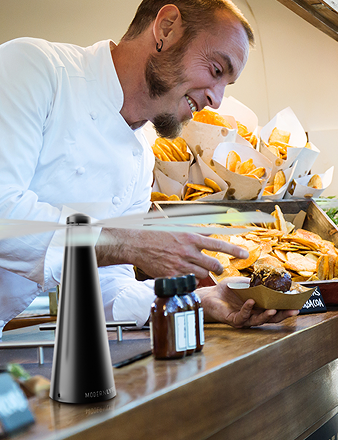
A lot of operators focus on visible upgrades and ignore practical irritants. Guests don't. If flies hover around food, if buffet lines feel exposed, or if an outdoor table becomes annoying to sit at, the experience drops immediately. That's not a minor issue. It affects comfort, hygiene perception, and whether people remember the event positively.
Small tools can protect larger revenue streams
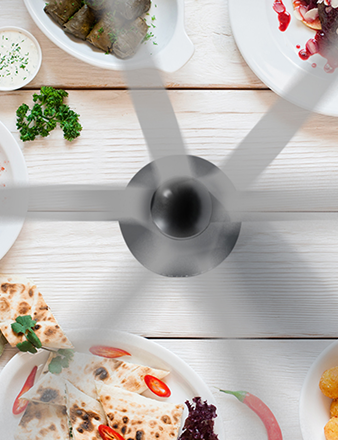
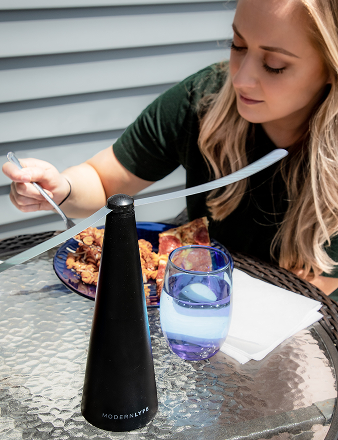
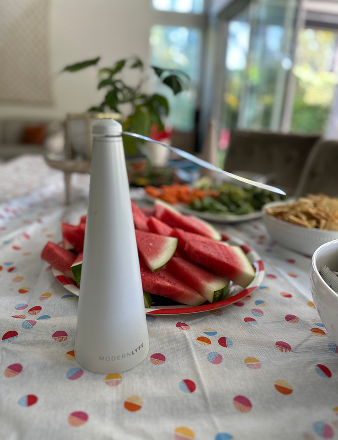
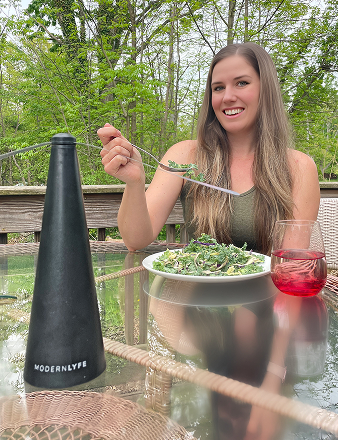
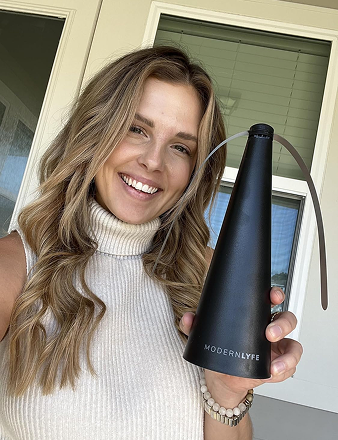
Targeted innovation earns its place. Battery-operated table fly fans, including options from Modern Lyfe, are built to help protect food presentation and reduce flying insect disruption in restaurants, hotels, catered events, and outdoor gatherings. That kind of tool doesn't replace service or design. It supports them by removing a predictable friction point.
The same principle applies across the business. Smart operators look for compact fixes with outsized operational value. Better outdoor lighting. Faster mobile payment at the table. Quiet portable shade solutions. Cleaner buffet protection. More deliberate queue design.
If you're evaluating where hospitality tech is useful, this overview of emerging technology for modern operators is a practical place to start.
Video helps when your team needs to see the concept in use:
The point is simple. Growth trends create openings, but they also expose weak spots. The businesses that lead are usually the ones that notice those weak spots first and fix them without drama.
If you want a cleaner, more comfortable outdoor dining or event setup, take a look at MODERN LYFE. Their fly fan solutions fit the operational problems hospitality teams deal with every day, especially where food presentation and guest comfort need to hold up outdoors.