A busy outdoor reception can unravel in minutes. A tray sits uncovered while the team clears plates, a fly lands near the garnish, a buffet pan drops below its holding temperature, and a guest notices the restroom dispenser is empty. None of those failures looks like a major operational crisis on its own. Together, they tell the guest that the venue isn't under control.
That's the meaning of hospitality standards in 2026. They connect what happens behind the kitchen door, beside the buffet, at the service desk, and in the restroom to the trust a guest carries home. Compliance matters, but the strongest operators treat standards as a working system that prevents visible failures before they reach the guest.
What Hospitality Standards Mean in 2026
A full terrace, a bar queue, and a kitchen sending food out quickly expose whether a venue has an operating system or only written policies. A plate remains outside too long, the refuse station fills, a door stays open, and an insect-control device sits too close to exposed food. Staff may keep smiling, but several connected risks are already reaching the guest experience.
That is the modern definition. Hospitality standards are the documented expectations, controls, and behaviors that govern guest service, cleanliness, food safety, security, maintenance, supply management, and guest satisfaction. They cover far more than greetings, uniforms, or scripted responses. They set the operating requirements for busy shifts, imperfect conditions, and the handoffs between back-of-house controls and front-of-house service.
ISO 22483:2020 sets quality requirements and recommendations for hotels across staff, service, events, safety and security, maintenance, cleanliness, supply management, and guest satisfaction. The standard was published in 2020 and is under systematic review, making it an established reference for hotel operations. Its value extends to dining and event venues because it connects service delivery with cleanliness, safety, and guest satisfaction. ISO 22483:2020 overview and hospitality standards context

Use three tests for every standard: does the venue deliver the promised experience, control risks to people and property, and prove that staff follow repeatable procedures? A failure in one area can weaken the others. Poor temperature control can create a safety issue, trigger an inspection concern, and change how guests judge the operation.
The Four Pillars of Modern Hospitality Standards
| Pillar | Primary risk | Who cares most | Operational signal |
|---|---|---|---|
| Guest experience and service protocols | Inconsistent or impersonal service | Guests, reviewers, brand leaders | Greeting, response, recovery, and communication routines |
| Hygiene and food safety | Contamination, illness, and poor ratings | Guests, inspectors, kitchen leaders | Cleaning records, handwashing controls, protected food |
| Safety, security, and emergency readiness | Injury, disruption, and liability | Guests, staff, regulators | Incident reporting, evacuation readiness, controlled access |
| Operational and back-of-house excellence | Hidden failures reaching the front of house | General managers, chefs, event teams | Temperature logs, maintenance, stock rotation, pest controls |
A standard has operational value only when someone owns it during the shift. Assign the check, record the result, and define the corrective action. Otherwise, the policy is decoration.
The Core Categories Every Venue Must Cover
A working venue should organize its hospitality standards into four operating categories. This makes an audit useful because managers can inspect behavior, equipment, records, and outcomes instead of scoring a vague impression of “quality.”
Hygiene and food protection
Hygiene covers personal cleanliness, handwashing, cleaning schedules, sanitized equipment, protected food, waste handling, and pest prevention. A kitchen that catches a temperature drift during service has a functioning control. A kitchen that discovers the problem only after a guest complains has a reporting failure.
Use a written cleaning matrix with named owners, approved chemicals, contact times, and sign-off points. For teams reviewing the physical side of food preparation, a resource on professional kitchen sanitation can help translate broad cleanliness expectations into practical commercial-kitchen tasks.
Safety and emergency readiness
Safety includes fire procedures, slips and falls, equipment condition, allergen communication, incident reporting, first-aid readiness, and controlled access to restricted areas. A hotel that trains every shift to report incidents creates a record managers can investigate. A hotel that relies on verbal handovers loses patterns.
Keep the process short. Staff should know who receives a report, what details to record, and which manager decides whether an area or service point must close temporarily.
Service consistency
Service standards define the guest-facing behaviors that should remain dependable across shifts. Greeting language, request ownership, complaint escalation, table checks, event announcements, and recovery authority all belong here.
A catering team might standardize the opening greeting for a wedding reception, then give servers permission to adapt their tone and recommendations. That balance matters. Guests need consistency, not robotic interactions.
Back-of-house discipline
Operational controls include stock rotation, maintenance, supplier checks, equipment calibration, shift handovers, temperature monitoring, and pest observations. These controls are mostly invisible when they work, which is exactly why managers must inspect them deliberately.
Start with four questions at every service point:
- Who owns this control? Name the role, not “the team.”
- When is it checked? Tie it to opening, shift change, service, or close-down.
- What proves completion? Use a log, photo, reading, or signed checklist.
- What happens after failure? Define the correction and escalation path.
That vocabulary turns hospitality standards into actions a supervisor can coach.
Regulatory Expectations and Public Scoring
Hospitality standards now shape inspection results, licensing decisions, public hygiene ratings, and guest reviews. The UK offers a clear example. Food Standards Agency open data includes 613,137 businesses in its English-language dataset as of 11/09/2026, covering restaurants, pubs, cafés, takeaways, hotels, and other food businesses. The UK Food Standards Agency hygiene rating data provides the public context behind those ratings.
Public scoring turns a back-of-house control into a front-of-house trust signal. An analysis of hotels, B&Bs, and guesthouses found an average hygiene score of 4.79 out of 5. 84.90% received the top score of 5, while 95.53% scored either 4 or 5. Only 0.07% received a zero rating. Industry analysis of hospitality hygiene scores
These figures do not prove that every high-scoring property delivers perfect service. They show how mature markets make food hygiene visible through inspection systems. A strong rating supports confidence before a guest books a table, room, or event. A poor one creates doubt that staff must overcome during every later interaction.

ISO 22483 gives hotel groups and hospitality suppliers a shared benchmark across locations. It covers safety, security, maintenance, cleanliness, supply management, and guest satisfaction, helping operators align daily controls instead of relying on local habits.
What public scoring changes for managers
Treat an inspection as a test of the operating system. The public score is the result. Training, cleaning ownership, maintenance response, temperature control, pest prevention, and documentation create that result.
Use the following questions during internal reviews:
- Is exposed food protected?
- Can staff explain the control they perform?
- Are corrective actions recorded and closed?
- Does the public area match the back of house?
- Would the team follow the same process on a quiet shift and a packed one?
The answers connect invisible controls to visible guest confidence. Owners also need a current view of regulatory requirements for hospitality businesses. Identify which requirements apply to the venue, assign each one to a named role, and verify execution before an external visit exposes the gap.
Temperature, Timing, and the Food-Safety Danger Zone
Temperature control must stay visible and consistent throughout service. Hot-held food should remain at 63°C or above. If the operation cannot maintain that threshold, limit exposure to 2 hours before stopping service, because the 5°C to 63°C range supports rapid bacterial growth. Follow the hospitality catering temperature and holding guidance for the holding procedure.

Give the banquet captain a short playbook:
- Check before service. Measure the food itself, not only the warmer display.
- Record the reading. Log the time, item, temperature, and initials.
- React to drift. Adjust the equipment, replace the pan, or stop service under the venue procedure.
- Track exposure. If food falls outside the required temperature, start the time limit immediately.
- Escalate uncertainty. Appearance and smell do not prove that food is safe.
Cooling needs the same discipline. Set a target of moving cooked food from 70°C to 3°C or below within 90 minutes. Use the food safety danger zone guide in induction training so staff understand why slow cooling creates a control failure.
Practical rule: A temperature log matters only when a failed reading triggers a defined action.
Use shallow containers, divide large batches, leave room for cold air to circulate, and label the cooling start time. Equipment and local requirements vary, but the operating rule is fixed: move food through the danger zone quickly, document the movement, and remove items from service when the control fails.
Pest Control as a Food-Safety Engineering Problem
Flies aren't just unpleasant. Public-health guidance identifies them as contamination hazards that can spread Salmonella, typhoid, cholera, and parasitic worms through body hairs, feet, feces, and saliva. The practical response is to keep food uncovered for as little time as possible and use lidded containers or washable net protectors. Public-health guidance on flies and food contamination
That changes the question from “How do we kill flies?” to “How do we stop insects reaching food, utensils, and service surfaces?” The answer is layered.
Design the room and equipment correctly
Food codes require insect-control devices to be positioned away from food-preparation areas and designed to retain insects so fragments aren't propelled onto exposed food, utensils, linens, or single-use items. Outdoor cooking and beverage stations need layouts that protect food and service items, especially where doors, windows, or openings remain unprotected. FDA Food Code provisions for insect control and open-air food service
A widely used food-service ordinance also requires effective screening when flies are prevalent, self-closing doors unless another effective barrier exists, protected stored utensils, and protection for food and drink during storage, display, and serving. Food-service requirements for screening, doors, utensils, and food protection
Do not place a device directly above a buffet or prep bench just because that location is convenient. Check airflow, splash risk, guest contact, cleaning access, and the direction in which insects or debris could move.

Remove what attracts insects
Australia's national food-safety guidance says businesses must do everything reasonably possible to prevent pest problems, stop pests entering or living in food premises, and eradicate them from premises and food-transport vehicles. Food Standards Australia New Zealand pest-prevention guidance
That means adult-insect control is only one layer. Your shift checklist should include:
- Spill response: Clean drink and food spills during the shift, not only at close.
- Waste control: Keep trash lids closed and move full containers away from service.
- Plate removal: Clear used plates quickly, particularly at outdoor receptions.
- Service-zone cleaning: Clean under and behind bars, buffet tables, grills, and beverage stations.
- Moisture management: Include drains, wet cloths, mop areas, and condensation points in close-down checks.
- Inspection follow-up: Record sightings by location, time, and likely attractant.
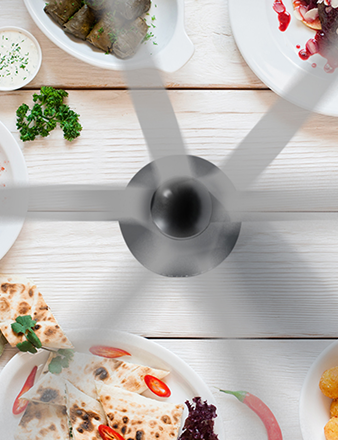
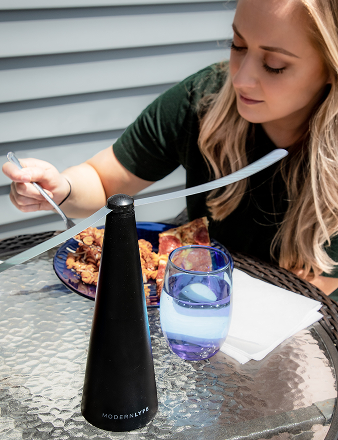
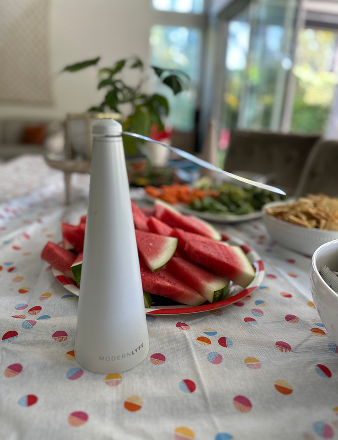
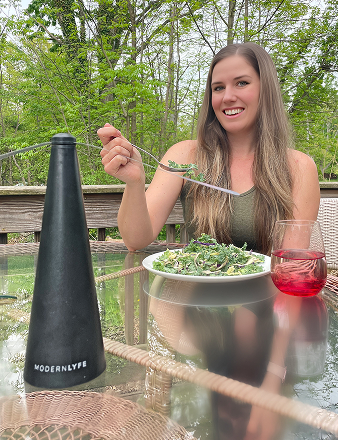
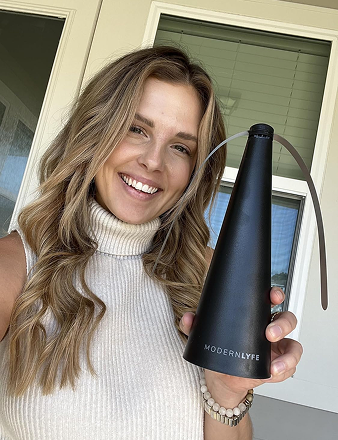
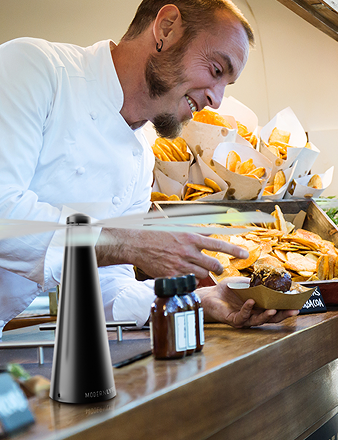
Discreet fly-fan solutions can support this program around buffet lines, outdoor tables, and reception stations, but they aren't a substitute for screening, sanitation, waste control, or professional pest management. A quiet, battery-operated fan can provide a tactical barrier without dominating the visual design. Place it where it protects the food zone and doesn't interfere with guests, staff movement, or food handling.
For a broader prevention framework, use integrated pest management for hospitality. Managers should also schedule a thorough inspection of accessible facility components at least monthly unless the customer agrees otherwise, following food-handling industry guidance. Food-handling facility inspection guidance
Building the Operational System Behind the Standards
A standard becomes real when a manager can observe it, a staff member can explain it, and the business can prove whether it happened. Start with short policies written in operating language. “Maintain cleanliness” is weak. “Clear spills at the time of discovery, record recurring locations, and notify the shift lead when the same area fails again” is enforceable.
Assign every control to a role. The opening supervisor owns the buffet setup. The chef owns cooling records. The duty manager owns incident escalation. The event lead owns the perimeter and close-down reset.
A practical rollout
Use a staged rhythm rather than one giant audit.
- Every shift: Check temperatures, exposed food, handwashing supplies, spills, waste lids, restroom presentation, and pest sightings.
- Every week: Review repeated failures, inspect service equipment, refresh one procedure, and coach the team on a real observation.
- Every month: Complete a structured facility and pest inspection, review incident reports, verify maintenance actions, and update the risk register.
Training should follow the same rhythm. New starters need task instruction and supervised practice. Existing staff need short refreshers tied to actual failures, not generic presentations. Event teams should rehearse greeting, escalation, buffet protection, and close-down procedures before a high-pressure booking.
Track only indicators that lead to action. Hygiene scores, incident reports, pest sightings, service recovery records, temperature exceptions, and overdue corrective actions tell a manager where the system is weakening. A dashboard full of vanity measures won't improve a dining room.
Management test: If a failure appears twice, stop treating it as an individual mistake. Review the process, ownership, equipment, and training.
Close the loop. Every failed check needs an owner, a deadline, a correction, and a later verification. That feedback loop is what catches a small spill pattern, missing soap, or recurring pest sighting before it becomes a review, inspection, or event-day failure.
What Guests Notice and What They Don't
A guest can forgive a plain lobby. They will not ignore an empty soap dispenser, a sticky restroom fitting, slow plate removal, or a fly hovering over an outdoor table. Guests experience those small moments directly, while back-of-house controls remain invisible. That makes front-of-house details the visible proof of the operating system behind them.
A UK survey found that guests valued restroom features connected with cleanliness and automation, including paper towels at 81%, automated soap dispensers at 78%, incontinence bins at 74%, automated faucets at 73%, automated toilet flushers at 72%, and handwashing reminder signs at 68%. UK hospitality restroom-feature survey data
Do not install every automated fixture by default. Identify the moments that communicate control, then assign ownership behind them. Paper towels, soap, and a clear handwashing prompt can send a stronger hygiene signal than an expensive surface left unmaintained.
Spend on signals that support the system
Prioritize improvements guests can see and staff can verify:
- Restrooms: Assign each shift responsibility for soap, drying supplies, bins, fixtures, and signage.
- Dining tables: Remove used plates promptly and protect exposed food.
- Outdoor service: Use pest controls that preserve conversation and do not create a visible food-safety concern.
- Service recovery: Give staff a clear escalation route and authority to resolve routine problems.
- Technology: Use digital tools to reduce friction in checklists, reporting, and handovers. A current overview of top trends in hospitality tech helps managers compare options without confusing technology with hospitality itself.
The strongest investment often stays unnoticed. It prevents the guest from encountering a problem in the first place. That result depends on back-of-house discipline, from replenishment and cleaning to pest prevention and handover quality.
Putting It All Together This Quarter
Choose the external or internal standard your operation will measure against, then translate it into the four pillars: guest experience, hygiene, safety, and operational control. Don't give the team a binder and call the job finished.
Next, run a one-week audit across those pillars. Observe opening, peak service, shift change, and close-down. Record failures by location and owner, not just by department.
Finally, fix one weak area properly. If outdoor dining produces repeated pest sightings, redesign the service zone, tighten spill and waste routines, and add a suitable tactical barrier. If restroom perception is weak, assign checks and replenish supplies before guests report the problem.
Hospitality standards work when they become daily behavior. Make the next quarter about proof, ownership, and correction.
MODERN LYFE offers quiet, battery-operated fly fans designed for restaurant tables, buffet lines, hotels, catering events, and outdoor gatherings, providing one tactical layer of insect protection without replacing sanitation or pest-management controls. Visit MODERN LYFE to review options for a cleaner, more controlled hospitality setup.