A fly lands on a breadbasket just as the lunch rush peaks. The patio door is propped open, a busser is clearing the neighboring table, and the hostess is already reaching for a napkin. At the expo line, cooks are calling tickets while a manager watches the guest decide whether to say something or quietly remember the incident in a review.
That moment is why how to get rid of flies in a restaurant can't mean merely spraying after the insects arrive. Restaurants create pressure points during service, including open doors, hot food surfaces, warm compost, and wet drink stations. Effective control combines sanitation, exclusion, staff discipline, and quiet airflow barriers that protect exposed food and guest tables while the operation is busy.
When Flies Crash Your Service Window

A busy service window changes the building. The front door opens for a delivery, the patio entrance stays ajar for servers carrying trays, and guests move between shaded tables and the dining room. A fly doesn't need much time to follow those air currents inside. Once it finds a warm surface, food odor, spilled drink, or damp organic residue, it can keep circling the same area.
The usual response is often reactive. Someone grabs a spray, a sticky strip appears near the back door, or a fly zapper starts crackling somewhere behind the bar. Those tools can have a role, but they don't correct the conditions that brought the insect in. A trap may catch adults after they enter, while a spray creates a food-safety and guest-experience problem if staff use it near exposed food.
Four service-hour pressure points
- Open doors: Delivery traffic, patio service, and staff movement create repeated entry opportunities. Food-safety guidance recommends keeping doors and windows closed as much as possible and using screens where openings are necessary. Housefly exclusion guidance for food businesses explains why openings deserve attention.
- Hot food surfaces: Steam, heat, and food odors rise from pass windows, carving stations, and buffet pans. Uncovered food gives a fly an immediate landing target.
- Warm compost and waste: Organic scraps in a warm bin can attract insects from the exterior, especially when the dumpster pad sits close to an entrance.
- Sweating drink stations: Syrup residue, beer foam, wet bar mats, and soda gun troughs create a small but persistent source of moisture and sugar.
A practical defense starts before the first ticket. Remove the attractants, reduce the openings, and use non-chemical airflow devices where guests and food are most exposed. That approach protects the service window instead of asking a late-night trap to repair a problem created during lunch.
Know the Flies You Are Fighting
Not every small flying insect needs the same response. A large fly near the back door points you toward exterior waste and entry gaps. Tiny flies hovering over a bar drain point toward organic buildup, while moth-like insects around a floor drain suggest a different inspection path.
The safety concern is serious regardless of species. A single common house fly can carry more than 100 pathogens, including E. coli, Salmonella, and Shigella, and may carry up to half a billion bacteria on the outside of its body, according to food-safety guidance on pest prevention and control. Because flies can mechanically transfer contamination from trash, drains, and other unsanitary surfaces onto food and food-contact surfaces, identification should lead directly to source removal.
| Fly Type | Hotspot | Where to Inspect First |
|---|---|---|
| House fly | Outdoor waste, dumpster areas, refuse residue | Exterior bins, loading doors, screens, and gaps around entries |
| Drain fly | Floor drains, mop sinks, wet organic buildup | Drain covers, drain traps, mop sink edges, and nearby floor joints |
| Fruit fly | Soda gun troughs, bar mats, produce, beer service areas | Under bar equipment, syrup residue, bottle storage, and beverage drains |
| Blow fly | Raw protein, blood, meat waste, and bone bins | Meat coolers, receiving areas, refuse containers, and protein prep zones |
Match the species to the response
House flies mean look outward as well as inward. Check the dumpster pad, garbage lids, delivery entrance, and patio perimeter. The Orkin restaurant fly-control guide notes that house flies can complete a life cycle in as few as 8 days at summer temperatures, so warm-weather sanitation delays can turn a small sighting into a recurring operation problem.
Drain and fruit flies mean inspect the wet zones. Scrubbing only the visible adult insects won't remove the organic material supporting them. A food-safety discussion of fruit flies identifies small-fly activity as an indicator of a sanitation or structural problem and states that removing the breeding source is the permanent solution. Ecolab's fruit-fly food-safety guidance provides that distinction.
Blow flies require a protein-waste audit. Look for residue beneath prep equipment, leaking bags, improperly closed meat-waste containers, and receiving materials that remain near the kitchen. Identification drives the protocol. Don't spend on a device aimed at adult flies while the breeding source remains active.
Build a Sanitation Routine Flies Cannot Beat
Sanitation works when staff perform it at the right moments, not when a closing checklist says “clean bar” or “empty trash.” A restaurant needs a rhythm that removes food residue, moisture, and breeding material before those resources sit undisturbed.
Set the daily cadence
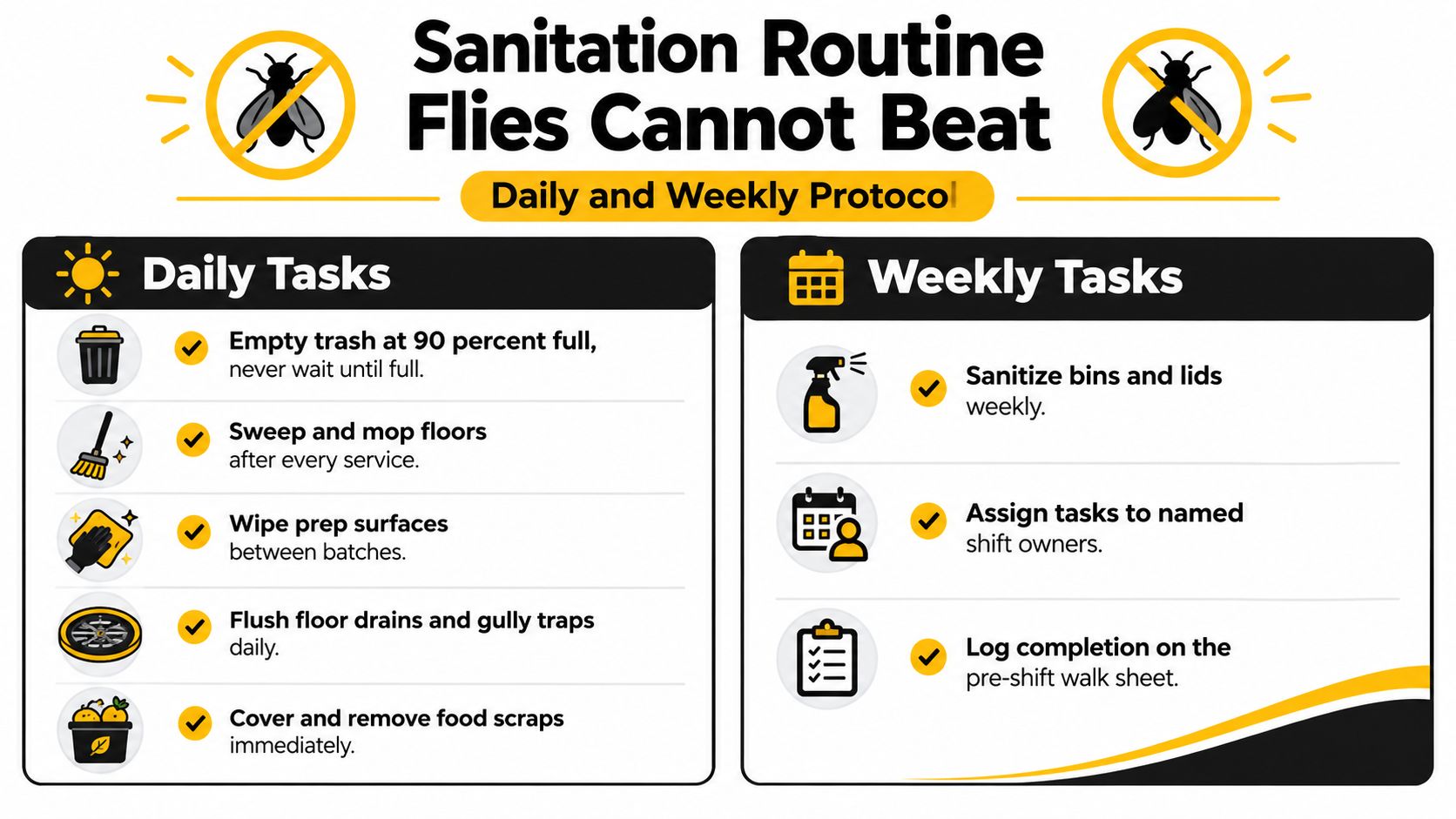
Start with a pre-shift walk. Empty front-of-house trash when it reaches roughly 90 percent full, rather than waiting for overflow. Pull bar mats for full scrubbing, rinse soda gun nozzles with an appropriate sanitizing solution, and check that bus bins are clean, lined, and covered when not in use.
During service, run a 30-minute fly sweep. Runners wipe condiment caddies and table edges, bussers reset surfaces immediately after guests leave, and a manager checks the patio, host stand, beverage stations, and waste route. The purpose isn't to make employees chase every insect. It's to prevent the sticky film, crumbs, standing water, and exposed scraps that keep attracting them.
At close, target the drains. Clean floor drains, mop sinks, and beer tap drains according to the product label and your food-safety program. Commercial guidance specifically recommends keeping drains and drain traps clean, while restaurant drain-control guidance from Orkin discusses foaming drain cleaner as a way to remove organic buildup that can support breeding. Don't pour unapproved chemicals into a drain connected to food-service systems.
Practical rule: If a team can smell the residue, feel the stickiness, or see standing water, the area belongs on the next sanitation action, not the next weekly meeting.
Fine mesh drain covers can help limit re-entry overnight, but they don't replace cleaning. Cover and remove food scraps immediately, keep trash containers lidded and lined, replace liners daily, and move exterior dumpsters away from entrances where the site allows.
Give weekly cleaning an owner
Weekly work should reach the places a mop and wipe-down miss:
- Under equipment: Pull prep tables and movable appliances to remove grease, crumbs, and damp debris.
- Above the line: Degrease hood filters and inspect ledges where residue can accumulate.
- Compost storage: Rotate compost bins to the coldest suitable storage area and keep lids tight.
- Dumpster pad: Audit drainage, wash residue from container areas, and correct pooling water.
- Documentation: Assign each task to a named shift owner and log completion on the pre-shift walk sheet.
For restaurants with street-facing glass, clean windows and frames can also make perimeter inspections easier, particularly around doors and patio service lanes. A manager looking for a dependable service can find restaurant window cleaners while keeping the sanitation plan focused on food-contact and refuse areas. Use your broader food safety restaurant guidelines as a reference when aligning pest controls with the operation's existing hygiene procedures.
Shut the Entry Points That Keep Sneaking Flies In
Treat every door, window, vent, and structural gap as an entry route. Houseflies generally breed outdoors and enter through doors and other openings, so an immaculate kitchen can still experience pressure if the building keeps inviting insects inside.
Start with a perimeter inspection
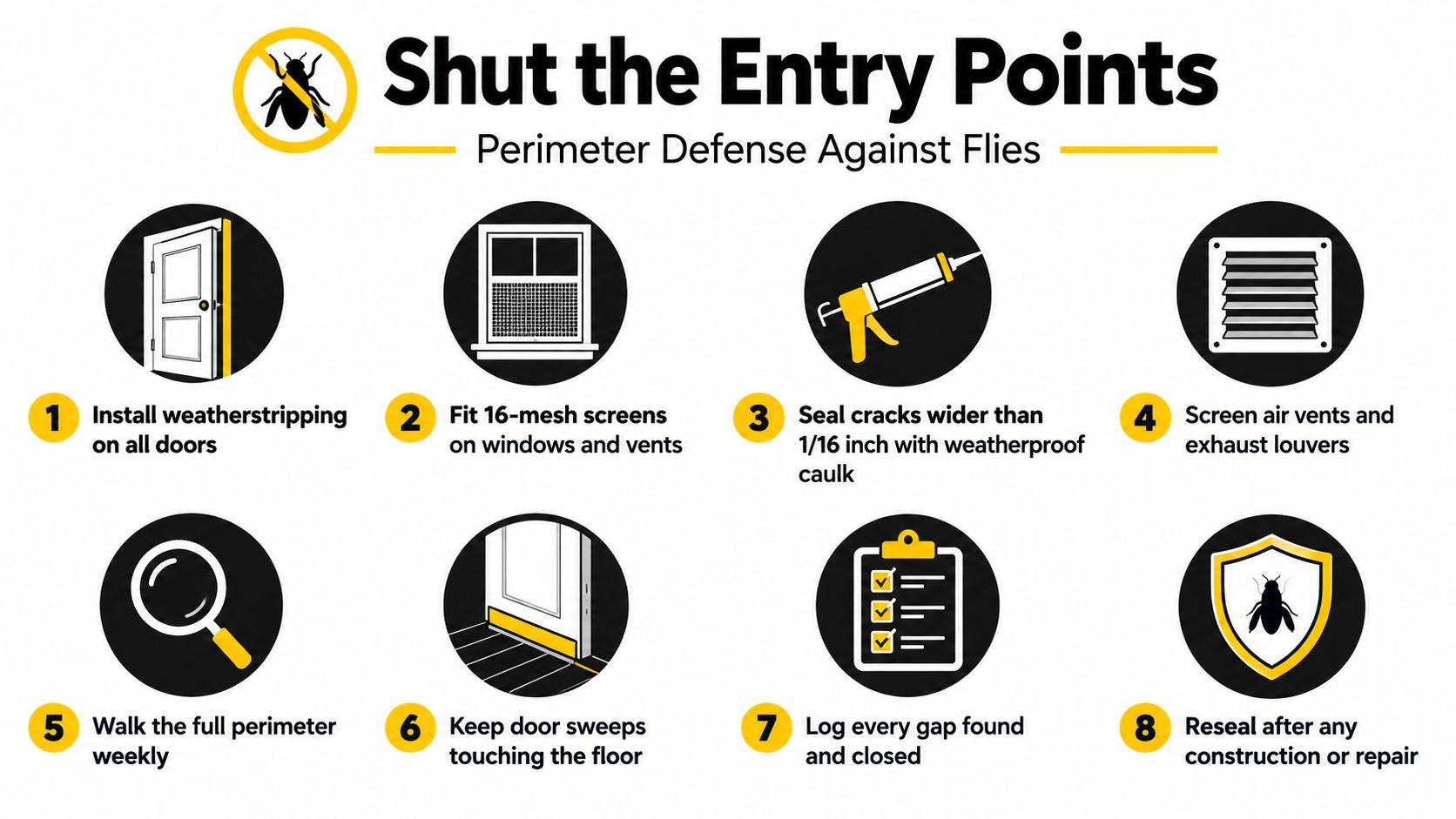
Walk the full exterior weekly, including the delivery side, patio, dumpster route, and roof-level vent areas. Seal cracks wider than 1/16 inch with weatherproof caulk, repair damaged screens, and check that door sweeps touch the floor without creating a trip hazard.
Fit operable windows and suitable vents with 16-mesh screens. Inspect exhaust louvers and service openings after construction, signage work, or utility repairs. A small gap that looks harmless during a quiet morning can become a steady entry route during a busy evening when doors cycle constantly.
Install self-closing hardware on back-of-house doors. Depending on the building, that may mean a self-closing hinge, an automatic closer, or a foot-operated pull that lets staff move through without leaving the door open. Replace damaged hollow-core exterior doors when they no longer close tightly.
Design for delivery and patio friction
A rule that depends on perfect behavior will fail during a rush. Create a single delivery entrance where possible, then use a vestibule, strip curtains, or a rigid plastic air barrier to reduce the open path between the exterior and food areas.
Air curtains can support this setup when installed correctly. Mount the discharge 2 to 4 inches above and ahead of the door frame, with the airflow overlapping the threshold instead of stopping short of it. The equipment should complement a closed or self-closing door, not justify leaving the entrance propped open.
Patio service needs its own controls. Use screen enclosures with weighted bottoms, magnetic closures on service lanes, and a clear rule that staff prop doors only long enough to step through. Positive air pressure, self-closing doors, and minimizing entrance-open time are also recognized measures for reducing entry pressure in busy food operations, as outlined in public guidance on fly prevention.
A barrier that staff can't use during service isn't a control measure. It's a piece of equipment waiting to be bypassed.
Pair passive barriers with a daily opening log. Record a broken closer, lifted screen, failed magnetic strip, or door that stayed open too long, then assign the repair to the same shift or the next facilities owner.
For a focused look at airflow hardware around doors, review this guide to a restaurant door fly fan. Use it alongside proper door discipline, because airflow doesn't compensate for a door that remains open throughout service.
Why Battery-Operated Fans at the Table Change Everything
Most fly-control programs protect the building but neglect the last few feet between an insect and a guest's plate. That gap matters during patio service, buffet events, and any meal where food stays exposed while guests sit nearby.
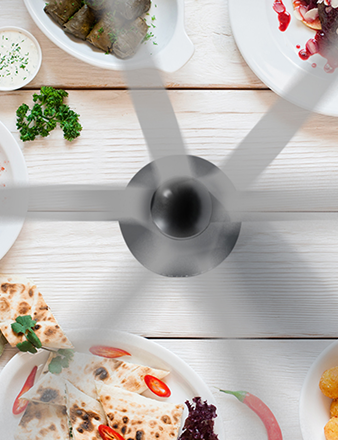
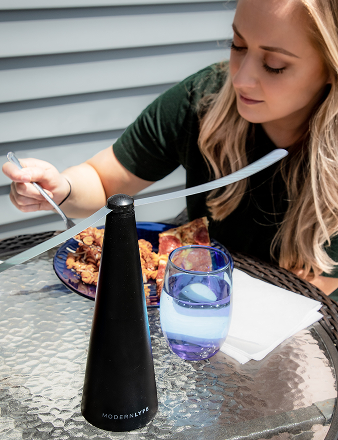
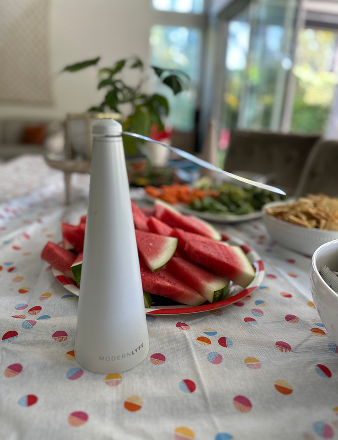
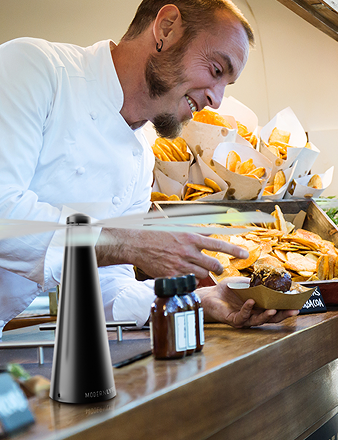
A quiet, battery-operated fan creates a physical airflow barrier over a table or buffet surface. Sustained moving air can disrupt a nuisance fly's hovering and landing approach, giving the operation service-hour protection without chemical scent or a noisy electrical zapper beside guests. The fan doesn't kill insects, and that is precisely why it fits well at a dining table. It helps keep the fly from landing in the first place.
Place airflow where exposure happens
Use the room's service pattern to decide placement:
- A fan at each booth cluster can cover tables where guests linger.
- Patio tables need individual coverage when doors and outdoor waste areas create pressure.
- A buffet or carving station benefits from fans angled across exposed product, positioned so the airflow doesn't disturb napkins or service utensils.
- The host stand can receive coverage when guests wait near an open entrance.
- Bar service needs a unit aimed across exposed garnishes or beverage staging, while staff still clean syrup and beer residue.
Choose units that can run 8 to 12 hours per charge, then rotate two battery sets so coverage doesn't stop halfway through a shift. Wipe blades nightly. A dirty fan can redistribute dust and residue, undermining the sanitation work around it.
The battery-powered fly fans guide offers a useful way to think about placement around dining tables and buffet lines. The important operational point is to position airflow before the rush, not after guests start swatting.
Treat the table fan as one layer
Fans don't remove breeding material, repair a screen, or solve a leaking drain. They also shouldn't blow directly across uncovered food in a way that spreads loose ingredients or disrupts the guest experience. Test the angle at each location, secure the unit against knocks, and include the device in the opening and closing checks.
| Placement Zone | Fans Used | Reduction in Fly Landings |
|---|---|---|
| Guest tables | One unit per exposed table or table cluster | Track through shift sighting and landing logs |
| Patio service | One unit per table where food remains exposed | Compare patio observations before and after deployment |
| Buffet or carving station | Angled airflow across the exposed service edge | Record landings during active service |
| Host stand | Positioned near the guest approach without blocking traffic | Note activity during door cycles |
| Bar staging area | Directed across garnishes and exposed beverages | Pair observations with bar-mat cleaning checks |
The result is a quieter defense than spraying or placing a conspicuous trap beside a plate. Airflow protects the moment guests experience, while sanitation and exclusion remove the reasons flies keep returning.
Train Your Staff to Be a Fly-Detection Team
Equipment only performs consistently when employees notice the conditions that make it necessary. A server who reports one fly near the patio door early gives the manager a chance to inspect the entrance, waste route, and nearby tables before the issue reaches the dining room.
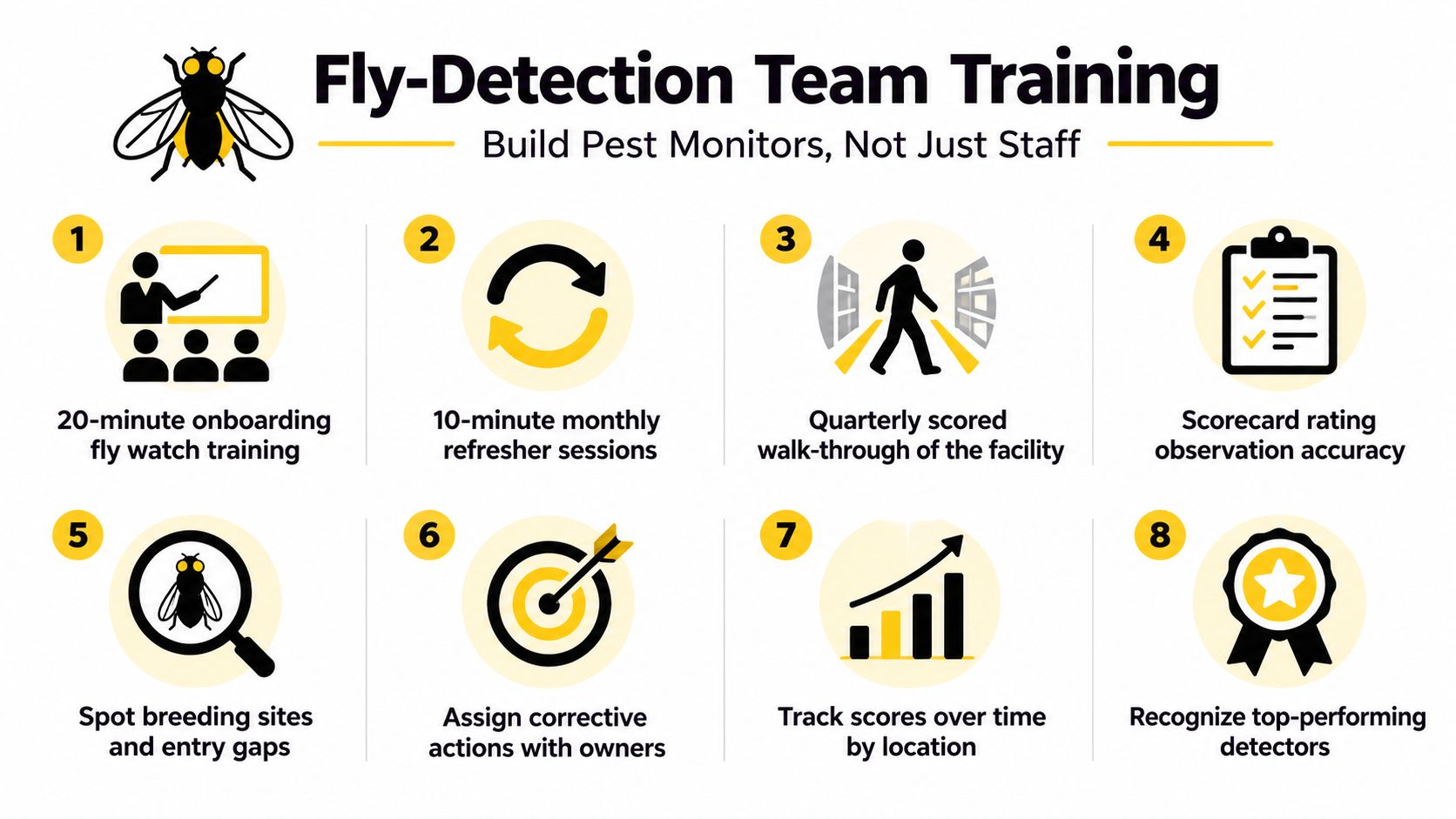
Start every new hire with a 20-minute fly-watch training session. Show staff the difference between a large house fly near an entry, small flies around beverage residue, and drain-associated activity. Then explain the action attached to each observation. The aim isn't to turn servers into pest technicians. It's to make the first report specific enough for a manager to respond.
Build four habits into every shift
- Spot scouts early. Staff should report the first fly, not wait for a cluster. The location, time, and nearby condition matter more than a vague “there are flies.”
- Log openings. Record doors left ajar during deliveries, patio resets, or rush traffic. A repeated opening problem usually needs hardware or workflow changes.
- Flag moisture immediately. Wet drains, sticky floors, overflowing bus bins, and syrup around soda equipment should trigger action as soon as someone sees them.
- Reset airflow coverage. At shift change, staff confirm that fans are running, charged, clean, and pointed across the intended surface.
Give each shift a printed log with door checks, fan rotation, sanitizer refills, and dumpster-area scans. Accountability works better when a person signs for a task than when a supervisor asks whether “someone” handled it.
Refresh the system without creating fear
Run a 10-minute monthly refresher and a quarterly scored walk-through of every station. Score observation accuracy, corrective-action follow-through, and the condition of high-risk areas. Recognize teams that catch problems early, and turn recurring misses into coaching notes rather than automatic punishment.
A good detector doesn't merely swat a fly. They identify the open door, wet drain, exposed waste, or empty fan battery that allowed the problem to reach the guest.
Your 30-Day Fly-Free Restaurant Rollout
Use the first month to turn scattered fixes into a working operating system. The sequence matters. There's no value in installing fans over tables if a drain is producing flies or the back door won't close.
Week 1, establish the baseline
- Log every sighting by zone, including dining room, patio, bar, kitchen, receiving, and waste areas.
- Audit floor drains, mop sinks, beer tap drains, soda equipment, bins, and dumpster conditions.
- Photograph damaged screens, open gaps, poor door alignment, and failed closers.
- Record guest complaints separately from staff observations.
- Mark exposed food and high-traffic locations that need service-hour airflow.
Week 2, remove entry opportunities
- Install or repair door sweeps and self-closing devices.
- Screen operable windows, vents, and exhaust louvers.
- Seal cracks and crevices identified during the perimeter walk.
- Add or service air curtains at primary delivery or patio entries.
- Remove standing water and correct drainage around refuse areas.
- Designate one delivery route and train staff to keep it controlled.
Week 3, protect guest-facing exposure
- Place battery-operated fans at high-traffic tables, buffet and carving stations, and the host stand.
- Charge and label two rotating battery sets.
- Train staff on sighting logs, door checks, wet-area reporting, and fan resets.
- Add a 30-minute service sweep for tables, beverage stations, bus bins, and patio zones.
- Inspect fan blades and mounting positions before opening.
Week 4, lock in maintenance
- Check fan batteries weekly and clean blades nightly.
- Schedule drain and trap treatments monthly according to the approved product label and food-safety program.
- Inspect entry points quarterly, and repeat the walk after repairs or construction.
- Store a written SOP where both front-of-house and back-of-house teams can access it.
- Review sighting counts per shift and guest complaint logs at the manager meeting.
- Compare zones, times, and recurring causes rather than relying on a single total.
A rollout is working when the team can identify where flies appear, what condition preceded the sighting, who corrected it, and whether the same zone keeps failing. Keep the log active after the first month. The goal isn't a temporary quiet period, it's a restaurant that removes breeding sources, limits entry, and protects guests during the busiest service window.
MODERN LYFE offers battery-operated fly fans that create a physical airflow barrier over restaurant tables, buffet lines, and food-service areas without relying on chemical sprays. Visit MODERN LYFE to review options for adding quiet, table-level fly protection to your dining or event setup.