A single fly can turn a busy dinner service into a damage-control exercise. It lands on the salad bar, a guest takes a photo, and suddenly the manager is apologizing instead of running the floor. The busser may remove the insect in seconds, but the guest remembers the breach in confidence.
The answer to how to prevent flies in restaurant spaces isn't another spray or a trap placed near the register. Reliable control uses layers: block entry, remove food and moisture sources, inspect hidden breeding sites, train staff to report activity, and use targeted devices where they add protection. That approach matches the long-standing food-premises baseline described in the Public Health Fly Control Regulations 1930, which required restaurants and hotels to protect food areas and exposed food from flies.
Why Flies Are a Real Restaurant Problem
A fly in a restaurant creates three problems at once. First, it creates a food-safety exposure. Flies move between waste, damp organic residue, drains, and food-contact areas. When one lands on a plate, prep surface, or uncovered ingredient, guests don't know where it was before arriving at their table. That uncertainty is enough to damage trust.
Second, fly activity creates regulatory exposure. The historical legal standard is clear: food-preparation and serving areas should be adequately protected from flies, and exposed food should have screens, covers, or another barrier. Current public guidance still emphasizes closed doors and windows plus properly maintained screens, showing that prevention remains the foundation rather than an optional enhancement. The practical implication is simple: traps can support a control plan, but they can't replace exclusion and sanitation.
Third, the problem becomes brand exposure. A guest can post a photo before a manager reaches the table. That image can trigger a complaint, a comped meal, a lost repeat visit, or an uncomfortable conversation with an inspector. The cost isn't limited to pest treatment. It includes staff time, disrupted service, discarded food, and the loss of confidence that makes guests choose another restaurant.
Treat prevention as risk management
Your team needs a written response, not an improvised swatting routine. Assign ownership for drains, waste, bars, patios, delivery doors, and guest-facing food displays. Record sightings by location and shift so the team can identify patterns instead of arguing about whether the issue is occasional.
Operational rule: If flies can reach exposed food, the restaurant has a process failure, even when the dining room looks clean.
The strongest system has three pillars: physical exclusion, source removal, and sanitation. Add inspection and targeted fly-control equipment after those basics are operating. That layered order protects compliance, guest confidence, and the shift itself.
Daily Sanitation Routines That Cut Fly Pressure
Sanitation works when it follows the restaurant's rhythm. A closing-only deep clean leaves too much time for spills, waste, and moisture to attract flies during service. Put every task on a clipboard, name the responsible role, and require a verification step.
Pre-shift setup
Thirty minutes before opening, the opening manager should verify the following:
- Interior trash: Empty every bin, replace liners, and check that lids close tightly.
- Outdoor tables: Replace soiled linens and remove food residue before guests arrive.
- Expo and pass: Degrease the pass-through, ledges, ticket rails, and nearby floor edges.
- Mop storage: Move mop buckets off the floor and into the utility sink area. Don't leave mop heads soaking in gray water.
- Food protection: Cover exposed ingredients and inspect produce for spoilage before placing it into service.
The manager initials the checklist after a physical walk-through, not from memory. A quick photo of the clean waste area and pass can provide useful verification during handoff. Teams looking to formalize the wider hygiene program can also use these food service hygiene standards as a reference point.

Service-hour control
During service, assign bussers to wipe condiment caddies, straw containers, and high-chair trays at regular intervals. Runners should sweep the patio, remove food debris, and place used napkins in sealed bins. Bar staff need to clean sugary spills and drip trays as soon as they appear, while dishwashers keep food film from accumulating around the wash-rinse line.
The commercial restaurant fly-control guidance specifically emphasizes frequent waste removal, immediate surface cleanup, covered food, and daily drain cleaning. Apply that logic to the actual shift. If a spill happens now, clean it now.
Closing verification
Within thirty minutes of closing, strip and sanitize drains, pull and launder bar mats, scrub the lowest grout channels, and remove the final waste run in tied bags. Clean floor sinks, grease-prone areas, and residue under equipment. The closing manager checks each zone, initials the log, and records any missed task for the opening team.
Hidden Breeding Sites Most Teams Overlook
Adult-killing tactics don't close the loop. Sticky traps, light traps, and swatters remove visible insects, but they leave behind the damp organic material where the next generation develops. A single female housefly can lay 500 eggs in a week, according to the restaurant fly-control guidance supplied for this topic, so recurring sightings demand a source investigation rather than more swatting.
Start close to the dish pit. Floor drains can hold a film of grease and food residue that stays damp between cleanings. Mop heads left in buckets of gray water create another wet organic zone. At the bar, inspect soda and beer drip trays, the undersides of equipment, and the area beneath beverage stations.
Match the insect to the location
- Drain flies: Look for them around floor drains, floor sinks, and other wet surfaces with organic film.
- Fruit flies: Check beverage stations, overripe produce, compost caddies, and sticky residue under bar equipment.
- Phorid flies: Inspect cracks, broken tile, grout, condensation areas, and hidden damp buildup that may sit below or behind equipment.
Condensation pans under low-boy coolers and ice machines deserve a physical inspection, not a glance. Outdoor bars, host stands, and compost containers also need attention. Soil beds beside outdoor dining can hold food debris and waste overnight, giving small flies a nearby source even when indoor tables are spotless.

If odor persists around waste, drains, or damp service areas, an odor elimination service may help identify and address residue that routine wiping misses. Odor isn't proof of a breeding site, but it can point your team toward organic buildup that deserves inspection.
Use this diagnostic rule: if you keep killing adults and still see flies within 48 hours, you've removed the symptom, not the breeding site. Deep-clean the suspect zone, correct the moisture problem, and document what changed. For targeted guidance on beverage and produce zones, review this fruit fly prevention guide.
Physical Barriers at Doors, Windows, and Outdoor Zones
The cheapest fly is the one that never enters. Exterior doors should close on their own, gaps should be sealed, and openable windows or pass-throughs should have tight-fitting screens. Public guidance for food facilities also supports door management, screens, and air curtains where entry traffic makes a closed-door policy difficult.
Choose the barrier for the opening
| Entry Point | Recommended Barrier | Best Use Case | Maintenance Note |
|---|---|---|---|
| Front entrance | Self-closing door or vestibule discipline | Guest traffic and host stand access | Check closing action and alignment during the weekly walk |
| Delivery door | Door sweep, weather stripping, and controlled opening | Receiving goods without leaving the opening exposed | Inspect lower seals for gaps and damage |
| Kitchen or service pass-through | Tight screen or strip curtain | Frequent movement between indoor and outdoor zones | Clean strips and replace warped or torn sections |
| High-traffic exterior opening | Air curtain | Delivery bays or doors that must remain active | Confirm airflow reaches the full threshold and stays unobstructed |
| Openable window | Properly fitted insect screen | Outdoor dining and naturally ventilated areas | Check mesh, frame fit, and tears |
Install door sweeps flush with the floor and seal cracks around frames, utility penetrations, and delivery thresholds. Don't mount lights directly above entrances when they attract insects toward the opening. Keep dumpster lids closed, clean the pad, and orient waste movement away from guest traffic and food doors.
Outdoor dining needs its own layout check. Place waste bins away from tables and circulation paths, keep compost containers closed, and schedule waste movement so bags don't sit beside the dining area during service. Limit the time delivery doors remain open, and never prop them open for convenience. If a rush requires repeated entry, assign one employee to manage the opening and closing cycle.
Manager's weekly check: Close every exterior door, inspect the sweep with a flashlight, test the self-closing hinge, examine screen edges, and stand inside the threshold to feel for gaps or turbulent airflow.
For practical maintenance guidance on damaged screens and door hardware, use this screen door repair and care advice. The restaurant door fly fan guide can also help managers evaluate where airflow tools belong, but airflow shouldn't compensate for a door that doesn't close.
Where Table-Mounted Fly Fans Fit in the System
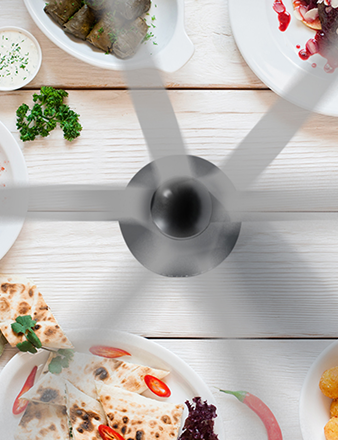
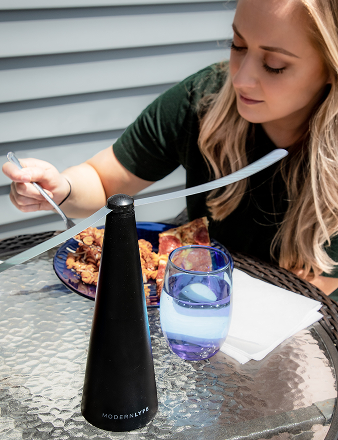
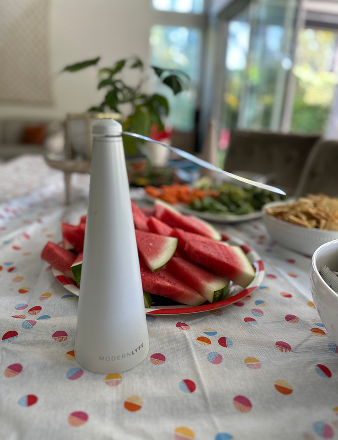
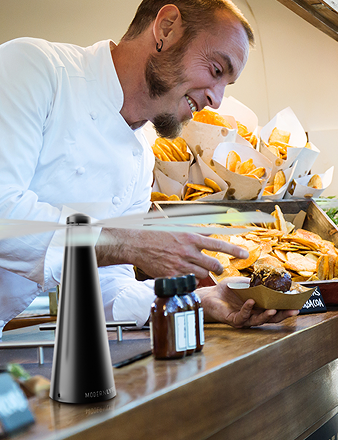
Table-mounted fly fans belong at the finishing layer. They don't remove waste, clean drains, seal doors, or correct a leaking ice machine. They create soft airflow across a protected food area, disrupting the flight path flies use to land and take off. That makes them useful around buffet lines, salad bars, outdoor tables, and catering displays where sprays are unsuitable and exposed food needs an additional non-chemical safeguard.

Place fans along the exposed-food line so airflow covers the guest-facing landing area without blowing directly into open dishes. Keep them clear of hot equipment, open flames, and surfaces where cords or batteries could create a service hazard. On patios, position airflow between the food and the likely approach path, while keeping the unit stable and outside the guest's elbow zone.
What to check before buying
- Motor noise: A quiet motor matters in dining rooms and speeches.
- Blade durability: The housing should withstand frequent transport and service handling.
- Power choice: Battery operation suits buffets and outdoor events without convenient outlets. Plug-in models suit fixed stations.
- Cleanability: Surfaces should be easy to wipe and maintain according to the equipment and food-safety procedures.
- Placement stability: The base must stay secure on a busy table or service counter.
MODERN LYFE offers battery-operated table fly fans designed for restaurant tables, buffet lines, outdoor receptions, and other dining setups. Treat that type of product as a guest-facing supplement, not as permission to relax sanitation standards.
The return is operational rather than merely technical. Fewer flies crossing a buffet improves guest perception, reduces interruptions and complaints, and can reduce the pressure to use spray interventions near service areas. The fan earns its place after the restaurant controls the sources that bring flies inside.
Scheduled Inspections and Staff Reporting
A working integrated pest-management routine gives every shift a defined job. Schedule inspections before activity becomes obvious, and make reporting easy enough that a server will use it during service.
Use three inspection cadences
Daily, inspect floor drains, floor sinks, grease-prone areas, beverage stations, mop storage, and food-waste bins. Look for moisture, residue, standing water, damaged lids, and small flies clustering near a specific point.
Weekly, inspect exterior dumpsters, waste pads, patio edges, outdoor bars, doors, windows, screens, and delivery thresholds. Clean the surrounding waste area and correct any gap or damaged barrier.
Monthly, complete a broader IPM audit. Inspect structural seals, condensation areas, broken tile, grout, equipment bases, and spaces behind or beneath fixed units. Recurring inspection intervals of 4 to 6 weeks are recommended in operations guidance so problems can be found before populations establish, as described in this restaurant fly-control inspection guidance.

Make the log useful
Give staff a one-page form with four required fields:
- What was seen: Housefly, fruit fly, drain fly, or uncertain.
- Where it appeared: Exact station, drain, table, door, or equipment zone.
- When it appeared: Date, shift, and approximate service moment.
- Action taken: Cleanup, waste removal, barrier repair, isolation, or manager escalation.
Repeated sightings in the same zone trigger a deeper audit. A manager should inspect the area, verify sanitation, check moisture and structural conditions, and decide whether to change the layout or call a licensed pest-control operator. Review the log during the weekly manager meeting, then assign an owner and due date for every unresolved item.
Your 30-Day Fly-Prevention Rollout
Don't try to buy your way out of a fly problem. Roll out the system in layers so the team can see which control is working and which gap remains.
Week 1, establish the sanitation baseline
Deep-clean drains, mop heads, beverage stations, floor sinks, equipment bases, and outdoor waste zones. Assign zone owners for every opening, service, and closing task. Start the sighting log immediately, even if the team believes activity is minor.
Week 2, close the entry points
Repair or install door sweeps, weather stripping, screens, self-closing hardware, strip curtains, and air curtains where the layout requires them. Check delivery bays and service doors first. Use a smoke pencil at each threshold to identify unwanted air movement around seals and openings, then correct the defect rather than accepting a partial fix.
Week 3, add targeted finishing tools
Place table-mounted fly fans on buffets, outdoor dining tables, and exposed serving stations where airflow can protect food and guest-facing surfaces. Install light traps behind service lines where they won't expose guests or food to debris. Keep outdoor bait stations away from seating and food traffic, and use only products and placement permitted by your pest-management procedures.
Week 4, formalize IPM
Set daily, weekly, and monthly inspection assignments. Use a paper logbook or digital ticket for every sighting and sanitation failure. Define the point at which recurring activity requires a licensed pest-control operator, a deeper plumbing or equipment inspection, or a change to the waste and delivery layout.
Check progress at day 7, day 14, day 21, and day 30. At each checkpoint, verify completed sanitation tasks, repaired barriers, device placement, and logged sightings. Quick wins in the first week should include sealed waste, dry mop storage, clean drains, covered food, and immediate spill response. A fly-prevention program succeeds when the manager can prove what changed, who owns it, and what still needs attention.
MODERN LYFE provides table-mounted fly fans for restaurant tables, buffet lines, catering setups, and outdoor dining areas, giving operators a non-chemical finishing layer after sanitation and exclusion are in place. Visit MODERN LYFE to review the fly-fan options and add targeted protection to the guest-facing areas where flies create the most disruption.