You know the moment. Service is smooth, the buffet looks sharp, glassware is polished, and then guests start doing that subtle hand wave over their drinks. A few fruit flies are circling the garnish tray. More show up near the bar sink. One lands on sliced citrus just as a guest steps up.
In a house, that’s annoying. In hospitality, it’s a credibility problem.
Restaurants, caterers, hotel event teams, and food truck operators deal with fruit flies for reasons home advice rarely covers. You’re not managing one fruit bowl on a quiet countertop. You’re dealing with prep scraps, drains, garnishes, bar fruit, bussing stations, compost bins, humidity, door traffic, and sometimes outdoor service all at once. That mix gives fruit flies exactly what they want.
I’ve seen teams waste time on random jars of vinegar placed wherever there’s space. That usually creates one more thing to clean without solving the actual pressure points. If you want to make a fruit fly trap that works, the trap itself matters. But placement, bait choice, sanitation, and the setting matter just as much.
The Uninvited Guest at Every Event
A patio dinner can look perfect right up until sunset. Then the fruit flies find the sangria station, the cut fruit for cocktails, and the bussing tub that sat a little too long behind the service station. Suddenly staff are apologizing for something guests may never mention directly, but they absolutely notice.
Weddings and catered events are even less forgiving. You get one shot at the setup. If flies gather around dessert displays or hover over garnish trays, the issue feels bigger than it is because guests connect pests with cleanliness. That’s why operators who treat fruit flies like a minor kitchen nuisance usually end up reacting too late.
Why hospitality spaces attract them fast
Fruit flies don’t need much. A little spilled juice under a speed rail, damp organic residue around a bar sink, overripe garnish fruit, and open trash nearby can keep them active. Outdoor events add another layer because wind, heat, and landscaping can shift where they gather throughout service.
The challenge gets worse when the venue itself invites insect pressure. On patios, pool bars, and semi-open dining rooms, openings around enclosures matter more than many managers realize. If you’re evaluating the building envelope as part of prevention, this guide to durable screens against Florida insects is a useful reference for understanding how screening choices affect bug pressure in hospitality-style spaces.
Fruit flies rarely show up because of one dramatic mistake. They show up because several small operational misses stack up at once.
Why this problem gets underestimated
A lot of online advice assumes you’re trying to catch a few flies in a quiet kitchen. That’s not your world if you run brunch service, banquet prep, a bar program, or an outdoor buffet. In professional settings, the question isn’t just “Can I catch them?” It’s “Can I reduce them without making the room look worse, creating sanitation headaches, or assigning constant trap maintenance to staff already in the weeds?”
That’s where DIY can still help, but only if you use it with some discipline.
Building Two Proven DIY Fruit Fly Traps
The two DIY versions worth your time are the jar with a paper funnel and the plastic bottle trap. Both work because they combine attraction with restricted entry. Done right, they’re cheap, fast to assemble, and useful for back-of-house control or low-visibility areas.

The jar and paper funnel trap
Use a clean glass jar, a sheet of paper, apple cider vinegar, water, and hand-washing dish soap. Pour in bait, then roll the paper into a cone so the narrow opening points down into the jar without touching the liquid. The cone creates a simple one-way path. Flies follow scent downward and struggle to exit.
The liquid matters as much as the cone. The critical factor for trap success is adding 2 to 3 drops of dish soap to the bait solution because it breaks surface tension, so flies that land on the liquid sink instead of standing on top. The entry hole should be about 2 mm, just large enough for entry and tight enough to make escape harder, as described in this practical DIY guide from Homesteading Family on fruit fly trap setup.
Build it for service areas, not show areas
This trap is best for:
- Bar back counters: Tuck it behind supplies, not beside guest-facing garnishes.
- Dish and bussing zones: Put it near organic residue, but away from active spray.
- Prep corners: Useful where fruit is portioned and trimmed.
What doesn’t work is dropping one near the problem and hoping scent alone does the rest. If there’s fresh cut pineapple, sticky pours, or open compost nearby, flies may ignore the trap.
The bottle trap for rougher environments
A plastic bottle trap is more practical when you need something stable, lightweight, and easy to replace. Cut the top section off a bottle, invert it into the lower half to make a funnel, and add bait to the bottom. You can also make small entry openings in a wrap or lid variation, but keep the opening tight.
For this style, don’t overfill. About a half-inch of liquid bait is the practical target for this trap type, based on DIY guidance from Thistledowns Farm on fruit fly bait performance. Too little liquid can create a bigger problem if flies feed without drowning.
Practical rule: If staff can’t reset a trap in under a minute, it won’t be maintained during a busy shift.
A quick visual helps if you’re training staff on setup and placement:
Which DIY trap should you use
| Trap type | Best use | Main advantage | Main drawback |
|---|---|---|---|
| Jar with paper funnel | Back bar, prep shelves, utility corners | Easy to make from common supplies | Breakable, less practical in hectic zones |
| Plastic bottle trap | Catering prep, mobile setups, storage areas | Stable and disposable if needed | Looks less polished, can get ignored if poorly baited |
If you only have time to make one, make the bottle version for operations and the jar version for fixed indoor spots where staff can monitor it.
Choosing the Best Bait to Maximize Captures
Most trap failures aren’t really trap failures. They’re bait failures.
Fruit flies respond to odor first. If the bait isn’t giving off the right fermentation signal, the trap can be perfectly built and still sit there untouched. That’s why apple cider vinegar remains the best default choice. It consistently outperforms alternatives because its volatile profile mimics overripe fruit. White vinegar is not a good substitute.

The bait hierarchy that makes sense in real use
Start with apple cider vinegar. If that’s not available, wine, old fruit, banana peels, or orange juice can work, but they’re second-tier options. The problem with alternatives is inconsistency. Some produce enough attractive odor, some fade fast, and some compete poorly against primary food sources already present in a commercial setting.
A useful deeper read on bait options is this guide to bait for a fruit fly trap, especially if you’re comparing attractants for different service environments.
A simple bait mix that works
For a straightforward DIY mix, use:
- Apple cider vinegar first: It’s the strongest default attractant for most day-to-day infestations.
- Water in a supporting role: One practical ratio is 1 tablespoon of apple cider vinegar to ¼ cup water with 2 to 3 drops of soap, based on the DIY specification already noted earlier.
- Dish soap at the end: Let it sit at the top instead of whipping it aggressively into the liquid.
If you’re using the plastic-wrap or bottle style, keep bait depth around that half-inch range mentioned in the earlier DIY guidance. Shallow bait can turn the trap into a feeding station instead of a kill point.
Why some bait performs better than vinegar
The gap between “smells fermented” and “catches flies” is bigger than most operators think. Research on engineered attractants found that specific volatile ratios matter, including 0.7% acetic acid and 0.007% isobutyric acid, and modified culture supernatants outperformed common fermented baits in field testing, according to this PMC study on fruit fly attractants.
That matters for one practical reason. If your DIY trap gets no attention, the issue may not be your placement or your staff. The bait may be too weak for the environment.
Strong surrounding odors can overpower weak bait. In a busy bar or buffet line, DIY bait has to compete with the room.
Strategic Placement and Maintenance in Professional Settings
Hospitality teams often focus on trap design and forget the bigger issue. Placement is a system. One good trap in the wrong spot loses to several decent traps positioned where flies feed, land, and breed.

Think like a surveillance program
Agricultural pest programs don’t rely on random placement. USDA-APHIS trapping guidelines call for structured densities by risk level, including 10 traps per square mile in high-risk urban, suburban, and port-of-entry areas, 5 traps per square mile in medium-risk urban areas, 1 trap per 4 square miles in low-risk rural zones, and 1 trap per 5 to 10 square miles in marginal-risk zones, as outlined in the National Exotic Fruit Fly Detection Trapping Guidelines.
You’re not mapping square miles inside a restaurant, but the principle applies. High-risk zones need denser attention than low-risk zones.
Where traps belong in real operations
Use traps near likely sources, not where they look convenient.
- Bar stations: Focus on sinks, mats, syrup areas, and citrus prep.
- Bus stations and dish returns: Organic residue collects here fast.
- Kitchen side doors and service entries: Flies often gather where traffic and waste intersect.
- Outdoor buffet support zones: Keep traps near staging, not on display.
For operators trying to build a broader prevention plan, this guide on how to control fruit flies is useful because it frames control as a routine, not a one-off trick.
Maintenance is where DIY either works or fails
A trap left unchanged too long becomes background clutter. In professional settings, staff should check traps as part of opening or closing side work, especially around bars, prep sinks, and waste areas. Replace bait when it’s diluted, contaminated, or no longer producing a strong odor.
Sanitation has to move with trapping. Remove competing food sources quickly, especially during the first 48 to 72 hours of active control in a problem area, because open scraps, sticky recycling, and neglected compost can pull flies away from your traps.
A trap should support sanitation, not substitute for it.
If a spot keeps producing flies, don’t just add another trap. Inspect the drain edge, floor seam, trash lid, under-counter syrup spill, and anything organic staff can smell but no longer notice.
Troubleshooting Common Trap Failures
If your trap isn’t working, don’t assume fruit flies are “just too bad this season.” In most cases, something specific is off. The method is usually the problem, not the concept.

The usual failure points
Some traps fail because the opening is too big. Others fail because the bait is weak, the soap is wrong, or the trap is sitting in moving air where the scent disperses poorly.
Run this checklist:
- Check the bait first: Not all attractants perform equally. As noted earlier, specific volatile ratios matter, and some engineered or commercial baits can improve efficiency several-fold over basic vinegar.
- Look at the opening: If flies enter and leave easily, the design is too forgiving.
- Review the soap: Hand-washing dish soap helps break surface tension. The wrong detergent can hurt performance.
- Inspect nearby competition: Open fruit, dirty drains, and sticky bottles can outcompete your trap.
A common commercial mistake
Teams often place a DIY trap in a drafty corner near a back door and assume “we tried traps.” But moving air can carry scent away from the fly traffic zone, and the trap ends up functioning more like decor than control.
Another mistake is using whatever vinegar is in the building. If staff grab white vinegar from a prep shelf instead of apple cider vinegar, the trap may get assembled perfectly and still produce poor results.
If a trap looks right but catches nothing, change the bait before you change the whole strategy.
The harder truth is that some environments overwhelm a basic trap. If the pressure is coming from multiple drains, constant fruit prep, and open-air service, DIY may catch some flies without changing guest perception much.
When DIY Is Not Enough The Case for Professional Solutions
There’s a point where DIY stops being resourceful and starts becoming expensive busywork.
In a house, a few jars can be fine. In a restaurant, resort, wedding venue, or catering operation, open bait containers create trade-offs that generic advice usually ignores. Staff have to maintain them. Managers have to decide where to hide them. Guests might notice them. And in some food service contexts, the optics alone are bad even before you get into hygiene concerns.
The tipping point
DIY fruit fly traps often fail in high-traffic commercial environments because they’re built for small residential problems, not continuous food handling. They have limited capacity, need frequent attention, and their open-container format can create hygiene concerns in food service settings, a gap discussed in this article on DIY fruit fly traps in real-world use.
Here’s when I’d stop relying on DIY alone:
- Guest-facing areas are affected: If flies are visible around tables, buffets, or bars, appearance matters as much as catch count.
- Staff can’t maintain the traps consistently: A trap that isn’t refreshed becomes clutter.
- The room has too many attractants: Busy bars, brunch lines, dessert stations, and outdoor service create too much competition.
- You need a cleaner visual standard: Fine dining, weddings, and branded events can’t look patched together.
What smarter escalation looks like
The right move isn’t always “more traps.” Sometimes it’s changing the control category entirely. Physical deterrents, better exclusion, tighter sanitation, and professional pest support often do more than multiplying vinegar containers around the property.
If you’re comparing broader service-level pest prevention, this overview of comprehensive Brisbane pest control is a useful example of how consistent pest management is framed as a health and operations issue, not just a nuisance issue.
For hospitality operators, the most practical upgrade is often a guest-friendly solution that doesn’t rely on exposed bait at all. If you’re evaluating alternatives to jars and bottle traps, this guide to a plug-in fruit fly trap is one route to compare against passive DIY methods.
DIY still has a place. I’d use it in back-of-house testing, isolated hotspots, and short-term cleanup around prep or waste zones. I wouldn’t build a guest-facing insect control plan around it if the venue depends on presentation.
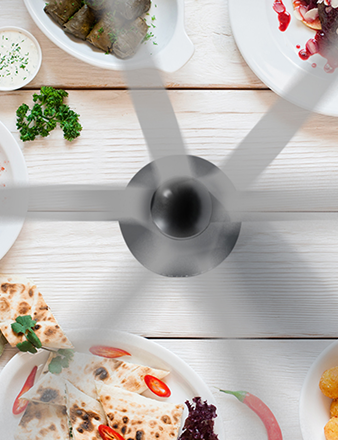
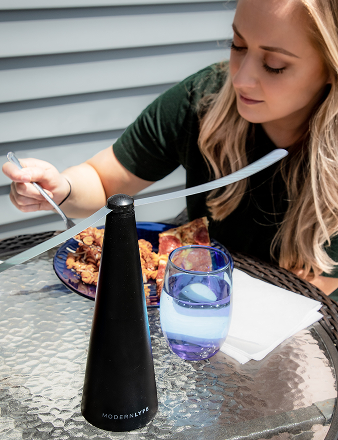
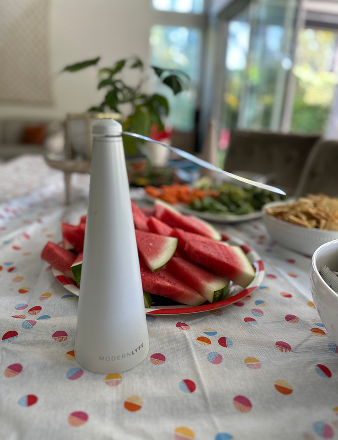
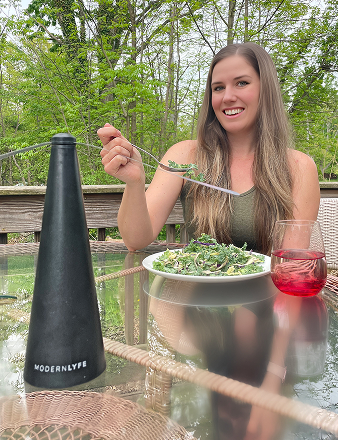
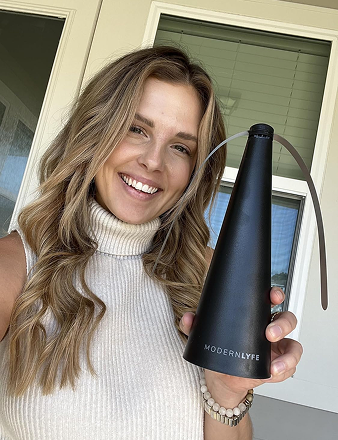
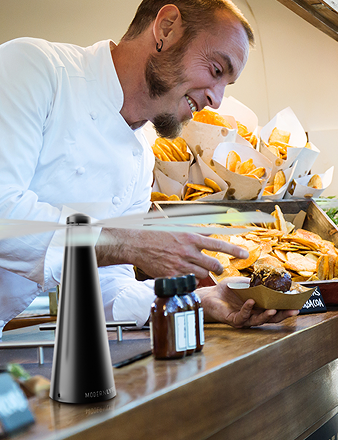
If you want a cleaner, more polished way to protect tables, buffets, and event setups from flying pests, take a look at MODERN LYFE. Their fly fans are built for hospitality settings where hygiene, guest comfort, and presentation all matter at the same time.