You're probably dealing with a version of the same problem most hospitality operators face. The menu is solid. Service is good. The space looks right. Yet the venue down the street can copy your pricing, your package format, and half your promotion ideas by next weekend.
That's when businesses drift into the worst kind of competition. They stop selling a distinct experience and start discounting to stay visible.
The better move is smaller and sharper. Instead of asking how to appeal to everyone, ask which specific problem you can solve better than anyone else in your category. In hospitality, that might mean a restaurant built around allergy-safe private dining, a hotel that specializes in micro-weddings, or a catering company known for flawless outdoor service where presentation and guest comfort matter as much as the food.
Winning in a Crowded Hospitality Market
A restaurant owner opens a patio for spring. Bookings look promising, but the reviews start sounding familiar. Nice food. Good atmosphere. Annoying flies. Staff keep running napkins, moving dishes, and improvising fixes. None of it feels premium, and none of it belongs in the brand story the owner is trying to build.
That operator isn't losing because the concept is weak. They're losing because the market is crowded and the offer is broad. When ten nearby venues all sell dinner, drinks, and private events, the one that solves a specific irritation better often gets remembered first.

Why broad positioning breaks down
General hospitality messaging sounds polished, but it rarely gives buyers a reason to choose. “Great service,” “beautiful setting,” and “memorable events” are baseline claims now. Guests expect them. Event planners filter them out.
Operators who win in mature local markets usually do something narrower. They become the place for executive breakfasts that run on time, design-led outdoor receptions, quiet luxury family gatherings, or spotless buffet presentation in high-traffic settings. That's where niche market solutions start to matter. They turn a general offer into a defendable one.
A useful way to think about it is this: broad businesses chase attention, while focused businesses build preference.
Practical rule: If a guest could copy and paste your headline onto five competing venues, you don't have a niche yet.
Hospitality teams that stay close to shifting demand also tend to spot these openings earlier. If you track changing buyer preferences, operating friction, and seasonal behavior, you make better bets than teams that rely on annual planning alone. That's part of why industry operators keep watching growth trends in hospitality buying behavior instead of assuming last season's offer will hold.
Going small to win big
The strongest niche positions in hospitality don't feel small to the buyer. They feel precise.
- Restaurants can specialize by dining context, not just cuisine.
- Hotels can own a specific event format instead of trying to host every type equally well.
- Caterers can build authority around difficult environments such as outdoor service, long buffet holds, or high-end residential events.
That kind of focus does two things at once. It reduces direct price comparison, and it gives your team a clearer standard for what to improve next.
What Exactly Are Niche Market Solutions
A general practitioner treats many conditions. A specialist solves one category of problem with more depth, more precision, and usually more trust from the patient who needs that exact help.
That's the simplest way to understand niche market solutions.
They are products or services designed for a specific audience with a specific problem, where generic options fall short. In hospitality, that could mean banquet furniture built for rooftop transport, beverage service designed for premium train travel, or table protection tools made for outdoor dining where appearance matters as much as function.

A niche is not just a small audience
A lot of operators misunderstand the term. They hear “niche” and assume it means limiting demand. That's not the point. A niche is a segment where the need is clear enough, specific enough, and urgent enough that a focused solution makes sense.
The Strategy Institute describes niche strategy as a structured discipline that starts with competitive environment analysis, then moves to unmet customer needs, and then to barriers to entry, investment requirements, and time to market leadership in its guide to niche market strategy. That matters because it takes specialization out of the realm of instinct and puts it into operating decisions.
For hospitality teams, that means asking better questions than “What can we sell?” Ask:
- Who struggles with this most
- What workarounds are they using now
- Why do current options fail in real service conditions
- What would make them switch quickly
What a real niche looks like in practice
A valid niche usually has three parts:
-
A defined user group
Not “event clients.” More like wedding planners handling outdoor receptions, hotel F&B teams managing terrace brunches, or caterers serving open-air buffets. -
A recurring friction point
The issue keeps showing up in reviews, staff complaints, setup delays, guest discomfort, or presentation failures. -
A solution that fits the environment
Hospitality buyers don't just want effectiveness. They care about cleanup, noise, visual fit, storage, staff workflow, and whether the product creates new problems while solving the old one.
The best niche offers in hospitality feel obvious in hindsight. Before launch, they usually looked too specific to outsiders.
The advantage of specialist thinking
Niche market solutions work because they compress decision-making. A buyer sees the fit immediately. They don't need a long education sequence to understand relevance.
That changes the sales conversation. You're no longer explaining why your product exists. You're confirming that you understand the buyer's context better than broad competitors do.
For restaurants, hotels, and event companies, that's a strategic advantage. Specialized offers are easier to position, easier to refine, and harder to replace with a generic substitute.
How to Identify Your Niche Opportunity
Most worthwhile hospitality niches don't appear in brainstorming sessions. They show up in small operational irritations that repeat until someone decides to treat them like a business opportunity.
A banquet manager sees staff lose time resetting outdoor buffet stations. A wedding planner notices that practical pest-control options ruin a carefully designed tablescape. A hotel events team keeps hearing the same complaint from guests on the terrace. Those are not side issues. They're buying signals.
Start with the gap, not the product
The cleanest approach is to look at the market in the same order serious niche strategy uses. Start with the field, not your own idea. The process begins with a competitive market analysis, then identifying unmet needs, then estimating barriers to entry, investment requirements, and the time required to lead the category. That sequence is what separates a clever concept from a viable niche.
In hospitality, competitive analysis should be concrete.
- Review nearby operators and note what they promote repeatedly
- Study supplier catalogs to see where products are standardized and where they look outdated
- Read guest reviews and planner feedback for recurring complaints that never quite get solved
- Watch service flow in your own business for workarounds staff use every day
Listen where operators complain in detail
The best clues are rarely found in polished marketing copy. They live in complaints, workaround habits, and purchase hesitation.
A useful pattern is this: if buyers keep using improvised fixes, they're telling you the market hasn't given them the right answer yet. In restaurants and events, that often includes weather exposure, hygiene, setup speed, guest comfort, table aesthetics, and labor-heavy service points.
For broader context on where operators are shifting attention, Simply Hospitality's 2025 trend analysis is worth reading because it reflects the kind of practical pressures venue teams are planning around, not just consumer-facing trends.
Three places niche opportunities usually hide
Hospitality buyers don't always ask for a new product directly. They describe a bad moment and hope someone connects the dots.
-
In guest-facing friction
Guests notice noise, mess, waiting, discomfort, and visual clutter fast. If something degrades the experience, it can become a niche opening. -
In back-of-house inefficiency
Staff know where service breaks down. A process that requires constant adjustment is often covering for a weak solution. -
In supplier blind spots
Large vendors often optimize for broad categories. That leaves smaller segments underserved, especially when the need is highly contextual.
If the problem only makes sense once you understand service flow, that's often where the opportunity is strongest.
Pressure-test the fit with your own capabilities
Not every gap is yours to pursue. The right niche sits at the intersection of buyer pain, market room, and your ability to deliver consistently.
That's where emerging product and service shifts matter. Buyers adopt new solutions when they reduce friction without complicating operations. Teams that follow emerging technology in hospitality operations tend to make better decisions here because they evaluate fit in real use conditions, not just on novelty.
A workable niche opportunity usually passes four tests:
- The buyer can describe the pain quickly
- The current alternatives feel compromised
- The use case repeats often enough to matter
- You can explain the difference in one sentence
If you can't do that, the idea may still be interesting. It's just not ready.
Validating Your Niche Before You Invest
A niche idea can sound smart and still fail in the market. Hospitality teams make this mistake when they confuse “specific” with “valuable.” A small audience is not enough. The group has to feel the problem strongly enough to change behavior, trial a new option, and pay for a better outcome.
Validation is how you find out whether that's true before you commit serious time, stock, or marketing spend.
Don't mistake silence for opportunity
One of the most common errors is assuming zero competition means open ground. It can mean that. It can also mean weak demand.
Luth Research notes that niche validation works best when businesses combine behavioral data, qualitative interviews, and competitor analysis to find real gaps, and that a niche with zero competition can indicate weak demand, while moderate competition often points to a healthier market with validated pain points in its guidance on underserved market analysis.
That's a useful filter for hospitality operators. If no one is trying to solve the problem, ask whether buyers care enough. If several imperfect solutions exist, the category may already be teaching you that demand is real.
What good validation looks like
Hospitality buyers often say yes politely. That's why opinion alone isn't enough. You need signs of actual movement.
Use a mix of inputs:
| Validation Method | What It Measures | Best For |
|---|---|---|
| Customer interviews | Problem clarity, urgency, willingness to change | Early-stage concept testing |
| Review mining | Repeated complaints and language buyers already use | Restaurants, hotels, event venues |
| Competitor comparison | Whether alternatives are weak, outdated, noisy, ugly, or labor-heavy | Product positioning |
| Simple landing page | Interest signals and message resonance | Pre-launch market testing |
| Pilot offer or beta rollout | Real-world usage, objections, repeat demand | Caterers, venues, planners |
| Sales conversations with target buyers | Budget fit and purchase triggers | B2B hospitality niches |
Questions that reveal real demand
A useful interview doesn't ask, “Would you buy this?” Interviewees often respond generously. Ask about behavior.
- What are you using now
- What do staff dislike about it
- When does it fail
- What happens when you do nothing
- Who notices the problem first
- What would make a replacement worth the switch
Those questions surface urgency. They also reveal whether the issue affects guest experience, labor, hygiene, visual presentation, or all four.
Field test: If the buyer can't describe the cost of the problem in operational terms, it may be an annoyance, not a niche.
Use small proofs before large commitments
In hospitality, a pilot often tells you more than a polished launch. Put a prototype or limited version in front of a narrow group. Watch what staff do without coaching. See whether planners mention it unprompted. Track whether the buyer asks about getting more units, broader deployment, or event-specific use.
Good validation also includes what doesn't work. If buyers like the concept but hate the footprint, finish, controls, setup, or maintenance demands, that's valuable information. It means the niche may be right while the current solution is wrong.
A strong validation outcome usually sounds like this: buyers describe the same pain in similar language, current alternatives feel compromised, and early users can picture repeat use in more than one setting.
That's when an idea starts becoming a business.
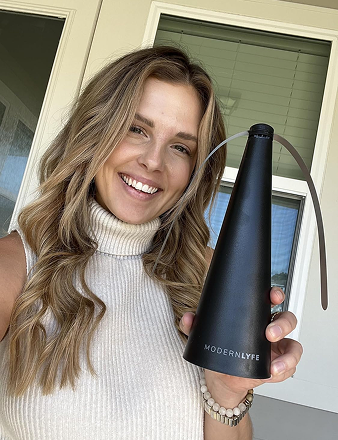
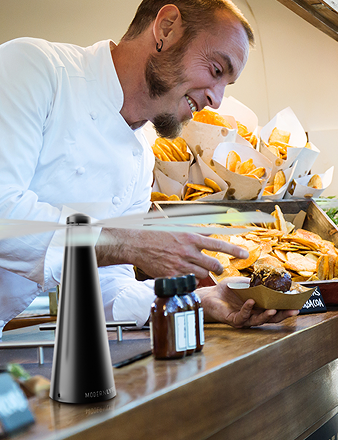
Niche in Action The Modern Lyfe Fly Fan
Hospitality has plenty of products that solve a problem technically while creating a second problem operationally. Outdoor dining is full of them. A tool may keep insects away, but if it looks cheap, sounds intrusive, gets in the staff's way, or clashes with a carefully designed event, buyers hesitate.
That's why the fly fan category is a useful example of niche market solutions in action.

The niche is tighter than it first appears
At a glance, “keeping flies away” sounds broad. In practice, the niche is narrower and more valuable. The buyer is not just anyone bothered by insects. The buyer is someone managing a hospitality setting where food protection, guest comfort, and appearance all matter at the same time.
That includes restaurant patios, hotel buffets, catered outdoor receptions, market tastings, and home events where the table setup is part of the experience. In those environments, a crude fix often fails even when it works mechanically.
Clientify's niche-market guidance points out that customer expectations are shifting toward quieter, more aesthetic, and operationally simpler solutions, and that strong opportunities often come from solving overlooked constraints such as venue aesthetics and guest experience in its article on niche market types and examples. That description fits hospitality especially well.
Why generic substitutes fall short
The comparison isn't just “fly fan versus no fly fan.” It's more practical than that.
- Chemical repellents can create a sensory conflict around food.
- Large fans may affect table settings or guest comfort.
- Disposable workarounds look temporary and low-end.
- Staff intervention costs attention and never scales cleanly during service.
A focused fly fan sits in a better position when it solves the issue without dragging down presentation. That's the key lesson. Niche products win when they respect the environment they operate in.
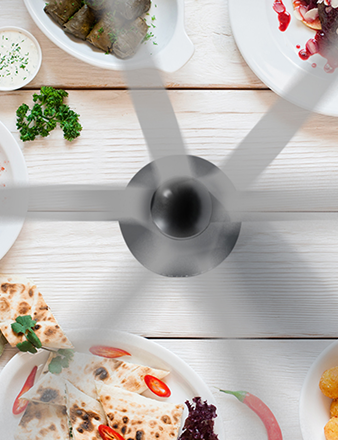
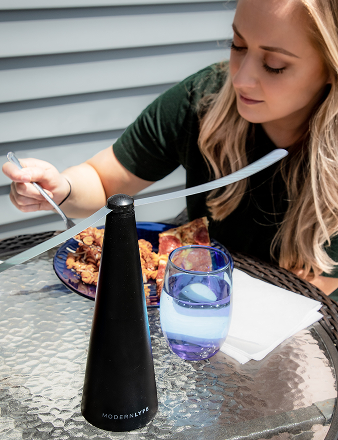
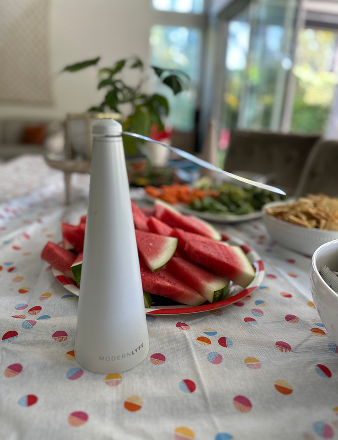
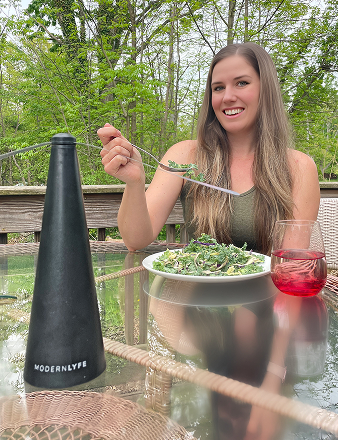
Here's a short product view in context:
What this example teaches operators
The product itself matters, but the strategic lesson matters more. This niche works because it combines several needs that broad suppliers often separate:
- Hygiene protection
- Guest experience
- Low visual disruption
- Simple deployment across different service formats
That's exactly how many strong hospitality niches are built. They don't invent demand from nothing. They take a familiar pain point and solve it in a way that finally matches how the venue operates.
If you're trying to find your own niche, pay attention to products like this. Not because you should copy them, but because they show the pattern clearly. The winning angle is rarely “more features.” It's “better fit for a very specific setting.”
Your Go-To-Market Strategy for a Niche Product
Once a niche product is validated, broad promotion is usually the fastest way to waste money. Hospitality niches respond to precision. The message, channel, and proof all need to match the exact operating context of the buyer.
A restaurant group buyer, an independent caterer, and a wedding planner may all face the same problem, but they don't evaluate solutions in the same way. Your launch has to account for that.
Lead with the problem buyers already recognize
The first message should never be feature-first. It should start with the service condition the buyer already understands.
For a hospitality product, that usually means framing the offer around moments like outdoor buffet protection, patio dining comfort, cleaner table presentation, easier event setup, or lower staff intervention during service. If the buyer has to work hard to see where the product fits, the launch copy is too broad.
Good niche messaging usually answers three questions fast:
- Where is this used
- What goes wrong without it
- Why is this better than the workaround
Pick narrow channels with high context
Hospitality buyers don't need endless impressions. They need relevant proof in places where they already make supplier judgments.
That often means:
- Industry partnerships with planners, event stylists, venue consultants, or specialty rental businesses
- Short demonstration content showing setup, appearance, and use during service
- Use-case landing pages for patios, buffets, weddings, hotels, and home entertaining
- Direct outreach to operators whose format clearly matches the niche
Content should be practical, not inflated. Show the product on real tables. Show scale. Show how staff place it, clean around it, store it, and use it without disrupting guests.
A niche launch works best when the buyer can imagine using the product before they ask for a quote.
Build proof before you scale spend
A lot of teams invert the sequence. They buy reach first and try to figure out proof later. In a niche, that's backwards.
Start with targeted placements, direct conversations, and practical demonstrations. Collect objections. Tighten language. Refine the visuals around the exact environments where the product performs best. Then expand.
This is also where implementation discipline matters. Product launches often stall because the offer is right but the internal rollout is messy. Teams that document targeting, messaging, sales feedback, and adoption friction inside a clear strategic implementation process usually adjust faster than teams relying on scattered sales notes.
A focused go-to-market plan doesn't need to feel small. It needs to feel specific enough that the right buyer says, “That's for us.”
Measuring Success and Staying Ahead
Launching a niche offer is only the first test. Holding the position is harder.
In hospitality, niche leadership fades when operators stop watching the details that created the opportunity in the first place. Guest expectations shift. Event formats change. Venues adapt spaces. Competitors notice the same demand and enter with cheaper or more polished alternatives.

Watch the right indicators
For niche businesses, the most useful indicators are the ones tied to fit and efficiency. The verified guidance on niche evaluation points to measures such as search volume, engagement metrics, customer acquisition cost, lifetime value, and profitability in UpSkillist's article on profitable niche markets. The same source notes that 72% of successful niche businesses perform quarterly market trend analysis to monitor demand shifts and keep their segment viable.
That rhythm matters more than many operators realize. A niche can remain attractive while the buying context changes around it.
For hospitality teams, useful review points often include:
- Customer acquisition cost by buyer type
- Repeat purchase patterns across venues, seasons, or event formats
- Retention and reorder behavior among planners, operators, and group buyers
- Feedback themes that signal changing expectations
- Profitability by use case, not just by product line
If events are part of your sales model, this guide on how to calculate event ROI and KPIs is a practical reference for building cleaner measurement around activations and event-led demand.
Stay close to movement in the segment
Niche leadership is rarely defended by louder branding alone. It's defended by better observation.
The operators who stay ahead tend to notice small changes early. A buyer starts asking for quieter service tools. A planner wants less visible equipment. A hotel team needs something easier to deploy across mixed indoor-outdoor layouts. Those requests are not edge cases. They are signals that the niche is evolving.
The best niche businesses keep listening, keep comparing, and keep refining before competitors force the issue.
If your venue, event business, or outdoor dining setup needs a cleaner answer to fly control without sacrificing presentation, explore MODERN LYFE. Their fly fans are built for hospitality settings where food protection, guest comfort, and table aesthetics all need to work together.