In a global outdoor patio accessories market valued at $20.7 billion in 2025 and projected to reach $34.4 billion by 2034, successful outdoor dining relies on layering lighting, shade, and pest-control accessories to create a space that's comfortable, compliant, and inviting for guests. The strongest setups treat tableware, service stations, airflow, and maintenance as one operating system, not a collection of attractive purchases.
You know the warning signs. Guests squint across a sun-baked table, servers carry plates through a dark corner, flies gather near an uncovered condiment station, and a portable heater blocks the only practical route to the patio. None of these problems comes from choosing one bad accessory. They come from buying equipment without deciding how the whole space should work.
A patio is an extension of the food-service operation. It has guest circulation, food-contact surfaces, waste movement, electrical equipment, weather exposure, and pest risks. The right outdoor dining accessories reduce friction across all of those areas at once.
Why Your Outdoor Dining Setup Needs a Strategy
The commercial opportunity is substantial, but so is the cost of treating the patio as an afterthought. The global outdoor patio accessories market was valued at $20.7 billion in 2025 and is projected to reach $34.4 billion by 2034, with a projected compound annual growth rate of 5.8%, according to outdoor patio accessories market analysis. Furniture accounts for 38.5% of the category, while Asia Pacific represents 42.3% of revenue. Those figures point to a broad, expanding market built around seating, comfort, presentation, and the equipment that makes outdoor spaces usable.
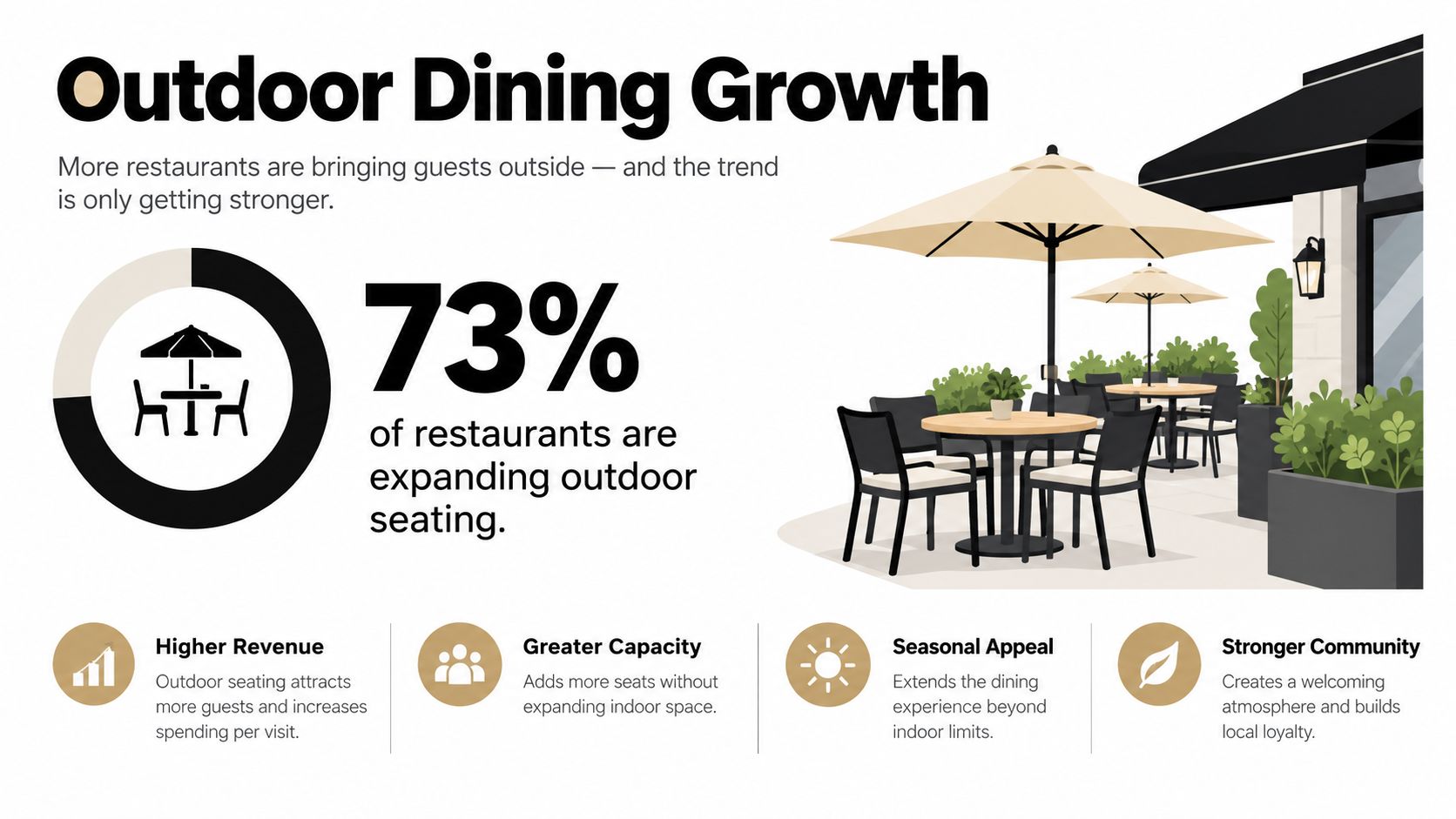
Restaurants have also made outdoor seating a more permanent part of service. One commercial patio furniture report states that 73% of restaurants now offer outdoor seating, compared with 58% before 2020. The same commercial patio furniture market report values that market at about $3.2 billion in 2024 and projects $5.1 billion by 2033, with accessories holding 7.3% of market share and growing at 6.2%.
A manager who buys a canopy because it looks good, then adds lights without checking glare, has created a visual improvement but not a working patio. The same applies to pest devices, serving carts, heaters, and storage. Each item needs a defined position, a cleaning routine, and an owner on the team.
Start with the service model
A full-service restaurant needs clear server lanes and discreet equipment placement. A caterer needs fast setup, compact storage, and accessories that travel without damage. A hotel event coordinator may prioritize a polished appearance, while a food truck operator needs lightweight pieces that can be deployed and removed quickly.
Write down the operating conditions before shopping:
- Guest movement: Mark entrances, exits, table aisles, queue areas, and routes to restrooms.
- Food movement: Identify where plated meals, drinks, condiments, waste, and used dishes travel.
- Weather exposure: Note direct sun, prevailing wind, rain runoff, and surfaces that become slippery.
- Compliance points: Check where exposed food, clean equipment, linens, and waste will sit.
Practical rule: Buy the accessory that solves a recurring operational problem first. Decorative upgrades come after shade, visibility, food protection, and movement are under control.
Selecting Shade and Lighting for Guest Comfort
Shade determines whether guests can comfortably use the space during the day. Lighting determines whether staff can safely serve it after dusk. Select both by observing the patio at the hours you intend to operate, not by reviewing product photos in a showroom.
Start with the sun. Track which tables receive direct exposure, where glare reaches seated guests, and whether a canopy or awning will shade the service path as well as the dining area. Fixed structures provide stability and a consistent visual boundary, but they reduce flexibility. Retractable awnings offer seasonal control, although their moving parts and fabric need inspection and cleaning. For compact terraces and balconies, stackable or multifunctional pieces can preserve usable floor area, an approach highlighted in outdoor dining ideas for terraces and balconies.
Then build lighting in layers:
- Ambient lighting establishes the overall mood. Use diffused fixtures rather than exposed bulbs that shine directly into seated guests' eyes.
- Task lighting belongs near service points, payment areas, steps, and dish collection stations. Staff need to see hands, plates, spills, and equipment.
- Accent lighting can define planting, walls, and table centers, but it shouldn't compete with the food or make walkways harder to read.
Battery-powered lamps offer placement freedom, while low-voltage systems can simplify permanent installation. Both create obligations. Assign charging, storage, cable inspection, and replacement to a named person instead of assuming someone will handle them.
| Option Type | Durability | Installation Effort | Best For |
|---|---|---|---|
| Fixed canopy or pergola | High when properly maintained | High | Permanent patios with predictable layouts |
| Retractable awning | Moderate to high | Moderate | Seasonal shade and flexible coverage |
| Portable shade canopy | Moderate | Low | Events, caterers, and changing layouts |
| Hard-wired low-voltage lighting | High | Moderate to high | Established service areas |
| Battery-powered lamps | Depends on construction and care | Low | Tables, pop-up events, and small terraces |
| String lighting | Moderate | Low to moderate | Ambient coverage where glare is controlled |
A compact canopy can work well when the footprint is tight, but confirm its dimensions and anchoring requirements before ordering. The 10 x 20 shade canopy guide can help you assess whether a larger portable structure fits your available area.
Integrating Pest Control Without Compromising Compliance
Pest control is the layer that carries the greatest food-safety consequence. A fly near a guest is unpleasant. A fly landing on exposed food, or fragments from a poorly placed electric device falling onto a preparation surface, creates a control failure.
Start with physical protection. Lids, reusable covers, disposable tenting, and shielded service vessels reduce direct access to food. Food-safety guidance also treats repeated fly landings or visible droppings and eggs as a discard threshold, not a minor annoyance, as explained in this food-safety guidance on flies and food.
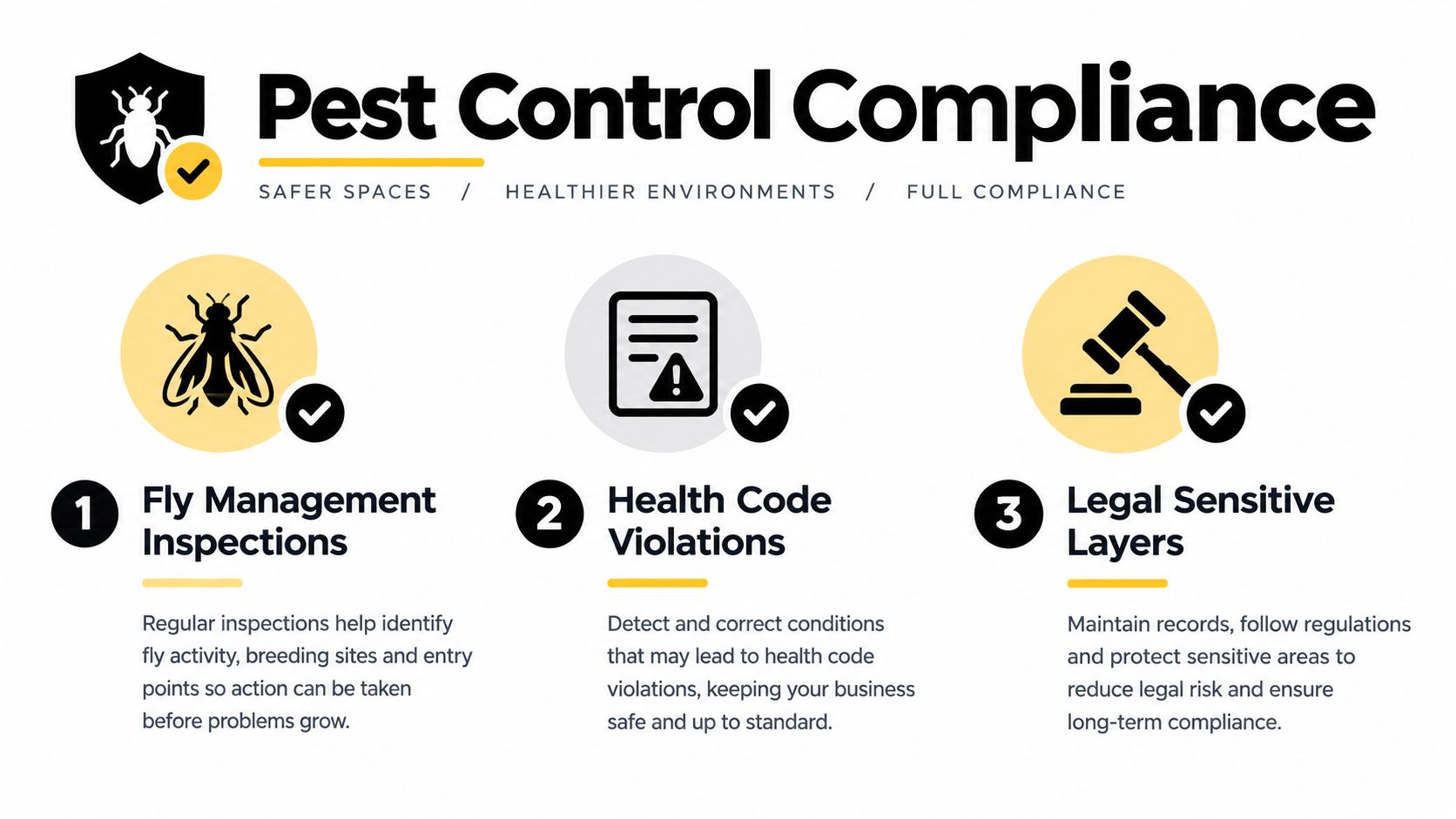
The FDA Food Code adds a specific requirement for electric insect-control devices. Equipment designed to electrocute or stun flying insects must retain the insect inside the device, and it can't be located over food-preparation areas. Dead insects and fragments must be prevented from falling onto exposed food, clean equipment, utensils, and linens, according to the FDA Food Code requirements for insect-control devices.
Build a layered defense
Don't expect one device to carry the entire burden. The practical sequence is:
- Remove attractants: Empty waste before it overflows, clean spills promptly, close containers, and keep food residue away from the patio perimeter.
- Block access: Use covers, screens, and properly positioned barriers around buffets, beverage stations, and prep points. For open-sided areas, resources such as Cross Breeze Screens on screening can inform decisions about physical separation.
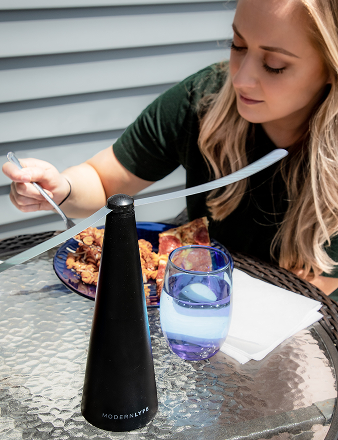
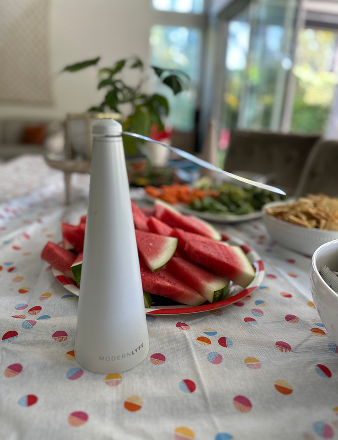
- Disrupt flight paths: Fan-based systems can help create moving-air zones near tables or service points without chemicals or odors. Position them so airflow doesn't blow napkins, dust, or debris toward food.
- Inspect and adjust: Record fly activity by location and service period. Move equipment when landscaping, furniture, wind, or menu layout changes.
A field experiment on botanical insecticides tested extract combinations of 20%:25%, 20%:30%, and 25%:30% across exposure times of 30, 45, and 60 minutes. It found statistically significant effects on fly density at p < 0.001 and cockroach density at p < 0.002, showing that both formulation strength and dwell time affect pest suppression, as reported in the field experiment on botanical insecticides. The operational lesson is simple. Evaluate any active pest-control method by contact time and placement, not just by its ingredient list.
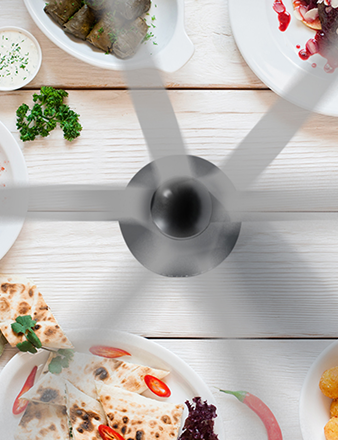
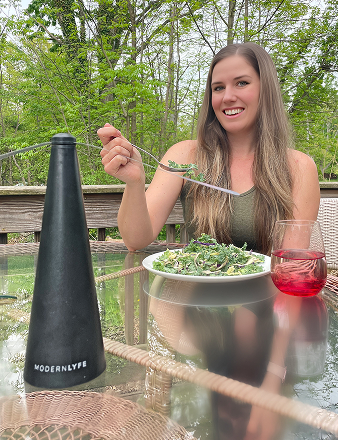
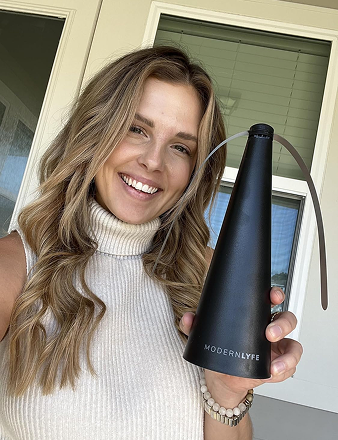
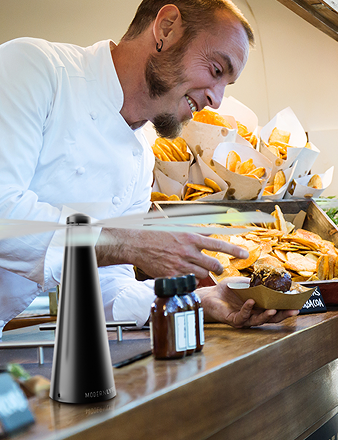
For a chemical-free airflow option, the MODERN LYFE Black Fly Fan is an outdoor and indoor dual-power fan designed to keep flies away from food at tables, buffet lines, and event setups. Treat it as one layer in a broader integrated pest management approach, not as a substitute for sanitation, covers, inspections, or compliant equipment placement.
Local rules can be stricter than a product description. Allegheny County requires open-air dining facilities to take active steps against contamination and pest entry when using unscreened openings, and it specifically identifies large flies, small flies, birds, mosquitoes, and nuisance pests as control concerns in its open-air dining requirements. New York City's outdoor-dining materials state that pest-management contracts must include the outdoor setup and classify flies in the facility as a critical violation, as outlined in New York City food-safety materials.
Choosing Tableware and Serving Accessories
Tableware that touches food deserves a stricter buying process than decorative equipment. The right choice balances stability, breakage risk, cleaning capacity, storage, and the level of presentation your venue promises.

Ceramic plates and glassware create weight and a familiar premium feel. That weight helps in breezy conditions, but it also increases carrying effort and breakage exposure. High-grade polymers and melamine reduce the consequences of drops and are useful around pools, crowded walkways, and mobile catering setups, though some guests may perceive them as less formal.
Use a decision matrix instead of choosing by appearance:
| Service Condition | Preferred Tableware | Serving Accessories | Main Trade-off |
|---|---|---|---|
| Formal seated dining | Ceramic, tempered glass, durable metal | Covered platters and stable trays | Higher handling and breakage risk |
| High-volume patio service | Durable polymer or reinforced composite | Stackable trays and lidded containers | Less traditional presentation |
| Poolside or family service | Melamine and impact-resistant drinkware | Covered bowls and easy-clean organizers | Requires careful material selection |
| Mobile catering | Lightweight, nestable pieces | Transport bins and compact beverage stations | Storage efficiency limits styling |
| Buffet or self-service | Stable reusable pieces | Chafing dishes, lids, sneeze protection, and portion tools | More surfaces require cleaning and inspection |
Serving accessories often create the largest hidden bottleneck. An open condiment tray attracts contamination and requires repeated resets. A beverage station placed too close to the plate pickup route creates congestion. Chafing dishes need stable placement, visible temperature checks, and enough clearance for staff to refill them without reaching over guests.
Outdoor service also needs temperature discipline. The FDA states that a food thermometer is the only way to ensure the safety of meat, poultry, seafood, and egg products across cooking methods in its guidance for handling food while eating outdoors. Outdoor dining accessories support the workflow, but they don't replace hot-holding, cold-holding, and internal-temperature checks.
Store equipment by service sequence. Keep clean tableware protected from weather and pests, place used-dish transport away from clean stock, and use dedicated containers for bulk food storage and transport when the setup needs to move between kitchen, loading area, and patio. For broader equipment planning, review outdoor catering supplies against your actual menu and staffing pattern.
A short demonstration can help staff understand how a polished table arrangement should function during service.
Positioning Accessories for Flow and Safety
Good equipment in the wrong place becomes an obstruction. Set the patio up from the staff's point of view first, then refine the guest-facing appearance.
Walk the route with a loaded tray. Mark where a server turns, where a guest pulls out a chair, and where a busser carries used dishes. Keep heaters, storage boxes, fans, planters, and signboards outside those movement paths. A clear-looking aisle on an empty patio can become unusable once chairs are occupied and staff carry food in both directions.
Use the floor plan as an operating tool
Place lighting where it reveals changes in level, table legs, steps, and wet surfaces. Avoid aiming bright fixtures across guests' faces or directly into a server's line of sight. If you use cables for temporary lighting, route them away from walking paths and protect them with appropriate covers rather than relying on tape.
Heaters need clearance from combustible materials, curtains, umbrellas, and decorative foliage. Position them to warm seated guests without creating a hot spot beside an exit or forcing staff to pass close to the heat source. Check the manufacturer's placement requirements and make the shutoff control accessible.
Fan-based pest-control units need open airflow. Mount or place them where guests won't bump them, but keep controls reachable for staff. Don't aim airflow across uncovered food, napkins, or lightweight packaging. If a fan makes a table setting unstable, the device is in the wrong position even if it reduces fly activity.
Protect the service line
Put waste and recycling stations close enough for rapid removal, but not beside exposed food, clean tableware, or the main guest sightline. Assign a collection route and frequency so bags don't sit beside the dining area during a busy period.
Use a simple pre-service walk-through:
- Open the routes: Remove spare chairs, cartons, unused stands, and temporary storage from staff lanes.
- Check the sightlines: Confirm that lights illuminate steps and controls without glare.
- Test the equipment: Run fans, lamps, heaters, payment devices, and service carts before guests arrive.
- Review the food boundary: Make sure covers, lids, and clean equipment remain protected from traffic and airflow.
A patio should look calm because the workflow is controlled, not because essential equipment has been hidden in unsafe places.
Maintaining and Reviewing Your Outdoor Setup
Outdoor dining accessories degrade through weather, handling, spills, dust, and rushed service. A patio that worked in early season can develop dark walkways, loose fittings, clogged fans, faded shade fabric, and poorly positioned waste stations after repeated use.
Maintenance needs three rhythms: before service, between operating periods, and at seasonal change.
Before every service
Assign one person to complete a short opening inspection. They should check that shade structures are secure, lighting works, fan blades are clear, tableware is clean and protected, food covers are available, and walkways are free of obstacles.
Look at the space from a seated guest's height as well as from the standing service position. A light that seems subtle from the bar may shine directly into someone's eyes at a table. A fan that seems quiet near the entrance may be disruptive beside a conversation area.
Between service periods
Clean accessories according to their materials and intended use. Wipe table surfaces and serving organizers, remove food residue from lids and covers, clean fan blades so airflow remains unobstructed, and inspect portable lamps for damaged housings or charging problems.
Review pest activity by location rather than relying on a general impression. If flies cluster near one buffet, waste station, planter, or doorway, change the surrounding practice first. Move the control device only after you identify what is attracting the insects.
Track operational complaints in a short log:
- Guest comfort: Record heat, glare, darkness, wind, noise, and insect complaints.
- Staff friction: Note blocked routes, difficult resets, charging failures, and awkward equipment handling.
- Food protection: Record uncovered items, damaged lids, spill risks, and any pest activity near exposed food.
- Equipment condition: Flag cracked pieces, unstable stands, worn cables, and deteriorating shade materials.
At seasonal change
Winterize heaters and store lightweight décor before harsh weather damages it. Bring battery-operated fans and lamps into a dry storage area, label chargers, and test the equipment before the first busy service rather than discovering a dead battery during a reception.
Inspect permanent electrical connections, shade anchors, drainage paths, and storage boxes. Landscaping growth can alter airflow, create new insect shelter, or narrow a walkway. Recheck equipment positions after pruning, furniture changes, construction, or a new menu station.
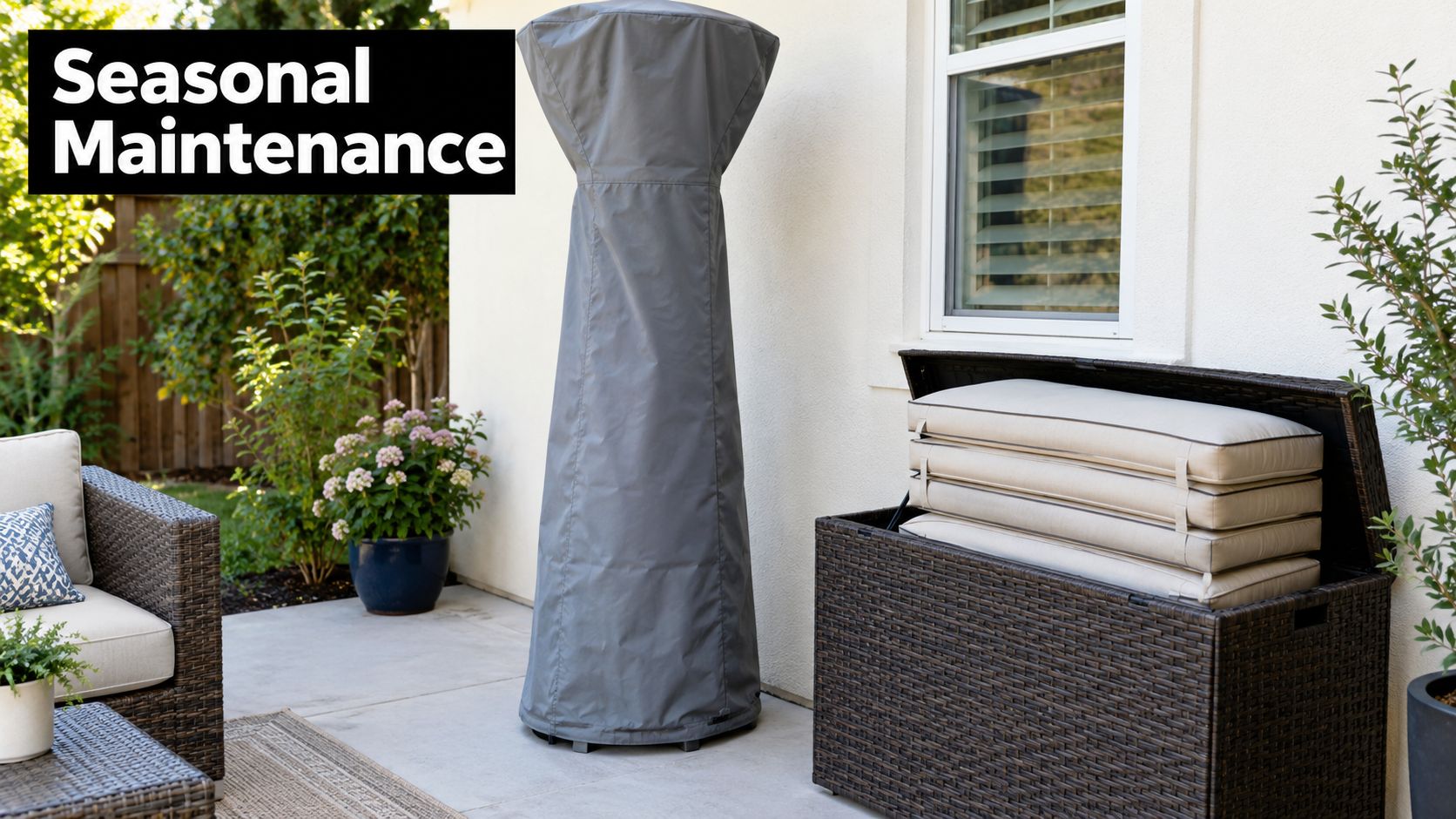
The review should end with decisions, not just observations. Remove accessories that repeatedly delay service, replace pieces that can't survive cleaning, and reposition anything that creates a safety or compliance risk. Keep the equipment that improves guest comfort while making the team's work easier.
MODERN LYFE offers fly fans designed for indoor and outdoor dining, buffet lines, receptions, and home gatherings, with battery-operated placement and a discreet form that fits into an organized patio system. Visit MODERN LYFE to review its fly-control options and build a cleaner, more comfortable outdoor service setup.