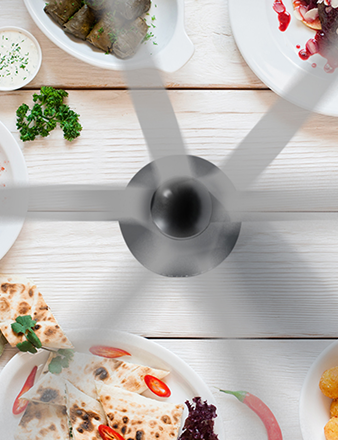
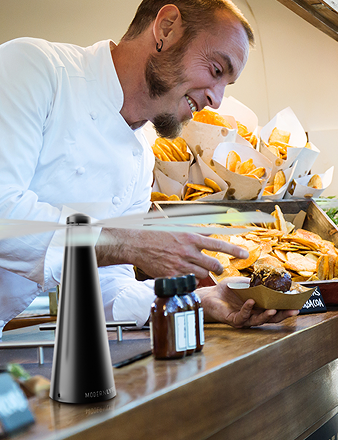
You know the moment. Dinner is outside, the food is on the table, the drinks are cold, and then the first mosquito lands on a wrist, then another hovers over the bread basket, and the whole evening starts tilting toward damage control. That's where outdoor fans to keep mosquitoes away stop being a gimmick and start being a placement decision.
Used correctly, fans make a real difference because they change the air mosquitoes depend on. Used badly, they just move warm air around and make noise. The win is in the setup, not the purchase.
Why Mosquitoes Take Over Outdoor Spaces

A patio can feel fine at sunset, then go bad fast once the air settles and the guests sit still. Food service adds body heat, movement, and odor, which gives mosquitoes exactly what they want, a steady target zone around people, not an empty corner of the yard. Once that happens, the table becomes the center of the problem.
Still air is the enemy
Mosquitoes are relatively weak fliers, and cool conditions with winds above 10 mph reduce their activity, which is why directed fan airflow can help keep mosquitoes away from an outdoor seating area. That's the basic truth operators keep rediscovering the hard way. Breezy evenings feel better because mosquitoes lose control and struggle to track a person cleanly.
The practical takeaway is blunt: if the air around the table is still, you're giving mosquitoes a cleaner path in. If the air moves across the occupied zone, you make the space harder for them to cross. That's why a patio that looks perfect on paper can turn into a feeding ground the minute the weather goes quiet.
Why guests become targets
Mosquitoes don't just hunt by sight. They follow odor signals from people, and they home in on the spots where those signals collect. A dinner table, buffet line, or outdoor bar creates a concentrated scent zone, so the problem isn't only that mosquitoes are present, it's that the space is announcing itself.
Practical rule: don't think of mosquitoes as random. Think of them as responding to a human scent cloud that gets worse when the air stops moving.
That's why airflow matters so much. It doesn't need to make the whole yard feel windy. It just needs to make the guest zone harder to read. Once you understand that, fan placement stops being a comfort choice and starts looking like a control strategy.
How Outdoor Fans Actually Disrupt Mosquitoes
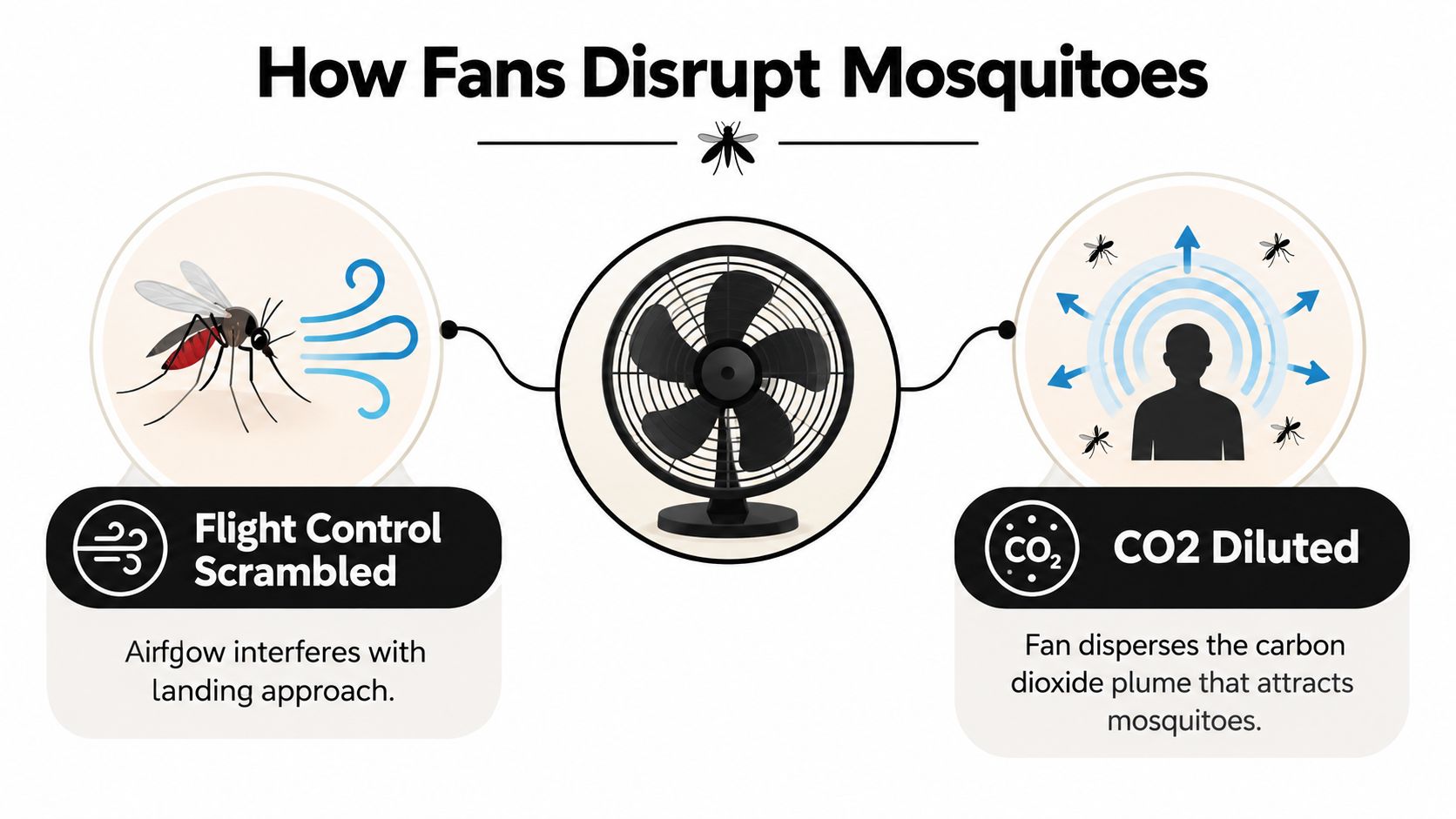
Outdoor fans work in two ways. First, they make flight and landing harder. Second, and more important, they break up the carbon-dioxide and odor trail that tells mosquitoes where people are sitting. The second part is the main reason fan direction matters so much.
Flight disruption is only half the story
Field experiments in a Central Michigan wetland found that fan-generated airflow from 0 to 3.7 m/s produced a strong, negatively logarithmic reduction in mosquito captures, with dilution of attractant cues identified as the primary mechanism rather than overpowering mosquito flight. That matters because it tells you what the fan is really doing. It isn't just blasting insects backward, it's making the human target harder to detect.
A good way to think about it is cooking smell. If someone opens a kitchen door and lets steam out, the smell is easy to follow when the air is still. Put a fan across that space and the plume spreads out, weakens, and gets less useful. Mosquitoes work off a similar trail, which is why a fan aimed the wrong way can waste most of its value.
Aiming beats raw speed
The fan should create cross-flow across the seating or dining zone, not just blow at people's faces. If the stream goes above head height or off to one side, the protected area shrinks fast. If it sweeps across the zone where guests sit, it interrupts the approach path and disperses the odor signal.
A peer-reviewed field study measured 0.6 m/s at a human subject 1.6 m downwind from a fan and reported reductions of 74% in mosquito orientation, 75% in landing, and 70% in probing when the airflow was combined with vapor-phase DEET. That's a useful reminder that airflow and repellent can work together, but only if the air is reaching the person in the right place. A 100 CFM blower reference for airflow planning is helpful only if it's tied to actual protected-zone coverage, not just fan specs on the box.
Don't point the fan at the guest
A fan aimed across the table is doing work. A fan aimed straight at a guest is mostly doing comfort work.
That distinction matters. You want a moving air barrier between mosquitoes and people, not a wind tunnel at the center of the meal. Once the airflow is crossing the occupied zone, you're dealing with mosquito behavior, not just heat management.
Airflow Targets and What Good Performance Looks Like
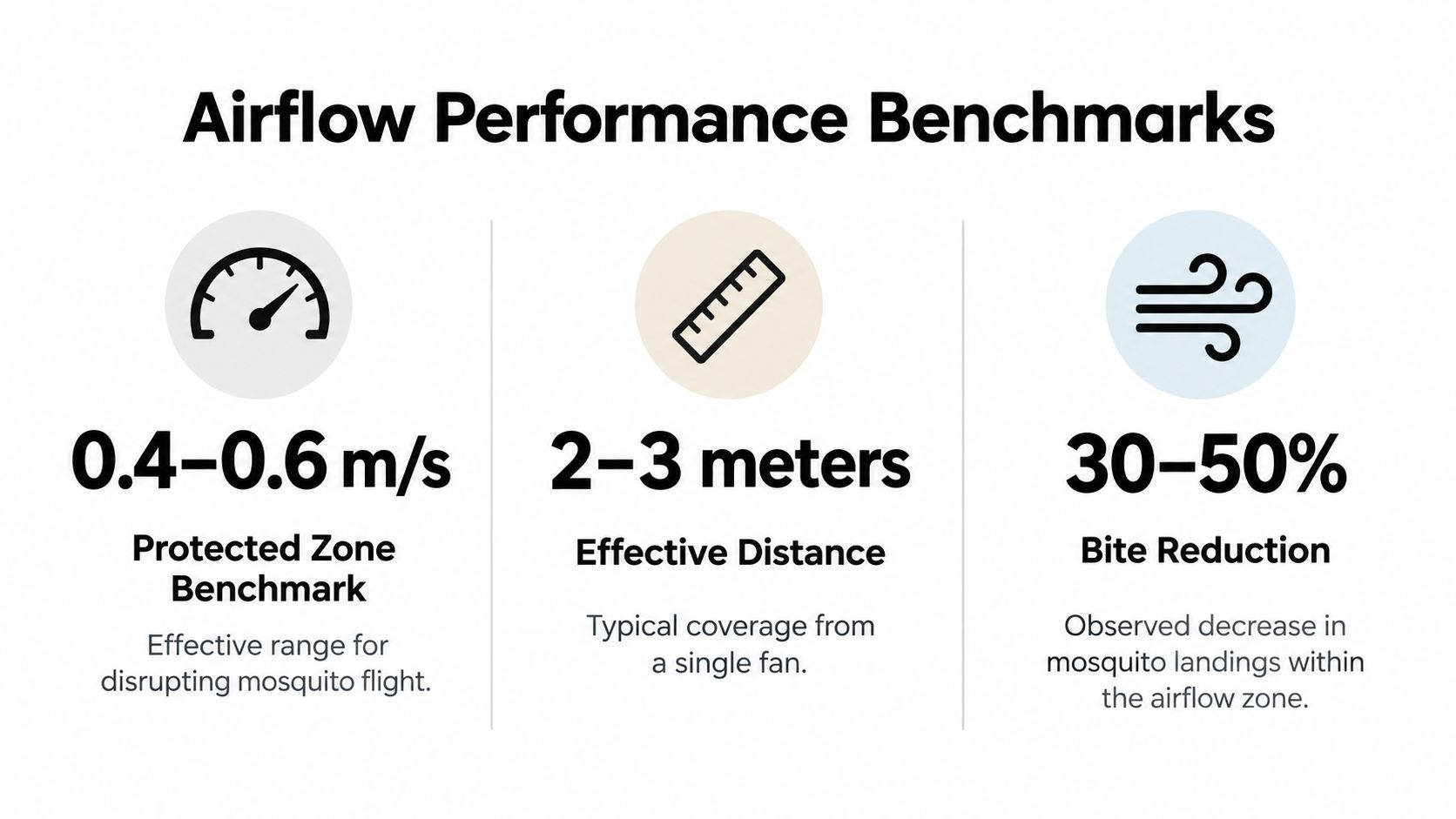
A serious setup should target 0.4 to 0.6 m/s inside the protected zone. Treat that as a working benchmark, not a magic threshold. Real performance shifts with distance, obstructions, fan shape, and ambient wind, so the number only matters if it shows up where guests are sitting.
Use occupant height, not box speed
Fan specs on the carton do not tell you what people feel at the table. What matters is airflow at seated, standing, and serving height. A strong stream that fades before it reaches the occupied zone does little for mosquito control.
Measure the space you are trying to protect. On repeat-use patios and event layouts, use a small anemometer and test at chair height, buffet height, and the spots where people stand in line. Table edges, serving stations, and umbrellas can break up airflow fast, so the setup has to hold up in the actual space, not just in an empty room.
What the research says in plain terms
The field study above showed meaningful reductions when airflow reached the person. That is the point. Modest airflow helps when it crosses the occupied zone cleanly, and more speed is not automatically better if the stream misses the guest or turns the area into a wind tunnel.
Operator's rule: verify airflow where the guest sits, not at the fan grill.
A 100 CFM blower reference for airflow planning is useful only if you connect it to actual protected-zone coverage. Another study found that average air velocity around sleepers rose to about 0.36 m/s under a ceiling fan, compared with 0.16 m/s without one, and mosquito density dropped by 91% in the fan-equipped condition. Patio conditions are different, but the principle stays the same. Air movement has to reach the human zone to matter.
For broader event planning, keep logistics separate from mosquito control, which still comes down to where you put the fan and what it covers.
A simple performance check
- Measure the occupied zone: place the anemometer at chair height, buffet height, or standing-guest height.
- Check continuity: airflow should not vanish between tables or die at the end of a serving line.
- Adjust before guests arrive: once plates are out, no one wants equipment shifted around.
If you cannot confirm air movement where people are sitting, you do not have a mosquito-control setup yet. You have a fan.
Placing Fans Across Patios, Buffets, and Event Seating
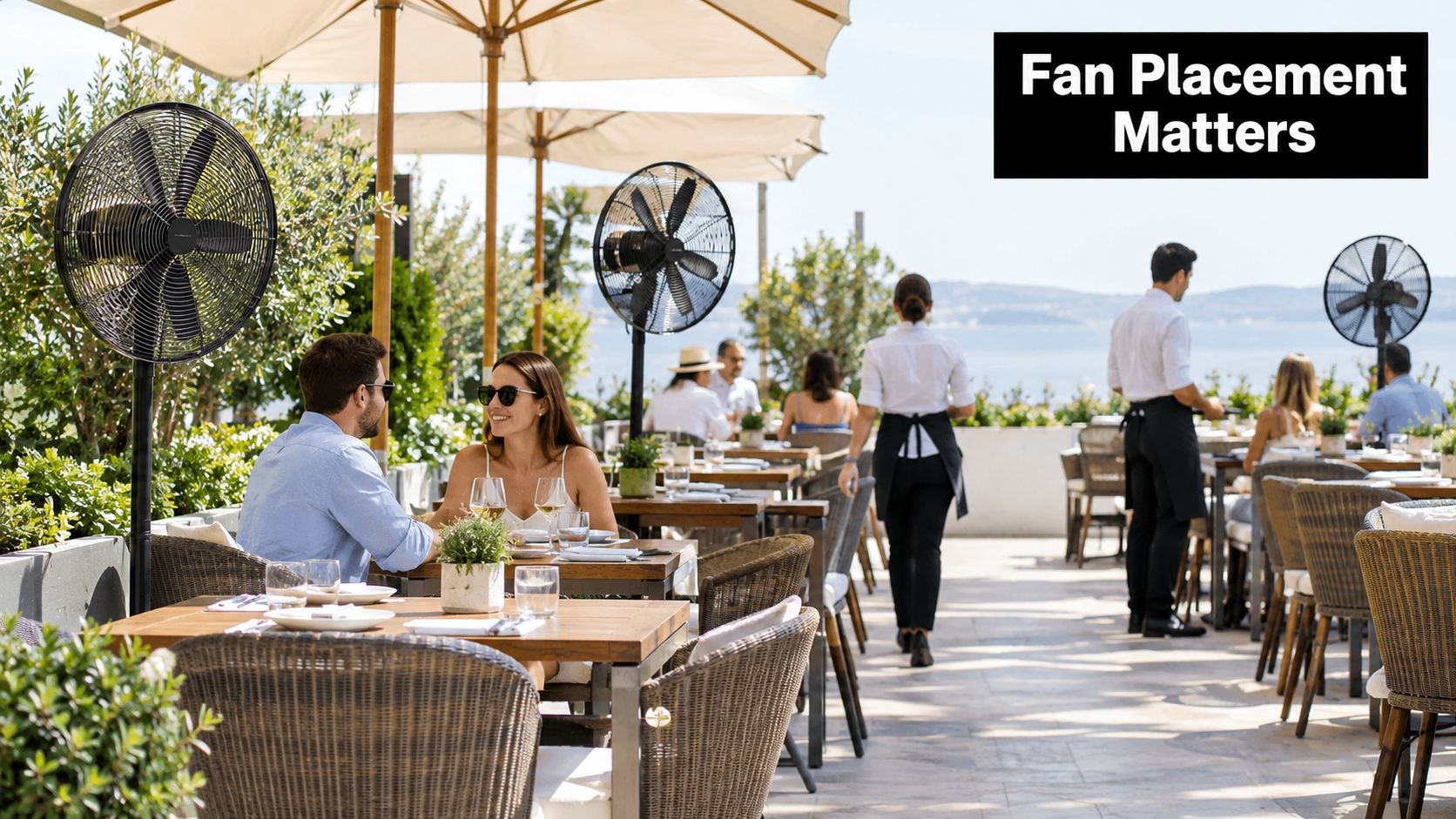
Placement decides whether a fan helps or just looks active. Put airflow across the occupied zone, and you make the space harder for mosquitoes to use. Point it at the wrong area, and you protect nothing.
Small patio setup
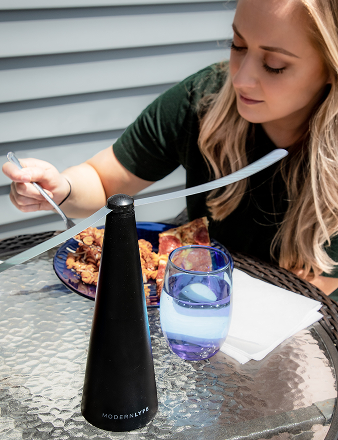
On a small patio, set the fan just outside the seating cluster and aim it across the table edge, not straight into the center of the group. That keeps air moving over laps, plates, and hands before it leaves the space. It also avoids turning the fan into a personal blast of air that annoys guests more than it helps them.
One table can be covered by one fan if the full dining area sits in the moving air. If the breeze only reaches one chair, the setup is wrong. A fan that misses half the guests gives you one protected seat and several exposed ones.
Restaurant terrace or multi-table layout
A terrace needs overlapping airflow zones. One fan per table usually works better than one large unit placed far away and expected to cover everything. The common mistake is arranging fans around furniture, instead of around where guests sit, servers walk, and people pause.
For event operators using digital check-ins, lighting, or POS systems outdoors, temporary internet services for events can keep the operation steady while the layout handles the mosquito pressure. Keep the technology separate from the airflow plan. The fan still has to serve the occupied zone first.
Buffet line or wedding service area
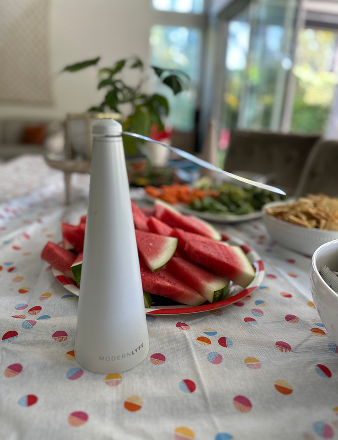
Buffets need cross-flow along the guest path, especially where people stop to serve themselves. Place fans so air runs parallel to the line or slightly across it. That breaks up the odor plume and makes hovering at shoulder level less attractive. Keep the path open. A service cart, decor screen, or stanchion can block airflow faster than staff expect.
Outdoor event setup guidance helps here because fan placement belongs in the floor plan, not in the last round of setup. With multiple units, overlap the edges so guests do not walk through dead air pockets. In a long buffet run or a larger tent, that overlap matters more than fan size. Use enough units to cover people, not just the room.
Fans as One Layer of a Complete Protection Plan
A fan is a supplementary barrier, not a complete mosquito-management strategy. That's the honest version, and it's the one operators should use. Airflow helps around guests, but it doesn't remove breeding sites, and it doesn't replace repellents or physical barriers.
Use fans with the rest of the toolkit
The public-health approach is layered. EPA-registered repellents reduce bites, intact screens keep mosquitoes out, and standing water control removes the source of new mosquitoes. The U.S. Environmental Protection Agency says outdoor spatial-repellent products must be used according to their approved labels, including coverage boundaries, wind effects, and startup time, so don't treat a mechanical fan like a registered chemical product unless it is one.
CDC guidance also recommends keeping mosquitoes outdoors with intact screens or air conditioning where applicable, alongside repellents and water control. That's the part many fan articles skip. A fan can make the seating area less attractive, but it doesn't fix a bad environment around the property.
When airflow is enough, and when it isn't
For a small patio with light mosquito pressure, good airflow can be enough to make dinner tolerable. For a humid evening event with food, warm bodies, and nearby breeding sites, it shouldn't be the only control. If the area has a strong human-odor signal, weak airflow gets overwhelmed fast.
Pennsylvania State University Extension recommends weekly cleaning and refilling of birdbaths, moving water where possible, screened porches or enclosed tents, and registered repellents for outdoor gatherings. That lines up with the operational reality, if guests are sitting in a mosquito-friendly area, the fan is one layer, not the plan.
If the venue still holds water, the fan is only protecting the symptom.
For teams that already use integrated pest management, the fan becomes part of the pattern. It helps reduce contact opportunity while the rest of the setup attacks breeding, access, and guest exposure. That's the right way to think about it, practical, layered, and not overpromised.
Common Misconceptions That Undermine Fan Performance
The biggest mistake is assuming that any breeze counts. It doesn't. A weak draft coming from the wrong angle can leave the table exposed while the fan gives everyone a false sense of safety.
Misconception one, any breeze works
What matters is airflow across the occupied zone. A fan that stirs air behind a chair or above people's heads won't disrupt landing behavior or dilute the odor trail where it matters. If the air doesn't cross the space where guests are sitting, the mosquitoes are still getting a clean read.
Misconception two, a fan makes the venue mosquito-free
No fan does that. The research supports localized bite reduction, not universal elimination. If someone is standing two tables away, walking to the bar, or lingering near a buffet corner outside the airflow, they're outside the protection zone.
Misconception three, bigger and faster always means better
More speed can help up to a point, but comfort and coverage matter too. A loud blast that makes diners move their chairs is a bad setup, even if it looks powerful on paper. The goal is steady, well-directed airflow that reaches the protected zone without creating a nuisance.
Here's the clean mental model to keep:
- Coverage first: protect the people, not the fan.
- Direction second: aim across the zone, not at faces.
- Layering third: pair airflow with repellents, screens, and source reduction.
That framework keeps operators from wasting money on the wrong gear or the wrong layout. It also keeps guests from mistaking a little air movement for actual mosquito control.
Your Pre-Event Mosquito Readiness Checklist
Before guests arrive, walk the space once and do the basics right. Check fan position first, because if the air isn't crossing the seating or serving zone, nothing else will compensate. Then look for water, screens, and repellent access.
Morning-of checklist
- Empty or remove water-holding items: buckets, toys, saucers, and anything that catches rain.
- Verify fan placement: the airflow should cross the occupied zone, not just circulate nearby.
- Confirm backup protection: keep EPA-registered repellents available for guests who want them.
- Check barriers: screens, tents, and enclosure edges should be intact.
- Look for dead air pockets: if one table feels still, add overlap or reposition the unit.
CDC mosquito-prevention guidance recommends emptying and scrubbing, turning over, covering, or discarding water-holding items once every week to remove breeding sites around outdoor dining and event areas. That routine matters because fan placement helps only around guests, while water control reduces the next wave of mosquitoes.
If the fan is too far from the table, move it closer or add a second unit. If the breeze dies after sunset, don't assume the setup is fine, test it again at dinner time, when people sit down and mosquitoes become active.
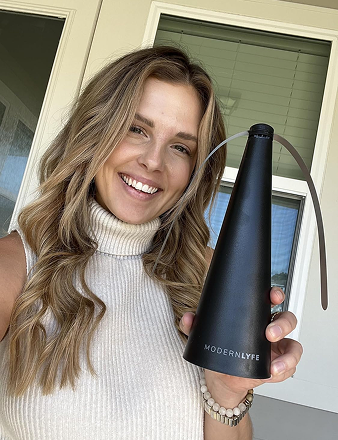
Modern Lyfe focuses on fan solutions for outdoor dining and events, which fits this topic well because airflow only helps when it's placed with purpose. If you want to build a cleaner, more comfortable setup for patios, buffets, or receptions, visit MODERN LYFE and compare fan options against your layout, not against a guess.