A dinner service can look polished right up to the moment the flies show up. The plates are clean, the patio is full, the weather is perfect, and then guests start waving napkins over their drinks and covering food with their hands. At that point, most operators make one of two mistakes. They either overreact with sprays near people and food, or they underreact and hope the problem fades on its own.
Neither works well.
Modern pest control alternatives are less about replacing one chemical with one “natural” product and more about building a system that makes the space harder for pests to use in the first place. That matters most in hospitality and food service, where the actual standard isn't just killing pests. It's protecting food, avoiding odors, preserving guest comfort, and keeping operations consistent during service.
Moving Beyond Sprays and Chemicals
For a lot of managers, the shift starts with a simple realization. Spraying after pests appear is a weak operating model.
If flies keep landing on a buffet, the core issue usually isn't a missing aerosol can. It's exposed food, open access, poor air movement, residue on surfaces, waste timing, or a nearby breeding source. Spray can knock pests down for the moment, but it rarely fixes why they were there.
That's why the industry has moved toward integrated pest management, or IPM. The FAO describes alternatives to highly hazardous pesticides as pest management options that fit within IPM and integrated vector management, including crop rotation, sanitation, trapping, thermal treatments, biological control with predators and parasitoids, and biopesticides. The same broader market shift shows up commercially. The global pest control market was valued at $20.1 billion in 2019 and is projected to reach $44.3 billion by 2034, a 5.4% CAGR, reflecting stronger adoption of eco-friendly and technology-based methods across residential and commercial settings (FAO guidance on alternatives).
That trend makes sense on the ground. Operators want methods that work around guests, staff, and food.
If you're reviewing practical environmentally friendly pest methods, the useful question isn't “What's the most natural option?” It's “Which option fits this space, this pest, and this service standard?”
The best pest control alternative is usually the one guests never notice because the problem never reaches them.
For readers who want a plain-language primer on the larger framework, this overview of Integrated Pest Management is a good starting point. It helps clarify why strong programs rely on layers, not miracle products.
The Foundation of Modern Pest Control
IPM works like fortress defense. You don't wait until pests are inside and then fight room by room. You harden the perimeter, reduce what attracts them, watch for pressure points, and only intervene when the problem crosses a practical threshold.

Prevention comes first
Prevention is the part people skip because it isn't dramatic. It's also the part that saves the most trouble.
In a kitchen, prevention means keeping drains, floors, storage zones, and waste areas from becoming food and moisture sources. At a patio entrance, it means controlling access points, not just reacting to what gets through them. In guest-facing areas, it means arranging service so food isn't sitting exposed longer than necessary.
Monitoring changes the decision quality
A modern program doesn't treat every pest sighting as the same event. One fly at an open-air brunch isn't the same as repeat activity near prep areas. A single ant trail at a doorway isn't the same as recurring movement from a wall void.
Monitoring helps staff answer four practical questions:
- What pest is it really? Misidentification leads to bad tool choices.
- Where is it coming from? Entry point, breeding area, waste source, environmental factors, or deliveries.
- When does it happen? During service, after cleaning, after rain, near trash pickup, or only outdoors.
- What level is acceptable? Food service usually has a much lower tolerance than a backyard garden.
Intervention should be selective
The strongest pest control alternatives don't avoid all intervention. They avoid careless intervention.
Core IPM tools shift the logic from “treat after infestation” to “prevent, monitor, and intervene only when thresholds are exceeded.” Those tools include sanitation, sealing entry points, eliminating food and water sources, and manual removal, all aimed at reducing unnecessary chemical exposure (Toxic-Free Future on toxic-free pest options).
Operational rule: If a method can't be used safely and calmly during normal service conditions, it probably isn't your first-choice method for a hospitality setting.
Policy is also pushing the market in this direction. In July 2024, the European Union enforced a revised Sustainable Use of Pesticides Regulation targeting a 50% cut in pesticide usage by 2030. In the U.S., the pest control industry is projected at $29.7 billion in 2026, with providers investing in smarter, lower-toxicity options to stand out rather than relying only on spray volume (industry outlook and regulation summary).
Your First Line of Defense Physical Methods
If you run a restaurant, hotel, venue, food truck, or catering operation, physical controls deserve most of your attention. They're visible, trainable, repeatable, and much easier to use around food than broad spray programs.

Exclusion stops the easiest wins for pests
Pests usually enter where buildings are sloppy. Under doors. Around utility penetrations. Through torn screens. At receiving doors that stay open too long. Around cracked thresholds and unsealed window frames.
That means exclusion starts with inspection, not product buying.
Walk the space at pest level. Crouch down. Look under exterior doors during daylight. Check whether screens fit tightly. Review where deliveries enter. Inspect dumpster-adjacent walls and back-of-house transitions. In food service, the back door is often a bigger pest story than the dining room.
Useful exclusion tasks include:
- Door control: Install and maintain sweeps, weather stripping, and tight-closing hardware.
- Screen integrity: Repair tears fast. One damaged screen can undo a lot of good sanitation.
- Utility sealing: Close gaps around pipes, conduit, and cables.
- Outdoor perimeter cleanup: Reduce clutter and standing water near entries.
If wood-damaging pests are part of your concern, this guide on how to prevent termites naturally is a practical example of how prevention beats post-damage treatment.
Sanitation does more work than most people think
A clean-looking space isn't always a pest-resistant space. Dining rooms can look spotless and still have syrup residue under dispensers, fruit sugars behind bars, damp mop heads, dirty floor drains, or organic buildup around waste lids.
That's why sanitation in IPM is not cosmetic. It's strategic.
Core IPM tools focus on sanitation, sealing entry points, removing food and water sources, and manual removal so teams reduce chemical exposure instead of defaulting to routine treatment (Toxic-Free Future guidance).
Key sanitation checks:
- Drain care: Organic buildup in drains often supports fly pressure.
- Waste timing: Don't let indoor trash linger through service peaks.
- Food storage discipline: Keep lids on, rotate stock, and remove damaged packaging.
- Moisture control: Fix leaks and dry low-traffic areas where pests can settle.
Mechanical tools solve specific problems
Traps, glue boards, snap traps, and manual removal all have a place, but they aren't interchangeable.
Glue boards help with monitoring and can show where activity is building, especially in utility zones and hidden corners. Snap traps are still effective for rodents when placed correctly and serviced consistently. Manual removal is useful for isolated problems, especially when a treatment would be excessive.
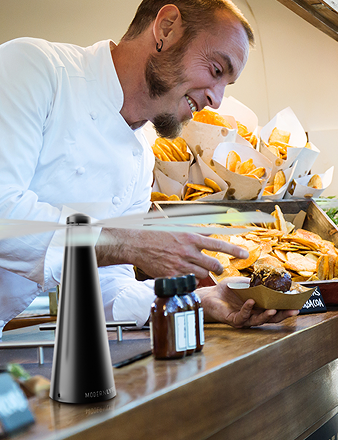
For fly pressure around exposed food, the goal is different. You're not trying to treat a hidden void. You're trying to protect a table, buffet, or service line in real time without introducing odor or residue where people are eating.
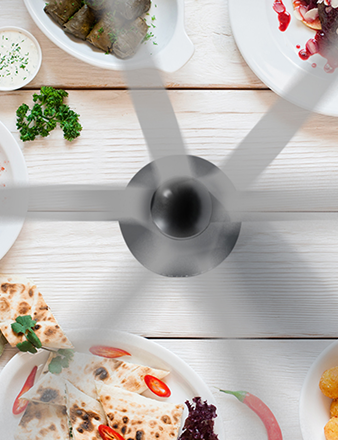
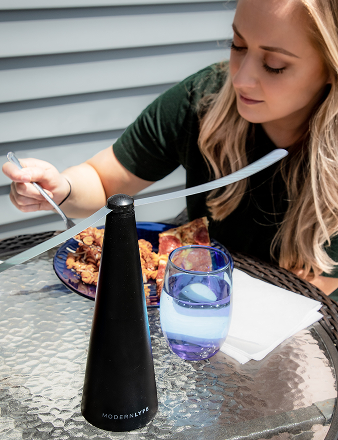
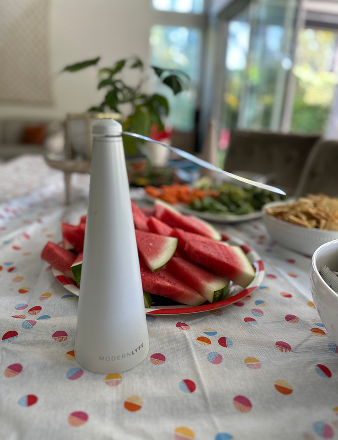
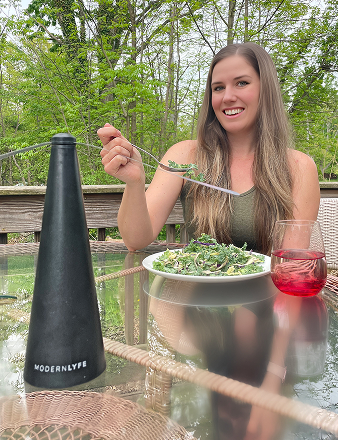
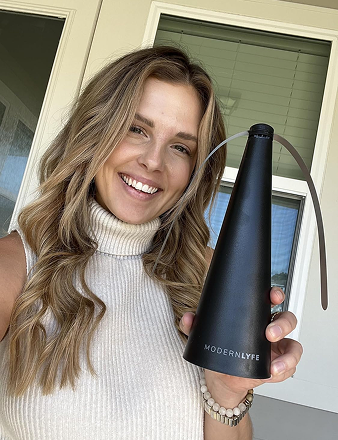
That's where air-based physical devices can make sense.
A short demo helps show how this category works in food-adjacent setups:
For practical applications in dining and event settings, this guide to door fans for flies shows where airflow-based tools fit and where they don't.
A physical method works best when it matches the pest's behavior. Traps work where pests travel. Barriers work where they enter. Air movement works where food needs immediate protection.
Using Nature Biological and Botanical Controls
Biological and botanical options are often the first thing people ask about when they want lower-chemical pest control. They can be useful, but they're commonly overestimated.
The big mistake is treating “natural” as if it means universal, harmless, and low effort. It doesn't.
Biological controls fit some environments better than others
Biological control uses living organisms or natural relationships to suppress pests. In outdoor growing areas, maintained properties, and agricultural settings, that can be a smart fit. Predators, parasitoids, and microbial tools can work well when the target pest, timing, and environment line up.
In a restaurant dining room or hotel banquet space, biological controls are usually not the first tool you reach for. They're less practical in guest-facing interiors. Food service needs direct, controlled results in spaces where presentation matters and pest tolerance is low.
Botanical products are selective, not magical
Plant-derived pesticides such as neem, pyrethrins, kaolin clay, essential oils, fatty acid salts, and microbial-derived insecticides can suppress pest populations, but their performance is mechanism-specific. Research reviews also note they work best inside integrated programs, because broad or poorly timed use can affect beneficial species too (Bee Life review of pesticide alternatives).
That has two practical implications.
First, product choice has to match the pest. Neem isn't a universal answer. Essential oils aren't a substitute for sanitation. Pyrethrins may be plant-derived, but they still need careful use and placement.
Second, durability matters. Many botanical repellents need repeated application or favorable conditions. In windy outdoor spaces, around open food, or during long events, that can be a weak operational fit.
A lot of consumer advice skips that reality. If you're looking at Effective deterrents for garden pests, the ideas can be useful in the right setting, especially outdoors. But garden deterrence and buffet protection are not the same job.
For readers comparing plant-based tools more closely, this explainer on 100% neem oil helps clarify where botanical products fit and where expectations should stay modest.
Natural products are often best used as spot tools, perimeter tools, or supplemental tools. They usually disappoint when people expect them to replace a whole system.
Comparing Your Pest Control Options
Choosing among pest control alternatives gets easier when you stop asking which method is “best” and start asking which method fits the setting. A commercial kitchen has different demands than a patio bar. A backyard barbecue has different tolerance levels than a hotel breakfast line.
Pest Control Alternative Comparison
| Method | Best For | Upfront Cost | Maintenance Level | Best Use Case |
|---|---|---|---|---|
| Exclusion | Flies, rodents, crawling insects | Moderate | Low to moderate | Doors, windows, utility gaps, loading areas |
| Sanitation | Nearly all common pests | Low to moderate | High because it depends on routine | Kitchens, bars, waste zones, storage rooms |
| Mechanical traps | Rodents and crawling insects | Low to moderate | Moderate | Back-of-house, utility rooms, hidden travel paths |
| Fly fans | Flying insects around exposed food | Moderate | Low | Buffets, patio tables, catering lines, outdoor service stations |
| Biological controls | Outdoor pest pressure and some landscape or garden issues | Moderate | Moderate to high | Gardens, landscaped grounds, agricultural edges |
| Botanical repellents | Targeted short-term or perimeter use | Low to moderate | Moderate to high | Spot treatment, garden edges, selective outdoor applications |
What actually drives the decision
The best method often depends on five operational realities:
- Food exposure: If food is open and guests are present, low-odor and non-residue methods usually make more sense.
- Service timing: If the problem happens during active service, you need tools that work immediately without disrupting staff.
- Location: Outdoor patios and open-air events need different controls than enclosed prep areas.
- Tolerance level: One pest sighting might be acceptable in a garden, but not near plated food.
- Labor discipline: Some alternatives work well only if staff maintain them every day.
A common mistake is choosing low-maintenance language over low-maintenance reality. For example, botanical sprays sound simple, but many require ongoing attention. Exclusion sounds boring, but once it's done well, it keeps paying off.
Fast selection rules
If you need a practical shortcut, use this:
- Use exclusion when pests are getting in from outside.
- Use sanitation when the site is feeding or sheltering them.
- Use traps when you need to monitor or reduce hidden activity.
- Use airflow and physical protection when exposed food needs defense during service.
- Use biological or botanical tools when the target pest and environment clearly support them.
That mix is how experienced operators build a program that's stable instead of reactive.
Building Your Custom Pest Control Plan
A workable plan has to match the site. Restaurants, hotels, caterers, and homeowners all want fewer pests, but they don't face the same risks. Food service has to balance food safety, guest comfort, and staff execution. Homeowners usually care more about family safety, convenience, and manageable routines.

For restaurants hotels and caterers
In food-adjacent spaces like buffets and patios, public guidance consistently points to a layered approach. Sanitation, exclusion, monitoring, and then least-toxic controls if needed are the most effective non-chemical sequence, especially where food is exposed and guests are present (urban IPM guidance for food-adjacent spaces).
That means your plan should be operational, not theoretical.
Start with these priorities:
- Protect entrances: Tight doors, working sweeps, intact screens, and disciplined receiving practices.
- Control food exposure: Reduce unnecessary hold times and cover or shield foods whenever possible.
- Manage waste aggressively: Empty, clean, and separate waste before it turns into an attractant.
- Monitor by zone: Dining area, prep area, bar, waste area, and exterior should each have their own review routine.
- Use least-toxic active tools only where needed: Match the control to the setting, not to habit.
A simple commercial checklist looks like this:
- Open the day with inspection. Check doors, drains, service stations, and yesterday's problem spots.
- Assign sanitation ownership. Don't leave pest prevention as everyone's job and no one's job.
- Track recurring issues. The same corner, drain, or patio edge usually tells you where the lasting fix belongs.
- Escalate selectively. If activity persists despite cleanup and exclusion, bring in targeted controls or outside expertise.
In hospitality, the best plan is the one staff can repeat during a busy shift without debate.
For homeowners and hosts
Homeowners should also think in layers, but with a simpler routine. You don't need a commercial protocol. You need a consistent one.
Focus on the places pests use:
- Kitchen: Store food tightly, wipe spills fast, and watch under-sink moisture.
- Patio and backyard dining area: Remove standing water, clean after meals, and reduce food exposure time.
- Garden perimeter: Use biological or botanical methods only when the target pest is clear.
- House exterior: Seal gaps, maintain screens, and keep clutter away from walls.
A homeowner plan usually works best in this order:
- First: Inspect and seal.
- Second: Clean and dry the environment.
- Third: Add traps or physical devices where needed.
- Fourth: Use plant-based or biological options as supplemental tools, not as the entire strategy.
The strongest plans are boring in the best way. They don't depend on one big treatment day. They depend on small habits that stop pressure from building.
Frequently Asked Questions
Are pest control alternatives safe for pets and children
Safer doesn't mean automatic. Physical methods like sealing gaps, screens, sanitation, and many monitoring tools are often easier to manage safely than broad treatments, but every product and device still needs correct placement. Keep traps, powders, and any plant-derived products out of reach, and avoid assuming that “natural” means harmless if touched, inhaled, or ingested.
What should I do if pests are still showing up
Go back to diagnosis. Confirm the pest, identify where it's entering or feeding, and check whether your current method matches the problem. If flies remain around drains, focus there. If pests only appear during service, review food exposure and door traffic. If activity continues after cleanup and exclusion, move to targeted controls or bring in a professional.
How do I find a pest control company that actually uses IPM
Ask direct questions. Do they inspect first? Do they document entry points and attractants? Do they recommend sanitation and exclusion before treatment? Do they use threshold-based decisions or show up on a routine spray schedule no matter what? If they can't explain prevention, monitoring, and selective intervention clearly, they're probably not running a real IPM program.
If you need a practical way to protect food and guest spaces without adding spray, odor, or visual clutter, MODERN LYFE offers fly fan solutions designed for restaurants, catered events, patios, and home dining setups. Their products fit the kind of layered, low-chemical pest control approach that works best where food is served in plain view.