A packed Saturday night can look profitable while the operation underneath is leaking money. The host stand is backed up, two servers are waiting on the POS, the kitchen is refiring a steak, and one manager is solving five problems that shouldn't have reached the floor in the first place. Everyone is moving fast, but the shift still ends with tired staff, uneven service, and margins that feel thinner than the dining room suggested.
That's the trap in hospitality. Busy isn't the same as productive. Restaurants, hotels, and catering teams can run all day and still waste labor, inventory, motion, and guest goodwill. Real productivity gains come from fixing the work itself so the same team can deliver a better result with less friction.
Beyond Busy How to Drive Real Productivity Gains
The clearest sign of a productivity problem isn't laziness. It's chaos that repeats.
A restaurant can have a full book and still struggle because the expo station is overloaded, servers keep re-entering modified orders, and guests lose patience over delays that nobody measured correctly. A hotel can run strong occupancy and still frustrate guests because room turns, maintenance handoffs, and banquet setup routines break down at the seams. A catering company can stay booked solid and still lose margin to rushed prep, last-minute rentals, and crews waiting for instructions onsite.

That's why productivity gains matter in hospitality. They aren't abstract finance language. They show up in tighter handoffs, cleaner prep lists, fewer comped meals, faster room resets, and staff who leave a shift tired for the right reasons instead of drained by preventable confusion.
Managers who improve operations usually start by changing one system at a time, not by launching a grand transformation plan. A better pre-shift brief. A cleaner station layout. A sharper service sequence. A more disciplined rollout process. The best improvements look small until they compound.
For teams working on operational change, this guide to strategic implementation is a useful reminder that good ideas only matter when they make it into daily routines.
Practical rule: If a recurring issue creates rework, delays a guest-facing moment, or forces a manager to intervene repeatedly, it's a productivity problem.
The goal isn't to make people hustle harder. The goal is to remove the drag that keeps good staff from doing their best work.
Defining Productivity Gains Beyond the Buzzwords
At its simplest, productivity gains mean getting more valuable output from the resources you already use. In hospitality, output might be meals served, rooms turned, events executed, guest satisfaction, or fewer service failures. Input is usually labor hours, ingredients, supplies, equipment time, and management attention.

A gain happens when that relationship improves. You serve the same dining room with fewer bottlenecks. You reduce waste without hurting quality. You clean rooms faster without missing standards. You produce a buffet setup with less scrambling and better consistency.
Productivity gains mean improving the ratio between results delivered and resources consumed.
What this looks like on the floor
Take a bartender during a high-volume service. If they rebuild the station so garnishes, glassware, and backup bottles are placed in the order they use them, ticket times can improve without cutting corners. The same person, same bar, same shift. Better output, less motion.
The same logic works in a hotel housekeeping department. If attendants stop hunting for linens, maintenance issues are tagged clearly, and carts are standardized, room turns become more reliable. Not because anyone worked harder, but because the process stopped fighting them.
A lot of business content treats productivity like a magic switch tied to software. In reality, gains are often modest and operational. A Harvard Business School field experiment found consultants using GPT-4 completed tasks 12% more, 25% faster, and with 40%+ higher quality, strong results but still far below the hype around total transformation, as summarized in this analysis of AI productivity claims and operational reality.
What productivity gains are not
Hospitality leaders often hear “improve productivity” and assume it means trimming labor. That's too narrow, and usually counterproductive.
A short-staffed operation might reduce hours on paper while increasing ticket times, mistakes, turnover, and manager stress. That isn't a gain. It's a cost shift that eventually lands somewhere else.
Use this filter instead:
- Better flow: Work moves with fewer stops, clarifications, and rescues.
- Better consistency: Guests get a more reliable experience across shifts.
- Better use of labor: Staff spend more time on value-adding work and less on recovery work.
- Better economics: Margin improves because waste, delay, and avoidable errors go down.
The hospitality version of smarter work
The strongest operators treat productivity as design. They ask simple questions.
- Where does work stall? Find the places where a task waits for approval, information, or materials.
- Where does rework happen? Refires, room re-cleans, and event setup corrections are expensive.
- Where do guests feel the problem? Delay at the host stand and confusion during check-in matter more than back-office neatness.
That's the shift. Productivity gains aren't about squeezing people. They're about building operations that let skilled teams perform without friction.
Measuring What Matters Hospitality KPIs for Productivity
You can't improve a hospitality operation by watching revenue alone. Revenue tells you what came in. It doesn't tell you how hard the team had to work to produce it, where margin leaked out, or which bottleneck dragged service down.
Consistent measurement matters even at the national level. U.S. labor productivity has a long-run benchmark of about 2.2% annual growth since World War II, then slowed before averaging 2.7% in 2023, according to the Economic Strategy Group's brief on U.S. labor productivity trends. The lesson for hospitality operators is straightforward. If broad productivity can swing, local measurement has to be disciplined.
Choose KPIs tied to actual work
The best KPI is the one your team can influence directly and review often. In hospitality, that usually means pairing financial outcomes with process measures.
| Sector | KPI | What It Measures |
|---|---|---|
| Restaurant | RevPASH | Revenue generated by each available seat hour |
| Restaurant | Meals per labor hour | How many meals the team produces for labor used |
| Restaurant | Table turn time | How quickly tables move from seating to reset |
| Hotel | Time to clean a room | Efficiency and consistency in housekeeping |
| Hotel | Guests served per employee | Service capacity relative to staffing |
| Catering | Cost per guest | How efficiently each event is executed |
| Catering | Events managed per team | Output delivered by a crew over a period |
A restaurant owner might obsess over average check while missing that table turn time is the actual operational choke point. A hotel GM might focus on occupancy while housekeeping delays slow check-ins and create guest complaints. A catering director might chase new bookings before fixing prep and loadout routines that damage event profitability.
For restaurant teams that want a practical reference point, OrderOut's guide to restaurant KPIs is useful because it organizes common metrics in a way managers can apply.
Benchmark against yourself first
External benchmarks can help, but internal trends are usually more valuable. Compare this month to the last clean period with similar conditions. Compare weekday lunch to weekday lunch, not Saturday dinner to a slow Tuesday. Compare banquet setups by event type, not all events thrown into one average.
The discipline is simple:
- Pick one process. Don't measure everything at once.
- Define the unit clearly. A room turn, a cover, an event, a shift.
- Track before and after. Otherwise every opinion turns into an argument.
- Review with the team. Staff usually know why the number moved.
A broader discussion of performance metrics for operational decisions can help managers choose measures that stay useful after the first enthusiasm fades.
The wrong KPI creates theater. The right KPI exposes where time, motion, and attention are being wasted.
Watch for false signals
Some numbers look productive but hide problems.
- Lower labor cost can mask service decline: If guest complaints rise, you didn't gain productivity.
- Higher sales can hide bottlenecks: A packed dining room can still run inefficiently.
- Fast output can reduce quality: Housekeeping speed means little if rooms need re-cleaning.
Measure what the guest experiences, what the team controls, and what finance eventually feels. That's where real productivity gains become visible.
Smart Strategies to Boost Hospitality Productivity
Most hospitality productivity gains come from operations, not hype. Anthropic estimates that current AI models could have minimal productivity impact on restaurants and transportation, which is a useful reminder that hospitality leaders still win mainly through workflow design, staffing discipline, and process execution in its research on estimating AI productivity gains.

Reducing interruptions
Interruptions are expensive because they break rhythm. In a restaurant, that means a server leaving a section to clarify a modifier the kitchen shouldn't have needed to question. In a hotel, it's a housekeeper stopping mid-room because the cart wasn't stocked or engineering wasn't updated. In catering, it's a crew pausing setup because the event diagram changed but nobody briefed the team.
The fix is often boring, which is why it works.
- Tighten pre-shift communication: Cover menu changes, sold-out items, VIP notes, and role assignments before service starts.
- Standardize handoffs: Use one method for allergy communication, maintenance flags, and event change notices.
- Protect guest-facing zones from friction: Outdoor dining, buffet lines, and patios should be calm, clean, and free from avoidable distractions that pull staff into reactive service.
A lot of operators improve when they stop treating interruptions as normal. They aren't. They're process failures with a human face.
For managers reworking these systems, Clouddle's piece on streamlining operations offers a helpful outside view of how small process changes reduce drag.
A practical walkthrough helps here:
Minimizing waste
Waste in hospitality rarely looks dramatic. It looks like over-prep, poor pars, duplicate ordering, avoidable spoilage, and menu items that create complexity without earning their keep.
A chef can improve productivity by trimming a menu that overloads prep stations. A hotel banquet team can reduce waste by tightening BEO review and aligning setup diagrams with actual inventory. A caterer can protect margin by standardizing pack lists so crews stop forgetting small items that trigger expensive replacement runs.
Consider three common examples:
- Restaurant example: A kitchen reduces refires by tightening ticket language and creating one final expo check for modifiers.
- Hotel example: A breakfast operation reorganizes buffet replenishment so attendants refill in sequence instead of reacting randomly.
- Catering example: An event team builds load-in kits by event type, which cuts onsite searching and forgotten equipment.
The pattern is the same. Waste drops when teams make work predictable.
Optimizing labor
Labor optimization isn't about shaving hours until the floor breaks. It's about putting the right person on the right task, at the right time, with the right setup.
Cross-training matters because hospitality demand moves. A host who can support takeout flow, a banquet lead who can troubleshoot AV basics, or a room attendant who knows the escalation path for maintenance issues gives the operation more resilience. Scheduling matters for the same reason. Historic sales, reservations, event timing, weather, and local patterns all affect labor needs, but schedules only help when managers also design the work inside each shift.
Good labor planning doesn't just decide who's on the schedule. It decides how work moves once they arrive.
A lot of operational gains come from basics:
- Build stations around sequence of use. Reduce steps, reaches, and searching.
- Separate peak tasks from support tasks. Don't ask top service staff to chase avoidable side work during rush periods.
- Write clearer opening and closing routines. Ambiguity creates handoff failure.
- Train for judgment, not just compliance. Staff need to know when to escalate and when to solve.
If you're tightening workflows across departments, this resource on process improvement in day-to-day operations is a solid companion to the hands-on work.
Capturing the ROI of Your Productivity Efforts
The financial return on productivity work isn't limited to lower costs. In hospitality, the bigger win is often better capacity, stronger consistency, and fewer expensive mistakes during peak periods.
A restaurant that reduces service friction can seat more smoothly, protect guest experience, and avoid comps. A hotel that improves room-turn coordination can reduce check-in pressure and protect front desk service. A caterer that runs cleaner prep and loadout systems can preserve margin while reducing the fire drills that burn out good people.
Ask who captures the value
Many operators, however, stop too early. They improve the process, see the savings, and treat the entire gain as retained profit.
That might help in the short term, but it misses a strategic lever. PIMCO notes that U.S. productivity rose 92.4% from 1979q4 to 2025q4 while hourly pay rose 33.6%, meaning productivity grew 2.7 times as much as pay, in its analysis of why productivity gains no longer reach workers. Hospitality businesses that share gains through wages, training, tools, or better working conditions can stand out in recruiting and retention.
That matters because turnover is one of the most expensive forms of operational waste, even when it doesn't show up neatly on a daily dashboard.
Reinvest where the operation feels it
Not every gain should go to payroll, but some should go back into the system that produced it.
- Training: Stronger onboarding reduces errors and dependence on manager rescue.
- Equipment and layout: Better tools often remove recurring friction faster than another policy memo.
- Supervisory capacity: A reliable lead on the floor can prevent problems before they spread.
- Recognition and incentives: Teams repeat what leadership notices and rewards.
For teams trying to connect service improvements to financial impact, Formbricks offers a useful framework to evaluate CX project value. The exact output will vary by operation, but the discipline is right. Tie operational changes to measurable business outcomes.
A productivity gain is strongest when finance can see it, staff can feel it, and guests can experience it.
The point isn't to be generous for appearance's sake. It's to build an operation that keeps getting better because the people doing the work see a reason to care.
Your Productivity Gains Implementation Checklist
The fastest way to stall a productivity project is to make it too broad. Pick one process that causes visible pain and run a short, disciplined improvement cycle.

Start small and make it real
Use this checklist with a single team, a single station, or a single service period.
- Choose one process first. Start with something concrete like table reset time, room cleaning flow, banquet setup, or ticket handoff accuracy.
- Define the KPI. Pick a measure that shows whether the change worked in practice.
- Ask the team where the friction is. Staff usually know the bottleneck long before management documents it.
- Test one change for a short trial. Rearrange a station, rewrite a checklist, change a handoff, or adjust prep sequencing.
- Compare before and after. Review the data and the lived experience together.
- Keep, revise, or drop it. Good operators treat improvement like a cycle, not a one-time announcement.
Keep expectations grounded
Many teams lose momentum because they expect dramatic leaps. Real improvement is usually quieter than that. One engineering-operations dataset found that a 65% increase in AI usage led to only a 7.76% increase in pull request throughput, and organizations using AI typically see gains in the 5% to 15% range according to DX's analysis of real-world AI productivity gains. Hospitality leaders should take the same lesson. Useful gains are often incremental, but they still matter when they repeat every shift.
The operators who outperform don't wait for a breakthrough. They keep removing friction, one bottleneck at a time.
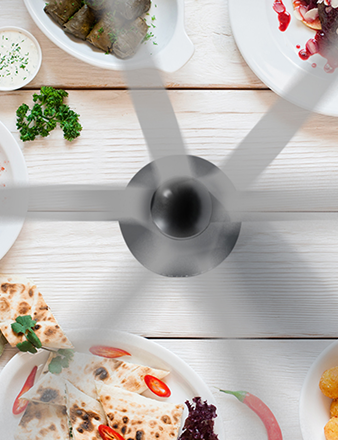
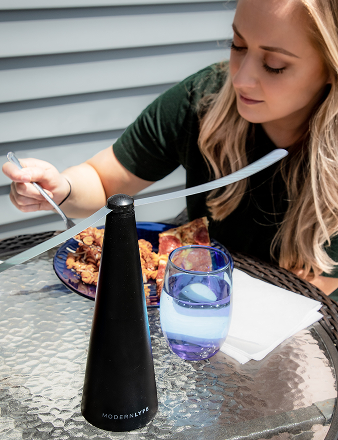
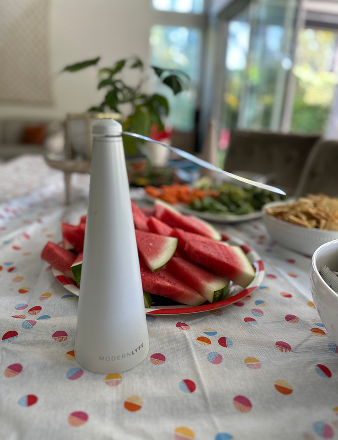
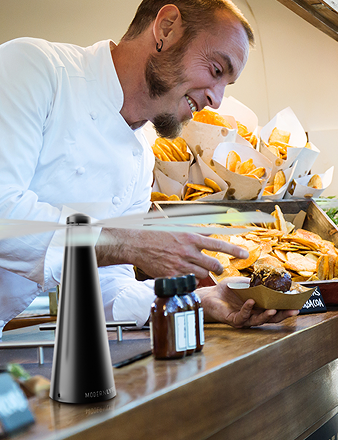
If you're improving outdoor dining, buffet service, or event flow, MODERN LYFE offers practical fly fan solutions that help protect food presentation and guest comfort without adding visual clutter to the setup. For restaurants, hotels, caterers, and event planners, that kind of small operational fix can support a smoother service environment where productivity gains are easier to hold onto.