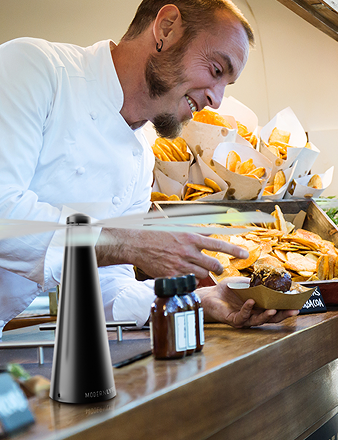
A beautifully set reception can lose its polish in seconds. Guests lean toward one another to talk, candles flicker across the tables, and a cheap pedestal fan adds a mechanical hum that reaches every seat. At a buffet, the fan may help move air, yet its vibration, rattling guard, or harsh high-speed whir makes the service area feel improvised rather than intentional.
Hospitality operators need more than a fan that moves air. They need a quiet standing fan that preserves conversation, supports guest comfort, and works reliably around food, furniture, staff, and changing layouts. The right choice depends on the fan's sound at the speed you use, the character of that sound, the airflow reaching guests, and how well the unit remains stable over time.
Why Quiet Standing Fans Matter in Hospitality
At an outdoor wedding reception, guests should hear a toast without competing with equipment noise. On a restaurant patio, airflow should relieve stagnant conditions while remaining unobtrusive at the table. Near a buffet, circulation may help make the area less attractive to flies, yet a poorly positioned unit can move napkins, buffet signage, candles, or plated food.

Noise changes the guest experience
Hospitality spaces magnify small annoyances. A steady, soft airflow can fade into the background. A pulsing motor, loose grille, or rattling oscillation repeatedly pulls attention toward the equipment. Guests may not identify the source as fan noise, but they will experience the room as less calm, less intimate, and less refined.
Quiet performance depends on operating speed. Modern quiet standing fans are commonly engineered for 20–35 dB on low settings. Some DC-motor pedestal fans measure about 20 dB and are widely described as whisper-quiet. General household fans often run at 25–35 dB on low and 40–58 dB on high, while older AC pedestal fans can reach roughly 35–50 dB, according to this standing fan noise comparison.
Use those figures as a starting point, not a purchasing decision. A smooth, low-frequency hum may be easier to tolerate than a lower headline reading paired with intermittent rattles or floor vibration. In dining rooms and event spaces, noise quality matters as much as volume.
Hospitality rule: If staff notice the fan from across the room, guests probably will too.
Quiet airflow supports foodservice presentation
A fan can create useful movement around buffet and service areas, including locations where operators want the environment to be less attractive to flies. Set the airflow to circulate around the area while keeping napkins, signage, candles, and plated food presentation intact. The unit should remain quiet enough for conversation and positioned so guests do not receive an uncomfortable direct stream.
Quiet equipment also protects the venue's design language. Hotel lobbies, wedding receptions, and premium patios depend on visual restraint. A stable, well-finished fan with controlled oscillation fits those settings better than a noisy appliance that staff must reduce to an ineffective speed.
The category has developed from basic motor-and-blade machines into comfort appliances that balance circulation and sound. Oscillating fan designs were first developed in 1907, building on ceiling-fan concepts, as described in this engineering history of oscillating fans. Oscillation remains valuable in hospitality because one fixed air stream rarely serves a full seating area evenly. Choose a unit whose movement supports coverage without introducing a repetitive mechanical rattle.
How Quiet Standing Fans Achieve Low Noise Levels
During dinner service, a fan can sound acceptable at low speed and become distracting as soon as staff increase airflow. Guests respond to the character of that sound, not only its headline dB rating. Motor control, blade geometry, guard design, housing shape, base stability, and assembly quality all shape the experience.
The motor sets the mechanical baseline
DC motors are often preferred for quiet operation because they support variable-speed control and can reduce vibration associated with older AC designs. Mounting still matters. A controlled motor in a flexible or poorly secured housing can create a hum that travels through the stand and into the floor.
Quiet standing fans commonly target 20–35 dB on low, while general household fans may reach 40–58 dB on high, according to these measured fan noise benchmarks. Operating speed changes the guest experience. A unit that sounds discreet at its lowest setting may become intrusive when staff increase airflow for a crowded patio or warm ballroom.
Ask suppliers for sound information across operating speeds. Confirm whether measurements were taken close to the fan, in a quiet room, or under conditions resembling your venue. A hospitality trial should cover the settings staff will use.
Blade geometry controls turbulence
The blades do more than move air. Their leading and trailing edges interact with turbulence, pressure changes, and tip-leakage vortices. These interactions create much of the broadband sound associated with axial fans.
Independent aeroacoustic studies found that slitted or perforated leading-edge designs can reduce overall sound pressure levels by roughly 3–7 dB while preserving flow performance at moderate-to-high flow rates. Another study reported up to 3.9 dB(A) reduction with only a 0.26% static-efficiency penalty, as detailed in this aeroacoustic blade study.
Examine blade shape, guard spacing, tip clearance, and whether the manufacturer addresses aerodynamic noise rather than relying solely on a motor type or RPM figure. A smooth, low-pitched airflow sound is usually easier for diners to tolerate than a narrow whine, even if both products report similar numbers.

Housing and vibration can erase the benefit
A smooth internal airflow path helps prevent flow separation and blade-passing turbulence from becoming audible. Acoustic research on fan housings measured 8–12 dB reductions in redesigned housings by improving internal flow and reducing pressure gradients near the cutoff, as shown in this fan housing acoustics research.
For hospitality buyers, the enclosure and stand are operating concerns, not cosmetic details. Rigid housing, accurate blade balance, tight fasteners, and a stable base limit mechanical noise spreading through the unit. Dust buildup and loose screws can later introduce sounds absent during the original demonstration.
For a plain-language overview of these design principles, review this quiet fan technology guide.
Test low, medium, and high settings from the distance where guests will sit. Listen for changes in tone, not only increases in loudness. A smooth rise in airflow is acceptable. Sudden whine, rhythmic ticking, or oscillation chatter warrants rejection.
Key Specifications to Compare Before Buying
A quiet fan is not automatically suitable for service. In a restaurant, the right choice depends on how the unit sounds at the speed staff need, how far guests sit from it, and whether its airflow improves comfort without disrupting conversation. Compare the operating scenario first, then the specifications.
The specifications that earn attention
Noise data should cover low, medium, and high speeds. A low-setting rating may suit a quiet dining room, but it says little about the whine, vibration, or rattling that appears when a crowded venue needs stronger airflow. Noise character matters as much as the headline dB figure.
Airflow must be assessed with noise and guest distance. One model advertises up to 2,436 CFM with 120° oscillation, while another specifies 715 to 908 CFM depending on mode, showing that quiet operation can still provide substantial circulation. These figures appear in this standing fan airflow comparison. Use advertised CFM to narrow the options, then test whether the air reaches the seating or event area without forcing staff to select an intrusive speed.
Oscillation quality also deserves close attention. A broad sweep helps distribute air, but a clicking or wobbling mechanism can become more noticeable than the motor itself.
| Specification | What to Look For | Why It Matters for Hospitality |
|---|---|---|
| Noise across speeds | Measurements for low, medium, and high settings, plus descriptions of hum, vibration, or rattling | Guests experience the fan at the speed staff select, not only at the quietest setting |
| Airflow capacity | A published CFM range and clear operating modes | Helps match circulation to dining rooms, patios, buffets, and event areas |
| Oscillation range | A smooth, stable sweep with adjustable direction | Spreads air without requiring a concentrated stream aimed at one table |
| Motor and control | DC motor, variable-speed control, remote, timer, or scheduling | Gives staff finer control over comfort and sound during service |
| Base and mounting | Wide, weighted, rigid base or a secure mounting option | Reduces tipping, wobble, and vibration near guests and staff |
| Construction | Materials suited to indoor or outdoor exposure, protected controls, and cleanable surfaces | Hospitality equipment faces frequent handling, dust, spills, and transport |
| Power arrangement | Cord length, outlet access, battery status, and charging plan | Prevents cables from crossing guest paths or units failing during service |
| Serviceability | Accessible grille, replaceable parts, warranty process, and support | Makes it easier to restore quiet operation instead of replacing the unit |
Match the fan to the venue
For an intimate restaurant, prioritize low-speed sound, smooth oscillation, and a finish that fits the interior. For a ballroom, compare airflow and coverage at the higher settings required during a full event, then listen for tonal changes that cut through conversation. For outdoor catering, choose a unit staff can secure and relocate without creating a trip hazard.
A standing fan does not replace a properly designed extraction system in a commercial kitchen. Operators reviewing broader air movement should also consult this resource on kitchen ventilation for NZ restaurants, which addresses kitchen extraction rather than guest-area circulation. Select the fan only after confirming its sound, airflow, controls, and stability in the conditions where guests will experience it.
Placement and Installation Tips for Events and Foodservice
A quiet standing fan can still become disruptive if staff place it beside a guest's chair or aim it directly across a table. Deployment determines whether guests experience gentle air movement or a persistent blast, and it also determines whether the fan stays useful around food.

Use placement to control the sound field
Start by identifying where air stagnates, then place the fan so it moves air across the space rather than directly into faces. On a patio, position the unit to send a broad stream along the seating area. In a hotel lobby, aim airflow across the circulation zone and away from reception conversations.
At a buffet, keep the fan far enough from the food to avoid disturbing presentation, napkins, or lightweight serving materials. The supplied placement guidance recommends positioning a fan 2–3 feet from the buffet edge to create a curtain of air without blowing directly on food, as illustrated in the required strategic placement guide. Use the lowest effective speed and test the airflow with empty serviceware before guests arrive.
Build a deployment plan
- Map the guest path. Keep stands away from door swings, aisle pinch points, and service routes. A fan that staff must step around will eventually be moved into a worse position.
- Set the height above the seating line. Adjust the head so airflow crosses the room or passes above table settings. Avoid aiming directly at candles, menus, lightweight décor, or plated food.
- Use oscillation selectively. A wide sweep can cover a patio, but the full range isn't always appropriate. Narrow the arc when the fan is near a conversation area, then widen it when serving a larger open space.
- Stagger units in large areas. A zigzag layout spreads air more evenly than lining fans along one wall. It also reduces the chance that several units create one concentrated noise hotspot.
Secure power and equipment
Corded models need a defined cable route, approved covers where appropriate, and a power source that doesn't force staff to run leads across guest paths. Portable units require a charging and rotation plan, not an assumption that one battery will last through every event.
Outdoor wind changes the equation. Use a stable base, place the unit behind a protected architectural feature where possible, and keep it clear of umbrellas, drapes, and temporary signage that can catch airflow. For a practical setup reference, use this quick installation guide.
Maintenance and Troubleshooting for Lasting Quiet Performance
A fan that starts can become the loudest appliance in a venue after repeated transport, dust exposure, grease contact, or loose hardware. Hospitality teams should treat sound changes as maintenance signals, not as an unavoidable part of ownership.

Establish a routine before problems appear
Assign a responsible team member to inspect fans on a recurring schedule, especially after outdoor events or heavy cleaning periods. Disconnect the fan before opening or cleaning any guarded area, and follow the manufacturer's instructions for motor and electrical components.
Use this sequence:
- Clean the airflow path. Brush or vacuum dust from the grille, blade area, motor intake, and exhaust vents. Buildup can reduce airflow and force staff to use a louder speed.
- Inspect the housing. Look for cracked plastic, bent guards, damaged feet, and gaps that can create vibration. Check the oscillation mechanism for movement that feels uneven.
- Tighten accessible fasteners. Loose screws in the guard, stand, or base often create a buzz or rattle. Don't overtighten parts that could crack or deform.
- Check the blade. A blade that is dirty, chipped, bent, or poorly seated can produce wobble. Replace damaged components rather than trying to balance them with improvised materials.
The required quiet performance checklist also recommends testing the fan at its highest setting and listening for new rattles or grinding noises. If the manufacturer approves it, apply a single drop of light machine oil to the motor shaft. Don't lubricate sealed components unless the manual specifically permits it.
Diagnose the sound, then act
A new rattle usually points to a loose guard, screw, stand joint, or nearby object. Turn the fan off, inspect each connection, and run it again on a firm surface.
A wobble during oscillation suggests a loose base, uneven floor, damaged pivot, or mechanical wear. Stop using the unit in a guest area until the base and oscillation assembly are secure.
A low hum with reduced airflow may indicate dust, a blocked intake, or a motor problem. Clean the accessible airflow path first. If the sound remains, remove the fan from service and use warranty or manufacturer support rather than allowing staff to keep increasing the speed.
For more operational troubleshooting, consult this fan performance optimization guide.
Alternatives and When to Choose Each
A standing fan is flexible, visible, and easy to reposition, but it isn't automatically the right tool. Venue layout, ceiling height, guest proximity, weather exposure, and the specific problem you're solving should determine the choice.
Compare the operating role
Ceiling fans provide broad circulation without occupying floor space. They suit permanent dining rooms, covered patios, and lobby areas where installation is acceptable. Their limitation is fixed placement. They won't help a catering team adapt to a changing event layout, and installation may require electrical work or structural planning.
Tabletop fans work for personal cooling or compact service areas. They're easy to move and less visually imposing, but their coverage is limited. A tabletop unit may help one host station or a small bar area, yet it won't replace a properly positioned floor-standing fan across a reception space.
Portable air circulators create a concentrated stream that can move air across a room from a fixed position. They're useful when the venue needs directional airflow, but the concentrated output can be uncomfortable near guests or disruptive around table settings.
Dedicated fly-repelling devices solve a narrower problem. They're appropriate when the priority is protecting food at buffet lines, dining tables, bars, outdoor markets, or catered receptions. They shouldn't be treated as a substitute for room-wide cooling because their operating purpose is insect deterrence rather than broad guest comfort.
Choose according to the problem
| Venue need | Better fit | Main trade-off |
|---|---|---|
| Permanent room-wide circulation | Ceiling fan | Strong coverage, limited flexibility |
| Personal relief at a host or bar station | Tabletop fan | Compact footprint, narrow coverage |
| Directional movement across an open room | Air circulator | Strong stream, less forgiving near guests |
| Food protection at a table or buffet | Fly-repelling device | Specialized function, not whole-room cooling |
| Flexible coverage across changing layouts | Quiet standing fan | Requires careful placement and storage |
For hot outdoor service areas where cooling and moisture are both relevant, review an outdoor misting fan as a separate category. Misting introduces different placement and surface-management considerations, so it isn't a direct replacement for a dry, quiet standing fan around dining tables.
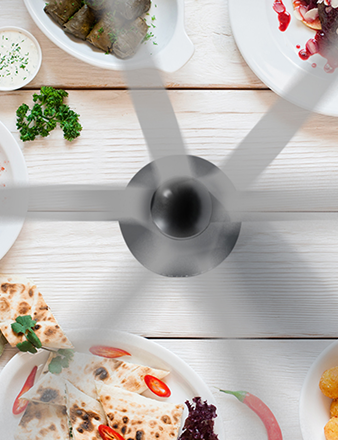
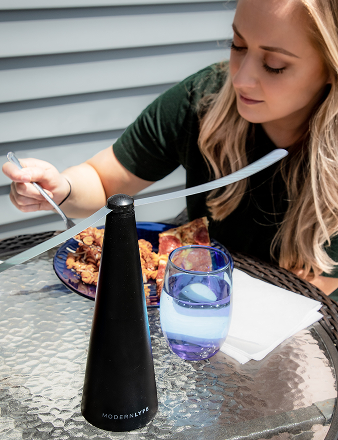
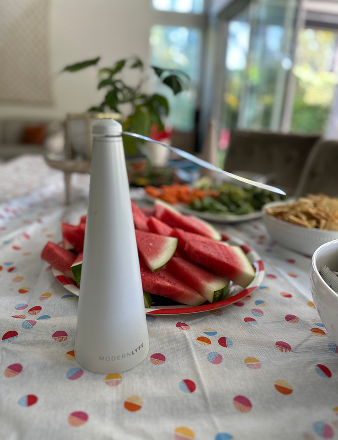
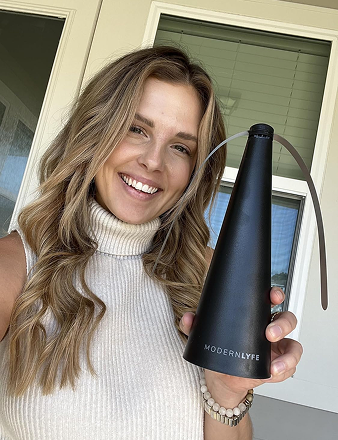
MODERN LYFE offers battery-operated fly fans designed for tables, buffets, restaurants, hotels, and outdoor gatherings. They're one option when the operational priority is keeping flies away from food while maintaining an unobtrusive setup, rather than moving enough air to cool an entire venue.
Practical Buyer Checklist and Frequently Asked Questions
Use this checklist before approving a purchase:
- Test every intended speed. Listen at low, medium, and high settings, not only the advertised quiet mode.
- Judge the sound character. Reject units with rattling, clicking, grinding, or noticeable vibration.
- Confirm airflow needs. Compare published CFM with the distance and area you need to serve.
- Inspect oscillation. The sweep should be smooth, stable, and adjustable for guest proximity.
- Plan placement. Identify outlets, cable routes, buffet edges, guest paths, storage locations, and outdoor shelter.
- Check construction. Look for a rigid housing, secure base, cleanable surfaces, and materials suited to the environment.
- Review support. Confirm warranty terms, replacement parts, service access, and the process for reporting motor or oscillation faults.
- Create a maintenance owner. Decide who cleans, inspects, and tests each unit before the next service.
Can a battery-operated fan support a full-day event?
It can, but don't approve it without a documented runtime test under the speed and oscillation settings your team will use. Bring charged spare units or a charging rotation if the event has no convenient power access. Battery management is part of the operating plan, not an optional convenience.
What if the manufacturer lists noise only at low speed?
Treat the claim as incomplete. Ask for readings at higher settings or arrange an in-venue demonstration. A fan that is quiet only at low speed may not meet the needs of a crowded patio, ballroom, or warm service area.
Can a quiet standing fan handle outdoor wind?
It can operate outdoors when the model is suitable and the team secures it properly, but wind can reduce the useful effect of the fan and increase tipping risk. Use a stable base, avoid exposed edges, and keep the unit away from loose décor and high-traffic routes.
What warranty coverage should operators expect?
Coverage varies by manufacturer, so check the written terms before purchase. Confirm whether the warranty addresses the motor, oscillation mechanism, battery, controls, and replacement parts, and keep purchase records for service requests.
A quiet standing fan earns its place when it delivers useful circulation without degrading conversation or presentation. Test the actual sound, plan the placement, and choose the equipment category that matches the problem your venue needs to solve.
MODERN LYFE offers battery-operated fly fans for tables, buffets, restaurants, hotels, catering events, and outdoor gatherings. Visit MODERN LYFE to review options for discreet food protection and build a cleaner, more comfortable guest-area setup.