You're probably dealing with the same three headaches most operators face at once. A guest wants the room cooler. Another wants faster check-in. Finance wants utility costs under control. Meanwhile, staff are still bridging gaps between disconnected systems, manual processes, and guest expectations that keep rising.
That's why smart hospitality solutions matter now. Not because the term sounds modern, but because properties need practical tools that reduce friction for guests and unnecessary work for teams. The best upgrades don't feel flashy. They make the property run better, the stay feel easier, and the environment more comfortable without forcing guests to learn a new app every five minutes.
What Are Smart Hospitality Solutions
A hotel manager's day rarely breaks in a straight line. Housekeeping needs room status updates. Engineering gets a comfort complaint. Front desk is juggling arrivals, digital keys, and a late checkout request. Then the utility bill lands, and it's obvious the building is still conditioning empty spaces like they're occupied.
That's the operating reality smart hospitality solutions are built for.
At the simplest level, smart hospitality solutions are connected tools that help a property respond to real guest behavior and real operational conditions. They can include in-room controls, occupancy sensors, connected HVAC, digital access, centralized dashboards, automated lighting, and AI-supported personalization. They can also include quieter forms of intelligence that guests barely notice, such as environmental controls that improve comfort or hygiene in the background.
Smart doesn't mean futuristic
A lot of teams hear “smart hotel” and think expensive showroom technology. In practice, the smarter approach is often more grounded. Start with where friction shows up:
- Guest comfort issues: Rooms feel too warm, too cold, too bright, or inconsistent from stay to stay.
- Staff inefficiency: Teams waste time confirming occupancy, relaying room status, or handling repetitive service requests.
- Energy waste: HVAC and lighting run on static schedules instead of actual room usage.
- Fragmented systems: Front desk, engineering, and room controls don't share the same operational picture.
A connected property fixes those pain points by making the building more responsive. If occupancy changes, the room should react. If a guest has known preferences, the stay should reflect them. If a space is empty, systems should scale back.
The urgency is real. The global smart hospitality market reached $29.55 billion in 2025 and is projected to reach $92.37 billion by 2030, with a 25.4% CAGR, driven by IoT-enabled guest experience and operational efficiency improvements, according to smart hospitality market data from The Business Research Company.
The broader definition operators need
The mistake I see most often is defining “smart” too narrowly. Operators focus on visible tech such as apps, tablets, and kiosks, then overlook quieter systems that remove discomfort without adding digital friction.
Practical rule: If the guest experience improves and staff workload drops, it belongs in the smart strategy, even if the guest never touches a screen.
That broader lens matters. A strong upgrade plan should include both digital systems and ambient intelligence. If you're thinking through where hospitality technology is heading next, this overview of emerging technology in guest-facing environments is a useful starting point.
The Core Technologies Driving Smart Hotels
Think of a smart hotel like a central nervous system. The sensors are the nerves. The platform is the brain. Connectivity carries the signals. Analytics interpret what's happening. Then the system triggers a response.
Without that coordination, you just have isolated gadgets.

IoT collects the signals
The foundation is the Internet of Things. In hospitality, that means connected devices in rooms and public spaces that detect conditions, capture status, and execute actions. Common examples include thermostats, motion sensors, occupancy sensors, connected blinds, smart lighting, and environmental monitors.
These devices matter because they replace guesswork with live data. Instead of running rooms on fixed schedules, the property can respond to actual use. Instead of relying on staff to report every issue manually, systems can flag changes as they happen.
According to Les Roches and SHMS reporting on smart hotel adoption, approximately 86% of global hotel operators have already deployed in-room technology, including smart thermostats and automated lighting.
Connectivity moves the information
None of those devices help much if they can't communicate reliably. Connectivity is what links the room, the lock, the dashboard, and the operating team.
Implementation decisions become practical considerations fast. For example, access control isn't just a hardware choice. It affects arrival flow, staff workload, and guest frustration when credentials fail. If you're comparing property access models, this breakdown of cellular vs NFC gate access is useful because it frames access as an operational reliability issue, not just a feature checklist.
A similar principle applies to batteries and power management. Smart devices only feel smart when they stay available. Teams evaluating locks, sensors, and mobile hardware should pay attention to lifecycle and maintenance implications, especially as battery technology advances continue to improve what wireless devices can realistically support on-property.
AI interprets and personalizes
AI sits on top of connected systems and helps the property turn raw data into action. That can mean recognizing preference patterns, supporting predictive maintenance, adjusting service workflows, or helping teams prioritize issues.
In guest-facing settings, AI is most useful when it removes effort. It can tailor room settings, help route service requests, or inform better staffing decisions. But it only works well if the underlying data is clean and the use case is specific.
The best AI deployments in hotels solve a narrow operational problem first, then expand. They don't start by trying to automate the whole guest journey.
Cloud and integration keep everything usable
Cloud platforms give operators centralized visibility. Integration platforms make sure systems can exchange information instead of living in separate silos. That's the difference between a smart room and a smart property.
A useful way to evaluate your stack is this:
| Layer | What it does | What goes wrong without it |
|---|---|---|
| IoT devices | Detect occupancy, comfort, and usage | No live operational visibility |
| Connectivity | Links devices and systems | Delays, failures, fragmented control |
| Analytics and AI | Finds patterns and suggests action | Data piles up without decisions |
| Cloud and integration | Centralizes control across systems | Every team works from a different view |
When these layers work together, the hotel stops reacting room by room and starts operating as one connected environment.
Key Business Benefits and Calculating ROI
Most owners don't need a lecture on innovation. They need to know whether smart hospitality solutions will reduce cost, improve service, and justify the spend.
That's the right question.
ROI in hospitality tech usually comes from three places at once. Guest experience improves. Operating friction drops. Building performance gets tighter. If a project only promises one of those, it's usually too narrow.

Start with energy because the savings are visible
Energy is often the cleanest business case because the waste is easy to identify. Empty rooms get cooled. Meeting spaces stay conditioned after use. Public areas run on fixed assumptions instead of real occupancy.
That's why occupancy-based HVAC is one of the first upgrades I'd evaluate on almost any property. According to Conexus smart hotel platform information, smart hotel platforms reduce energy costs by 60% to 80% through occupancy-based HVAC systems that shut off conditioning in vacant rooms and pre-condition spaces before verified arrival.
That's a direct operational win, not a soft benefit.
Guest experience pays back more slowly, but it sticks longer
The second return comes through consistency. Guests may not describe their stay in technical terms, but they absolutely notice when the room feels right, access is easy, requests move quickly, and common areas feel better managed.
That kind of experience has long-tail value:
- Better reviews: Comfort and convenience shape public feedback.
- Stronger loyalty: Guests come back when the stay feels effortless.
- Fewer recovery costs: Staff spend less time fixing preventable issues.
- Higher confidence from teams: Employees can focus on service instead of system workarounds.
The trick is not to reduce ROI to utility savings alone. Smart systems often free staff to spend more time on moments that define hospitality. If you're trying to connect technology choices to broader performance outcomes, the operational lens in this guide to business impact from modern technology decisions is worth applying.
Efficiency gains show up in labor allocation
Automation works best when it handles repetitive tasks, not when it tries to impersonate human service. A good deployment reduces manual handoffs, duplicate data entry, room-status confusion, and reactive maintenance calls.
Here's a simple way to assess likely ROI before you buy anything:
- Identify the recurring cost. Energy waste, manual check-in bottlenecks, comfort complaints, or maintenance delays.
- Map the root cause. Static room settings, disconnected systems, poor visibility, or too many handoffs.
- Choose one measurable intervention. Occupancy-based HVAC, keyless access, centralized controls, or automated environmental management.
- Define the before-and-after metric. Complaint volume, staff time, recovery workload, or utility trend.
- Add the hidden value. Review quality, smoother service flow, less staff frustration, and stronger brand consistency.
Operator note: The best hospitality ROI model blends hard savings with fewer guest complaints and fewer staff workarounds. If you only count one side, you'll undervalue the project.
What doesn't work
Not every “smart” purchase pays back.
A few patterns consistently disappoint:
- Feature-first buying: Teams buy what demos well instead of what solves a real pain point.
- No integration plan: Devices are installed, but no one connects them into daily operations.
- Guest-facing tech overload: Too many screens and app prompts create friction instead of convenience.
- No staff adoption: If engineering, front desk, and housekeeping don't trust the system, they'll bypass it.
The smartest investment is usually the one that removes an expensive annoyance that happens every day.
Real-World Smart Hospitality Use Cases
A guest books a stay after a long travel day. They arrive wanting speed, not explanation. The best smart environments understand that immediately.
The access process is simple. The room is already conditioned appropriately. Lighting and climate feel intentional instead of generic. If the guest heads to a terrace bar, the atmosphere still feels managed, even outdoors, where comfort problems usually get ignored until someone complains.

The smart room that actually helps
The most obvious use case is the guest room. Connected lighting, temperature control, entertainment settings, and privacy features make sense when they remove friction. The room should adapt quickly, remember preferences where appropriate, and reduce the need for guests to call the front desk over basics.
Well-designed smart rooms don't ask guests to become operators. They make the environment easier to use than a traditional room, not more complicated.
A good test is simple. If the room needs a printed instruction card for every feature, the design has already gone off track.
Front desk and arrival flow
Arrival is where many properties win or lose the guest's first impression. Keyless entry, pre-arrival communication, and connected room readiness all help. But the goal isn't to eliminate people. It's to let staff focus on exceptions, welcomes, and service rather than repetitive processing.
That's especially important for larger resorts where mobility shapes the guest journey beyond the lobby. Operators planning movement across spread-out properties can learn a lot from this comprehensive guide to resort transport, because transport coordination is part of hospitality flow, not a separate problem.
AI-guided personalization and back-of-house decisions
AI is useful when it supports judgment rather than replacing it. It can recognize preference patterns, flag maintenance issues, or help properties respond faster to operational shifts. In-room personalization, predictive alerts, and smarter service routing all fit here.
This is also a good point to see how vendors frame the connected guest journey in practice:
The overlooked category of invisible intelligence
Much hospitality content falls short. It overemphasizes visible interfaces like apps and chatbots and underexplains the systems that improve comfort without asking the guest to do anything. EHL has highlighted that effective smart systems often operate in the background, and the wider discussion still leaves a gap around ambient solutions for comfort and hygiene, as noted in EHL's discussion of invisible technologies in hospitality.
That gap matters because some of the most effective upgrades aren't digital from the guest's point of view at all.
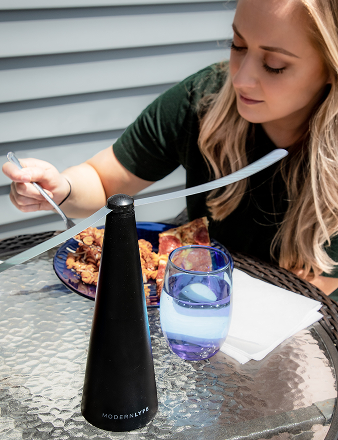
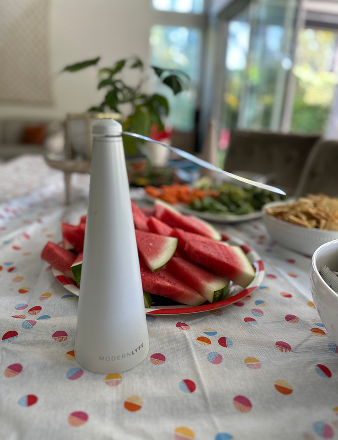
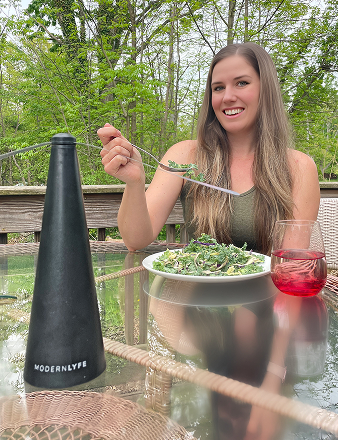
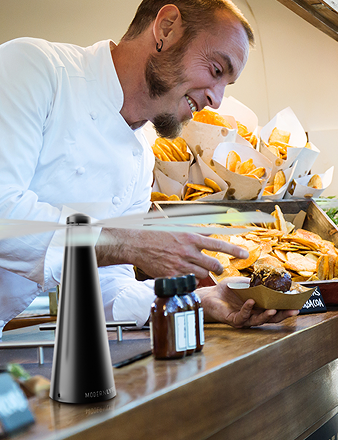
Consider outdoor dining, pool bars, buffets, weddings, or terrace service. A property can invest heavily in mobile ordering and room controls, then still let insects compromise food presentation and guest comfort in open-air settings. That's a hospitality failure, even if the app works perfectly.
Ambient intelligence should include systems that protect the physical environment:
- Environmental sensors that help maintain comfort in semi-open spaces
- Automated lighting scenes that adjust without staff intervention
- Occupancy-driven controls that respond in real time
- Low-friction hygiene and comfort tools that solve nuisance problems without noise or visual clutter
Smart hospitality isn't just digital convenience. It's operational control that guests feel as comfort.
That broader definition is more useful for operators because it reflects how guests judge a property. They don't separate “tech” from “experience.” They judge the whole environment.
Your Roadmap to Smart Implementation
Most properties don't need a giant transformation project on day one. They need a disciplined sequence. The best implementations start with a narrow operational problem, prove the value, then expand into a connected system.
That makes the work more manageable and reduces the risk of buying disconnected tools that never become part of daily operations.

Assess and strategize
Start with the top three pain points in your property. Don't begin with a vendor demo. Begin with recurring operational drag.
Look for issues such as:
- Repeated comfort complaints: Rooms or public areas feel inconsistent.
- Waste you can see: HVAC or lighting runs when spaces are empty.
- Slow handoffs: Front desk, housekeeping, and engineering keep chasing status manually.
- Guest friction points: Arrival, access, room controls, and service requests feel clunky.
- Outdoor service gaps: Dining, events, and buffets lose polish because physical comfort isn't managed well.
Write down the exact problem, who owns it, and what a better outcome would look like. If the problem statement is vague, the project will drift.
Pilot and test
Pick one contained use case and test it in a limited environment. That might be a floor, a room block, an event space, or one outdoor dining area.
A strong pilot has three qualities:
| Pilot trait | What it looks like |
|---|---|
| Clear use case | One defined problem, such as occupancy-based room conditioning |
| Operational owner | A department leader who will actually use the system |
| Observable result | Fewer complaints, smoother workflow, or less visible waste |
This stage is where many teams either build momentum or lose it. Keep the pilot small enough to manage, but real enough to expose the operational truth. If staff ignore it, that's valuable information. If guests find it confusing, that's valuable too.
Field advice: Pilot what your team will adopt, not what looks impressive in a board presentation.
Scale and integrate
Once a pilot works, connect it to the wider property instead of layering on more standalone tools. A thermostat, lock, sensor, or dashboard only creates strategic value when it feeds a broader operating model.
That usually means asking tougher questions:
- Can engineering see the same room state as front desk?
- Can occupancy data inform energy settings?
- Can guest access status trigger other room functions?
- Can outdoor event operations use ambient technology as part of the same quality standard as indoor spaces?
At this stage, avoid the temptation to add tech category by category without an integration plan. A fragmented smart property is still fragmented.
Monitor and optimize
A deployed system isn't finished. It needs tuning.
Teams should review what's happening on the ground:
- Are guests using the features as intended?
- Are staff trusting the automation or overriding it constantly?
- Which alerts matter, and which ones create noise?
- Where is comfort still breaking down?
- What operational task has become easier?
One of the best indicators of success isn't just faster completion of tasks. It's whether staff have more capacity for genuine hospitality. Forbes has argued that a particularly telling metric is how much time staff spend in meaningful conversations with guests after AI deployment, in its discussion of what hospitality brands should consider when deploying AI.
That's the right lens. The point of smart hospitality solutions is not to remove the human layer. It's to protect it by stripping out avoidable friction.
The Future of Hospitality Is Smart and Seamless
Hospitality is moving toward environments that feel easier, calmer, and more responsive. That doesn't happen because a property bought more screens. It happens because the operation made better decisions about where technology should step in and where it should stay out of the way.
That's why the strongest smart hospitality solutions combine two ideas at once. First, they use connected systems, automation, and AI to reduce waste and improve control. Second, they improve the physical experience through ambient tools that work subtly in the background, especially in the spaces where guests notice comfort most.
This matters across hotels, resorts, restaurants, events, and short-term rentals. Operators tracking broader shifts in guest expectations can get useful context from these vacation rental market insights, especially if they're thinking beyond traditional room tech and looking at how convenience and operational efficiency shape the full stay.
The next smart upgrade on your property doesn't have to be dramatic. It should be useful. Fix one repeat problem. Reduce one visible waste point. Remove one comfort issue that staff are tired of managing manually.
That's how good smart strategies start. Not with a massive rollout, but with a focused decision that makes the guest experience better and the operation easier to run.
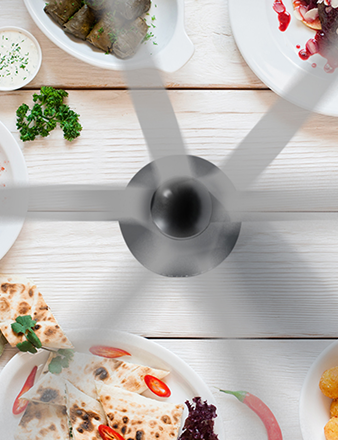
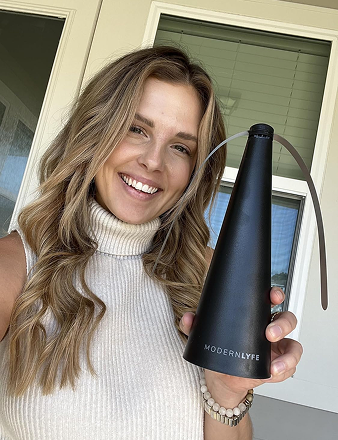
If you're ready to improve guest comfort in dining, buffet, outdoor event, and hospitality service areas without adding digital friction, MODERN LYFE offers a practical place to start. Their quiet, battery-operated fly fans help protect food presentation and guest experience in a simple, elegant way that fits the broader move toward smarter, more integrated hospitality.