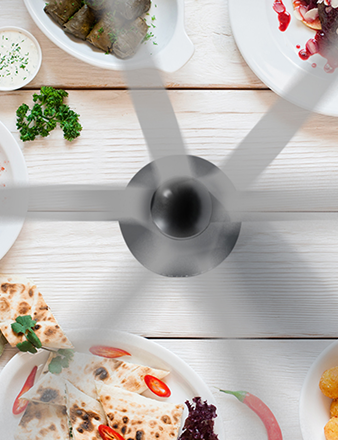
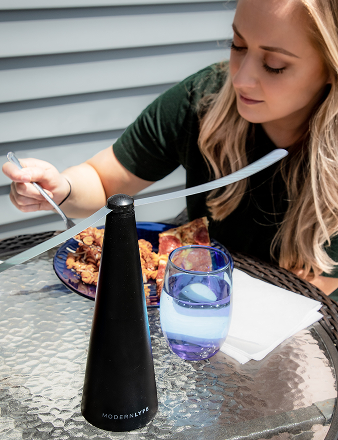
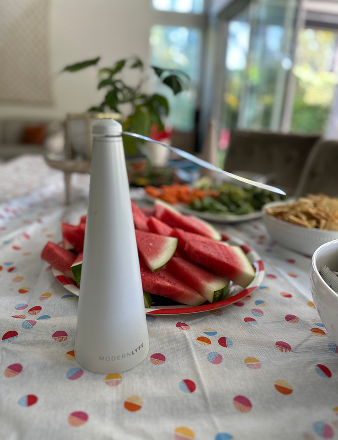
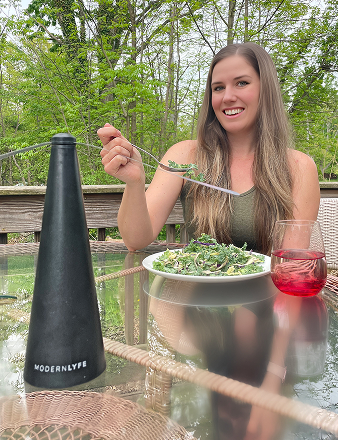
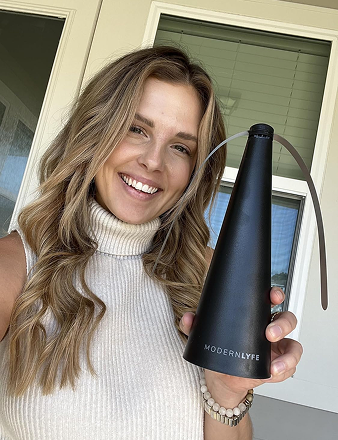
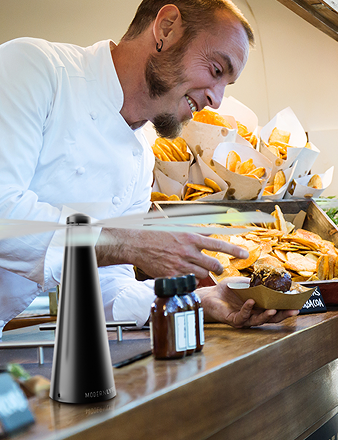
You've got a new hire on the floor, a Friday night rush is building, and the team's trying to remember who resets the buffet, who checks the allergen cards, and who sets the table fan before guests notice the flies. That's the test for staff training materials. If the packet can't survive a packed dining room, a banquet changeover, or a last-minute equipment handoff, it isn't training, it's paperwork.
Why Most Staff Training Materials Fail on the Floor
A service-night problem usually starts small. A hostess fumbles the fly fan setup, a server misses an allergen step, or a new banquet lead reads a BEO too rigidly and sends the wrong team to the wrong room. None of that happens because people are careless. It happens because the material they were given was built for a binder, not for a busy floor.
Generic PDFs and slide decks can look polished in an office and fall apart in motion. They are often too wordy, too abstract, and too far from the pace of service. A manager who wants a real-world example of prevention tied to daily habits can look at the pest-control guidance in this Modern Lyfe article on how to prevent pest problems, because prevention only works when the team knows what to do before the rush starts.
Practical rule: if a step can't be done under pressure, it does not belong in a front-line SOP unless you rewrite it.
Three failure modes show up again and again in hospitality. First, the content reads well but cannot be executed in a hallway, on a patio, or during a check-in line. Second, the packet ignores product-specific procedures, which is where devices like a Modern Lyfe fly fan get handled badly, stored badly, or cleaned inconsistently. Third, onboarding packets go stale after the first quarter, so managers keep teaching yesterday's process while the operation has already moved on.
There's a reason well-built training matters at scale. U.S. training expenditures reached $102.8 billion in 2025, and average direct learning spend was reported at $874 per learner in 2025 (Lorman). That kind of investment only makes sense if the content can be deployed quickly, updated cleanly, and used across shifts. For a practical “make this better now” lens, Knowlify's guide on how to transform training materials instantly is worth reading because the key issue is floor usability, not design flair.
The operations lesson is simple. Staff training materials are the operating system. If they do not guide real behavior in a rush, they are not protecting guest experience.
The Building Blocks of Effective Staff Training Materials

Every strong packet starts with the same core pieces, and each one has a job. Clear learning objectives tell the learner what success looks like. A logical content outline keeps the material in the order people will use it. Step-by-step procedures show the work, and practice activities make sure the learner can do it without guessing.
A restaurant GM or hotel F&B lead can use this structure on any task, from new-server onboarding to event setup. AIHR lists learning objectives, a structured outline, detailed steps, practice activities, assessments, a glossary, and accessibility considerations as core elements of effective materials (AIHR). That matches what managers need in practice. If the goal is vague, the team improvises. If the sequence is unclear, the floor gets inconsistent. If there's no assessment, you never know what stuck.
A sample objective should sound like a performance target, not a theme. “Understand fly fan setup” is too soft. A stronger version is, “Given a clean buffet line and an assigned table number, the host will place, activate, and verify the fly fan before guest arrival with no missed safety or placement steps.”
The easiest way to keep procedures usable is to cap each section at 7 steps or fewer, keep the sequence logical, and use consistent formatting like numbered steps, bullets, and bold terms (Folge.me). That matters because busy teams scan, they don't study. A clear structure is also easier to convert into video or microlearning later, which is why it helps to think ahead to how to produce training videos while you draft the written version.
Use this quick review before you publish a module:
- Objective clarity: Does the learner know exactly what they must do?
- Action order: Are the steps in the same sequence the task happens on shift?
- Step count: Is each procedure section at 7 steps or fewer?
- Practice built in: Is there a scenario, role-play, or hands-on check?
- Assessment included: Can a manager verify the learner can perform the task?
- Glossary present: Are terms, abbreviations, and product names defined?
- Accessibility noted: Does the material work for different reading levels and devices?
A one-page checklist like that keeps drafts from drifting into fluff. It also makes revisions faster, which matters when service standards change and the packet has to keep pace.
Writing Learning Objectives and Step-by-Step Procedures
The cleanest way to write a learning objective is to use action, condition, and criterion. Action is what the employee does. Condition is the context. Criterion is the standard for acceptable performance. That format forces you to write for the floor, not for a classroom.
Here's the difference in a hospitality setting. Weak objective, “Learn fly fan procedures.” Strong objective, “Given the fly fan, a buffet station, and shift supplies, the host will set up, position, and clean the unit according to the checklist before the first guest is seated.” The second version tells the manager what to observe and tells the new hire what success looks like.
| Weak objective | Strong objective |
|---|---|
| Learn fly fan procedures. | Given the fly fan, a buffet station, and shift supplies, the host will set up, position, and clean the unit according to the checklist before the first guest is seated. |
| Know how to maintain equipment. | Given a closing checklist, the employee will wipe, inspect, power down, and store the fan in the correct location before shift handoff. |
A procedure should read like a work order. Use present tense, concrete verbs, and short numbered steps. A 17-year-old host on a Friday night should be able to follow it without asking for translation.
Sample fly fan procedure
- Check the unit. Confirm the fan is clean, charged, and free of visible damage.
- Set the base. Place it on a flat buffet surface away from heat, water, and guest reach.
- Position the blades. Make sure the fan sits where it protects food without blocking service access.
- Power it on. Turn the unit on and verify the movement is steady.
- Watch the first minute. Confirm it stays stable and doesn't interfere with plates, signage, or serving tools.
- Clean between shifts. Wipe the exterior, remove debris, and check for residue before the next service window.
- Store properly. Power down, return the unit to its assigned storage spot, and note any issues for the closing team.
That format works because every step is observable. If a manager can't watch it, coach it, or verify it, it doesn't belong in the procedure. Step-by-step writing should describe behavior, not intent.
One more habit pays off fast. Keep instructions in the same order the task happens in real life. If a closing team stores the unit before wiping it, the material is wrong. If the team can't tell what “clean” means, define it in the glossary and tie it to the checklist.
Choosing the Right Format for Each Lesson
Not every lesson belongs in a handout. A printed sheet works best when the team needs a fast reminder during shift briefings, but it fails when the task needs motion, timing, or judgment. A video walkthrough is stronger for new equipment setup because the learner can see placement, posture, and sequence. It falls short if the team needs live correction.
Role-play drills shine when language and guest interaction matter. A host practicing a complaint recovery script or a server explaining a buffet adjustment will remember the exchange better than they would from reading alone. Teach-back exercises are best when you need proof of understanding, because the learner has to explain the process in their own words. They're weaker when the task is highly physical and the person hasn't done the work yet.

The best operations usually blend formats. A dish-prep procedure benefits from demonstration plus practice, while a guest-greeting script benefits from role-play and observation. That's consistent with the mobile reality of modern training too, since 71% of employees access training materials on mobile devices and completion rates are 43% higher when mobile options are available (Intellum). A phone-friendly packet with short modules, clear headings, and scannable steps will beat a long desktop PDF almost every time.
Keep the format close to the task. If the task is visual, show it. If the task is conversational, rehearse it. If the task is procedural, break it into steps and test it.
A quick decision grid helps managers move faster:
- Printed handout: Best for daily shift briefings, quick reminders, and reference sheets.
- Video walkthrough: Best for new equipment setup, cleanup sequence, and visual demonstrations.
- Role-play drill: Best for guest complaints, service recovery, and explanation-heavy moments.
- Teach-back: Best for confirming menu knowledge, compliance steps, and policy recall.
There's no value in picking a single format and forcing every lesson into it. The more complex the task, the more likely it needs a mix. A front desk script may start as a handout, move to a role-play, and end with a teach-back before the employee takes the floor alone.
Onboarding Templates and Role-Play Scripts You Can Reuse

A good onboarding template should follow shifts, not calendar weeks. Hourly teams live in service windows, so the plan has to match when they work. Use a simple 30-day structure that tells the new hire what to learn, what to practice, and what a manager should observe on each shift.
Reusable 30-day onboarding template
Days 1 to 3, first service exposure
- Tour the space and review safety basics.
- Learn the floor layout, storage areas, and closing locations.
- Shadow a lead through one setup and one breakdown.
- Practice one procedure, such as fly fan placement or cleanup.
Days 4 to 10, assisted performance
- Complete assigned opening or closing steps with supervision.
- Rehearse guest-facing language before the shift starts.
- Use the checklist for one product-specific task.
- Ask the manager to verify one completed procedure.
Days 11 to 20, partial independence
- Run familiar tasks with spot checks.
- Explain the why behind the procedure during a teach-back.
- Log any equipment or process issues.
- Repeat the task in a different service window.
Days 21 to 30, independent execution
- Perform the full task sequence without prompting.
- Handle one guest question or correction with manager backup only if needed.
- Review notes from prior shifts and fix recurring mistakes.
- Confirm the employee can complete the step and explain it back.
If you need a model for broader event coordination paperwork, the structure in this event coordinator checklist template from Modern Lyfe can help you keep responsibilities sorted by phase instead of by vague topic. That same logic works for onboarding, because the employee needs to know what happens next, not what chapter they're in.
Here's a reusable role-play script for a guest interaction involving a fly fan.
Server: “Just a quick note, this fan helps keep flies away from the buffet area. I'm setting it on this side so it doesn't block your plate service.”
Guest: “Will it be noisy?”
Server: “It's designed to stay unobtrusive during service. If you'd like, I can adjust the placement a bit farther from your table.”
Guest: “Is it safe near the food?”
Server: “Yes, it stays positioned away from direct contact with the food and outside the serving path.”
A second script can cover the back-of-house handoff.
Closing lead: “Did you wipe the unit before storage?”
Closing team member: “Yes, I cleaned the exterior, checked the base, and noted the battery status.”
Closing lead: “Good. Store it in the assigned cabinet and flag any damage on the handoff sheet.”
If you want a low-friction way to reinforce the culture around good onboarding, Custom Mark's gift ideas for employees can be useful for recognition moments tied to training milestones. The point isn't swag, it's signaling that clean execution matters.
Run both scripts during pre-shift before you publish them. If the wording feels awkward in a quiet room, it'll feel worse at 7 p.m. with tickets stacking up.
Measuring Whether Training Materials Changed Behavior
Training only matters if behavior changes on the floor. That means you need a measurement system, not a feeling. Set the metrics before rollout, capture the baseline, run the training, then compare the same measures afterward. The CDC recommends a pretest/posttest design and review points at 30, 60, and 90 days so managers can verify whether knowledge transfer changed behavior (CDC).
The first mistake managers make is tracking completion only. Completion shows participation, not competence. The second mistake is checking results once and moving on. A clean quiz score can still hide a messy shift if the employee never applies the process under pressure.
What to measure on a hospitality floor
- Speed of service: Did the process slow setup or cleanup?
- Error rate: Did the team skip a step or place equipment incorrectly?
- Guest feedback: Did comment cards or verbal complaints change?
- Equipment damage or misuse: Did handling improve after training?
- Manager observation: Did supervisors see consistent execution?
If you want a deeper framework for tying behavior to outcomes, the operational lens in this performance metrics guide from Modern Lyfe pairs well with training review. The point is to compare what the employee did before training with what they do after, using the same yardstick.
For a fly fan module, that might mean counting how many units are set correctly per shift, whether guest complaints about flies drop, and whether maintenance issues are reported clearly instead of ignored. Keep the log simple enough that a supervisor can update it during service. If the measurement process takes too long, managers stop using it.
Measure what the floor can actually change. If the team can't influence the metric directly, it's the wrong metric for the training packet.
A strong measurement loop also helps you revise the material itself. If the same step keeps getting missed, the issue might be the wording, the order, or the demonstration. That's not a learner problem alone, it's a training-design problem.
Piloting, Refining, and Scaling Your Training Program
Every new module should start with one shift or one property before you roll it out wider. Pilot it with real users, collect the confusion points, and revise the wording where people stall. Visme's guidance on piloting with a small group and keeping materials current with the latest standards is exactly right for hospitality, because service changes faster than most binders do (Visme).
Tape this checklist to the manager's office wall:
- Draft one objective tied to a visible task.
- Write one seven-step procedure with present-tense verbs.
- Run one role-play before the first live use.
- Measure one baseline and compare it after rollout.
- Review at 30, 60, and 90 days.
- Update the module when the menu, standard, or product changes.
The smartest training packets are living documents. If a new fly fan model arrives, the procedure changes. If the closing sequence changes, the storage step changes. If the floor team finds a better way to explain the device to guests, capture it and fold it into the script.
Pick one procedure this week, write the objective, build the seven-step version, and pilot it on one shift. Then measure what changed and tighten the language before you scale it across the rest of the operation.
If you're building a cleaner, calmer hospitality setup, MODERN LYFE gives you the kind of practical product support that belongs in real training materials, not just a showroom. Visit MODERN LYFE to see how their fly fans fit into guest-facing procedures, and use that same product clarity to tighten your onboarding, service scripts, and maintenance checklists.